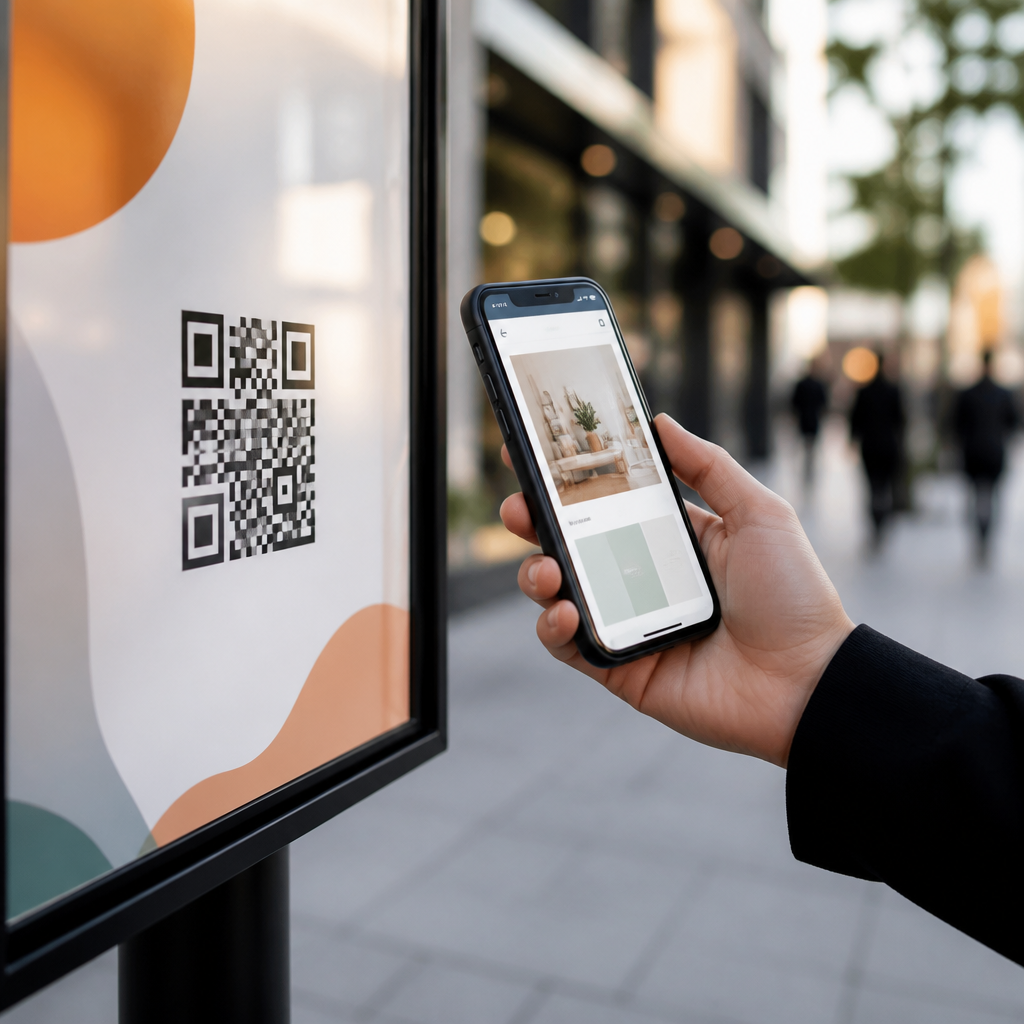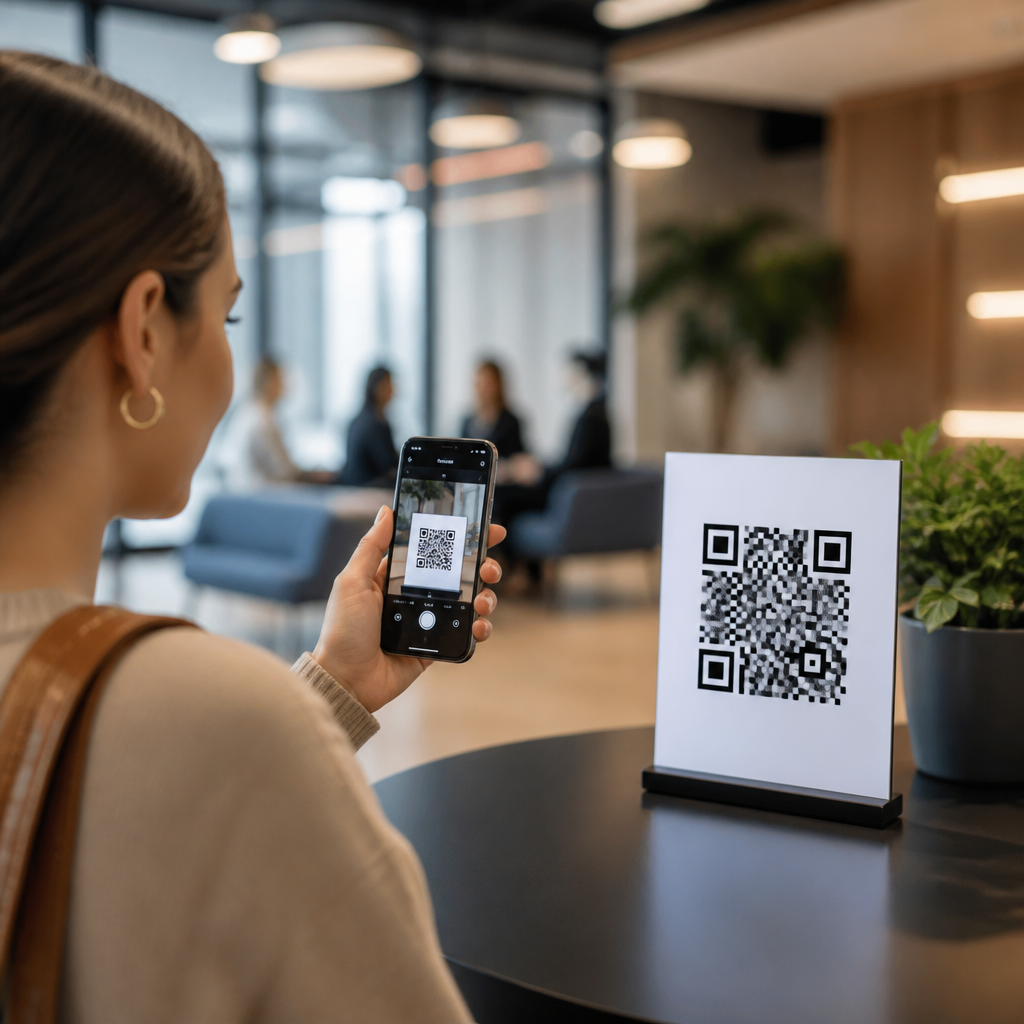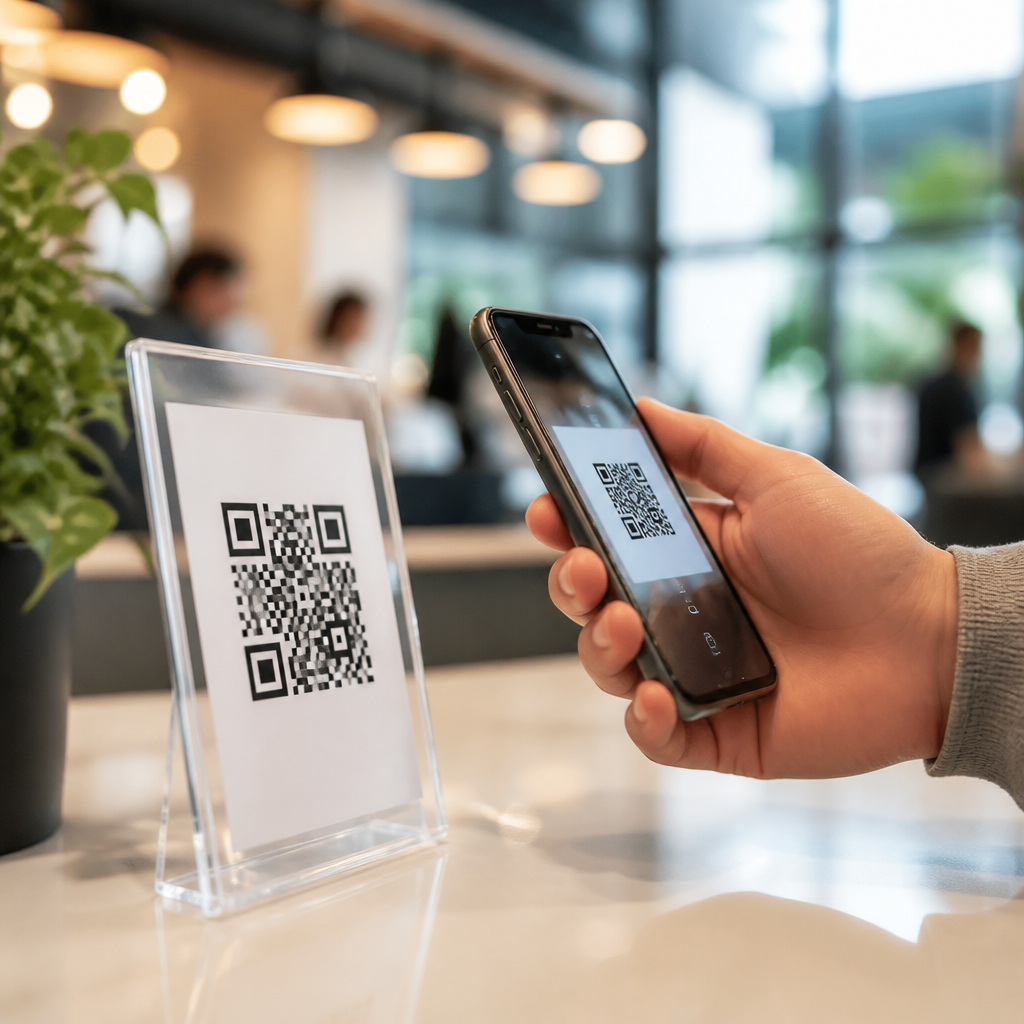
QR codes and landing pages work best when they are planned as one conversion system rather than as separate marketing assets. A QR code is the bridge between an offline or in-app touchpoint and a digital destination, while a landing page is the focused page built to continue the message, capture intent, and move a visitor toward a measurable action. In marketing funnels, that connection matters because every scan represents a moment of intent that can be strengthened or wasted within seconds. I have seen well-designed print campaigns underperform simply because the code led to a generic homepage, and I have seen modest flyer campaigns outperform paid ads because the scan opened a fast, relevant page with one clear next step.
Integrating QR codes into marketing funnels means mapping each scan to a stage of the buyer journey: awareness, consideration, conversion, retention, or advocacy. At the top of the funnel, a code on packaging or out-of-home media may introduce a product story, explainer video, or store locator. In the middle, a code on a brochure, event badge, or direct mail piece can route prospects to a comparison guide, booking form, or case study. At the bottom, a code on a shelf talker, invoice, or proposal can open a purchase page, financing option, or personalized quote form. After purchase, a code on the box or receipt can drive onboarding, support, loyalty enrollment, reviews, and referrals.
Done correctly, this approach improves attribution, increases response rates, and shortens the distance between interest and action. Done poorly, it creates friction: slow mobile pages, mismatched messaging, broken redirects, or pages that ask for too much too soon. The best practices below focus on the practical details that determine results, from campaign architecture and page speed to analytics, compliance, and testing. If your broader marketing strategy includes print, retail, events, packaging, direct mail, or field sales, this hub explains how to turn QR code scans into qualified traffic and measurable pipeline instead of untracked curiosity.
Start with funnel intent, not the code itself
The first best practice is to decide what job the QR code must do at a specific funnel stage. Marketers often begin by generating a code, placing it on an asset, and only then asking where it should lead. That reverses the process. The correct sequence is audience, context, offer, destination, and measurement, with the QR code serving as the delivery mechanism. For example, a code on a trade show booth should not send every visitor to the same page. A prospect who scans from a product demo may need a pricing consultation page, while a visitor who scans from a technical poster may need specification sheets and integration documentation.
Clear intent keeps both creative and analytics focused. If the campaign goal is awareness, success may be measured by qualified page views, video completion, or store locator use. If the goal is lead capture, the page should present a concise value exchange such as a guide, sample, trial, or appointment. If the goal is purchase, the page should minimize distractions, surface trust signals, and make checkout or handoff obvious. This alignment is what turns a QR code from a novelty into a funnel component.
In practice, I recommend creating a scan-path brief for every campaign. It should define the source asset, audience segment, moment of use, landing page promise, desired action, fallback experience, and reporting owner. Teams that adopt this discipline usually reduce avoidable errors like expired pages, duplicated codes, or campaigns that cannot be attributed across channels.
Match the landing page to the scan context
Message match is the single biggest conversion lever for QR-driven traffic. A person scanning a code from a restaurant table tent, a product package, a postcard, or a conference badge has a different mindset and time horizon. The landing page must acknowledge that context immediately. The headline should reflect what the person just saw. The first screen should answer the question, “What happens next if I stay here?” If the printed asset promises a 10 percent welcome offer, the page should show that offer instantly, not bury it below a hero carousel or unrelated navigation.
Context also includes environment. Many scans happen on mobile connections in stores, transit stations, lobbies, and event halls. That means concise copy, large tap targets, compressed images, and forms that are short enough to complete with one hand. For local campaigns, add map integrations, call buttons, business hours, and inventory or appointment cues. For B2B campaigns, include proof points early: customer logos, implementation timelines, certifications, and compatibility details. A QR code on industrial equipment, for instance, should land on a service or parts page that respects urgency, not on a glossy brand page.
Dynamic QR codes are especially useful here because they let marketers preserve the printed code while updating the destination over time. A retailer can use one code on seasonal signage but change the landing page by location, promotion window, or stock status. That flexibility is valuable, but it requires governance: redirects must be tested regularly, and destination changes should be logged so reporting stays credible.
Build mobile-first pages that remove friction
Most QR scans happen on smartphones, so the landing page must be engineered for mobile performance before design polish. Fast rendering matters because scan intent is fragile. Google’s Core Web Vitals are a practical benchmark: keep Largest Contentful Paint low, reduce layout shifts, and limit JavaScript that delays interactivity. In audits I have run, common QR landing page failures include oversized hero images, embedded videos that autoplay poorly, pop-ups that block the screen, and forms with too many required fields.
The best QR landing pages have one primary action above the fold, with supporting information arranged in descending order of importance. If the action is “Book a demo,” put the scheduling option first and include alternate low-friction options like “Email me details” or “Download the spec sheet.” If the action is “Buy now,” show the product, price, shipping expectations, return policy, and accepted payment methods without forcing extra navigation. If compliance is required, such as age verification, healthcare disclosures, or financial consent, place it in a way that is legally sound without overwhelming the first interaction.
Accessibility is part of friction reduction. Use readable contrast, descriptive button labels, logical heading structure, and forms compatible with autofill and screen readers. QR codes widen access only if the destination is usable. A campaign cannot claim performance success if scans are high but completion rates are poor among users on older devices, slower networks, or assistive technology.
Use segmented destinations and clean measurement
Attribution is where QR code programs either mature or stall. Every meaningful QR campaign should have a naming convention, tracked destination URLs, and a clear relationship between source asset and landing page outcome. UTM parameters remain the simplest common standard for campaign tagging, especially when paired with analytics platforms such as Google Analytics 4, Adobe Analytics, HubSpot, or Salesforce campaigns. The critical point is consistency. If one team tags source as “print” and another tags “directmail,” reporting becomes fragmented and impossible to trust.
Segmentation should reflect channel, placement, audience, geography, and creative variant when those differences affect behavior. A single postcard campaign may need separate QR destinations for existing customers, lapsed buyers, and net-new prospects. A retail display may need store-level segmentation to compare scan rate against sales lift. Event marketers often benefit from assigning different codes to booth panels, handouts, session slides, and staff badges so they can distinguish casual interest from sales-ready engagement.
| Funnel stage | Typical QR placement | Best landing page goal | Primary metric |
|---|---|---|---|
| Awareness | Packaging, posters, out-of-home | Explain value and capture light intent | Qualified visits |
| Consideration | Brochures, event assets, direct mail | Deliver comparison content or booking | Lead rate |
| Conversion | Shelf signage, proposals, invoices | Complete purchase or request quote | Revenue per scan |
| Retention | Receipts, inserts, product labels | Onboarding, support, loyalty enrollment | Activation rate |
| Advocacy | Thank-you cards, packaging, email crossovers | Review, referral, social sharing | Referral volume |
For serious funnel analysis, connect scan data to downstream events. That means linking landing page conversions to CRM records, ecommerce transactions, or customer success milestones. Without that connection, a team may optimize for scan volume while missing that some placements generate lower-quality leads or higher refund rates. The strongest programs evaluate scans, sessions, conversion rate, cost per qualified action, and eventual revenue contribution together.
Design QR codes for reliability and trust
A QR code that looks attractive but scans poorly undermines the whole funnel. Follow established print and display standards: maintain sufficient contrast, preserve the quiet zone around the code, avoid distorting the modules, and test at realistic distances and lighting conditions. Short URLs behind the code are preferable because they reduce redirect complexity and are easier to audit. Use HTTPS destinations, and when possible, display a branded domain near the code to reassure users that the destination is legitimate.
Placement matters as much as design. Codes should be large enough for expected scanning distance and positioned where users can actually pause and act. On moving vehicles or escalator ads, scanability may be theoretically possible but practically weak. In-store, codes placed below knee height or behind reflective plastic routinely underperform. At events, codes on presentation slides should remain visible long enough to scan, and speakers should say exactly what value the scan provides. A simple instruction like “Scan to compare plans and book a consultation” outperforms a bare code with no context.
Trust signals should continue on the landing page. Use consistent branding, recognizable page titles, privacy links, and concise explanations of data use. If the page asks for contact information, explain what the user will receive and how often. This is particularly important in regulated sectors such as healthcare, finance, and education, where users may hesitate if the destination feels ambiguous.
Test, govern, and optimize across the full journey
Optimization does not end when the code scans successfully. The best teams test the entire journey, from printed asset to page load to post-conversion follow-up. Start with pre-launch QA on multiple devices, operating systems, browsers, and network conditions. Verify redirects, analytics events, form submissions, confirmation screens, CRM routing, and thank-you email triggers. Then run structured experiments. On landing pages, test headline clarity, form length, offer framing, proof elements, and CTA placement. On the physical asset, test the call to action, surrounding copy, visual prominence, and incentive.
Governance is essential for hub-level QR marketing programs because assets often stay in circulation longer than digital teams expect. Product packaging, posters, catalogs, and field collateral may remain active for months or years. Assign ownership for destination upkeep, redirect management, and retirement rules. Maintain a registry that documents code purpose, launch date, linked campaign, destination history, and performance notes. This prevents a common failure mode: legacy codes sending users to obsolete promotions, dead pages, or content that no longer reflects the offer.
Finally, think beyond the first conversion. A well-integrated funnel uses the landing page to set up the next step automatically. If someone scans for a how-to guide, enroll them in a relevant nurture path. If they scan from packaging for setup help, invite them into onboarding and loyalty. If they request pricing, route them to sales with source context intact. QR codes become far more valuable when they do not merely generate visits, but feed a coherent lifecycle program with measurable business outcomes.
QR codes and landing pages deliver the strongest results when they are engineered as a connected part of the marketing funnel. The essential practices are straightforward: define the funnel objective before creating the code, match the page to the scan context, build for mobile speed and clarity, measure with disciplined tagging and CRM integration, design codes for reliable scanning, and govern every destination over time. These steps sound operational, but they directly affect revenue because they determine whether real-world attention becomes qualified digital action.
As the hub for integrating QR codes into marketing funnels, this topic connects naturally to related work on direct mail response, event lead capture, retail conversion, packaging engagement, customer onboarding, and referral generation. Each use case changes the landing page structure and success metrics, yet the underlying rule stays the same: a scan only has value when the next experience is immediate, relevant, and easy to complete. That is why generic homepages, long forms, and weak attribution consistently waste QR traffic.
If you are refining a QR code marketing strategy, start by auditing your current scan paths. Identify every code in market, note where it appears in the funnel, test the mobile experience, and compare scan sources against conversion quality. Then prioritize the pages with the biggest traffic or revenue potential and improve message match, speed, analytics, and follow-up. Small fixes at these handoff points often produce outsized gains. Build the funnel deliberately, and your QR codes will stop acting like static shortcuts and start performing like accountable marketing infrastructure.
Frequently Asked Questions
1. Why should QR codes and landing pages be planned as one conversion system?
QR codes and landing pages perform best when they are treated as parts of the same user journey rather than as separate campaign assets. The QR code creates the transition point from an offline, printed, in-store, event, packaging, or mobile environment into a digital experience. The landing page then has the job of confirming relevance, maintaining message continuity, and guiding the visitor toward a specific action. If those two elements are disconnected, the user experiences friction immediately. For example, if a QR code on a product display promises a coupon but sends people to a generic homepage, trust and momentum drop fast.
Thinking of them as one system improves conversions because it forces better alignment across message, design, audience intent, and analytics. The copy near the QR code should set an expectation, and the landing page should fulfill it within seconds. The visual style should feel familiar enough that the user knows they arrived in the right place. The offer should match exactly what motivated the scan. Most importantly, the desired next step should be obvious, whether that is making a purchase, signing up, downloading a resource, booking a demo, or redeeming an offer. When every part is planned together, each scan has a much better chance of becoming a measurable result.
2. What makes a good landing page for QR code traffic?
A strong landing page for QR code traffic is focused, fast, mobile-friendly, and built around immediate clarity. Since most QR scans happen on smartphones, the page should load quickly, display cleanly on smaller screens, and make the next step simple to complete with one hand. The headline should confirm exactly why the visitor scanned. If the QR code offered access to an event menu, product details, a discount, or a tutorial, the landing page should present that content right away rather than forcing the user to search for it.
Good QR landing pages also remove distractions. That usually means limiting navigation, reducing unnecessary text above the fold, and emphasizing one primary call to action. Supporting elements such as trust signals, short benefit-driven copy, customer proof, product visuals, or concise FAQs can help reassure the visitor, but they should support the main conversion goal rather than compete with it. Form fields should be kept to the minimum required. Buttons should be large, clear, and action-oriented. In many cases, location-aware, device-aware, or campaign-specific personalization can improve performance even more, as long as it remains relevant and does not feel invasive. The central principle is simple: the page should continue the scan experience smoothly and make the value obvious without delay.
3. How can marketers improve QR code scan-to-conversion rates?
Improving scan-to-conversion rates starts before the scan itself. The context around the QR code matters a great deal. People are more likely to scan when they understand what they will get and why it is worth their time. Clear surrounding copy such as “Scan to claim 15% off,” “Scan for setup instructions,” or “Scan to view today’s menu” usually outperforms unexplained codes. Placement also influences performance. The code should be easy to spot, easy to reach, and displayed at a size that scans reliably in real-world conditions. Contrast, whitespace, and print quality all affect usability.
After the scan, conversion gains usually come from reducing friction and tightening message match. Send users to a dedicated landing page instead of a general website page. Keep load times low. Make the offer, benefit, or information immediately visible. Align the visual and verbal language of the page with the source context so users feel continuity. Use one clear CTA rather than several competing choices. If the campaign goal is lead generation, ask only for the information you truly need. If the goal is purchase, shorten the buying path as much as possible. Testing is also essential. Marketers should experiment with CTA wording, headline variations, page layouts, incentives, and QR code placement. With proper tracking in place, those tests can reveal where intent is being lost and which adjustments produce more completed actions.
4. What are the most common mistakes brands make with QR codes and landing pages?
One of the most common mistakes is sending QR traffic to a homepage or a page that is too broad. A scan is usually driven by a very specific moment of interest, so generic destinations tend to weaken momentum. Another frequent problem is failing to explain why someone should scan in the first place. A QR code by itself does not communicate value. Without a clear benefit or instruction, many people simply ignore it. Technical issues are also common, including pages that load slowly, poor mobile design, broken redirects, or codes that are difficult to scan due to low contrast, small size, cluttered placement, or poor printing.
From a conversion standpoint, brands also lose results when the landing page asks too much too soon. Long forms, excessive navigation, multiple offers, and vague calls to action can all interrupt progress. Message mismatch is another major issue. If the code promises one thing and the page delivers something else, users are likely to leave immediately. Many campaigns also underperform because they are not measured well. Without tracking scans, sessions, bounce behavior, CTA clicks, and final conversions, it becomes hard to know whether the issue is with the code placement, the offer, the page experience, or the audience targeting. The best way to avoid these mistakes is to build the QR code and landing page as a single funnel step with a clear promise, a dedicated destination, and a defined success metric.
5. How should businesses track and measure the performance of QR code landing pages?
Businesses should measure QR code campaigns with the same discipline they apply to any other conversion funnel. At a minimum, tracking should connect the QR scan source to landing page visits and then to meaningful outcomes such as sign-ups, purchases, downloads, reservations, form completions, or coupon redemptions. Dynamic QR codes are especially useful because they allow marketers to update destinations and collect scan data without reprinting the code. UTM parameters, campaign tagging, analytics events, and conversion goals should all be configured so each QR placement can be evaluated accurately.
The most useful metrics depend on campaign goals, but several indicators are broadly important. Scan volume shows how much initial interest the placement generated. Landing page engagement metrics such as bounce rate, time on page, scroll depth, and CTA click-through rate can reveal whether the page matched user expectations. Final conversion rate shows whether the full system is working. Segmenting performance by location, channel, device type, creative version, or audience can uncover patterns that high-level metrics miss. For example, one retail sign may drive many scans but few purchases, while packaging inserts may generate fewer scans but far stronger conversion quality. That insight helps teams optimize where codes appear, what they promise, and how landing pages are structured. In practice, the most effective measurement approach is one that treats every scan as the start of a trackable customer journey, not just a vanity interaction.