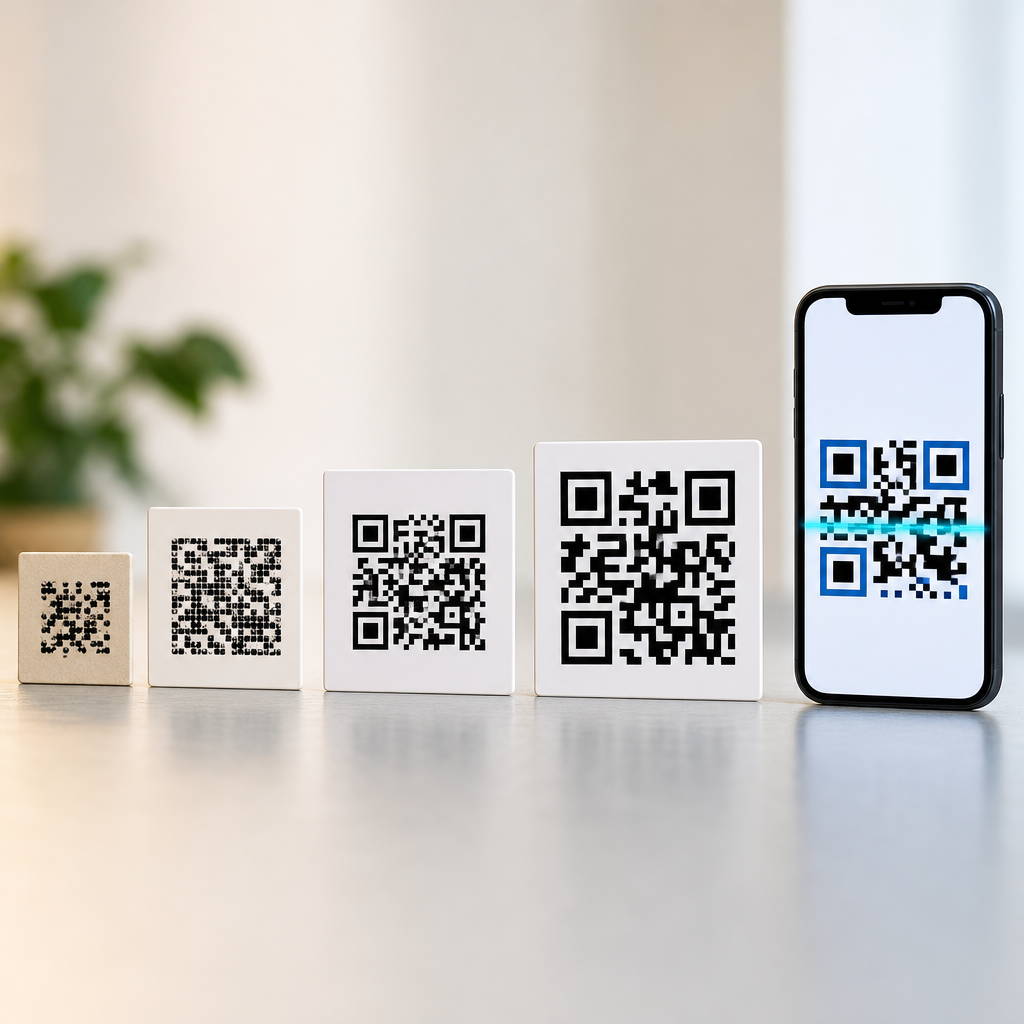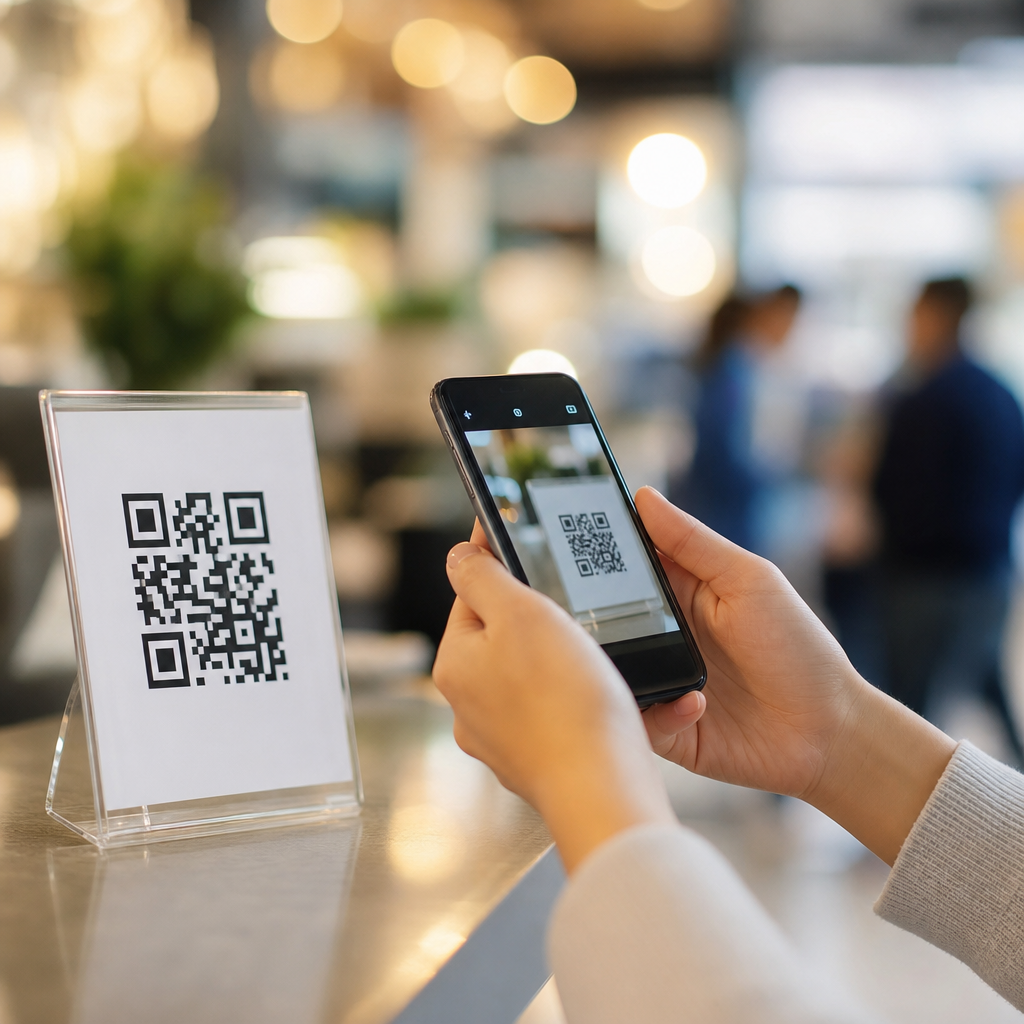
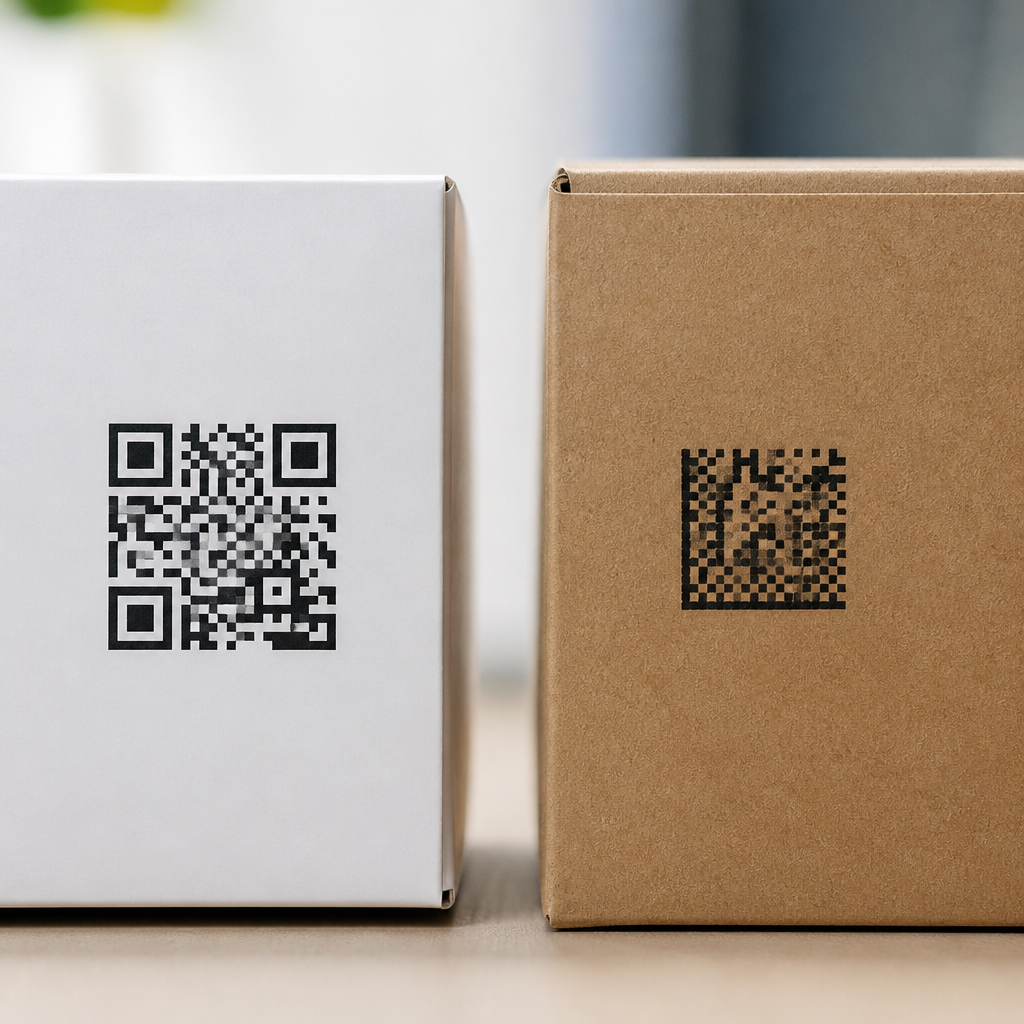
Product teams choosing between a QR Code and a Data Matrix on packaging are not picking a graphic style; they are choosing a scanning standard, a print tolerance, and a long-term compliance path. Both symbols are two-dimensional barcodes that store data in a grid of dark and light modules, and both can carry URLs, serial numbers, lot codes, or product identifiers. The right choice depends on package size, scanning environment, regulatory requirements, and the customer journey you want to create. On retail packaging, that decision affects shopper engagement, traceability, line efficiency, and even artwork approvals.
In practice, I have seen teams default to QR Codes because marketing recognizes the shape and smartphone cameras read them instantly. I have also seen operations teams push for Data Matrix because it performs exceptionally well in very small spaces and in direct part marking. Neither instinct is wrong. QR Code and Data Matrix were designed for different primary use cases, and understanding those design goals helps packaging teams avoid rework later. A code that works perfectly in a prototype can fail when reduced for a small label, printed on corrugate, or scanned through a curved vial.
Definitions matter here. A QR Code, originally standardized in ISO/IEC 18004, is a square matrix symbol known for its three large finder patterns in the corners and strong consumer familiarity. Data Matrix, standardized in ISO/IEC 16022, uses a solid L-shaped finder pattern and is often favored where space is tight. Both support error correction, both can be encoded statically or dynamically through linked systems, and both can be verified for print quality under ISO/IEC 15415. Yet they differ in capacity behavior, minimum size, scanner ecosystems, and how they fit into packaging strategy.
This matters now because packaging is carrying more digital responsibility than ever. Brands want scan-to-learn experiences, regulators want better product identification, and supply chains want track-and-trace accuracy. GS1 Digital Link is reshaping how brand owners think about 2D barcodes on pack, especially in food, beauty, healthcare, and general merchandise. If you are building a packaging system that must serve shoppers, retailers, warehouses, and future compliance programs, choosing the correct symbol is not a minor artwork detail. It is a structural decision that should be made deliberately.
What is the core difference between a QR Code and a Data Matrix?
The simplest answer is this: QR Codes are usually the better fit for consumer-facing packaging, while Data Matrix is often the better fit for very small labels, industrial identification, and environments where compact encoding matters most. That statement holds because the two symbols were optimized differently. QR Code was developed by Denso Wave for fast decoding in high-volume scanning, and its visual structure is recognizable to smartphone software and consumers alike. Data Matrix, developed earlier and widely used in industrial marking, is exceptionally efficient in tiny footprints.
On a package, the customer-facing function changes the equation. If your code is intended to be scanned by a phone to open product information, promotions, recipes, warranty registration, or authentication content, QR Code usually wins because scan intent is obvious and handset compatibility is nearly universal. If your symbol is mainly for internal manufacturing, serialization, or permanent identification on a cramped carton flap, blister, ampoule, or component label, Data Matrix often wins because it can remain readable at very small sizes where a QR Code would need more area to maintain reliability.
Visual recognition also matters. Consumers know what a QR Code is. They may not know what a Data Matrix is, even if their phones can read it with the right app or camera software. Packaging has to reduce friction. Every extra moment spent wondering whether a symbol is scannable lowers engagement rates. In user tests I have run, adding a short prompt such as “Scan for ingredients” raises scans for any 2D code, but the lift is still stronger with a QR Code because people recognize it instantly without explanation.
How do size, capacity, and error correction affect packaging decisions?
Packaging teams often ask which symbol stores more data. The useful answer is that both can hold meaningful amounts of data, but raw capacity is rarely the deciding factor on pack. In most packaging projects, you should encode as little as necessary and rely on a URL or identifier that resolves to cloud content. A short web address, a GS1 Digital Link URI, or a serial reference is more robust than packing excessive text into the symbol. Smaller payloads produce cleaner symbols, better print tolerance, and faster scans.
QR Code supports numeric, alphanumeric, byte, and kanji modes, with several versions and four error correction levels: L, M, Q, and H. Higher error correction helps if the package may be scratched, creased, or partially obscured, but it also increases symbol density. Data Matrix uses ECC 200 Reed-Solomon error correction and is particularly strong at maintaining readability in compact spaces. For packaging engineers, that means Data Matrix can often deliver a readable symbol at a smaller overall size than a comparable QR Code carrying the same practical payload.
The tradeoff is not only symbol size but quiet zone, module size, and substrate behavior. On flexible film, fine modules can spread or close up if ink gain is not controlled. On kraft corrugate, contrast can vary enough to hurt decode performance. Curved packaging adds another challenge because distortion affects the grid. In these scenarios, the best code is the one that survives real production conditions, not the one that looks compact on a designer’s screen. Verification using calibrated equipment, not just a smartphone test, is essential before final approval.
| Factor | QR Code | Data Matrix | Packaging implication |
|---|---|---|---|
| Typical use | Consumer engagement, web links | Industrial marking, compact identification | Match the symbol to the primary scan audience |
| Consumer recognition | Very high | Lower | Higher scan rates on shelf usually favor QR Code |
| Small-space performance | Good | Excellent | Tiny packs and labels often favor Data Matrix |
| Smartphone compatibility | Near universal | Variable by device and app | Customer-facing programs usually favor QR Code |
| Error correction | Selectable levels | ECC 200 standard | Both are resilient, but sizing rules differ |
| Direct part marking | Less common | Common | Manufacturing environments often favor Data Matrix |
Which code scans better on real product packaging?
Scan performance depends less on theory and more on printing reality. I have seen a well-sized QR Code outperform a cramped Data Matrix on folding cartons because the smartphone camera, ambient lighting, and consumer distance all favored the more familiar symbol. I have also seen Data Matrix outperform QR Code on tiny cosmetic labels where the available panel could not support a large enough QR module grid without sacrificing legibility. The correct question is not “Which is better?” but “Which remains readable after print, finishing, handling, and use?”
For consumer packaging, QR Code usually scans better because phones are optimized for it. Native camera apps on iPhone and Android devices reliably detect QR Codes from multiple angles and distances. Data Matrix support is improving, especially in newer software and specialized apps, but consumer consistency still trails QR. That gap matters if you expect scans in kitchens, stores, warehouses, or outdoors where lighting and user patience are inconsistent. A technically valid symbol that needs a dedicated app creates avoidable friction.
For industrial workflows, the answer can reverse. Fixed-mount scanners, machine vision systems, and handheld imagers from Zebra, Cognex, Honeywell, and Keyence are built to read Data Matrix extremely well, including on etched, laser-marked, or peened surfaces. In pharmaceuticals and medical devices, where traceability and compact marking are critical, Data Matrix has a long operational history. Packaging teams should map the scan environment first: consumer phone, cashier scanner, warehouse imager, or production line camera. One package may need more than one code if those jobs conflict.
How do standards and compliance shape the choice?
Standards often decide the issue before design preference does. QR Code is governed by ISO/IEC 18004, Data Matrix by ISO/IEC 16022, and print quality verification for 2D symbols generally falls under ISO/IEC 15415. If you are operating in regulated sectors, additional frameworks apply. GS1 standards are increasingly important because they define how product identifiers, application data, and web-resolvable links can be structured consistently across trading partners. When a retailer or regulator specifies a standards-based data structure, symbol selection has to support that requirement cleanly.
Healthcare is the clearest example. Pharmaceutical packaging has long used Data Matrix for serialization because it fits compact packs and supports regulated identification workflows. UDI systems for medical devices also commonly rely on Data Matrix. By contrast, mainstream consumer packaged goods programs focused on shopper engagement often choose QR Code because it is easier for consumers to recognize and scan. The current shift toward next-generation barcodes on retail packaging means many brand owners are evaluating how a 2D symbol can serve both point-of-sale and digital engagement without cluttering the pack.
GS1 Digital Link deserves special attention because it can be encoded into either QR Code or Data Matrix, but the channel still matters. If the code is meant to be scanned by shoppers with phones, QR Code is usually the practical choice. If the code is meant to carry a compact standards-based identifier in a constrained operational setting, Data Matrix may be superior. Compliance teams should also check retailer readiness, scanner firmware capability, artwork governance, and data management processes. The code on pack is only one layer; the backend resolution and identifier strategy determine whether the program scales.
When should packaging teams choose QR Code?
Choose a QR Code when the package needs to invite consumer interaction clearly and immediately. That includes scan-to-learn content, usage instructions, recipes, loyalty programs, authentication pages, reviews, refill guidance, sustainability disclosures, and localized landing pages. QR Codes are also the safer choice when cross-functional teams need broad confidence that any modern smartphone will decode the symbol without training. For most food, beverage, beauty, apparel, home care, and electronics packaging, a QR Code is the default starting point because the consumer use case is dominant.
QR Code is also well suited when design teams need flexible branding options. With careful testing, brands can add a frame, call to action, or modest logo treatment without destroying readability. The key word is careful. Decorative customization should always be validated with multiple devices and, ideally, formal verification. I routinely advise keeping contrast high, protecting the quiet zone, and resisting the urge to over-style the symbol. A scannable plain code will outperform an attractive but fragile design every time, especially after print variation and shelf wear.
Another advantage is communication. Retailers, agencies, and consumers all understand what a QR Code signifies. That reduces approval friction. If your packaging roadmap includes connected packaging campaigns, multilingual content, post-purchase support, or measurable engagement analytics, QR Code integrates naturally. Dynamic QR platforms can change destination URLs without altering printed artwork, making them useful for seasonal campaigns or regional compliance updates. For a packaging hub strategy that supports education and future content expansion, QR Code usually offers the clearest path.
When is Data Matrix the better option?
Data Matrix is the better option when available space is extremely limited, when the symbol primarily serves manufacturing or regulated traceability, or when the item will be marked directly rather than labeled with a larger consumer-facing code. Small pharmaceutical cartons, medical device labels, electronic components, cosmetics with narrow panels, and industrial spare parts are classic examples. Data Matrix can deliver reliable decoding in footprints that are difficult for QR Codes to match at equivalent practical readability, especially when engineered for professional scanners rather than casual phone use.
It is also the stronger choice for direct part marking. Laser, dot peen, chemical etch, and other permanent marking methods commonly use Data Matrix because the symbol retains strong finder structure even under harsh production conditions. Aerospace and automotive programs rely on it for parts traceability for exactly that reason. On packaging lines, Data Matrix can fit where artwork real estate is fiercely constrained by mandatory copy, multilingual labeling, or tamper-evident features. If the code exists mainly to satisfy operational control rather than encourage customer interaction, Data Matrix often solves the problem more elegantly.
That said, packaging teams should not assume Data Matrix is invisible to consumers. Some phones and retail systems will read it, and standards-based data can still power rich experiences. But if the packaging objective includes voluntary consumer scanning at scale, Data Matrix usually needs more explanation and may underperform in the wild. It is best chosen because its compactness or industrial suitability is necessary, not because it seems more technical. Good packaging strategy aligns the symbol with the job users actually need it to do.
How should brands make the final decision?
Start with a four-part brief: who scans, why they scan, where they scan, and how much space the pack truly offers after mandatory elements are locked. Then test the shortest possible encoded payload, define the minimum acceptable module size, and print prototypes on the actual substrate with final finishing. Verify symbol quality using recognized methods, then run user tests with the real devices people will use. A packaging choice made from vector artwork alone is guesswork. A choice made from verified print samples is defensible and usually cheaper than fixing a failed launch.
For most consumer packaging, the answer is straightforward: use a QR Code for shopper-facing experiences and reserve Data Matrix for operational or space-constrained needs. In hybrid systems, brands may use both, with QR Code visible on the principal display or information panel and Data Matrix used elsewhere for traceability. The benefit of making that distinction early is clarity across design, compliance, production, and analytics teams. Everyone knows which symbol serves which function, and the packaging architecture remains scalable as standards and retailer expectations evolve.
The main takeaway is simple. QR Code belongs on product packaging when the package is meant to speak directly to consumers through their phones. Data Matrix belongs when compactness, regulated identification, or industrial scanning is the primary requirement. If you are updating packaging now, audit your scan goals, standards obligations, print constraints, and device ecosystem before approving artwork. Then choose the symbol that fits the real job, not the trend. That one decision will improve scan performance, reduce production risk, and make your packaging system far more future-ready.
Frequently Asked Questions
What is the main difference between a QR Code and a Data Matrix on product packaging?
The main difference is not visual style but intended use, scanning behavior, and packaging fit. Both QR Codes and Data Matrix codes are two-dimensional symbols made of small square modules that encode information such as URLs, product IDs, lot numbers, serial numbers, and manufacturing data. However, QR Codes are most often used for consumer-facing interactions, while Data Matrix is widely used for industrial marking, traceability, and regulated identification workflows.
A QR Code is generally the more familiar symbol to shoppers. Most smartphone cameras recognize it instantly, which makes it a strong choice when the goal is to drive a customer to a landing page, product instructions, promotions, authentication tools, or post-purchase experiences. Its common use in marketing and packaging means consumers are more likely to know what to do when they see it.
Data Matrix, by contrast, is often preferred when space is tight or when the code must remain highly readable at very small sizes. It is widely used in pharmaceuticals, medical devices, electronics, automotive parts, and other sectors where direct part marking, serialization, and machine vision matter more than consumer recognition. It can perform extremely well in controlled supply chain environments where scanners are configured to read it as part of a production or compliance process.
In practical packaging terms, choosing between them means asking what the code needs to do. If the code must be scanned easily by consumers at arm’s length with a phone, QR Code usually has the advantage. If the code must fit on a very small label, survive demanding print conditions, or align with specific traceability standards, Data Matrix may be the better fit. The right decision comes from balancing user experience, print constraints, and any compliance obligations attached to the product category.
Which code works better on small packages or limited print space?
Data Matrix often works better when packaging space is extremely limited. One of its strongest advantages is its ability to encode a meaningful amount of data in a very compact footprint. For small labels, ampoules, vials, electronics components, cosmetic minis, or narrow folded cartons, that compactness can make a major difference. If your print area is measured in millimeters rather than inches, Data Matrix is frequently the first symbol packaging and compliance teams evaluate.
Its compact design also helps when the package already carries mandatory copy, legal warnings, ingredients, multilingual text, and branding elements competing for space. In those cases, a symbol that stays readable at smaller sizes can reduce layout pressure. This can improve overall package design while still preserving traceability or serialization capability.
That said, “smaller” does not automatically mean “better” if the intended user is a consumer scanning with a smartphone. A very small symbol of any kind can become difficult to scan in real-world conditions such as curved surfaces, reflective materials, low lighting, or imperfect print quality. QR Codes usually require more space than a Data Matrix for equivalent real-world usability in consumer scenarios, but they often provide a more familiar scanning experience for shoppers.
The best way to decide is to evaluate the total environment, not just the dimensions on the dieline. Consider substrate, print method, quiet zone, contrast, curvature, expected scan distance, and who is doing the scanning. If the package is tiny and the scan is mostly for manufacturing or regulated traceability, Data Matrix is commonly the superior option. If the code must also invite customer interaction, the extra space needed for a well-sized QR Code may be worth it.
Is a QR Code or a Data Matrix better for consumer engagement and smartphone scanning?
For consumer engagement, QR Code is usually the better choice. It has become the default symbol for smartphone-based experiences, and most mobile users immediately associate it with a scan action. That familiarity matters on packaging because every extra second of hesitation can reduce scan rates. If your goal is to connect packaging to digital content such as recipes, product registration, how-to videos, sustainability information, loyalty programs, or localized experiences, QR Code is generally the most effective path.
Smartphone camera apps and retail scanning behaviors also favor QR Codes in many markets. Native camera support is widespread, and brands often build entire packaging campaigns around that ease of use. From a customer journey perspective, a QR Code can function as a gateway from shelf to screen with very little user education required. This makes it especially useful when marketing, commerce, and customer support teams all need the package to serve as a digital touchpoint.
Data Matrix can sometimes be scanned by smartphones as well, but that does not automatically make it the best consumer-facing option. Recognition can vary by device, app, and context, and average shoppers may not identify the symbol as something they are expected to scan. That disconnect can lower engagement even if the symbol is technically readable.
If customer interaction is central to the packaging strategy, QR Code usually provides the stronger mix of usability, recognition, and design flexibility. It can also support dynamic URL strategies, analytics, A/B testing, and content changes without requiring packaging redesigns, assuming the digital system behind the code is configured properly. In short, when the package is meant to “start a conversation” with the customer, QR Code is typically the better tool.
How do compliance and industry regulations influence the choice between QR Code and Data Matrix?
Compliance can be one of the most decisive factors in this choice. In regulated industries, packaging teams are not simply choosing the easiest code to print or the most attractive option for branding. They often need to meet specific standards for product identification, serialization, traceability, or verification across manufacturing, distribution, and point-of-dispense workflows. In many of these environments, Data Matrix has a strong advantage because it is deeply embedded in industry and regulatory systems.
For example, healthcare, pharmaceutical, and medical device sectors commonly rely on Data Matrix for compact, standardized encoding of identifiers such as GTINs, serial numbers, expiration dates, and lot numbers. It is often selected because it works well with machine vision systems, standardized data structures, and small-format labeling. Where serialization and chain-of-custody are critical, Data Matrix is frequently the established operational choice.
QR Codes can also play a role in compliance-oriented packaging, especially when the objective includes linking users to digital records, product information, authentication portals, or broader connected packaging initiatives. In some strategies, brands use both symbols: one for formal supply chain or regulatory workflows and another for consumer engagement. This dual-code approach can be useful, though it introduces layout, governance, and scanning-priority considerations that need careful planning.
The safest approach is to start with the standards and market requirements that apply to your category and geographies. Review retailer expectations, GS1 or other relevant data standards, regulatory labeling rules, and the scanner ecosystem used by your manufacturers, distributors, and end users. If the product must pass through tightly controlled systems with established coding requirements, those rules should lead the decision. Compliance needs should not be retrofitted after packaging artwork is finalized.
Can brands use both a QR Code and a Data Matrix on the same package?
Yes, brands can use both on the same package, and in some cases that is the most practical solution. A dual-symbol strategy is often used when the package needs to serve two different functions at once: one code for internal operations or regulated traceability, and another for customer-facing digital engagement. For example, a Data Matrix might support serialization, lot tracking, or production scanning, while a QR Code directs consumers to product content, support tools, or marketing experiences.
This approach can be effective, but it should be planned carefully. Placing two scannable symbols on the same package can create confusion for both users and devices if there is no clear hierarchy. Consumers may not know which one to scan, and some scanning environments may pick up the wrong symbol if placement, size, or surrounding graphics are not controlled. Good packaging design should make the intended use of each code obvious through labeling, positioning, and context.
Operational governance matters as well. Each code should have a clearly defined purpose, owner, data source, and update process. If one symbol is tied to regulated traceability data and the other points to a dynamic digital experience, teams need to maintain both accurately over time. That includes print quality management, scan testing, content maintenance, and cross-functional coordination between packaging, regulatory, manufacturing, and digital teams.
Using both symbols makes the most sense when each one solves a distinct business need that cannot be addressed as well by a single code. If the package has enough space and the scan journeys are clearly separated, a two-code approach can provide the best of both worlds. But if space is limited or the customer experience could become cluttered, simplifying to one well-chosen symbol is often the smarter long-term decision.