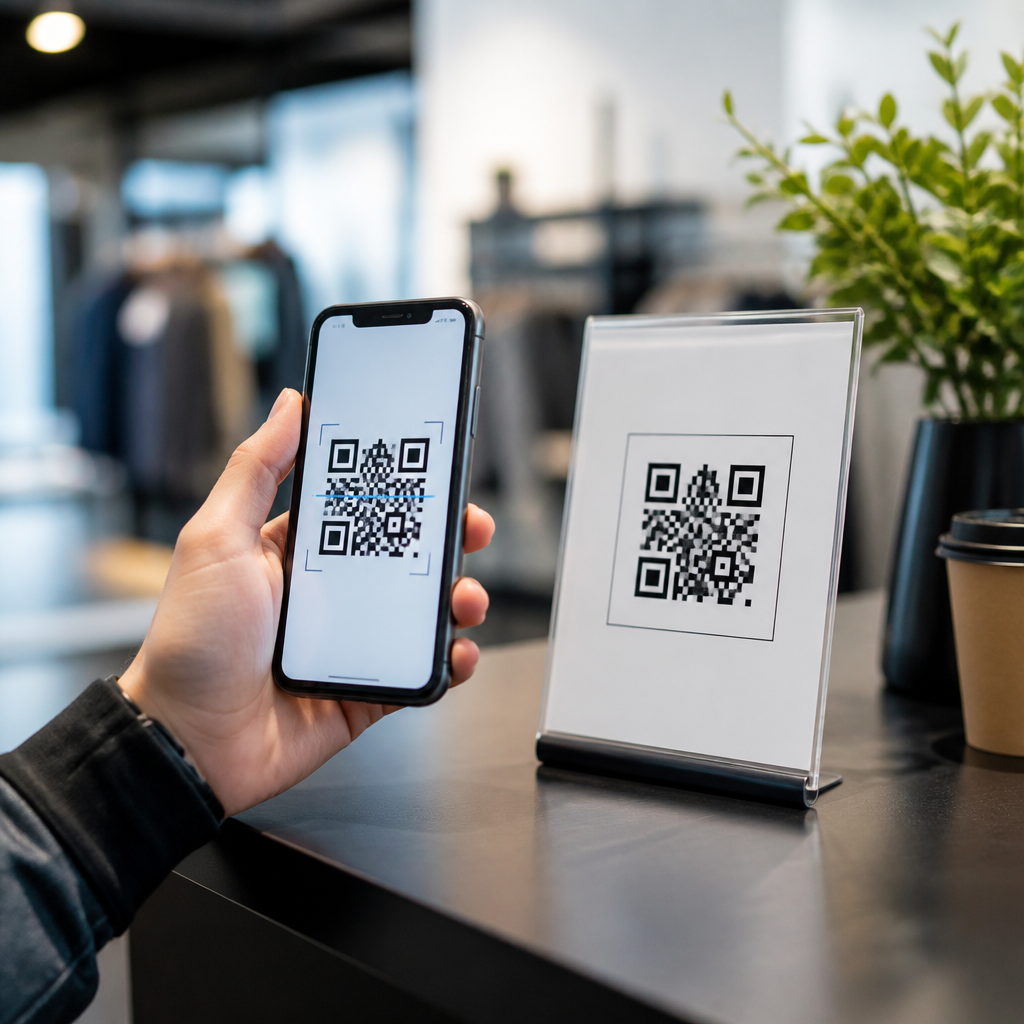
QR code troubleshooting for marketers is no longer a niche technical task; it is a core campaign discipline that affects attribution, customer experience, and conversion rate across print, packaging, retail, events, and out-of-home media. A QR code is a two-dimensional matrix barcode that stores a URL, text string, contact card, payment request, or app intent in a pattern of dark and light modules that a smartphone camera can decode. For marketers, the most common use is linking an offline touchpoint to a digital action, such as a landing page, coupon, product video, form, or app download. When that scan fails, every downstream metric suffers. Impressions become invisible, intent goes unmeasured, and budget tied to production, placement, and media can be wasted.
In practice, most QR code issues fall into a handful of categories: the code does not scan reliably, it scans but opens the wrong destination, the destination loads too slowly, tracking is incomplete, or the experience after the scan does not match user expectations. I have seen all five problems show up in campaigns that looked polished in design review yet broke in market because of low contrast, excessive branding, weak mobile pages, expired redirects, or untagged links. That is why troubleshooting matters. It protects media efficiency, helps creative teams avoid expensive reprints, and gives analysts confidence that scan activity reflects real customer behavior rather than technical noise. This hub article explains the most common QR code failures, how to diagnose them quickly, and how to prevent them before launch.
Why QR codes fail: the five root causes marketers should check first
The fastest way to troubleshoot a QR campaign is to separate the problem into five layers: code quality, physical placement, destination behavior, analytics setup, and audience context. Code quality covers the symbol itself, including error correction level, quiet zone, contrast, module density, and whether a logo or custom shape has made the pattern unreadable. Physical placement includes size, angle, distance, lighting, reflective surfaces, and whether the code appears on curved packaging, glass, fabric, or moving screens. Destination behavior means the URL resolves properly, loads on mobile, and does not trigger browser, app, cookie, or consent issues. Analytics setup covers UTM parameters, redirect chains, event tagging, and platform attribution. Audience context includes whether people have enough time, motivation, and signal strength to scan and complete the next action.
If you only remember one framework, use this sequence: can the phone detect the code, can the code resolve the link, can the page load quickly, can the visit be measured, and can the user complete the intended action. That sequence mirrors how real scan journeys fail. For example, a poster in a subway station may scan perfectly in office testing but fail in market because commuters view it at an angle, under dim light, with only a few seconds to act. A direct mail QR code may scan and open correctly but still underperform because the landing page is not mobile optimized or the form requests too much information. Good troubleshooting starts with the earliest point of failure and moves forward.
How to fix QR codes that will not scan reliably
When a QR code will not scan, start with symbol design. The code needs strong contrast, ideally black on white, because many camera systems still struggle with pastel combinations, gradients, metallic inks, and low-contrast brand palettes. Leave a clear quiet zone around the code, typically four modules wide, so the scanner can distinguish the symbol from surrounding graphics. Size matters too. A common production rule is a scan distance ratio of roughly 10:1, meaning a code viewed from 10 inches away should be about 1 inch wide. For posters viewed at 10 feet, the code usually needs to be much larger. Tiny QR codes on business cards can work; tiny QR codes on shelf wobblers rarely do.
Customization is another frequent cause of failure. Marketers like branded QR codes with center logos, rounded dots, and nonstandard eye shapes, but every styling choice reduces scanning tolerance. If you add a logo, increase error correction carefully and test multiple devices, including older Android phones and lower-end cameras. I have had custom codes pass on iPhone and fail on budget retail handsets because the module edges were too soft after print. Avoid reversing light modules onto dark backgrounds unless you have verified compatibility. Also check print production. Bleed, ink spread, lamination glare, and compression in exported artwork can deform modules enough to hurt scans. Always test from final printed proofs, not only from design files on a monitor.
Placement issues are just as important as design. Put the code where a person can stop, frame it, and scan without awkward body position. On packaging, avoid seams, folds, caps, and strongly curved edges. On windows, account for reflections. On digital signage, avoid motion backgrounds behind the code. If the medium moves, such as buses or escalator panels, assume scan opportunity is short and code size must increase. For live events, test venue lighting and network conditions beforehand. Practical troubleshooting means replicating the real environment instead of blaming the code in isolation.
What to do when the QR code scans but the destination breaks
A successful scan does not guarantee a working campaign. The next layer is URL resolution and landing page performance. First, verify the encoded link directly. A mistyped character, malformed redirect, or expired short link can send users to a 404 page, a parked domain, or an old campaign. Dynamic QR codes are useful because they allow destination changes without reprinting, but they introduce operational risk if someone edits the redirect incorrectly or a subscription lapses. I recommend checking the final destination with curl or a browser redirect extension and making sure the chain is short. Each extra redirect adds latency and another failure point, especially on weak mobile networks.
Then review the mobile page itself. The destination must load fast on cellular data, not just office Wi-Fi. Core performance issues often include oversized hero images, heavy tag containers, unnecessary JavaScript, and intrusive pop-ups. If the QR code points to an app store, make sure device-specific routing is correct. If it points to a PDF, consider that many users on mobile will abandon a large download. Landing pages tied to QR campaigns should be purpose-built: concise copy, prominent next step, thumb-friendly buttons, and forms reduced to the minimum required fields. The best troubleshooting result is often not “the code works now” but “the post-scan path finally converts.”
| Problem | Likely cause | Fastest fix |
|---|---|---|
| Scans inconsistently | Low contrast, small size, poor quiet zone | Increase size, use dark-on-light colors, restore padding |
| Scans to error page | Broken URL or expired redirect | Validate final destination and shorten redirect chain |
| Loads slowly | Heavy mobile page or weak connection | Compress assets and simplify page scripts |
| No analytics data | Missing UTM tags or event setup | Add campaign parameters and verify in analytics tools |
| High scans, low conversions | Poor message match or confusing landing page | Align CTA, offer, and mobile experience |
How to troubleshoot QR code tracking, attribution, and reporting gaps
Many marketers think a QR code problem exists when the real issue is measurement. If scans appear low, first define what metric you are looking at. A platform may report scans, unique scans, clicks after redirect, sessions, engaged sessions, or conversions, and those numbers will never match exactly. A phone camera can detect the code, show a preview, and then the user may choose not to open the link. Some QR generators count the redirect hit; analytics platforms count the landing page session; consent tools may suppress analytics tags altogether. Troubleshooting starts by documenting each step and where the count is collected.
Use distinct UTM parameters for every placement that could produce different behavior: mailer version, store location, package SKU, event booth, or creative variant. Without that granularity, troubleshooting becomes guesswork. Google Analytics 4, Adobe Analytics, and most CRM attribution systems can all support QR measurement, but only if campaign parameters are consistent and downstream events are configured. I strongly recommend testing with browser developer tools, real-time analytics reports, and server logs when available. If the QR platform says 500 scans and GA4 shows 320 sessions, look for redirects blocked by privacy settings, page exits before tags load, or duplicate scans by the same user counted differently across systems. Report definitions matter as much as technical setup.
Attribution tradeoffs are unavoidable. QR codes bridge offline to online, but they do not eliminate dark traffic, shared links, or multi-device behavior. A customer may scan a product package, then later purchase from a desktop retargeting ad. That does not mean the QR code failed. It means your model needs to account for assisted conversions. Marketers troubleshoot better when they combine direct scan metrics with landing page engagement, coupon redemptions, lead quality, and lift by location or period. Looking at scans alone can hide campaign value or exaggerate it.
Common campaign-specific QR problems in print, retail, packaging, and events
Different channels create different failure patterns. In print, the top issues are insufficient size, poor contrast after press output, and codes placed too close to busy editorial layouts. A magazine spread may look elegant with a subtle gray code, but subtle usually means harder to scan. In direct mail, codes often perform well because recipients hold the piece at a workable distance, yet response still drops when the offer on the mailer does not match the landing page headline. In retail, fixture placement can make or break results. Shelf-edge codes compete with movement, limited dwell time, and weak store Wi-Fi. Endcaps and aisle blades typically outperform low shelf placements because they are easier to spot and frame.
Packaging adds another layer: substrate and shape. Matte cartons usually scan better than reflective flexible pouches. Curved bottles distort codes unless the symbol is sized generously and placed on the flattest possible panel. For food and beverage brands, condensation can interfere with readability in refrigerated environments. Event marketers run into a different set of problems. Conference badges, booth graphics, and presentation slides may all include QR codes, but audience context changes everything. A code on a keynote slide is visible only briefly, so the destination must be simple and memorable, and the code must be large enough for the back row. A code at a booth can support richer actions because attendees can stop, but staff should still test connectivity, lead form behavior, and CRM routing before doors open.
Out-of-home campaigns are the hardest to execute well. Billboards, transit shelters, taxi toppers, and stadium ribbons can generate attention, yet many placements are unrealistic for scanning because of speed, distance, or safety. If people cannot scan comfortably while stationary, use a short vanity URL or text keyword as a backup. Troubleshooting in these environments is less about the code itself and more about whether the behavior you want is physically possible.
Preventive QA: the checklist that avoids most QR issues before launch
The best QR code troubleshooting process happens before anything is printed or published. Build a preflight checklist that covers symbol specs, destination validation, analytics tagging, and environmental testing. Confirm the encoded URL, then scan the code with multiple native camera apps and at least two dedicated scanner apps. Test current iPhone and Android devices, plus one older device with a weaker camera. Review the code at intended size in final output format, not an enlarged PDF proof. If the code will appear on packaging, print a mockup and wrap it around the actual container. If it will run in stores, test under store lighting. If it will appear in a trade show booth, test on venue-grade cellular data.
Next, verify the post-scan experience. Check redirect speed, final URL, page load time, accessibility, cookie consent behavior, and form completion. Use PageSpeed Insights or Lighthouse to catch mobile bottlenecks, and inspect analytics in real time to confirm that campaign parameters persist through redirects. Create naming conventions for dynamic QR codes so operations teams know which code belongs to which asset, market, and date range. Set monitoring alerts for destination uptime if the campaign is high value. Finally, document ownership. Someone should be responsible for the code generator account, redirects, analytics, creative file, and reprint decision. Many QR failures become expensive simply because nobody knows who can fix them quickly.
QR code troubleshooting for marketers comes down to disciplined diagnosis and stronger launch habits. Most problems are not mysterious. They usually trace back to code readability, environmental fit, redirect integrity, mobile-page quality, or inconsistent measurement. When you work through those layers in order, you can identify the real blocker instead of reacting to symptoms. That matters because QR campaigns sit at the intersection of creative, production, media, web, and analytics. A small mistake in any one area can make a polished campaign look ineffective. A clear process protects budget and gives teams confidence that scan behavior reflects genuine audience response.
The practical takeaway is simple: treat every QR code like a conversion path, not a decorative asset. Size it for real-world distance, preserve contrast and quiet zone, keep redirects stable, build fast mobile destinations, and tag every campaign with precision. Test on real devices in real environments, then verify reporting before launch and during the campaign. If your team manages multiple offline-to-online programs, use this page as the hub for FAQs and troubleshooting standards across print, retail, packaging, events, and out-of-home. Tighten the process now, and your next QR campaign will be easier to scan, easier to measure, and far more likely to convert.
Frequently Asked Questions
Why is my QR code scanning inconsistently across different phones and environments?
Inconsistent scanning usually comes down to a mix of design, print quality, size, placement, and environmental conditions rather than one single technical flaw. A QR code works by presenting a clear pattern of dark and light modules to a smartphone camera, so anything that reduces contrast or obscures that structure can lower scan success. Common issues include codes printed too small for the expected scanning distance, low contrast color combinations, glossy surfaces that create glare, curved packaging that distorts the code, and overdesigned creative treatments that interfere with readability. Even something as simple as poor lighting at an event booth or a wrinkled poster in transit can affect scan performance.
Device differences also matter. Newer phones generally have better autofocus, exposure control, and built-in QR recognition, while older devices may struggle in low light or with codes that lack a strong margin around the edges. Marketers should also account for context: a code on a shelf talker scanned at arm’s length has different requirements than a code on a billboard scanned from several feet away. A practical troubleshooting approach is to test the code on multiple iPhone and Android models, under both bright and dim conditions, before launch. If scan rates are uneven in the field, review the code’s physical size, quiet zone, contrast, placement angle, and surface finish first, because these are the most frequent causes of scanning friction.
What size should a marketing QR code be to ensure reliable scans?
There is no single universal size because ideal dimensions depend on the expected scanning distance, the amount of encoded data, and the surface where the code appears. As a general rule, the farther away someone will be when scanning, the larger the QR code needs to be. Marketers often use the rough guideline of making the code about 1 inch larger for every 10 inches of scanning distance, but that should be treated as a starting point rather than a guarantee. A code on direct mail or product packaging may scan well at around 1 to 1.5 inches square, while a code on an in-store sign, transit ad, or event banner may need to be significantly larger to support quick scans in real-world conditions.
Encoded complexity also affects size requirements. A short dynamic URL usually creates a simpler code than a long static link stuffed with UTM parameters, and simpler codes tend to scan more easily at smaller sizes. That is one reason marketers often prefer dynamic QR codes: they keep the visual pattern cleaner while preserving flexibility for tracking and destination changes. If a campaign is mission-critical, it is smart to prototype at the intended production size, print on the actual material, and test from realistic user positions. Reliable QR sizing is not just about technical minimums; it is about reducing hesitation, making the scan feel effortless, and protecting conversion rate in fast-moving environments.
Why does my branded or customized QR code stop working after design changes?
Branded QR codes can improve visual appeal and reinforce campaign identity, but aggressive customization is one of the most common reasons a code becomes difficult or impossible to scan. QR codes include built-in error correction, which allows for some design flexibility, such as adding a logo in the center or adjusting colors. However, that flexibility has limits. If you alter the finder patterns in the corners, reduce contrast too much, round too many modules, add a large logo without enough error correction, or place the code over a busy background, you may damage the structure that scanning software depends on. A design that looks polished to a creative team can still fail technically in everyday use.
The safest way to customize a QR code is to preserve the core geometry, maintain a clear quiet zone around the code, and use high-contrast foreground and background colors. Dark code on a light background remains the most dependable choice. If brand guidelines call for more stylization, test extensively across devices, lighting conditions, and print outputs before rollout. It is also important to evaluate the code after every production step, not just on screen. Colors may shift in print, finishes may introduce glare, and resizing may blur edges. For marketers, the key principle is simple: branding should enhance recognition without compromising function. If there is a tradeoff between visual novelty and frictionless scanning, performance should win every time.
How can I troubleshoot QR code attribution and tracking problems in my campaigns?
Attribution issues usually happen when the QR code destination, analytics setup, and campaign naming conventions are not aligned before launch. Many marketers assume that if a QR code scans, tracking will take care of itself, but offline-to-online measurement requires careful setup. If you are using a static QR code that points directly to a long URL with embedded parameters, errors can creep in through mistyped UTMs, redirects that strip tracking parameters, or inconsistent naming across campaigns. In other cases, the landing page loads correctly but analytics platforms fail to attribute sessions properly because of cookie consent flows, app opens, browser privacy settings, or cross-domain handoff problems.
A stronger troubleshooting process starts with dynamic QR codes and a documented measurement framework. Use a short, trackable redirect under your control, apply standardized UTM structures, and validate that the final destination preserves parameters after every redirect. Then test the full user journey on both iOS and Android, using multiple browsers and scanning methods. Confirm not only that the page opens, but that sessions, source/medium, campaign names, events, and conversions appear correctly in analytics and CRM systems. If reported scans are high but visits are low, inspect redirect speed, mobile page performance, and bot filtering. If visits are present but conversions are missing, review event tagging, consent implementation, and landing page behavior. For marketers, QR code troubleshooting is ultimately about protecting data quality as much as scanability, because poor attribution can make a successful offline campaign look ineffective.
What should I check if a QR code suddenly stops working after a campaign has already launched?
If a QR code fails after launch, start by identifying whether the issue is with the code itself, the destination URL, the redirect service, or the mobile experience after the scan. In many cases, the printed code is still perfectly readable, but the destination has changed or broken. Common post-launch failures include expired landing pages, removed redirects, DNS issues, server outages, app deep links that no longer resolve correctly, and website changes that create mobile compatibility problems. This is especially common when different teams manage creative, web operations, and analytics separately. A code printed on packaging or out-of-home media may remain in market for weeks or months, so any change to the underlying destination can create a customer experience failure long after the campaign goes live.
The fastest troubleshooting workflow is to scan the code yourself on several devices, confirm whether it resolves consistently, and trace the full redirect chain. Check HTTP status codes, page load speed, SSL validity, mobile rendering, and whether any app interstitial or pop-up blocks the user from completing the intended action. If you used a dynamic QR code platform, verify that the destination was not edited incorrectly and that account settings, limits, or subscription changes are not affecting access. For long-running campaigns, set up monitoring on the destination URL and maintain a redirect governance process so campaign links are never changed casually. Marketers should treat live QR codes like active media assets, not static artwork. Once a code is in the field, especially on print, packaging, retail displays, or signage, even a small backend error can interrupt conversions at scale.