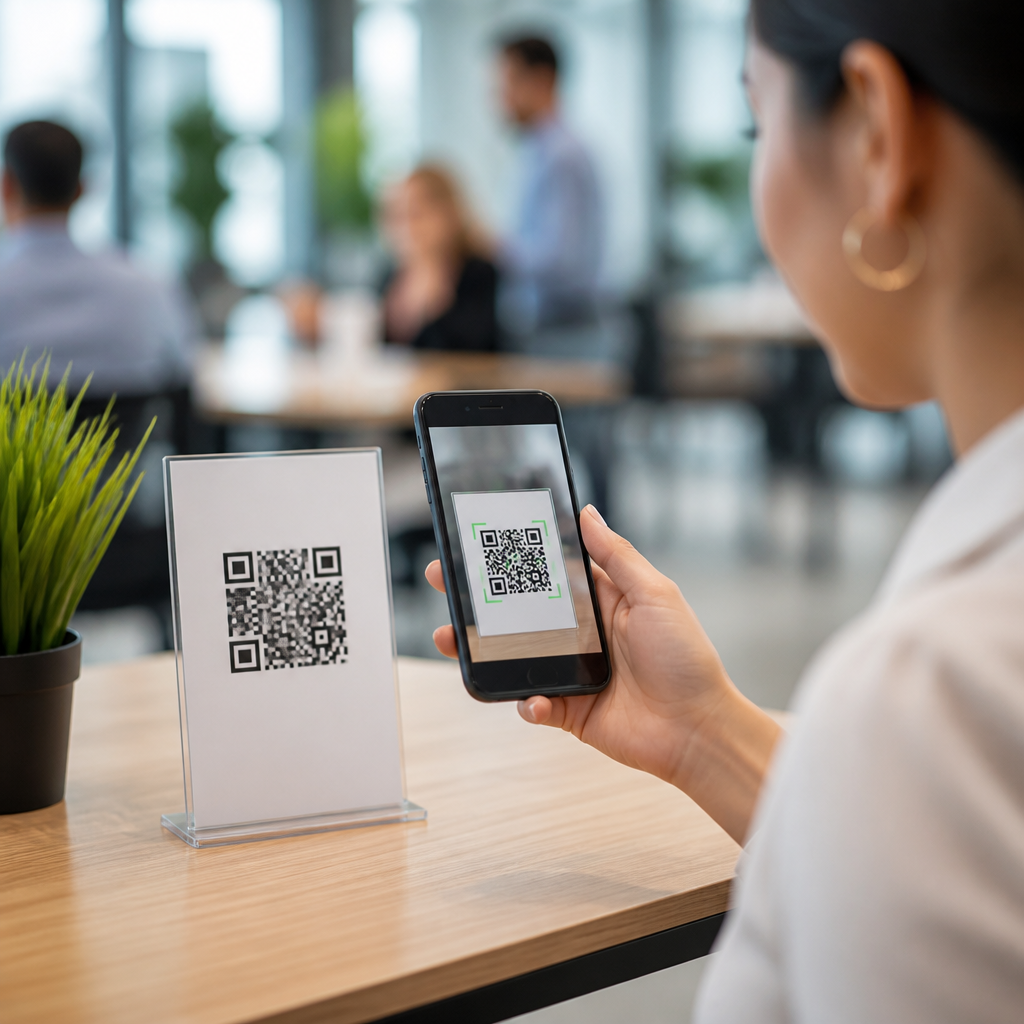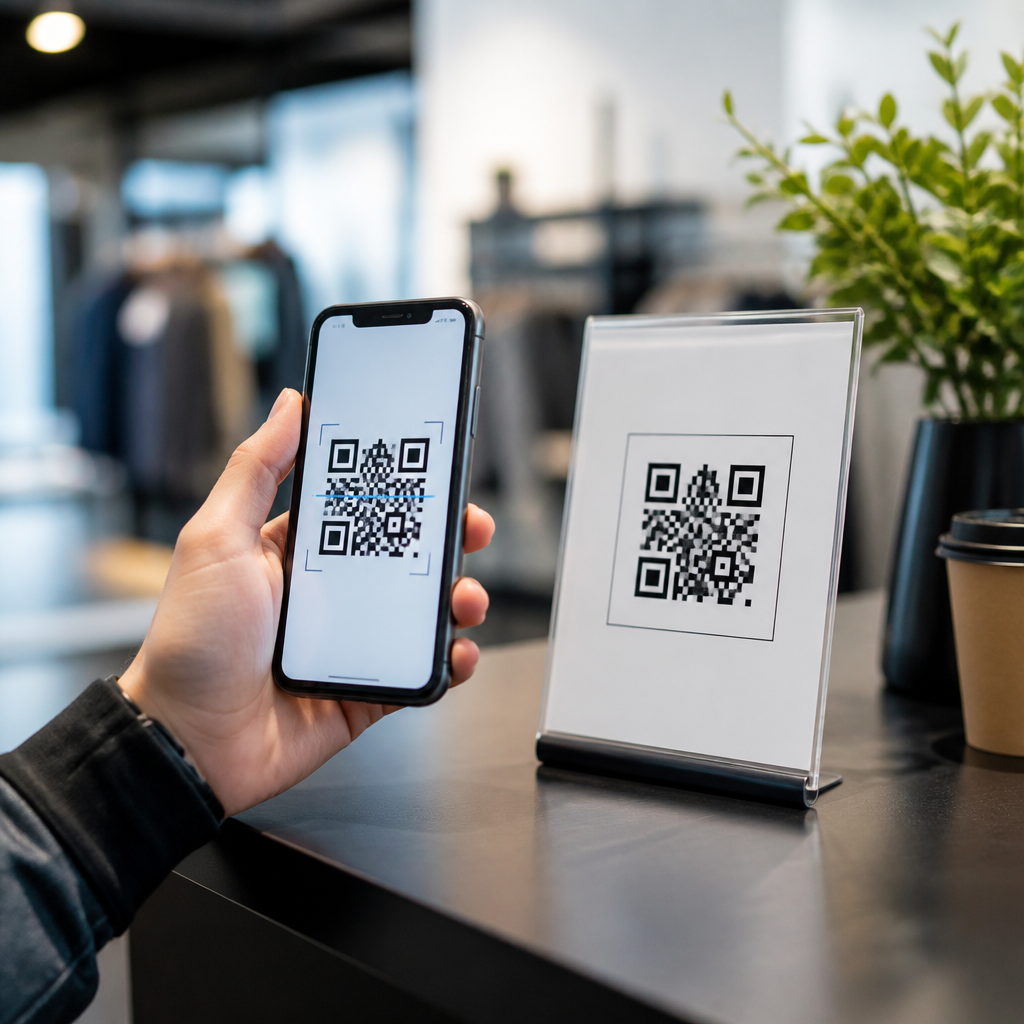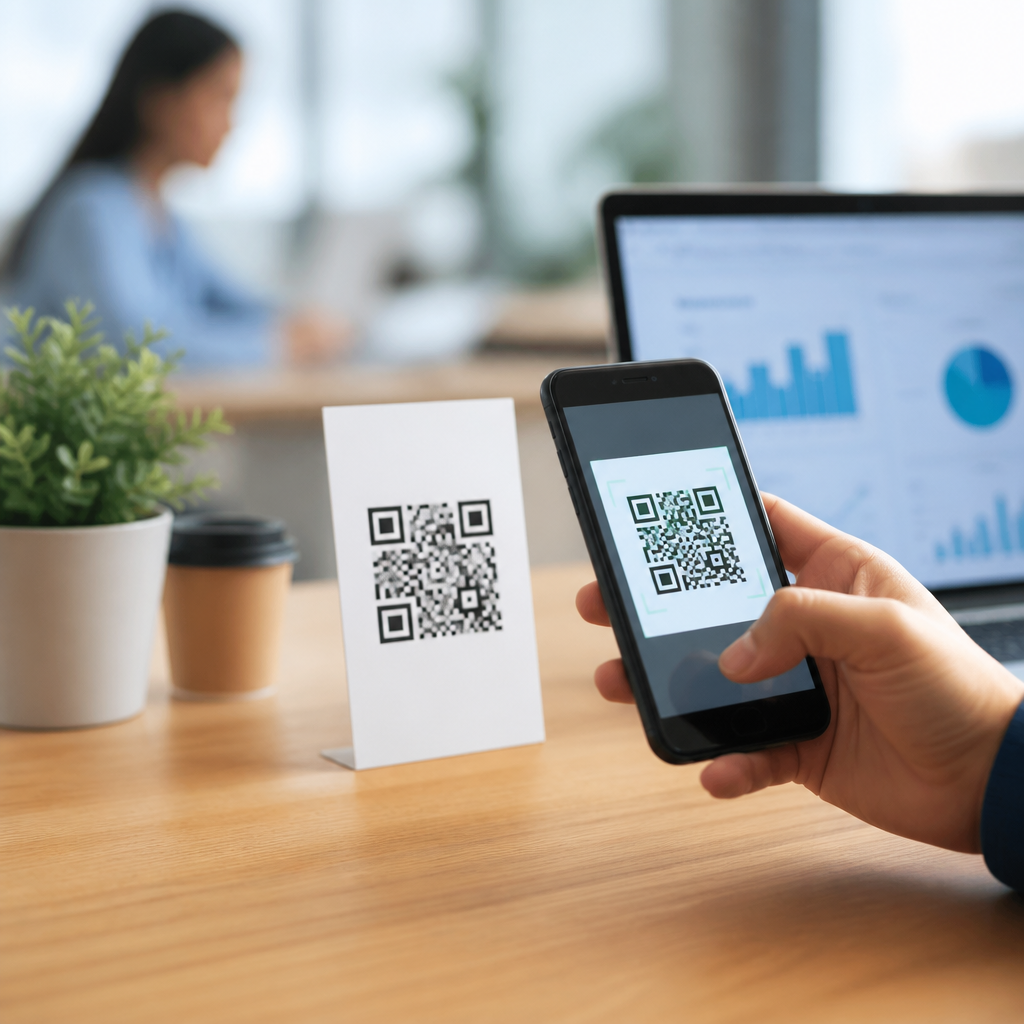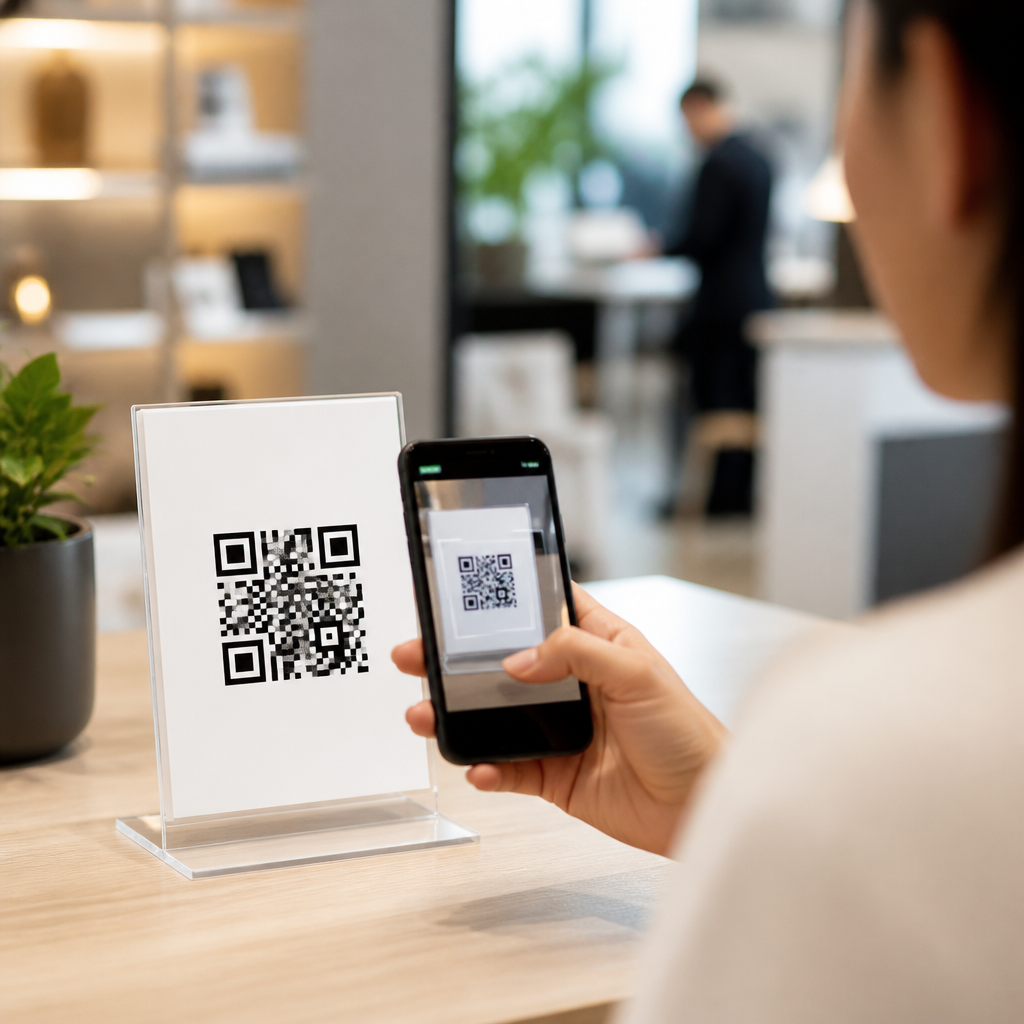
QR code marketing gives businesses a simple bridge between offline attention and online action. A quick scan can open a menu, claim a coupon, start a WhatsApp chat, download an app, register for an event, or track campaign response with far more precision than a printed URL. For beginners, that combination of convenience and measurement is the core appeal. For experienced marketers, QR codes are valuable because they shorten the path from interest to conversion while generating data that can improve future campaigns.
A QR code, or Quick Response code, is a two-dimensional barcode that stores information such as a URL, contact card, payment link, SMS prompt, or Wi-Fi credentials. Modern smartphone cameras can read QR codes natively, which removed a major barrier that limited adoption in earlier years. Once Apple and Android made scanning frictionless, QR codes became practical for retail shelves, restaurant tables, product packaging, direct mail, out-of-home advertising, trade show booths, and customer support materials.
I have used QR codes in retail launches, event campaigns, packaging tests, and local service promotions, and the pattern is consistent: results improve when the destination is relevant, the placement is intentional, and the scan experience is measured carefully. A code by itself does not create demand. It works when the offer, context, and landing page align. That is why a beginner’s guide must cover more than code generation. It needs to explain strategy, creative execution, analytics, compliance, and how this topic connects to deeper tutorials.
This hub article is built to do exactly that. It introduces the core mechanics of QR code marketing, explains common campaign types, outlines setup and tracking, and highlights the practical mistakes that waste scans. It also serves as a central starting point for broader beginner to advanced guides under QR Code Tutorials, Guides & Resources. If you want to know which QR code type to use, where to place it, how to design it without hurting scanability, what metrics matter, and when dynamic QR codes are worth paying for, this guide gives clear answers.
What QR code marketing is and when it works best
QR code marketing is the use of scannable codes to move a person from a physical or static digital touchpoint to a measurable digital destination. That destination can be a webpage, form, video, coupon, map listing, product manual, review page, app store listing, loyalty signup, or payment screen. The best use cases share one trait: they remove friction at the exact moment intent exists. A diner wants the menu now. A shopper wants product details now. A passerby wants event tickets now. The code succeeds because it compresses several steps into one scan.
Beginners often ask whether QR codes still matter when people can search manually. The answer is yes, because convenience changes behavior. Typing a long URL from a poster is slow and error-prone. Searching later introduces drop-off. A QR code captures attention in the moment and turns it into an action. This is especially effective in high-intent environments such as packaging, receipts, in-store displays, conference signage, and direct mail. It is less effective when the code is placed where scanning is physically awkward, poorly lit, or disconnected from user motivation.
Static and dynamic QR codes are the first strategic choice. A static QR code permanently encodes the final destination, which makes it simple and often free, but impossible to update after printing. A dynamic QR code points to a short redirect URL controlled by a platform, allowing you to change the destination later, track scans, use UTM parameters, and sometimes segment by location, device, or time. For most business campaigns, dynamic QR codes are the better choice because printed assets often outlive the first landing page version.
Another beginner question is whether every campaign needs a custom landing page. In practice, no, but every campaign needs a destination that matches intent. If the code appears on product packaging, the scan should lead to setup instructions, FAQs, warranty registration, or cross-sell products, not a generic homepage. If the code appears on a flyer promoting a discount, the landing page should display that exact offer immediately. Message match is not optional. It is one of the strongest predictors of conversion after the scan.
Common campaign types beginners should start with
The easiest entry point is a website or landing page QR code. This is useful for posters, brochures, in-store displays, table tents, business cards, and window decals. A local gym, for example, can place a code on its storefront with the prompt “View class schedule and claim a free pass.” That is concrete, relevant, and measurable. A real estate agent can add a code to yard signs that opens a mobile property page with photos, floor plans, and a booking form for viewings.
Coupon and offer campaigns are another reliable starting point. Restaurants use QR codes on takeaway bags to drive repeat orders with a timed discount. Retailers place codes near shelves to unlock bundle pricing or compare product variants. Because the offer is specific, scan intent is stronger and attribution is clearer. The code should lead directly to the redeemable asset, whether that is a coupon code, wallet pass, or claim form. Avoid forcing extra navigation after the scan.
Contactless engagement campaigns are popular for service businesses. A clinic can use a code for appointment booking, pre-visit forms, or directions in Google Maps. A salon can use one for rebooking and aftercare instructions. A home services company can place codes on vans, invoices, and leave-behind cards to start a call, request a quote, or save contact details as a vCard. These use cases work because the next action is immediate and useful rather than promotional.
Review generation is effective when handled ethically. Hotels, restaurants, medical practices, and repair shops often place QR codes on receipts or follow-up cards with prompts such as “Share your feedback” or “Review your visit.” The best practice is to send customers to a neutral feedback page first or directly to an approved review platform, while complying with each platform’s policies. Never mislead users or selectively solicit only positive reviews if the platform prohibits that behavior.
Education and support are underused categories. Manufacturers can print QR codes on packaging that open assembly videos, troubleshooting guides, ingredient sourcing pages, safety instructions, or registration forms. This reduces support burden while improving customer experience. In software-adjacent products, onboarding QR codes can connect physical inserts to mobile setup tutorials. I have seen return rates drop when brands placed a “Start here” code inside the box that answered the first three customer questions before frustration built.
How to choose the right QR code type, destination, and placement
Choosing the right code starts with the user’s context. Ask what the person is doing, what they want next, and what device they are using. Someone scanning from a billboard has limited time and attention, so the destination must load fast and present one primary action. Someone scanning from a product label may want detailed information and can tolerate more depth. Someone scanning from a receipt might respond well to a loyalty invitation because the purchase is already complete.
Placement affects scan rate more than many beginners realize. The code must be easy to notice, physically reachable, and large enough to scan at the expected distance. On packaging, put it where hands naturally rotate the product. On posters, avoid low corners that become obstructed. In restaurants, table tents and menu inserts outperform wall posters because they are closer and easier to frame with a phone camera. For outdoor placements, account for glare, weather, and movement. A code on a passing bus is far less practical than one at a bus shelter.
Use plain-language calls to action. “Scan to learn more” is weaker than “Scan for setup video,” “Scan for 15% off today,” or “Scan to book in 30 seconds.” Specificity tells users what they gain and whether the scan is worth their effort. I recommend treating the CTA as seriously as ad copy. It should explain the benefit, set expectations, and reduce uncertainty. If registration is required, say so. If the code opens a PDF, say so. Surprises lower trust.
Design matters, but scanability matters more. Branded colors, logos, and frame shapes can increase recognition, yet every visual modification introduces risk. Maintain strong contrast, protect the quiet zone around the code, test across multiple phones, and avoid tiny module sizes. ISO/IEC 18004 defines the technical standard behind QR code symbology, and while marketers do not need to memorize it, they should respect its implications. Decorative codes fail most often because contrast is weak, the logo covers too much area, or the code is printed too small for the scanning distance.
| Campaign scenario | Best QR type | Ideal destination | Placement tip |
|---|---|---|---|
| Retail shelf display | Dynamic URL | Product comparison page | Place beside price tag at hand height |
| Restaurant takeaway bag | Dynamic offer code | Repeat-order coupon page | Print near handle where customers look first |
| Event poster | Dynamic registration code | Fast mobile signup form | Use large size and high contrast at eye level |
| Product packaging | Dynamic support code | Setup video and FAQ hub | Print on side panel and inside insert |
| Business card | Static vCard or dynamic URL | Saved contact or profile page | Keep code clear of edge and laminate glare |
Tracking, analytics, and measurement that actually matter
Good QR code marketing is measurable. The minimum setup for serious tracking is a dynamic QR platform plus analytics on the destination page. Most teams add UTM parameters so scans appear clearly in Google Analytics 4, Adobe Analytics, or another reporting system. This helps separate traffic by channel, asset, geography, and campaign objective. If you use a form tool such as HubSpot, Typeform, or Gravity Forms, pass source data into hidden fields so lead attribution survives beyond the first session.
The most useful metrics depend on the goal. For awareness, track unique scans, scan rate by placement, and landing page engagement. For lead generation, track form starts, completions, qualified lead rate, and cost per lead. For ecommerce, track add-to-cart rate, conversion rate, average order value, and assisted conversions. For retention campaigns, track repeat purchase rate or redeemed offers. Raw scan volume is not enough. A code with fewer scans but higher purchase intent may outperform a widely scanned but poorly matched placement.
Testing should be structured. Compare one variable at a time: CTA wording, offer type, landing page layout, code placement, or incentive strength. For example, a museum can test “Scan for audio guide” against “Scan for curator highlights” on exhibit labels and compare dwell time or app launches. A retailer can test a code on shelf wobblers versus endcap signage and measure product detail views. In my experience, copy changes often deliver larger gains than visual redesigns because they sharpen the user’s expectation before the scan.
Attribution has limits, and beginners should understand them early. One person may scan and convert later on a laptop. Another may scan multiple times from different places. Some privacy settings reduce data granularity, and some QR platforms overstate location precision because they infer from IP data. Treat QR analytics as directional and useful, not perfect. The practical standard is to combine platform scan data, web analytics, CRM records, and redemption outcomes to form a realistic picture of performance.
Beginner mistakes, advanced tactics, and how this hub should guide your next steps
The most common beginner mistakes are easy to avoid. Sending every scan to the homepage wastes intent. Printing static codes for campaigns that may change creates expensive reprint problems. Using tiny codes, glossy finishes, poor contrast, or cluttered backgrounds hurts scanning. Forgetting a CTA gives users no reason to act. Neglecting mobile page speed increases bounce rates. And skipping testing before launch leads to avoidable failures, especially across older Android devices, dark mode interfaces, and low-light settings.
Compliance and trust also matter. If a QR code collects personal data, the landing page must explain what is being collected and why. Consent banners, privacy notices, and email opt-in language should meet your jurisdiction’s requirements, whether that means GDPR, CCPA, or industry-specific rules. Secure destinations with HTTPS. Be careful with redirects, because users have become more aware of QR phishing. The best way to counter hesitation is brand recognition, a clear CTA, and a destination domain that looks legitimate and familiar.
Advanced use begins when you segment experience by audience and lifecycle stage. Dynamic QR codes can route users to different pages based on store location, time window, language, or campaign source. A consumer packaged goods brand might print one code across all boxes, then redirect scans by country to localized instructions and promotions. An event organizer can use distinct codes for speakers, attendees, and sponsors to track which touchpoints drive registrations. CRM integration, marketing automation, and first-party data strategy make QR campaigns more valuable over time.
As a hub page, this guide should point your next learning path. If you are new, start with tutorials on static versus dynamic QR codes, QR code size and print best practices, landing page design for scans, and UTM tracking setup. Next, move to guides on QR codes for restaurants, retail, real estate, events, packaging, and lead generation. After that, explore advanced resources covering analytics dashboards, A/B testing frameworks, security considerations, localization, bulk code management, and API-based QR code creation for larger campaigns.
The main lesson is simple: QR code marketing works when convenience, intent, and measurement come together. Choose the right destination, make the benefit obvious, place the code where scanning is natural, and track outcomes beyond the scan itself. Start with one practical campaign, test it carefully, and build from the results. If you are creating a stronger resource center under QR Code Tutorials, Guides & Resources, use this page as the foundation, then expand into the specific beginner and advanced guides your audience needs next.
Frequently Asked Questions
What is QR code marketing, and why is it useful for beginners?
QR code marketing is the practice of using scannable codes to move people from a physical touchpoint into a digital experience in seconds. Instead of asking someone to type a long web address, search for your business, or remember a promo code later, a QR code lets them scan and instantly reach a landing page, restaurant menu, product page, event registration form, app download, WhatsApp chat, coupon, or review request. For beginners, that simplicity is one of the biggest advantages. It reduces friction, shortens the path between interest and action, and makes it much easier to capture attention while it is still fresh.
Another reason QR code marketing is so useful is that it blends convenience with measurable performance. Traditional print materials like flyers, posters, packaging, direct mail, and in-store signs often struggle with attribution because it is difficult to know which piece actually drove a response. A QR code changes that by creating a trackable bridge between offline marketing and online behavior. Businesses can often measure scans, locations, timing, device types, and post-scan actions depending on the platform they use. That means even a beginner can start learning which campaigns are creating real engagement and which placements need improvement.
Just as importantly, QR codes are versatile and cost-effective. You do not need a large budget or a complex tech stack to get started. A local business can use one to share a digital menu, a service provider can generate leads from printed materials, and a retailer can connect shelf signage to product demos or special offers. In practical terms, QR code marketing helps beginners do two things well: make it easier for people to respond and make it easier for the business to understand what happened after that response.
How do I create a QR code marketing campaign that actually works?
A successful QR code marketing campaign starts with a clear goal. Before generating a code, decide what action you want the user to take after scanning. That action might be claiming a discount, booking an appointment, joining a loyalty program, starting a chat, downloading an app, watching a product demo, or registering for an event. When the objective is specific, it becomes much easier to choose the right destination page, write a stronger call to action, and measure whether the campaign performed well.
Next, focus on the landing experience. A QR code is only the entry point, not the campaign itself. If the page loads slowly, looks confusing on a phone, or asks the user to complete too many steps, scan rates may be good but conversions will still be weak. The destination should be mobile-friendly, fast, visually clear, and tightly matched to the promise made on the printed material. If the QR code says “Get 15% Off Today,” the user should land directly on the coupon or redemption page, not on a generic homepage where they have to search for the offer.
Placement and context also matter a great deal. Put QR codes where people naturally have time and motivation to scan them, such as product packaging, checkout counters, menus, event signage, brochures, business cards, window displays, trade show booths, or direct mail pieces. Include a simple instruction or benefit statement near the code, such as “Scan to book now,” “Scan for the full menu,” or “Scan to get your free guide.” People are much more likely to scan when the value is obvious. Finally, test the code before publishing, use tracking where possible, and review the results so you can improve future campaigns based on real behavior rather than guesswork.
What are the best ways to use QR codes in marketing?
The best uses for QR codes are the ones that remove unnecessary steps and create a fast path to a high-value action. One of the most common and effective examples is linking printed materials to mobile-friendly landing pages. A flyer can lead to a booking form, a poster can lead to an event registration page, and product packaging can lead to instructions, warranty registration, or upsell offers. These use cases work well because they meet people in an offline setting and give them a direct route to the next step without requiring extra effort.
QR codes are also especially strong for promotions and customer engagement. Restaurants use them for digital menus, retailers use them for coupons and loyalty sign-ups, and service businesses use them to start phone calls, text messages, or WhatsApp conversations. They can also support content marketing by linking to videos, tutorials, downloadable guides, or customer testimonials. In these cases, the QR code does more than generate traffic; it helps move the prospect closer to trust and conversion by delivering useful, relevant information at the right moment.
For more advanced applications, businesses can use QR codes to gather better campaign data and personalize experiences. Different codes can be assigned to different locations, print ads, products, or audience segments to see which source drives the most scans and conversions. At events, a QR code can simplify registration, collect leads, distribute schedules, and follow up with attendees afterward. In-store, it can connect shelf displays to product comparisons or limited-time offers. The strongest strategy is not to use QR codes everywhere without purpose, but to deploy them where they genuinely improve convenience, increase response rates, and reveal measurable marketing insights.
What mistakes should beginners avoid with QR code marketing?
One of the biggest mistakes beginners make is sending users to the wrong destination. A QR code should take people directly to the most relevant page for the specific campaign, not to a generic homepage or a desktop-only page that is difficult to use on a phone. If someone scans a code to get a coupon, view a menu, or register for an event, they should arrive at that exact experience immediately. Any mismatch between expectation and destination creates friction and lowers trust, which can reduce conversions even if scan volume is high.
Another common mistake is failing to explain why someone should scan. A QR code by itself is not always enough motivation. People need a reason, especially in busy environments where they are making quick decisions. A short call to action can make a major difference: “Scan to save 20%,” “Scan to see pricing,” “Scan to watch the demo,” or “Scan to chat with our team.” Without that context, many users may ignore the code because the benefit is unclear. Design also matters. If the code is too small, placed on a reflective surface, buried in clutter, or printed with poor contrast, scan rates will suffer.
Beginners should also avoid launching without testing and tracking. Always scan the code on multiple devices before publishing, check that the page loads correctly, and confirm that any forms, coupons, or chat links work as expected. If possible, use trackable links or a QR code platform that provides analytics so you can measure performance over time. Another avoidable error is overcomplicating the user journey by asking for too much information too soon. The best QR campaigns respect user momentum: scan, load, understand, act. Keep that sequence simple, and your results are far more likely to improve.
How can I measure the success of a QR code marketing campaign?
Measuring a QR code campaign starts with defining success in business terms, not just scan counts. Scans are useful because they show initial engagement, but they do not tell the full story. A campaign should ideally be judged by what happens after the scan, such as purchases, bookings, sign-ups, downloads, coupon redemptions, form submissions, or conversations started. In other words, a QR code is performing well when it drives meaningful action, not simply when people point their phones at it.
To measure accurately, connect the QR code to a trackable destination. Many businesses use unique URLs, campaign parameters, landing pages, or dynamic QR code tools that provide reporting on scan activity. Depending on the setup, you may be able to see how many scans occurred, when they happened, where they came from, and what devices were used. If you pair that information with website analytics or CRM data, you can understand which printed materials, store locations, products, or promotions generated the strongest downstream results. This is one of the most valuable aspects of QR code marketing: it makes offline campaigns much easier to evaluate with digital-style precision.
The most practical approach is to compare both engagement and conversion metrics over time. Look at scan rate, landing page bounce rate, form completion rate, sales generated, and cost per conversion if applicable. You can also test variations, such as different calls to action, placements, incentives, or landing pages, to improve performance. For example, a poster that says “Scan to book your free consultation” may outperform one that simply says “Learn more.” By reviewing the full journey from scan to outcome, businesses can refine their campaigns, invest more confidently in what works, and turn QR codes into a reliable part of a broader marketing strategy.