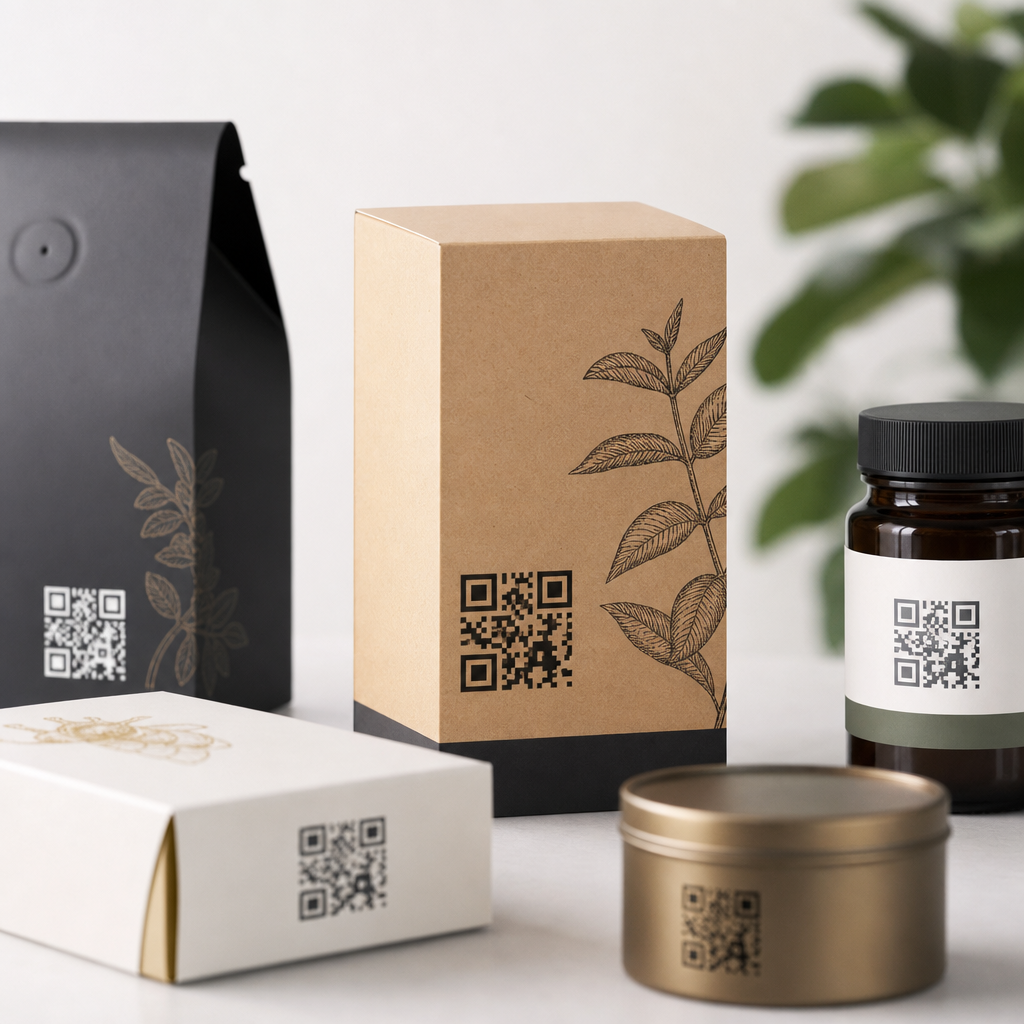
QR code ideas for product packaging have moved far beyond linking to a homepage. On modern shelves, a small scannable square can educate buyers, prove authenticity, unlock loyalty rewards, capture first-party data, and extend a package into a measurable digital touchpoint. For brands building creative marketing ideas using QR codes, packaging is the highest-leverage starting point because it reaches customers at the exact moment of consideration, purchase, unboxing, and repeat use.
A QR code, or Quick Response code, is a two-dimensional barcode that stores a URL or other machine-readable information. When scanned with a smartphone camera, it opens digital content instantly. Product packaging includes primary packaging such as bottles, boxes, pouches, and labels, plus secondary packaging like cartons, inserts, sleeves, and shipping boxes. In practice, the best packaging QR campaigns connect the physical product to a digital action that is genuinely useful to the buyer, not just novel to the marketer.
I have worked on packaging QR deployments for food, cosmetics, supplements, and consumer electronics, and the pattern is consistent: codes perform when the destination is specific, fast, mobile-friendly, and clearly promised on-pack. “Scan for recipes” outperforms a generic “learn more.” “Scan to verify authenticity” beats sending people to a broad brand page. The code itself is only the trigger. The value proposition, placement, landing experience, and measurement plan determine whether scans become revenue, retention, or wasted print space.
This matters now for three reasons. First, smartphone adoption and native camera scanning have removed friction. Second, privacy changes have made first-party engagement more valuable than rented audiences. Third, retailers and regulators increasingly expect better traceability, ingredient transparency, and post-purchase support. A smart packaging strategy can satisfy all three. Used well, QR codes on packaging help brands answer customer questions immediately, reduce support load, improve trust, and create repeatable marketing journeys from a channel the brand already owns.
How to choose the right QR code use case for packaging
The strongest packaging QR code ideas start with customer intent, not internal enthusiasm. Ask what the buyer needs at each stage. Before purchase, they may want ingredients, sourcing details, social proof, product comparisons, or size guidance. After purchase, they may need setup instructions, care guidance, recipes, refill information, warranty registration, or loyalty rewards. During repeat use, they may respond to replenishment offers, referral prompts, or content that deepens product adoption. Mapping those moments produces more effective campaign concepts than brainstorming disconnected stunts.
A practical way to prioritize is by business objective. If the goal is conversion, use codes that remove hesitation, such as how-to demos, reviews, and comparison pages. If the goal is retention, direct scans to loyalty enrollment, replenishment reminders, or usage tips. If the goal is trust, focus on provenance, testing certificates, sustainability information, or anti-counterfeit verification. If the goal is data capture, offer a tangible exchange: exclusive content, warranty activation, contest entry, or product registration. Packaging should carry one primary call to action per surface, because crowded labels reduce scan rates.
Dynamic QR codes are usually the right choice for packaging because the destination can be changed after printing. That matters when a campaign ends, a page moves, compliance language changes, or inventory remains in market for months. Dynamic codes also support scan analytics such as total scans, device type, location at a regional level, and time patterns. Static codes fit only when the destination will never change and no measurement is needed. For most brands, that is a narrow use case.
High-performing QR code ideas for product packaging
Several packaging QR code ideas consistently perform across categories because they answer common buyer questions. Instructional content is one of the best. A cosmetics brand can place a code on a serum carton linking to a 45-second application video and ingredient explanation. A cookware company can link to seasoning and cleaning instructions. Electronics brands can reduce returns by sending buyers to setup steps and troubleshooting flows. If a code prevents confusion in the first ten minutes of ownership, it creates value immediately.
Recipe and usage inspiration is especially effective for food, beverage, and household products. A pasta sauce jar can link to three dinner recipes filtered by prep time. A spice blend can open a landing page with pairings for chicken, vegetables, and seafood. A specialty cleaner can show before-and-after examples, surface compatibility, and safety notes. This type of content increases product consumption frequency, which is one of the simplest drivers of repeat purchase.
Loyalty and retention mechanics also belong on packaging. A coffee brand can invite buyers to scan inside the box flap to collect points after purchase. A skincare line can use batch-specific codes to enroll users in a regimen tracker that sends reorder reminders at the right interval. Beverage brands often pair QR scans with instant-win promotions, but the strongest campaigns go beyond sweepstakes and create persistent value, such as personalized offers, local stockist finders, or subscription savings.
Transparency and authenticity are increasingly important categories. Premium olive oil, supplements, wine, baby products, and luxury goods can all use packaging QR codes to verify origin, display lot or batch information, and explain testing standards. Buyers scanning a supplement bottle want to know whether third-party testing exists, what the active ingredients do, and how to use the product safely. A direct answer on a verified page builds trust more effectively than a dense label panel.
| Use case | Best for | Primary customer benefit | Typical success metric |
|---|---|---|---|
| How-to video | Electronics, beauty, home goods | Faster setup and better first use | Lower returns, higher engagement time |
| Recipes or inspiration | Food, beverage, household products | More ways to use the product | Repeat purchase rate |
| Authenticity check | Luxury, supplements, alcohol | Trust and counterfeit prevention | Verification scans per unit |
| Loyalty enrollment | CPG, DTC brands | Rewards and personalized offers | Email or SMS opt-in rate |
| Warranty registration | Appliances, electronics, tools | Easy post-purchase support | Registration completion rate |
| Sustainability details | Apparel, beauty, packaged goods | Clear disposal and sourcing guidance | Scan-to-read rate |
Creative marketing ideas using QR codes that extend beyond the label
The most creative marketing ideas using QR codes treat packaging as media, not just compliance real estate. One approach is serialized storytelling. Instead of sending every buyer to the same destination, a brand can rotate content by season, flavor, batch, or region. A tea company might print a dynamic code on each blend that opens a page with origin notes, brewing guidance, and a founder video specific to that lot. A cereal brand can update destinations monthly to feature breakfast ideas, kid-friendly challenges, or retailer-specific promotions without changing the printed package.
Another strong model is the unboxing journey. Outer packaging can carry a code for shipping updates or welcome messaging, while inner packaging can reveal onboarding content, referral incentives, or community access. This layered approach works well for direct-to-consumer products because attention is highest immediately after opening. I have seen brands increase post-purchase email capture by moving the code from the exterior mailer to the insert card and changing the promise from “visit our website” to “scan to activate your starter guide and reward.”
Packaging can also support user-generated content. A snack brand can ask buyers to scan and vote on the next flavor, upload serving ideas, or join a limited challenge. A beauty brand can direct users to a gallery of real application results and then invite them to submit their own. The crucial detail is moderation and incentive design. If participation requires too many steps, scan traffic drops. If incentives are too broad, submissions become low quality. The best programs clearly explain what the customer gets and how long the process takes.
Localized experiences are underused. A national beverage brand can place one dynamic QR code on all packaging and detect geography to surface nearby events, retail partners, weather-relevant recipes, or region-specific compliance details. This is particularly useful when products are sold through many retailers and a single universal landing page would feel generic. Localization improves relevance without fragmenting packaging inventories.
Design, placement, and technical rules that improve scan rates
Packaging QR performance often fails because of execution basics. Size matters. On most consumer packaging, a code should be at least 0.8 by 0.8 inches, and often larger on curved surfaces or when scanning distance increases. Quiet zone matters too: the blank margin around the code should be preserved so cameras can distinguish it from surrounding graphics. Contrast should be high, ideally dark code on light background. In testing, decorative inversions and low-contrast brand colors routinely reduce scan success.
Placement should align with the moment of use. If the code is meant to influence purchase, it belongs on the front or a visible side panel. If it is for post-purchase setup, the interior flap, back panel, or quick-start insert may perform better because it reaches owners instead of browsers. Curved bottles, metallic inks, glossy finishes, and seams create avoidable problems. Always test the printed code on final materials under store lighting, warehouse lighting, and home conditions. A code that scans on a designer’s screen mockup is not validated.
Call-to-action copy is another decisive factor. Never print a naked QR code. Tell people exactly what happens next: “Scan for a 60-second setup guide,” “Scan to check batch purity results,” or “Scan to claim your refill discount.” Specificity increases intent and filters accidental scans. For regulated categories, make sure the landing page aligns with claims allowed on-pack. If a supplement label cannot imply treatment outcomes, the QR destination should not introduce unsupported medical claims either.
Mobile landing pages must load quickly and match the promise on the package. Compress media, avoid intrusive pop-ups, and remove unnecessary navigation. If the packaging promises authenticity verification, the first screen should confirm the result immediately, not force the user through a menu. If the goal is registration, keep forms short and support autofill. Better packaging campaigns usually depend less on cleverness than on friction reduction.
Measurement, compliance, and operational planning
Good packaging QR campaigns are measured like any serious marketing asset. At minimum, track scans, unique visitors, scan-to-session quality, bounce rate, completion rate for the target action, and downstream conversion such as signup, registration, or reorder. Use UTM parameters and analytics tools such as Google Analytics 4, Adobe Analytics, or your commerce platform’s event tracking. When codes appear across SKUs, regions, or retailers, use unique dynamic destinations or parameter structures so performance can be compared cleanly.
Operational planning matters because packaging has long lead times. Before print, confirm destination ownership, redirect logic, analytics governance, and fallback behavior if a page changes. I recommend maintaining a QR inventory sheet that records each code’s SKU, artwork file, destination, launch date, market, owner, and sunset plan. This prevents a common failure: thousands of units remain in circulation while the linked campaign expires. Dynamic redirect management solves much of this risk, but only if someone is accountable for maintenance.
Compliance is category specific. Food and beverage brands may need to align ingredient, allergen, and nutrition statements with local regulations. Alcohol brands must consider age gating and regional advertising restrictions. Beauty and supplement brands should review claim substantiation carefully. Privacy rules matter too. If the scan experience collects email, phone numbers, location, or purchase data, consent language and data handling practices should meet applicable standards such as GDPR or CCPA requirements where relevant. Trust is hard to earn and easy to lose.
Finally, plan for accessibility and customer support. Some buyers will not scan. Important safety, legal, or core usage information should not exist only behind a code. Think of packaging QR experiences as extensions, not excuses to remove necessary on-pack communication. When used this way, they improve clarity without creating exclusion.
QR code ideas for product packaging work best when they solve a real customer problem and support a measurable business goal. The strongest uses are practical: setup help, recipes, loyalty activation, authenticity checks, sustainability guidance, and warranty or registration flows. Creative marketing ideas using QR codes become effective when the experience is specific, mobile-first, clearly promised on-pack, and maintained over the life of the packaging.
For brands building a broader QR Code Campaign Ideas & Case Studies program, packaging should be the hub because it reaches both prospects and owners in moments of high intent. Start with one priority use case per product line, use dynamic codes, test print quality on final materials, and connect every scan to analytics. Then expand into layered journeys, localized content, and retention programs once the basics are working.
The opportunity is straightforward: every package can become a trackable, service-oriented, trust-building media channel. Audit your current packaging, identify the top customer question each product should answer, and launch one QR experience that makes ownership easier today.
Frequently Asked Questions
1. What are the best ways to use QR code ideas for product packaging?
The best QR code ideas for product packaging are the ones that add value at the exact moment a customer interacts with the product. Instead of sending people to a generic homepage, brands can use packaging QR codes to connect shoppers to product tutorials, setup guides, ingredient sourcing details, how-to videos, care instructions, warranty registration, subscription options, or limited-time promotions. This turns the package into an interactive touchpoint rather than a static label.
Packaging is especially powerful because it meets customers across several stages of the buyer journey: on the shelf, immediately after purchase, during unboxing, and again during repeat use. A code printed on the front panel might help educate a first-time buyer, while a code inside the box might unlock a loyalty reward or post-purchase onboarding experience. For food, beauty, apparel, electronics, and consumer goods brands, this creates a practical bridge between physical packaging and digital engagement.
Some of the most effective use cases include product authentication, access to user-generated content, cross-sell recommendations, refill reminders, sustainability stories, and first-party data capture through registration or preference forms. When done well, the QR code feels useful, not promotional. The strongest strategy is to match the destination to the customer’s likely question in that moment: “Is this authentic?” “How do I use it?” “Can I get rewards?” or “What should I buy next?”
2. How can QR codes on packaging improve the customer experience?
QR codes improve the customer experience by removing friction and giving buyers instant access to relevant information without requiring them to search manually. A customer standing in a store can scan a code to compare sizes, view ingredients, watch a demo, or understand product benefits in seconds. After purchase, the same approach can help with onboarding, troubleshooting, and education, reducing confusion and increasing confidence in the product.
They are also useful for creating a more personalized and helpful post-purchase journey. For example, a skincare brand can link to a routine builder, a coffee company can provide brew instructions, and a supplement brand can offer dosage guidance and reorder reminders. This kind of utility can reduce support requests while increasing satisfaction, trust, and repeat purchase intent. Instead of packaging being the end of the conversation, it becomes the start of an ongoing relationship.
Another major advantage is convenience. Customers are already comfortable scanning codes with their phones, so QR experiences can feel fast and natural when the benefit is obvious. The key is to clearly state why someone should scan. A simple call to action such as “Scan for setup,” “Scan to verify authenticity,” or “Scan to earn points” sets expectations and increases engagement. The more specific and customer-focused the offer, the better the experience tends to be.
3. Can QR codes on product packaging help with authenticity and trust?
Yes, QR codes can play a significant role in building trust and helping verify product authenticity, especially in industries where counterfeiting is a concern, such as cosmetics, supplements, luxury goods, electronics, wine, and pharmaceuticals. A packaging QR code can direct customers to a secure verification page where they confirm batch numbers, serial numbers, manufacturing details, or proof of origin. This gives buyers added confidence that the item they purchased is legitimate.
Beyond anti-counterfeit uses, QR codes also support transparency, which is a major trust driver for modern consumers. Brands can link to sourcing information, certifications, lab test results, allergen disclosures, sustainability claims, or factory and ingredient traceability details. When customers can quickly confirm what a product contains, where it came from, and how it was made, packaging becomes a tool for credibility rather than just branding.
To make this effective, the verification experience should be secure, easy to understand, and mobile-friendly. Brands should avoid sending users to cluttered pages or requiring too many steps. If authentication is a priority, dynamic QR codes connected to serialized data are often more powerful than a single static destination. Combined with clear packaging language and a trustworthy landing page, QR codes can strengthen both perceived and actual brand integrity.
4. How do QR codes on packaging support loyalty, retention, and first-party data collection?
Packaging QR codes are an excellent way to drive loyalty and retention because they connect with customers after the sale, when many brands otherwise lose visibility. By placing a QR code on the box, label, insert, or inner flap, companies can invite buyers to join a rewards program, register their purchase, claim a discount on their next order, or unlock exclusive content. These offers give customers a concrete reason to scan and help move one-time purchasers into longer-term brand relationships.
They are also highly valuable for first-party data collection. When customers scan to activate rewards, register warranties, receive care tips, or enter a giveaway, brands can ethically gather useful information such as email addresses, product preferences, location insights, usage patterns, and repurchase intent. This data can then support smarter segmentation, more relevant follow-up campaigns, and stronger lifecycle marketing. In an environment where privacy changes have reduced third-party tracking, packaging becomes a practical source of direct, consent-based customer insight.
The most successful programs keep the exchange clear and worthwhile. Customers are more likely to share information when they understand what they are getting in return, whether that is convenience, savings, exclusivity, or support. Brands should also be transparent about privacy, minimize form friction, and ensure the mobile experience is seamless. When QR code packaging strategy is built around value and trust, it can become a reliable engine for retention and measurable customer growth.
5. What are the best practices for designing and placing QR codes on product packaging?
Effective QR code placement starts with visibility, context, and scan reliability. The code should be easy to find, large enough to scan comfortably, and printed with strong contrast against the background. Avoid placing it over busy graphics, reflective finishes, tight curves, folds, seams, or areas likely to be damaged in shipping. If the package is small, testing is especially important to make sure real users can scan the code quickly on different devices and under different lighting conditions.
Equally important is the call to action. A QR code by itself is not enough; customers need a reason to use it. Clear prompts such as “Scan for recipes,” “Scan to verify your product,” “Scan to register warranty,” or “Scan to earn rewards” dramatically improve scan rates because they explain the benefit immediately. The destination should match that promise exactly. If users scan for instructions and land on a general homepage, trust drops and future engagement declines.
From a strategy standpoint, dynamic QR codes are often the better choice because they allow brands to update destinations without reprinting packaging and provide useful scan analytics such as time, location, and device type. This makes packaging more measurable and adaptable over time. Brands should also think intentionally about placement by product moment: front-of-pack for in-store education, side panel for deeper product details, inside packaging for post-purchase engagement, and back panel for compliance or support resources. With good design, testing, and destination planning, QR codes can become one of the most effective and trackable elements on modern product packaging.