QR codes have become one of the most practical tools for lead generation campaigns because they connect offline attention to measurable digital action in a single scan. A QR code, or quick response code, is a two-dimensional barcode that opens a webpage, form, app page, file, payment screen, or other destination when scanned with a smartphone camera. For marketers, that simple behavior solves a persistent problem: how to capture intent the moment it appears. I have used QR codes in trade show booths, direct mail offers, retail displays, and field sales collateral, and the difference between a generic print asset and a trackable QR-driven asset is immediate. You stop guessing who responded and start seeing source, time, device, location, and conversion path.
Lead generation means attracting prospective buyers and collecting enough information to continue a sales or nurturing conversation. In practice, that usually means an email signup, demo request, appointment booking, quote form, gated download, coupon redemption, or text opt-in. QR codes matter here because they reduce friction. Instead of asking someone to type a long URL, remember a brand name, or search later, you give them a one-step bridge from curiosity to action. That convenience is especially valuable in environments where attention is short: conferences, storefronts, packaging, menus, vehicle wraps, out-of-home ads, and printed brochures.
Creative marketing ideas using QR codes work best when the code is not treated as decoration. It must be paired with a specific promise, a relevant landing page, and a clear next action. If the sign says “Scan to learn more,” results are usually weak because the value is vague. If it says “Scan for a 10% first-order coupon,” “Scan to book a free audit,” or “Scan for the spec sheet and installer rebate,” response rates improve because the user knows exactly what they will get. Strong campaigns also use dynamic QR codes so the destination can be updated without reprinting the asset, and analytics can be segmented by channel, placement, and creative variation.
This article serves as a hub for QR code campaign ideas and case studies within the broader subject of QR code campaign ideas. It explains where QR codes generate the highest-quality leads, how to structure the offer behind the scan, what metrics to track, and which mistakes depress conversion. The goal is not to collect scans for vanity reporting. The goal is to generate qualified leads that sales can work and marketing can attribute. When QR campaigns are planned with that standard in mind, they become one of the most efficient ways to turn physical media and in-person interactions into pipeline.
Why QR codes work for lead generation
QR codes perform well because they remove steps from the response process. In campaign analysis, every extra action lowers conversion: notice the ad, remember the offer, type the URL, wait for the page, then submit the form. A QR code compresses that flow. One scan opens the exact destination, often with campaign parameters already attached. That means cleaner attribution in Google Analytics 4, Adobe Analytics, HubSpot, Marketo, or Salesforce campaigns. It also means less leakage between interest and conversion, especially on mobile.
There is a second reason they work: they fit naturally into omnichannel marketing. A printed postcard can send a user to a personalized landing page. A retail shelf talker can trigger a giveaway entry form. A podcast poster can launch a listener signup page with prefilled source tags. In each case, the code lets an offline touchpoint behave like a clickable digital ad. When teams use unique QR codes per location, version, or audience segment, they can compare performance with unusual precision. I have seen event teams discover that a lobby sign converted better than a booth backdrop simply because visitors had more time to scan while waiting in line.
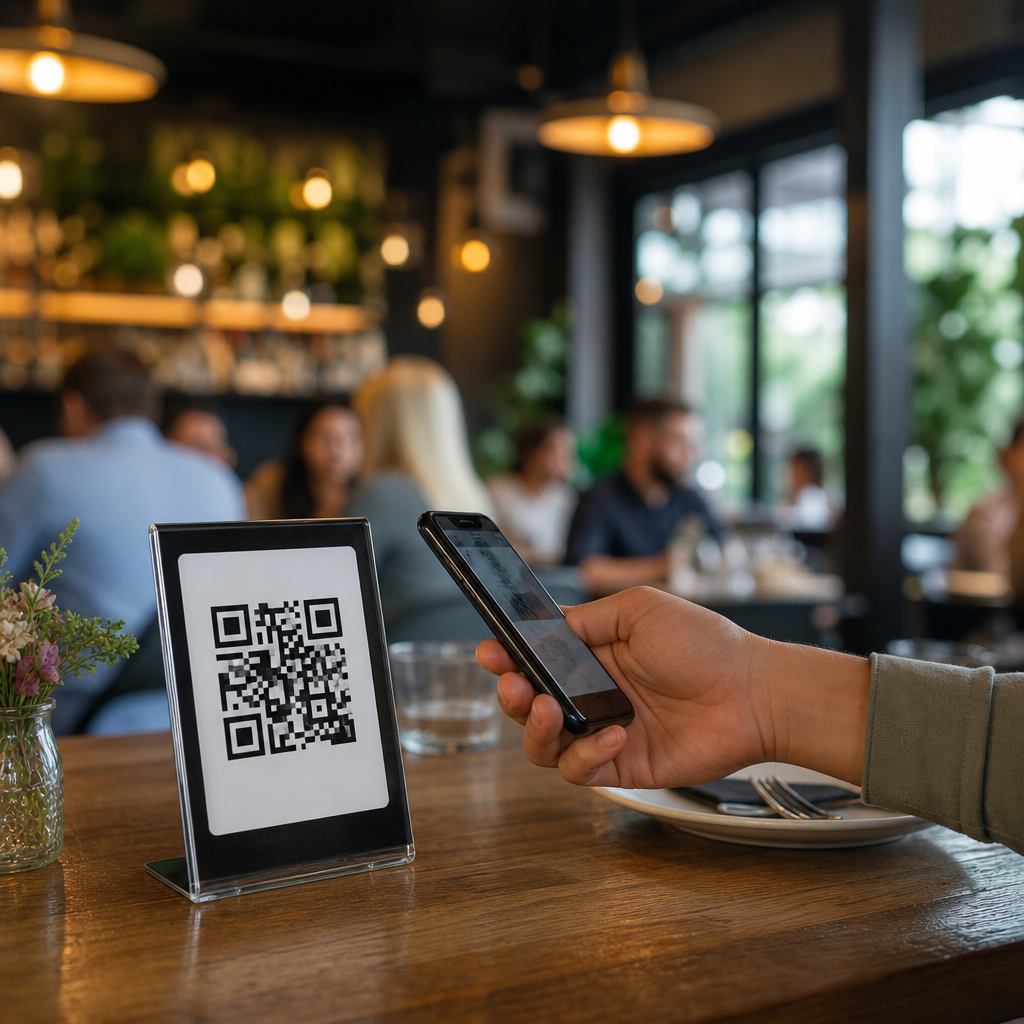
Trust and usability also matter. Smartphone cameras now detect QR codes natively on iOS and Android, so the habit is mainstream. During restaurant menu rollouts and contactless transactions, many users learned to scan without hesitation. For lead generation, that means the technology barrier is low, but user expectations are higher. People expect a fast, secure mobile page, a visible brand match, and a useful outcome. If the destination is slow, generic, or form-heavy, they abandon. If it is concise and relevant, they convert.
High-performing QR code campaign ideas by channel
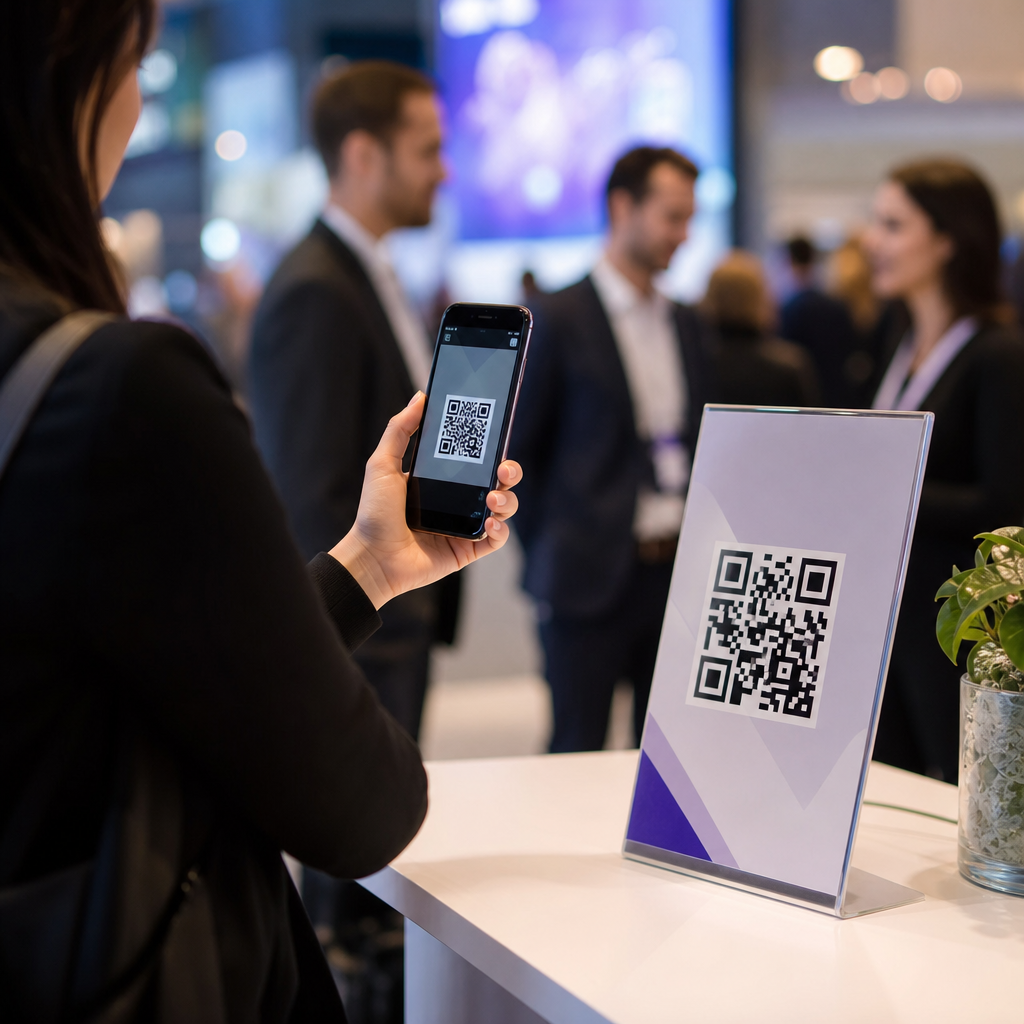
The best QR code ideas for lead generation are anchored to the context where the scan happens. At trade shows, use separate codes for booth signage, product demo stations, badge-backed handouts, and speaking-session slides. Each code should point to a tailored action, such as scheduling a post-event demo, downloading a buying guide, or entering a prize draw tied to qualification questions. This structure helps sales prioritize leads by intent rather than by raw scan count.
Direct mail is another strong channel because the recipient already has a physical piece in hand. A postcard for a home services brand can feature “Scan for an instant estimate range,” linking to a short form that asks ZIP code, service need, and timeline. B2B companies can mail dimensional packages with QR codes tied to account-based landing pages that reference the recipient’s industry or pain point. Response rates improve when the physical asset and landing page use the same headline, design cues, and offer.
Retail and packaging campaigns work when the offer extends the product experience. Consumer brands can place a code on packaging that unlocks loyalty enrollment, recipe content, refill reminders, or subscription offers. Industrial manufacturers can put QR codes on equipment labels linking to maintenance guides, warranty registration, and replacement-part requests. Those scans are valuable because they come from actual owners or evaluators, often at the point where need is immediate. The lead quality is often higher than broad social traffic because intent is contextual.
Outdoor and transit placements need disciplined messaging because viewing time is short. A bus shelter ad should not ask for a long-form signup immediately. It should offer something fast and concrete, such as “Scan to see apartments available this week” or “Scan for today’s event lineup and VIP list.” Restaurants, gyms, clinics, and real estate teams can all use window signage effectively after hours, turning foot traffic into inquiries when staff are unavailable. Vehicle wraps can work too, but only when the audience can scan safely at parking locations rather than in motion.
| Channel | Best lead offer | Why it converts |
|---|---|---|
| Trade shows | Demo booking or giveaway with qualifier form | Captures active interest at the moment of engagement |
| Direct mail | Personalized landing page or quote request | Connects tactile attention with immediate mobile response |
| Retail packaging | Loyalty signup, warranty registration, or refill reminder | Reaches users at product touchpoint with clear relevance |
| Storefront and OOH | Coupon, appointment, or local inventory check | Converts nearby intent into measurable action |
| Sales collateral | Case study, spec sheet, or consultation request | Supports buying research without forcing manual search |
How to build a QR code offer that actually converts
A successful QR lead generation campaign starts with the offer, not the code. Ask what the user wants in that specific moment. At a conference booth, they may want a concise product comparison, pricing overview, or a chance to win something meaningful. On packaging, they may want setup help or a loyalty reward. On a real estate sign, they likely want current listing details, price, photos, and a showing request form. The offer should answer immediate intent first and collect lead information second.
Keep the landing page narrow. One code should lead to one primary action. Multi-option pages feel flexible to marketers but indecisive to users. A high-converting mobile landing page usually has a short headline, one supporting sentence, three to five proof points, and a brief form. If the value exchange is low, like a coupon or checklist, ask only for email. If the value exchange is high, like a consultation or estimate, ask for the fields needed for routing and follow-up. Progressive profiling in HubSpot, Marketo, or Pardot can collect additional details later.
Design details materially affect results. Use dynamic QR codes with a high error-correction level when the code may be printed on curved surfaces or viewed in imperfect conditions. Preserve contrast; black on white remains the safest standard. Add a call to action next to the code, not just beneath it, and include a fallback short URL for accessibility. Test scanning distance based on placement size. A common rule is that scan distance should be roughly ten times the code width, but field testing matters more than rules of thumb. I always test in the actual environment for glare, shadows, low signal, and crowd flow.
Form strategy deserves equal attention. Lead quality collapses when marketers ask for too much too soon. For top-of-funnel offers, short forms outperform exhaustive qualification. For bottom-of-funnel offers, use hidden fields and routing logic so the CRM receives campaign source, medium, placement, and asset ID automatically. That setup supports accurate attribution and sales prioritization. It also enables retargeting, nurture segmentation, and closed-loop reporting instead of isolated scan counts.
Measurement, optimization, and common mistakes
Measuring QR code lead generation requires more than counting scans. Scans indicate interest, but leads, qualified leads, opportunities, and revenue reveal business value. At minimum, track scan rate by impression source, landing page conversion rate, cost per lead, qualification rate, and downstream pipeline. Use UTM parameters and unique dynamic codes for every placement so you can separate poster A from poster B, booth counter from hanging banner, or package insert from outer box. In GA4, create events for scan sessions, form starts, submissions, and key engagement steps. In your CRM, map source data consistently to campaign records.
Optimization often produces quick gains. If scans are high and form submissions are low, the problem is usually the landing page, offer mismatch, or form length. If foot traffic is high and scans are low, the issue is often weak call-to-action copy, poor placement height, or visual clutter around the code. I have improved response simply by moving a QR code from the lower corner of a poster to eye level and replacing “Learn more” with “Scan for the 2024 pricing guide.” Small wording changes can double scans because clarity beats cleverness in public spaces.
Several mistakes recur across campaigns. The first is linking to a desktop page or generic homepage. That forces the user to hunt, and many leave immediately. The second is printing static codes too early, before legal review, destination testing, or campaign routing is final. Dynamic codes reduce that risk. The third is ignoring security perception. Users are rightly cautious about unknown links, so branded landing pages, HTTPS, and recognizable domain names matter. The fourth is failing to train staff. If booth teams, store associates, or field reps do not explain the benefit of scanning, performance suffers. Human prompting still lifts response significantly.
Privacy and compliance cannot be an afterthought. If the QR destination collects personal data, consent language, privacy notices, and SMS or email opt-in standards must match the jurisdiction and channel. For healthcare, finance, and regulated industries, legal review is essential before launch. None of this weakens the case for QR codes. It strengthens it, because campaigns that are measurable, user-friendly, and compliant are the ones that scale. Use QR codes as a conversion bridge, not a gimmick, and they will consistently turn physical attention into qualified demand.
QR code ideas for lead generation campaigns work best when strategy, context, and execution align. The code itself is only the trigger. The real performance comes from matching each placement with a clear value proposition, a mobile-first landing page, disciplined tracking, and a follow-up path that sales and marketing can actually use. When those parts are connected, QR codes turn print, packaging, events, signage, and sales materials into measurable lead sources rather than passive brand assets.
The strongest creative marketing ideas using QR codes are usually simple. Offer something specific. Make scanning feel worthwhile immediately. Route the visitor to one focused action. Track every version with dynamic codes and analytics parameters. Then review performance by lead quality, not just scan volume. Trade shows, direct mail, retail, outdoor media, and field sales all benefit from this approach because each channel contains moments of real intent that are otherwise hard to capture.
As the hub for this subtopic, this guide provides the framework for evaluating every future QR code campaign idea and case study: start with the user’s context, define the conversion goal, remove friction, and measure downstream impact. If you are planning your next campaign, audit your existing offline touchpoints and identify where a scan could replace delay, confusion, or manual follow-up. Build one tightly scoped pilot, test it rigorously, and scale what converts.
Frequently Asked Questions
How can QR codes improve lead generation compared with traditional offline marketing methods?
QR codes improve lead generation by removing friction between offline interest and online action. In traditional offline marketing, a prospect might see a flyer, trade show sign, direct mail piece, product package, or event banner and then need to remember a website, type a long URL, search for a brand later, or manually fill out a form. Every extra step creates drop-off. A QR code compresses that process into a single scan, which means marketers can capture intent at the moment it is strongest.
That immediate response is what makes QR codes especially effective. When someone scans, they are signaling active curiosity, not passive awareness. Instead of hoping they take action later, you can send them directly to a landing page, demo booking form, lead magnet, coupon, product quiz, consultation request, or event registration page. This creates a cleaner path from attention to conversion and makes campaigns far more measurable than many traditional print efforts.
Another major advantage is tracking. With the right setup, QR codes let you measure scans, location-based performance, device types, timing, conversion rates, and downstream actions. That means a postcard campaign, booth display, in-store sign, or outdoor advertisement no longer has to be a guessing game. You can compare placements, calls to action, and offers to see which ones generate qualified leads most efficiently. In practical terms, QR codes turn static offline impressions into trackable acquisition channels.
They also support better lead quality when used strategically. A generic homepage link often wastes interest, but a QR code tied to a specific intent-based destination can pre-qualify prospects. For example, a booth visitor scanning a code for a product comparison guide is demonstrating a different stage of intent than someone scanning for a giveaway entry. By aligning the destination with the context, marketers can segment leads more accurately and follow up with more relevant messaging.
What are the best QR code ideas for lead generation campaigns at events, trade shows, and in-person promotions?
Events and trade shows are some of the best environments for QR code lead generation because attention is already concentrated and time is limited. One of the strongest ideas is to place QR codes on booth signage that lead to a fast mobile form offering something valuable, such as a product brochure, pricing sheet, case study, buying guide, or consultation request. This works well because prospects can self-identify their interest without waiting for a sales conversation, and your team can follow up with context.
Another effective use is QR-powered lead capture for giveaways or contest entries. Instead of collecting business cards in a bowl, direct attendees to a short form that gathers contact information, company details, and one or two qualifying questions. This approach gives you cleaner data and helps separate low-intent entrants from real prospects. You can also use the form to ask what solution they are interested in, which gives sales teams better insight after the event.
Demo scheduling is another strong idea. Many booth visitors are interested but not ready to talk in a crowded environment. A QR code can route them to a page where they can book a personalized demo, request a call, or choose a time for a follow-up meeting. This is especially useful when your team is busy, because it captures intent even when no one is immediately available to engage.
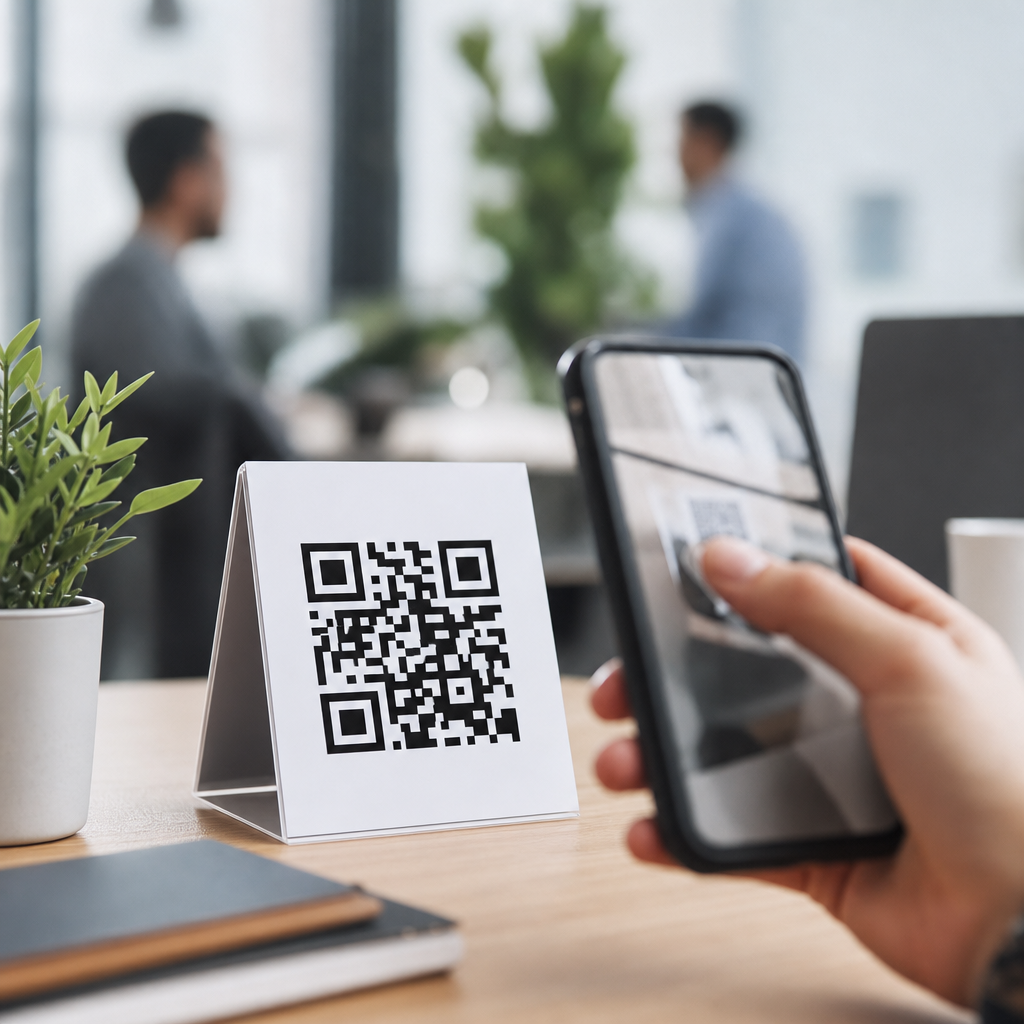
For in-person promotions outside trade shows, QR codes work well on posters, table tents, packaging inserts, storefront displays, receipts, and direct mail pieces. A restaurant might use them for loyalty sign-ups, a real estate team might use them for home valuation requests, and a B2B company might use them on conference materials to distribute an industry report. The key is to match the offer to the environment. If someone is scanning in a fast-moving setting, the destination should be simple and mobile-friendly. If they are in a more engaged setting, such as a booth or seminar, you can ask for more information in exchange for more substantial value.
The most effective campaigns also include a clear call to action near the code. People are more likely to scan when they know exactly what they will get, such as “Scan for the buyer’s guide,” “Scan to book a live demo,” or “Scan to get event-only pricing.” A QR code alone is not the strategy. The strategy is the combination of placement, message, offer, and follow-up.
What should a QR code lead generation landing page include to maximize conversions?
A QR code landing page should be designed specifically for mobile users and built to continue the exact promise made near the code. If the code says “Scan for a free consultation,” the page should immediately reinforce that offer with a clear headline, a short explanation of the value, and an easy next step. Consistency matters because any mismatch between the physical call to action and the digital destination can reduce trust and hurt conversion rates.
The page should load quickly, display well on smartphones, and eliminate unnecessary distractions. Since most scans happen on mobile devices, long paragraphs, cluttered navigation, and overly complicated forms can cause users to leave. In many cases, the best-performing landing pages use a simple structure: a compelling headline, a concise value proposition, a few credibility elements such as testimonials or trust badges, and a short form or button-based action.
Form length is especially important. For top-of-funnel offers like checklists, discounts, or event resources, ask only for the information you truly need, often just name and email, or at most company and role if qualification matters. If your campaign targets higher-intent leads, such as demo requests or consultations, you can ask for a bit more detail, but the form should still feel easy to complete on a phone. Progressive profiling can help you gather additional information later rather than all at once.
Strong landing pages also clarify what happens after conversion. Tell users whether they will receive an instant download, a confirmation email, a calendar booking link, or a call from your team. Reducing uncertainty increases completion rates. If appropriate, include social proof, short bullet points about benefits, and a visible privacy reassurance so users feel comfortable sharing their information.
Finally, the page should be fully trackable. Add analytics, UTM parameters, conversion events, CRM integrations, and any automation needed for follow-up. A QR code scan is valuable, but the real business result comes from what happens next. The landing page should not only convert visitors but also feed clean data into your lead nurturing and attribution systems so you can improve campaign performance over time.
How do you track and measure the success of a QR code lead generation campaign?
Tracking a QR code campaign starts with defining what success means. For some campaigns, the primary metric may be total scans. For others, it may be form submissions, booked meetings, qualified leads, cost per lead, or pipeline generated. The most useful measurement framework connects the scan to a meaningful business outcome, not just surface-level engagement.
A common best practice is to use dynamic QR codes tied to unique campaign URLs with UTM parameters. This lets you distinguish performance by source, placement, creative version, location, event, or audience segment. For example, if you place separate codes on booth banners, handouts, badges, and presentation slides, you can see which physical touchpoints actually drive lead activity. That insight helps you optimize future campaigns rather than relying on assumptions.
Once users land on the destination page, use analytics tools to measure behavior such as bounce rate, time on page, form completion, click-throughs, and conversion events. If the goal is lead capture, connect the page to your CRM or marketing automation platform so every submission is tagged with the original QR source. This makes it easier to understand not just volume, but lead quality and downstream sales impact.
You should also evaluate campaign context. Scan volume can vary based on placement visibility, traffic levels, incentive strength, and user intent. A QR code on product packaging may generate fewer scans than one at a live event, but the leads may be more qualified. Similarly, a giveaway campaign may produce high volume but lower intent than a code linked to a consultation request. That is why scan counts alone are incomplete. You need to compare conversion rate, sales acceptance, opportunity creation, and customer acquisition where possible.
Testing is another important part of measurement. Try different calls to action, offers, form lengths, landing page layouts, and placement strategies. A small wording change like “Scan for pricing” versus “Scan for a custom quote” can change lead quality significantly. Over time, the most successful teams treat QR code campaigns like any other performance channel: they test, measure, refine, and repeat based on data.
What are the most common mistakes to avoid when using QR codes for lead generation?
One of the biggest mistakes is sending scanners to a generic homepage instead of a focused landing page. When someone scans a QR code, they are responding to a specific prompt in a specific context. If the destination is broad or unclear, the momentum is lost. A dedicated page with a clear offer and next step almost always performs better than forcing users to navigate on their own.
Another common mistake is failing to explain why someone should scan. A QR code without a compelling call to action is just a symbol. People need a reason, such as access to a guide, event-only offer, instant quote, free sample, registration page, or product demo. The best-performing