QR codes can turn an offline interaction into a qualified sales opportunity in seconds, but only when the campaign is built around the right lead generation process. I have used QR codes in retail stores, trade show booths, direct mail campaigns, restaurant tabletop promotions, and service businesses, and the same pattern keeps appearing: companies blame the QR code when results are poor, even though the real problem is usually the offer, landing page, tracking setup, or follow-up workflow. Understanding the mistakes to avoid when using QR codes for lead generation matters because these small black-and-white squares often sit at the first conversion point between curiosity and contact data. If that moment is poorly designed, response drops fast.
In marketing terms, QR codes for lead generation are scannable links that send a prospect to a digital destination where they take an action such as submitting a form, booking a call, requesting a quote, downloading a resource, joining a text list, or claiming an offer. Static QR codes point to one fixed URL. Dynamic QR codes use a short redirect URL, which allows marketers to change the destination later and measure scans by date, device, and location. The distinction is important because lead generation depends on testing and attribution, not just printing a code and hoping people engage.
The stakes are higher than many teams realize. Smartphone adoption makes scanning friction low, but attention is still scarce. A QR code competes with signage clutter, channel fatigue, privacy concerns, and weak mobile experiences. Good campaigns solve for all of those constraints. Bad campaigns create dead ends: codes placed where users cannot scan them, links that open slowly, forms that ask for too much information, and offers too vague to justify a submission. The hub article below explains the most common mistakes, why they hurt performance, and what to do instead if you want QR codes to produce leads you can actually convert.
Leading with the code instead of the offer
The first and most damaging mistake is treating the QR code as the strategy rather than the delivery mechanism. People do not scan because a code exists; they scan because they expect a clear benefit. In practice, the highest-converting campaigns answer three questions immediately: what will I get, how long will it take, and why should I trust this brand? A poster that says “Scan here” almost always underperforms a poster that says “Scan for a 2-minute pricing calculator” or “Scan to get the contractor checklist before you book.”
I have seen this most clearly at events. One software vendor placed a large QR code on booth graphics with no context and generated very few leads. Another used the same booth footprint but offered an industry benchmark report, stated the report length, and promised an instant download with no sales call required. The second booth consistently outperformed because the value exchange was obvious. For lead generation, specificity wins. Good offers include demos, gated templates, eligibility assessments, coupon codes, waitlists, estimates, samples, and resource guides tied to a real problem.
The supporting copy around the code matters as much as the destination. Add a direct call to action, a brief incentive, and expectation-setting language. If a user will need to complete a form, say so. If they will receive a text, disclose it. This reduces low-intent scans and improves conversion quality. A lead magnet that is too broad attracts noise; one that is too narrow limits volume. The right balance is relevance plus immediate usefulness.
Sending traffic to a weak mobile landing page
A QR scan is a mobile action, so every lead generation experience must be designed for mobile first, not adapted from desktop later. One of the most common failures is linking the code to a homepage or to a landing page with slow load times, cluttered navigation, tiny text, and forms that are painful on a phone. Google’s Core Web Vitals are not just technical benchmarks; they shape whether a prospect stays long enough to convert. If the page shifts while loading or asks users to pinch and zoom, conversion rates fall.
The best QR code landing pages have one purpose and one next step. They load quickly, keep copy concise, place the form high on the page, and remove distractions. A visitor scanning from a flyer in a coffee shop is not in research mode. That person is acting on a moment of interest. If you make them hunt for the offer, re-enter a long URL, or navigate through multiple pages, you lose them. In campaigns I have optimized, simply replacing a generic services page with a dedicated mobile landing page often improved form completion significantly.
Trust cues also matter on small screens. Include recognizable brand elements, a short privacy statement near the form, social proof where appropriate, and plain-language labels. If the visitor is booking a consultation, show available times quickly. If the lead magnet is a download, deliver it immediately after submission instead of hiding it behind an email delay. Mobile users reward clarity and speed. They abandon ambiguity.
Using the wrong QR code setup, size, or placement
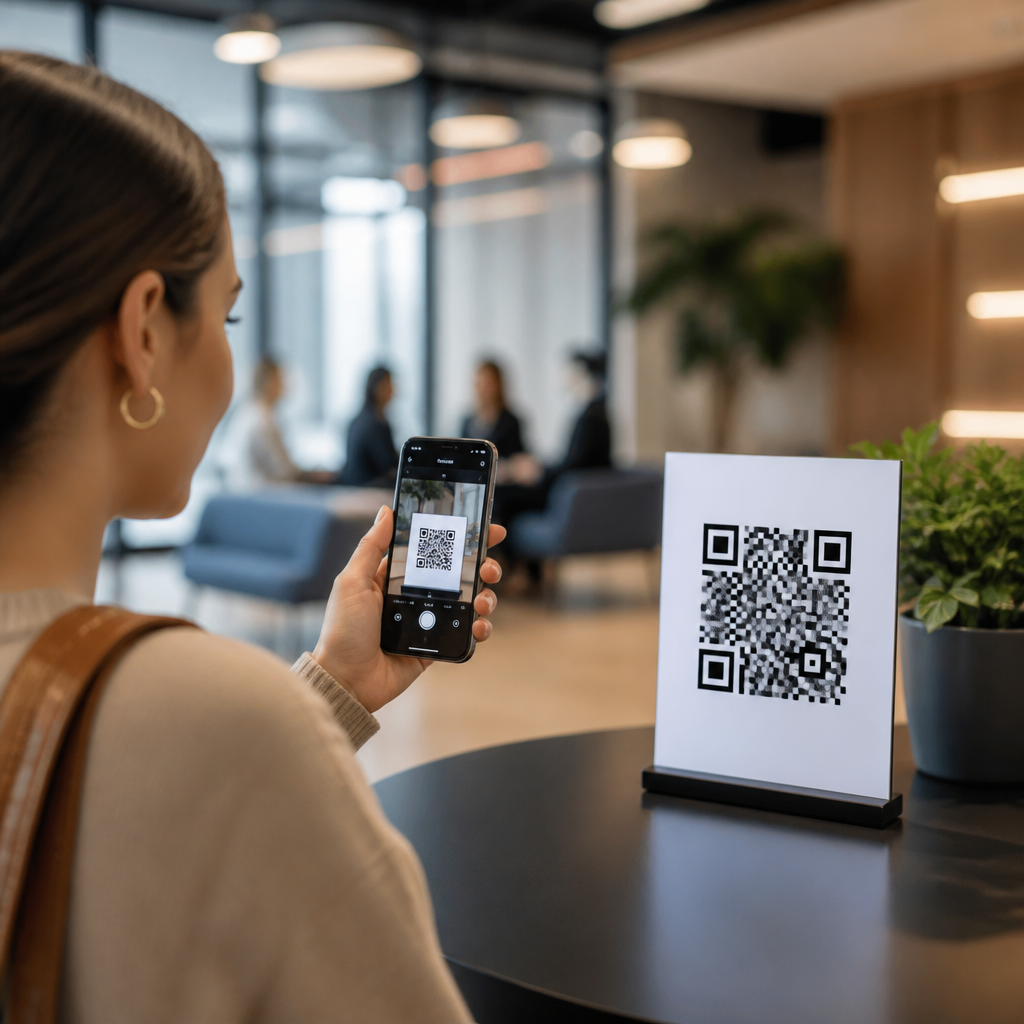
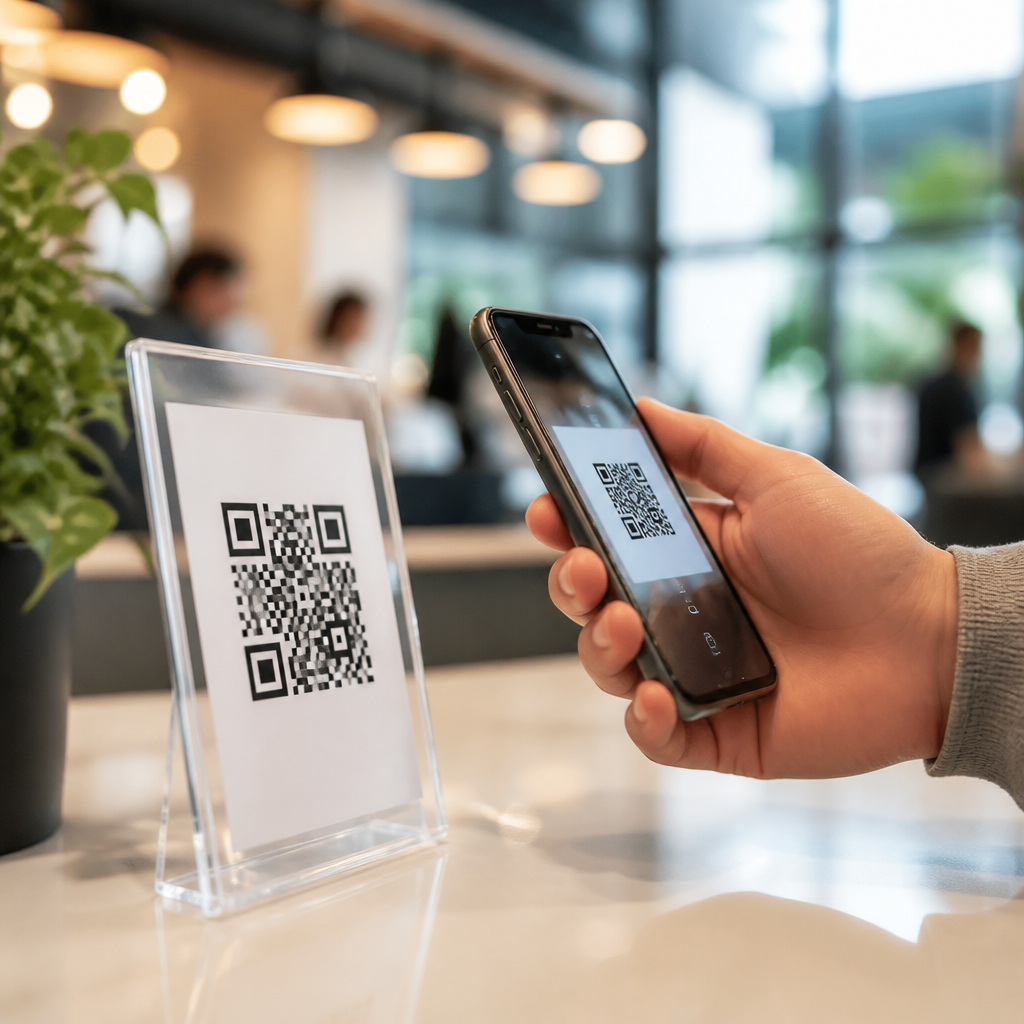
Another avoidable mistake is ignoring the physical realities of scanning. QR code lead generation lives at the intersection of print design, user behavior, and camera performance. A code that works perfectly on a designer’s monitor can fail on packaging, reflective surfaces, curved labels, moving vehicles, or poorly lit environments. I recommend testing every code in the exact place it will appear, using multiple phones, before rollout.
Dynamic QR codes are generally the better choice for lead generation because they support destination updates and analytics. They also protect you from costly reprints when a page changes. Beyond code type, size and quiet zone are critical. The quiet zone is the blank margin around the code that helps scanners read it accurately. Remove that margin or add decorative clutter too close to the pattern, and scan reliability drops. Contrast matters too: dark code, light background, no visual distortion.
| Mistake | What Happens | Better Practice |
|---|---|---|
| Code is too small for distance | Users cannot scan quickly and give up | Match code size to expected scanning distance and viewing angle |
| Placed on reflective or curved surface | Camera struggles to focus or decode | Use matte materials or flatter placement where possible |
| Static code printed everywhere | Destination cannot be updated or tracked well | Use dynamic codes for campaigns that need testing and attribution |
| No CTA near the code | People see the code but do not know why to scan | Add a benefit-driven instruction beside the code |
| Code used where phones are restricted | Response rate stays low regardless of offer | Place codes only where scanning is practical and socially acceptable |
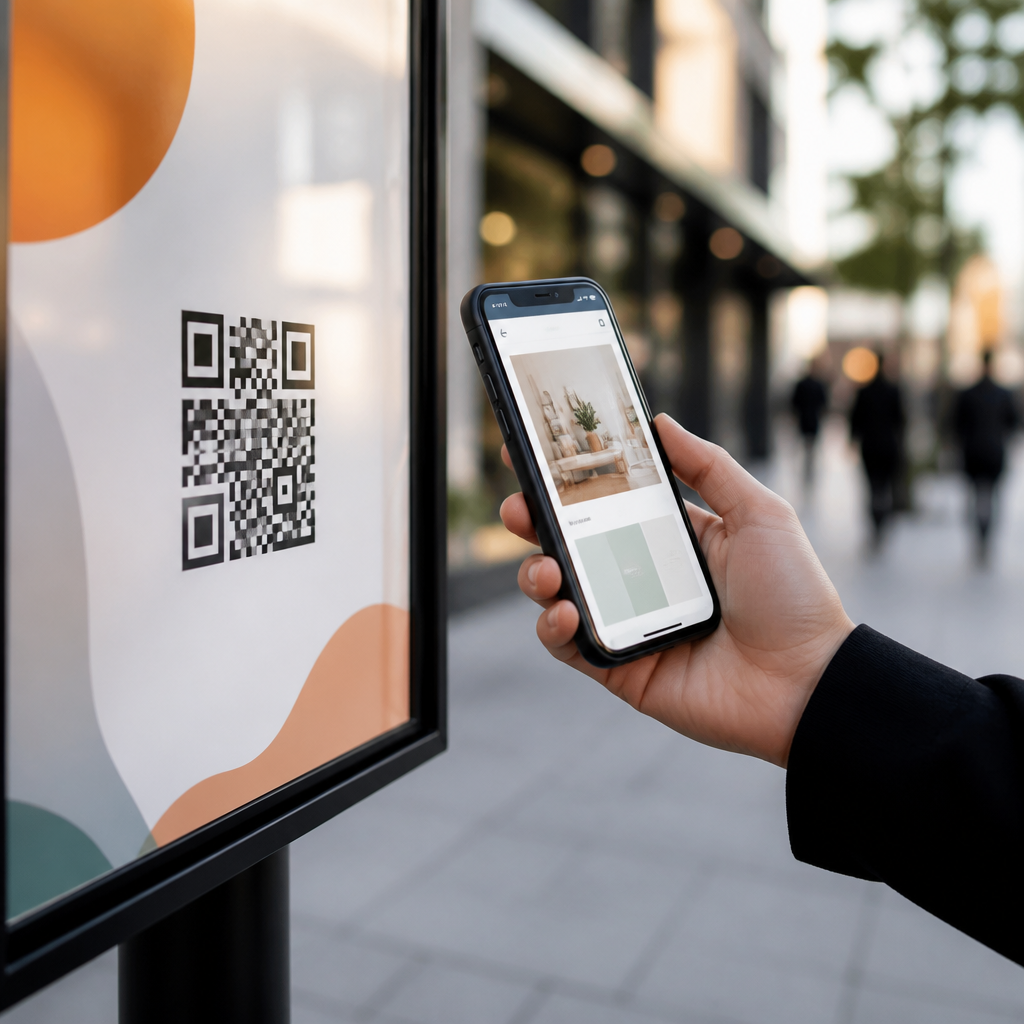
Placement strategy should reflect context. On direct mail, the code belongs near the core offer, not buried near legal copy. In a store, place it where customers naturally pause. On restaurant tables, avoid spots hidden by condiments or glare. On trade show graphics, do not mount the code so high that attendees need to step back into foot traffic to scan. Small placement errors create measurable losses.
Failing to track scans, leads, and downstream revenue
Many teams track only raw scans, which is not enough. A successful QR code lead generation campaign measures the full path from scan to qualified lead to revenue. That means using UTM parameters, dynamic QR platforms, CRM integration, and event tracking in analytics tools such as Google Analytics 4, HubSpot, Marketo, or Salesforce. Without that setup, marketers cannot tell whether a code on a postcard outperformed a code on in-store signage, or whether a high-scan placement delivered low-quality leads.
I prefer to define campaign measurement before the code is generated. At minimum, track scan volume, unique users, landing page conversion rate, cost per lead, lead source, sales acceptance rate, and influenced pipeline. For local businesses, call tracking can be essential if the landing page offers a tap-to-call option. For event campaigns, badge scans and form fills should be reconciled so the sales team does not contact the same prospect twice with conflicting context.
Attribution also requires operational discipline. If the QR code drives to a lead form, hidden fields should capture source details. If the page offers a calendar booking, the scheduler should pass campaign identifiers into the CRM. If multiple placements use the same code, performance becomes impossible to segment. Better practice is to create distinct codes for each placement, even when the landing page remains similar, so reporting reveals what actually worked.
Asking for too much information too early
Long forms are a classic conversion killer, and they are even worse after a QR scan because the user is on a phone and often standing, walking, or multitasking. Marketers sometimes try to collect every qualification field upfront: company size, budget, timeline, phone number, role, industry, region, and custom notes. That may help sales later, but it often prevents the lead from happening at all. For top-of-funnel offers, fewer fields usually produce more usable volume.
The right form length depends on the value of the offer and the level of intent. If someone is requesting a live demo or insurance quote, asking for a few business details can be reasonable. If someone wants a checklist or discount code, keep the form lighter. Progressive profiling is a better approach than front-loading friction. Capture name and email first, then collect additional details in follow-up interactions, preference centers, or later gated assets.
There is a tradeoff here. Short forms increase submissions but can reduce average lead quality. The solution is not guesswork; it is testing. Compare form variants by conversion rate and by sales-qualified lead rate, not by form fills alone. In one campaign, removing two optional fields increased submissions, while lead quality remained stable because the offer itself filtered for relevance. In another, dropping company size reduced quality enough to burden sales. The answer comes from data.
Ignoring follow-up speed, segmentation, and compliance
Even well-designed campaigns fail when follow-up is slow or generic. QR codes often capture leads at moments of high intent: after seeing a product demo, standing in front of a shelf, reading a mailer, or comparing vendors at an event. That intent cools quickly. If your team waits two days to respond, a competitor that replies in ten minutes usually wins the conversation. Speed-to-lead is not a luxury metric; it directly affects conversion outcomes.
Automation helps, but only when it is relevant. A person who scanned for a local service estimate should not receive the same email sequence as someone who downloaded a national industry report. Segment by offer type, location, audience, and funnel stage. Use confirmation pages and autoresponders that match the promised next step. If the QR code led to a coupon, deliver the coupon immediately. If it led to a consultation request, confirm receipt and set expectations for timing.
Compliance is another area where teams make preventable mistakes. If you are collecting email addresses, phone numbers, or other personal data, your form language and consent process must align with applicable rules and your own privacy policy. For SMS, consent standards are especially important. For regulated industries such as healthcare or finance, review workflows carefully before launch. Trust is part of lead generation. Prospects notice when data handling feels vague or careless.
Not testing the full user journey in real conditions
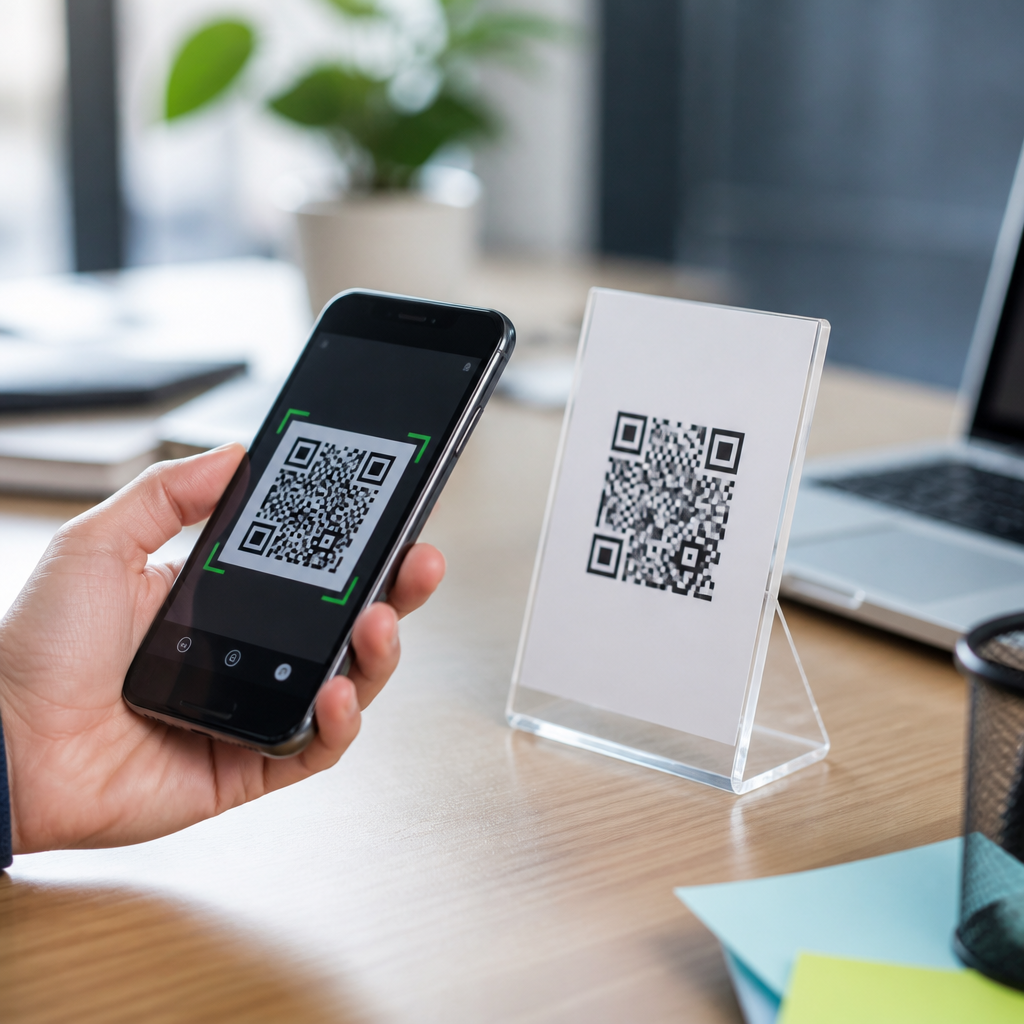
The final mistake is assuming the campaign works because the link opens on one internal device. Real testing is broader. Scan in dim light, bright sunlight, low-signal areas, and crowded venues. Test older phones, different camera apps, and both iOS and Android. Confirm that redirects resolve quickly, forms submit correctly, thank-you pages load, CRM records are created, and autoresponders send. Then test again after the printed asset is installed or shipped.
Real-world conditions expose issues teams miss in conference rooms. A code on window signage may become unreadable at noon because of glare. A code on packaging may scan poorly once the label curves around the bottle. A landing page may load fast on office Wi-Fi but lag on cellular data in a convention hall. I have also seen campaigns where the form worked, but a hidden field broke CRM routing, so hot leads sat unassigned for days. Those are expensive failures because the top of the funnel appears healthy while revenue suffers quietly.
Ongoing optimization should be built into the campaign from the start. Review placement-level scan rates, landing page conversion, form abandonment, and follow-up outcomes weekly during active periods. Refresh underperforming calls to action, test alternate offers, and retire placements that attract curiosity but not qualified demand. QR codes are measurable, flexible assets when managed properly. Used carelessly, they become untracked print decoration.
QR codes for lead generation work best when every element around the code is intentional: the offer, the CTA, the landing page, the form, the analytics, and the follow-up. Most failures come from avoidable execution errors, not from the technology itself. If you remember the core lesson from this hub article, make it this: a QR code should shorten the path to value, not add friction at any step. Strong campaigns offer a clear reason to scan, send users to a fast mobile page, collect only necessary information, track outcomes beyond scans, and trigger timely, relevant follow-up.
For marketers building a broader QR codes in marketing strategy program, lead generation deserves this level of rigor because it connects offline attention to measurable pipeline. The brands that win are not the ones with the fanciest code design. They are the ones that respect context, test in the real world, and treat every scan like the beginning of a customer journey. Audit your current QR code campaigns against the mistakes above, fix the weakest step first, and then expand what is already proving it can generate qualified leads.
Frequently Asked Questions
1. What is the biggest mistake businesses make when using QR codes for lead generation?
The biggest mistake is assuming the QR code itself is the strategy. A QR code is only a delivery mechanism. It gets someone from a physical environment to a digital destination, but it does not create demand, build trust, or persuade a prospect to take action on its own. When businesses say a QR campaign “didn’t work,” the failure usually comes from what happens before and after the scan. In most cases, the offer is weak, the landing page is confusing, the form is too long, the message is unclear, or there is no meaningful follow-up sequence in place. The code may scan perfectly, but if the prospect does not immediately understand what they get and why it matters, conversion rates will suffer.
Effective lead generation with QR codes starts with a complete funnel mindset. You need a specific audience, a compelling reason to scan, a fast mobile experience, a clear call to action, and a process for capturing and nurturing the lead after submission. For example, a trade show QR code that says “Learn More” will usually underperform compared with one that says “Scan to Get the Product Comparison Guide” or “Scan for a Free 10-Minute Demo.” Specificity increases intent. The best-performing campaigns treat the QR code as one step in a larger conversion path rather than the centerpiece of the campaign.
2. Why do so many QR code campaigns fail to convert after people scan?
Most failed QR code campaigns break down at the landing page stage. A person may be interested enough to scan, but interest is fragile. If the page loads slowly, looks cluttered on mobile, asks for too much information, or does not match the message that prompted the scan, users drop off quickly. QR scans often happen in real-world environments where attention is limited. Someone may be standing in a store aisle, walking a trade show floor, sitting in a restaurant, or sorting direct mail at home. That means your page has to communicate value instantly and make the next step feel easy.
Another common conversion killer is poor message alignment. If a sign, postcard, tabletop display, or booth graphic promises a discount, quote, checklist, sample, or consultation, the landing page must repeat that same promise right away. Any disconnect creates hesitation. People want confirmation that they landed in the right place and that scanning was worth the effort. Strong campaigns maintain message continuity from the physical callout to the digital page headline, subheadline, and form. They also remove distractions by focusing on one goal rather than sending the visitor into a general website menu where they can wander away.
To improve conversions, build a mobile-first landing page with a short headline, a concise explanation of the benefit, one primary call to action, and a form that asks only for the information needed at that stage. If you can qualify later, do it later. In lead generation, every extra field creates friction. The goal is to make the first conversion easy, then continue qualification through follow-up emails, text messages, calls, or sales conversations.
3. How important is the offer behind a QR code, and what kind of offer works best?
The offer is often more important than the QR code placement itself. People do not scan because a QR code exists. They scan because they expect to receive something useful, valuable, timely, or convenient. If the incentive is vague or low-value, response rates will be disappointing no matter how visible the code is. This is one of the most misunderstood parts of QR lead generation. Businesses often focus on printing the code on signs, packaging, mailers, menus, or brochures without putting equal attention into the reason someone should care.
The strongest offers are relevant to the moment and the setting. In retail, a QR code may work well when it unlocks a product comparison guide, buying checklist, exclusive discount, or warranty registration bonus. At a trade show, prospects may respond better to a case study, pricing guide, product demo, meeting scheduler, or giveaway entry tied to a business outcome. In service industries, high-performing offers often include a free estimate, consultation, service checklist, troubleshooting guide, or local promotion. The common thread is clarity. People should know exactly what they are getting and why it helps them.
A good offer also reflects lead quality, not just lead volume. A generic “Enter to Win” campaign may produce scans and submissions, but many of those contacts will have little buying intent. A more targeted offer, such as “Scan for a 2026 Cost Savings Assessment” or “Get the Installation Planning Guide,” may produce fewer leads overall but attract more qualified prospects. The best offer depends on your sales cycle, average deal value, and where the prospect is in the decision-making process. The key is to match the incentive to a real problem your audience wants solved right now.
4. What tracking and attribution mistakes should businesses avoid with QR code lead generation?
One of the most damaging mistakes is running QR campaigns without a proper tracking structure. If you cannot tell where scans came from, which placements generated leads, which offers produced conversions, and which leads turned into revenue, you will not know what to improve. Many businesses use the same destination URL across every printed piece, event, location, or display. That makes reporting far less useful. You may know that people scanned, but you will not know whether the direct mail piece outperformed the in-store poster, whether one restaurant table tent did better than another, or whether a specific trade show booth message drove stronger lead quality.
At minimum, each campaign should use unique tracking links, campaign parameters, or QR-specific URLs tied to the source, medium, placement, offer, and time period. Dynamic QR codes are especially helpful because they let you change the destination without reprinting materials and often provide scan analytics such as location, device type, and time of engagement. Those insights can reveal patterns that are easy to miss, such as one location producing many scans but few form submissions, which may indicate a poor landing page experience rather than a traffic problem.
It is also important to track beyond the scan. A scan is not a lead, and a lead is not revenue. Connect your QR campaign to analytics, your CRM, and your follow-up workflow so you can measure form completions, appointments booked, sales calls held, opportunities created, and closed deals. True attribution matters because some QR campaigns generate fewer total scans but far better leads. If you only judge performance at the top of the funnel, you may invest more in channels that create activity while missing the placements that create actual customers.
5. How should businesses handle follow-up after someone scans a QR code and becomes a lead?
Follow-up is where many QR lead generation campaigns either become profitable or quietly fall apart. Capturing a lead is only the midpoint. If there is no immediate and organized response, interest fades quickly. This is especially true when someone scans in a moment of curiosity or convenience. The window for engagement can be short, so speed and relevance matter. Too many businesses collect leads through QR codes and then treat them like generic website form submissions, with delayed outreach, no segmentation, and little context for the sales team.
A better approach is to build an automated follow-up path before the campaign launches. Once someone submits a form, they should instantly receive the promised asset, confirmation, or next-step instructions. Depending on the offer, that may include an email with a download link, a text message confirming a consultation request, a calendar page to book a meeting, or a thank-you page with a clear secondary call to action. Internally, the lead should route to the right team member or system with source information attached so the follow-up can reference where the scan happened and what the person requested. That context improves response quality and helps sales conversations feel more relevant.
Longer-term nurturing also matters. Not every QR lead is ready to buy immediately. Someone scanning a restaurant tabletop promotion may be early in the decision process, while someone scanning a trade show demo request may be much warmer. Your workflow should reflect those differences. Segment leads by source, offer type, location, and intent level, then tailor messaging accordingly. The companies that get the best results from QR codes are not just generating leads; they are building a consistent process that connects offline attention to mobile conversion, accurate tracking, and timely follow-up. That full system is what turns a simple scan into a qualified sales opportunity.