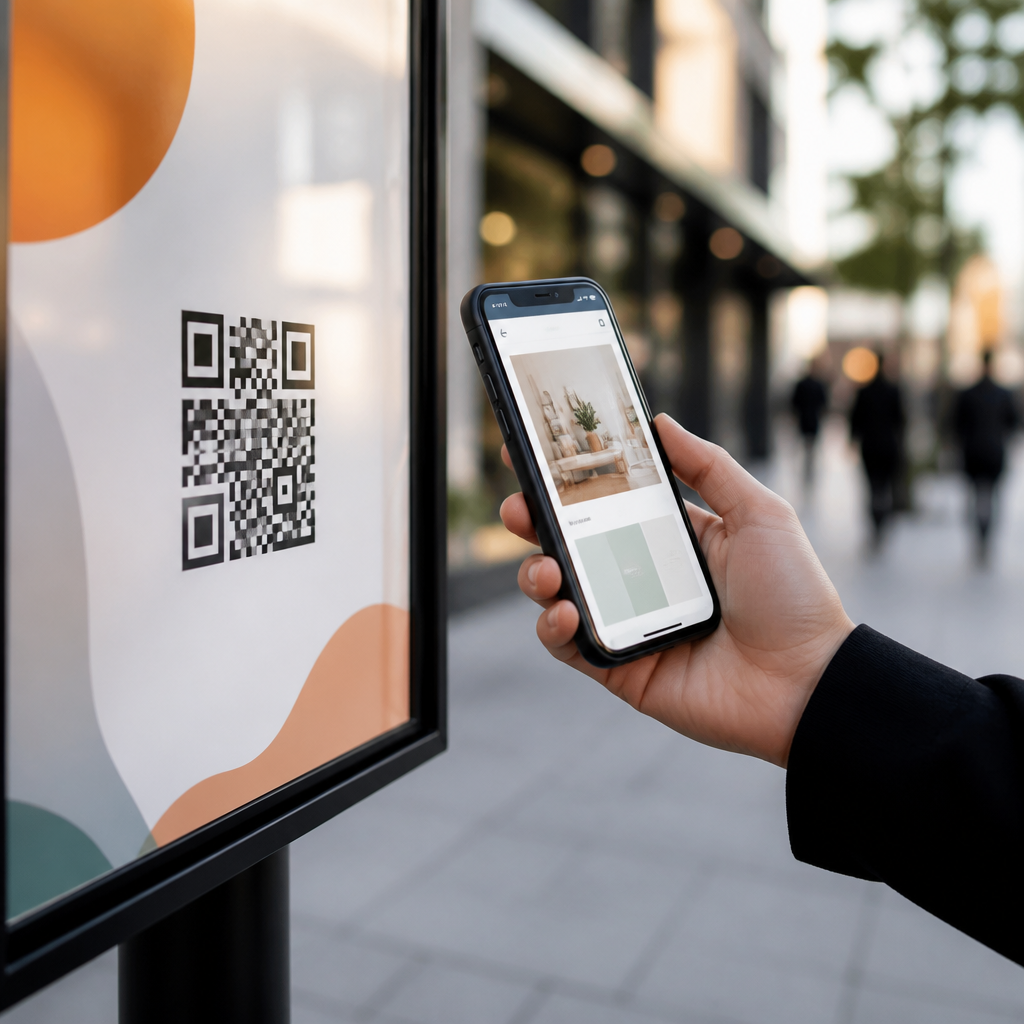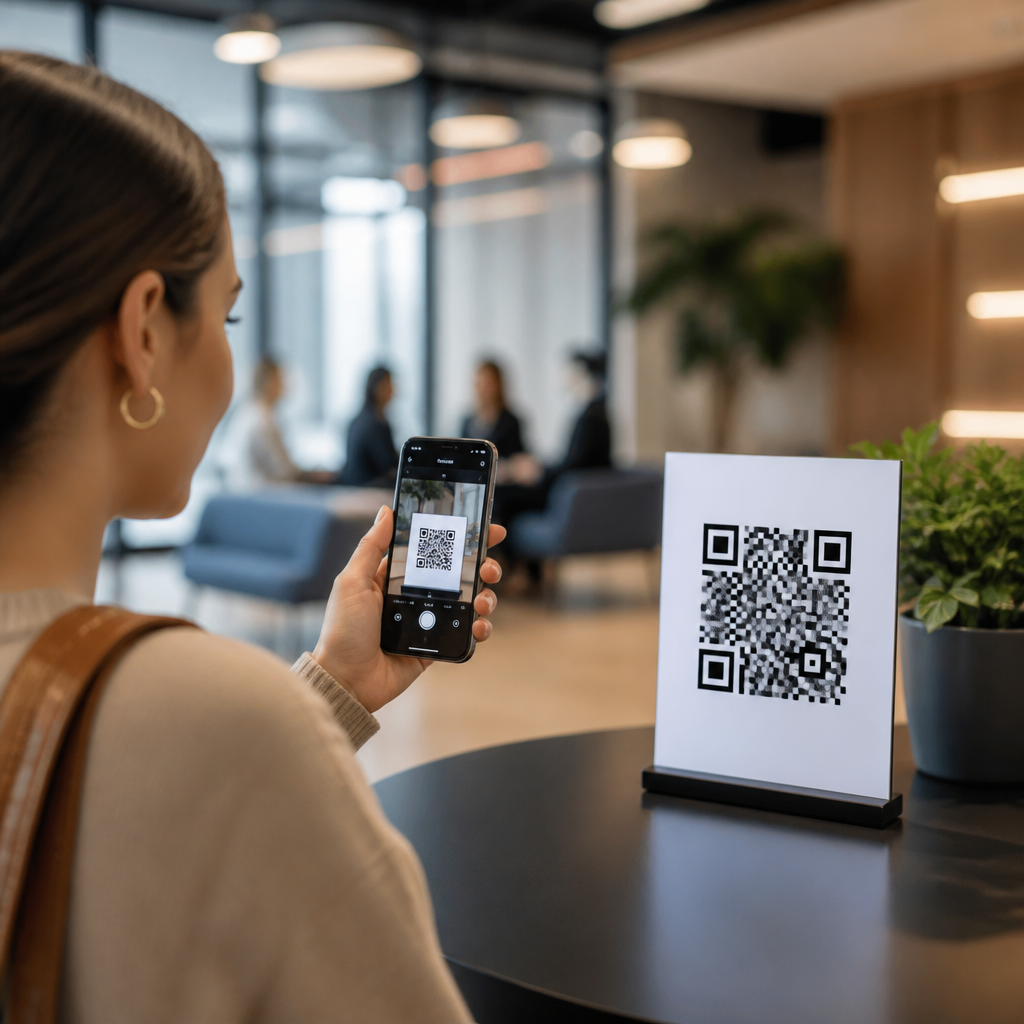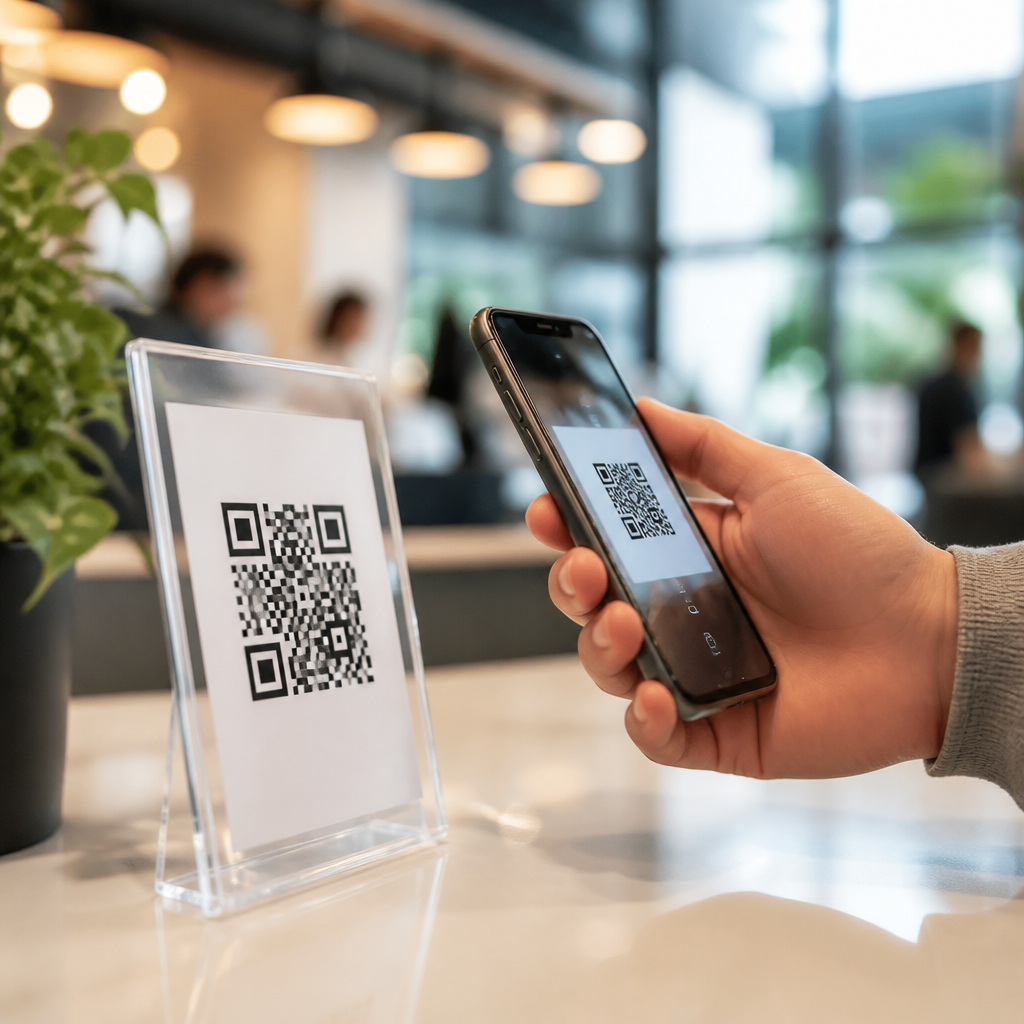

Landing page optimization for QR code leads is the practice of designing the exact page a person reaches after scanning a marketing QR code so that attention, trust, and conversion stay high from scan to form submission. In practical terms, it connects offline intent with digital capture: a poster, package, flyer, event badge, direct mail piece, or retail sign prompts the scan, and the landing page turns that moment of curiosity into a measurable lead. I have worked on QR campaigns for trade shows, field sales teams, packaging inserts, and out-of-home placements, and the same lesson appears every time: the code is only the doorway; conversion happens on the page.
QR codes for lead generation matter because they compress the customer journey. A user sees an offer in the physical world, scans with a smartphone camera, and lands directly on a form, scheduler, product selector, gated asset, or contact flow. That removes friction compared with typing a URL, searching a brand name, or navigating a full site menu. The opportunity is large because smartphone scanning behavior is now normal across iOS and Android, and most consumers expect a scan to lead somewhere immediately useful. If the destination page is slow, generic, or mismatched to the call to action, the campaign underperforms even when scan volume looks strong.
A lead in this context is any identifiable prospect action that signals commercial interest: submitting a contact form, booking a demo, downloading a brochure after entering an email address, registering for a webinar, requesting a quote, joining a loyalty program, or starting a conversation through chat or messaging. Optimization means improving the percentage of scanners who complete that action. It includes message match between the printed trigger and the page headline, mobile-first layout, speed, consent language, analytics, and post-conversion routing into a CRM such as HubSpot, Salesforce, or Zoho. When teams treat the landing page as the center of the QR code lead generation system, they get cleaner attribution and better sales follow-up.
This article serves as the hub for QR codes for lead generation within a broader marketing strategy. It explains what a high-converting QR landing page includes, how to map campaign intent to page structure, how to measure success, and where common failure points hide. Use it as the foundation for related work on dynamic QR codes, UTM tagging, form design, event lead capture, packaging campaigns, and offline-to-online attribution.
Start with scan intent and message match
The first rule of landing page optimization for QR code leads is simple: the page must continue the promise made where the code appears. If a trade show banner says “Book a 15-minute product assessment,” the landing page headline should repeat that offer, not drop the visitor onto a generic homepage or a broad solutions page. This continuity is called message match, and it is one of the biggest levers for conversion because scanners act on immediate context. They are often standing, walking, or multitasking. They will not reconstruct your intent for you.
Segmenting by scan source is therefore essential. A QR code on product packaging serves a different mindset than one on direct mail or event signage. Packaging scanners may want setup help, warranty registration, replenishment reminders, or accessory recommendations. Direct mail scanners may respond to time-bound offers and financing. Event scanners usually want speed: a short form, calendar availability, speaker slides, or a follow-up conversation. In my campaigns, conversion rates improve when each source gets its own dedicated page and dynamic QR destination rather than a single catchall lead page.
Use dynamic QR codes whenever possible because they let marketers change the destination URL without reprinting the code, pause expired offers, and monitor scans by time, device, and location. Dynamic platforms such as Bitly, QR Code Generator PRO, Beaconstac, and Uniqode also support campaign management at scale. Static codes still work for evergreen destinations, but they are a poor fit for lead generation campaigns that need testing, regional routing, or sales-team assignment rules. The landing page should reflect that flexibility with modular content blocks tailored to source, audience, and offer.
Build the page for fast mobile conversion
Most QR scans happen on mobile devices, so the landing page must be designed for thumbs, variable connections, and limited attention. Core Web Vitals are not a theoretical concern here. A page that delays Largest Contentful Paint with oversized hero images or third-party scripts can lose the visitor before the form appears. Compress images, serve modern formats like WebP, minimize JavaScript, defer nonessential tags, and host forms efficiently. In performance audits I run with PageSpeed Insights and Lighthouse, the best QR landing pages usually load the primary value proposition and form above the fold in under three seconds on mobile.
Visual hierarchy should be direct. Put a specific headline at the top, followed by one sentence explaining the value, then the form or primary call to action. Remove global navigation if the goal is lead capture; every extra link introduces leakage. Keep paragraph length short, font sizes readable, and tap targets large enough for one-handed use. Trust elements should be visible but compact: customer logos, security badges, privacy language, review snippets, or a brief statement such as “We reply within one business day.” For higher-consideration offers, adding a photo of the actual consultant, product specialist, or account team can increase credibility because the prospect sees who will follow up.
Forms deserve special discipline. Ask only for what sales or marketing will truly use. For top-of-funnel offers, name and email may be enough. For quote requests, company, role, use case, and timeline may be justified, but long forms usually depress mobile completion. Progressive profiling in marketing automation tools can collect more later. Autofill, input masks for phone numbers, and real-time validation reduce frustration. If a form feels heavy, test alternatives such as one-click calendar booking through Calendly, embedded chat, SMS opt-in, or click-to-call for high-intent local campaigns.
Choose the right landing page model for the offer
Not every QR campaign should use the same landing page structure. The best model depends on user intent and sales complexity. For simple lead capture, a single-offer page with a clear headline, concise proof points, and one form works best. For product education, a short explainer page that answers the top three objections before the form often converts better than a bare form. For location-based campaigns, use geo-aware pages that prefill the nearest branch, rep, or event schedule. For account-based marketing, create personalized pages for named companies or industry segments, especially when QR codes appear on direct mail packages sent to targeted lists.
At events, speed beats completeness. A strong event landing page can offer three buttons instead of one: “Book a demo,” “Get the deck,” and “Talk to sales.” This lets scanners self-select without forcing the same path on every visitor. For packaging or in-store displays, educational micro-pages often outperform aggressive forms because buyers may not be ready to hand over details immediately. In those cases, consider two-step journeys: first deliver setup help, recipes, guides, or compatibility information; then present a contextual lead invitation after the user gets value. That sequence improves trust and can produce higher-quality leads.
| QR campaign context | Best landing page format | Primary CTA | Key optimization note |
|---|---|---|---|
| Trade show booth | Short mobile form with calendar option | Book a demo | Minimize fields; route instantly to rep |
| Direct mail | Offer page with proof and deadline | Request consultation | Mirror the mailer headline and incentive |
| Product packaging | Help-first page with secondary lead capture | Register product | Lead with utility before asking for data |
| Retail signage | Location-aware page | Claim local offer | Use nearest store details and hours |
| Sales collateral | Personalized account page | Schedule meeting | Reference company or industry context |
Offer design also matters. Give scanners a reason to act now, not later. Effective lead magnets include a diagnostic checklist, ROI calculator, extended warranty, setup consultation, product sample, event-only pricing, or access to gated benchmark data. The offer must fit the context. A white paper may work in B2B software, but a maintenance checklist or rebate may outperform it for manufacturing, healthcare devices, or home services. The common principle is relevance plus immediacy.
Track attribution, lead quality, and downstream revenue
Scan counts alone do not tell you whether a QR code lead generation program works. Optimization requires a measurement chain from scan to qualified lead to revenue. Start with clear campaign naming conventions in the URL using UTM parameters for source, medium, campaign, content, and sometimes term. A poster in Terminal A should not be grouped with a booth banner or package insert if the intent differs. Consistent naming makes Google Analytics 4 reports usable and allows CRM reporting to tie opportunities back to a physical asset.
Event tracking should capture page views, CTA clicks, form starts, form completions, calendar bookings, phone taps, and chat engagements. In GA4, define key events and build funnel explorations by QR source. In a tag manager, test every trigger on real devices before launch. Many teams miss attribution because redirect chains strip parameters or because embedded forms submit through iframes without proper event forwarding. If you use HubSpot forms, Marketo, Pardot, or Typeform, verify hidden fields pass campaign data into contact records. Good data hygiene is part of conversion optimization because it tells you which pages deserve more traffic and which need redesign.
Lead quality is the second layer. A page can raise submission volume while lowering sales value if the offer attracts low-intent scanners. Review qualification rates, meeting show rates, pipeline creation, and close rates by QR source and landing page variant. One B2B manufacturer I advised saw a lower top-line conversion rate after replacing a generic ebook with an application-specific consultation form, yet sales accepted a much larger share of leads and revenue per scan increased. The right metric is not just conversion rate; it is cost per qualified lead and contribution to pipeline.
Offline context can also enrich attribution. Store staff can note sign placement. Event teams can align scan spikes with speaking sessions. Direct mail programs can compare in-home dates with scan timing. In some environments, especially healthcare, finance, and regulated industries, privacy constraints limit user-level tracking, so campaign-level analysis becomes more important. Keep consent notices clear, minimize unnecessary personal data collection, and coordinate with legal teams on SMS, email, and cookie requirements.
Test systematically and fix common failure points
The biggest landing page optimization gains usually come from disciplined testing, not dramatic redesigns. Begin with hypotheses tied to user friction: a stronger headline may improve message match; fewer fields may increase completion; replacing a long hero section with immediate form access may help event traffic; adding social proof may lift conversion on cold audiences. Use A/B testing tools such as Optimizely, VWO, or native experimentation in your platform when traffic is sufficient. When traffic is low, rely on sequential testing supported by session recordings, heatmaps from Hotjar or Microsoft Clarity, and qualitative feedback from sales teams.
Common failure points appear repeatedly. First, the code leads to a homepage instead of a campaign page. Second, the page is not mobile-optimized and forces zooming or excessive scrolling. Third, the offer on the page differs from the printed call to action. Fourth, forms ask for too much too soon. Fifth, follow-up is slow; leads generated by QR scans often cool quickly because intent is momentary. Sixth, redirects break on poor connections or open inside social-app browsers with awkward behavior. Seventh, teams do not test under real conditions such as glare, weak signal, or older devices. I always run field tests from the exact printed asset before launch.
Operational follow-up deserves as much attention as design. If a lead submits from a booth QR code and waits two days for a response, the campaign wastes in-person interest. Route leads instantly, set service-level agreements, and trigger confirmation pages that clarify the next step. A strong thank-you page can offer calendar booking, a downloadable asset, or a fallback contact method. It should also reassure users that their request was received. For sales-assisted journeys, send contextual notifications to the assigned rep including QR source, campaign, and page variant so the conversation starts with relevant context.
Build a scalable hub for QR codes for lead generation
As a sub-pillar within QR codes in marketing strategy, this topic works best when the landing page standards are documented and repeatable. Create templates for major use cases: event capture, direct mail, packaging, retail, field sales, and account-based outreach. Standardize your dynamic QR governance, naming conventions, CRM field mapping, and reporting dashboards. Build internal links from this hub to detailed guides on dynamic versus static QR codes, QR code design best practices, UTM tracking, mobile form optimization, event lead capture workflows, and QR code analytics. That structure helps teams execute faster and keeps campaign knowledge from fragmenting across departments.
A scalable program also requires brand and compliance guardrails. Establish approved CTA patterns, privacy disclosures, preferred form lengths by funnel stage, and image standards that preserve load speed. Keep a testing backlog so each new campaign contributes insight rather than starting from zero. The strongest organizations treat QR lead generation as an integrated system spanning creative, media, web, analytics, CRM, and sales enablement. When those pieces align, the landing page becomes a reliable conversion asset instead of an afterthought attached to a printed code.
Landing page optimization for QR code leads succeeds when the destination page matches scan intent, loads fast on mobile, asks only for necessary information, and connects attribution to downstream revenue. The QR code itself can increase access, but the landing page determines whether curiosity becomes a qualified lead. Dedicated pages for each source, dynamic routing, clear offers, strong analytics, and rapid follow-up consistently outperform generic destinations. The tradeoff is operational discipline: teams must maintain pages, test links, govern data capture, and coordinate with sales.
If you are building a QR codes for lead generation program, start by auditing every existing code and asking a blunt question: does this scan land on the best possible page for that exact context? Then prioritize the biggest opportunities—events, direct mail, packaging, or retail signage—create tailored mobile-first pages, and instrument the full funnel from scan to pipeline. Done well, landing page optimization turns QR campaigns from clever tactics into measurable lead engines. Use this hub as your blueprint, then expand into the supporting articles and workflows that make the system scale.
Frequently Asked Questions
What makes a landing page specifically effective for QR code leads?
An effective landing page for QR code leads is built around continuity, speed, and clarity. When someone scans a QR code from a poster, product package, event badge, flyer, direct mail piece, or retail display, they are acting on immediate interest. That interest is often brief, so the page they reach needs to confirm right away that they are in the correct place. The headline, offer, imagery, and message should closely match the source of the scan. If the QR code promised a demo, discount, guide, registration form, or quote request, the landing page should repeat that promise above the fold without forcing the visitor to search for it.
Mobile usability is also critical because most QR scans happen on smartphones. The page should load fast, display cleanly on smaller screens, use large tap targets, and keep form fields to a practical minimum. Trust elements matter more than many marketers realize because QR traffic often comes from offline environments where users have little context beyond the code itself. Strong visual branding, concise copy, social proof, privacy reassurance, and a straightforward explanation of what happens after submission all help reduce hesitation.
Most importantly, the page must support a single next step. QR visitors typically convert better when they are not distracted by multiple competing calls to action or full-site navigation. A focused page with one clear conversion goal, such as booking a meeting, requesting pricing, downloading a resource, or joining a waitlist, keeps momentum high from scan to submission. In short, the best QR landing pages respect the user’s immediate intent and remove every avoidable obstacle between curiosity and conversion.
How should the landing page message align with the QR code’s offline placement?
Message alignment is one of the biggest drivers of QR lead quality and conversion rate. A scan from a trade show booth carries a different mindset than a scan from product packaging, a storefront sign, or a direct mail campaign. Someone scanning at an event may want quick access to specifications, a meeting request form, or a giveaway entry. Someone scanning from packaging may want setup help, warranty registration, a reorder option, or product details. The landing page should reflect that exact context so the user feels the experience is coherent and relevant.
That means the copy, design, and offer should echo the wording and visual cues used at the scan point. If the code appears on a booth graphic promoting a free consultation, the landing page should lead with that same consultation offer rather than a generic homepage message. If the code appears on a flyer for a limited-time local promotion, the page should mention the promotion, location, and timing immediately. This continuity reduces confusion and reassures the visitor that the scan worked as expected.
It is also smart to tailor the page for audience intent and environment. A person scanning in a busy hallway, expo floor, or retail aisle is usually not ready for long-form reading. In those cases, concise copy, a short form, and a quick value statement work best. By contrast, a QR code on a brochure or direct mail piece may justify a somewhat more detailed landing page because the user may have more time and stronger buying intent. Matching message and structure to the offline context helps preserve momentum, increase trust, and improve lead capture accuracy.
What are the most important conversion elements to include on a QR code landing page?
The highest-performing QR code landing pages usually include a few core conversion elements working together. First is a strong headline that confirms the value of scanning. Visitors should immediately understand what they are getting and why it matters. Second is a concise supporting explanation that answers the basic questions: what this offer is, who it is for, and what happens next. Third is a prominent call to action, ideally visible without scrolling, that tells the visitor exactly what to do.
The form itself is one of the most important conversion elements. For QR traffic, shorter is often better, especially on mobile. Ask only for the information you truly need at that stage of the funnel. Name, email, company, or phone may be enough depending on the offer. If sales qualification matters, consider progressive profiling later rather than using a long initial form that lowers completion rates. Buttons should be easy to tap and should use action-oriented language such as “Book My Demo,” “Get the Guide,” or “Claim My Offer.”
Trust-building elements deserve equal attention. These can include testimonials, recognizable client logos, review ratings, event-specific credibility markers, security and privacy notes, or a short statement about how the user’s information will be used. If appropriate, include a visual of the product, team, or deliverable to make the offer feel concrete. Finally, remove distractions. Limit navigation, avoid clutter, and keep the page focused on one goal. A QR landing page is not meant to do everything; it is meant to convert a specific moment of intent into a measurable action.
How can you measure and improve the performance of a landing page for QR code campaigns?
Performance measurement starts with proper tracking. Each QR code should connect to a destination that can be attributed to its specific campaign, source, placement, and sometimes even location or audience segment. This is commonly done with unique URLs, campaign parameters, dynamic QR code management, and analytics platform integration. Without clean attribution, it becomes difficult to know whether leads came from a trade show sign, direct mail piece, packaging insert, window display, or another offline asset.
Once tracking is in place, focus on metrics that reflect both engagement and conversion quality. Key indicators include scan-to-landing-page visits, bounce rate, time on page, form-start rate, form completion rate, cost per lead, and downstream sales outcomes. It is also useful to compare performance by placement. For example, the same offer may perform very differently on a booth banner than on a printed handout because the user intent and environment differ. Reviewing these differences often reveals where message alignment, speed, or form length needs adjustment.
Improvement should come through structured testing rather than guesswork. A/B test headlines, calls to action, form length, proof elements, hero visuals, and mobile layout. Pay close attention to page speed because delays can sharply reduce QR conversions, especially in on-the-go environments. Session recordings, scroll analysis, and form analytics can also help identify friction points. In many campaigns, small improvements such as simplifying the first screen, reducing fields, clarifying the benefit, or making the button more prominent can meaningfully raise conversion rates. The best optimization process connects scan data, landing page behavior, and lead quality so decisions are based on revenue impact, not just surface-level clicks.
What common mistakes reduce conversions on QR code landing pages?
One of the most common mistakes is sending QR traffic to a homepage instead of a dedicated landing page. Homepages are usually built for broad exploration, not immediate conversion, so they often dilute the visitor’s intent with too many options. Another major problem is weak message match. If the QR code promises one thing and the page delivers something more general, visitors lose confidence quickly. This disconnect is especially damaging in fast-moving environments like events, stores, transit locations, and street-level signage where attention is limited.
Poor mobile experience is another frequent issue. Small text, slow load times, cluttered layouts, hard-to-complete forms, and buttons that are difficult to tap can all cause drop-off. Since QR interactions are overwhelmingly mobile-first, even a visually attractive page can underperform if it is not designed for speed and usability on a phone. Long forms are also a common conversion killer. Marketers often ask for too much information too early, creating friction at the exact moment the user should be moving smoothly toward submission.
There are also strategic mistakes that affect lead quality. Failing to explain the value of converting, omitting trust signals, using vague calls to action, or not telling the user what happens after form submission can all create hesitation. On the back end, weak tracking makes it hard to optimize because teams cannot accurately link scans to leads and revenue. The strongest QR campaigns avoid these issues by creating dedicated, source-aware landing pages that load quickly, speak directly to the user’s context, and guide them through a simple, credible, single-purpose conversion path.