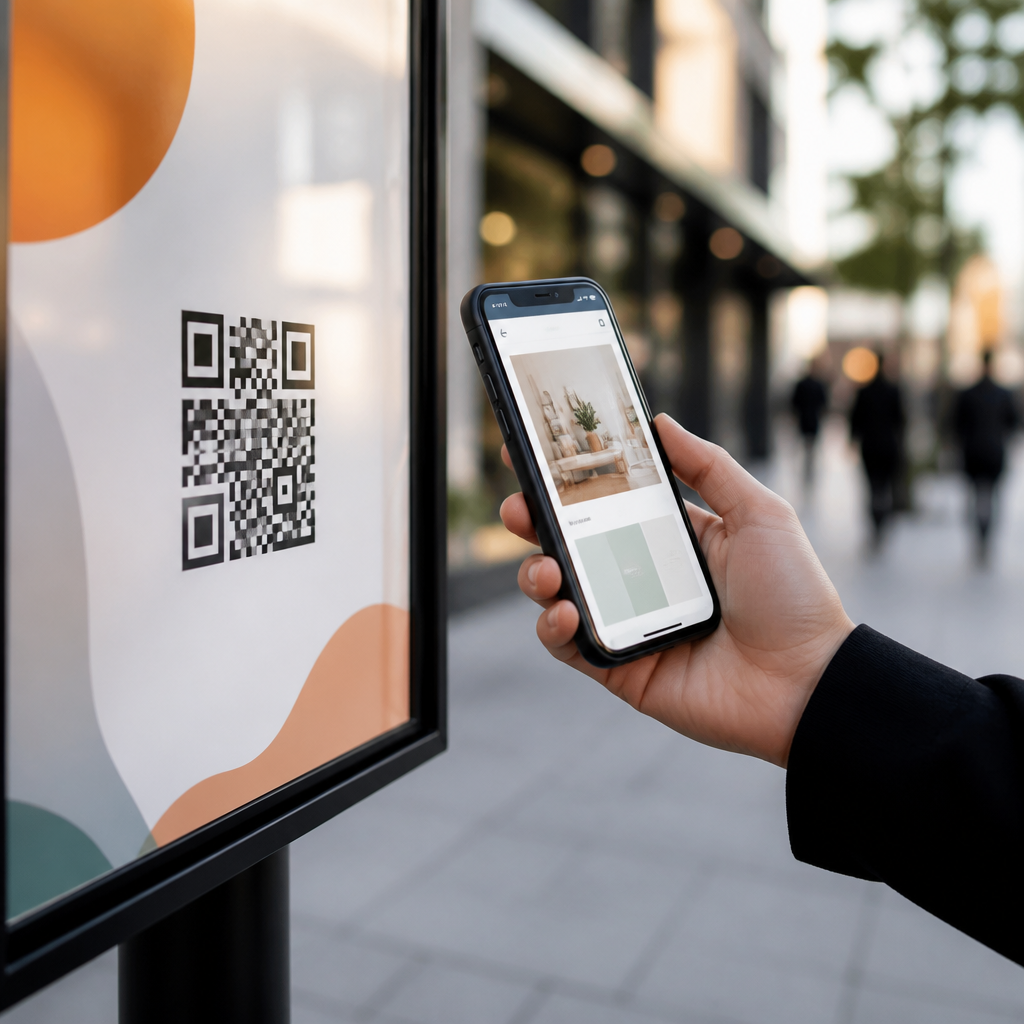
QR codes have moved far beyond simple link shortcuts and now play a practical role in retargeting campaigns, where the goal is to reconnect with people who already showed interest. In marketing terms, retargeting means serving follow-up ads, messages, or offers to users based on a prior action, while a funnel is the structured path from first exposure to conversion and retention. When you use QR codes for retargeting campaigns, the code becomes a measurable offline-to-online bridge: it captures intent from packaging, direct mail, in-store signage, event displays, print ads, and product inserts, then sends the scanner into a tracked digital experience.
This matters because many brands still struggle to connect physical touchpoints with digital audience building. I have seen campaigns generate strong scan volume from brochures or retail displays, then lose attribution because the landing page was not tagged correctly, the pixel was missing, or the QR destination was too broad to identify real intent. A properly built QR retargeting setup solves that gap. It lets marketers segment users by source, product interest, geography, campaign date, or funnel stage, then use that data in ad platforms such as Google Ads, Meta Ads, LinkedIn, or programmatic display. The result is better attribution, lower wasted spend, and more relevant follow-up messaging across the full marketing funnel.
At a technical level, the process is straightforward. A dynamic QR code points to a URL with campaign parameters, the landing page loads analytics tags and advertising pixels, the visit is recorded, and the user is added to one or more remarketing audiences if consent and platform rules allow it. From there, marketers can trigger sequential experiences: reminder ads for nonbuyers, product demos for high-intent scanners, abandoned-cart promotions, store-visit incentives, or customer upsell campaigns. The key is not the code itself. The key is designing the scan destination, measurement framework, and audience logic so every scan contributes to a useful next step.
Because this article is the hub for integrating QR codes into marketing funnels, it covers the full system rather than only code generation. You will see how to structure landing pages, choose tracking parameters, map audiences to funnel stages, compare channel options, and avoid common compliance and data-quality mistakes. If your goal is to turn physical engagement into measurable digital demand, QR codes can do that effectively when they are treated as part of a broader retargeting architecture rather than a standalone tactic.
How QR Codes Fit into a Marketing Funnel
QR codes work best when each placement matches a defined stage of the funnel. Top-of-funnel placements, such as posters, event signage, transit ads, or product-awareness mailers, usually aim to capture curiosity. The scan should lead to lightweight content: a quick explainer, a short video, a buying guide, or a location finder. Mid-funnel placements, such as comparison sheets, shelf talkers, webinar handouts, and catalog pages, should deepen evaluation with product details, testimonials, case studies, or configurators. Bottom-funnel placements, such as abandoned-cart postcards, quote follow-ups, packaging inserts, and in-store financing prompts, should support action with a direct offer, booking flow, checkout page, or account sign-up.
In practice, I map every QR code to a single funnel objective before launch. If a retail display is intended to build an audience for later product ads, I do not send scanners to the home page. I send them to a category page or campaign landing page with a clear value proposition, analytics events, and a pixel configured to place users into a product-interest audience. If a trade show badge handout is meant to qualify buyers, I send scanners to a demo booking page and create a separate audience for people who visited but did not complete the form. This discipline prevents muddy signals and gives retargeting platforms clearer behavior data to work with.
The strongest funnel integrations also respect user intent. Someone scanning a restaurant table tent expects a menu, offer, or loyalty prompt, not a generic brand page. Someone scanning a software one-pager at a conference expects technical specifications, pricing guidance, or a case study relevant to the use case on that sheet. Relevance improves scan-to-landing engagement, lowers bounce rate, increases time on site, and feeds cleaner audience lists. Better audience quality almost always outperforms larger but vague remarketing pools.
Building the Tracking Foundation for QR Retargeting
The core requirement for QR code retargeting is accurate tracking. Start with dynamic QR codes instead of static ones whenever the campaign has any lifespan beyond a one-off use. Dynamic codes let you change destinations without reprinting assets, pause expired offers, test alternate landing pages, and preserve scan data at the code level. Most enterprise QR platforms and many mainstream generators support dynamic redirects, scan analytics, expiration rules, password gating, and device-level reporting. Those features are useful, but they do not replace web analytics and ad-platform tagging. You need both.
Every destination URL should include structured UTM parameters, at minimum source, medium, campaign, and content. For example, a code on store signage might use source=qr, medium=offline, campaign=spring_launch, and content=store_display_a. A code in a direct-mail piece might change only the content or campaign identifier. This naming consistency makes traffic visible in Google Analytics 4, Adobe Analytics, or another analytics platform, and it helps analysts compare scan sources with downstream events such as form submissions, purchases, or account creation.
Next, confirm that your tag manager and ad pixels fire correctly on all destination pages. In GA4, define events that reflect funnel progression, such as view_item, generate_lead, add_to_cart, begin_checkout, purchase, or custom events like brochure_download and demo_request. In Google Ads and Meta, build retargeting audiences from users who visited specific pages or triggered high-intent events. For business-to-business campaigns, LinkedIn Insight Tag is especially useful when the QR traffic comes from trade shows, sales collateral, office signage, or industry publications. If consent management applies in your market, your tags must honor it consistently, or your audience counts will be distorted and your compliance risk will rise.
| QR placement | Primary intent | Recommended destination | Audience to build |
|---|---|---|---|
| Product packaging | Post-purchase engagement | Setup guide or accessory page | Cross-sell and loyalty audience |
| Direct mail | Offer response | Personalized landing page | Nonconverting offer visitors |
| Retail signage | Product evaluation | Category or product detail page | Product-interest audience |
| Trade show handout | Lead qualification | Demo or case study page | Visited-no-form audience |
| Print advertisement | Awareness to education | Explainer video or guide | Content-engaged audience |
Creating Retargeting Audiences from QR Code Scans
A QR scan does not automatically create a usable audience; the audience is created by what the user does after the scan. That is why destination design matters as much as the code. The simplest audience is all visitors from a QR-tagged campaign URL within a defined time window, such as 30 or 60 days. More valuable audiences are behavior based. Build one audience for scanners who viewed a product page, another for those who watched at least 50 percent of a video, another for users who started a form but did not submit, and another for buyers who reached the thank-you page. These segments support very different messages and bid strategies.
For consumer brands, product-level segmentation is powerful. A cosmetics company can place separate QR codes on shelf signage for skincare, makeup, and fragrance, each feeding different landing pages and therefore different retargeting pools. Ads can then show category-specific creative instead of generic branding. For B2B companies, use-case segmentation often works better than product segmentation. A cybersecurity vendor at an event might assign distinct QR codes to cloud security, compliance automation, and incident response materials, then retarget each audience with matching webinars, analyst reports, or consultation offers.
Audience duration should reflect the buying cycle. Fast-moving consumer goods may need seven- to fourteen-day windows, while furniture, higher education, software, or financial services can justify thirty-, sixty-, or ninety-day remarketing periods. Frequency caps also matter. If someone scans a QR code from product packaging after purchase, repeated acquisition ads may waste budget and annoy customers. In that case, suppress purchasers from prospecting-style retargeting and move them into onboarding, cross-sell, or referral sequences instead. Good retargeting is not just about chasing visitors; it is about matching the next message to the actual relationship stage.
Designing Landing Pages That Convert and Feed Better Audiences
The landing page is where QR code retargeting campaigns succeed or fail. Mobile experience comes first because most scans happen on phones. Pages must load quickly, display the value proposition above the fold, avoid intrusive pop-ups, and present one clear next action. If the code appears on a physical asset with limited context, the page should immediately confirm relevance with mirrored language such as “Scan to compare models” or “Scan for your event discount.” Message match reduces confusion and increases meaningful engagement signals.
I recommend building dedicated landing pages for major QR placements rather than reusing a generic site page. A dedicated page makes attribution cleaner and allows content to align with context. For a QR code on restaurant takeout packaging, a generic homepage wastes intent; a page featuring reorder links, loyalty enrollment, and a limited-time dessert upgrade can lift both conversion rate and customer lifetime value. For a home services flyer, a page with local proof, financing details, and a quote request form will outperform a broad services overview page because it resolves the exact questions a scanner has at that moment.
Include content assets that support both immediate conversion and later retargeting. A downloadable buying guide, calculator, configurator, video demo, FAQ block, or store locator gives visitors multiple ways to engage, and each action can become a custom event for audience building. This is especially useful when buyers are not ready to convert on the first visit. Instead of losing them, you capture meaningful intent data that powers more relevant ads later. The page should also use server-side or carefully managed client-side tracking where appropriate, because unreliable tagging can silently shrink your remarketing pools.
Campaign Examples Across Channels and Industries
Retail, events, hospitality, healthcare, and B2B services all use QR retargeting differently, but the operating logic is the same: capture intent offline, classify it online, and follow up with relevant messaging. Consider a retail apparel brand placing QR codes on window decals during a seasonal launch. Scanners land on a mobile collection page tagged by store location and product theme. Visitors who browse outerwear but do not buy are later shown dynamic product ads featuring jackets they viewed, while visitors who purchase are shifted into accessory cross-sell audiences. Location-based UTM content values also reveal which stores drive the most engaged traffic.
A trade show example is even clearer. A software company can print separate QR codes on booth panels for platform overview, pricing, security documentation, and customer stories. Scanners who choose security content are often technical evaluators, so retargeting can emphasize compliance certifications, implementation guides, and architect-led demos. Scanners who choose pricing content may be later-stage buyers, so follow-up ads can focus on ROI calculators, procurement FAQs, and booking a sales consultation. This is more efficient than treating every booth visitor as the same lead type.
Restaurants and hospitality brands can also benefit. A hotel may place QR codes in-room for spa services, dining, late checkout, and local experiences. Those scans create segmented audiences for future stay promotions and ancillary offers, provided consent and privacy policies are handled correctly. In healthcare and regulated sectors, the same approach works with more caution. A clinic might use QR codes on appointment reminder cards or wellness brochures to drive users to educational content and service pages, but retargeting setup must avoid sensitive audience construction that violates platform rules or privacy standards.
Privacy, Compliance, and Measurement Pitfalls to Avoid
The biggest mistake in QR retargeting campaigns is assuming that a scan equals permission. It does not. Privacy rules vary by jurisdiction, and advertising platforms impose their own restrictions, especially around health, financial hardship, children, and other sensitive categories. If your campaign uses cookies, pixels, or identifiable follow-up flows, your consent banner, privacy notice, and tag behavior must be aligned. This is not just a legal issue; poor consent implementation also undermines measurement accuracy by producing inconsistent audience sizes across analytics and ad platforms.
Another common failure is weak campaign governance. Teams print multiple QR codes that all point to the same untagged page, then wonder why no actionable segmentation exists. Others use link shorteners or redirects that strip parameters, break analytics sessions, or slow page load enough to increase abandonment. I always test QR destinations across iOS and Android, Wi-Fi and cellular, with real devices, before launch. I also verify redirect status codes, pixel firing, event capture, and audience population inside each ad platform. A campaign is not ready because the code scans; it is ready only when attribution and retargeting logic work end to end.
Finally, avoid over-optimizing for scan volume alone. A high scan count from a poster in a busy area may look impressive, but if the users bounce immediately or never qualify into a useful audience, the campaign has limited value. Better KPIs include engaged sessions, event completion rate, audience growth by segment, assisted conversions, cost per qualified visitor, and downstream revenue from remarketing cohorts. Those metrics reveal whether your QR codes are strengthening the marketing funnel or simply generating curiosity without conversion.
QR codes are most effective in retargeting campaigns when they are treated as a funnel integration tool, not a novelty. The code should connect a physical moment to a digital journey that is measurable, segmented, and useful for follow-up advertising. That requires four essentials: a placement tied to clear intent, a landing page matched to that intent, reliable analytics and pixel tracking, and retargeting audiences built from meaningful behavior rather than raw traffic alone.
The practical benefit is better continuity between offline marketing and online performance media. Instead of losing visibility after someone scans a package insert, event handout, catalog page, or store sign, you can understand what they cared about and respond with an appropriate next message. This improves attribution, sharpens audience quality, reduces wasted spend, and supports smarter sequencing from awareness through conversion and retention. It also helps unify teams that often work separately, including brand, field marketing, retail, lifecycle, and paid media.
If you are building a broader QR codes in marketing strategy program, start with one high-intent use case, such as direct mail, packaging, or event collateral, and instrument it thoroughly. Define the funnel stage, create a dedicated landing page, add structured UTM parameters, validate tags, and build audiences before the asset goes live. Once the first campaign produces dependable data, expand the framework across channels. Done well, QR retargeting turns scans into sustained demand, not just temporary attention.
Frequently Asked Questions
How do QR codes fit into a retargeting campaign?
QR codes fit into a retargeting campaign by acting as a trackable bridge between an offline touchpoint and an online action. Instead of treating a flyer, product package, direct mail piece, event sign, storefront display, or print ad as the end of the interaction, a QR code turns that moment of interest into measurable digital behavior. When someone scans the code, they land on a specific page, and that visit can trigger analytics events, tracking pixels, first-party data collection, or audience segmentation for future follow-up.
In practical terms, this means a QR code can help move a person into the next step of your funnel. A prospect might scan to view a product page, claim an offer, watch a demo, register for an event, or join an email list. Once that action happens, you can build retargeting audiences based on what they did next. For example, someone who scanned but did not convert can receive reminder ads, while someone who scanned and viewed a pricing page can receive a more sales-focused follow-up. The QR code itself is not “doing” the retargeting; it is creating the trackable entry point that makes retargeting possible and more precise.
This is especially valuable because many marketing journeys begin offline and continue online. Without a QR code, it can be difficult to connect that first physical interaction to later digital engagement. With the right setup, QR codes help marketers attribute interest, personalize follow-up, and understand where users are dropping off in the funnel. That makes them useful not just for traffic generation, but for audience qualification and re-engagement as well.
What do you need to set up before using QR codes for retargeting?
Before launching a QR-code-based retargeting campaign, you need a solid measurement and audience framework. Start with a dedicated landing page or campaign URL for each QR code placement. That page should match the intent of the person scanning. If the code appears on product packaging, the destination should continue the product experience. If it appears in a trade show booth, the landing page should support that context with relevant messaging, a strong call to action, and a clear next step.
Next, make sure your tracking infrastructure is in place. That typically includes UTM parameters for source and campaign attribution, analytics tools such as GA4 or another measurement platform, and advertising pixels or tags from the channels you plan to use for retargeting. Depending on your privacy approach and tech stack, you may also want server-side tracking, consent management, and first-party data capture through forms, account creation, or email sign-ups. The goal is to know not just that a scan happened, but what the user did after the scan.
You should also define your audience rules before the campaign begins. Think in segments rather than one large pool. For example, separate people who scanned and bounced, scanned and viewed multiple pages, scanned and added a product to cart, or scanned and completed a lead form. These audience definitions allow you to tailor follow-up messages instead of repeating the same generic ad to everyone. Finally, test the full journey end to end. Scan the code on multiple devices, confirm the landing page loads quickly, verify that tags fire correctly, and check that audiences are being populated as expected. Good retargeting performance usually comes from careful setup long before the first scan happens.
What kinds of audiences can you build from QR code scans?
You can build a wide range of audiences from QR code scans, especially when you combine the scan event with on-site behavior. The simplest audience is “all visitors who arrived from a specific QR code.” That alone can be useful if you want to follow up with anyone who engaged with a print ad, mailer, in-store display, event sign, menu, brochure, or packaging insert. But the real value comes from deeper segmentation.
For example, you can create audiences based on funnel stage. One segment might include users who scanned the code and visited only the landing page. Another could include users who continued to a product category, pricing page, demo video, or FAQ section. You can also isolate high-intent users, such as people who started checkout, submitted part of a form, downloaded a resource, or spent a meaningful amount of time on the site without converting. If your campaign supports account logins or email capture, you can connect scans to known users and use that information for more advanced lifecycle marketing.
Audience building can also be tied to campaign source and creative context. If different QR codes appear in different locations, each one can feed a separate audience. A code on a retail shelf may indicate product-level interest, while a code on a conference badge or booth display may indicate B2B interest. A code inside a package may signal post-purchase engagement, which opens the door to upsell, cross-sell, review requests, or replenishment reminders rather than standard prospecting messages. The better your segmentation, the more relevant your retargeting becomes, and relevance is usually what improves click-through rate, conversion rate, and return on ad spend.
What are the best practices for making QR-code retargeting campaigns effective?
The most effective QR-code retargeting campaigns start with message continuity. The promise made near the QR code should match the landing page, and the landing page should match the follow-up ads. If someone scans because they want a discount, product details, a how-to guide, or exclusive access, the experience should deliver that immediately. A disconnect between the QR code’s context and the page content often leads to drop-off, which weakens both conversion rates and retargeting quality.
Another best practice is to use dynamic QR codes rather than static ones whenever possible. Dynamic codes allow you to update destination URLs, test variations, and monitor scan data without reprinting materials. This adds flexibility when you want to optimize landing pages, refine offers, or redirect traffic as your campaign evolves. It is also wise to customize codes by placement. A single code for every channel limits your visibility, while unique codes for packaging, posters, direct mail, and event collateral give you cleaner attribution and more useful audience insights.
Mobile experience matters just as much as tracking. Most scans happen on smartphones, so landing pages need to load quickly, display clearly, and make the next action obvious. Keep forms short, calls to action prominent, and distractions minimal. From there, align retargeting ads to user intent. Someone who scanned but did not act may need education or reassurance. Someone who viewed pricing may need urgency, social proof, or a stronger offer. Someone who already purchased may be better suited for loyalty messaging than acquisition ads. Frequency caps, exclusion rules, and conversion windows should also be managed carefully so your ads stay helpful instead of repetitive. In short, strong QR retargeting comes from relevance, technical accuracy, and a smooth mobile-first funnel.
Are there privacy, compliance, or measurement limitations to be aware of?
Yes, and they are important. QR codes can support strong retargeting, but they do not remove the need for privacy compliance, consent-aware tracking, and realistic measurement expectations. A QR code scan by itself does not automatically provide personally identifiable information. What it typically provides is a visit to a tagged destination, which can then be measured according to your analytics and advertising setup. If you plan to collect email addresses, phone numbers, account data, or other first-party information after the scan, you need to be transparent about what you are collecting and how it will be used.
Depending on where your audience is located, regulations and platform rules may affect what kind of tracking and audience building you can do. Consent banners, cookie policies, and data-processing disclosures may be required. Browser restrictions, ad platform limitations, and mobile privacy changes can also reduce the visibility of user behavior, especially if users decline tracking or move across devices. Because of that, it is smart to treat QR retargeting data as directionally powerful rather than perfectly complete in every case.
Measurement can also be limited by the structure of the campaign. If a QR code sends users to a third-party platform you do not control, your ability to fire tags or build audiences may be weaker. If the destination page is slow or poorly configured, users may leave before key events are captured. The best response is to build a measurement plan that combines multiple signals: scan counts, landing page visits, downstream events, form submissions, purchases, and audience growth over time. When you pair that with compliant data collection and a first-party data strategy, QR codes become a practical and responsible retargeting tool rather than a black box.