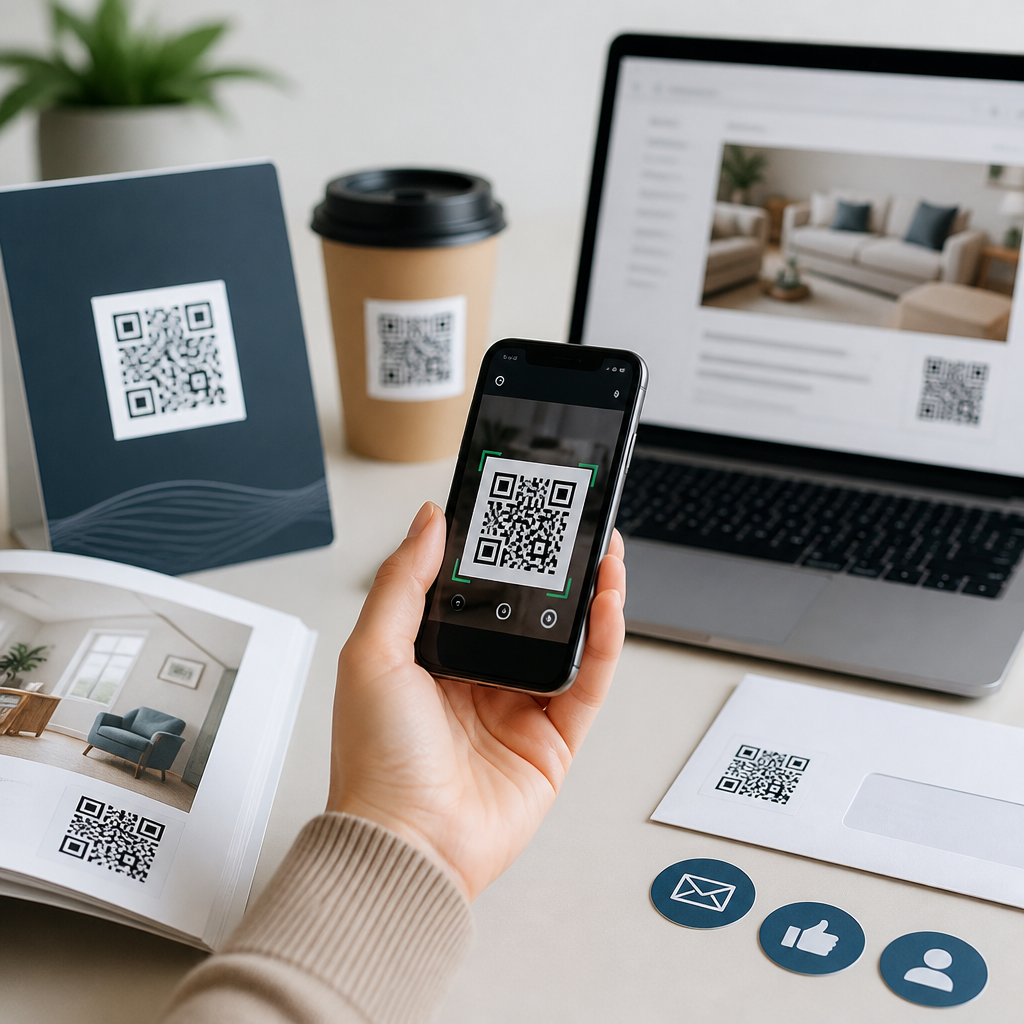
QR codes have moved from novelty to core marketing infrastructure because they connect physical touchpoints, digital campaigns, and measurable customer actions with almost no friction. In omnichannel marketing, that matters because customers do not move through one neat funnel; they scan a package in a store, click an email later, watch a social video that night, and convert on a laptop days afterward. A QR code, when planned correctly, becomes the bridge that keeps those interactions connected.
Omnichannel marketing with QR codes means using scannable codes consistently across channels such as print, packaging, direct mail, retail signage, events, email, social media, and customer support. The goal is not simply to place the same code everywhere. The goal is to align each code with the context of the channel, the intent of the audience, and the next action you want measured. I have implemented QR programs for product launches, trade show follow-up, restaurant promotions, and retail loyalty enrollment, and the difference between a code that gets ignored and one that drives revenue usually comes down to placement, destination design, and attribution setup.
Marketers often ask a basic question first: why use QR codes instead of a typed URL, search prompt, or app link? The answer is convenience and continuity. A QR code reduces action steps, works across offline and online environments, and can route traffic dynamically based on device, time, location, or campaign. Modern smartphones scan natively through camera apps, so the behavior is mainstream. QR codes also create a strong measurement layer when built with UTM parameters, dynamic redirects, and channel-specific landing pages. For a marketing team trying to understand which physical assets influence digital conversion, few tools are as flexible or inexpensive.
This hub article explains how to use QR codes across multiple marketing channels, what role they play in an omnichannel strategy, which deployment patterns produce the best results, and what mistakes weaken performance. It is designed as a foundation page for the wider topic of QR codes in marketing strategy, so it covers the main channels, operational requirements, creative decisions, compliance concerns, and measurement practices that support successful execution at scale.
Build an omnichannel QR code strategy before you generate anything
The most effective QR campaigns start with strategy, not design software. Before creating a code, define the customer journey stage, the business objective, and the exact conversion event. A packaging QR code may aim to increase product education, while a direct mail QR code may drive appointment booking, and an in-store sign may enroll customers in SMS or loyalty. Those are different jobs, so they should not all send visitors to the homepage. In practice, I map every QR initiative to a single primary KPI such as scan rate, landing page completion, lead capture, coupon redemption, app install, or assisted revenue.
Channel planning should account for scan context. Someone standing in an aisle has seconds of attention and may need a concise product comparison or coupon. Someone opening a catalog at home may be willing to watch a longer demo video or configure a product. Someone at a trade show booth may scan for a sales deck, case study, or meeting scheduler. The rule is simple: match the landing experience to the moment. QR codes fail when marketers treat every scan as identical traffic.
Use dynamic QR codes whenever possible. Dynamic codes allow the visible pattern to remain the same while the destination URL changes behind the scenes. That makes it possible to update expired offers, route users by geography, A/B test landing pages, and preserve printed inventory. Established platforms such as Bitly, QR Code Generator Pro, Beaconstac, Flowcode, and Uniqode support editable destinations and analytics. For governance, maintain a campaign naming convention that ties every code to source, medium, asset, audience, region, and date. Without that discipline, reporting becomes unreliable within weeks.
Use channel-specific destinations and consistent tracking standards
One of the most important principles in omnichannel marketing with QR codes is that the code itself is only the doorway. The destination and analytics framework determine whether the scan becomes useful traffic. Every QR code should resolve to a mobile-optimized landing page, because most scans happen on smartphones. Load speed matters. If the page takes more than a few seconds, abandonment rises sharply, especially in retail and event environments where attention is already divided.
Tracking should be standardized across channels using UTM parameters, redirect rules, and analytics goals. In Google Analytics 4, define events for scan-driven sessions, form submissions, purchases, coupon reveals, video views, or store locator interactions. In a CRM such as HubSpot or Salesforce, pass campaign IDs and source details into lead records so offline scans contribute to attribution. If your team uses call tracking, assign QR-specific numbers to campaigns where phone contact is the likely next step, such as healthcare, home services, or automotive retail.
| Channel | Best QR Destination | Primary KPI | Tracking Method |
|---|---|---|---|
| Product packaging | How-to guide, warranty, cross-sell page | Post-purchase engagement | UTM plus product SKU parameter |
| Direct mail | Personalized offer or booking page | Response rate | Unique campaign URL and CRM source field |
| Retail signage | Coupon, reviews, product comparison | Store-assisted conversion | UTM plus location code |
| Events and trade shows | Lead form, calendar booking, brochure | Qualified leads | Form capture and booth asset ID |
| Email and social | App download, video, loyalty enrollment | Secondary engagement | Campaign parameters and audience segment |
Consistency matters as much as creativity. I recommend building a QR measurement template that includes campaign name, channel, asset type, audience, owner, destination URL, live date, expiration date, and success metric. This avoids the common situation where teams launch codes quickly but cannot compare performance across print, packaging, and events because each team tracked differently.
Apply QR codes to print, direct mail, and out-of-home media
Print remains one of the strongest environments for QR code use because it solves print’s historic weakness: delayed response. On postcards, brochures, catalogs, flyers, magazine ads, and billboards, a QR code turns passive exposure into immediate action. Direct mail is especially effective when the code leads to a personalized landing page. For example, a local clinic can mail households a seasonal checkup reminder and route scans to a booking page prefilled with the neighborhood offer code. A real estate brokerage can place codes on property brochures that open virtual tours and financing calculators rather than a generic listings page.
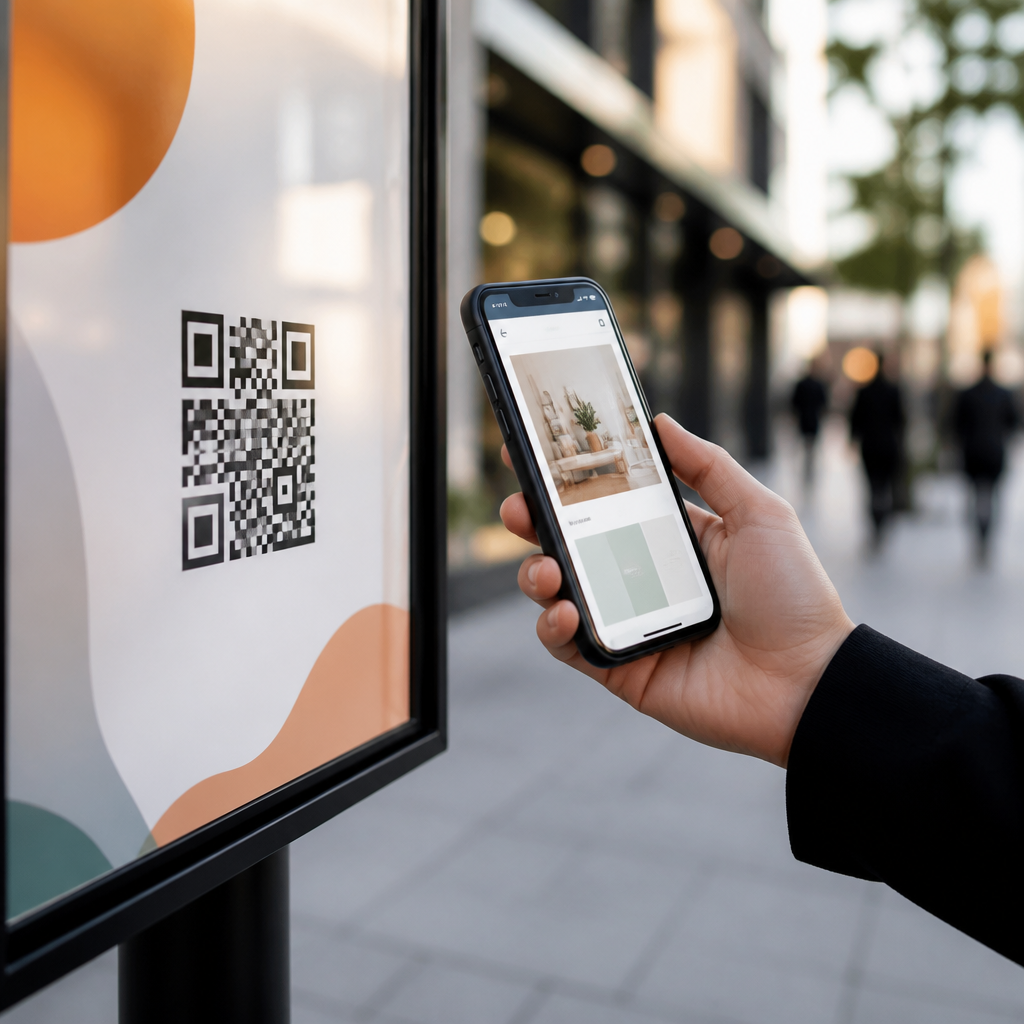
Out-of-home placements require special attention to scanning distance and dwell time. A transit shelter ad can work because pedestrians are stationary for a moment; a highway billboard usually cannot because scanning while driving is unsafe and impractical. In these environments, size, contrast, and call-to-action copy determine usability. The code should have adequate quiet zone space, strong foreground-to-background contrast, and a plain instruction such as “Scan to see prices,” “Scan for today’s menu,” or “Scan to claim 15% off.” Decorative codes often underperform when the pattern becomes harder to read under glare or low light.
In direct mail testing, I have repeatedly seen response improve when the code is paired with a clear value exchange and a deadline. “Scan to get your quote” is weaker than “Scan by Friday for a free estimate and same-week scheduling.” The lesson is not that urgency always wins, but that the offer must justify the scan. A printed code without a specific benefit is just another graphic element.
Use QR codes in retail, packaging, and in-store experiences
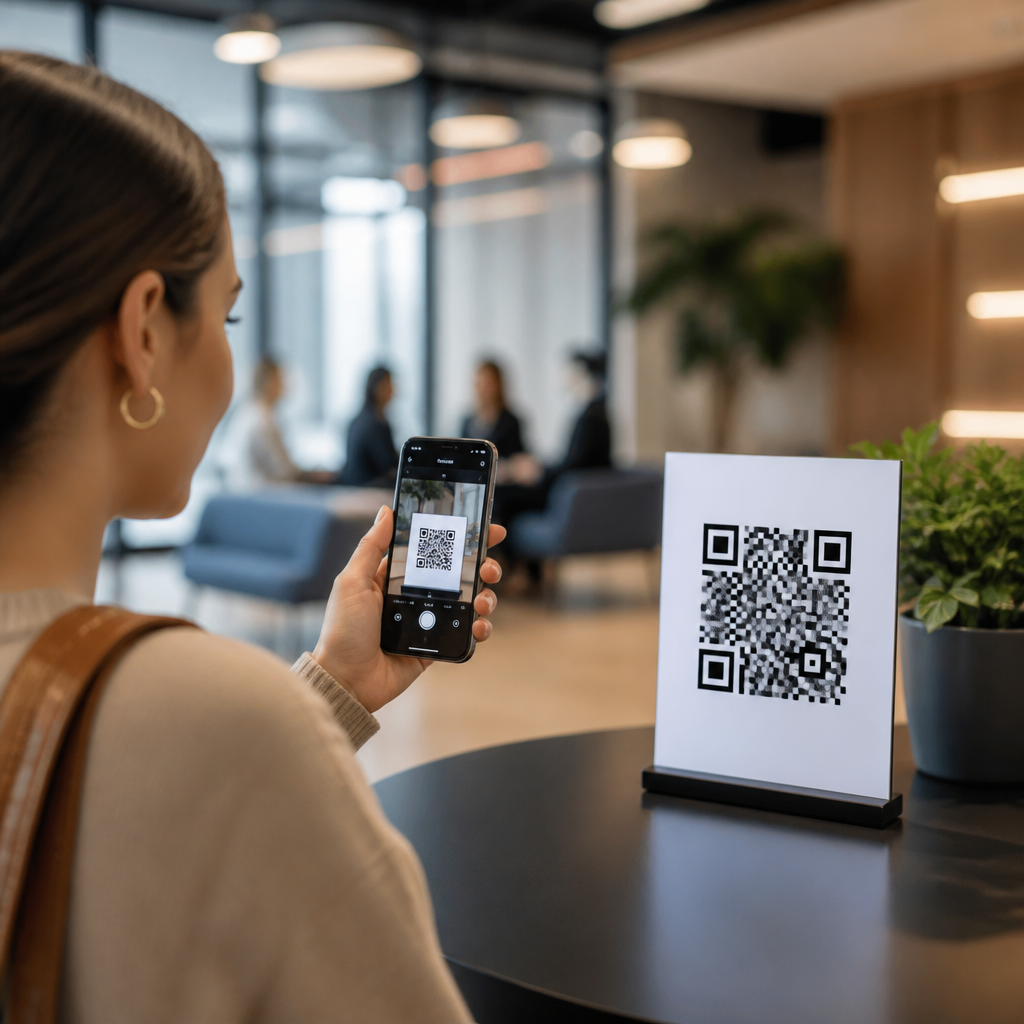
Retail and product packaging are where omnichannel QR codes become especially powerful because they support both pre-purchase and post-purchase moments. On shelf talkers, endcaps, and window displays, QR codes can open buying guides, shade finders, customer reviews, stock availability, or localized promotions. Beauty brands often use codes beside testers to deliver tutorials and before-and-after content. Consumer electronics brands use packaging codes to simplify setup, warranty registration, and accessory recommendations. Food and beverage brands use them for recipes, sourcing stories, loyalty entries, or allergen details.
Packaging codes should be treated as permanent service assets, not one-time campaign devices. After purchase, customers want setup instructions, troubleshooting, refill ordering, and support access. A code on a coffee machine box that opens a quick-start video reduces support burden and improves early satisfaction. A code on supplement packaging that links to ingredient sourcing, dosage guidance, and subscription reorder options can increase trust and repeat purchase. Because packaging often remains in homes for months, dynamic routing is essential. You may need to update compliance language, swap retired videos, or change promotional offers without reprinting cartons.
For brick-and-mortar stores, align QR code destinations with inventory and location data when possible. If a shopper scans a display for a product that is unavailable in that branch, send them to a nearby stock checker or ship-to-home page. The best in-store QR experiences remove uncertainty. The worst send users to a broad homepage where they must start over on a small screen while standing in an aisle.
Extend QR code campaigns through events, email, social, and service channels
Events are ideal for QR code deployment because attendees are already primed to interact. Booth graphics, badges, table tents, presentation slides, and product demo stations can all carry different codes for different intents: scheduling meetings, downloading technical sheets, entering giveaways, or joining post-event nurture flows. In B2B settings, I prefer separate codes for top-of-funnel materials and bottom-of-funnel actions. A visitor who wants a spec sheet should not be forced into the same path as a buyer ready to book a demo. Distinct pathways improve lead quality and downstream sales reporting.
Email and social media also benefit from QR codes, though the use case differs from offline media. In email, a QR code can help users shift devices smoothly, such as scanning from a desktop inbox to complete a mobile app installation or mobile wallet coupon save. In social, codes are useful in videos, livestreams, printed creator merchandise, and screenshots shared across platforms. Restaurants, venues, and local businesses often use Instagram stories and printed tabletop codes together so the same promotion is visible both online and on premises, creating reinforcement rather than duplication.
Customer service is an underused channel for omnichannel QR codes. Insert codes into packaging inserts, invoices, receipts, manuals, service vans, and support emails to route customers to FAQs, return portals, installation videos, or chat. This reduces friction after purchase and protects margins by lowering avoidable support contacts. For field service businesses, technicians can leave behind a QR-enabled care guide that prompts customers to review the service, book maintenance, or access warranty terms. Those touches extend the relationship beyond the initial transaction.
Design, testing, and governance practices that improve scan rates
Good QR performance is rarely accidental. Start with technical reliability: use high error correction only when branding elements are added, keep the code large enough for the expected scanning distance, and maintain contrast and whitespace. Test on both iOS and Android devices, under indoor and outdoor lighting, and on glossy as well as matte substrates. Short redirect chains are preferable because long chains can slow page load and create failure points. Always verify that the final destination is secure, mobile-friendly, and compliant with privacy requirements.
Creative decisions also affect results. The call to action should state the outcome, not merely the action. “Scan to compare plans” outperforms “Scan here.” Place codes where users naturally pause, not where they are still moving or making other decisions. If a form is involved, minimize fields. If a coupon is offered, make redemption simple at the register or online checkout. I also recommend adding a fallback short URL near the code for accessibility and edge cases where scanning fails.
Governance becomes critical as programs scale. Assign ownership for code creation, destination approval, analytics validation, and expiration review. Maintain an inventory of active codes so old links do not remain in circulation with broken destinations. Establish brand and compliance rules for codes used in regulated sectors such as healthcare, finance, alcohol, and supplements. QR codes are easy to deploy, which is exactly why they need process discipline.
Using QR codes across multiple marketing channels works best when each code is treated as a strategic entry point, not a decorative add-on. The strongest omnichannel programs connect offline and online touchpoints, send users to context-specific mobile destinations, and measure what happens after the scan with consistent attribution. Print, direct mail, retail signage, packaging, events, email, social, and service communications can all benefit, but only when the user experience matches the moment and the value of scanning is obvious.
The practical advantages are clear. QR codes shorten the path from attention to action, make physical media measurable, and give marketers flexible routing through dynamic destinations. They also support the full customer lifecycle: discovery, evaluation, purchase, onboarding, service, and retention. When implemented carefully, they improve convenience for customers and produce cleaner channel data for marketers. When implemented poorly, they send motivated users to generic pages, break attribution, and waste valuable physical impressions.
If you are building a QR codes in marketing strategy program, start by auditing your existing channels and identifying where customers currently face friction moving from offline to online. Then assign one clear objective to each QR placement, create mobile-first landing pages, standardize tracking, and test relentlessly. That disciplined approach turns QR codes from simple scan tools into a dependable omnichannel marketing system.
Frequently Asked Questions
How can businesses use QR codes effectively across multiple marketing channels?
Businesses use QR codes most effectively when they treat them as part of a connected customer journey rather than as isolated campaign add-ons. A QR code can appear on product packaging, direct mail, in-store signage, event booths, print ads, email graphics, social content, and even presentation materials, but the real value comes from sending each audience to a purposeful destination. For example, a packaging QR code might lead to setup instructions, loyalty rewards, or product education, while a code in a retail display could deliver a limited-time offer or product comparison page. In email or social campaigns, QR codes can help bridge users from one device or environment to another, such as moving someone from a desktop email to a mobile landing page, app download, or store locator.
To make this work across channels, marketers should align every QR code with a specific objective, such as capturing leads, driving purchases, increasing app installs, collecting reviews, or encouraging repeat engagement. It is also important to use campaign-specific URLs, UTM parameters, and analytics integrations so scans can be tied back to source, medium, timing, and conversion behavior. When QR codes are planned as trackable touchpoints within a broader omnichannel strategy, they help connect physical and digital interactions and give marketers a clearer view of how customers move from awareness to action.
What makes a QR code campaign successful in an omnichannel marketing strategy?
A successful QR code campaign starts with relevance, clarity, and continuity. Relevance means the code appears in a place where scanning makes sense and provides immediate value. A shopper looking at packaging may want product details, usage tips, or a discount on their next purchase. An event attendee may want a fast way to register, download resources, or connect with a sales team. A direct mail recipient may be more likely to scan if the code leads to a personalized landing page rather than a generic homepage. If the destination matches the user’s context and intent, scan rates and conversions tend to improve.
Clarity matters just as much. People need a reason to scan, so the call to action should be explicit. Phrases like “Scan to see how it works,” “Scan for today’s offer,” or “Scan to claim your reward” outperform vague placement with no explanation. Continuity is the final piece. Once someone scans, the landing experience should feel consistent with the original channel, campaign, and message. The design, offer, and next step should all align. When businesses combine contextual placement, strong calls to action, mobile-friendly destinations, and accurate performance tracking, QR codes become a dependable bridge between channels instead of a disconnected marketing gimmick.
How should marketers track and measure QR code performance across different channels?
Marketers should measure QR code performance the same way they evaluate any serious acquisition or engagement channel: by looking beyond raw scans. Scan volume is useful, but it is only the starting point. The more meaningful metrics include unique scans, repeat scans, landing page engagement, bounce rate, form completions, purchases, coupon redemptions, app installs, and assisted conversions. These indicators help determine whether a code is simply attracting attention or actually driving business outcomes. To compare performance across channels, each QR code should use a distinct destination URL or a URL tagged with channel-specific campaign parameters so traffic can be separated cleanly in analytics tools.
Dynamic QR codes are especially valuable because they allow marketers to update destinations without reprinting the code and often include built-in reporting. Combined with web analytics, CRM data, and marketing automation platforms, they make it possible to see how a scan from a package, flyer, shelf display, or social asset contributes to later actions. Businesses should also evaluate environmental factors such as placement, visibility, time of day, device type, and conversion path length. In practice, the best reporting framework connects each code to a clear goal and then compares not only who scanned, but what they did next and whether that action supported revenue, retention, or customer engagement targets.
What are the best practices for designing QR codes and landing pages that people will actually use?
The best-performing QR codes are easy to scan, easy to trust, and easy to act on. From a design standpoint, the code needs strong contrast, sufficient size, and enough surrounding white space to be read quickly by a phone camera. It should not be distorted, crowded by other elements, or placed where lighting, curvature, glare, or distance makes scanning difficult. If branding is added, such as a logo or custom color treatment, usability should always come first. A visually attractive code that does not scan reliably will undermine the campaign. Placement also matters. QR codes should appear where people naturally pause and have time to use a phone, such as packaging panels, checkout counters, event signage, mailers, menus, or product displays.
Just as important is the destination after the scan. The landing page should load fast, display well on mobile devices, and continue the promise made by the call to action. If the code says “Scan for 20% off,” the discount should be immediate and obvious. If it says “Scan to watch the demo,” users should not have to hunt through a homepage to find it. Effective pages reduce friction by keeping forms short, minimizing unnecessary navigation, and making the next step clear. Trust signals such as recognizable branding, secure URLs, and concise copy also improve completion rates. In short, the scan experience succeeds when both the code and the page are designed around speed, relevance, and convenience.
Are dynamic QR codes better than static QR codes for multi-channel marketing campaigns?
For most multi-channel marketing campaigns, dynamic QR codes are the better choice because they offer flexibility, control, and measurement that static codes cannot. A static QR code points to a fixed destination that cannot be changed once printed or distributed. That can work for simple, permanent use cases, such as linking to a basic contact card or evergreen information page. However, in a live marketing environment where offers change, landing pages evolve, and optimization is ongoing, static codes can become limiting very quickly. If a URL changes, a promotion expires, or a campaign needs adjustment, a static code often requires a full redesign and reprint.
Dynamic QR codes solve that problem by allowing the destination URL to be edited while the visible code stays the same. This is especially useful when the same campaign spans packaging, retail displays, direct mail, print materials, and event assets over time. Marketers can update messaging, test different landing pages, route visitors by geography or device, and maintain continuity without replacing the code in every channel. Dynamic codes also support stronger analytics, making it easier to monitor scan behavior and optimize results. While static codes still have a place in low-maintenance or permanent applications, dynamic QR codes are generally the smarter option when campaigns need attribution, agility, and long-term scalability across multiple customer touchpoints.