How to Keep QR Campaign Messaging Consistent Across Channels starts with one principle: every scan should feel like part of the same conversation, no matter where the customer found the code. In omnichannel marketing with QR codes, consistency means the offer, tone, visual identity, landing-page experience, and next step remain aligned across print, packaging, email, social, retail signage, direct mail, events, and paid media. When that alignment breaks, response rates drop because customers hesitate, question legitimacy, or land on a page that does not match what they were promised. I have managed QR campaigns across retail, events, and product packaging, and the strongest performers always shared a disciplined messaging system before any codes were generated.
QR codes are no longer a novelty. They are a routing layer between physical and digital touchpoints. A customer sees a shelf talker, scans, and enters a mobile coupon flow. Another sees the same promotion in an email, taps through, and expects the same headline, value proposition, and redemption terms. A third scans from a trade-show banner and expects a page optimized for speed, relevance, and tracking. Omnichannel marketing with QR codes works when these journeys differ in format but not in promise. The message can adapt to context, yet the core meaning must remain stable.
That matters because QR campaigns sit at the intersection of brand, media, analytics, and customer experience. The code itself is not the campaign. The campaign is the system around it: placement, call to action, destination URL, UTM framework, creative assets, incentive structure, and post-scan follow-up. If one channel says “Get 20% off today” while another says “Unlock exclusive member pricing,” and both routes lead to a generic homepage, the customer experiences friction instead of continuity. Consistency reduces cognitive load, improves trust, and makes attribution cleaner because each asset maps to a defined campaign structure rather than ad hoc execution.
For marketers building a hub around omnichannel marketing with QR codes, the practical question is straightforward: how do you preserve one campaign message while tailoring delivery to each channel? The answer is a combination of message architecture, shared creative rules, controlled link governance, disciplined measurement, and channel-specific testing. When those elements are documented and enforced, QR campaigns scale without drifting. When they are ignored, teams create duplicate destinations, conflicting offers, and reports that cannot explain performance. The sections below show how to build a repeatable framework that keeps QR campaign messaging consistent across channels and strong enough to support every related effort in a broader marketing strategy.
Build a message architecture before you create any QR code
The most effective QR campaigns begin with a message architecture, not a design file. In practice, that means defining five items in a single source document: the campaign objective, audience segment, core promise, proof points, and desired action. I usually add approved variants for short-form placements, because a package label, a bus shelter, and an Instagram story do not allow the same amount of copy. The critical rule is that each variation must preserve the same promise. If the campaign is about booking a demo in exchange for an industry benchmark report, every channel should communicate that exact exchange in plain language.
Consistency depends on separating fixed elements from flexible elements. Fixed elements are the campaign name, value proposition, offer terms, destination experience, and compliance language. Flexible elements are CTA length, supporting copy, image crop, and context cue. For example, a healthcare provider promoting vaccine appointments might use “Book your flu shot in minutes” as the fixed promise. In-store posters can add location relevance, email can mention patient portal convenience, and paid social can highlight nearby availability. The language changes slightly, but the customer never wonders whether these are different offers.
A documented hierarchy prevents common drift. The headline should carry the primary promise. Subhead copy should explain what the user gets after scanning. CTA text should state the next action, such as “Scan to book” or “Scan to claim.” Proof points should support the claim with specifics: same-day pickup, clinician availability, loyalty points, or product tutorial access. This is especially important when multiple teams touch the campaign. Retail marketing, CRM, social, and field teams often rewrite copy for their own channels. Without a controlled hierarchy, the same QR campaign turns into several loosely related messages that dilute performance.
One discipline that consistently improves results is creating a messaging matrix before asset production. The matrix aligns channel, audience state, creative format, CTA, and destination. That prevents a direct-mail QR code from sending users to an awareness-stage page while store signage sends them to a conversion-stage page using the same visual campaign identity. It also reveals where internal linking signals should point within your content ecosystem, such as related articles on QR code landing pages, QR code tracking, or mobile conversion optimization.
Match landing pages, offers, and calls to action across touchpoints
A QR code campaign fails the moment the landing page breaks the promise made by the scan prompt. Message consistency is not just visual consistency; it is expectation consistency. If a flyer says “Scan for the spring menu and a free appetizer,” the landing page must immediately show the spring menu, explain redemption, and support mobile use without pinch-and-zoom. Sending users to the restaurant homepage forces them to search, creates doubt, and lowers conversion. In my experience, landing-page mismatch is the single most common cause of underperforming QR campaigns.
Use destination governance to prevent that problem. Every QR code should map to a controlled URL inventory with naming conventions, ownership, expiration policy, and redirect logic. Dynamic QR codes are usually the right choice because they let you update destinations without reprinting physical assets, but that flexibility needs rules. If a code appears on product packaging with a six-month shelf life, do not redirect it to a short seasonal page that disappears after two weeks. Route it to a durable campaign page with modular content blocks that can evolve while keeping the central message intact.
The CTA should also stay stable. If the physical poster says “Scan to save your offer,” the landing page button should not suddenly say “Learn more.” The action should progress naturally from scan intent to completion intent. This continuity matters for accessibility and speed as well. Strong QR destinations keep forms short, compress images, preserve headline language above the fold, and make redemption steps explicit. Google Analytics 4, Adobe Analytics, or Matomo can then track scan-origin behavior cleanly because users enter a path designed for the campaign rather than wandering through generic site navigation.
| Channel | Typical QR Use | Consistency Risk | Best Practice |
|---|---|---|---|
| Packaging | Instructions, loyalty, recipes, registration | Offer expires before product is used | Use evergreen page with campaign modules |
| Retail signage | Coupons, product details, inventory lookup | Store message differs from paid media | Match headline and promotional terms exactly |
| Cross-device redemption, app download, event check-in | Tap-through and scan paths diverge | Keep offer, CTA, and destination identical | |
| Direct mail | Appointments, quotes, localized offers | Print lead time causes outdated links | Use dynamic codes and redirect governance |
| Events | Lead capture, session materials, demos | Generic page ignores attendee context | Create event-specific page with same campaign promise |
Create channel adaptations without changing the core message
Omnichannel marketing with QR codes does not mean cloning one asset everywhere. It means adapting execution to context while preserving strategic consistency. A customer at a bus stop has seconds of attention and variable connectivity. A customer reading a catalog at home has more time and may compare products. A shopper holding packaging in a store needs reassurance about ingredients, warranty, or setup. The core message remains the same, but the support copy and visual emphasis should reflect the use case. Good omnichannel teams understand this difference between consistency and sameness.
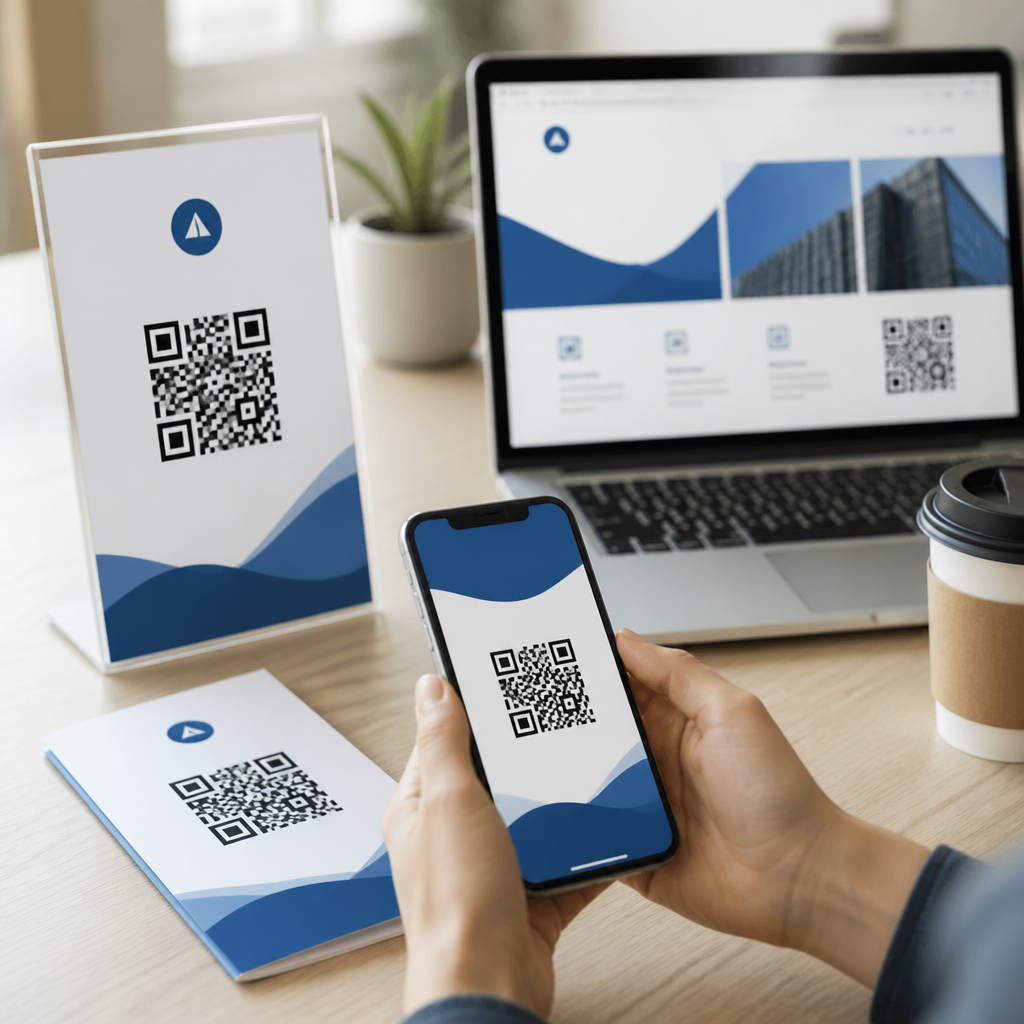
Start with a campaign spine: one approved headline, one concise supporting statement, one standardized offer description, one design system, and one destination family. Then create channel-specific wrappers. For out-of-home, use large code sizing, high contrast, and a CTA that explains the benefit in six words or fewer. For email, place the QR code alongside a fallback button because not every user will scan from a desktop environment. For retail displays, include a short URL beneath the code for accessibility and edge cases. For social video, show the same headline verbally and visually before presenting the code.
Real-world brands handle this well when they treat QR codes as part of campaign operations rather than isolated graphics. Consumer packaged goods companies often place QR codes on boxes for recipes, sustainability disclosures, or loyalty sign-up. The best implementations repeat the same wording found in paid social and on-site banners, then personalize the destination based on product SKU or region. B2B event marketers do something similar by using session-specific QR codes that still carry the same conference-wide message architecture: what the attendee gets, why it matters, and what happens next.
Governance makes this scalable. A shared asset library should include approved CTA language, logo lockups, contrast rules, minimum quiet zone requirements, and device-testing standards. Brand teams should review not only how the code looks but also how the linked page behaves. I have seen campaigns with perfect visual compliance fail because a local team rewrote the form intro, changed incentive wording, or added unnecessary fields. Messaging consistency lives in the whole journey, not just the printed square.
Use analytics, taxonomy, and testing to catch inconsistency early
You cannot keep QR campaign messaging consistent across channels if your measurement framework cannot reveal where inconsistency exists. Every QR asset needs a taxonomy that identifies campaign, channel, placement, audience, creative version, geography, and date range. UTM parameters remain useful, but they should be paired with a campaign registry so teams know which destination and message belong to each code. Without that registry, reporting turns into guesswork, especially when the same promotion appears in stores, emails, direct mail, and partner materials simultaneously.
In GA4, I recommend validating three levels: scan source quality, landing-page engagement, and conversion continuity. Scan source quality asks whether placements generate meaningful visits rather than accidental scans. Landing-page engagement looks at engaged sessions, scroll depth, and key events. Conversion continuity checks whether users complete the action implied by the original CTA. If a QR poster promises appointment booking but most users bounce after reading service details, the issue is probably message mismatch or an overlong booking flow. If one channel has much lower conversion despite similar scan volume, compare on-asset wording first.
Testing should focus on clarity before creativity. Marketers often A/B test colors or code placement while ignoring more important variables such as benefit statement, offer framing, and destination relevance. In one retail campaign I worked on, replacing “Discover more” with “Scan for store-only savings” increased qualified sessions because the value was explicit and channel-specific without changing the underlying offer. Another useful test is headline mirroring: using the exact same phrase on the physical asset and the landing page hero. That simple continuity often lifts trust and speeds comprehension.
Operational reviews matter too. Before launch, run a cross-channel consistency audit covering asset copy, redirects, analytics tags, page load speed, legal terms, and redemption logic. After launch, review search queries, on-site behavior, and support tickets for evidence of confusion. Customers reveal inconsistency quickly through questions like “Is this the same offer?” or “Why did the code take me somewhere else?” When that feedback appears, treat it as a messaging defect, not just a customer service issue.
Build an omnichannel QR hub that supports long-term strategy
As a hub within a broader QR Codes in Marketing Strategy topic, this page should guide teams toward repeatable execution, not one-off tactics. The goal is to create a durable operating model for omnichannel marketing with QR codes. That model includes documented messaging rules, channel playbooks, template landing pages, analytics standards, and internal pathways to deeper content on QR code design, dynamic versus static codes, retail activation, packaging strategy, and attribution. A hub page earns its value by connecting those pieces into a system marketers can actually use.
Long-term consistency also depends on lifecycle planning. QR campaigns rarely stay confined to one launch window. A code on a brochure may remain active for months. Packaging may circulate long after a promotion ends. Store signs may be reused by local teams. That is why evergreen destination strategy, redirect controls, and archival procedures are essential. When a campaign sunsets, the code should still lead somewhere coherent: a current product page, a support resource, or a refreshed offer page that clearly explains the next best action.
Cross-functional ownership is the final requirement. Marketing sets message architecture, but web teams manage destinations, analytics teams maintain taxonomy, legal approves claims, and field teams control local deployment. The strongest organizations appoint one campaign owner responsible for message integrity from printed asset to post-scan conversion. That role reduces version sprawl and ensures every customer-facing touchpoint tells the same story. In omnichannel marketing with QR codes, alignment is not a branding nicety. It is the mechanism that turns scans into measurable business outcomes.
Keeping QR campaign messaging consistent across channels is ultimately a discipline of alignment. Define one core promise, carry it through every asset, and make the landing experience match exactly what the customer was told to expect. Use dynamic codes with governance, adapt creative to context without changing the message, and track every placement with a clear taxonomy. When teams follow those rules, QR codes stop behaving like isolated tactics and start performing as a connected omnichannel system.
The payoff is practical: higher trust, smoother mobile journeys, cleaner attribution, and better conversion rates from the same media spend. Customers do not have to reinterpret your campaign every time they encounter it in a new channel. They recognize the offer, understand the action, and move forward with confidence. That is what effective omnichannel marketing with QR codes looks like in real execution.
If you are building or fixing a QR program, start by auditing one live campaign across every touchpoint today. Compare the headline, CTA, destination, and offer terms line by line. Tighten what differs, document what works, and use that framework as the standard for every future launch.
Frequently Asked Questions
Why is message consistency so important in QR campaigns across different marketing channels?
Message consistency matters because a QR code is not just a shortcut to a page; it is a continuation of the customer’s experience. When someone scans a code from product packaging, an email, a direct mail piece, a retail sign, or a social post, they expect the same core promise to carry through. If the offer changes, the tone feels different, the design looks unrelated, or the landing page pushes a different next step, trust drops immediately. Customers hesitate when they feel unsure whether they are in the right place or whether the promotion is still valid, and that hesitation lowers scan-to-conversion rates.
In omnichannel marketing, consistency helps reduce friction. It reassures people that the brand recognizes them and that the campaign is intentional, not fragmented. A consistent QR experience also makes performance stronger because it reinforces recall. If the same headline, visual cues, value proposition, and call to action appear across print, packaging, email, social, in-store signage, and paid media, customers process the message faster and act with more confidence. In practical terms, consistency improves recognition, strengthens credibility, supports attribution, and makes it easier to optimize campaign elements without confusing the audience.
What parts of a QR campaign should stay consistent across channels?
The most important elements to keep aligned are the offer, the brand voice, the visual identity, the landing-page experience, and the next step you want the customer to take. The offer should remain recognizable no matter where the code appears. That does not mean every execution must be identical, but the core value proposition should be stable. If one channel promotes a discount, another should not suddenly emphasize a contest or unrelated content unless that difference is clearly planned and communicated.
Brand voice is equally important. A playful social ad that leads to a stiff, overly formal landing page creates a disconnect. The same applies to design. Colors, typography, imagery style, logo use, and campaign naming should feel connected so that the customer immediately knows they are still interacting with the same brand and campaign. The landing page should also reflect the source experience without breaking the larger campaign message. For example, the wording on the page should echo the headline or CTA near the QR code, and the page should clearly deliver what the code promised.
Finally, the conversion path should stay coherent. If the QR code invites users to “shop now,” “claim your offer,” or “learn more,” the destination should support that exact action with minimal ambiguity. The more consistent these components are, the more likely customers are to move forward without second-guessing what they scanned.
How can marketers keep QR messaging aligned while still adapting creative for different channels?
The key is to separate what must remain fixed from what can be tailored. Your campaign should have a defined messaging framework that includes the primary value proposition, approved headlines, tone guidelines, campaign visuals, and the intended call to action. These are the non-negotiable elements that create continuity. From there, individual channels can adapt the format, length, and presentation based on audience behavior and platform constraints.
For example, a direct mail piece may need a more explanatory introduction, while retail signage may rely on shorter copy and stronger visual hierarchy. Social may be more conversational, and packaging may focus on utility or urgency. Those adjustments are appropriate as long as the core message remains intact. A good practice is to create a campaign playbook that shows how the QR code should be introduced in each environment, what language is approved, which landing page variants are connected to each placement, and how the CTA should appear.
It also helps to centralize review before launch. Many inconsistencies happen when teams working on email, paid media, packaging, and in-store materials build assets independently. A shared approval process, version control for copy and design, and a single source of truth for URLs and QR destinations can prevent mixed messaging. Adapt the execution to the channel, but protect the promise behind the scan.
What are the most common mistakes that make QR campaign messaging feel inconsistent?
One of the biggest mistakes is allowing the QR code to promise one thing while the landing page delivers something else. This can happen when campaigns evolve over time, when pages are updated without coordinating with offline materials, or when teams reuse old QR codes for new promotions. Even small mismatches, such as different discount amounts, outdated dates, or conflicting calls to action, can create enough doubt to reduce conversions.
Another common problem is inconsistent branding. If a printed flyer uses one set of campaign visuals and the destination page uses a different color palette, headline, or tone, users may think they have landed on the wrong page. Poor continuity is especially damaging on mobile, where users make quick trust decisions. Confusing transitions, slow-loading pages, and generic destinations also weaken performance because they make the scan feel disconnected from the original context.
Marketers also run into trouble when they over-customize by channel. Tailoring creative is useful, but if each team rewrites the offer, changes the CTA, or swaps in unrelated messaging, the campaign loses its unified identity. Finally, a lack of testing is a major issue. Every QR code placement should be checked in the exact environment where it appears to confirm that the message, page content, user experience, and next step all match the customer’s expectations.
How do you measure whether QR campaign messaging is truly consistent and effective across channels?
Start by measuring both experience consistency and performance consistency. On the experience side, audit every placement where the QR code appears and compare the surrounding message, the design treatment, the destination page, and the conversion path. Ask whether a customer scanning from packaging, print, email, social, retail signage, or event collateral would feel they entered the same campaign story. This kind of audit often reveals breaks in tone, offer clarity, or visual continuity that analytics alone will not show.
On the performance side, track scan rate, click-through behavior after the scan, bounce rate, time on page, conversion rate, and downstream actions by channel. If one source has strong scan volume but weak conversions, that often signals a mismatch between the message near the QR code and the landing-page experience. Use channel-specific tracking parameters and QR code management tools so you can identify where drop-off happens. Segment by placement, device, geography, and campaign variant when relevant.
It is also useful to gather qualitative feedback. Internal testing, customer service insights, retail staff observations, and user session recordings can show where people become uncertain. If users ask whether the offer is still active, whether they scanned the correct code, or what they are supposed to do next, those are warning signs of inconsistency. The goal is not just to make every asset look similar, but to ensure every scan feels like a seamless continuation of the same message, the same brand promise, and the same intended next step.