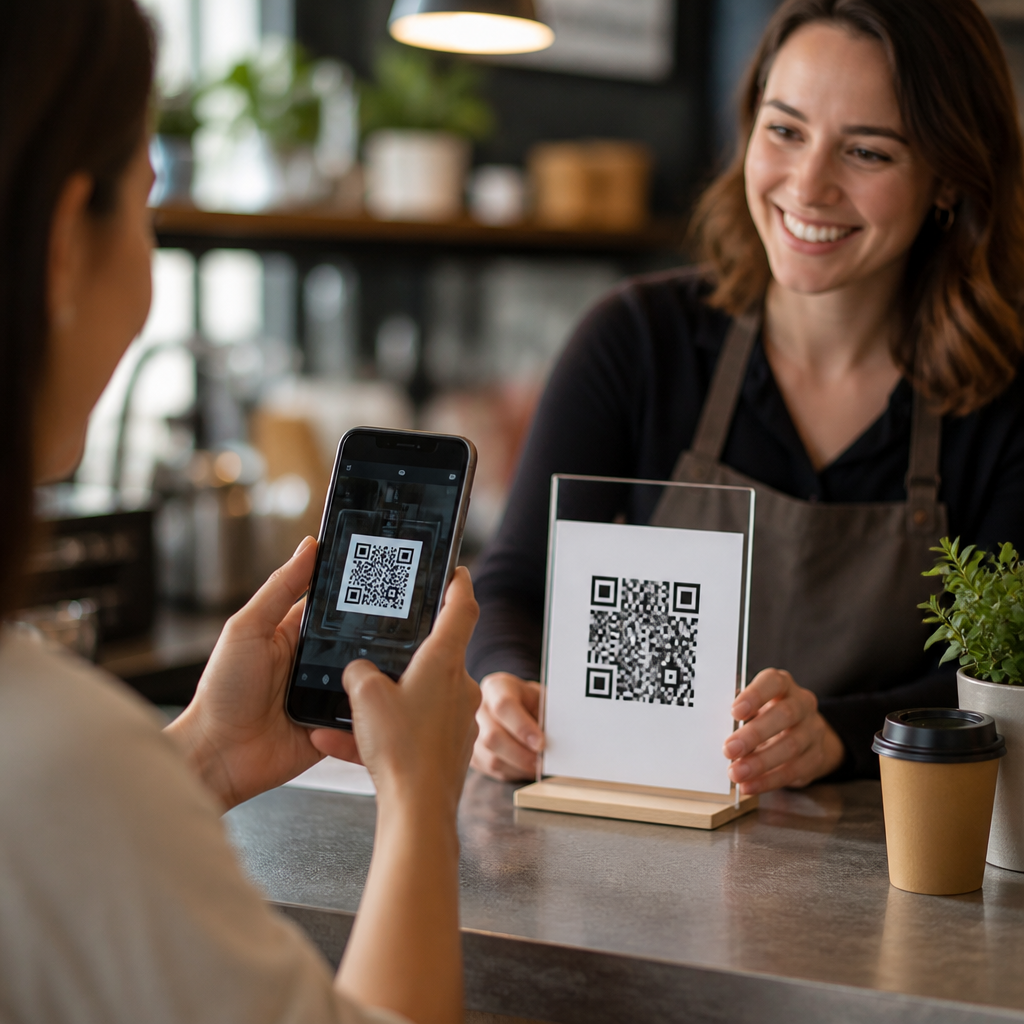
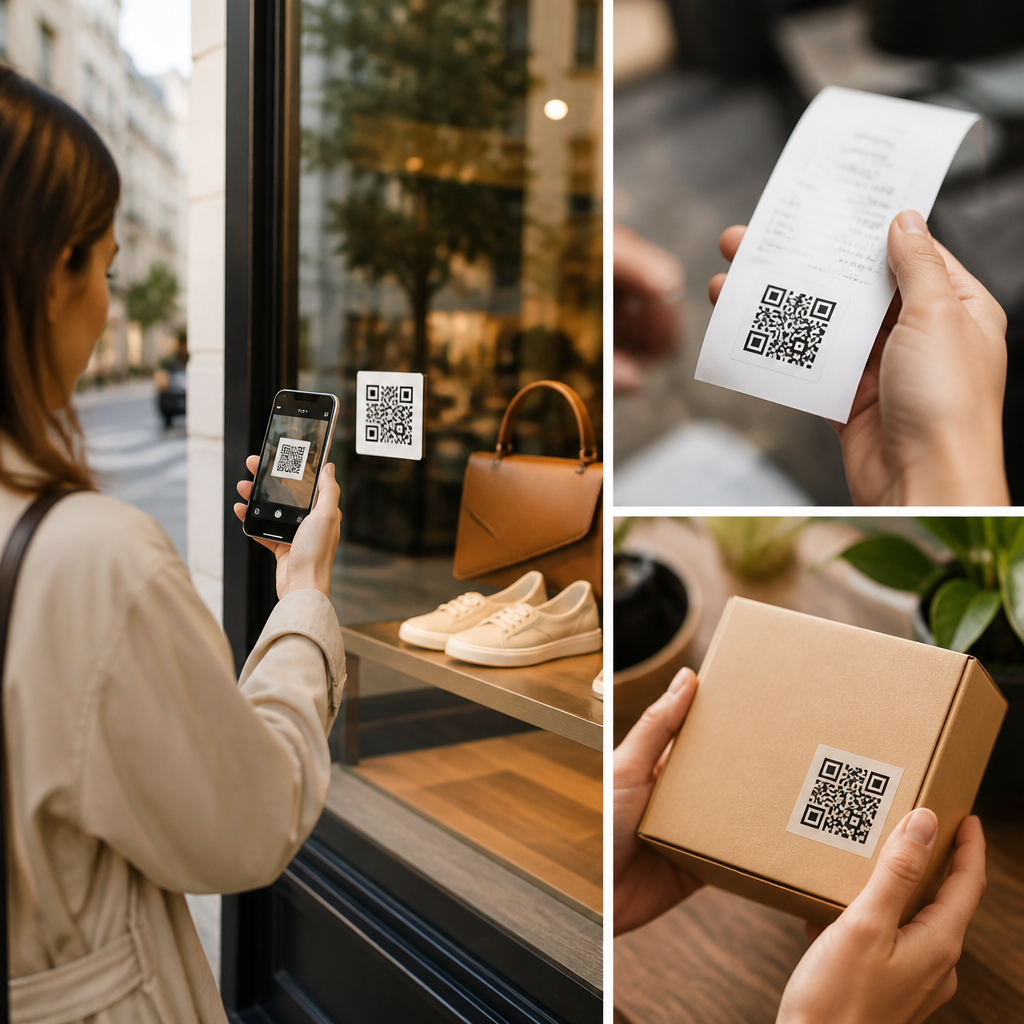
QR codes have become one of the most practical bridges between physical marketing and digital action, especially for retailers, restaurants, consumer brands, and local service businesses that need customers to move seamlessly from seeing a message to doing something measurable. In omnichannel marketing, that bridge matters because customers rarely stay in one place: they notice a promotion in a store window, complete a purchase at the counter, revisit the brand through packaging at home, and later return through email, social, search, or a loyalty app. A well-planned QR code strategy connects those moments into one journey.
Using QR codes across store windows, receipts, and packaging is not just about adding a scannable square to printed materials. It is about matching customer intent to context. Store windows reach passersby before they enter. Receipts reach confirmed buyers immediately after purchase. Packaging reaches customers after the sale, often when attention is high and the product is physically in hand. Each touchpoint supports different goals, different calls to action, and different measurement methods, yet together they create a coordinated omnichannel system.
When I plan QR code campaigns for physical businesses, I treat each placement as a distinct media channel. Window QR codes are top-of-funnel acquisition tools. Receipt QR codes are conversion and retention tools. Packaging QR codes are post-purchase engagement and advocacy tools. That separation prevents a common mistake: sending every scanner to the same generic homepage. People scan because they want a fast answer, offer, instruction, or next step. If the landing experience does not immediately fulfill that expectation, scan rates may look acceptable while business impact stays weak.
This hub article explains how omnichannel marketing with QR codes works, why these three placements matter, what customers expect from each one, and how to structure campaigns that produce useful data. It also outlines design standards, analytics practices, and operational considerations that turn QR codes from a novelty into a dependable performance channel. For marketers building a broader QR code marketing strategy, this page provides the framework that supporting articles can expand into execution details for each surface, audience, and conversion goal.
Why Omnichannel Marketing with QR Codes Works
Omnichannel marketing means creating one connected customer experience across physical and digital touchpoints. QR codes are effective in this model because they reduce friction at the exact moment curiosity appears. A customer standing outside a shop can scan to see menu items, inventory, opening hours, or a limited-time offer without typing a URL. A buyer holding a receipt can scan to join a rewards program or download a warranty guide. A customer opening packaging can scan for setup videos, refill options, care instructions, or a referral incentive.
The core advantage is immediacy. Mobile users generally act when intent is fresh, and QR codes capture that moment faster than search, manual URL entry, or app navigation. Camera-based scanning is now standard on iPhone and Android devices, which removed the old adoption barrier of needing a separate scanning app. As a result, brands can use QR codes as low-friction connectors between offline attention and online action, while still tracking campaign performance through tagged URLs, platform analytics, and conversion events.
These placements also support different business objectives across the funnel. Store windows can drive awareness, footfall, reservations, lead capture, and after-hours browsing. Receipts can increase repeat purchase rate, review volume, survey participation, and loyalty enrollment. Packaging can reduce support costs, improve onboarding, grow subscription revenue, and generate user-generated content. The omnichannel benefit comes from designing those touchpoints to work together rather than in isolation.
Using QR Codes in Store Windows
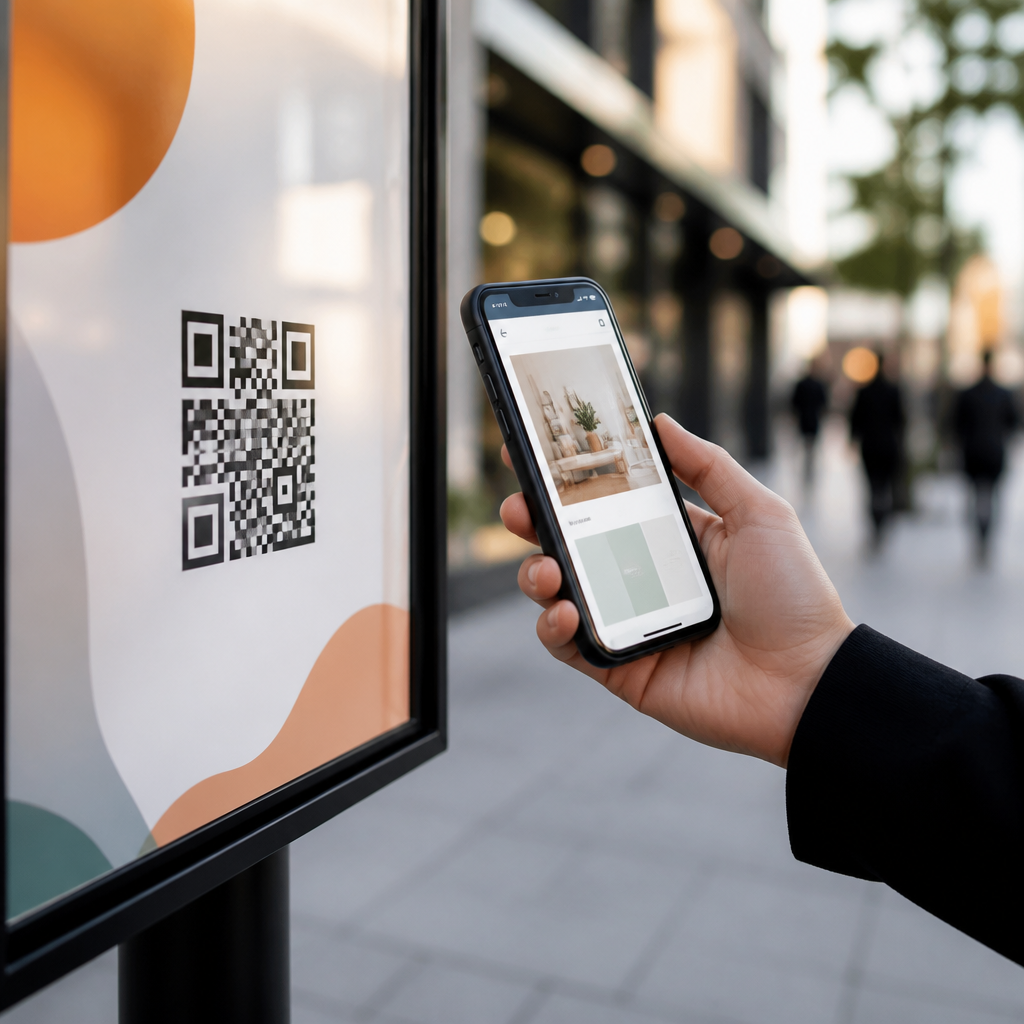
Store window QR codes are often the first physical-to-digital interaction a customer has with a brand. Their job is to convert attention into a measurable next step, even when the store is closed or busy. Effective window codes answer immediate questions: What do you sell? What does it cost? Are there current offers? Can I order now? Can I book an appointment? Can I browse before walking in?
Context matters more here than anywhere else. People scanning through glass may be standing, walking, carrying bags, dealing with glare, or scanning from a sidewalk. The code must be large enough to scan from a realistic distance, printed with strong contrast, and paired with a direct call to action such as “Scan for today’s menu,” “Scan to book a fitting,” or “Scan for 10% off your first order.” I recommend testing scanability from several angles and distances, including at night and in bright sun, because reflective surfaces and interior lighting can degrade performance.
Landing pages for window QR codes should be mobile-first and action-first. A restaurant might send users to a live menu with order-ahead and reservation buttons. A salon might direct scanners to stylist availability and online booking. A boutique might feature new arrivals, store hours, and a first-visit incentive. The page should load quickly, avoid forcing immediate app downloads, and present one primary action above the fold. If the offer requires email capture, make the value explicit.
Window QR codes are especially strong for after-hours commerce. I have seen retailers recover otherwise lost demand by linking closed-store traffic to local inventory pages, appointment forms, or click-and-collect options. That is valuable because interest outside operating hours is often invisible without a scanning mechanism. A code turns a passive display into a measurable storefront channel.
Using QR Codes on Receipts
Receipt QR codes work because the customer has already converted once. That changes the psychology of the interaction. At this stage, the customer does not need broad brand education. They need a relevant reason to stay connected. The strongest receipt experiences extend the transaction into retention, feedback, or support.
Common receipt goals include loyalty program enrollment, digital receipt access, product registration, satisfaction surveys, review generation, reorder links, and personalized offers tied to the purchase. For example, a coffee chain can print a code that adds points to a loyalty account with one scan. A home goods retailer can link to assembly instructions for purchased items. A pharmacy can connect to refill reminders and care information, while maintaining privacy safeguards and compliance procedures.
Timing is the strategic advantage. The receipt is delivered when the purchase is still mentally active, so response rates can exceed those from delayed follow-up emails, especially for walk-in traffic where you may not yet have customer contact details. That makes receipt QR codes a strong tool for converting anonymous buyers into identifiable customers in a compliant way.
There are limits. Thermal receipt paper can fade, and cramped designs reduce scan success. The code should not compete with mandatory transaction data, and staff should understand the value proposition so they can mention it naturally when appropriate. If the destination page asks for too much information, customers will drop. Keep the exchange simple: one scan, one immediate benefit, one optional next step.
Using QR Codes on Packaging
Packaging QR codes extend the customer relationship into the usage phase, which is where many brands either deepen loyalty or lose momentum. Unlike windows and receipts, packaging reaches customers in a lower-pressure environment, usually at home. Attention can be high because the product is being opened, assembled, tasted, applied, or stored. That makes packaging ideal for education, activation, and repeat revenue.
For consumer packaged goods, a packaging code can lead to recipes, origin stories, nutritional details, refill subscriptions, or retailer-specific promotions. For electronics, it can open setup videos, firmware instructions, troubleshooting guides, and registration forms. For cosmetics, it can link to shade tutorials, ingredient explanations, and replenishment reminders. For apparel, it can deliver care instructions, styling recommendations, and returns guidance.
This touchpoint also supports cost reduction. Clear instructional content reduces support tickets and product returns caused by confusion rather than defects. I have seen brands cut repetitive service inquiries by placing QR-linked how-to content directly on the box instead of burying support links in email footers. The customer gets help at the moment of need, and the business gets lower service friction.
Packaging can also power advocacy. A post-purchase landing page can invite customers to share a review, upload a photo, join a community, or refer a friend after they have had enough product experience to respond credibly. The key is sequencing. Do not ask for a review the moment the box is opened unless the product category supports immediate feedback. Ask first whether the customer needs setup help, then present community and referral actions later.
Matching Placement to Goal, Content, and Metrics
The most effective omnichannel QR code programs are structured by intent. Each placement should have a dedicated destination, unique tracking parameters, and a metric that reflects its role in the customer journey. That discipline makes optimization possible and prevents the reporting confusion that happens when every code points to one generic campaign page.
| Placement | Primary customer intent | Best landing experience | Core metrics |
|---|---|---|---|
| Store window | Explore before entering or buying | Hours, inventory, menus, booking, first-visit offer | Scans, click-through, bookings, store visits, orders |
| Receipt | Continue relationship after purchase | Loyalty signup, survey, review, digital receipt, reorder | Enrollments, survey completion, repeat purchase, reviews |
| Packaging | Use product successfully and reengage | Setup help, tutorials, care, subscription, referral | Activations, support deflection, repeat orders, referrals |
Use separate URLs or dynamic QR routing for each placement, then tag destination links with campaign parameters that feed into analytics platforms such as Google Analytics 4, Adobe Analytics, HubSpot, or Shopify reports. If a code opens an app, use deferred deep linking where possible so the user lands on the intended content after installation. For in-store campaigns, pair scan data with point-of-sale timing, loyalty identifiers, or redemption codes to connect scans to revenue more reliably.
Design, Governance, and Measurement Best Practices
Good QR code performance depends on execution details. Use error correction carefully, preserve adequate quiet space around the code, and test across common phone cameras. Contrast should be high, especially on glass, kraft packaging, or glossy labels. Branded styling can improve recognition, but overdesigned codes often fail in real conditions. Reliability matters more than decoration.
Landing pages must be fast, secure, and relevant. HTTPS is mandatory. Avoid pop-ups that obscure content immediately after load. If location matters, ask for it only when needed and explain why. If personal data is collected, link to a clear privacy notice. For regulated sectors such as healthcare, alcohol, finance, or supplements, confirm that the destination content and claims align with legal requirements and platform policies.
Governance is equally important. Maintain a QR code inventory with owner, placement, destination URL, launch date, and status. Broken or outdated links damage trust quickly, especially on packaging that remains in circulation for months. Dynamic QR code platforms can help by allowing destination updates without reprinting, but they require access control, naming standards, and periodic audits. I recommend quarterly scans of all live physical placements, plus event-based reviews whenever pricing, product availability, or promotions change.
Measurement should move beyond raw scans. A scan is interest, not value. Track completed actions such as reservations, coupon redemptions, loyalty joins, support article views, subscription starts, and repeat purchases. Where possible, compare outcomes by placement, creative, and offer. A window code promoting “Browse the menu” may outperform “Get 10% off” if the audience is primarily deciding whether to enter, while the opposite may be true in tourist-heavy areas. Testing reveals intent patterns that broad assumptions miss.
QR codes work best when every physical touchpoint leads to a useful digital next step. Treat store windows, receipts, and packaging as connected channels, not isolated print surfaces. Give each one a clear purpose, a landing experience matched to customer intent, and metrics tied to business outcomes. That is how omnichannel marketing with QR codes becomes measurable, scalable, and genuinely helpful for customers.
For most brands, the opportunity is immediate. Start by auditing existing physical materials, choose one high-intent action for each placement, and build mobile pages that answer the customer’s next question without delay. Then tag, test, and refine. When QR codes are deployed with discipline, they increase convenience for customers and create a stronger link between offline visibility and digital performance. Use this hub as the foundation for a broader QR code marketing strategy, and turn every scan into a purposeful step in the customer journey.
Frequently Asked Questions
How can businesses use QR codes effectively on store windows?
Store windows are one of the best places to use QR codes because they reach people before they enter, after hours, and even when they are just passing by. A well-placed window QR code can turn casual foot traffic into measurable digital engagement by sending people to a menu, booking page, coupon, product launch, waitlist, loyalty signup, or store locator. The key is to match the destination to the shopper’s immediate context. Someone scanning from a sidewalk usually wants quick information or an easy next step, not a long-form experience. That means the landing page should load fast, display clearly on mobile, and give the user a simple action such as “shop now,” “claim offer,” “book appointment,” or “see today’s specials.”
Design and placement matter just as much as the offer itself. The code should be large enough to scan from a comfortable distance, printed with strong contrast, and positioned where glare, reflections, or door handles will not interfere. Businesses should also include a short call to action that explains exactly why someone should scan, such as “Scan for 10% off,” “Scan to browse in-stock items,” or “Scan to order ahead.” Without that instruction, many customers will not take the extra step. For businesses with multiple campaigns, dynamic QR codes are especially useful because they allow the destination to be updated without reprinting the window signage, making it easier to rotate promotions, seasonal messaging, or local offers while still tracking performance.
What makes QR codes on receipts valuable for retailers and restaurants?
Receipts are highly effective because they reach customers at the exact moment a transaction has already taken place. That makes them ideal for extending the relationship beyond the purchase. Instead of treating the receipt as a purely operational document, businesses can use a QR code to invite customers into a next step that supports retention, feedback, and repeat revenue. Common examples include review requests, satisfaction surveys, loyalty enrollment, digital receipts, reorder pages, coupon offers for a future visit, care instructions, and personalized product recommendations. In restaurants, a receipt QR code can lead to catering information, online ordering, reservation booking, or rewards membership.
The real advantage is that receipts tie QR use to a completed action, which makes attribution much clearer. A business can measure how many purchasers scan, what percentage join a loyalty program, how many return to redeem a follow-up offer, or whether post-purchase engagement differs by location, cashier, daypart, or campaign. To improve results, the call to action should be specific and relevant to the customer’s recent experience. “Scan to earn points on this purchase” is usually more compelling than a generic “Learn more.” Timing also matters. A short survey might work well immediately, while a reorder reminder may be more effective if the linked page presents a future-use discount. When used thoughtfully, receipt QR codes help businesses transform a routine proof of purchase into a practical retention tool.
Why are QR codes on packaging so effective for post-purchase engagement?
Packaging is often the longest-lasting physical touchpoint a brand has, which makes it a powerful place for QR codes. Unlike store signage or promotional flyers that may only be seen briefly, packaging can stay with the customer for days, weeks, or even longer. That creates multiple chances to drive digital action after the initial sale. Brands can use packaging QR codes to connect customers to setup instructions, how-to videos, recipes, refill programs, warranty registration, subscription options, product authentication, sustainability information, cross-sell recommendations, or customer support. For consumer goods in particular, packaging helps move the relationship from one-time purchase to ongoing brand interaction.
Packaging QR codes are especially valuable in omnichannel marketing because they connect the in-home experience back to measurable digital behavior. A customer might first notice a product in a retail setting, buy it in person, and only later scan the code at home when they are ready to learn more or repurchase. That delayed interaction is important because it captures intent outside the store environment. To get the best results, businesses should place the code where it is easy to find without disrupting essential design elements, and they should pair it with a clear message such as “Scan for setup help,” “Scan for refill options,” or “Scan to verify authenticity.” The destination should reflect the product’s stage in the customer journey. Post-purchase content works best when it reduces friction, answers likely questions, and gives the customer a reason to stay connected to the brand after the sale.
What are the best practices for making QR codes easy to scan and more likely to convert?
Successful QR code campaigns depend on both technical quality and user experience. At the most basic level, the code must be easy to scan across a range of devices, lighting conditions, and distances. That means using sufficient size, strong color contrast, a clean background, and enough quiet space around the code so phone cameras can recognize it quickly. It is also important to test the code in the actual environment where it will appear. A code that scans perfectly on a computer screen may perform poorly when placed behind reflective glass, printed too small on textured packaging, or positioned where a customer must stand at an awkward angle. Businesses should test with different phones and in real-world conditions before rolling out a campaign broadly.
Conversion, however, depends on more than scanability. Customers need a reason to act and a frictionless experience after they scan. The call to action should explain the benefit immediately and avoid vague wording. The landing page should be mobile-friendly, fast-loading, and tightly aligned with the promise made near the code. If the sign says “Scan for today’s menu,” the page should open directly to that menu, not a generic homepage. If the receipt says “Scan to review your visit,” the user should not have to search for the correct form. Businesses should also use trackable links, campaign tagging, and dynamic QR platforms when appropriate so they can measure scans, conversions, device behavior, and campaign performance over time. In short, the best QR codes do three things well: they scan instantly, they clearly communicate value, and they lead to a simple next step.
How should businesses measure the success of QR codes across windows, receipts, and packaging?
Measurement should go beyond raw scan counts. While scans provide a useful starting point, they do not tell the whole story. Businesses should define success based on the purpose of each placement. A store window QR code might be judged by coupon redemptions, appointment bookings, or after-hours product views. A receipt QR code may be measured by loyalty signups, review submissions, survey completion rates, or repeat purchase behavior. A packaging QR code might be evaluated through warranty registrations, reorders, subscription enrollments, support deflection, or video completion. Each location in the customer journey serves a different function, so each should have its own performance benchmarks.
To measure accurately, businesses should use separate QR codes or tagged URLs for each placement, even when they point to similar content. That makes it possible to compare what happens when someone scans from a front window versus a printed receipt or a product box at home. Dynamic QR codes are particularly useful because they allow destinations to be updated while preserving reporting continuity. It is also wise to connect QR performance data with broader analytics platforms, CRM systems, and point-of-sale information whenever possible. This helps reveal not just who scanned, but what those users did next and whether the action contributed to revenue, retention, or customer satisfaction. Over time, these insights allow marketers to refine calls to action, landing pages, placement strategy, and campaign timing so QR codes become a reliable and measurable part of omnichannel marketing rather than a one-off tactic.