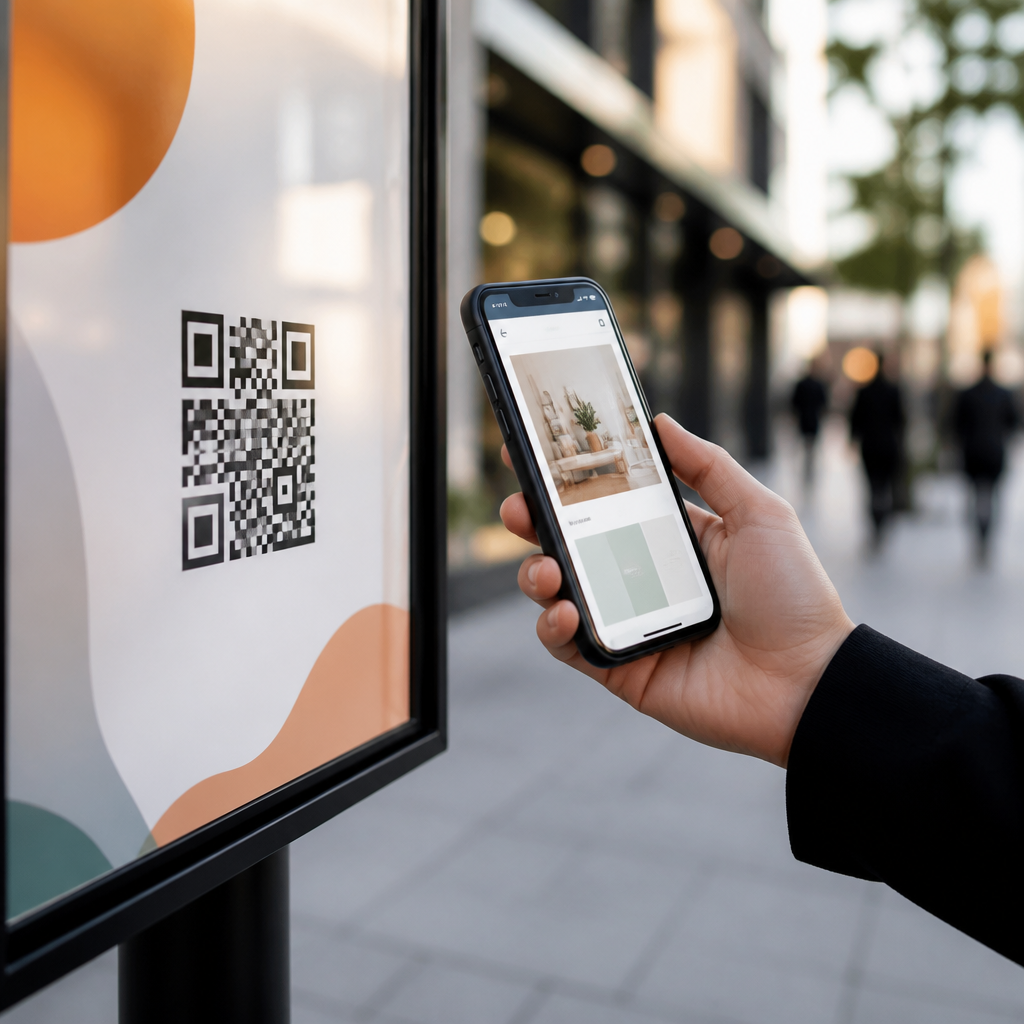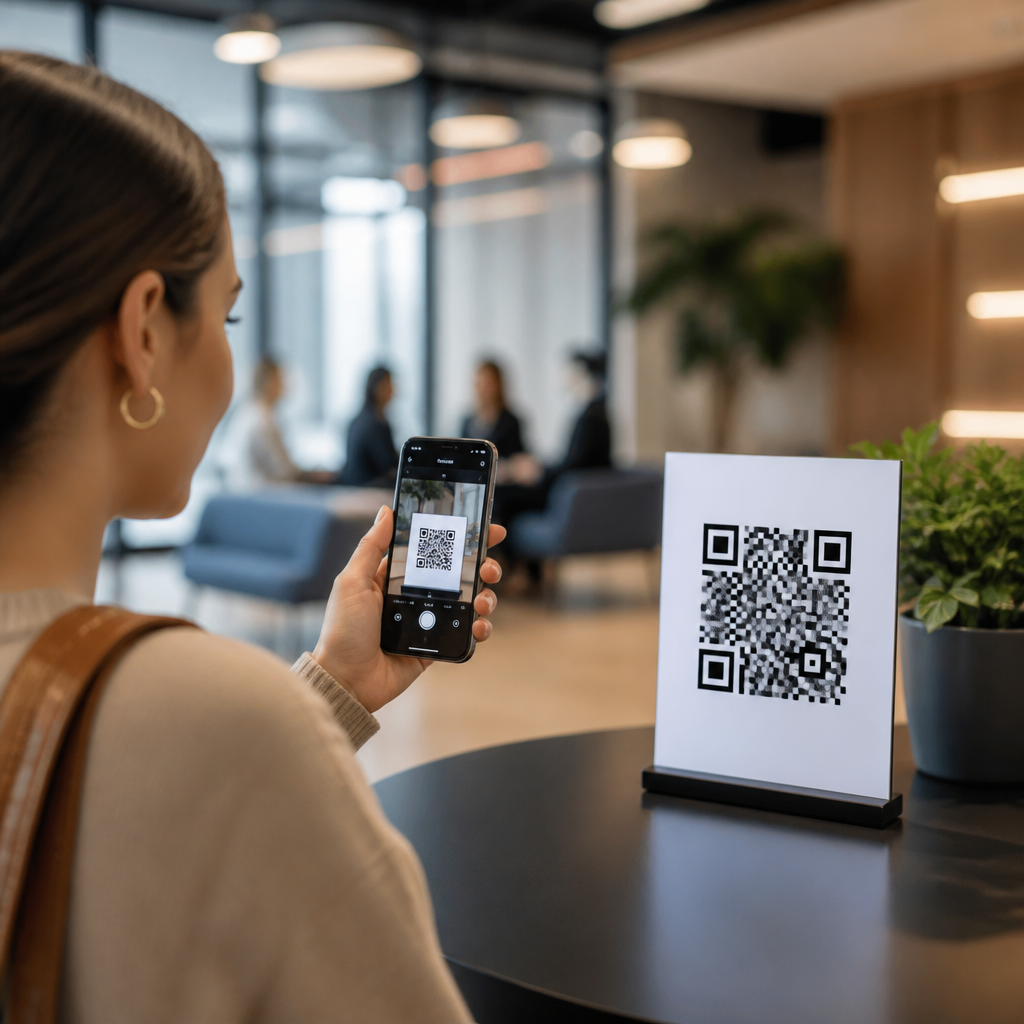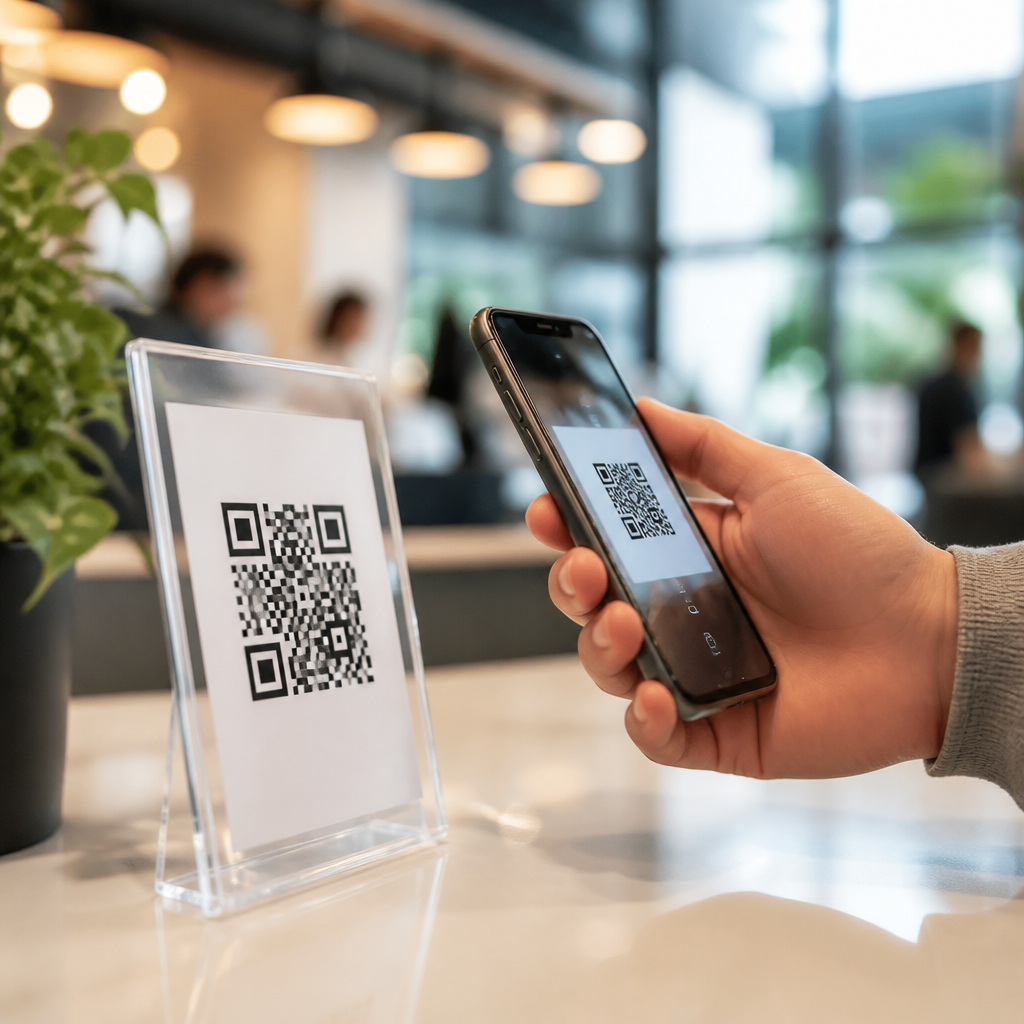
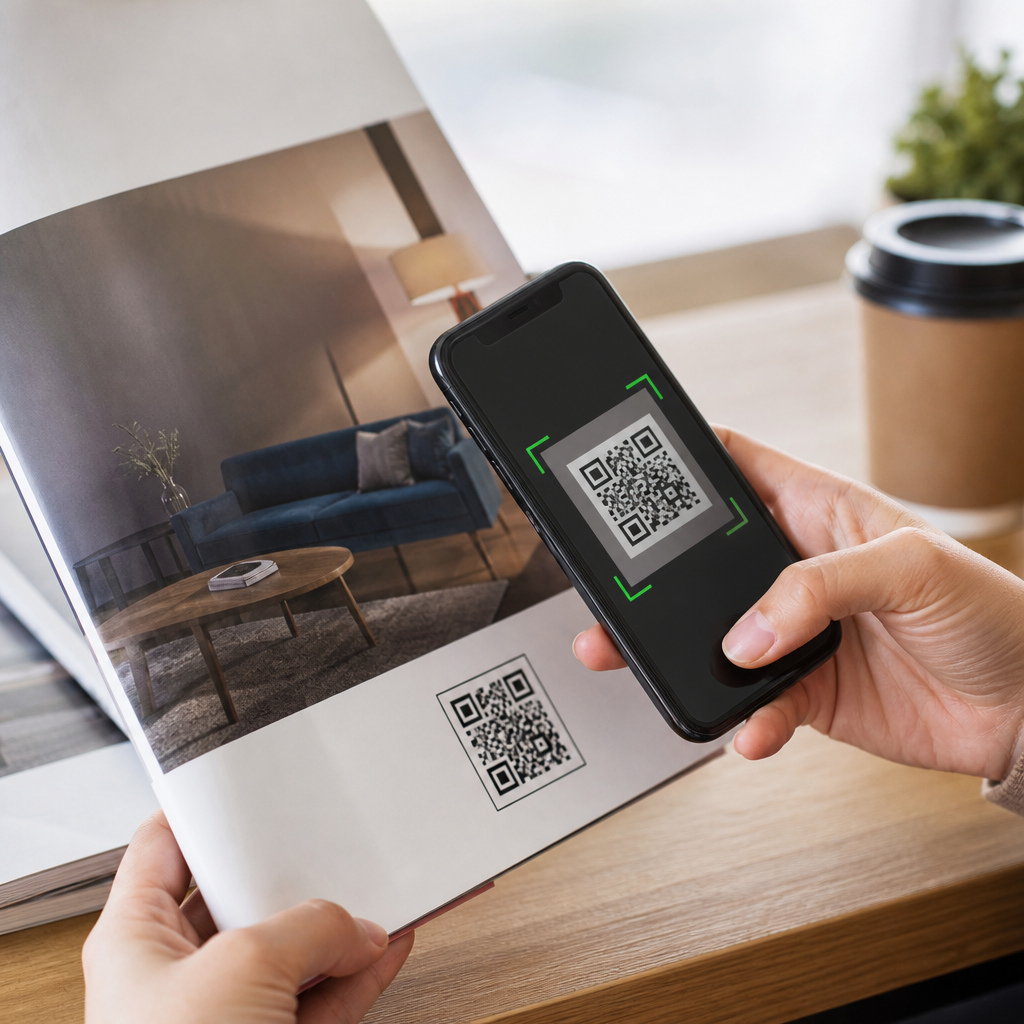
Print ads still earn attention in places digital banners cannot reach, but attention alone does not create revenue. To generate leads from print ads using QR codes, marketers need a clear bridge between offline interest and online action. A QR code, or quick response code, is a scannable matrix barcode that opens a digital destination when a smartphone camera reads it. In lead generation, that destination is usually a landing page, form, scheduling tool, offer page, or messaging channel designed to capture contact details and buying intent. I have used QR codes across direct mail, magazine ads, trade show handouts, packaging inserts, and outdoor placements, and the pattern is consistent: when the code, offer, and destination align, response quality improves dramatically.
This matters because print remains credible, targeted, and memorable, especially in local markets, B2B niches, healthcare, home services, education, and events. Yet print has always faced one frustrating limitation: attribution. A phone number or vanity URL can help, but both add friction. QR codes remove that friction by turning a static ad into a measurable conversion path. They also let teams track scans by source, creative, time, and geography, then connect those actions to CRM records and sales outcomes. For marketers building a broader QR code marketing strategy, lead generation is one of the highest-value use cases because it ties media spend directly to pipeline. The goal is not simply to get scans. The goal is to capture qualified leads, enrich intent data, and move prospects into a follow-up sequence sales can actually use.
At a practical level, successful QR code lead generation depends on five elements: audience fit, compelling offer, mobile-first destination, reliable tracking, and disciplined follow-up. Miss one, and performance drops. For example, a luxury real estate ad may attract scans, but if the form is long, slow, or poorly matched to the property segment, conversion rates will suffer. On the other hand, a short valuation request form tied to a neighborhood-specific print insert can generate fewer but far better leads. In this hub article, I will break down how to design, place, track, and optimize QR codes for lead generation from print ads so the channel produces measurable business results rather than untraceable brand lift.
How QR Codes Turn Print Attention Into Qualified Leads
The core mechanic is simple: the print ad creates interest, the QR code provides instant access, and the landing experience captures data. What makes this effective is reduced cognitive load. Instead of asking someone to remember a URL, type it later, or call during business hours, the ad invites immediate action in the moment of attention. That moment matters. In campaigns I have managed, scan rates were highest when the offer answered a practical question quickly, such as “See pricing,” “Get the buyer guide,” “Book a free assessment,” or “Check availability near you.” Generic calls to action like “Learn more” almost always underperformed because they did not justify the scan.
Lead quality improves when the QR code destination matches buying stage. Top-of-funnel prospects may respond to a checklist, calculator, or guide. Mid-funnel prospects are more likely to submit a form for a consultation, quote, demo, or appointment. Bottom-funnel prospects often prefer instant routes such as click-to-call, live chat, or calendar booking. This is why QR codes for lead generation should never send all traffic to the homepage. A homepage asks the visitor to do the marketer’s sorting work. A dedicated landing page does the sorting in advance and improves conversion odds.
Dynamic QR codes are usually the better choice for print campaigns because the destination URL can be changed after the ad is distributed. If a landing page breaks, inventory changes, or a sales team wants to test a different offer, the printed code remains usable. Dynamic platforms also provide analytics such as scan counts, device type, time, and sometimes approximate location. Static codes have a place for permanent evergreen destinations, but for lead generation they are often too rigid. Once thousands of brochures or mailers are printed, flexibility becomes valuable.
Another benefit is attribution clarity. By assigning unique dynamic QR codes to each publication, mailing list segment, store region, or creative version, teams can compare performance at a granular level. A local clinic, for instance, can run one code in a neighborhood newsletter, another in a commuter rail poster, and another in direct mail, then see which source drives the most booked consultations. That level of visibility lets marketers optimize spend instead of treating print as a black box.
Build the Right Offer and Landing Page Before You Print
The best QR code cannot rescue a weak offer. People scan when the value exchange feels immediate and relevant. For lead generation, strong offers usually fall into several categories: savings, access, diagnosis, personalization, or urgency. A home services brand might offer a seasonal maintenance checklist plus a discount. A university program might offer a course guide and application deadline reminders. A software company advertising in an industry magazine might offer a benchmark report tied to the reader’s sector. Specificity wins because it signals relevance.
Your landing page must be built for mobile first, not mobile friendly as an afterthought. Most scans happen on phones, often in environments with distractions, glare, or weak connectivity. Keep load times fast, use one clear headline that mirrors the ad promise, and place the form above the fold when possible. If the lead magnet needs explanation, use short benefit bullets and minimal visual clutter. In my experience, reducing a form from seven fields to three can double conversion rate without materially hurting downstream qualification, especially if progressive profiling is available later through email nurturing or sales outreach.
Match the ad context to the form depth. A person scanning a transit shelter poster is giving you a smaller commitment than someone reading a niche trade journal. For low-attention placements, ask only for essentials: name, email, and perhaps ZIP code. For higher-intent placements, such as conference print materials or premium direct mail, you can ask for company, role, budget range, or project timeline. The test is straightforward: if each additional field does not improve routing or follow-up enough to offset conversion loss, remove it.
Compliance and trust signals matter. Include a short privacy note near the form, state what the user will receive, and avoid bait-and-switch copy. If the ad promises a quote, do not force the user through a long educational funnel first. If the page collects regulated data in healthcare, finance, or education, align with relevant rules and internal security standards. Trust affects lead volume and quality.
Design Print Ads and QR Codes for High Scan Rates
QR codes fail most often because of design mistakes, not technology. The code must be easy to notice, easy to scan, and clearly worth scanning. Size depends on placement distance, but a common rule is that the scanning distance should be about ten times the code width. A code printed at 2 centimeters wide is suitable for close reading, while posters and signage need larger dimensions. Always test from realistic angles and lighting conditions on multiple phones, including older devices.
Contrast is essential. Dark code on a light background remains the safest standard. Brand styling is fine if it does not compromise the finder patterns or quiet zone around the code. Many marketers over-customize with low contrast, gradients, or busy backgrounds, then wonder why scans are weak. If brand aesthetics conflict with readability, readability should win. Error correction can help when adding a logo, but it is not a license to obscure the pattern excessively.
Placement and instruction also influence response. A QR code should sit near the call to action, not as an isolated afterthought in a corner. Add microcopy that tells users exactly what happens next: “Scan to get a sample kit,” “Scan to book your consultation,” or “Scan to download the 2025 pricing guide.” That small line removes ambiguity and improves intent. In A/B tests I have run, explicit next-step copy consistently outperformed vague labels.
| Print placement | Best QR offer | Typical form length | Main optimization focus |
|---|---|---|---|
| Direct mail postcard | Estimate, coupon, appointment | Short to medium | Fast load and local relevance |
| Magazine ad | Guide, demo, case study | Medium | Message match and credibility |
| Trade show handout | Demo booking, spec sheet | Medium to long | Sales routing and follow-up speed |
| In-store signage | Loyalty signup, product finder | Short | Immediate incentive |
| Outdoor poster | Locator, quick quote, SMS opt-in | Very short | Readability at distance |
One more practical rule: provide a fallback URL for users who cannot scan. This does not replace the QR code, but it protects response and accessibility. Use a short, memorable URL that points to the same campaign page or a close equivalent. Print is expensive; do not lose prospects over a solvable usability issue.
Tracking, Attribution, and CRM Integration
If you cannot connect scans to leads and leads to revenue, you do not yet have a dependable lead generation system. Start by giving every print source its own campaign parameters and, ideally, its own dynamic QR code. Append UTM parameters for source, medium, campaign, content, and placement. Then ensure your analytics platform captures sessions and conversions correctly. Google Analytics 4 can handle campaign traffic, but you also need form tracking, call tracking where relevant, and CRM mapping so contacts carry source data into the sales pipeline.
Most serious teams connect QR campaigns to a CRM such as HubSpot, Salesforce, Zoho, or Microsoft Dynamics. The minimum useful setup includes hidden fields that capture campaign parameters, automated lead assignment rules, and a timestamp for the first touch. Better setups add enrichment from tools like Clearbit, ZoomInfo, or native CRM enrichment, plus offline conversion imports to ad and analytics platforms. That allows a business to compare not just cost per lead, but qualified lead rate, meeting rate, opportunity rate, and closed revenue by print source.
Attribution windows deserve attention. Print often drives delayed conversions because people scan, browse, and return later. That means last-click reporting may understate performance. Use first-touch and position-based views alongside direct QR conversions. For example, a B2B manufacturer may see only a modest number of same-session form fills from an industry catalog ad, but CRM records may show that many later demo requests originated from that initial QR scan. Without multi-touch visibility, the campaign looks weaker than it is.
Operationally, response speed matters as much as tracking. A lead generated from a print ad is still a digital lead, and the old follow-up rule applies: the first useful response often wins. If the offer is a consultation or quote, route it instantly, notify the right rep, and set service-level expectations. I have seen identical QR campaigns produce very different revenue outcomes simply because one team called within fifteen minutes while another waited until the next day.
Optimization Strategies That Improve Lead Quality Over Time
Once the campaign is live, optimization should focus on lead quality, not vanity metrics. A high scan rate with poor conversion or low sales acceptance is not success. Review the funnel in stages: impressions to scans, scans to landing page views, views to form starts, starts to submissions, submissions to qualified leads, and qualified leads to revenue. This layered view shows where friction or mismatch exists. If scans are strong but submissions are weak, the page or form is the likely issue. If submissions are high but sales rejects most leads, the offer or targeting needs refinement.
Test one meaningful variable at a time. The most productive experiments are usually call-to-action phrasing, offer framing, form length, landing page proof elements, and follow-up sequence. For a regional law firm, changing print CTA copy from “Learn your options” to “Get a free case review” increased lead conversion because the second phrase was more concrete. For a SaaS brand, replacing a general ebook with an industry-specific ROI calculator reduced lead volume but improved demo booking rate, which made the campaign more profitable.
Segmentation improves results further. Different audiences respond to different intents, so create separate codes and pages for each segment when feasible. A university recruiting adult learners should not send them to the same page as first-time undergraduates. A hospital service line should separate elective procedures from urgent care inquiries. A commercial roofing company should distinguish property managers from homeowners. Precision in the print-to-page journey raises relevance, and relevance raises conversion quality.
Finally, treat this article’s topic as a hub within a broader QR code marketing strategy. Lead generation works best when connected to related assets such as QR code landing page best practices, CRM integration guides, print ad creative standards, local campaign tracking, and post-scan nurturing workflows. Build those supporting pages, interlink them clearly, and use the hub to define the overall process. That structure helps both users and search systems understand your authority on QR codes for lead generation.
Common Mistakes to Avoid and a Practical Action Plan
The most common mistakes are predictable: sending scans to the homepage, using static codes for time-sensitive campaigns, printing codes too small, hiding them in cluttered layouts, offering vague value, asking for too much data too soon, and failing to route leads quickly. Another frequent error is assuming every audience wants the same next step. A restaurant may do well with a loyalty signup or SMS club, while an enterprise cybersecurity company needs a consultation request backed by strong qualification and calendar availability. Context decides the right conversion path.
A reliable rollout plan is straightforward. Define the audience and stage of intent. Choose one offer that solves a real problem. Create a dedicated mobile-first landing page with a concise form. Generate a dynamic QR code with campaign parameters. Place the code prominently in the print ad with explicit scan instructions. Test the code on multiple devices under real conditions. Connect form submissions to your CRM, automation, and sales alerts. Launch with unique codes by source or placement. Review scan, conversion, and qualification data weekly, then adjust the offer, page, or follow-up sequence based on evidence.
When done well, QR codes transform print from a hard-to-measure awareness channel into a consistent source of attributable leads. They shorten the path from interest to action, capture richer intent data, and help sales teams respond while attention is fresh. For marketers building authority around QR codes in marketing strategy, lead generation is one of the clearest proof points because it ties creative, technology, analytics, and revenue together. Start with one campaign, track every step, and improve from there. The gains come from disciplined execution, not novelty. Print still works, and with the right QR code system, it can work measurably harder for your pipeline.
Frequently Asked Questions
How do QR codes help generate leads from print ads?
QR codes turn a static print ad into a direct response channel. Instead of asking someone to remember a website, type a long URL, or search for your business later, a QR code gives them an immediate path from interest to action. When a person scans the code with a smartphone, they can be sent to a landing page, contact form, appointment scheduler, quote request page, coupon, product demo, or messaging app conversation. That removes friction, which is one of the biggest obstacles in lead generation.
They also improve measurability. Traditional print advertising often struggles with attribution because it can be difficult to know which readers actually took action after seeing an ad. With a QR code, you can track scans, sessions, conversions, form submissions, and even downstream sales if your analytics and CRM are connected. That means marketers can finally evaluate print campaigns using performance data instead of guesswork.
Just as important, QR codes let you align the user experience with the intent of the ad. A print ad promoting a free consultation can send people directly to a booking form. An ad for a limited-time promotion can link to an offer page with a simple lead capture form. A local service business can route users to a mobile-friendly contact page with click-to-call and map directions. In each case, the QR code acts as the bridge between offline attention and online conversion, making print more accountable and more effective as a lead generation tool.
What should a QR code in a print ad link to for the best lead generation results?
The best destination is usually a dedicated landing page built specifically for the print campaign. Sending people to your homepage may seem convenient, but it often reduces conversions because visitors have to hunt for the next step. A campaign-specific landing page keeps the message focused, matches the promise made in the print ad, and guides the user toward one clear action such as filling out a form, requesting a quote, downloading a resource, booking a consultation, or claiming an offer.
That landing page should be mobile-first because nearly all QR code scans happen on smartphones. It should load quickly, display clearly on smaller screens, and ask only for the information you truly need. A short form with fields like name, email, phone number, and service interest will usually outperform a longer form that feels like work. Strong headlines, concise copy, trust indicators, and a clear call to action all help increase conversion rates.
The exact destination should reflect your audience and campaign goal. If your primary objective is fast lead capture, a simple landing page with a compelling offer is ideal. If your audience is likely to need more reassurance before converting, consider linking to a page that includes testimonials, proof points, FAQs, and a contact option. For high-intent services, a scheduling page can work well because it moves prospects directly into the sales process. If immediate conversation matters most, a messaging channel such as SMS or WhatsApp may be effective. The key is to make the post-scan experience feel like a natural continuation of the print ad rather than a generic website visit.
What makes a QR code print ad more likely to get scans and conversions?
Successful QR code print ads are clear, relevant, and easy to act on. First, the ad should give readers a compelling reason to scan. “Scan to learn more” is usually too vague. Stronger calls to action explain the value directly, such as “Scan to get a free estimate,” “Scan to claim 15% off,” “Scan to book your consultation,” or “Scan to download the guide.” People are much more likely to respond when they understand exactly what they will receive.
Placement and design matter too. The QR code should be large enough to scan easily, printed with high contrast, and positioned where it does not compete with cluttered visuals or dense text. It should have enough white space around it to improve readability. In most cases, the code should be visible without forcing the reader to rotate the page awkwardly or move around to capture it. It also helps to include a short backup URL for people who prefer not to scan or have technical issues.
Conversion performance improves when the ad and landing page stay tightly aligned. If the print ad highlights a free assessment for homeowners, the landing page should repeat that exact offer and make the next step obvious. Consistency builds trust and reassures users that they landed in the right place. Adding urgency, social proof, and a low-friction form can further improve results. In practical terms, the best-performing print ads do not treat the QR code as a novelty. They treat it as the primary response mechanism and build the entire experience around making that scan feel worthwhile.
How can you track and measure leads from QR codes in print ads?
Tracking starts with using a unique QR code for each campaign, publication, audience segment, or ad variation you want to measure. That way, you can distinguish which print placements are generating scans and which are producing actual leads. Dynamic QR codes are especially useful because they allow you to update the destination URL without reprinting the ad, and they often provide scan-level reporting such as time, location, and device data.
For deeper attribution, connect the QR code destination to analytics platforms and your CRM. Add UTM parameters to the linked URL so website analytics can identify traffic from specific print campaigns. Set up conversion tracking for form completions, booked calls, downloads, coupon claims, or any other lead action that matters to your business. If possible, pass campaign data into your CRM so you can see not only which ad generated a lead, but also which leads turned into qualified opportunities and customers.
The most useful metrics usually include scan rate, landing page conversion rate, cost per lead, and lead-to-customer rate. A high number of scans with few conversions may indicate that the offer or landing page needs improvement. A low scan volume may point to weak creative, poor QR code placement, or an unconvincing call to action. Measuring across the full funnel helps marketers move beyond vanity metrics and understand real business impact. With the right setup, print advertising becomes much easier to optimize because you can compare creative concepts, offers, publications, and geographic markets based on actual lead performance.
What are the most common mistakes to avoid when using QR codes in print advertising?
One of the biggest mistakes is linking the QR code to a generic or poorly optimized page. If the destination is slow, confusing, or not mobile-friendly, you will lose interested prospects immediately. Another common error is using a weak call to action that does not explain why someone should scan. People need a clear benefit, especially in print where distractions are fewer but motivation still matters. A code without context often gets ignored.
Technical and design mistakes can hurt results as well. Printing the QR code too small, using low contrast, crowding it with other visual elements, or placing it on curved or reflective surfaces can make scanning difficult. Some brands also fail to test the code thoroughly before launch. Every QR code should be tested across multiple phones, camera apps, lighting conditions, and print sizes to make sure the experience works reliably. If a code fails even occasionally, response rates can drop quickly.
From a strategy standpoint, many marketers stop at scans instead of optimizing for leads. A scan is only the first step. If the form is too long, the offer is weak, or the next action is unclear, traffic will not translate into revenue. It is also a mistake to use the same QR code everywhere without segmentation, because that limits your ability to identify which print placements actually perform. The most effective campaigns avoid these issues by pairing strong creative with a clear value proposition, a frictionless landing page, robust tracking, and ongoing testing. When those pieces are in place, QR codes can make print advertising far more measurable and lead-focused than many businesses expect.