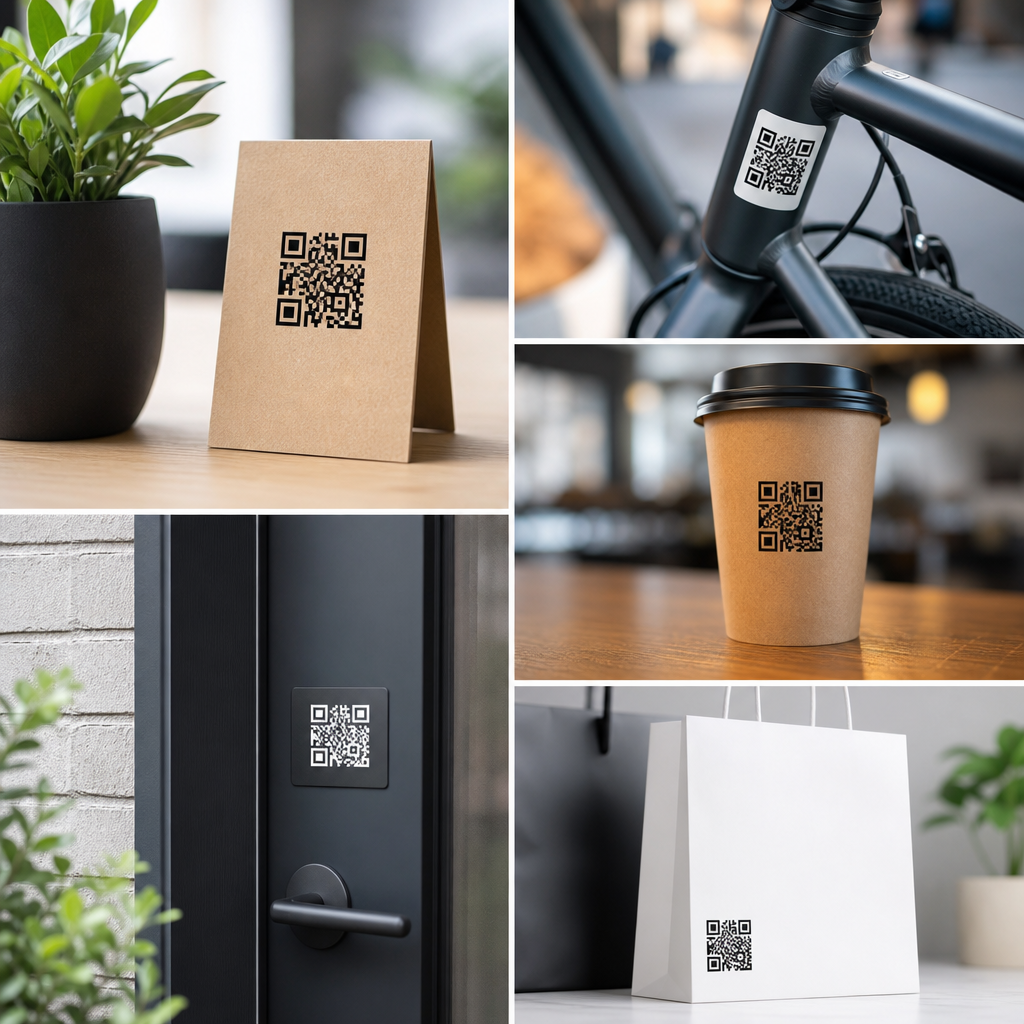
Creative QR code placement ideas can turn an ordinary scan into a memorable brand interaction, but only when placement is planned with the same care as design, messaging, and measurement. In practice, placement means the physical or digital location where a QR code appears, while a QR code campaign is the broader effort that uses scannable codes to move people from one touchpoint to another, such as from packaging to product education or from an event poster to registration. I have worked on retail launches, restaurant menus, trade show booths, and direct mail drops where the code itself was technically perfect, yet results varied dramatically because of context, visibility, and timing. That is why this topic matters. A well-placed code reduces friction, supports branding, and creates a clear next step for the audience. A poorly placed code gets ignored, scanned accidentally, or fails because the user cannot reach it comfortably. For brands building a broader QR Code Design & Branding strategy, placement is the bridge between visual identity and action. This hub article explains how to think about creative QR code campaigns, where to place codes for the highest response, what standards improve scan rates, and how to connect each placement to a measurable business goal.
What makes a QR code placement creative and effective
Creative QR code placement is not decoration. It is the deliberate matching of audience intent, environment, and destination. The best campaigns answer three questions immediately: why should I scan, what will I get, and can I do it easily right now. In my experience, the highest-performing placements combine relevance with convenience. A code on a coffee cup that links to loyalty rewards works because the user is already holding the cup and has a few seconds of attention. A code on a highway billboard often underperforms because scanning safely is impossible, even if the artwork looks striking.
Effective placement also depends on fundamentals. Codes need sufficient quiet zone, contrast, and size relative to viewing distance. As a practical rule, I recommend testing at the actual distance and angle users will experience, not just on a designer’s screen. Dynamic QR codes are usually the better campaign choice because they allow destination changes, UTM tagging, and performance tracking without reprinting materials. When brands use branded frames, logos, or custom colors, they should test across iPhone and Android camera apps, low-light conditions, and cracked-screen scenarios. Creativity should enhance usability, not compete with it.
Product packaging and labels that extend the brand experience
Packaging is one of the strongest placements because it reaches people at the moment of purchase, unboxing, or use. For consumer goods, a QR code can connect the physical product to richer digital content that packaging cannot fit, including setup videos, ingredient sourcing, warranty registration, refill reminders, and loyalty enrollment. Beauty brands use codes inside cartons for tutorials and shade-matching guidance. Food producers use them for recipes, nutrition details, and farm-to-shelf traceability. Wine labels often link to tasting notes or winemaker stories, creating a stronger premium impression than static text alone.
Placement on packaging should follow handling behavior. If customers naturally rotate a box to read ingredients, placing the code near that panel can work well. If speed matters, place it on the front or top flap with a concise call to action such as “Scan for how-to video” or “Verify authenticity.” Authentication is especially useful for high-value goods, supplements, and electronics, where counterfeit risk damages trust. For e-commerce orders, inserts and shipping boxes create additional opportunities. A code on a thank-you card can prompt reviews, referrals, or replenishment. A code on a return insert can route customers to self-service support before they request a refund, which often reduces preventable returns.
Retail, storefront, and in-store placements that capture buying intent
Stores offer multiple scan moments, and each serves a different purpose. Window displays can convert foot traffic after hours by linking to current inventory, booking pages, or limited offers. Shelf talkers can answer practical questions shoppers have in aisle, such as dimensions, compatibility, reviews, or demo clips. Fitting rooms can support apparel brands with style guides, size availability, and alternative colors. Endcaps and point-of-sale counters are ideal for loyalty sign-ups because the shopper is already in a purchase mindset. These placements work best when the destination reflects the immediate decision the customer is trying to make.
One retail pattern I have seen repeatedly is that codes near staff-assisted areas perform better when they complement the associate rather than replace them. For example, a furniture store can place a code on room sets that opens AR visualization and fabric options. The customer explores independently, then asks more informed questions. Grocery stores have used codes near local produce to explain origin stories and sustainability certifications, helping justify premium pricing. The lesson is simple: the more closely the content answers the question in front of the shopper, the better the scan rate and downstream conversion.
Events, print, and outdoor media: matching placement to attention span
Events are fertile ground for creative QR code campaigns because audiences expect interaction. Badges can connect attendees to contact cards, agendas, and lead capture forms. Booth graphics can route visitors to product demos or prize entries. Presentation slides can distribute whitepapers without forcing people to photograph tiny URLs. Menus, conference programs, brochures, and mailers also remain effective because the user can physically hold the piece while deciding whether to scan. Direct mail, in particular, often lifts response when the code sends people to a personalized landing page rather than a generic homepage.
Outdoor media requires stricter judgment. QR codes can work on transit shelters, station posters, and street-level signage where pedestrians are stationary. They are far less reliable on moving vehicles or high-speed roadside billboards. The issue is not novelty; it is human behavior and safety. If the environment does not allow a comfortable pause, the code becomes a branding prop instead of a response tool. The strongest print and event placements also use concise prompts tied to value, such as “Scan to see today’s schedule,” “Scan for show pricing,” or “Scan to save this recipe.”
Creative campaign formats by placement objective
Different placements serve different business goals, so campaign planning should start with the objective rather than the surface available for printing. The table below summarizes practical options I commonly recommend.
| Placement | Best objective | Typical destination | Key success factor |
|---|---|---|---|
| Product packaging | Education and retention | How-to videos, loyalty, registration | Visible during unboxing or use |
| Store window | After-hours conversion | Inventory, booking, directions | Readable from sidewalk distance |
| Shelf signage | Purchase confidence | Reviews, specs, comparisons | Answers an in-aisle question fast |
| Event booth | Lead capture | Demo request, giveaway entry | Clear incentive and staff reinforcement |
| Direct mail | Response generation | Personalized landing page | Strong offer and short path to action |
| Restaurant table or menu | Ordering and upsell | Menu, specials, loyalty | Fast mobile page load |
This objective-first approach keeps creative QR code placement ideas grounded in outcomes. It also helps teams build stronger internal links between campaign assets and related content, such as packaging design standards, landing page guidance, or analytics setup within the larger QR Code Design & Branding program.
Restaurants, hospitality, and service environments
Restaurants were early adopters of QR menus, but the best hospitality campaigns now go well beyond replacing paper. Table tents can highlight seasonal cocktails, chef videos, allergy information, or loyalty enrollment. Hotel room placards can link to spa booking, late checkout, local guides, and room service ordering. Gyms and studios can place codes on equipment or mirrors to open class schedules, trainer bios, or exercise demonstrations. Salons can connect mirror decals to rebooking, stylist portfolios, and product recommendations. These are all strong because the scan solves an immediate customer need.
Service environments also reveal an important limitation: if connectivity is poor, scan rates and conversion drop sharply. I have seen beautifully branded QR campaigns fail in basement restaurants and convention halls because the mobile page was too heavy and the signal was weak. The fix is straightforward. Use lightweight landing pages, compress media, and make essential information visible above the fold. If a customer scans for a menu or booking option, do not make them fight through pop-ups, cookie banners, or autoplay video. In hospitality, speed feels like service quality.
Digital and hybrid placements beyond print
Creative QR code campaigns are not limited to physical materials. Screens in stores, livestream overlays, webinar closing slides, smart TV ads, and digital out-of-home displays can all drive scans when the audience has a second device in hand. A streaming ad can place a code on screen long enough for viewers to act, sending them to a coupon or product bundle. A webinar host can use a code for instant resource downloads, avoiding messy chat links. Museums and galleries often combine physical labels with audio or video content accessed by scan, creating a richer hybrid experience without cluttering the exhibit itself.
These digital placements require strict timing and readability. If the code appears for only two seconds, many viewers will miss it. If it competes with subtitles or product shots, attention drops. Best practice is to pair the code with a short spoken and visual prompt, keep it on screen long enough for recognition and camera activation, and avoid placing it near screen edges where television cropping or platform UI may interfere. Hybrid campaigns work especially well when they continue the same visual system across packaging, email, signage, and paid media, reinforcing recognition wherever the audience encounters the brand.
Measurement, testing, and common placement mistakes
Every QR placement should be measurable. At minimum, use dynamic codes with campaign-specific URLs, UTM parameters, and analytics tied to the intended conversion event. For retail, that event may be loyalty sign-up or product page views. For events, it may be badge scans, booked demos, or downloaded brochures. For packaging, it may be registration completion or reorder rate. The point is to evaluate the full path, not just raw scans. A code can generate many scans and still fail commercially if the landing page is mismatched or the offer is weak.
Common placement mistakes are predictable. Codes are printed too small, placed on curved surfaces that distort scanning, buried in cluttered layouts, or sent to generic homepages with no continuity from the physical prompt. Teams also forget the human factor. If someone has to crouch, step into traffic, remove gloves, or wait through a slow page load, many will abandon. The practical solution is field testing. Print prototypes, test in daylight and low light, and watch real users interact without coaching. The best placements feel obvious in retrospect because friction has been removed before launch.
Creative QR code placement ideas work best when brands treat placement as part of customer experience design rather than as an afterthought. The strongest creative QR code campaigns place the code where intent already exists: on packaging during unboxing, on shelves during comparison, on windows when stores are closed, on event materials when attendees need information, and on service touchpoints when speed matters. They also connect each scan to a clear value exchange, whether that is education, convenience, savings, entertainment, or proof of authenticity. Good placement is specific, contextual, and measurable.
As the hub for Creative QR Code Campaigns within QR Code Design & Branding, this article should guide your next decisions. Start with the user’s question in that moment, choose the placement that makes scanning comfortable, use a dynamic code, and send traffic to a fast landing page built for mobile action. Then test the code in the real environment and measure business outcomes, not vanity metrics. If you apply that process consistently, your QR campaigns will do more than look inventive. They will create smoother customer journeys, stronger brand recall, and higher conversion from every surface you use. Review your current touchpoints, pick one high-intent placement, and launch a smarter QR campaign this week.
Frequently Asked Questions
1. What makes a QR code placement creative without hurting scan performance?
Creative QR code placement works best when it adds surprise, relevance, or usefulness without making the code difficult to notice or scan. In other words, creativity should support the experience, not compete with it. A QR code on product packaging, a countertop display, a storefront window, a direct mail piece, a table tent, an event badge, or even a fitting room mirror can feel inventive when the placement connects naturally to what the customer is doing in that moment. For example, placing a code on packaging near setup instructions makes sense because the user is already looking for help. Placing one on an event poster near the headline and call to action works because people expect a next step there.
The most effective placements balance visibility, context, and motivation. The code should be easy to spot, large enough to scan at the expected distance, and paired with a clear reason to act, such as “Watch the demo,” “See color options,” “Register now,” or “Unlock care tips.” Good placement also considers lighting, surface material, glare, curvature, and foot traffic. A beautifully designed code hidden on a reflective surface or wrapped around a bottle seam may look clever in a mockup but perform poorly in real life. The strongest creative placements feel intentional, brand-aligned, and friction-free, turning the scan into a memorable interaction rather than a scavenger hunt.
2. Where are the best physical places to put QR codes for stronger engagement?
The best physical placement depends on audience intent, dwell time, and the type of action you want people to take. High-performing locations often include product packaging, shelf talkers, point-of-sale displays, menus, receipts, window clings, brochures, business cards, trade show booths, event signage, table tents, posters, vehicle wraps, and in-store instructional areas. Packaging is especially powerful because it reaches people at a high-interest moment, whether they are considering a purchase, unboxing a product, or using it for the first time. A code on the outer box can drive product comparisons or reviews, while a code inside the package can lead to onboarding, tutorials, warranty registration, or loyalty rewards.
Retail and event environments also offer strong opportunities because they combine attention with immediate action. A QR code near a product demo station can deliver ingredient details, before-and-after examples, or user guides. A code on a conference banner can send attendees straight to registration, schedules, speaker bios, or lead capture forms. Hospitality settings can use placements on menus, room cards, coasters, or check presenters to connect guests to specials, reservations, feedback forms, or local recommendations. The key is to match the placement with the user’s mindset. If someone is waiting, browsing, comparing, or learning, a QR code can extend that moment into a richer digital experience. If someone is rushed or distracted, the code needs a stronger incentive and a simpler destination.
3. How should QR codes be placed in digital environments instead of physical ones?
Digital QR code placement requires more care than many brands expect, because the user may already be on a device that cannot easily scan a code shown on the same screen. That does not mean QR codes do not belong in digital channels; it means they should be used strategically. Common digital placements include presentation slides, webinar screens, social graphics, digital signage, connected TV ads, livestream overlays, email graphics, and desktop website banners. These environments work best when the viewer has access to a second device, such as a phone while watching a presentation, streaming content, or viewing an in-store display.
To make digital placement effective, think about timing, screen size, and scan window. A code shown briefly in a video or at the end of a presentation should stay visible long enough for someone to open their camera and scan comfortably. On large screens, the code needs enough size and contrast to work from a distance. It should also be paired with a short URL or alternate path when possible, so users are not blocked if scanning is inconvenient. In digital campaigns, QR codes often perform well when they bridge screens, such as moving viewers from a TV ad to a mobile landing page, from a webinar to a downloadable resource, or from a digital menu board to an order page. The principle is simple: use QR codes where they reduce friction between one touchpoint and the next, not where they duplicate a link the user could click directly.
4. What should a business measure to know whether a QR code placement idea is actually working?
Measuring QR code placement goes beyond counting scans. Scans are the first signal, but they do not tell the full story unless you connect them to what happens next. A well-run QR code campaign should track scan volume, unique scans, time and date trends, device type, location patterns when available, landing page engagement, form completions, purchases, registrations, coupon redemptions, video views, downloads, and any other conversion event tied to the campaign goal. This is especially important because a placement can generate curiosity-driven scans that look impressive on the surface but do not produce meaningful outcomes.
It is also useful to compare performance by placement type, messaging, and audience context. For example, a QR code on packaging may drive fewer scans than one at a live event, yet produce far better conversion because users are more qualified. A code on a storefront may generate many after-hours scans, suggesting interest from passersby who want information before visiting. Dynamic QR codes are especially valuable here because they allow you to update destinations and monitor performance without reprinting the code. Ideally, each major placement should use its own trackable URL structure or campaign tagging so results can be segmented clearly. When businesses review scan data alongside conversion behavior, they can identify which locations, calls to action, and customer moments produce the strongest return, then refine future placements with evidence instead of guesswork.
5. What common QR code placement mistakes should brands avoid?
The most common mistake is treating placement as an afterthought. Brands often spend time on the code design or landing page but place the code in a location that is awkward, poorly lit, too small, too high, too low, curved, obstructed, or surrounded by visual clutter. Another frequent issue is failing to give users a compelling reason to scan. A QR code by itself is not a message. People are much more likely to engage when the placement includes a specific, relevant benefit, such as accessing a tutorial, claiming an offer, viewing ingredients, joining a waitlist, or getting exclusive event information. Without that context, even a visible code can be ignored.
Other avoidable problems include sending users to a generic homepage, linking to non-mobile-friendly content, placing codes where internet access is weak, and using static codes when the destination may need to change. Brands also underestimate the importance of testing in real conditions. A code that scans perfectly in the office may fail on glossy packaging under store lighting or on a poster viewed from several feet away. It is wise to test with different phones, scanning angles, and distances before launch. Finally, many campaigns miss the opportunity to connect placement strategy with the broader customer journey. The best QR code campaigns do not just place codes in random locations; they map each code to a touchpoint with a clear purpose, a relevant next step, and measurable outcomes. That is what turns a simple scan into a useful and memorable brand interaction.