QR codes have moved from niche utility to mainstream marketing infrastructure, giving brands a low-friction way to connect physical touchpoints with digital experiences. A QR code, short for Quick Response code, is a two-dimensional barcode that a smartphone camera can scan to open a webpage, download a file, trigger an app action, save contact details, or launch a payment flow. For marketers, that simple scan bridges offline attention and online conversion in seconds. I have used QR codes in retail displays, event signage, direct mail, and packaging campaigns, and the strongest results always came from one principle: the code itself is never the strategy. The strategy is the value waiting behind the scan.
That distinction matters because many businesses still treat QR codes as decorative add-ons. They print one on a flyer, send traffic to a generic homepage, and then conclude that QR code marketing does not work. In practice, effective QR code marketing depends on relevance, context, speed, and measurability. The destination must match the moment. A customer scanning a restaurant table tent wants a menu, offer, or loyalty reward immediately, not a cluttered site navigation. A trade show attendee scanning a booth banner wants product specs, pricing, or a quick demo request form. When the landing experience is focused, scan rates and downstream conversions rise.
Why does this matter today? Smartphone adoption is nearly universal in many markets, native camera scanning is built into iOS and Android, and consumers are now comfortable using QR codes in payments, menus, ticketing, and authentication. That behavior change lowered the barrier that once limited campaign adoption. At the same time, privacy shifts made first-party data more valuable. QR campaigns can help brands capture opted-in email addresses, preference data, loyalty enrollments, and product interest signals without relying solely on third-party tracking. Dynamic QR platforms also let teams edit destinations after printing, run A/B tests, tag traffic with UTM parameters, and monitor scans by time, device, and location.
This hub article covers creative marketing ideas using QR codes that you can deploy quickly and measure properly. Each idea is practical, works across industries, and can support deeper campaign pages within a broader QR code campaign ideas and case studies content cluster. Use these examples as starting points, then adapt the offer, landing page, and call to action to your audience.
1. Turn product packaging into a repeat-purchase channel
Packaging is one of the most underused QR code placements because it reaches customers at the exact moment of product use. Instead of linking to your homepage, send scanners to a post-purchase experience tailored to that item. For example, a coffee brand can place a QR code on the bag that opens brew guides, flavor notes, and a subscription offer for monthly deliveries. A skincare company can route users to a skin routine page showing when and how to layer that product with complementary items. This works because packaging reaches verified buyers, not casual browsers.
In my experience, packaging QR codes perform best when they deliver one of three values: education, reward, or replenishment. Education reduces returns and boosts product satisfaction. Reward increases loyalty through points, referral credits, or exclusive content. Replenishment shortens the path to the next order. Dynamic codes are especially useful here because you can update the destination as inventory changes or seasonality shifts. Add UTM parameters, connect scans to your CRM, and compare repeat-purchase rates for customers who scanned versus those who did not.
2. Use in-store signage to personalize the aisle experience
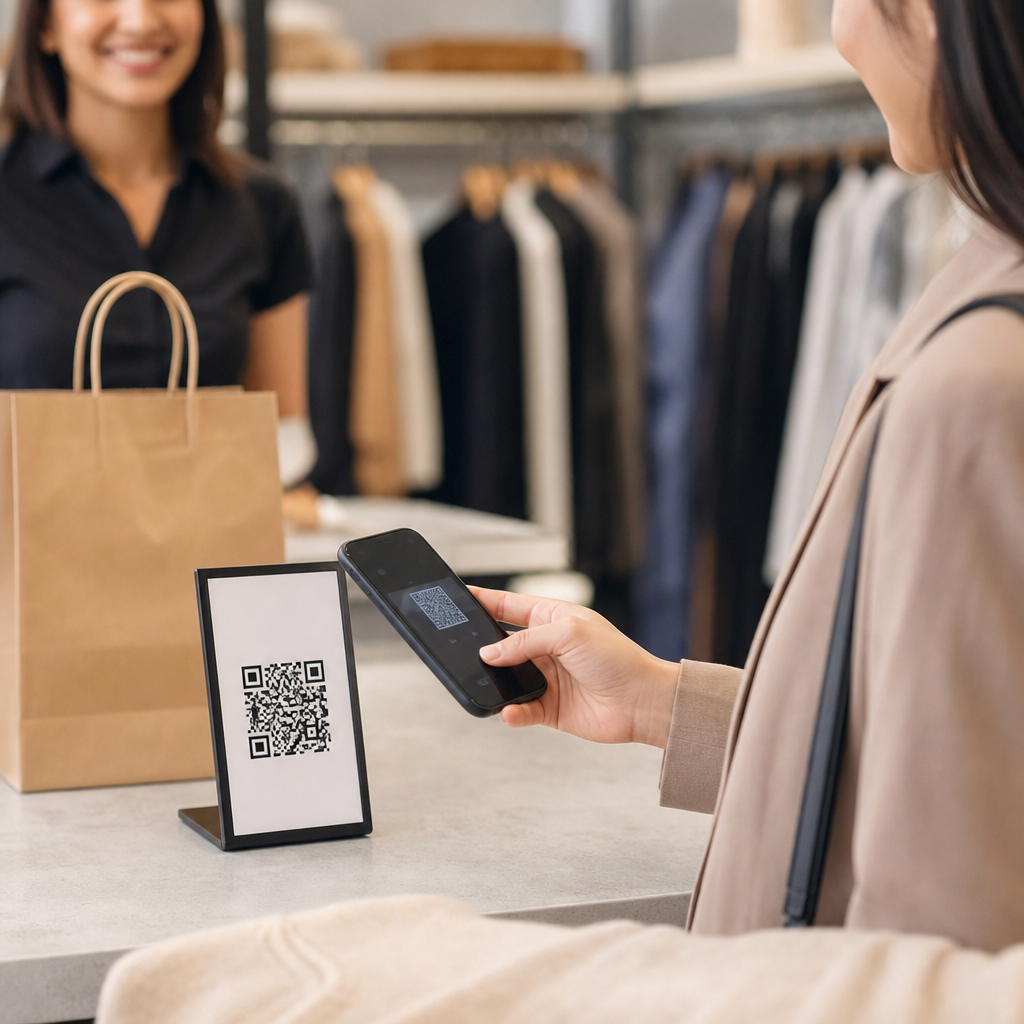
Retail environments often force brands to compress too much information into too little shelf space. QR codes solve that by turning signs, shelf talkers, endcaps, and window displays into expandable content layers. A hardware retailer can attach codes to complex products such as power tools and route shoppers to short comparison pages, safety tips, or “choose the right model” quizzes. A beauty retailer can use shelf signage to launch shade finders, application videos, and before-and-after galleries. The customer gets guidance without waiting for an associate, and the retailer gains measurable engagement data.
The key is to avoid generic links. Build landing pages by store zone, category, or campaign goal. If a shopper scans near premium products, show premium proof points, testimonials, and financing options. If the display promotes clearance items, lead with urgency and nearby stock status. Retailers using platforms such as Bitly, QR Code Generator PRO, or Beaconstac can create dynamic destinations and track which store assets drive the most scans. For chains with multiple locations, unique codes per store also reveal where visual merchandising is strongest.
3. Upgrade direct mail with instant digital actions
Direct mail remains effective because it commands physical attention, but its traditional weakness is response friction. A QR code removes that barrier. Instead of asking recipients to type a long URL, scan a catalog, or call during business hours, the code can open a personalized landing page, prefilled booking form, or limited-time coupon. Real estate agents can place QR codes on postcards that link to virtual tours and mortgage calculators. Dental practices can send reminder cards that open online scheduling. Local service businesses can connect flyers to quote forms that capture address and job type in under a minute.
To make this work, align the mailer headline, code label, and landing page promise exactly. If the card says “See your custom estimate,” the page should immediately show that estimate flow, not a homepage banner. Add variable URLs or individual identifiers when privacy rules and platform setup allow, so each household lands on a more relevant page. Track scan-to-conversion rates, not just scans. In many campaigns I have reviewed, mail pieces with a QR code and a narrow call to action outperformed mailers that offered too many options.
4. Make event marketing measurable before, during, and after attendance
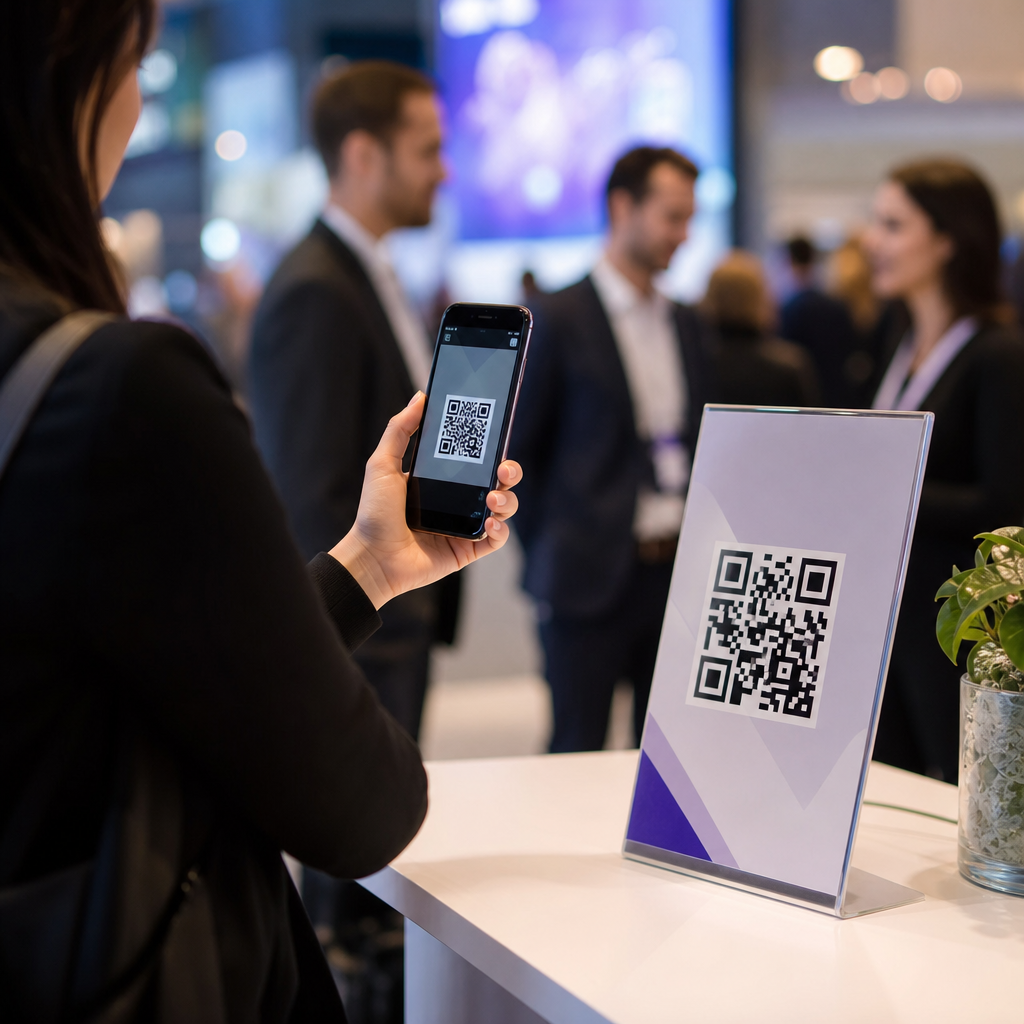
Events are ideal for QR code marketing because attendees move through multiple physical touchpoints in a short time. Use one code on registration emails and badges for check-in efficiency, another on booth graphics for product sheets and demo requests, and another on presentation slides for downloadable resources. At conferences, I have seen exhibitors replace printed spec packets with QR-linked microsites that include brochures, case studies, pricing tiers, and contact forms. That reduced print costs while improving lead attribution because each scan tied engagement to a session, booth zone, or asset.
Post-event follow-up is where many teams leave value on the table. A QR code on takeaway cards or swag inserts can route visitors to a recap page with session recordings, comparison guides, and a booking calendar. If your sales cycle is longer, offer a practical asset such as an implementation checklist or ROI calculator rather than pushing an immediate demo. That keeps intent high without creating pressure. Event teams should also monitor time-of-day scan patterns to learn which sessions, placements, and messages performed best.
5. Add QR codes to restaurant, hospitality, and venue touchpoints
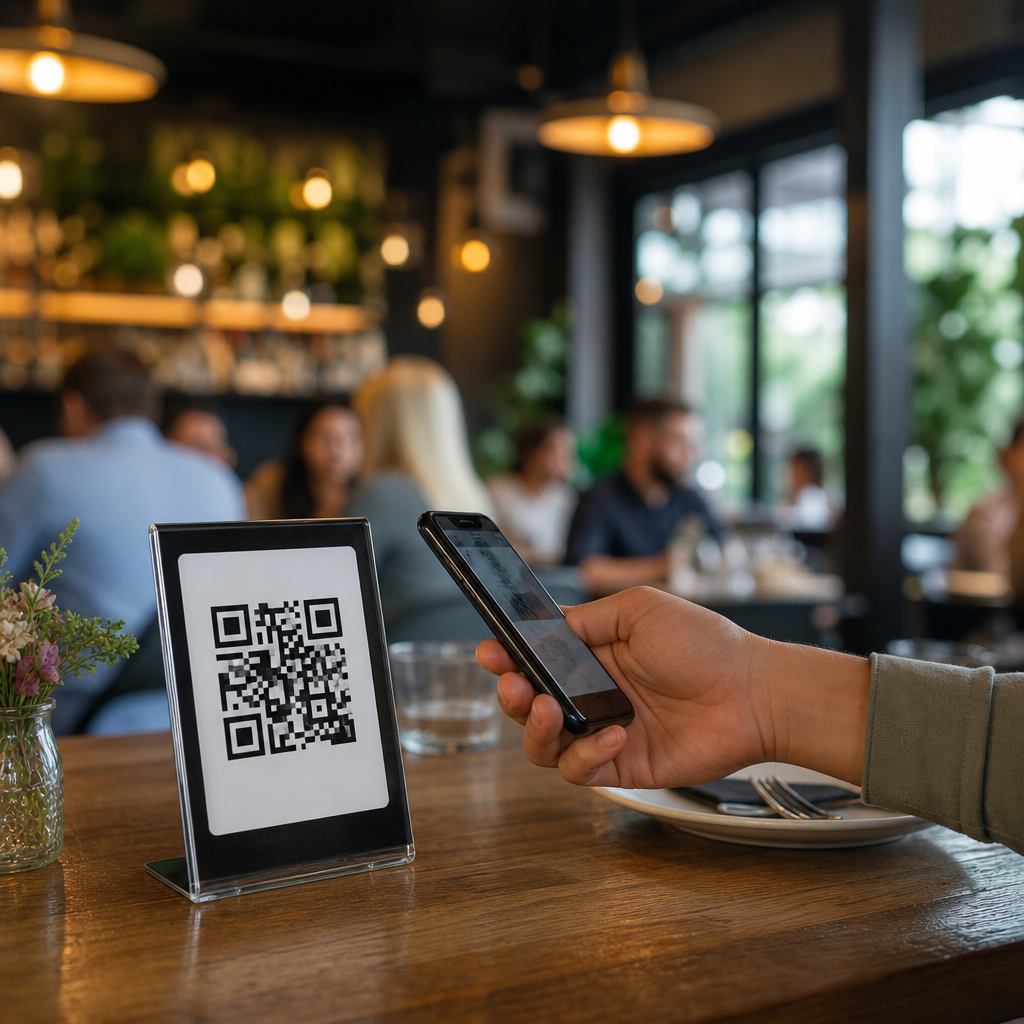
Restaurants helped normalize QR scanning for everyday consumers, but menus are only the beginning. A table tent can promote a chef’s tasting video, wine pairing guide, or loyalty signup. Hotel room cards can link to spa booking, late checkout requests, or a local neighborhood guide. Stadium and theater seat-back placements can send visitors to merchandise offers, digital programs, or food ordering pages that reduce concession line congestion. These uses succeed because they match an immediate need in a fixed location.
Hospitality brands should build destination pages that load fast on mobile connections and require minimal typing. If guests are on property, lean into convenience: one-tap reservations, maps, and service requests. If the goal is list growth, give a clear incentive such as a dessert offer on the next visit or member-only access to early booking windows. Review scan data alongside average order value, repeat visit rate, and ancillary revenue to see which placements influence business outcomes, not just engagement.
6. Create social proof loops from reviews, referrals, and user-generated content
One of the most practical creative marketing ideas using QR codes is to make happy customers your media channel. Put a QR code on receipts, packaging inserts, and thank-you cards that asks for a review, referral, or shared photo. The destination can detect the product or location and route customers to the correct Google Business Profile review page, Trustpilot listing, or branded upload form. E-commerce brands can invite buyers to post a product photo in exchange for loyalty points. Service businesses can ask for reviews while the job is still fresh in the customer’s mind.
The balance here is important. Do not create misleading review funnels or gate negative feedback in ways that violate platform policies. Instead, ask for honest feedback, make the process quick, and offer a separate support path for customers who need help. A smart implementation can also turn referrals into measurable acquisition. For example, a salon can give clients a QR code card that opens a referral landing page with a unique code for friends. That turns a physical handoff into trackable word-of-mouth marketing.
7. Launch limited-time scavenger hunts and interactive campaigns
QR codes are excellent for gamified campaigns because they can tie physical exploration to digital rewards. Retailers can hide codes across departments for a seasonal treasure hunt. Museums can build interactive trails with educational clues and sponsor messages. A downtown business association can place codes in shop windows during a holiday campaign, rewarding participants who scan multiple locations with prizes or discounts. The mechanic is simple: each code unlocks content, points, or the next clue, and completion triggers an incentive.
This approach works best when the reward structure is clear and the technology is lightweight. Avoid requiring app downloads unless your audience already uses the app regularly. A mobile web experience with progress tracking, email capture, and prize fulfillment is usually enough. The campaign also benefits from unique QR destinations per location, which makes participation measurable and prevents confusion. Gamified QR promotions can deliver high dwell time, repeat visits, and strong local partnerships when every stop contributes meaningful value rather than novelty alone.
8. Use QR codes in education-driven B2B marketing
B2B teams often overlook QR codes because they associate them with consumer promotions, yet they are highly effective in complex sales environments. Put QR codes on sales sheets, proposal covers, trade publication ads, office signage, and product packaging to connect prospects with deeper technical content. A manufacturing supplier can link a print ad to CAD files, compliance certificates, and application notes. A SaaS company can place a code on a one-pager that opens a role-specific demo video and ROI calculator for finance, operations, or IT stakeholders.
In account-based marketing, QR codes can support highly targeted outreach. A dimensional mailer sent to a buying committee can use unique codes by role, so procurement sees pricing logic, end users see workflow examples, and executives see business cases. The destination should be ungated when possible for initial engagement, with a clear next step to book a consultation or request a pilot. Because B2B journeys are long, integrate scan data with platforms such as HubSpot, Marketo, or Salesforce to evaluate influence across the pipeline, not just last-click attribution.
9. Pair QR codes with coupons, loyalty, and mobile payments
Some of the fastest wins come from connecting QR codes to transactional behavior. Coupons become easier to redeem when a code opens a wallet-ready offer or checkout page. Loyalty programs grow faster when enrollment takes one scan instead of a paper form. Small businesses can even use QR codes to speed mobile payments and reduce checkout friction at pop-ups, markets, and service counters. The creative angle is not the discount itself; it is the seamless path from interest to action.
| Use case | Best QR destination | Primary metric | Example |
|---|---|---|---|
| Coupon campaign | Single-offer landing page with expiry timer | Redemption rate | Gym flyer offering a seven-day pass |
| Loyalty signup | Short mobile form with auto-applied welcome reward | New member enrollments | Cafe counter card offering a free pastry after signup |
| Mobile payment | Payment link or wallet-compatible checkout | Completed transactions | Market stall accepting instant cardless payment |
| Upsell after purchase | Order confirmation page with add-on recommendation | Average order value | Car wash receipt promoting monthly membership |
Operational details matter here. Staff need a script, signage should explain what happens after scanning, and the landing page must be mobile-first. If payment or redemption fails, customers lose trust quickly. Test on multiple devices, use HTTPS destinations, and make sure code size and contrast meet print standards so scans are reliable under different lighting conditions.
10. Turn print, outdoor, and transit ads into trackable performance media
Billboards, bus shelters, posters, magazine ads, and brochures have long been difficult to measure precisely. QR codes change that by turning static placements into direct-response channels. A commuter scanning a transit poster can open a store locator, app download page, or local offer. A magazine reader can access an extended product demo, financing calculator, or appointment form. The strategic benefit is not just convenience; it is attribution. Unique QR codes by placement, market, and creative version help marketers compare performance across channels that were once judged mainly by reach estimates.
There are limits. A highway billboard is rarely a safe scanning environment, and some placements offer too little dwell time. But street-level posters, elevator screens, waiting areas, and in-venue signage can perform very well when the incentive is immediate and location relevant. Use large codes, strong contrast, and a clear instruction such as “Scan for today’s price” or “Scan to book in 30 seconds.” Then review scan volume against conversion quality to identify which physical media deserve more budget.
Creative QR code marketing works when the scan leads to a specific outcome that fits the context, whether that is learning, booking, buying, reviewing, or joining. Across packaging, retail, direct mail, events, hospitality, referrals, gamified campaigns, B2B outreach, loyalty flows, and print advertising, the same rules apply: offer immediate value, send traffic to a focused mobile destination, track results at the campaign and placement level, and refine based on real behavior. The strongest campaigns use dynamic QR codes, consistent naming conventions, UTM tagging, and landing pages built for speed and clarity. They also respect user intent. A person scanning from a shelf needs a different experience than someone scanning from a postcard at home.
If you want better results from creative marketing ideas using QR codes, start small and test one use case you can measure within a month. Pick a high-intent touchpoint, write a plain-language call to action, create a landing page for that exact moment, and monitor scans, conversions, and downstream revenue. Then expand what works into a repeatable playbook for your broader QR code campaign strategy.
Frequently Asked Questions
What makes QR code marketing so effective compared to traditional print calls to action?
QR code marketing works so well because it removes friction at the exact moment a person is interested. Traditional print calls to action often ask people to remember a website URL, search for a brand later, or manually type in a landing page address. A QR code shortens that journey to a single scan. When someone sees a poster, product package, direct mail piece, table tent, or in-store display, they can move from curiosity to action in seconds. That speed matters because attention is limited, and the easier it is to act, the more likely people are to follow through.
Another reason QR codes are effective is that they connect physical marketing with measurable digital behavior. Instead of hoping a brochure or flyer influenced someone, marketers can track scans, landing page visits, conversions, downloads, sign-ups, and even location-based engagement when used responsibly and with proper consent practices. This makes QR codes especially valuable for campaigns that span print, retail, events, packaging, outdoor media, and product experiences. They turn static assets into interactive touchpoints.
QR codes also support a wide range of outcomes. A scan can open a product demo, claim a limited-time offer, join a loyalty program, save contact information, leave a review, access a menu, watch a tutorial, or complete a purchase. That flexibility gives marketers room to match the action to the customer’s intent instead of forcing every campaign into the same funnel. In practical terms, QR codes are effective because they combine convenience, speed, trackability, and versatility in a format consumers already understand.
What are some of the most creative ways businesses can use QR codes in marketing today?
Some of the best QR code ideas come from using them in places where people already have attention and intent. Product packaging is a strong example. A QR code on a box, label, or insert can link to setup instructions, how-to videos, ingredient sourcing, care guides, warranty registration, cross-sell recommendations, or a loyalty enrollment page. That turns packaging from a passive wrapper into an ongoing engagement channel. Restaurants, retailers, and consumer brands can also use QR codes on receipts to invite reviews, offer bounce-back discounts, or encourage customers to join SMS or email lists.
Events and in-person experiences are another high-impact area. A QR code on signage, name badges, booth displays, or presentation slides can direct attendees to speaker resources, booking forms, giveaways, digital catalogs, or demo requests. For local businesses, QR codes on storefront windows, checkout counters, table displays, and business cards can make it easier to claim offers, browse seasonal promotions, or book appointments. Real estate teams often use QR codes on yard signs and flyers to link directly to virtual tours, listing details, and agent contact pages, which is a smart example of reducing the gap between interest and inquiry.
More creative brands use QR codes to make campaigns feel interactive rather than purely transactional. For example, a code can unlock exclusive content, behind-the-scenes stories, gamified experiences, scavenger hunts, social contests, referral rewards, or limited-edition drops. A fashion brand might place a QR code in a store display that reveals styling videos and inventory availability. A nonprofit might use one on event signage to collect instant donations. A service business might put one on vehicle wraps to offer instant quote requests. The most effective creative uses are not just novel; they give the audience a clear reason to scan and deliver something genuinely useful or rewarding on the other side.
How can I make sure people actually scan my marketing QR codes?
Getting scans starts with offering clear value. People do not scan QR codes simply because they exist; they scan when they understand what they will get and why it is worth the effort. That means every code should be paired with a direct, benefit-driven call to action. Instead of saying “Scan here,” say “Scan to get 15% off,” “Scan to watch the demo,” “Scan to book in 30 seconds,” or “Scan for the full menu.” Specificity improves response because it answers the customer’s first question immediately: what happens next?
Placement and design also matter. The QR code should be easy to spot, large enough to scan quickly, and placed where people naturally pause. On print materials, avoid cluttered areas and low-contrast backgrounds. On packaging, make sure the code is not folded, curved too tightly, or hidden near seams. For posters, displays, and signs, position the code at a convenient scanning height and test it from realistic distances. In many cases, adding a short URL below the QR code is helpful for accessibility and backup. Branded QR codes with custom colors, frames, and logos can improve trust and visual consistency, but scan reliability should always come first.
The destination experience is just as important as the code itself. If someone scans and lands on a slow, confusing, or non-mobile-friendly page, you lose the momentum that made the QR code valuable in the first place. Send users to a page tailored to the context of the scan, not just your homepage. Keep the page fast, mobile-optimized, and focused on one primary action. Finally, test every QR code thoroughly across devices, lighting conditions, and use environments. The brands that generate the most scans usually succeed because they combine a compelling reason to act, smart placement, and a smooth mobile experience from start to finish.
How do I track the performance of a QR code marketing campaign?
Tracking QR code performance begins with using dynamic QR codes whenever possible. A dynamic code lets you update the destination URL without reprinting the code, and it often provides built-in analytics such as scan count, time of scan, device type, and approximate location. This is especially useful for multi-channel campaigns because it gives marketers flexibility and visibility. If a landing page changes, an offer expires, or a campaign underperforms, you can adjust the experience behind the code without replacing the printed asset.
To measure results more accurately, connect your QR code links to analytics tools using UTM parameters or other campaign tracking methods. That allows you to see what happens after the scan, including page views, conversions, purchases, form submissions, downloads, and assisted revenue. If you are running multiple QR codes across packaging, posters, mailers, in-store displays, and event materials, create unique links for each placement. That way, you can compare performance by channel, location, audience segment, or creative variation rather than treating all scans as one traffic source. This level of detail helps you understand not just whether QR codes work, but where they work best.
It is also important to define the right success metrics before launch. Depending on the campaign, that might mean total scans, unique scans, conversion rate, email sign-ups, coupon redemptions, app installs, bookings, or sales attributed to the scan journey. A high scan count is encouraging, but it is not enough if the landing page does not convert. The most useful reporting ties scan behavior to business outcomes. Review performance regularly, test different calls to action, and refine the post-scan experience over time. QR code marketing performs best when it is treated as an optimizable funnel, not just a one-time print feature.
What are the biggest mistakes to avoid when using QR codes in marketing?
One of the biggest mistakes is giving people no compelling reason to scan. A QR code without context feels random, and a vague instruction like “Learn more” is usually not persuasive enough. Marketers should clearly communicate the benefit, urgency, or usefulness of the scan. Another common mistake is sending users to a generic homepage instead of a dedicated landing page aligned with the campaign. If someone scans a code on a product display for a discount or tutorial and lands on a broad website with no obvious next step, the experience breaks down immediately.
Poor usability is another frequent issue. QR codes that are too small, distorted, low contrast, placed on reflective surfaces, or printed in hard-to-reach locations can frustrate users and reduce performance. It is equally problematic to use overly stylized designs that look impressive but scan unreliably. Brands should test their codes in real-world conditions before rollout. Mobile experience is another critical factor. Since most scans happen on smartphones, the destination page must load quickly, display properly on small screens, and make the next action simple. Long forms, slow pages, and cluttered layouts can erase the advantage of the scan.
Finally, many marketers miss the opportunity to measure and improve. Static codes with no tracking, no campaign-specific URLs, and no defined conversion goal make it difficult to understand ROI. There is also a strategic mistake in treating QR codes as a gimmick instead of part of a broader customer journey. The best QR code campaigns fit naturally into how people discover, evaluate, and buy. They respect context, deliver immediate value, and lead users into a useful next step. When marketers focus on relevance, usability, and measurable outcomes, QR codes stop being just a technical tool and become a reliable conversion asset.