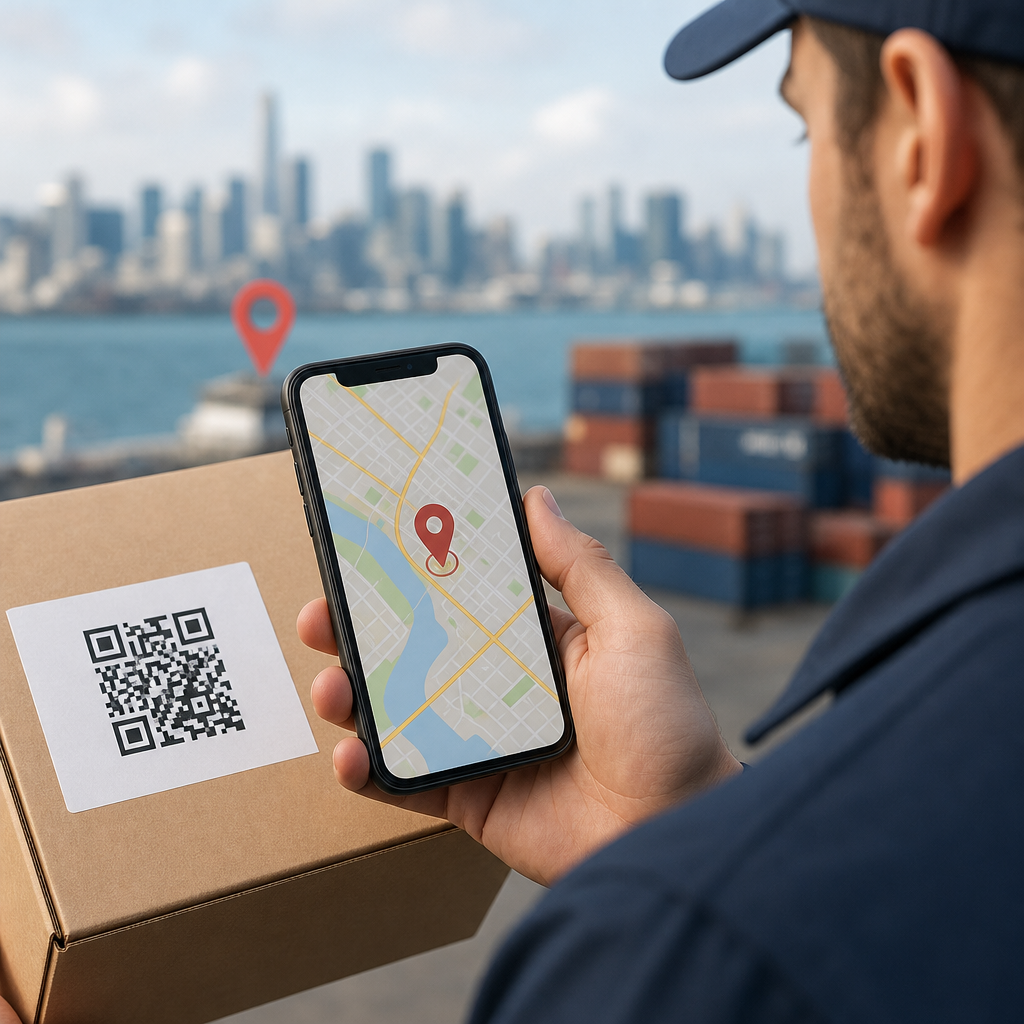
Geographic tracking with QR codes turns each scan into a location-aware signal that helps marketers, operators, and product teams understand where engagement happens, when it peaks, and how physical placement influences results. In practice, this means connecting a dynamic QR code to analytics that record approximate city, region, device type, timestamp, referral context, and repeat activity, then using that data to build heatmaps and scan behavior reports. I have implemented these systems for retail displays, event signage, restaurant tables, field service labels, and direct mail, and the pattern is consistent: location data is only useful when it is paired with context. A scan count alone says little. A heatmap that shows clusters around one entrance, one neighborhood, or one store format reveals what to fix, where to invest, and how to attribute offline engagement more accurately.
For teams responsible for QR code analytics, tracking, and optimization, geographic tracking matters because QR codes bridge physical environments and digital outcomes. A poster in a train station, a package insert, and a trade show banner may all point to the same landing page, yet they produce very different scan behavior. Heatmaps help answer practical questions fast: Which placements generate the highest scan density? Which regions convert better after scanning? Are scans coming from the intended campaign area or from secondary sharing? If a code is printed nationally, are response rates concentrated in urban centers, tourist zones, college towns, or affluent zip codes? These answers shape media planning, distribution strategy, staffing, and localized messaging. They also expose friction, such as codes placed where cellular reception is weak or where foot traffic moves too quickly for users to scan comfortably.
Key terms should be clear from the start. Geographic tracking refers to estimating where scans occur, usually by IP-derived geolocation rather than GPS, unless the user explicitly grants precise location permission on the landing page. A heatmap is a visual layer that aggregates scan volume or scan quality by area, often city, postal code, store radius, or latitude-longitude grid. Scan behavior describes the sequence and characteristics of scanner actions: first-time versus repeat scans, time-to-scan after exposure, device type, operating system, dwell time after landing, and downstream conversion events such as form submissions, coupon saves, or purchases. Dynamic QR codes are central because they route through a managed redirect, allowing analytics collection, destination changes, tagging, and segmentation. Static QR codes can still be measured with web analytics on the destination URL, but they offer fewer controls and weaker attribution. Understanding these distinctions is essential before interpreting any map or trend line.
How Geographic QR Tracking Works in Real Campaigns
Most geographic QR tracking begins with a dynamic QR code served through a redirect domain. When the code is scanned, the request hits the QR platform, which logs timestamp, user agent, and IP address, then resolves that IP through a geolocation database such as MaxMind or IP2Location. The platform redirects the user to the final destination with UTM parameters or campaign IDs appended, allowing Google Analytics 4, Adobe Analytics, or a CRM to associate the visit with the original code. This architecture gives you two measurement layers: scan-level data in the QR platform and session-level or conversion data in your analytics stack. In my projects, the cleanest implementations use server-side event forwarding so that scan events, pageviews, and conversions can be reconciled without relying entirely on browser cookies.
Accuracy depends on the source of location. IP geolocation is good enough for country, usually reliable for region, and often acceptable for city-level pattern analysis, but it is not a substitute for exact device coordinates. Mobile carrier routing, VPNs, corporate networks, and privacy relays can all shift apparent location. That is why responsible teams use geographic tracking for directional decisions, not forensic certainty. If precise location is required, the landing page can request browser geolocation permission after the scan, but consent rates vary and user trust must be respected. For most QR code heatmaps, aggregated city or store-trade-area analysis is the right balance of utility and privacy.
Real campaigns reveal why setup matters. A retail chain might place one creative in 300 stores but assign unique dynamic QR codes by region, store cluster, or fixture type. Heatmaps then show whether endcap displays outperform shelf talkers in suburban locations while window decals dominate in dense downtown stores. An event organizer can issue separate codes for entrance signage, badges, session screens, and booth panels. When scans are mapped by hall, daypart, and source, the organizer sees not only where attention concentrated, but whether those scans led to app installs or booked meetings. A restaurant group can compare scans from table tents, takeout packaging, and exterior posters, then overlay weather and neighborhood patterns to see where lunch traffic differs from evening discovery.
Building Useful Heatmaps and Interpreting Scan Behavior
A heatmap is only as useful as the question it answers. The most basic heatmap shows raw scan density by geography, but stronger analysis layers in quality signals. I recommend three views. First, a volume heatmap shows where scans cluster. Second, a conversion heatmap shows where post-scan actions occur, such as coupon redemption, reservations, or purchases. Third, an efficiency heatmap normalizes outcomes by exposure, using units like scans per thousand flyers, scans per store visit, or conversions per display location. Without normalization, busy cities always look better, even when placements are mediocre. This is one of the most common mistakes I see when teams present scan behavior to executives.
Behavior analysis should also separate first scans from repeat scans. Repeat scanning can be a positive sign of utility, as with digital menus, equipment manuals, or loyalty cards. It can also indicate confusion if users keep rescanning because the page fails to load properly or because the code links to a temporary offer that they revisit unsuccessfully. Time patterns matter. A commuter campaign may show sharp morning and evening peaks near transit hubs. A museum code may spike in afternoon clusters around specific exhibits. A product package may scan repeatedly over weeks as customers return for instructions or reordering. These patterns reveal user intent more accurately than total scan counts alone.
Segmentation deepens the picture. Break scan behavior by device type, operating system, campaign asset, venue type, and landing page variant. On several campaigns, I found Android users over-indexed on scans from outdoor signage because lower-end devices handled camera QR detection differently, affecting completion speed and bounce rate. In another rollout, one city showed healthy scan volume but weak conversion. The heatmap looked promising until device data exposed that many scans came from older phones on a heavy page with poor Core Web Vitals. After compressing images and reducing scripts, the same geography improved materially. Geographic tracking is powerful because it highlights where to investigate; behavior metrics explain why.
| Metric | What It Tells You | Best Use Case | Main Limitation |
|---|---|---|---|
| Raw scans by city | Where engagement is concentrated | Spotting high-interest regions quickly | Favors high-population areas |
| Unique scanners | Approximate reach without repeat inflation | Comparing campaign penetration | Device changes can fragment counts |
| Scans per exposure unit | Placement efficiency | Evaluating stores, mail drops, or poster sites | Requires reliable exposure estimates |
| Post-scan conversion rate | Traffic quality by geography | Budget allocation and localization | Depends on clean downstream attribution |
| Repeat scan rate | Utility or friction after first visit | Service, packaging, and support codes | Needs context to interpret correctly |
Best Practices for Data Quality, Privacy, and Optimization
Reliable geographic tracking starts before the first scan. Use unique dynamic QR codes at the level where decisions will be made. If you need to compare by store, route, or placement type, do not reuse one code across all assets and hope analytics can sort it out later. Establish a naming convention that captures campaign, asset, region, and version. Append consistent UTM parameters so landing page analytics align with QR platform logs. Test redirects on iOS and Android, over Wi-Fi and cellular, and through major in-app browsers such as Instagram, Facebook, and WeChat if relevant. I also recommend scanning from known test locations and validating whether city-level reporting matches expectations before launch.
Privacy should shape the design, not become an afterthought. Most geographic QR analytics rely on coarse location inferred from IP addresses, which is generally sufficient for operational decisions and less intrusive than precise tracking. If your use case requires exact location, ask clearly, explain the benefit, and avoid gating core content behind permission requests. Aggregate reports whenever possible, especially when mapping small locations where a low scan count could make individuals more identifiable. Comply with applicable laws and platform requirements, and be transparent in your privacy notice about what is collected and why. Good governance protects users and improves data reliability because stakeholders trust the measurement process.
Optimization should follow a disciplined loop: measure, diagnose, test, and redeploy. If a heatmap shows underperformance in one cluster, inspect environmental causes first. Is the code too high, too small, poorly lit, behind reflective glass, or placed where people cannot stop? Then review message-match. A scan promise like “See today’s menu” or “Get assembly help” generally outperforms generic calls to action because users know what happens next. Finally, check landing experience by geography and device. Slow pages, language mismatch, unavailable offers, and weak cellular coverage all depress conversion after a successful scan. Small operational changes often beat creative overhauls.
This hub page should guide deeper work across the broader topic. Related analyses naturally include QR code attribution models, A/B testing print placements, dwell-time interpretation, campaign benchmarks, dynamic versus static code strategy, offline-to-online conversion tracking, and dashboard design in tools such as Looker Studio, Tableau, and Power BI. Geographic tracking with QR codes becomes most valuable when heatmaps and scan behavior are treated as a decision system, not a vanity report. Use location data to find patterns, pair it with behavior to explain intent, and connect both to business outcomes. If you are building or refining a QR measurement program, start with dynamic codes, clean taxonomy, and city-level heatmaps tied to conversion events. Then iterate from evidence, because the best-performing QR campaigns are optimized where people actually scan, not where teams assume they do.
In summary, geographic tracking with QR codes gives organizations a practical way to understand offline engagement at scale. It defines where scans happen, heatmaps reveal concentration and gaps, and scan behavior explains whether those interactions represent curiosity, utility, or purchase intent. The strongest programs do not stop at counting scans. They normalize for exposure, separate first-time from repeat activity, compare geographies fairly, and connect location data to page performance and conversion outcomes. That is how a retail team decides which fixture deserves wider rollout, how an event team measures attendee flow, and how a restaurant or service brand learns which neighborhood placements create sustained value instead of one-time clicks.
The core benefit is better decision-making. When you know where a QR code performs, where it struggles, and what users do after scanning, you can improve placement, creative, operations, and budget allocation with much less guesswork. You also gain a more realistic view of attribution for channels that have historically been hard to measure, including packaging, out-of-home media, print collateral, and in-venue signage. Heatmaps and scan behavior reports make QR codes accountable in the same way digital ads are accountable, while still respecting the differences between physical environments and browser-based campaigns.
There are limits, and acknowledging them makes the analysis stronger. IP-based geolocation is approximate, not exact. Foot traffic, weather, network conditions, and social sharing can influence results in ways a simple map cannot fully capture. Repeat scans may indicate loyalty or friction depending on context. A heatmap can point to a problem, but it does not automatically diagnose the cause. That is why experienced teams validate map findings with on-site observation, store feedback, campaign metadata, and downstream analytics. Geographic tracking works best as part of a broader measurement framework, not as a standalone truth source.
If you manage QR code analytics, tracking, and optimization, treat this topic as foundational. Set up dynamic codes correctly, collect location and behavior data responsibly, build heatmaps that answer operational questions, and use those insights to test improvements quickly. Done well, geographic tracking with QR codes turns every scan into an actionable signal about place, intent, and performance. Review your current QR inventory, identify the assets that need unique tracking, and build your first geography-to-conversion dashboard now.
Frequently Asked Questions
How does geographic tracking with QR codes actually work?
Geographic tracking with QR codes works by pairing a dynamic QR code with a redirect and analytics layer that records contextual data every time the code is scanned. Instead of sending users directly to a fixed destination, the QR code points to a managed URL that logs the interaction first and then routes the person to the intended landing page, app store listing, form, menu, product page, or campaign asset. At the moment of the scan, the system can capture approximate location data such as city, region, and country, along with timestamp, device type, operating system, browser, referral context, and whether the scan appears to come from a new or returning user.
The location signal is typically derived from the scanner’s network information rather than precise GPS coordinates, which is why most platforms report approximate rather than exact user position. For marketing and operational analysis, that level of detail is usually the right balance: it shows where engagement is happening geographically without requiring users to manually enter location details. Over time, scan events can be aggregated into dashboards, maps, and trend reports that reveal which territories are responding, when activity spikes, and how placement affects performance.
This is especially useful in physical environments where traditional web analytics are limited. A QR code on product packaging, a retail display, a direct mail piece, a poster, or an event sign creates a measurable bridge between offline presence and digital behavior. Once enough scans accumulate, teams can compare locations, identify high-performing regions, evaluate local campaigns, and adjust distribution or messaging based on actual scan behavior rather than assumptions.
What kind of geographic data can you realistically collect from QR code scans?
In most real-world implementations, geographic tracking from QR code scans provides approximate location data rather than street-level precision. The most common fields include country, state or province, region, city, and sometimes metro area or general coordinates associated with an IP-based lookup. This is often enough to understand regional demand, compare city-level engagement, and spot geographic patterns across markets. For many marketers and product teams, that level of insight is exactly what matters because it supports campaign optimization, territory analysis, and placement decisions without overcomplicating the setup.
Beyond location itself, the more valuable part of the dataset is often the surrounding context. A good dynamic QR system can log scan time, day of week, device category, operating system, browser, unique versus repeat scans, and sometimes referral or source information depending on the campaign environment. When combined, these signals help explain not only where people are scanning, but also how they are engaging. For example, a code may perform well in one city during commuting hours on mobile devices, while another location may produce more scans on weekends from in-store traffic.
It is important to set expectations correctly. QR code tracking does not automatically provide precise GPS data, exact user identity, or guaranteed physical placement accuracy unless additional consent-based technologies are involved. In a privacy-conscious and technically realistic deployment, the system is best understood as a source of location-aware engagement intelligence. That makes it extremely effective for heatmaps, regional reporting, distribution planning, local campaign measurement, and market comparison, even if it is not intended to function as a person-level location surveillance tool.
Why should businesses use dynamic QR codes instead of static QR codes for geographic tracking?
Dynamic QR codes are essential for geographic tracking because they allow scan data to be recorded and managed centrally before the user reaches the final destination. A static QR code simply encodes a fixed URL or data string, which means it has no built-in analytics layer unless the destination itself tries to infer traffic sources after the fact. Even then, the reporting is usually incomplete, especially for offline placements. With a dynamic QR code, every scan passes through a measurable endpoint that can log geographic and behavioral information in a consistent way.
Another major advantage is flexibility. If a campaign changes, the destination URL behind a dynamic QR code can be updated without reprinting the code. That matters in physical deployments where replacing signage, packaging, labels, or printed collateral can be expensive and slow. Teams can also segment campaigns by location, assign different QR codes to different placements, run A/B tests, and compare scan performance across stores, regions, events, or product lines. This makes dynamic QR codes far more useful for optimization and ongoing measurement.
From an operational perspective, dynamic QR codes also support richer reporting. They make it easier to identify scan concentrations by geography, compare unique versus repeat activity, detect sudden changes in regional demand, and connect offline touchpoints to digital outcomes. For organizations that want to understand where interest is strongest and how physical placement influences engagement, static codes are simply too limited. Dynamic infrastructure turns the QR code from a passive link into an active measurement tool.
How can geographic scan data improve marketing, operations, and product decisions?
Geographic scan data helps marketing teams move from broad assumptions to location-specific action. Instead of treating all scans as equal, they can see which cities, regions, or territories respond best to a campaign and then allocate budget, creative, distribution, and field effort more effectively. If one market shows strong scan volume but weak conversion, that may point to a landing page mismatch or local messaging issue. If another market has modest traffic but excellent downstream performance, it may deserve more investment. Geographic visibility turns QR analytics into a practical tool for campaign refinement.
Operations teams can also benefit in ways that go beyond advertising. Scan behavior can reveal whether product displays are placed effectively, whether printed materials are reaching the right areas, whether event signage is generating engagement in expected zones, and whether demand clusters justify inventory or staffing changes. In retail and field environments, heatmaps and location-based reports often uncover patterns that are easy to miss when performance is viewed only at the national level. A code on packaging, shelf talkers, kiosks, or service materials can become a lightweight source of real-world demand intelligence.
For product and growth teams, geographic tracking can inform rollout strategy, feature localization, support planning, and market validation. If users in specific regions repeatedly scan onboarding materials, warranty cards, or setup guides, that can indicate where product interest is accelerating or where additional education is needed. When scan data is paired with conversion events, retention metrics, or repeat usage signals, teams can assess not just where attention originates, but where meaningful engagement develops over time. That is where geographic tracking becomes more than reporting; it becomes an input for strategic decision-making.
Are there privacy, accuracy, or implementation concerns to consider with geographic QR tracking?
Yes, and addressing them properly is what separates a useful implementation from a risky or unreliable one. On the privacy side, the most important principle is transparency and proportionality. Geographic QR tracking should be designed to collect only the data needed for legitimate analytics and campaign measurement, with clear disclosure where appropriate and compliance with relevant privacy laws and internal data governance policies. In most cases, businesses should rely on approximate location data and avoid framing the system as precise personal tracking unless explicit consent and appropriate safeguards are in place.
Accuracy is another consideration. Most QR geographic reporting is based on IP-derived location data, which is generally directionally strong at the city or regional level but not perfect. VPN usage, mobile carrier routing, corporate networks, and shared devices can introduce noise. That does not make the data useless; it simply means it should be interpreted as a pattern-recognition tool rather than an exact map of every individual scanner. The best approach is to look for trends across a meaningful sample size, compare performance over time, and avoid overreacting to isolated scan events.
Implementation quality also matters a great deal. Reliable geographic tracking depends on a well-configured dynamic QR platform, clean redirect logic, consistent campaign naming, accurate placement tagging, and analytics that separate unique scans from repeat interactions. It is also important to align QR data with downstream goals such as visits, sign-ups, purchases, or support outcomes so the organization is not just measuring scan volume in isolation. When set up thoughtfully, geographic QR tracking is both practical and compliant, giving teams actionable location-aware insight without requiring invasive data collection or complicated user flows.