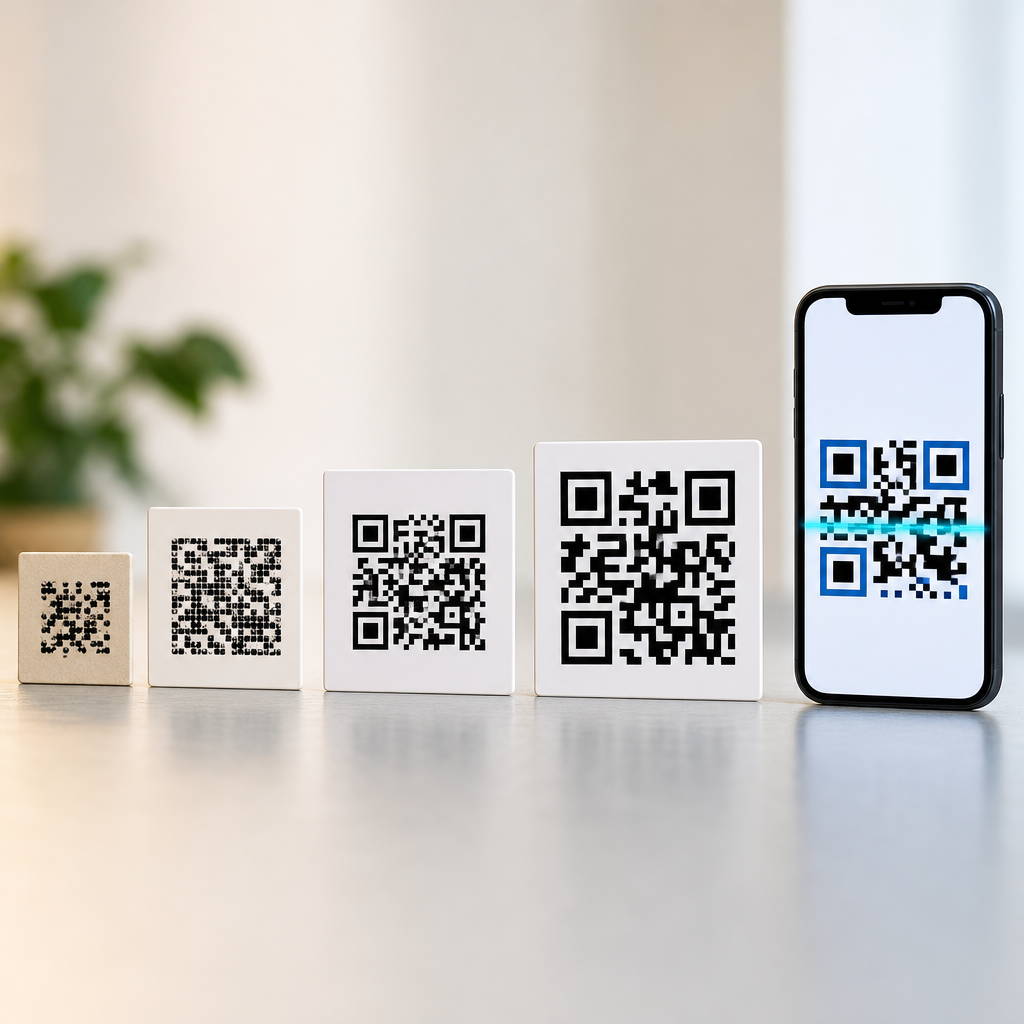
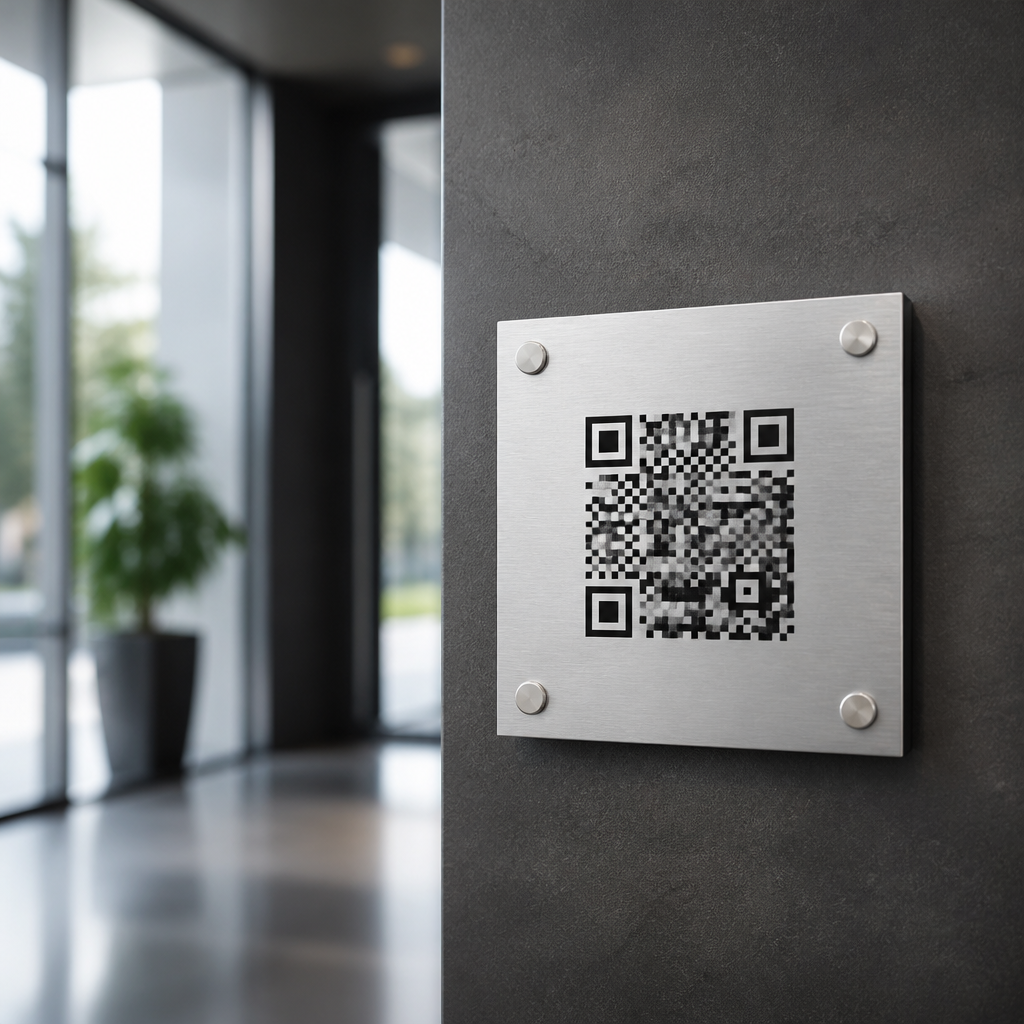
Choosing the right QR code type for permanent signage usually comes down to one decision: static vs dynamic QR codes. That sounds simple, but the choice affects durability, maintenance, analytics, campaign flexibility, and even compliance risk over the life of the sign. In practice, I have seen businesses save thousands in reprint costs by choosing a dynamic QR code for a long-lived sign, and I have also seen teams overcomplicate simple use cases that only needed a static code. Permanent signage includes storefront decals, museum labels, trail markers, equipment tags, building directories, restaurant table plaques, and trade show structures intended to stay in place for months or years. Because replacing physical signs is slow and expensive, the QR code printed on them must be chosen with long-term consequences in mind.
A static QR code stores the final destination directly in the code itself. If it contains a web address, phone number, Wi-Fi credential, or plain text, that data is permanently encoded. A dynamic QR code, by contrast, usually stores a short redirect URL controlled through a QR code platform. When someone scans it, the platform forwards the user to the current destination. That extra layer enables editing after print, scan tracking, device-based routing, and campaign controls, but it also creates dependency on the provider and the continued operation of the redirect. For permanent signage, the core question is not which type is universally better. The right question is which type best fits the lifespan, change rate, and risk tolerance of the sign.
This matters because signage is one of the few marketing and operational assets that must keep working unattended. A broken menu QR code frustrates customers. A dead maintenance tag slows technicians. A mislabeled exhibit damages trust. A sign installed across multiple locations can outlive the original web page, marketing campaign, or even the employee who ordered it. The best permanent signage QR code therefore needs more than scannability. It needs resilience. To make the right choice, you need to weigh editability, ownership, analytics, privacy, vendor lock-in, design constraints, and testing standards before the sign is printed and mounted.
Static vs dynamic QR codes: the direct answer
For most permanent signage, dynamic QR codes are better because they let you change the destination without replacing the sign. That is the clearest answer. If a sign is expected to remain in use for a year or more, and the linked content could ever change, dynamic QR codes reduce long-term cost and operational risk. They are especially valuable for menus, real estate signs, directories, product displays, event venues, healthcare information boards, and any public-facing sign managed by a team rather than a single owner.
Static QR codes are better for permanent signage only when the content is truly fixed, the destination must work independently of any platform, or the sign serves a narrow utility purpose. Good examples include encoding a stable vCard for emergency contact details, a fixed URL owned by the organization and unlikely to change, a plain text asset number, or a Wi-Fi setup code for a network with no expected credential changes. Static codes are also useful when procurement rules prohibit ongoing software subscriptions or when security policy rejects third-party redirects.
If you need a simple rule, use a dynamic QR code for customer-facing permanent signage and a static QR code for fixed-data utility signage. That rule is not perfect, but it aligns with how signs fail in the real world: destinations change more often than sign materials do.
What makes permanent signage different from short-term print
Permanent signage changes the economics of QR code decisions. A flyer, postcard, or event handout has a short shelf life. If a link changes, the asset may already be obsolete. A wall-mounted acrylic sign, engraved metal plate, or outdoor wayfinding panel is different. Design, fabrication, shipping, installation, and approvals often cost far more than generating the QR code itself. In multi-site rollouts, replacing one incorrect code can become a project involving vendors, facilities teams, and local managers.
Environmental conditions also matter. Permanent signs are exposed to sunlight, abrasion, cleaning chemicals, weather, and vandalism. That means a QR code should not merely resolve correctly on launch day; it should continue to work after wear reduces contrast or after a destination page is reorganized. Dynamic QR codes address the second problem by preserving the printed symbol while changing the landing page behind it. They cannot fix poor print quality, but they can prevent content drift from turning a physically sound sign into a functional dead end.
Another difference is organizational memory. Long-lived signs frequently outlast campaigns, software migrations, and staffing changes. I have audited signage programs where no one knew who controlled the original URL shortener, which made dozens of installed QR codes impossible to update. Permanent signage should therefore be treated like infrastructure. The QR code type, ownership model, naming convention, destination governance, and testing cadence should all be documented before deployment.
Why dynamic QR codes usually win on flexibility and cost
The strongest case for dynamic QR codes is change management. A dynamic code allows you to update the landing page, swap a PDF, redirect to a seasonal menu, route by location, or fix a typo after the sign is already installed. That flexibility has direct financial value. If a restaurant chain prints table tents or wall plaques with static menu URLs and later redesigns the site structure, every affected sign becomes a replacement cost. With dynamic codes, the redirect target changes in the dashboard and the physical asset stays in service.
Dynamic QR codes also support measurement. Most reputable platforms record scans by date, approximate location, device type, and operating system. For permanent signage, that data helps answer practical questions: Which entrance sign drives the most scans? Are museum visitors using exhibit codes or ignoring them? Does a bilingual sign perform differently by placement? Analytics are not just for marketers. Facilities, operations, and customer experience teams can use scan data to justify sign placement, remove underperforming codes, or improve landing pages.
There is also a user-experience advantage. Because dynamic destinations can be changed quickly, the sign owner can keep content current. A property manager can redirect a lobby sign from leasing inquiries to a maintenance update page during renovations. A manufacturer can reroute an equipment QR code from a product brochure to a recall notice. A university can update campus map destinations each semester without touching installed plaques. In every case, the sign remains useful because the code remains administratively live.
| Factor | Static QR Code | Dynamic QR Code |
|---|---|---|
| Edit after printing | No | Yes |
| Scan analytics | Usually none | Usually included |
| Works without provider platform | Yes | No, depends on redirect service |
| Best for long-term public signage | Only if content will never change | Usually yes |
| Risk if destination changes | High reprint risk | Low if dashboard access is maintained |
When static QR codes are the better choice
Static QR codes still have an important place in permanent signage because simplicity is a reliability feature. A static code has no redirect dependency, no dashboard login, no subscription renewal, and no third-party service sitting between the scanner and the encoded data. If you print a static code containing a stable HTTPS URL on a durable sign, it can keep working as long as that URL remains valid. For organizations that prioritize independence and minimal moving parts, that is attractive.
This matters most when the encoded information is inherently fixed. Asset identification tags, serial references, archival exhibit labels pointing to permanent collection pages, and internal operational signage often fit this model. If the data does not need analytics and is governed by a long-lived information architecture, static can be the safer option. Government agencies and regulated facilities sometimes prefer static codes because approval of third-party redirect services adds procurement and legal complexity.
Static can also be superior for offline payloads. A QR code that stores plain text instructions, a phone number, an SMS template, or Wi-Fi credentials does not require internet access to reveal the encoded content itself. For a remote cabin check-in sign or internal warehouse setup label, that can be exactly what you want. The tradeoff is obvious: once printed, the content is frozen. If the Wi-Fi password or phone number changes, the sign must be replaced.
The hidden risks of dynamic QR codes on permanent signage
Dynamic QR codes are not automatically safer just because they are editable. Their main weakness is dependency. The code only works if the redirect service, custom domain setup, account billing, and administrative access all remain intact. I have seen businesses lose control of functioning signs because the staff member who created the codes left, the subscription lapsed, or the platform retired a feature. In those cases, the signs looked fine but sent users nowhere.
That risk can be managed. Use a provider with a strong uptime record, export capability, role-based access, and clear data retention terms. Whenever possible, use a branded short domain that your organization owns rather than a generic platform domain. A branded domain improves trust, supports continuity if you switch vendors, and gives security teams better visibility. Also document account ownership in the same system that tracks other digital assets, not in one employee’s inbox.
Privacy is another consideration. If scan analytics include approximate location, device data, or campaign tagging, the organization should disclose tracking where appropriate and align with its privacy policy. In healthcare, education, and public-sector settings, even basic analytics can trigger review. Dynamic codes are powerful, but they should be governed like any other data-collecting channel.
Best practices for choosing the right QR code for your sign
Start with five questions. Will the destination ever change? Who will own the code after launch? Do you need analytics? What happens if the platform fails? How expensive is sign replacement? If the answer to the first, third, or fifth question is significant, dynamic is usually the right choice. If platform dependency is unacceptable and the content is genuinely fixed, static is more appropriate.
Then evaluate implementation details. Use high contrast, sufficient quiet zone, and tested scan distance. Follow ISO/IEC 18004 principles for symbol integrity, and test on both iPhone and Android using native camera apps. For permanent signage, I recommend a minimum physical size based on expected scan distance, then field-testing under actual lighting. Matte finishes often scan better than glossy ones because they reduce glare. Error correction can help with minor damage, but it should not be used as an excuse for decorative distortion.
Finally, build governance into the rollout. Name each code by location and purpose. Store the destination URL, owner, creation date, and replacement plan in a shared register. Link related pages internally so users can navigate if they land on a broader resource hub instead of a single page. The best permanent signage QR program is not just well designed. It is maintainable.
Recommended use cases by industry
In restaurants, dynamic QR codes are almost always better for permanent signage because menus, promotions, ordering flows, and hours change frequently. In real estate, dynamic works best for yard signs and window displays because listings change, agents rotate, and lead-routing needs to be tracked. In museums and public attractions, dynamic codes support exhibit updates, multilingual content, and audio guide routing without replacing plaques. In manufacturing, the choice is mixed: dynamic for public-facing product info and compliance updates, static for durable internal asset tags with fixed identifiers.
Education and healthcare need more caution. Universities benefit from dynamic campus maps, admissions flows, and event signage, but should keep ownership centralized through institutional IT or web teams. Hospitals and clinics can use dynamic codes for visitor information and service lines, yet patient-facing implementations should be reviewed for privacy and accessibility. In government, static often wins when procurement is rigid and the destination page structure is stable, although dynamic is valuable for emergency information where speed of updates matters.
The pattern is consistent. The more likely the information is to change, and the more expensive the sign is to replace, the stronger the case for a dynamic QR code on permanent signage.
The best QR code type for permanent signage is usually dynamic, because permanence in the physical world rarely means permanence in digital content. Static QR codes still make sense when the data is fixed, third-party dependency is unacceptable, or the sign serves a narrow utility function. The decision should be based on lifespan, edit needs, analytics, governance, privacy, and replacement cost rather than habit or price alone.
If you remember one principle, make it this: choose the QR code type that can survive both physical wear and organizational change. For most customer-facing signs, that means a dynamic QR code managed through a documented process and, ideally, a branded domain your organization controls. For fixed-data operational signs, static can be the cleanest and most durable option.
Before you print your next permanent sign, audit the destination, assign an owner, test the scan experience in real conditions, and decide whether future edits are likely. That one planning step will do more to protect the value of your signage than any design tweak after installation.
Frequently Asked Questions
What is the main difference between a static QR code and a dynamic QR code for permanent signage?
The core difference is whether the destination can be changed after the sign is printed and installed. A static QR code points directly to fixed information, such as a specific URL, phone number, or text string, and once that code is printed, it cannot be edited. If the destination changes later, the code on the sign becomes outdated and the sign usually has to be replaced. A dynamic QR code works differently. The printed code points to a short redirect link managed through a QR platform, which means you can change the final destination later without changing the physical sign.
For permanent signage, that distinction matters more than most teams realize. Signs in storefronts, lobbies, campuses, hospitals, factories, job sites, transit locations, and event venues often stay in place for years. During that time, landing pages change, campaigns evolve, departments rebrand, PDFs get replaced, and compliance language may need to be updated. A static code is fine when the destination is truly permanent and unlikely to change, but that is less common than it sounds. A dynamic code gives you flexibility to adapt over time, which is often the safer long-term choice for signage expected to outlive a single campaign or webpage.
There are also operational differences. Dynamic QR codes typically allow scan tracking, device data, location trends, and campaign management, while static codes generally do not offer built-in analytics. That makes dynamic codes more useful when signage performance matters. In short, static codes are simpler and often cheaper upfront, while dynamic codes are usually more resilient and manageable over the life of a permanent sign.
Which QR code type is usually better for permanent signage?
In most long-term signage scenarios, a dynamic QR code is usually the better choice because permanent signs are rarely as permanent as the information behind them. The sign itself may stay on a wall, pedestal, window, product display, or facility entrance for years, but the linked content often changes many times during that period. A dynamic code protects that investment by letting you update the destination without reprinting or reinstalling the sign.
This is especially important when signage is expensive to replace. Large-format signs, etched displays, metal plaques, exterior wayfinding, branded retail fixtures, and compliance-related installations can be costly not only to reprint but also to remove, reinstall, and approve internally. In those environments, the ability to update the QR code destination remotely can save significant money and prevent operational headaches. It also reduces downtime, since the code remains usable while the linked experience evolves behind the scenes.
That said, “usually better” does not mean “always better.” A static QR code can still be the right answer when the destination is truly stable and there is no need for analytics or future edits. For example, if a sign links to a permanent Wi-Fi login string, a fixed contact method, or a URL that the organization fully controls and does not expect to change, static may be sufficient. The best decision comes down to lifespan, risk tolerance, maintenance expectations, and whether anyone will need to update the experience later. If there is any real chance the destination may change, dynamic is generally the safer option for permanent signage.
When does a static QR code make sense for a permanent sign?
A static QR code makes sense when simplicity is the priority and the destination is highly unlikely to change over the life of the sign. This usually applies to very narrow, stable use cases. For example, a sign that encodes plain text instructions, a fixed phone number, a prefilled SMS action, or a short URL that the organization owns and intends to keep indefinitely can sometimes work well as a static code. In those cases, the absence of editing capability is not a meaningful drawback because the underlying information is expected to remain constant.
Static codes can also make sense when an organization wants to avoid platform dependency. Because the code resolves directly to its destination, there is no need to maintain a subscription or rely on a third-party dashboard to keep the sign functioning. That can be attractive for very simple installations, especially when the business has strong control over the linked URL and a low likelihood of restructuring its web content. Some teams also prefer static codes for internal signage where analytics are unnecessary and the sign can be replaced easily if needed.
However, static only makes sense if the organization is being honest about future change. Teams often assume a landing page will stay the same, only to redesign the site, migrate domains, update compliance language, or route users to a different workflow six months later. If replacing the sign would be expensive, slow, or disruptive, static becomes a risky choice. So while static can be appropriate for permanent signage, it is best reserved for cases where the content is truly fixed and the cost of future change is genuinely low.
Why are dynamic QR codes often considered safer for long-term maintenance and compliance?
Dynamic QR codes are often safer because they give organizations control after installation. If the destination page moves, the company rebrands, a campaign ends, or the sign needs to point somewhere else, the code can be updated without touching the physical asset. That alone reduces maintenance burden, but the compliance benefit is equally important. Permanent signs often sit in environments where legal language, disclosures, forms, privacy policies, safety procedures, or service instructions may need to be revised. A dynamic code makes it possible to keep the sign current even when the digital content changes.
From a risk-management perspective, this flexibility matters. A static QR code tied to an outdated page can create poor user experiences, lost leads, customer confusion, and in some industries, real regulatory issues. Imagine a healthcare, financial, educational, or industrial setting where the QR code links to obsolete instructions or retired documents. Replacing the content behind a dynamic code is far easier than replacing every installed sign. That means teams can respond faster to policy changes, product recalls, service updates, or content corrections.
Dynamic codes also support better governance. Marketing, operations, and compliance teams can review performance, redirect traffic to approved destinations, and retire old campaigns without physically revisiting each sign location. If a URL changes because of a site migration or vendor switch, the sign does not instantly fail. The main caveat is that dynamic codes rely on an active service provider, so businesses should choose a reputable platform, understand ownership and subscription terms, and document who controls the account. Used properly, dynamic QR codes provide a stronger long-term safety net for permanent signage.
Should analytics influence the choice between static and dynamic QR codes for permanent signage?
Yes, analytics should absolutely influence the decision, because permanent signage is often more valuable when you can measure how people are interacting with it. Dynamic QR codes typically provide scan data such as total scans, time trends, device type, approximate location, and sometimes campaign segmentation. That information helps businesses understand whether a sign is actually being used, which locations perform best, and whether the call to action needs improvement. For organizations managing multiple signs across different sites, analytics can turn signage from a passive asset into a measurable channel.
This matters for optimization as much as reporting. If one store entrance sign gets strong engagement and another does not, analytics can reveal where adjustments are needed. If scans spike at certain times of day, a business can tailor the landing page experience accordingly. If a compliance or support sign is rarely scanned, that may indicate visibility, placement, or messaging issues. Without dynamic tracking, teams are often left guessing whether the sign is effective or simply being ignored.
That said, analytics are not always necessary. If the QR code exists purely for convenience and no one will act on the performance data, a static code may still be adequate. But for most customer-facing permanent signage, the ability to measure engagement is a meaningful advantage. It supports better decision-making, justifies signage investment, and helps teams refine the user journey over time. If performance, accountability, or ongoing optimization matter at all, dynamic QR codes usually have a clear edge.