
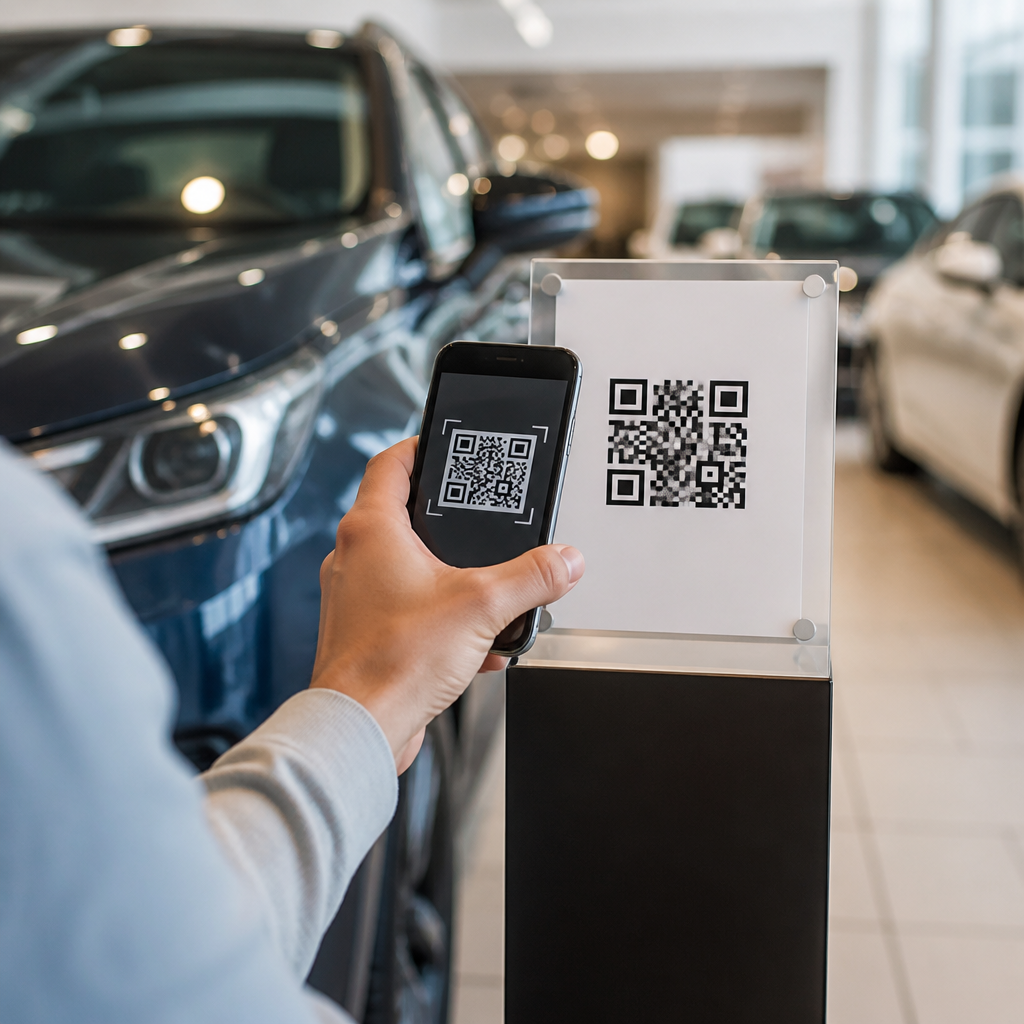
QR codes have become one of the most practical tools in automotive marketing because they bridge the gap between a physical vehicle and the digital information shoppers need to make a confident decision. In the car business, a QR code is a scannable square barcode that opens a webpage, video, form, coupon, financing application, service page, or inventory detail page on a smartphone. I have seen dealership teams use them on windshield stickers, showroom displays, direct mail, service reminders, event signage, and vehicle handoff materials to shorten the path from curiosity to action.
The car buying experience has changed sharply in the past decade. Buyers now research extensively before visiting a dealership, compare pricing across several sellers, read reviews, watch walkaround videos, and expect transparent answers on availability, payments, trade-in value, and ownership costs. Cox Automotive has repeatedly reported that buyers spend far more time online than in-store during the purchase journey, and that reality has forced dealers and automotive brands to improve every handoff between channels. QR codes matter because they remove friction at those handoffs. Instead of asking a shopper to remember a URL, search for a trim package later, or wait for a salesperson to email details, a simple scan can deliver the exact information needed in seconds.
For automotive businesses, that convenience has measurable value. A QR code can connect a used-car buyer to a vehicle history report, a new-car shopper to an incentives page, or a service customer to a maintenance scheduler. It can also support compliance and consistency by ensuring that every customer reaches the same approved landing page rather than receiving improvised explanations from different staff members. When implemented well, QR codes improve transparency, speed lead capture, support attribution, and help shoppers continue their journey on their own terms. That combination makes them especially useful in a category where purchases are high consideration, inventory changes daily, and trust is often the deciding factor.
This automotive QR code hub explains where they fit across the buying journey, which dealership use cases produce the most value, and what teams must do to avoid poor customer experiences. The central idea is simple: QR codes work best when they answer the next buyer question immediately. In automotive retail, that next question may be about price, features, financing, trade-in, service history, warranty coverage, or delivery options. The more precisely a dealership connects each code to that question, the more likely it is to increase engagement and sales quality rather than create one more piece of ignored marketing.
How QR codes support each stage of the automotive customer journey
Automotive shoppers move through distinct stages: discovery, comparison, dealership visit, transaction, delivery, and ownership. QR codes can help at every stage because each stage has a predictable information need. During discovery, codes on billboards, print ads, social graphics, or event displays can send consumers directly to model pages, local inventory, or payment estimators. During comparison, QR codes on vehicle listing pages, brochures, and lot stickers can open walkaround videos, OEM feature breakdowns, and side-by-side trim information.
On the dealership lot, the value becomes more immediate. A shopper standing beside a vehicle usually wants answers fast: Is this unit still available? What are the features? Has the price changed? Can I estimate my payment? Is there a Carfax or AutoCheck report? By placing a dynamic QR code on the window sticker or hang tag, dealers can link directly to the live vehicle detail page, where pricing, photos, disclosures, and call-to-action buttons are current. This is one of the simplest ways to reduce dependence on printed materials that go out of date the moment incentives, mileage, or status change.
In the finance and insurance stage, QR codes can route buyers to secure credit applications, protection plan explainers, or document checklists. That reduces paperwork bottlenecks and can improve completion rates because the buyer can continue the task on their own device. After delivery, codes can support onboarding by linking to owner manuals, service scheduling, roadside assistance details, accessory catalogs, and how-to videos for infotainment, charging, or driver-assistance features. For electric vehicles especially, this matters because first-time EV buyers often have many setup and charging questions after they leave the lot.
High-impact dealership use cases that improve the car buying experience
The strongest automotive use cases are the ones tied to buyer intent. Window stickers are the most obvious example. A QR code on every new or used vehicle can open a mobile-optimized landing page with VIN-specific details, current price, monthly payment estimate, feature highlights, fuel economy, and availability. For used cars, adding a link to the condition report and history report increases transparency. If the unit has a recent inspection, reconditioning summary, or warranty eligibility, that should be included as well.
Showroom displays and test-drive stations are another effective use case. A code beside a demo vehicle can launch a product specialist video explaining trim differences, safety features, and technology packages in plain language. This helps shoppers who prefer self-directed research and ensures that a busy showroom does not become a dead end. I have also seen dealerships place QR codes in waiting areas that connect shoppers to a trade-in appraisal form, credit prequalification page, or new incentives page. These placements turn passive waiting time into productive shopping time.
Direct mail remains relevant in automotive, especially for service conquest campaigns, equity-mining offers, and model launch promotions. A QR code on a mailer can send the recipient to a personalized landing page instead of a generic homepage. That matters because every extra click lowers conversion. Event marketing works the same way. At auto shows, tent sales, community sponsorships, and ride-and-drive events, QR codes can capture leads quickly, register attendees for follow-up, and route them to inventory filtered by body style, price, or fuel type.
Service and fixed operations should not be overlooked. Service lane QR codes can explain recommended maintenance, menu pricing, tire offers, recall checks, or shuttle options. Customers who trust the service department are often more likely to repurchase from the same retailer later, so QR codes in service communications support both retention and future sales.
| Use case | Where the QR code appears | What the shopper gets | Primary benefit |
|---|---|---|---|
| Lot inventory access | Window sticker or hang tag | Live vehicle detail page, photos, payments, availability | Faster self-service research |
| Used vehicle transparency | Certified and pre-owned displays | History report, inspection summary, warranty details | Higher trust |
| Finance prequalification | Showroom desks, brochures, email, direct mail | Secure credit app or payment estimator | Shorter purchase cycle |
| Trade-in capture | Waiting area, service lane, event signage | Valuation form with VIN and mileage entry | More leads and inventory sourcing |
| Ownership support | Delivery folder, key tag, owner packet | Manuals, service scheduler, feature tutorials | Better post-sale experience |
Why QR codes work especially well for modern automotive shoppers
Car buyers want control, speed, and proof. QR codes serve all three. Control matters because many shoppers prefer to browse without initiating a sales conversation immediately. A QR code lets them review price, trim, and financing information privately on their phone. Speed matters because inventory decisions happen quickly. A vehicle that looked perfect in a weekend newspaper insert may be sold by the time the shopper arrives. A code linked to live inventory reduces that mismatch. Proof matters because buyers are skeptical of vague claims. When a dealership links a code to a real inspection report, manufacturer build data, or a clearly disclosed pricing page, it replaces guesswork with evidence.
They also fit current smartphone behavior. Consumers are now accustomed to scanning restaurant menus, payment links, event tickets, and product packaging. In automotive retail, that normalized behavior lowers the barrier to engagement. The key is relevance. A generic code that dumps a user onto a homepage is weak. A code that answers the specific question created by the context is strong. If the code is on an EV display, it should lead to charging time, battery warranty, estimated range, and available incentives. If it is on a commercial vehicle brochure, it should lead to payload, upfit options, and fleet contact information.
Another reason QR codes perform well is that they help unify online and offline measurement. Dealers can create unique codes by model line, campaign, store location, or placement. Using analytics platforms such as Google Analytics 4, call tracking, CRM source mapping, and dynamic QR code dashboards, they can see which scans lead to form submissions, phone calls, appointment requests, or sold units. That level of attribution is especially valuable for channels like print, in-store signage, and events that have historically been harder to measure accurately.
Best practices for implementing QR codes in automotive marketing
Execution determines results. The first rule is to use mobile-first landing pages that load quickly and match the expectation created by the code. A shopper scanning a vehicle sticker should not land on a desktop page with tiny text and no clear call to action. The second rule is to use dynamic codes whenever possible. Dynamic QR codes allow marketers to change the destination URL without reprinting the asset, which is critical in automotive where incentives expire, units sell, and campaigns change often.
The third rule is to place a plain-language prompt beside the code. “Scan for price, payments, and history report” performs better than a code with no explanation because it tells the shopper exactly why scanning is worth the effort. The fourth rule is to design for real-world conditions. Codes must be large enough to scan, printed with sufficient contrast, and placed where glare, rain, tint, or windshield curvature will not interfere. I have seen otherwise smart dealership programs fail because the code was too small on a laminated tag behind reflective glass.
Data governance matters as well. If a QR code collects lead information, the linked form should use secure transmission, clear consent language, and CRM routing that assigns follow-up promptly. If a code is used in finance contexts, the destination should meet the dealership’s compliance and privacy requirements. Teams should also test every code across iPhone and Android devices, different camera apps, and weak connectivity environments on the lot.
Finally, integrate QR code strategy with existing dealership systems. The best programs connect inventory feeds, video platforms, digital retailing tools, reputation content, and service schedulers so the scan opens a complete next step rather than an isolated page. Tools vary, but the principle is constant: reduce friction, preserve context, and make every scan actionable.
Common mistakes, limitations, and the articles this hub should inform
QR codes are not a cure-all. The most common mistake is linking to generic pages that force users to start over. Another is ignoring staff training. Salespeople should know what each code does, how to use it during a walkaround, and how to continue the conversation once the shopper has scanned. Poor maintenance is another risk. Broken links, expired offers, and sold inventory create immediate trust damage.
There are also audience and environment limitations. Some buyers still prefer paper information or direct human explanation. Rural lots may have inconsistent cellular coverage. Older printed materials can remain in circulation after offers expire. Accessibility must be considered too, including readable surrounding text and alternate ways to access the same information. The practical response is not to avoid QR codes, but to support them with short URLs, visible phone numbers, and staff assistance.
As the hub for automotive use cases, this page should guide deeper articles on QR codes for dealership lot stickers, used-car history reports, EV education, service lane retention, finance applications, direct mail attribution, auto show lead capture, and post-sale owner engagement. Those subtopics deserve detailed treatment because each has distinct compliance, creative, operational, and measurement requirements. Start by auditing the moments in your dealership where customers pause and ask the next obvious question. Then place QR codes exactly there, linked to the clearest possible answer. Done well, QR codes make car buying easier, more transparent, and more measurable for both shoppers and automotive marketers.
Frequently Asked Questions
1. How do QR codes make it easier for shoppers to research a vehicle on the lot?
QR codes simplify one of the biggest friction points in car shopping: getting accurate, useful information at the exact moment a shopper is looking at a vehicle. When a code is placed on a windshield sticker, showroom display, hangtag, or lot sign, a customer can scan it with a smartphone and instantly open a page with vehicle details such as trim level, mileage, pricing, features, fuel economy, safety ratings, warranty information, and available incentives. Instead of waiting for a salesperson to print information or answer basic questions, shoppers can explore key details on their own in seconds.
This creates a more convenient and more confident buying experience. Many customers prefer to browse independently before engaging with a sales team, and QR codes support that behavior without slowing the process down. A well-designed QR destination can also include photos, walkaround videos, comparison tools, trade-in estimators, and payment calculators, helping the shopper move from curiosity to serious consideration much faster. In practical terms, QR codes turn a parked vehicle into an interactive digital experience, which is especially valuable on large lots where customers may want to compare several models efficiently.
2. What kind of information can a dealership share through a QR code during the buying process?
Dealerships can share almost any digital asset that helps a buyer make a better decision, which is one reason QR codes are so effective in automotive marketing. A single scan can lead to a vehicle detail page, financing application, credit pre-qualification form, limited-time coupon, trade-in appraisal tool, digital brochure, service history summary, or a page highlighting current manufacturer incentives. For pre-owned vehicles, a QR code can also direct shoppers to information such as vehicle history reports, inspection summaries, and reconditioning details, all of which support transparency.
QR codes are equally useful for richer media. A dealership might link to a video walkthrough, feature demonstration, customer testimonial, or side-by-side comparison with similar models. In the showroom, codes can be used on display stands to explain advanced technology packages, safety systems, or electric vehicle charging details in a format that is easier to understand than a printed spec sheet alone. During promotions, dealerships can place QR codes on direct mail pieces, service reminders, or digital ads to connect shoppers directly to inventory pages or lead forms. The flexibility is what makes them powerful: they allow physical marketing materials and in-person vehicle displays to connect immediately to the most relevant digital content for that stage of the customer journey.
3. How do QR codes help build trust and confidence when someone is deciding whether to buy a car?
Trust is critical in automotive sales, and QR codes can support trust by making information more accessible, more transparent, and easier to verify. When a shopper scans a code and sees real-time pricing, detailed vehicle specifications, financing options, history reports, photos, and dealership contact information, the process feels more open and less dependent on guesswork. Buyers are often more comfortable when they can review information at their own pace rather than feeling pressured to ask every question face-to-face. That sense of control matters, especially for major purchases like vehicles.
QR codes also reduce the chances of miscommunication. Printed materials can become outdated, and verbal explanations can vary from one interaction to another, but a properly maintained digital landing page can present current, standardized information every time. That consistency helps reinforce professionalism and credibility. In addition, linking shoppers to value-added content such as maintenance plans, warranty coverage, certification details, or educational videos shows that the dealership is investing in the buyer’s understanding, not just trying to make a quick sale. When used thoughtfully, QR codes do more than provide convenience; they create a smoother, more transparent experience that encourages informed decision-making.
4. Can QR codes improve the experience beyond the initial vehicle search and test-drive stage?
Yes, and that is where QR codes often become even more valuable. While they are excellent for helping shoppers research inventory, their usefulness extends across the full ownership journey. After a customer shows interest in a vehicle, a QR code can connect them to a test-drive scheduling form, financing pre-approval page, trade-in submission tool, or appointment confirmation page. This keeps the momentum going and reduces the number of steps required to move from browsing to serious purchase consideration.
After the sale, dealerships can continue using QR codes to improve customer experience and retention. Codes can be added to delivery packets, service reminder postcards, key tags, dashboard materials, or follow-up emails that link directly to owner resources, maintenance scheduling, warranty details, how-to videos, roadside assistance information, or loyalty offers. For newer vehicles with advanced infotainment, driver-assistance, or EV charging features, QR codes can direct owners to tutorials that answer common questions quickly. This ongoing convenience reinforces the dealership relationship and helps customers feel supported long after they leave the lot. In other words, QR codes are not just a lead-generation tool; they can also strengthen customer satisfaction and long-term engagement.
5. What makes a QR code strategy successful for dealerships and automotive marketers?
A successful QR code strategy depends on relevance, ease of use, and a strong mobile experience. First, the destination must match the shopper’s intent. If a customer scans a code on a specific vehicle, they should land on that exact vehicle’s detail page, not a generic homepage. If the code appears on a service reminder, it should take them directly to online scheduling or a service offer page. The faster the user gets to useful information, the more effective the QR code will be. Relevance is what turns a scan into real engagement.
Second, the content has to work well on a smartphone. Pages should load quickly, display clearly, and make next steps obvious, whether that means watching a video, calling the dealership, checking payments, or filling out a form. It also helps to place QR codes where shoppers naturally pause and want more information, such as windshield stickers, showroom stands, direct mail pieces, and service materials. Finally, dealerships should track performance so they can measure which codes generate scans, leads, appointments, or sales activity. That data helps refine messaging, placement, and destination pages over time. When QR codes are easy to scan, linked to genuinely helpful content, and integrated into the full buying journey, they become a practical tool for improving both shopper experience and dealership results.