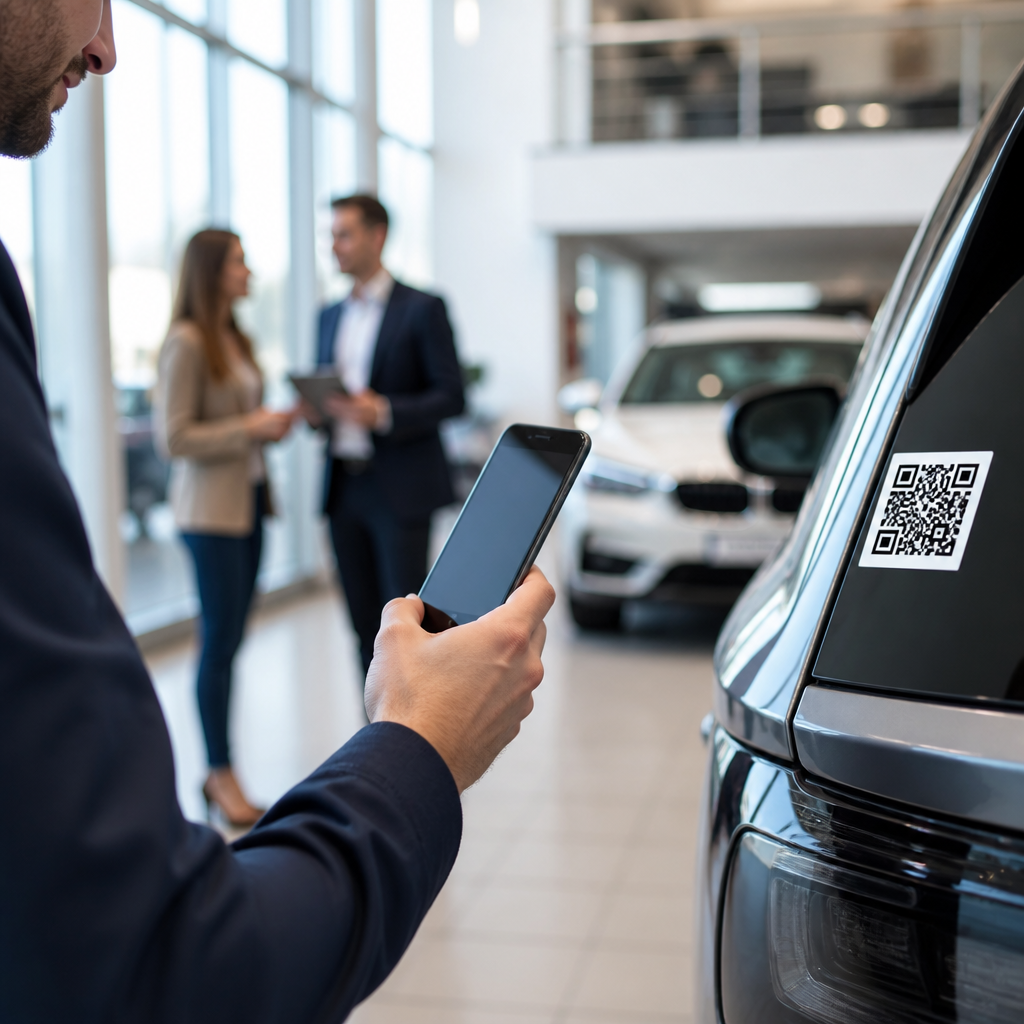
QR codes for car dealership marketing campaigns have moved from novelty to core infrastructure because they connect physical vehicles, signage, mailers, and showroom interactions to measurable digital actions in seconds. In dealership marketing, a QR code is a scannable two-dimensional barcode that opens a landing page, video, lead form, map listing, payment page, trade-in tool, or digital brochure on a shopper’s phone. I have implemented these campaigns across rooftop groups and single-point stores, and the pattern is consistent: when codes are placed with intent and tied to a clear next step, they reduce friction, increase attribution, and improve lead quality. For automotive retailers, that matters because the path to purchase is fragmented across lots, third-party listings, direct mail, service visits, and repeat ownership cycles.
Dealerships face a specific challenge that many local businesses do not. Inventory changes daily, model incentives change monthly, and consumers often begin on a vehicle information page, then bounce to review sites, OEM offers, and map apps before contacting a store. QR codes help stitch those touchpoints together. A shopper standing beside a used SUV after hours can scan to see price, Carfax availability, payment estimates, and reserve options. A service customer waiting for an oil change can scan into a trade appraisal, loyalty offer, or referral program. A direct mail recipient can jump to a personalized landing page instead of typing a long URL. Each use case creates a measurable bridge between offline attention and online intent.
The value is not just convenience. Properly managed QR code campaigns support stronger campaign attribution, better first-party data collection, more consistent messaging, and faster handoff to sales or service teams. Dynamic QR codes, UTM tracking, CRM integration, and inventory feed connections turn a simple scan into actionable dealership intelligence. This article serves as the hub for automotive use cases under the broader QR codes in marketing topic, covering how dealers use QR codes across inventory, the showroom, service, events, direct mail, and reputation management, along with the standards that make campaigns effective and compliant.
Why QR codes fit the automotive buying journey
Car buying is a high-consideration purchase with many micro-decisions. Shoppers compare trim levels, financing terms, fuel economy, safety features, ownership costs, and dealer reputation before they ever speak to a salesperson. In practice, that means every in-person impression should offer a frictionless way to continue the conversation digitally. QR codes work well in automotive because the physical asset is the product. Unlike many retailers, a dealership can attach a scannable experience directly to the exact unit a customer is evaluating on the lot.
I have seen the biggest gains when dealerships map QR placements to buyer intent. On the windshield, the code should answer “What is this vehicle and what will it cost me?” On a service counter sign, it should answer “What should I do next while I am here?” On a direct mail card, it should answer “Why should I respond now?” This direct matching of context to action is what separates effective campaigns from decorative QR codes that get ignored. The scan has to feel like a shortcut, not an extra task.
Automotive campaigns also benefit from mobile-first behavior. Most lot traffic already carries the right device, and current smartphone cameras scan natively on iOS and Android. That reduces adoption barriers. When dealers combine scan destinations with fast pages, payment calculators, click-to-call, and finance prequalification, they capture intent at the moment it peaks. The result is often fewer anonymous walkarounds and more attributable leads that sales managers can track by source, placement, and campaign.
Core dealership use cases across sales, service, and retention
The most common sales use case is the vehicle detail page shortcut. A QR code on each unit can route shoppers to the live VDP with photos, price, monthly payment ranges, feature highlights, OEM incentives, and lead forms. For used inventory, this is especially valuable because VIN-specific details matter. Dealers can also link to walkaround videos, 360 tours, and comparison pages for competing models. If a vehicle sells, a dynamic QR code can redirect to similar inventory rather than producing a dead end.
In the showroom, codes support self-guided browsing without replacing staff. Table tents can open trim comparison charts, F&I explainer videos, protection product menus, or multilingual buying guides. During busy weekends, that keeps shoppers engaged while teams manage floor traffic. For new vehicle launches, one code can send users to a model hub with feature summaries, availability, and reservation forms. Dealers hosting EV education events often use QR codes for charging guides, tax credit information, and test-drive scheduling because these topics require more detail than a window sticker can provide.
Service and retention campaigns are equally important. Codes on repair orders, waiting area signage, and pickup packets can prompt reviews, next-service booking, prepaid maintenance enrollment, or equity mining tools. A service customer already trusts the store enough to bring in a vehicle, making this an efficient moment to present upgrade offers. I have also seen effective campaigns on courtesy shuttle cards, key tags, and tire storage reminders. The best retention QR codes are concise and transactional: scan to schedule, scan to pay, scan to review, scan to value your trade.
Best placements and campaign goals by dealership touchpoint
| Touchpoint | Best QR destination | Primary goal | Key metric |
|---|---|---|---|
| Windshield sticker | Vehicle detail page or payment calculator | Convert lot traffic into leads | Scans per vehicle and lead rate |
| Showroom stand | Trim comparison or product video | Support in-store education | Engagement time and assisted sales |
| Direct mail postcard | Campaign landing page with offer | Track mail response | Scan rate and appointment bookings |
| Service waiting area | Review form or trade appraisal tool | Retention and conquest upsell | Reviews, appraisals, and booked visits |
| Event signage | Registration or test-drive scheduler | Capture attendees immediately | Registrations and attended appointments |
Placement affects performance more than many dealerships expect. A code printed too low on a windshield or with glare across the surface will underperform regardless of the offer. In my experience, the strongest physical placements are eye-level, high-contrast, and paired with a direct command such as “Scan for price and payment options” or “Scan to book your test drive.” Avoid generic labels like “Learn more.” Shoppers respond better when the result is explicit.
Different channels also demand different goals. Lot signage should focus on inventory and immediate conversion. Direct mail should focus on offer redemption and attribution. Service lounge materials should emphasize retention and reviews. Event QR codes should prioritize speed, since users are often standing, talking, and partially distracted. When dealerships define one primary action per code, campaign reporting becomes cleaner and optimization decisions become easier.
Technical setup: dynamic codes, tracking, and CRM integration
For dealership marketing, dynamic QR codes are the standard choice because inventory, offers, and routing rules change constantly. A static code hard-links to one URL forever, which creates risk when a campaign page is removed or a unit sells. Dynamic platforms such as Bitly, QR Code Generator Pro, Beaconstac, Flowcode, and enterprise campaign tools let marketers update the destination without reprinting assets. That matters on the lot, where replacing every vehicle sticker is operationally expensive.
Tracking should be configured before anything is printed. At minimum, append UTM parameters for source, medium, campaign, and content so scans appear clearly in Google Analytics 4 and any dashboard layered above it. For example, a windshield campaign can identify rooftop, row, model family, and creative version. Pair that with event tracking for button clicks, lead submissions, finance applications, phone taps, and map opens. If your website vendor controls form routing, confirm that hidden fields preserve campaign parameters into the CRM.
Integration with dealership systems is where QR campaigns become strategically valuable. Leads should flow into the CRM with source naming that sales teams recognize, whether the store uses VinSolutions, DealerSocket, Elead, or another platform. Inventory-linked destinations should sync with the website provider or feed manager so pricing and availability remain current. If a campaign touches fixed ops, connect scheduling and payment tools as well. The objective is simple: every scan should become reportable activity, not orphan traffic that marketing sees but the store cannot act on.
Creative and landing page standards that improve scan-to-lead conversion
A QR code does not rescue weak creative. It amplifies the next step. High-performing dealership campaigns use short supporting copy, visible value, and a landing page matched to the exact promise made at the scan point. If the windshield says “See today’s price and monthly payment,” the page should open above the fold with current price, payment estimate, incentives, and a clear path to contact, reserve, or get prequalified. Sending that user to a generic homepage is a conversion leak.
Speed is critical. Google’s guidance on page experience and mobile usability is directly relevant here because scans happen on mobile devices in imperfect conditions: bright sun, weak reception, and short attention spans. Compress images, minimize intrusive pop-ups, and place tap targets far enough apart for one-handed use. On VDPs, include dealership phone, directions, hours, and a lightweight lead form. For EV and higher-consideration models, add FAQs that answer common objections such as range, charging time, warranty coverage, and tax incentives.
Trust signals matter as much as convenience. Real vehicle photos, transparent pricing language, review snippets, CARFAX or AutoCheck references when applicable, and lender or warranty logos can improve confidence. In direct mail campaigns, continuity between postcard message and landing page headline materially affects response. I also recommend fallback paths: if a user is not ready to submit a form, offer text messaging, save-and-share, or a brochure download. Good QR campaign design respects varying levels of purchase readiness without losing attribution.
Compliance, privacy, and operational pitfalls dealers should avoid
Automotive marketing carries compliance obligations that QR campaigns do not bypass. If a code links to payment offers, required disclosures should be visible and truthful under applicable advertising rules, including state regulations and Federal Trade Commission standards on deceptive practices. If finance prequalification is offered, the form flow should distinguish clearly between soft-pull and hard-pull scenarios. Consent language for SMS or email follow-up must align with TCPA and CAN-SPAM requirements and your CRM’s opt-in records.
Privacy and data handling deserve equal attention. A QR scan itself may be anonymous, but once a customer submits information, that data enters your website, analytics stack, forms provider, CRM, and possibly call tracking software. Dealers should review vendor access, retention policies, and field mapping to avoid exposing customer data unnecessarily. If campaigns are personalized through direct mail or loyalty records, use secure landing pages and avoid embedding sensitive information in visible URLs.
Operationally, the biggest mistakes are broken destinations, outdated offers, and codes with no human follow-through. Test every code on multiple devices before launch and after any website migration. Establish ownership for refreshing creative when incentives end or inventory turns. Train BDC and floor teams to recognize QR-generated leads and respond based on landing page context. When a shopper scans a service-lane trade offer, the team should not treat that inquiry like a generic internet lead. Relevance in response is what converts marketing activity into sales outcomes.
How dealerships measure success and scale what works
The right KPI depends on the campaign objective, but scan volume alone is not enough. I advise dealerships to track a chain of metrics: scans, unique visitors, engagement depth, lead submissions, appointment set rate, show rate, sold rate, repair order value, or review completion depending on the use case. For lot inventory codes, a strong signal is the percentage of scans that reach payment tools or contact actions. For service-lounge campaigns, review conversion and trade appraisal starts can reveal whether retention messaging resonates.
Benchmarking should be channel-specific. A direct mail QR campaign may have a lower scan rate than a windshield campaign but a higher appointment rate because the audience is more targeted. Multi-rooftop groups should compare normalized performance by store traffic, inventory age, and campaign placement, not just raw totals. In practice, some of the best insights come from pairing scan data with sales outcomes: which models generate the most scans but few leads, which mail offers drive service visits, and which service prompts create the most upgrade conversations.
Scaling successful QR programs requires process discipline. Start with one high-intent use case, usually lot inventory or service review generation, validate the landing experience, then expand into direct mail, event marketing, F&I education, and loyalty campaigns. Build naming conventions, dashboard views, and creative templates so stores can replicate winning tactics without reinventing setup each month. QR codes for car dealership marketing campaigns work best when treated as a system, not a one-off graphic. Audit your current touchpoints, launch one measurable pilot, and expand only after the data shows where scans turn into revenue.
Frequently Asked Questions
1. How are QR codes used in car dealership marketing campaigns?
QR codes give dealerships a fast bridge between offline shopper touchpoints and online actions. In practice, that means a code can be placed on vehicle window stickers, showroom displays, service lane signage, direct mail pieces, event banners, business cards, social graphics, and even TV or out-of-home creative. When a shopper scans the code with a phone, it can open a vehicle detail page, a trade-in valuation tool, a finance pre-approval form, a payment calculator, a digital brochure, a walkaround video, a map to the store, or a lead capture page tied to a specific campaign.
What makes QR codes especially valuable for dealerships is that they shorten the path from interest to action. A customer standing next to a used SUV on the lot does not need to remember a URL or search later. They can immediately access pricing, features, Carfax information, photos, financing options, or availability from the exact vehicle they are viewing. The same principle works in mail and print campaigns. A postcard promoting a lease offer can send the shopper directly to a model-specific landing page instead of relying on them to visit the homepage and search from there.
They also support stronger attribution. Instead of guessing whether a sign, flyer, or display influenced traffic, the dealership can track scans, clicks, form submissions, calls, appointments, and downstream sales activity connected to each code. That turns physical marketing into something much more measurable. For dealership groups managing multiple rooftops or campaigns at once, QR codes create a practical infrastructure layer that connects inventory, offers, customer intent, and reporting in a way that is simple for shoppers and highly useful for marketers.
2. What should a dealership link a QR code to for the best results?
The best destination depends on the shopper’s context and the campaign goal. A QR code should not simply send every user to the dealership homepage. That usually creates friction and lowers conversion rates. Instead, the destination should match the exact moment in the buyer journey. If the code is on a vehicle on the lot, it should typically go to that vehicle’s inventory page, a walkaround video, or a lead form pre-filled with the stock number. If the code appears in a finance-themed campaign, it should go to credit pre-qualification, payment options, or a special offer page. If it is on service signage, it should open an appointment scheduler, coupon page, or maintenance menu.
For new model campaigns, high-performing destinations often include model research pages, trim comparisons, incentive landing pages, or test-drive scheduling forms. For used vehicles, shoppers usually respond well to pages with real photos, pricing transparency, history reports, monthly payment estimates, and an easy way to reserve the unit or request more information. In direct mail, a strong destination might be a personalized landing page featuring a trade-in range, a current incentive, and a short form. In the showroom, a QR code can link to an F&I explainer, digital brochure, ownership benefits page, or accessory catalog.
The key is relevance, speed, and clarity. The page should load quickly, be mobile-optimized, and make the next action obvious. Dealerships often lose momentum when the scan leads to a cluttered page with too many options. The best-performing experiences usually have one primary call to action, concise copy, and campaign-specific messaging that matches the sign or vehicle the shopper just scanned. In other words, the QR code itself is only the trigger; the landing experience is what determines whether curiosity becomes a lead, appointment, or sale.
3. How can dealerships track QR code performance and measure ROI?
Dealerships can track QR code performance by assigning each code to a distinct campaign, placement, or vehicle category and connecting that code to analytics and CRM workflows. At the most basic level, marketers should know how many scans occurred, when they happened, where traffic came from, what page users landed on, and what actions they completed next. More advanced setups can measure lead submissions, phone calls, chat starts, appointment requests, credit applications, trade-in completions, coupon redemptions, and even sold units influenced by the campaign.
A practical measurement framework starts with dynamic QR codes. Unlike static codes, dynamic codes allow the destination URL to be changed without reprinting the code and typically include built-in scan analytics. From there, dealerships should use UTM parameters or equivalent tracking tags so traffic can be identified clearly in platforms like Google Analytics, CRM reporting, and ad dashboards. For example, a code placed on a showroom stand for a truck month promotion should have a different tracking structure than a code on a service reminder mailer or a used vehicle windshield tag. That segmentation makes reporting meaningful.
ROI becomes clearer when scan data is tied to real business outcomes. A dealership should look beyond total scans and evaluate lead quality, engagement depth, appointment set rate, showroom visits, gross opportunities, and close rate. It is common for one placement to generate fewer scans but more qualified leads than another. A direct-mail QR code tied to a trade-in campaign, for instance, may outperform a general awareness display because the shopper intent is stronger. The strongest operators review performance by campaign, model line, rooftop, and creative format, then refine calls to action, placements, and landing pages accordingly. When implemented correctly, QR codes stop being a novelty metric and become part of a broader attribution model for dealership marketing.
4. What are the biggest mistakes dealerships make with QR code campaigns?
The most common mistake is treating the QR code as the strategy instead of as the delivery mechanism. A QR code by itself does not create engagement. The offer, message, placement, landing page, and follow-up process are what make the campaign work. Many dealerships print codes on signs, brochures, or vehicle displays without explaining why someone should scan. If there is no clear value proposition such as “See payment options,” “Get trade value,” “Watch walkaround video,” or “Claim today’s offer,” scan rates tend to be low.
Another major issue is poor destination design. Sending traffic to the homepage, a desktop-only page, or a slow-loading inventory experience usually wastes shopper intent. Mobile usability matters enormously because nearly every scan happens on a phone. Pages should be fast, simple, easy to navigate, and aligned with what the physical sign promised. Dealerships also run into problems when they use static codes everywhere and later realize they cannot update links, track performance cleanly, or test different destinations. Dynamic QR codes are usually the smarter operational choice, especially for larger groups or campaigns that evolve frequently.
Other mistakes include printing codes too small, placing them where glare or distance makes scanning difficult, failing to test them across devices, and not training the sales team on how to use them in conversation. Compliance and brand consistency can also get overlooked. If a code links to an offer page, the offer details must be current and accurate. Finally, many stores fail to establish a lead-handling process for QR-driven conversions. If a customer scans a code to request a trade value or book a test drive, the dealership needs prompt follow-up, proper CRM attribution, and a clear handoff to sales or BDC. The best campaigns succeed because operations and marketing are aligned, not just because a code was printed well.
5. Where should a dealership place QR codes to get the most scans and conversions?
The highest-performing placements are usually the ones closest to shopper intent. On the lot, that includes window stickers, windshield hang tags, vehicle display stands, and used car information sheets because the customer is already evaluating a specific vehicle. In the showroom, placement works well on feature comparison boards, model launch displays, F&I explainer materials, desk signage, and delivery packets. In service, QR codes can be highly effective on repair order jackets, waiting area signs, checkout counters, maintenance menus, and follow-up materials that encourage future appointments or accessory purchases.
Outside the store, direct mail remains one of the strongest channels because it pairs a physical offer with an immediate digital next step. Postcards, equity mailers, service reminders, event invitations, and model-specific campaigns can all perform well when the landing page is tightly matched to the message. Community event booths, sponsorship banners, off-site sales events, and local partnerships also create good scan opportunities when the call to action is easy to understand and the destination is mobile-friendly. Even traditional media can support QR usage if the code appears long enough and large enough to scan comfortably.
The real answer, however, is that the best placement is not universal. It depends on the dealership’s inventory mix, traffic patterns, campaign goals, and customer journey. A high-volume used-car operation may see exceptional value from VIN- or stock-specific lot signage, while a luxury rooftop might get stronger engagement from showroom content focused on model education, concierge scheduling, or ownership benefits. The smartest approach is to test placements intentionally, compare scan-to-lead and lead-to-sale performance, and expand what proves effective. When dealerships place QR codes where shopper curiosity is already strongest and pair them with a compelling next step, they consistently turn passive browsing into measurable action.