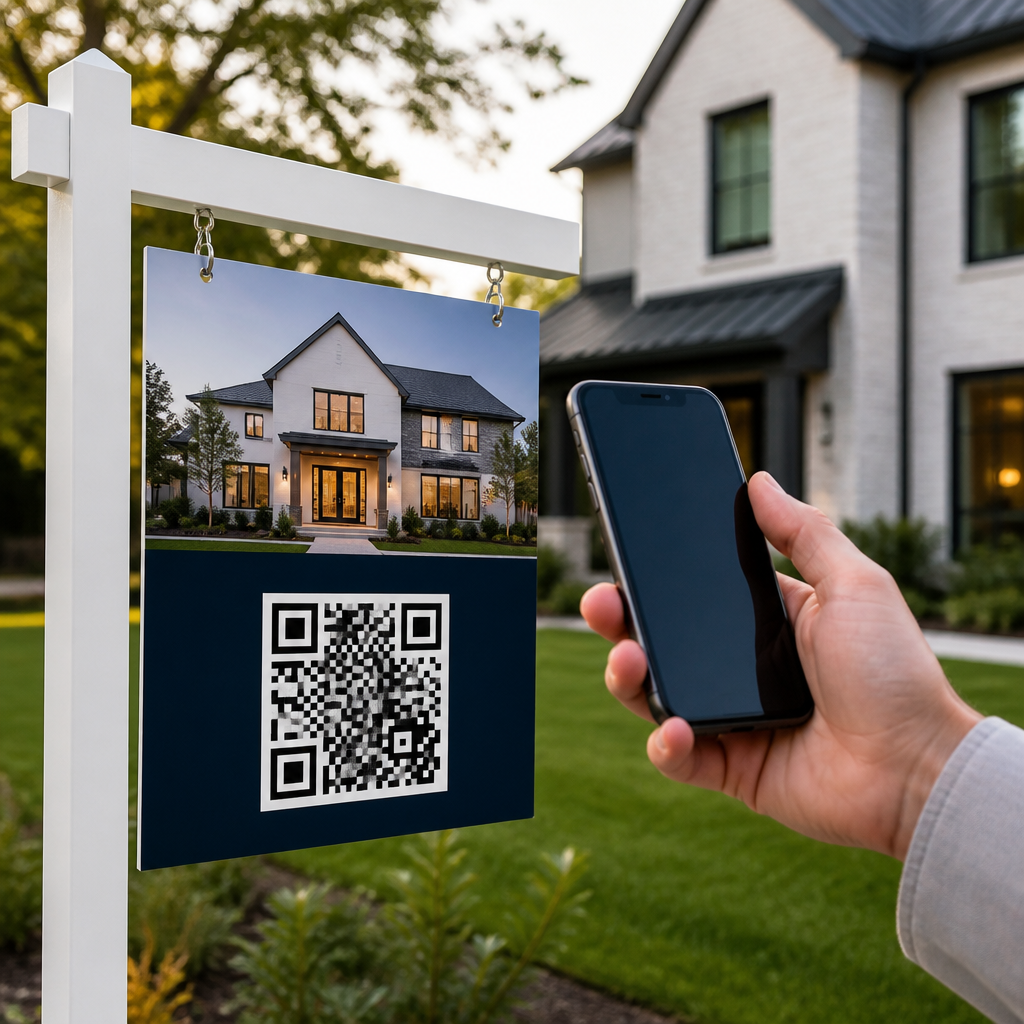
Using QR codes on real estate signs has moved from a novelty to a practical marketing standard because it connects a passerby’s moment of interest to immediate property information, agent contact options, and measurable lead capture. In real estate, a QR code is a scannable two-dimensional barcode that sends a smartphone user to a digital destination such as a listing page, virtual tour, open house registration form, financing calculator, or neighborhood guide. A real estate sign includes yard signs, directional signs, rider panels, window displays, development boards, and commercial property placards. When these tools work together, they shorten the path from curbside attention to qualified inquiry. That matters because buyer intent is often highest when someone is physically standing in front of a property or driving through a target neighborhood.
I have implemented QR sign campaigns for single-family listings, multifamily lease-ups, and commercial brokers, and the same lesson keeps repeating: the code itself is not the strategy. The destination, sign placement, mobile experience, and follow-up workflow determine whether scans become showings. Agents often ask a basic question first: do people really scan codes from signs? Yes, when the offer is clear and the experience is fast. The widespread adoption of built-in smartphone cameras removed the friction that limited early QR campaigns. During the past several years, consumers also became more comfortable scanning codes in restaurants, retail stores, events, and healthcare settings, which normalized the behavior for property search.
For a real estate business, QR codes on signs matter for three reasons. First, they improve access. A buyer can get price, photos, and availability without calling from the sidewalk. Second, they improve measurement. Dynamic QR platforms can report scans by date, time, approximate location, and device type, helping brokers compare sign locations and creative approaches. Third, they improve conversion. Instead of hoping someone remembers a phone number, a code can open a page with one-tap calling, saved listing alerts, mortgage prequalification, and calendar booking. Used correctly, QR codes support residential resale, rentals, new developments, land marketing, and commercial leasing. This article explains how to use them well, what destinations perform best, how to measure results, and where this tactic fits inside a broader real estate marketing system.
Why QR codes work on real estate signs
QR codes work on real estate signs because they match the context of discovery. A prospect sees a property while already evaluating location, curb appeal, traffic patterns, school proximity, or retail visibility. That person may not be ready to speak to an agent, but is often willing to scan for facts. In practice, this creates a low-pressure entry point for both high-intent buyers and early-stage researchers. On residential listings, scans typically rise around new sign installation, price changes, open house weekends, and peak commuting hours. On commercial properties, scan quality often improves when signs face slow-moving traffic near business districts or development corridors.
The most successful sign campaigns answer the first four questions immediately: What is this property, what does it cost, can I see more, and how do I act now? If the QR destination fails any of those, performance drops. Sending all scans to a generic homepage is one of the most common mistakes I see. A property-specific mobile landing page consistently outperforms a broad website because it reduces choices and keeps the visitor anchored to the original interest. The page should load quickly, display photos above the fold, show status and key specs, and present clear action options. For example, a rider reading “Scan for price, photos, and tour times” generally converts better than a bare code with no explanation because it sets an explicit expectation.
There is also a trust component. Real estate is a high-consideration purchase, so prospects want confidence that the code leads somewhere legitimate. Branded destination pages, HTTPS security, brokerage contact details, and consistent sign design all help. In my experience, vanity short links printed under the code improve confidence further because users can type the address if they prefer not to scan. Accessibility matters too. Codes should be large enough to scan from a reasonable distance, printed with strong contrast, and placed where glare, foliage, or frames will not interfere. Good execution is simple, but it is rarely accidental.
Best destinations for real estate sign QR codes
The best destination depends on the property type and campaign goal. For most residential resale signs, the highest-performing destination is a mobile listing page with headline facts, photo gallery, map, showing request form, and one-tap call or text. If the listing is likely to attract neighbors who may refer friends, add a “share this listing” option. For luxury properties, a code can open a cinematic video tour or interactive story page, but it still needs direct actions such as private showing requests and downloadable brochures. Media without conversion options creates interest but wastes intent.
New construction communities often benefit from a QR code that opens an availability map, floor plans, lot releases, and appointment scheduling. Renters scanning multifamily development signs usually want unit pricing, current specials, pet policy, parking details, and online application access. Commercial users are different again. A retail, office, or industrial sign should lead to a page with square footage, zoning or permitted use, asking rate, site plan, traffic counts if available, demographic highlights, and broker contact details. Investors evaluating land parcels may need utility notes, parcel maps, entitlement status, and due diligence document access.
Another effective destination is a gated lead form tied to valuable information. Examples include “download the brochure,” “get the offering memorandum,” or “unlock off-market alerts in this ZIP code.” This works especially well in commercial real estate and investor-focused residential segments where buyers expect to exchange contact information for more complete documents. The tradeoff is friction. If every visitor must fill a form before seeing basics, scan abandonment increases. A balanced approach is best: provide core facts openly, then gate deeper assets. Dynamic QR systems from providers such as Bitly, QR Code Generator Pro, Beaconstac, and Flowcode make it easy to update destinations without replacing the physical sign, which is essential when listings change status or campaign goals evolve.
Design, placement, and technical setup that improve scan rates
Physical design influences scan volume more than many agents expect. A code that looks fine on a desktop proof can fail outdoors because of sun glare, low contrast, or poor sizing. As a rule, make the code prominent enough to scan from where a person can safely pause. On standard yard signs, that usually means a code around 2 by 2 inches at minimum, often larger, paired with a short call-to-action. On development boards or window signage, larger formats support pedestrian scanning from several feet away. Quiet zones, the blank margin around the code, must remain unobstructed or scanners can struggle to read it. Black on white remains the safest choice, even when branded colors are available.
Testing should happen on multiple devices before printing at scale. I check current iPhone and Android cameras, both in bright sun and lower evening light, because many scans occur during commutes. Use dynamic rather than static codes whenever possible so the destination can change after installation. Add UTM parameters to the landing page URL so analytics platforms such as Google Analytics 4 can attribute traffic, conversions, and engagement specifically to sign scans. If a brokerage uses a CRM like HubSpot, Follow Up Boss, kvCORE, or Salesforce, connect forms and click events so lead routing happens automatically. Speed matters: a property page that loads in two seconds will usually outperform one that takes five, especially on mobile networks.
| Use case | Recommended QR destination | Primary conversion |
|---|---|---|
| Residential resale | Mobile listing page with photos, price, map, showing request | Tour booking or call |
| Luxury listing | Video-rich property microsite with brochure download | Private showing request |
| New construction | Community availability map, floor plans, appointment scheduler | Model home appointment |
| Multifamily leasing | Unit availability page with specials and application link | Guest card or application |
| Commercial property | Property page with site plan, brochure, traffic and demographics | Broker inquiry |
Placement should reflect how people approach the sign. If most traffic is vehicular, the code belongs where a parked or slow-moving prospect can scan safely, not where drivers would be tempted to interact on the road. Directional signs can support open houses, but primary lead capture is usually better on the main yard sign, window display, or brochure box panel near the entrance. Some agents add a second code for a different action, such as financing prequalification or neighborhood listings, but too many choices dilute results. One code per sign face is usually the cleanest strategy. Keep the message direct: “Scan for photos, price, and available tour times” outperforms abstract wording because it tells the prospect exactly what they gain.
Real estate use cases by property type and campaign goal
Residential agents can use QR codes on signs for more than active listings. A “coming soon” sign can collect early interest before full market launch, building a list for private previews if local rules and MLS policies allow that marketing sequence. Open house signs can route visitors to digital registration forms, reducing paper sign-in friction and improving follow-up accuracy. Just listed and just sold signs can link to neighborhood valuation pages, turning local curiosity into seller leads. This is one of the most reliable sign-based prospecting tactics because homeowners naturally compare nearby outcomes to their own property value.
Property managers and leasing teams can use QR codes to streamline tours and applications. A code on a building window can open current inventory, rental criteria, and self-scheduled tour options. During lease-ups, teams often pair large exterior signs with codes that connect to unit-specific availability so prospects do not bounce when a floor plan is no longer open. In student housing and urban multifamily, codes placed on transit shelter ads near the property can complement on-site signage and create a measurable path from neighborhood awareness to leasing lead.
Commercial real estate benefits from QR codes because information density is high and brochures are often too detailed for a sign. An industrial property sign can link to dock door counts, clear height, power availability, and transportation access. A retail listing can highlight co-tenancy, parking ratio, and household income within a defined radius. Office leasing pages can show suite plans, asking rent, and virtual walkthroughs. For investment sales, the sign may direct prospects to an executive summary, while full financials remain behind a registration wall. Across these cases, the principle is consistent: show enough information to qualify interest, then offer a deeper asset that captures serious prospects.
Measurement, compliance, and common mistakes to avoid
A QR code on a real estate sign should be treated like a measurable campaign asset, not a decorative add-on. Track scans, landing-page views, form completions, calls, texts, brochure downloads, and booked showings. Compare performance by sign location, property type, call-to-action wording, and destination format. In several campaigns I managed, changing the CTA from “Scan here” to “Scan for price and photos” increased scan-through because it made the benefit concrete. Small changes matter. So does lead quality. Fifty scans with no inquiries may indicate curiosity from unqualified traffic, while ten scans that produce three showings suggest the sign is reaching the right audience.
Compliance deserves attention. Real estate advertising rules vary by state, board, and brokerage policy, and fair housing obligations always apply. Ensure the destination page includes required brokerage identification, agent disclosures where applicable, and accurate status information. If you use forms, follow privacy standards and disclose how contact data will be used. For open house registration, avoid collecting unnecessary personal information. Accessibility also matters: pages should be mobile-friendly, legible, and simple to navigate for users relying on screen readers or enlarged text settings.
The most common mistakes are predictable. Agents print static codes that break when listings move. They link to desktop pages that are slow on mobile. They place codes too small to scan, or they omit the value statement that tells people why they should bother. Some send users to portals cluttered with competing listings, which leaks attention at the moment of highest intent. Others fail to test after installation and discover later that glare, laminate, or frame edges interfere with scanning. The fix is straightforward: use dynamic codes, test the physical sign in real conditions, simplify the destination, and connect every interaction to analytics and follow-up.
Building a real estate sign hub strategy with QR codes
As a hub topic within QR codes in marketing, real estate signage should connect to a wider content and campaign ecosystem. One article or landing page can branch into supporting resources for open house QR codes, brochure box alternatives, virtual tour pages, commercial offering memorandums, neighborhood guides, mortgage calculators, and seller lead generation from just sold signs. The hub works because each use case answers a distinct intent while reinforcing the same operational model: scan, learn, act, and measure. Internally, brokerages should maintain templates for each property category so agents are not reinventing destination pages and tracking setups every time a sign goes up.
The operational benefit is scale. A team with standardized QR workflows can launch listings faster, maintain consistent branding, and compare results across markets. A brokerage can learn, for example, that suburban residential signs convert best with immediate photo galleries and text links, while downtown mixed-use signs perform better with brochure downloads and broker callback forms. Those findings improve future campaigns. The best real estate marketers treat QR sign data as field intelligence about buyer behavior in specific neighborhoods and asset classes, not just as a vanity metric.
Using QR codes on real estate signs is effective because it turns physical visibility into digital engagement at the exact moment interest appears. The code bridges the gap between seeing a property and taking a next step, whether that means booking a tour, downloading a brochure, checking availability, or contacting an agent. Success depends on practical execution: a scannable design, a clear call-to-action, a fast mobile destination, and analytics tied to real business outcomes. For residential, rental, new development, and commercial properties, the pattern is the same: meet the prospect with the right information immediately and remove friction from follow-up.
If you manage real estate marketing, start with one high-intent sign type and build from there. Create a mobile-first landing page, generate a dynamic QR code, add a benefit-driven CTA, test the printed sign in real conditions, and connect scans to your CRM. Then expand into open houses, neighborhood seller campaigns, leasing signs, and commercial property boards using the same measurement framework. A well-built QR sign program does more than modernize a listing. It makes offline real estate marketing trackable, faster to optimize, and easier for prospects to act on today.
Frequently Asked Questions
What are the main benefits of adding QR codes to real estate signs?
QR codes turn a traditional real estate sign into an instant digital entry point. Instead of asking a buyer to remember an address, search for a listing later, or call when it is convenient, the code lets them access property details immediately while interest is highest. That immediate connection can lead a passerby to photos, pricing, square footage, virtual tours, open house dates, school information, neighborhood highlights, and direct contact options for the agent. In practical terms, that shortens the gap between curiosity and action, which is one of the biggest advantages in real estate marketing.
They also make lead capture more measurable. When a QR code sends users to a dedicated landing page, sign-in form, or inquiry page, agents and brokers can track scans, time of day, device type, and conversion activity. That data helps reveal which signs, locations, and listings generate the strongest response. Over time, those insights can improve sign design, call-to-action language, and follow-up strategy. For many real estate professionals, QR codes are valuable not just because they provide convenience to buyers, but because they add trackable performance data to an otherwise offline marketing channel.
Where should a QR code on a real estate sign lead buyers?
The best destination depends on the goal of the sign, but it should always match what a buyer expects when they scan. For an active listing, the most effective choice is often a mobile-friendly property page with current photos, price, key features, availability status, and a clear button to contact the agent. If the property has strong visual appeal, a virtual tour or video walkthrough can be especially effective because it delivers an immediate, immersive experience. For open houses, the code can point to a registration page, event details, or a calendar reminder form. For new developments or multifamily projects, it may lead to a community overview page, floor plans, or a leasing inquiry form.
What matters most is relevance and simplicity. A QR code should not drop users onto a generic homepage and force them to search again. It should take them directly to the most useful next step. In many cases, that means a dedicated landing page built specifically for sign traffic, with concise property details, fast-loading images, financing or mortgage tools, and obvious ways to call, text, or submit an inquiry. If the destination page is easy to use on a smartphone and clearly aligned with the sign’s message, the scan is much more likely to convert into a real lead.
How can agents make QR codes on yard signs easy and safe for people to use?
Ease of use starts with visibility and design. The QR code should be large enough to scan from a practical distance, printed sharply, and placed where glare, shadows, or sign hardware will not interfere with readability. It also needs a strong call to action nearby, such as “Scan for Price,” “Scan for Virtual Tour,” or “Scan for Open House Info.” Without that instruction, many people may notice the code but not understand the benefit of using it. Good contrast is also essential, typically a dark code on a light background, because decorative styling that looks attractive can sometimes reduce scannability in real-world outdoor conditions.
Safety and trust matter as well. Buyers are more likely to scan when the sign clearly shows a recognizable brokerage brand, agent name, and destination purpose. The linked page should be secure, mobile-optimized, and load quickly. It is also smart to avoid forcing users through too many steps immediately after scanning. For example, showing useful listing information first and then offering optional lead capture often feels more trustworthy than blocking access behind a required form. Since many scans happen curbside, agents should also think about user context: someone may be in a car, on a sidewalk, or juggling limited time. The simpler and more transparent the experience, the more effective the QR code will be.
Can QR codes on real estate signs help with lead generation and marketing analytics?
Yes, and that is one of the strongest business reasons to use them. A QR code can be tied to a unique URL, which makes it possible to see how many people scanned a specific sign and what they did afterward. That gives agents a clearer picture of which listings attract drive-by interest and which sign placements perform best. If someone scans a code and then schedules a showing, fills out a form, requests financing information, or calls the agent, those actions can often be tracked as conversions. This turns a physical sign from a passive branding tool into an active source of measurable digital engagement.
QR code tracking can also improve broader marketing decisions. Agents can compare scans across neighborhoods, monitor engagement before and after a price change, test different calls to action, or see whether users respond better to virtual tours than photo galleries. In a team or brokerage setting, this information can support smarter spending and stronger campaign planning. The key is to connect the QR code to a purposeful landing page and analytics setup, not just any webpage. When used strategically, QR codes provide both immediate lead opportunities and long-term performance insights that can sharpen an entire real estate marketing program.
What are the most common mistakes to avoid when using QR codes on real estate signs?
A common mistake is sending users to the wrong type of page. If a buyer scans a sign and lands on a slow, cluttered, or generic website, the opportunity is often lost. The experience should be direct, fast, and tailored to the property or campaign. Another frequent issue is poor sign execution, such as making the code too small, placing it too low or too high, printing it with low contrast, or crowding it with too much text. Real estate signs are viewed in outdoor conditions and often from a distance, so practical readability matters more than creative styling alone.
Another mistake is forgetting the follow-up and measurement side. If the QR code is not tied to a dedicated landing page, CRM workflow, or analytics platform, it becomes harder to know whether it is actually generating results. Agents also sometimes ask for too much information too soon, which can reduce conversions. A better approach is usually to deliver value first, then invite the user to take the next step. Finally, it is important to keep the destination current. A code that leads to an outdated listing, broken link, or under-maintenance page can damage credibility quickly. For QR codes on real estate signs to work well, they need to be relevant, mobile-friendly, trackable, and maintained just like any other serious marketing asset.