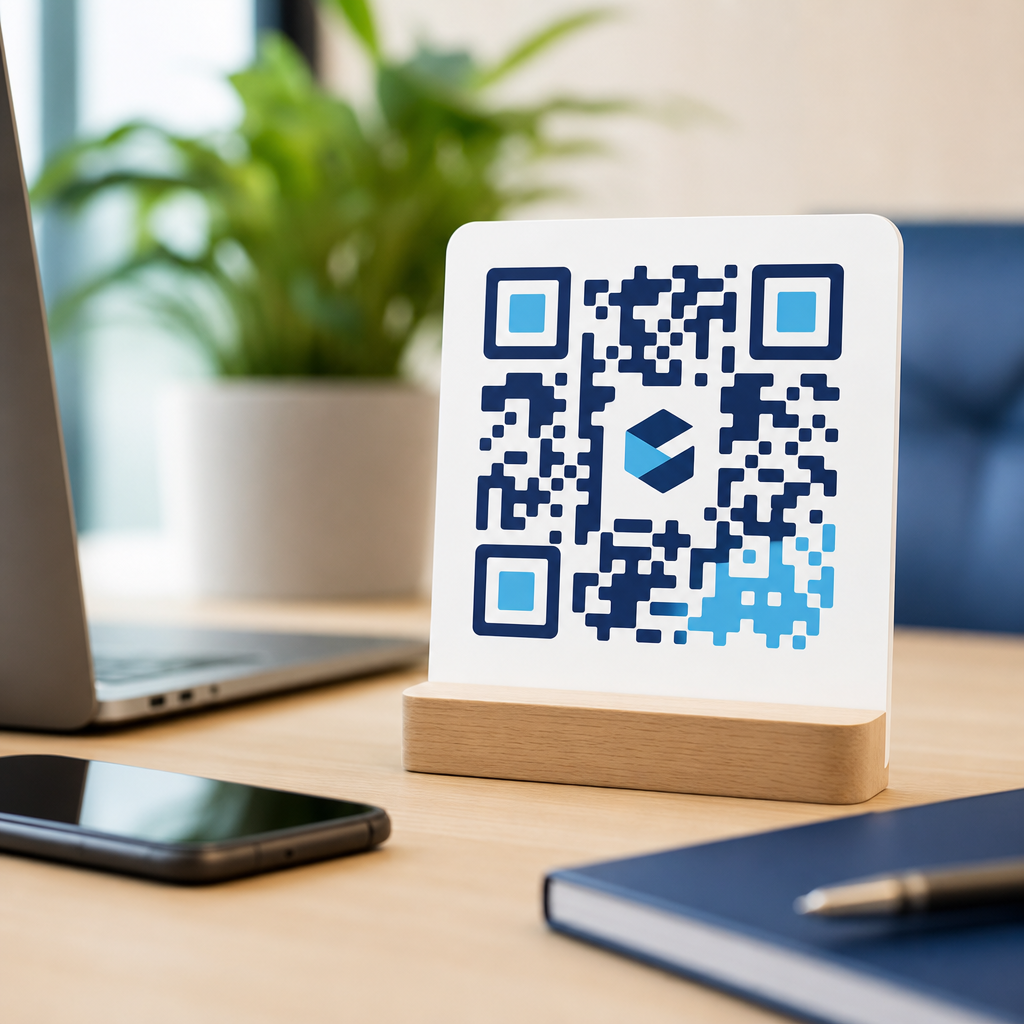
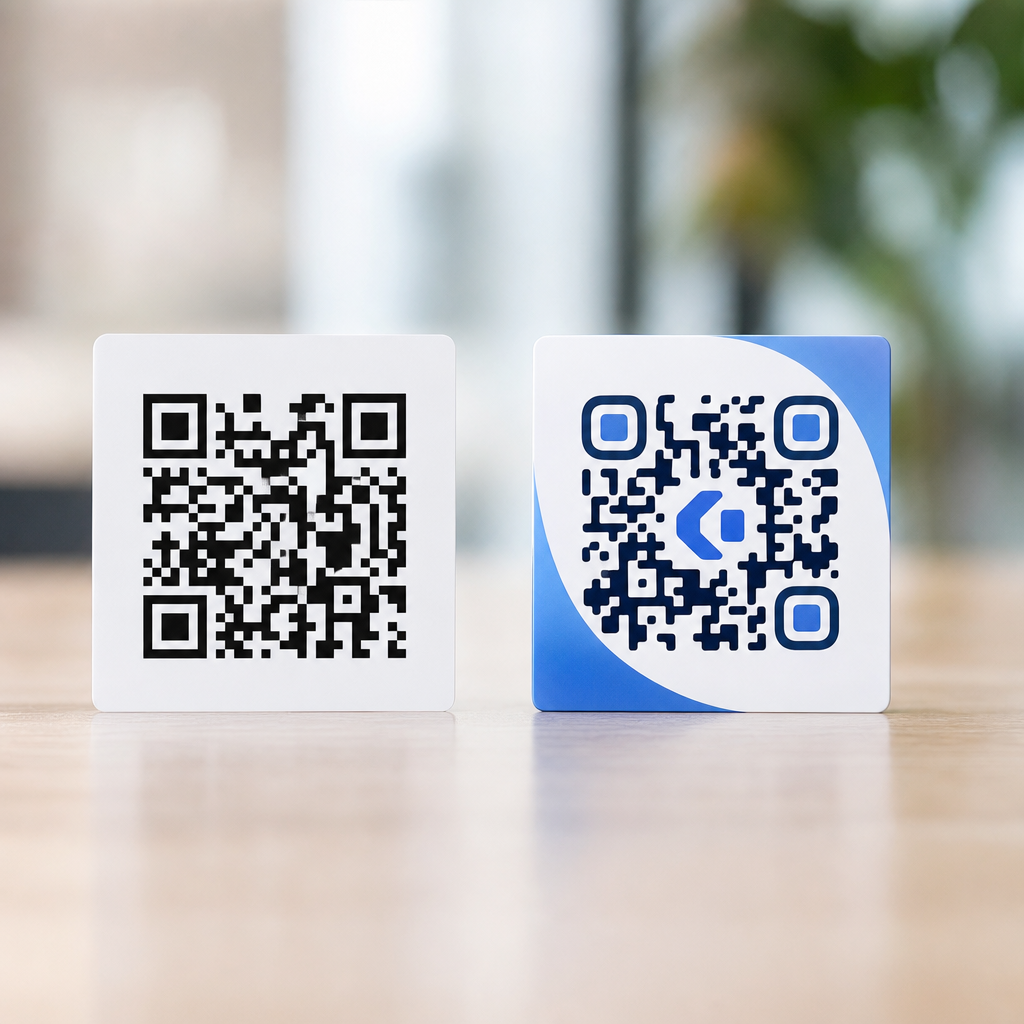
QR codes do not have to be black and white, and that surprises many marketers the first time they redesign packaging, menus, mailers, or event signage. The short answer is yes: QR codes can be colored, branded, and styled without losing scanability, but only when color, contrast, quiet zones, error correction, and print conditions are handled correctly. In practice, the safest approach is simple: keep the code dark, keep the background light, preserve the finder patterns, and test every version on multiple devices before publishing.
Within QR Code Design & Branding, color, contrast, and readability sit at the center of performance because they directly affect whether a person can scan the code in one second or gives up after three failed attempts. I have worked on QR code rollouts for retail shelf talkers, restaurant tabletop displays, direct mail, and mobile app onboarding screens, and the same pattern repeats: teams focus on appearance first, then discover too late that beautiful low-contrast codes break under glare, cheap ink, poor lighting, or older phone cameras. A branded QR code is only successful when it remains machine-readable in the real world, not just in a design mockup.
To understand best practices, it helps to define the main terms. Color refers to the foreground modules and background used in the code. Contrast is the difference in luminance between those two areas; scanners care more about light-versus-dark separation than about hue alone. Readability means a camera and decoding engine can reliably detect the finder patterns, alignment patterns, timing patterns, and data modules. Quiet zone means the empty margin around the code, usually at least four modules wide. Error correction is the built-in redundancy level, commonly L, M, Q, or H, that allows some damage or styling while preserving decodability.
This topic matters because QR codes now appear across packaging, payments, hospitality, product authentication, connected TV, and out-of-home advertising. According to industry usage reports from vendors such as Bitly and QR TIGER, scan activity has expanded well beyond pandemic-era menus into mainstream customer journeys. When a code fails, the user rarely retries more than once. That makes color decisions a business issue, not just a design issue. This article is the hub for the entire color, contrast, and readability subtopic: it explains what works, what fails, why scanners behave the way they do, and how to design branded QR codes that keep their visual identity without sacrificing scan performance.
Can QR codes be colored? The direct answer and the rules that make it work
Yes, QR codes can be colored as long as the foreground remains significantly darker than the background and the structural elements stay intact. Scanners do not require black specifically; they require dependable tonal separation. A navy code on a white label usually scans well. A dark green code on a cream box often scans well. A pastel yellow code on a white poster usually fails because the luminance contrast is too low even if the colors look distinct to the human eye.
The most important rule is that readability depends more on luminance contrast than on brand color preference. Smartphone cameras capture light, and decoding software converts image regions into binary decisions. If the software cannot consistently distinguish modules from the background, the code becomes noisy. This is why dark-on-light combinations outperform light-on-dark combinations in most environments. Inverted codes can work, but they are less universally reliable because some scanners still struggle with reversed polarity, especially when reflections, motion blur, or screen glare enter the scene.
Another rule is to protect the three corner finder patterns and the timing pattern. These are not decorative shapes; they are orientation anchors. In branded designs, I treat them as non-negotiable. You can round modules, soften corners, and apply a brand palette, but once the finder patterns lose clarity, scan reliability falls sharply. Error correction can compensate for some visual customization, yet it is not permission to ignore fundamentals. A high error correction level helps when adding a small logo or making gentle stylistic changes, but it cannot rescue a low-contrast, overdesigned code.
Why contrast matters more than hue
If one principle governs QR code readability, it is contrast. Cameras and decoding libraries such as ZXing, ZBar, and proprietary mobile scanner SDKs evaluate whether dark modules stand apart from the background under imperfect conditions. In print, those conditions include dot gain, substrate texture, varnish, and uneven lighting. On screens, they include brightness settings, reflections, pixel density, and motion. Strong contrast provides the margin of safety needed across all of them.
A common mistake is assuming that complementary colors guarantee scanability. They do not. Red on green may look visually striking, but if the luminance values are too similar, the code can become unreadable when converted to grayscale by the camera pipeline. I have seen bright red modules on black packaging pass a desktop test and fail on a retail floor because the shelf lighting compressed tonal separation. The practical design question is not “Do these colors clash or harmonize?” but “Will the camera clearly see dark modules against a light field?”
For that reason, many professional workflows evaluate QR codes in grayscale before approval. If the code still looks obviously dark-on-light in grayscale, it is usually on safer ground. Contrast checking tools used in digital design can help, but they are not enough by themselves because QR codes are machine vision objects, not ordinary text. Real-world testing remains mandatory. Print a sample at final size, place it under expected lighting, and scan from realistic distances using both iPhone and Android devices.
Best color combinations for branded QR codes
The safest QR code color combinations are dark foregrounds on light backgrounds. Black on white remains the benchmark because it maximizes readability and survives poor print conditions. After that, the best branded options include navy on white, forest green on white, dark plum on pale cream, and charcoal on light gray. These combinations preserve the tonal hierarchy scanners need while giving designers room to align with packaging or campaign identity.
Less reliable combinations include mid-tone foregrounds on mid-tone backgrounds, neon colors, metallic inks, gradients inside critical patterns, and transparent overlays placed on busy photography. White QR codes on dark backgrounds can work in controlled circumstances, especially on screens, but they should be considered advanced implementations that require more testing. Similarly, using brand red, orange, or teal is not inherently a problem if the chosen shade is dark enough and the background remains clean and light.
| Color approach | Typical scan reliability | Notes |
|---|---|---|
| Black on white | Excellent | Best baseline for print and screen |
| Navy on white | Excellent | Strong branded option with high contrast |
| Dark green on cream | Good to excellent | Works when cream stays very light |
| White on black | Variable | Can scan, but less universal across devices |
| Yellow on white | Poor | Insufficient luminance contrast |
| Gradient over photo | Poor to variable | Busy backgrounds break module detection |
When teams want exact brand colors, I recommend starting with the darkest approved brand swatch and placing it on a white or nearly white field. If the brand system has only light or saturated accent colors, use those outside the code in surrounding design rather than inside the modules themselves. That compromise usually protects both visual consistency and performance.
Design elements that affect readability beyond color
Color is only one variable. Module shape, logo placement, code size, quiet zone, and surface finish also determine whether a QR code scans. Rounded modules are generally acceptable when they remain distinct and the code is generated by a reputable tool, but overly decorative dots, thin strokes, or fragmented patterns reduce decoding tolerance. Small logos can work when centered and paired with error correction level Q or H, yet large logos that overwrite the timing pattern or too many data modules create unstable results.
Quiet zone errors are especially common in branded layouts. The blank space around the code is essential because it tells the scanner where the symbol begins and ends. Designers often let text, borders, icons, or background textures creep into this area. In production reviews, I reject more QR codes for quiet zone violations than for color issues. A good code with a bad quiet zone behaves like a well-printed barcode covered by clutter.
Material choices matter too. Gloss lamination, foil stamping, embossing, and curved surfaces can distort contrast and geometry. On beverage cans and cosmetic tubes, the code may technically meet color guidelines but still fail because highlights and curvature interrupt finder pattern detection. In those cases, flattening the application area, increasing size, or switching to matte varnish often improves results more than changing the palette.
Print versus digital: why the same code behaves differently
A colored QR code that scans perfectly on a website may fail when printed on corrugated packaging or displayed on a sunlit window. Print introduces ink spread, registration shifts, substrate absorbency, and environmental wear. Digital display introduces brightness control, refresh artifacts, and reflections. Because of those differences, best practice is to validate each production environment independently rather than assume one approved file works everywhere.
For print, size and contrast are the first controls. A common starting point for close-range use is at least 0.8 by 0.8 inches, though required size increases with scan distance and data density. For posters, billboards, and transit placements, a practical field rule is roughly ten times the scanning distance ratio used by many sign fabricators: the farther the user stands, the larger the code must be. High-density dynamic URL codes with UTM parameters or vCard content need more space than simple short URLs because they contain more modules.
For digital screens, avoid tiny QR codes in the corner of a presentation slide or TV ad. Motion, compression, and camera autofocus all work against the user. Keep the background plain, maintain strong contrast, and leave the code visible long enough for a person to open the camera and scan comfortably. On OLED screens, deep blacks are helpful, but glossy reflections can still reduce real contrast at the moment of scan.
Testing methods professionals use before launch
The most reliable way to judge a colored QR code is structured testing. My standard process starts with generation from a trusted platform, then grayscale review, then print or device mockups at final size, then scans across multiple phones, camera apps, and lighting conditions. I test native iPhone Camera, Google Lens, and at least one lower-cost Android handset because budget devices often reveal weaknesses hidden by flagship cameras.
Distance and angle matter. A code on a tabletop menu should scan quickly from 12 to 24 inches at mild angles. A code on a storefront poster should scan from the sidewalk without requiring users to square up perfectly. If scan time is inconsistent, designers should not assume users will compensate. They should increase contrast, enlarge the code, simplify styling, or reduce data density by using a short redirect URL.
Analytics also help after launch. Dynamic QR platforms such as Bitly, QR Code Generator Pro, Flowcode, and Beaconstac can show scan volume by time, device, or campaign. If one print run or placement underperforms, compare not only traffic source and call-to-action but also physical execution. I have seen “low engagement” diagnosed as a messaging problem when the real issue was dark blue ink printed on kraft stock, which cut effective contrast below a safe threshold.
Common mistakes and the best practices that prevent them
The most common mistake is prioritizing brand aesthetics over machine readability. Teams ask whether they can use a light pastel, a metallic finish, or a full-image background, and the honest answer is usually no if they expect universal scan reliability. Another mistake is inverting the code without testing. Some inverted designs perform acceptably on modern devices, but acceptable is not the same as dependable across contexts, especially in print.
A third mistake is shrinking the code to fit layout constraints while also adding a logo and custom module styling. Those choices compound each other. Smaller size reduces camera detail, logo placement removes data area, and styling lowers tolerance. The best practice is additive discipline: if you add one complexity, remove another. For example, if you need a centered logo, keep the color scheme conservative and increase size. If you need a dark package, place the code inside a white holding shape rather than printing directly onto the dark field.
Finally, never approve a QR code from a design file view alone. Approve it from scans in the actual environment. That is the standard that protects campaigns, packaging timelines, and customer experience. Colored QR codes absolutely can work, and when done well they improve brand consistency without hurting performance. The formula is straightforward: dark foreground, light background, protected structure, adequate quiet zone, realistic size, and rigorous testing. Use those principles as the foundation for every article and execution in the color, contrast, and readability branch of your QR Code Design & Branding strategy. Review your existing codes, identify any low-contrast designs, and test them now before the next print run or campaign launch.
Frequently Asked Questions
Can QR codes be colored, or do they have to stay black and white?
Yes, QR codes can absolutely be colored. They do not need to remain strictly black on a white background to work. What matters most is not the specific color choice, but the visual contrast between the dark modules of the code and the lighter background behind them. In other words, a navy QR code on a white card, a dark green code on a cream package, or a deep burgundy code on a pale poster can all scan well when designed properly. This is why branded QR codes have become common across packaging, restaurant menus, retail displays, direct mail, and event signage.
The reason black and white is still widely recommended is because it offers the most reliable contrast for virtually every camera and lighting condition. However, modern QR code readers can handle many color combinations as long as the code remains easy for a device to distinguish from the background. The safest rule is simple: use a dark foreground and a light background. Avoid flipping that relationship unless you have tested extensively, because light codes on dark backgrounds are generally less dependable. If you want a custom look without sacrificing performance, think of color as a branding layer applied carefully on top of a fundamentally functional design.
What color combinations work best for a scannable QR code?
The best-performing QR code color combinations use strong contrast. Dark colors for the code itself and light colors for the background are typically the safest choice. Black on white remains the gold standard, but other reliable combinations include dark blue on white, dark green on beige, dark brown on cream, or charcoal on a pale brand color. The key is making sure the camera can clearly separate the data pattern from the surrounding area. If the two colors are too close in brightness, scanning accuracy can drop quickly, especially in low light, glare, or when the code is printed at a smaller size.
What often causes problems is not the use of color itself, but poor contrast decisions. For example, yellow on white, light gray on pastel, neon shades, metallic inks, and glossy reflective finishes can all make detection harder. Red can be especially tricky in some use cases because certain scanners and image-processing systems do not interpret it as strongly as darker tones. Gradients, while visually appealing, can also introduce uneven contrast across the code. If you want to use brand colors, choose the darkest brand tone for the code and the lightest tone for the background. Then test the result on multiple phones, under different lighting, and at the actual print size before publishing it widely.
Can I add branding, a logo, or custom styling to a QR code without breaking it?
Yes, but customization has limits. QR codes can often include a center logo, rounded modules, branded colors, and other stylistic treatments without losing functionality, provided the core structure remains intact. One reason this is possible is that QR codes include built-in error correction, which allows scanners to recover some missing or obstructed data. That means a small logo placed in the middle may still scan successfully if the code uses an appropriate error correction level and enough of the original pattern remains visible.
That said, there are several elements you should not alter aggressively. The finder patterns, which are the three large square markers in the corners, must stay clear and recognizable because scanners rely on them to detect and orient the code. The quiet zone, which is the empty margin around the code, also needs to be preserved so the scanner can distinguish where the code begins and ends. If you add a logo, keep it modest in size and avoid covering too much data area. If you round the shapes or use decorative modules, make sure they still read clearly as distinct dark elements against the background. A branded QR code should still look like a QR code first and a design asset second. As a practical best practice, increase error correction when adding visual customization, then test every final version in real-world conditions.
Why are contrast, quiet zones, and error correction so important when coloring a QR code?
These three factors are central to QR code reliability. Contrast is what allows a camera to identify the pattern accurately. If the code and background do not differ enough in brightness, the scanner may struggle to interpret the data, even if the design looks attractive to the human eye. Quiet zones are equally important because they create a clear border around the QR code. Without that empty space, surrounding graphics, text, or packaging elements can visually interfere with the scanner’s ability to isolate the code. Many failed scans happen not because the QR code was colored, but because the design team crowded it too closely with other visual elements.
Error correction is the feature that gives QR codes some resilience. It allows a percentage of the code to be damaged, obscured, or stylized while remaining readable. This is especially helpful when you are adding a logo, changing colors, or printing on imperfect materials. However, error correction is not a license to overdesign. Higher error correction can help preserve scanability, but it does not solve poor contrast, missing quiet zones, or badly distorted patterns. The most dependable approach is to treat these features as non-negotiable technical requirements. Keep the code dark, keep the background light, leave enough empty space around it, preserve the corner markers, and use error correction strategically rather than as a last-minute fix.
How should I test a colored QR code before using it on packaging, menus, mailers, or signage?
Testing should be done as if the code is already in the real world, not just on a design file on a bright monitor. Start by checking the QR code on multiple smartphone models and camera apps, because scan performance can vary across devices. Test it both directly through the native camera and through common scanning apps if your audience may use them. Then review the code at the exact size it will appear in print or on screen. A QR code that scans well at 3 inches wide may fail when reduced to a much smaller label or when viewed from a distance on a poster.
Next, test in realistic environmental conditions. Scan it under bright daylight, indoor lighting, shadows, glare, and slightly angled viewing positions. If the code will appear on packaging, print on the actual substrate whenever possible, since textured materials, glossy coatings, folds, and color shifts can affect readability. For menus and signage, test from the expected user distance. For mailers, test after trimming and finishing. Also check that the quiet zone has not been compromised by nearby graphics and that the landing page loads correctly once scanned. The most effective workflow is to generate the design, print or export the final production version, and then test every variant before distribution. A QR code is only successful if people can scan it instantly, so verification is not optional. It is part of the design process.