Why clear scan incentives matter more than fancy QR artwork becomes obvious the moment you watch real customers decide whether to scan. In stores, at events, on packaging, and in direct mail, people give a QR code only a second or two of attention. They do not stop because the code has rounded corners, a gradient fill, or a logo in the center. They stop when the value proposition is immediate and credible. A QR code in marketing succeeds when the audience knows exactly what happens after the scan and why that outcome is worth their effort.
That point sits at the center of why QR codes work in marketing. A QR code is simply a machine-readable bridge between an offline touchpoint and a digital action. The marketing result comes from the context around it: the offer, the timing, the placement, the landing experience, and the degree of trust the brand creates in a tiny amount of space. I have tested QR codes on product packaging, trade show signage, restaurant tables, postcards, and retail displays, and the strongest predictor of scan rate was never artistic styling. It was message clarity. “Scan to compare models,” “Scan for 15% off today,” and “Scan to watch setup instructions” consistently outperformed codes with clever design but vague copy.
For marketers building a hub around why QR codes work in marketing, this is the essential starting definition: a clear scan incentive is the explicit reason a person should scan now. It may be a discount, exclusive content, product authentication, event check-in, faster purchase, loyalty enrollment, or access to support. Fancy QR artwork refers to visual customization intended to make the code look on-brand. Customization can help recognition, but it is secondary. If the incentive is weak, decorative treatment will not rescue performance. If the incentive is strong, a plain black-and-white code often wins because it is unmistakable and easy to read.
This matters because QR codes now sit inside high-intent moments. Smartphone cameras read them natively, consumers are familiar with scanning, and marketers can connect print, packaging, outdoor media, and in-person experiences to measurable digital outcomes. Yet familiarity also raises the bar. People have learned to ignore unexplained codes just as they ignore banner ads and generic calls to action. The brands getting results are the ones that answer the unspoken questions instantly: What do I get? How long will it take? Is this safe? Is it worth doing here and now? When those questions are answered, QR codes become one of the most efficient tools in modern marketing strategy.
Why QR codes work in marketing when the value exchange is obvious
QR codes work because they reduce friction between interest and action. Before widespread scanning, an offline ad often asked people to type a URL, search a product name, or remember an offer later. Each extra step caused drop-off. A QR code removes those steps. One camera action can open a landing page, coupon, menu, video, payment flow, form, app deep link, or location map. That speed matters most when motivation is already present, such as standing in front of a product, waiting at a bus stop, reading a brochure, or attending a live event.
But low friction alone does not create response. The scan only happens if the audience sees a worthwhile exchange. In conversion work, I treat every QR code as a tiny promise. If the surrounding copy promises savings, the page must reveal a usable offer fast. If the code promises instructions, the user should land on the exact setup video, not a generic homepage. If the code promises “learn more,” performance usually suffers because the reward is undefined. Direct incentives outperform abstract curiosity because they lower uncertainty. People scan when the outcome is concrete.
That is why high-performing campaigns frame QR codes with benefit-led language. On consumer packaged goods, “Scan for recipes using this sauce” beats “Discover more.” In B2B print ads, “Scan for the 3-minute ROI calculator” beats “See our solutions.” In retail windows, “Scan to check your size in stock” beats “Shop now.” The code is not the message; it is the mechanism. Marketing teams that remember this produce higher engagement and cleaner attribution because users self-select based on a real intention, not accidental interest.
Clear scan incentives outperform decorative code design
Visual customization has a role, but its role is constrained by usability. A QR code must maintain enough contrast, quiet zone spacing, module integrity, and error correction to scan quickly across different phones and lighting conditions. As customization increases, reliability can decline. Rounded modules, embedded logos, inverted colors, and artistic overlays may look impressive in a mockup but fail on glossy packaging, curved surfaces, or low-resolution print. I have seen beautifully branded codes underperform simple standard codes by a wide margin because users had to reposition their camera several times or assumed the artwork was not actually scannable.
The stronger commercial reason to prioritize incentive over decoration is that message clarity scales across channels. A compelling offer can lift scan rates on packaging, shelf wobblers, receipts, direct mail, event badges, and point-of-sale displays with minimal redesign. Artwork usually must be reworked for each size and substrate. If you have limited time and budget, invest first in the words around the code, then in the landing page, then in testing print production, and only after that in stylization. That order reflects what drives results in the field.
A practical standard is simple: if removing the custom styling would not harm response, the styling was never the main lever. If changing the incentive from vague to specific doubles scans, the value proposition was the lever. This is why the best-performing QR systems often look visually restrained. They are designed for distance, contrast, and certainty. The surrounding callout does the persuasive work, and the code does the technical work.
The components of an effective QR code call to action
The highest-performing QR prompts answer five questions in a glance: what to do, what you get, how long it takes, where it leads, and why you should trust it. Good copy can fit in a short line or two. “Scan for today’s 20% coupon,” “Scan to see a 90-second demo,” and “Scan to register before seats fill” all communicate action and payoff. Adding a small trust cue can improve response further, especially in public settings: “No app needed,” “Official brand site,” or “Secure payment.”
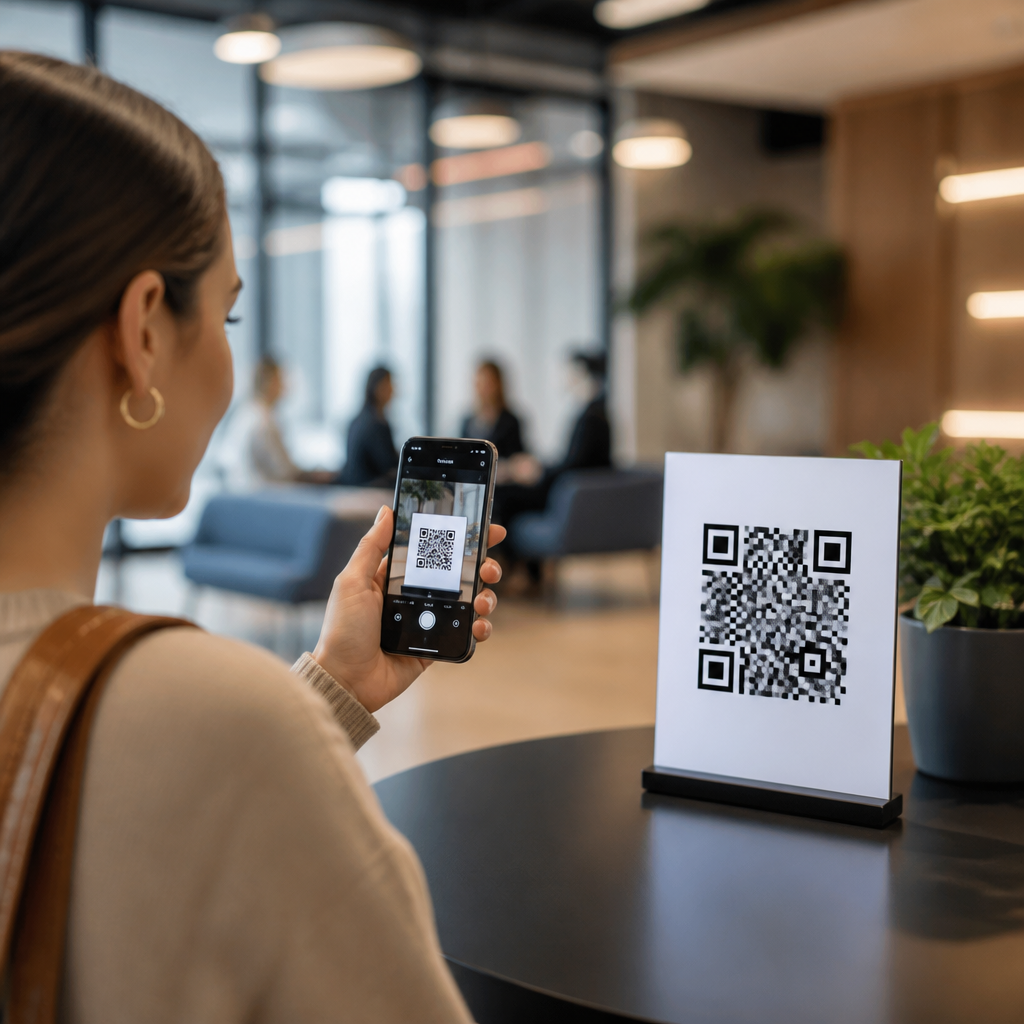
Placement and readability matter just as much as wording. The code should be large enough for the expected scanning distance, with a quiet zone that is not crowded by other design elements. The CTA should sit immediately beside or above the code, not buried in body copy. On physical media, users rarely hunt for explanatory text. They decide based on what they can understand in one visual sweep. In testing, the best layouts made the incentive the headline and treated the QR code as the obvious next step.
| Context | Weak CTA | Strong CTA | Why the strong version works |
|---|---|---|---|
| Product packaging | Scan to learn more | Scan for 5 recipes with this product | Specific payoff tied to immediate product use |
| Retail display | Shop online | Scan to check your size in stock | Solves a current in-store problem fast |
| Direct mail | Visit our website | Scan for your personalized quote | Matches intent and reduces typing friction |
| Trade show booth | See more | Scan for the demo deck and pricing | High-value content for qualified leads |
These patterns reflect a wider truth about why QR codes work in marketing: they convert best when they complete an existing task. A shopper wants proof, comparison, inventory, savings, or guidance. A diner wants a menu and payment speed. An attendee wants quick access to slides or booking links. The marketer’s job is to align the code with that job and say so plainly.
Real-world use cases that explain why QR codes work in marketing
Packaging is one of the clearest examples because the product is already in the customer’s hand. A code can unlock recipes, warranty registration, authenticity checks, refill subscriptions, or reorder pages at the moment interest peaks. Beauty brands use package scans to deliver shade guides and application tutorials. Electronics brands use them for setup videos and troubleshooting. Food brands use them for ingredient sourcing, promotions, and meal ideas. In each case, the code works because it extends the product experience with relevant utility, not because the code itself looks creative.
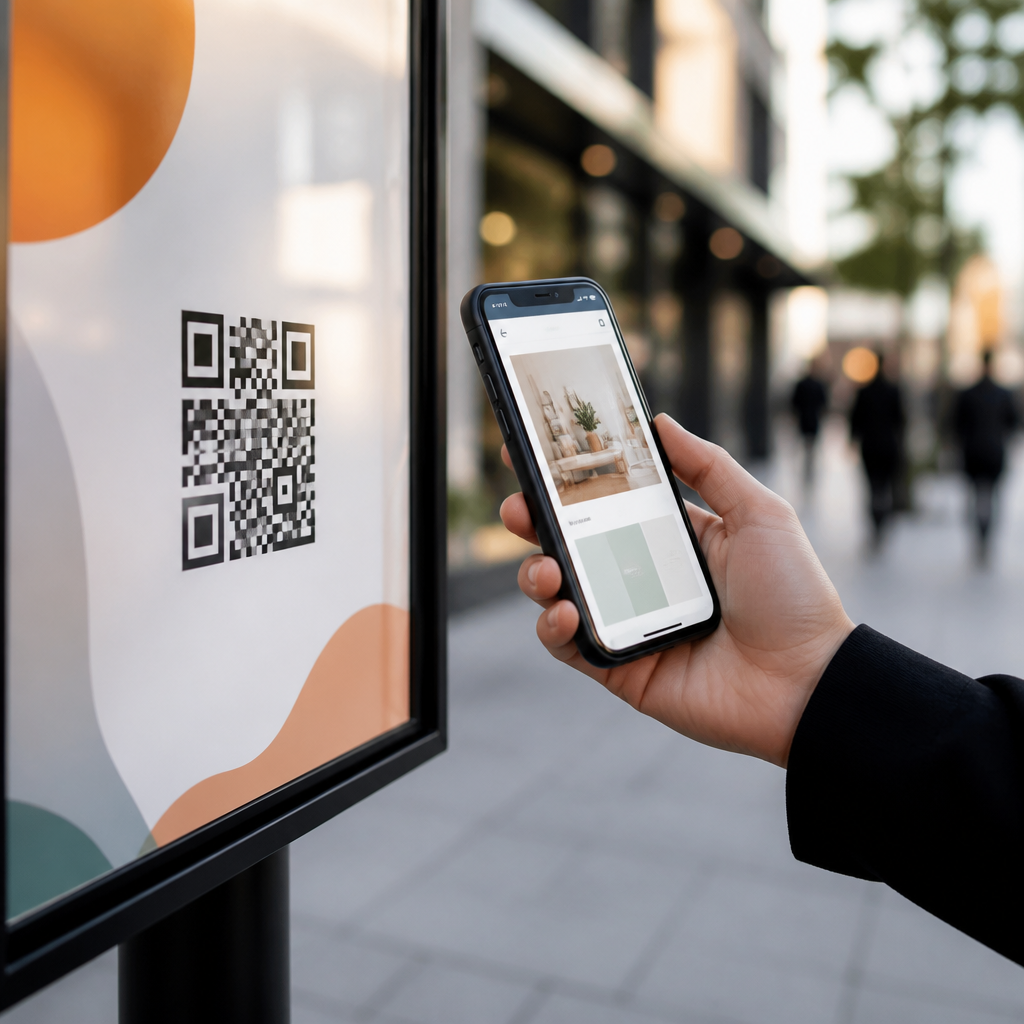
Retail environments create another high-intent moment. Window displays can route after-hours traffic to local inventory or appointment booking. Shelf tags can support comparison shopping and reviews without forcing customers to search manually. End caps can connect to coupons or bundled offers. When stores use QR codes this way, they support assisted selling without increasing staff load. The winning incentive is usually convenience or certainty: find stock, compare options, access a deal, or get details instantly.
Events and trade shows remain one of the strongest channels for QR performance because attendees expect fast digital follow-up. Session screens can share slides, exhibitors can distribute product sheets, and badges can support networking or check-in. The best event codes promise an immediate asset: agenda updates, waitlist registration, prize entry, lead capture, or meeting booking. A booth that says “Scan for the benchmark report and pricing calculator” will collect stronger leads than one that offers a generic “learn more” journey.
Restaurants, hospitality, and service businesses also show why QR codes work in marketing. Menus, loyalty programs, feedback requests, room service, local guides, and reorder flows all benefit from reducing friction at the exact point of need. The operational and marketing value combine: customers get speed, while the business gets measurable engagement and first-party data. Again, the key is a clear outcome. “Scan to join rewards and get a free appetizer” is stronger than a stylized code with no explanation.
Measurement, testing, and the role of landing page relevance
Marketers often judge QR performance too early by focusing only on scans. Scans matter, but they are the top of a micro-funnel. The real metric is completed intent: coupon redemption, lead submission, purchase, video completion, menu order, appointment booking, or another defined conversion. Dynamic QR platforms such as Bitly, QR Code Generator PRO, Beaconstac, and Flowcode can track scans by time, location, and device. UTM parameters can connect scans to analytics platforms like Google Analytics 4, Adobe Analytics, or CRM attribution models. That visibility is one reason QR codes have become so valuable in omnichannel strategy.
The landing page determines whether the incentive survives contact with reality. If the CTA promises a coupon, show the coupon immediately. If it promises a guide, skip the homepage and open the download or friction-light form. If it promises inventory, preselect the local store if possible. Every mismatch reduces trust and lowers future scan willingness. I have seen campaigns with healthy scan volume but poor business results because the post-scan experience added forms, pop-ups, or irrelevant navigation before delivering what was promised.
Testing should focus on variables with commercial leverage: incentive wording, placement, destination type, and context. Start with A/B tests on the CTA and landing page headline before testing decorative variations of the code itself. Compare “Scan for 10% off today” against “Scan for free shipping.” Compare product education against price incentive. Compare the QR near the product versus near the checkout. These are the tests that reveal why QR codes work in marketing for your audience rather than in theory.
Trust, accessibility, and limitations marketers should acknowledge
Consumers are more willing to scan than they were a decade ago, but they are not indiscriminate. Security concerns are real because malicious actors have used QR stickers to redirect payments and capture data. Responsible marketers reduce that fear with transparent branding, recognizable domains, and concise destination cues. Printing the destination URL near the code, using HTTPS, and avoiding bait-like language all increase trust. In regulated industries, compliance and consent language may need to sit near the CTA, especially when collecting personal data.
Accessibility also matters. Contrast should be strong, size should match viewing distance, and instructions should not rely on color alone. If a QR code is the only path to essential information, provide a fallback short URL. This is especially important for users with older devices, damaged cameras, or assistive technology needs. Inclusive design is not optional; it protects response rates and brand credibility.
There are limits to what QR codes can do. They are not a universal fix for weak offers, confusing customer journeys, or poor mobile pages. They can also fail in low-connectivity environments if content is heavy or destinations are unstable. Marketers should use them where they clearly remove friction or add value, not just because space exists on the asset. When the use case is sound, however, QR codes remain one of the simplest ways to connect physical attention to digital action.
Clear scan incentives matter more than fancy QR artwork because marketing performance depends on motivation before aesthetics. People scan when the reward is specific, timely, and trustworthy. That principle explains why QR codes work in marketing across packaging, retail, events, hospitality, and direct mail. The code shortens the path to action, but the surrounding message creates the reason to act.
The practical takeaway is straightforward. Lead with a benefit-driven call to action, keep the code highly scannable, send users to the exact promised destination, and measure completed outcomes rather than scans alone. Use customization only after readability, contrast, landing page relevance, and tracking are locked in. Brands that follow this sequence usually see better engagement and cleaner attribution because they respect how quickly customers make scanning decisions.
If you are building a stronger QR codes in marketing strategy program, audit every live code through one question: would a first-time customer know exactly why to scan right now? If the answer is no, rewrite the incentive before redesigning the artwork. That single change will improve more campaigns than any visual flourish ever will.
Frequently Asked Questions
Why do clear scan incentives outperform decorative QR code designs?
Clear scan incentives outperform decorative QR code designs because people make scanning decisions extremely quickly. In most real-world environments, whether someone is standing in a retail aisle, walking past signage at an event, opening direct mail, or looking at product packaging, they are not studying the code itself. They are deciding whether the outcome of scanning is worth their attention. A QR code with custom colors, rounded modules, or a branded center logo may look more polished, but design flair alone does not answer the most important question in the customer’s mind: “What do I get if I scan this?”
When the incentive is specific and easy to understand, friction drops immediately. Messages like “Scan to get 20% off today,” “Scan to view setup instructions,” or “Scan to see live inventory” are stronger than visual decoration because they create a direct value exchange. The customer understands the benefit, the action feels purposeful, and the scan becomes more likely. In contrast, a visually impressive QR code with no clear promise often creates uncertainty. People may assume it leads to a generic homepage, an ad, or something not worth their time.
That is why performance-focused marketers prioritize clarity over novelty. The QR code is not the offer. It is the bridge to the offer. If the bridge is beautiful but the destination is vague, conversion suffers. If the bridge is simple and the destination is compelling, people scan.
What makes a QR scan incentive actually effective?
An effective QR scan incentive is immediate, specific, relevant, and believable. Immediate means the benefit is available right away, not after multiple steps or unclear conditions. Specific means the audience knows exactly what they will receive, such as a discount, a how-to video, exclusive content, a menu, a registration page, or a product demonstration. Relevant means the incentive matches the context in which the QR code appears. A shopper in a store may care about pricing, reviews, or coupons, while someone at a trade show may care more about booking a demo or downloading technical details.
Believability is just as important. Overhyped language weakens trust, especially when there is no indication of what happens next. “Scan now for something amazing” is far less effective than “Scan to compare models in 30 seconds.” Good incentives reduce uncertainty by setting a clear expectation. They tell users what they will get, why it matters, and often how fast they can access it.
The strongest incentives also reflect audience intent. On packaging, “Scan for assembly instructions” may outperform “Scan to learn more” because it solves an immediate problem. In direct mail, “Scan to claim your personalized quote” may work better than a generic invitation to visit a website. Effective incentives are not clever for the sake of being clever. They are useful, direct, and tied to a real customer motivation.
Does fancy QR artwork ever help, or can it actually reduce scan performance?
Fancy QR artwork can help branding in limited situations, but it can also reduce scan performance if it compromises readability or distracts from the offer. QR codes work best when they are easy for mobile devices to detect and decode. Heavy styling, low color contrast, oversized logos, unusual shapes, or decorative alterations can interfere with scan reliability. Even if the code remains technically functional, custom artwork can still hurt results if it becomes the focal point instead of the reason to scan.
There is nothing inherently wrong with branded QR codes when they are tested carefully and used to support recognition. A subtle visual treatment can make a code feel more consistent with the campaign or package design. The problem begins when aesthetics take priority over clarity and usability. If marketers invest heavily in making the code look distinctive but neglect the surrounding copy, they often end up with something that is visually memorable yet commercially weak.
The safest approach is to treat design as a supporting layer, not the main strategy. Keep the code scannable, maintain strong contrast, leave adequate quiet space around it, and pair it with a clear call to action. If a decorative version is used, it should be tested across devices, lighting conditions, print sizes, and distances. In other words, good artwork may enhance presentation, but it should never replace a compelling incentive or interfere with the scan itself.
What should marketers say next to a QR code to increase scans?
Marketers should use direct, benefit-led language that explains exactly what happens after the scan. The best copy answers three questions in a few words: what the user gets, why it is valuable, and why they should do it now. Phrases like “Scan to get your coupon,” “Scan to watch the 1-minute demo,” “Scan for the full ingredient list,” or “Scan to reserve your seat” work because they are concrete and action-oriented. They do not leave the outcome open to interpretation.
Good QR code copy is usually stronger when it avoids vague wording. “Scan here” tells people what to do, but not why. “Learn more” is common, but often too generic to create urgency. Better alternatives focus on utility, savings, access, speed, convenience, or exclusivity. For example, on in-store signage, “Scan to compare sizes and colors” gives a customer a practical reason to act immediately. In direct mail, “Scan to activate your offer before Friday” adds both benefit and a time cue.
The surrounding text should also support trust. If the destination matters, say what it is. If the experience is fast, mention that. If the offer is limited, make that clear. Strong QR messaging reduces hesitation because it replaces uncertainty with a simple promise. In many campaigns, changing just the call to action and incentive wording has a greater effect on scan rate than redesigning the code itself.
How can businesses test whether incentive messaging matters more than QR code styling?
Businesses can test this by running controlled comparisons where the QR code destination stays the same, but the messaging and visual treatment change independently. One of the most useful approaches is an A/B test. In one version, keep the QR code plain and pair it with a strong, specific incentive. In another, use a more stylized code with weaker or more generic copy. If the landing page, placement, timing, and audience are otherwise similar, the results will reveal which factor drives more scans and downstream conversions.
It is also smart to isolate variables. Test call-to-action language such as “Scan for 15% off” versus “Scan to explore the collection.” Test practical incentives against curiosity-based wording. Separately, test a standard black-and-white code against a branded design while keeping the copy identical. This helps determine whether styling improves brand perception, has no meaningful impact, or creates scanning issues. The key metric is not just scan volume, but also what happens after the scan, including bounce rate, time on page, form completions, purchases, or coupon redemptions.
Context-specific testing matters as well. An incentive that works on product packaging may not work at an event booth. Retail shoppers may respond to savings and reviews, while event attendees may respond to instant downloads or scheduling options. By measuring scan rate and post-scan behavior together, businesses usually discover that the clearest value proposition has the strongest effect. In practice, the data often confirms what real customer behavior suggests from the start: people scan for a reason, not for decoration.