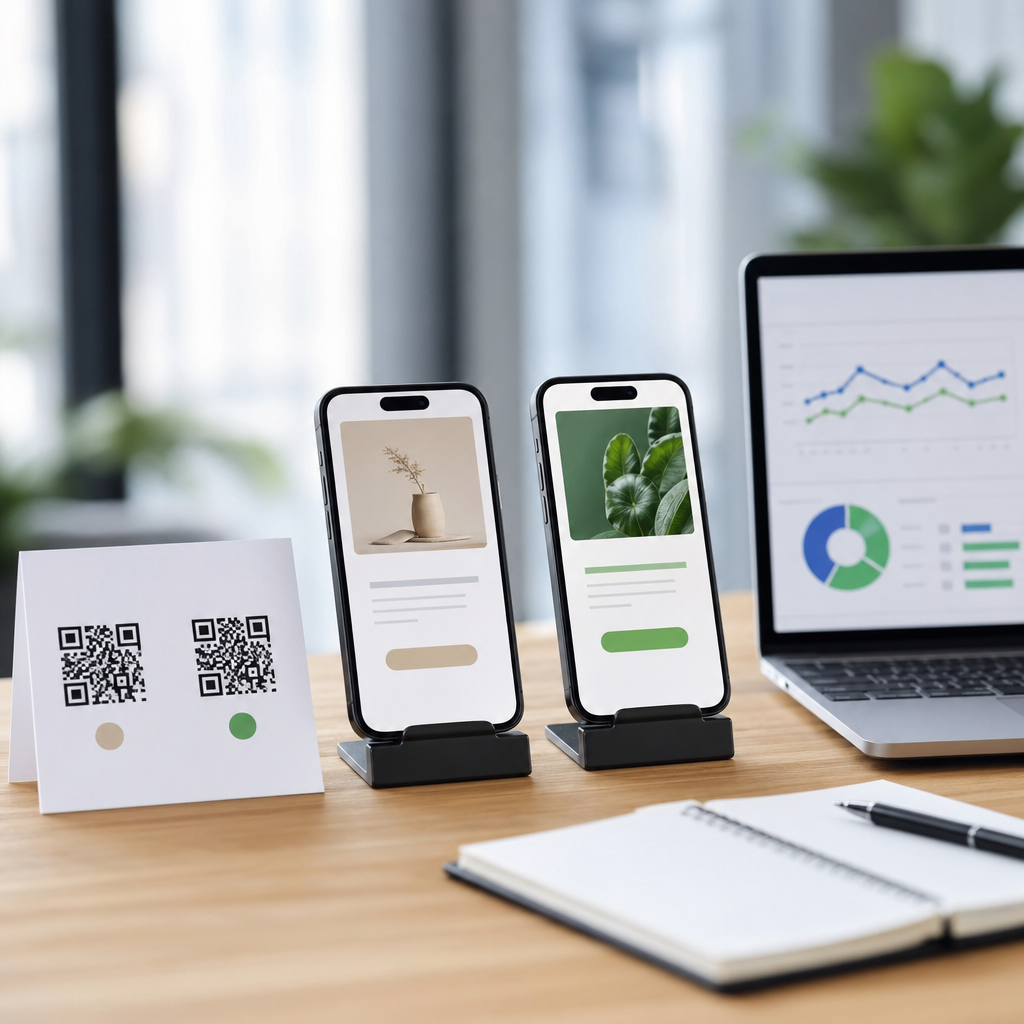

QR code tracking turns a simple scan into measurable user behavior, which is why the right metrics matter more than the code itself. A QR code is only the entry point; the real value comes from understanding who scanned, when they scanned, where they scanned, what happened next, and whether the campaign produced a business result. I have worked on QR campaigns for retail packaging, restaurant menus, direct mail, trade shows, and field service programs, and the same pattern appears every time: teams celebrate scan volume first, then realize they never defined success clearly enough to improve results. That is where QR code analytics becomes essential.
When marketers ask what metrics they should track for QR codes, they usually mean more than one thing. They want to measure visibility, engagement, conversions, location performance, creative effectiveness, and return on spend. They also need to separate static facts from dynamic behavior. A static QR code points to a fixed destination and offers limited measurement options unless the landing page is tracked separately. A dynamic QR code routes through a managed short URL or redirect service, making it possible to log scans, change destinations, append campaign parameters, and monitor results over time. In practice, dynamic codes are the standard choice for any campaign where optimization matters.
Why does this matter? Because QR codes now sit across the full customer journey. They appear on product packaging, posters, receipts, event badges, out-of-home ads, table tents, invoices, manuals, and even television screens. According to industry reporting from vendors such as Bitly and QR Code Generator, scans increased sharply after 2020 and stayed elevated as consumers became comfortable opening mobile experiences instantly. That shift means QR codes are no longer a novelty. They are a measurable acquisition channel, and like any channel, they need performance metrics tied to business goals. Tracking the right QR code metrics helps you diagnose friction, allocate budget, improve creative placement, and prove value to stakeholders who care about revenue, leads, retention, or operational efficiency.
Start with the core QR code metrics every campaign needs
The first layer of QR code tracking is operational performance: scans, unique scans, scan rate, time, device, and location. Total scans tell you raw activity. Unique scans estimate how many individual users engaged, usually based on a combination of device and browser signals. Scan rate compares scans to impressions or distribution volume, such as scans per 1,000 mailers, scans per poster location, or scans per package unit shipped. Time-based data shows hourly, daily, and weekly patterns, which is useful for staffing, promotion timing, and identifying delayed response from print media. Device and operating system data reveal whether users are scanning on iPhone or Android, which can matter for landing page rendering, wallet pass compatibility, or app deep links.
Location data is often misunderstood. Most QR platforms report approximate geolocation from IP address, not precise GPS coordinates. That is still useful. If a campaign runs in ten cities and scans concentrate in three, you have an immediate distribution or message fit question. If an airport poster receives scans mostly from a neighboring office district, the placement may be visible but not contextually strong. I usually treat geolocation as directional evidence, then validate it against store traffic, media placements, and sales records. Another essential metric is repeat scans. A single-use campaign, like a promotional poster, may aim for one scan per person. A service sticker on machinery or a digital menu may benefit from repeat usage, because repeat scans indicate practical utility.
The most important rule at this stage is to define the denominator. Without context, 500 scans can be outstanding or weak. Five hundred scans from 5,000 direct mail recipients is a very different result from 500 scans across 500,000 product packages. Teams often track scan totals and stop there, but the better metric is response rate against exposure: scans divided by delivered mail, event attendees, foot traffic estimates, or units distributed. That response rate is the bridge between QR code analytics and campaign performance analysis.
Measure engagement after the scan, not just the scan itself
A scan is not success. It is the start of a session. To understand whether the QR code actually moved a user forward, track landing page views, engaged sessions, bounce rate, average engagement time, pages per session, scroll depth, video plays, form starts, add-to-cart actions, and click-throughs to downstream pages. In Google Analytics 4, engaged sessions are especially useful because they filter out accidental scans and low-intent visits. I have seen campaigns with high scan volume but poor engagement because the destination page loaded slowly, failed to match the call to action, or presented too many choices. When engagement metrics are weak, the problem is often not the QR code but the mobile experience after it.
UTM parameters remain a best practice for QR destinations because they let you attribute traffic cleanly inside analytics platforms. A printed flyer in one store, a packaging insert, and a trade show booth can all point to the same page while preserving source, medium, campaign, content, and placement data. That allows you to compare performance by asset and environment. If the booth code drives longer sessions and more demo requests than the flyer code, the audience or message is different, and your follow-up strategy should reflect that. Session quality metrics also help detect scan curiosity versus purchase intent. Someone who scans a product code, reads ingredients, and exits after twenty seconds behaves differently from someone who scans, reviews details, and adds the item to a cart.
For service and support use cases, the engagement set changes slightly. Instead of product exploration, you may track document downloads, FAQ views, warranty registrations, support article completion, or tap-to-call interactions. In restaurants, menu QR analytics often focus on menu opens, time spent, item detail views, table-level ordering clicks, and completion rates by daypart. The metric choice should follow the use case, but the principle is constant: scans measure attention; engagement metrics measure relevance.
Track conversion metrics that connect scans to business outcomes
Once engagement is in place, the next layer is conversion. The exact conversion depends on campaign intent: purchases, leads, appointment bookings, account signups, coupon redemptions, app installs, donations, store visits, or support deflection. Every QR campaign should have one primary conversion and at least one secondary conversion. For example, a real estate sign might define a property inquiry form as the primary conversion and brochure downloads or call clicks as secondary conversions. A consumer packaged goods campaign might treat coupon claim as primary and retailer locator visits as secondary.
In practice, I recommend building a simple funnel: exposure, scans, landing page views, engaged sessions, conversion starts, completed conversions, and revenue or value created. That funnel lets you calculate scan-to-conversion rate, visitor-to-conversion rate, cost per scan, cost per lead, and return on ad spend where paid media is involved. It also highlights where performance breaks. If scans are strong but form submissions are weak, the offer or form is likely the issue. If conversions start but do not complete, mobile usability, trust signals, or payment friction may be responsible.
| Metric | What it tells you | Common use case |
|---|---|---|
| Total scans | Overall activity volume | Posters, packaging, print ads |
| Unique scans | Estimated number of individual users | Direct mail, event badges |
| Scan rate | Response relative to exposure | Mailers, in-store signage |
| Engaged sessions | Traffic quality after scan | Landing pages, digital menus |
| Conversion rate | Business outcome efficiency | Leads, sales, bookings |
| Revenue per scan | Financial value of each scan | Ecommerce, promotions |
Offline redemption deserves special attention because many QR journeys cross channels. If a code unlocks an in-store discount, the analytics platform may not see the final sale unless POS data, coupon codes, or CRM records are connected. The same is true for lead generation that closes later through a sales team. Good QR code tracking often depends on stitching systems together: QR platform, web analytics, ad platforms, CRM, ecommerce platform, and POS. Without that integration, scan data looks active but commercially incomplete.
Use audience, source, and context metrics to compare placements
Not all scans are equal, and one of the most valuable uses of QR code analytics is comparing where codes are placed and which audiences respond best. Track performance by channel, asset, geography, store, campaign, audience segment, product line, and placement type. A code on shelf wobblers may outperform packaging because it reaches shoppers at the decision point. A QR code on a conference badge may drive more profile views than a code on booth graphics because the context is personal and immediate. These are not small differences; they determine where future budget should go.
Source-level comparisons are strongest when each placement has its own dynamic code or at least distinct tracking parameters. Reusing one QR code across every environment creates attribution blindness. If one code appears on brochures, windows, sales decks, and invoices, you lose the ability to compare intent and performance accurately. I prefer separate codes for each meaningful placement, even when they resolve to the same page, because the measurement gain far outweighs the setup effort. Platforms such as Bitly, Beaconstac, Flowcode, QR Code Generator PRO, and Uniqode support this model well, especially when paired with Google Analytics 4 and a CRM.
Context metrics also include time to scan and daypart behavior. Restaurant menu scans spike around meal periods. Transit ads may perform during commute windows. Packaging scans often lag purchase by hours or days because the user interacts after arriving home. These timing patterns help with staffing, offer expiration, remarketing windows, and inventory planning. If most support QR scans happen after business hours, self-service content becomes more valuable. If event scans peak during keynote transitions, booth staff can be allocated accordingly.
Monitor technical quality, privacy limits, and testing indicators
Technical metrics protect performance before marketing metrics can improve it. At minimum, monitor redirect uptime, destination load time, mobile Core Web Vitals, broken links, duplicate scans caused by retries, and scan failures by device type. A beautifully designed poster with a weak cell signal, low color contrast, or an overcomplicated landing page will underperform regardless of demand. I have seen scan rates jump simply by increasing code size, improving quiet zone spacing, raising contrast, and moving the code above waist level with clearer instructions. QR performance is partly analytics and partly operational discipline.
Testing indicators matter as well. Run A/B tests on call to action, incentive, landing page layout, and placement. Compare “Scan to get 10% off” against “Scan for today’s offer,” or compare a menu code on the table edge versus the upright tent. Track not just scans but downstream conversion and revenue, because a high-scan version can attract lower-intent users. Standards from ISO/IEC around QR symbol quality, plus practical mobile UX checks in PageSpeed Insights and Search Console, should inform optimization. The code must be scannable, the page must load fast, and the promise must match the destination.
Privacy is another constraint. Unique user counts are estimates, cookie consent affects attribution, and location data is approximate. Apple and browser privacy changes can limit session stitching. That does not make QR analytics unreliable, but it does mean your reporting should distinguish observed data from modeled assumptions. For regulated sectors such as healthcare and financial services, review data handling carefully and avoid collecting more personally identifiable information than the use case requires. Good measurement is precise without becoming intrusive.
Build a QR code analytics dashboard that supports optimization
The best dashboard answers three questions quickly: what happened, why it happened, and what to do next. I usually structure QR reporting around acquisition, engagement, conversion, and technical health. Acquisition includes scans, unique scans, scan rate, and location trends. Engagement includes landing page views, engaged sessions, time on page, and click depth. Conversion includes leads, orders, redemptions, bookings, revenue, and conversion rate. Technical health includes scan error reports, page speed, uptime, and top device breakdowns. A weekly dashboard can handle operations, while a monthly review should focus on trendlines and decisions.
As a hub topic within QR Code Analytics, Tracking and Optimization, this subject connects naturally to deeper articles on dynamic versus static codes, UTM strategy, QR conversion attribution, offline-to-online measurement, restaurant menu tracking, direct mail QR performance, event QR reporting, and QR code A/B testing. The hub metric framework remains simple: start with scans, qualify with engagement, validate with conversions, segment by context, and protect with technical monitoring. If you track those layers consistently, QR codes stop being black boxes and become one of the clearest bridges between physical touchpoints and digital outcomes.
The main benefit of tracking QR code metrics is not just better reporting. It is better decisions. You learn which placements deserve expansion, which creative messages create qualified action, which devices or pages create friction, and which campaigns produce revenue instead of vanity activity. That clarity is what turns QR codes into a dependable channel rather than a tactical add-on. Define your primary conversion, assign unique tracking to each meaningful placement, connect web and offline data where possible, and review the funnel regularly. If you do that, your next QR campaign will be easier to measure, easier to optimize, and much easier to justify.
Frequently Asked Questions
What are the most important QR code metrics to track first?
The first metrics to track are total scans, unique scans, scan time, scan location, device type, and post-scan actions such as clicks, form submissions, purchases, bookings, or downloads. These give you a complete picture of performance instead of just telling you that a code was scanned. Total scans show overall activity, while unique scans help you understand how many individual users engaged. Time-of-scan data reveals when interest peaks, which is especially useful for retail promotions, restaurant traffic patterns, event schedules, and direct mail response windows. Location data helps identify where engagement actually happened, whether that is by region, store, venue, or placement. Device type adds context about user behavior and can expose mobile experience issues. Most importantly, conversion metrics tell you whether the scan led to a business outcome. In practice, that final layer matters most. A QR code that gets fewer scans but produces more purchases or leads is usually more valuable than one that generates high scan volume with no meaningful action afterward.
Why is scan count alone not enough to measure QR code performance?
Scan count is useful, but on its own it is incomplete and often misleading. A high number of scans can look impressive while hiding the fact that users left immediately, failed to convert, or encountered a poor landing page experience. You need to know what happened after the scan. Did users stay on the page? Did they tap through to a product, redeem an offer, fill out a form, call a location, or complete a purchase? Those downstream actions are what separate curiosity from real engagement. It is also important to compare total scans against unique scans, because repeated scans from the same person may indicate genuine continued interest, or they may signal friction, such as a user trying multiple times to get the page to load. In campaigns like packaging, menus, trade show booths, or field service labels, a code often serves different user intents. That is why scan volume should be treated as the top of the funnel, not the final score. The better question is not just how many people scanned, but how many qualified users moved forward and contributed to a measurable outcome.
How can you tell whether a QR code campaign is actually driving conversions?
To determine whether a QR code campaign is driving conversions, you need a clear tracking setup that connects the scan to a defined goal. That goal might be a sale, a lead, a reservation, a coupon redemption, an app install, a demo request, or another action that matters to the business. Start by assigning each QR code to a dedicated URL or campaign parameter set so you can isolate traffic source and placement. Then measure conversion rate, revenue, lead quality, and cost per result where possible. If you are using analytics platforms, event tracking and attribution tags should capture what users do after they land. For example, a direct mail QR code may generate fewer scans than a social promotion, but if its scan-to-purchase rate is significantly higher, it may be the stronger channel. In retail or packaging campaigns, it is also helpful to compare scan activity with coupon redemption or product page behavior. In restaurant and menu use cases, you might track scans against online orders or table-side upsells. A successful QR code campaign is not defined by attention alone. It is defined by measurable movement toward a business objective.
Which contextual metrics help explain why one QR code placement performs better than another?
Contextual metrics are often what turn raw data into useful insight. Placement-specific scans, location, time of day, day of week, repeat scans, device type, operating system, and landing page engagement all help explain performance differences. For example, a QR code on product packaging may see steady repeat scans over time, while a code on a trade show banner may spike during specific event hours. A menu QR code may perform best during lunch and dinner peaks, while a direct mail code may show stronger engagement within the first few days after delivery. Geographic patterns can also reveal whether certain stores, regions, or territories are outperforming others. Device and browser data matter because a placement may appear weak when the real issue is that the landing page loads poorly on certain phones. Bounce rate, session duration, and click-through behavior add another layer of explanation by showing whether users found the content relevant once they arrived. When you compare these contextual signals across placements, you can identify whether performance differences are caused by audience quality, timing, visibility, message fit, or technical issues.
How should businesses use QR code metrics to improve future campaigns?
Businesses should use QR code metrics as a feedback loop for optimization, not just as a report at the end of a campaign. Start by reviewing which codes generated the highest-quality engagement, not merely the highest scan totals. Look for patterns in placement, offer, audience, timing, and landing page behavior. If one code received strong scan volume but weak conversions, the issue may be the destination experience, the call to action, or a mismatch between user expectation and landing page content. If another code had modest scan volume but excellent conversion rate, that placement or message may be worth expanding. Metrics can also guide practical improvements such as changing code size, improving visibility, adjusting surrounding copy, refining incentives, or tailoring destination pages by campaign type. In field service, for example, repeated scans may indicate users are returning for manuals or support content, suggesting value in deeper self-service resources. In retail, scan and redemption data can help determine which packaging messages actually influence buying behavior. The goal is to treat each campaign as a source of learning. Over time, QR code metrics should help you make better creative decisions, improve user experience, strengthen attribution, and increase return on marketing spend.