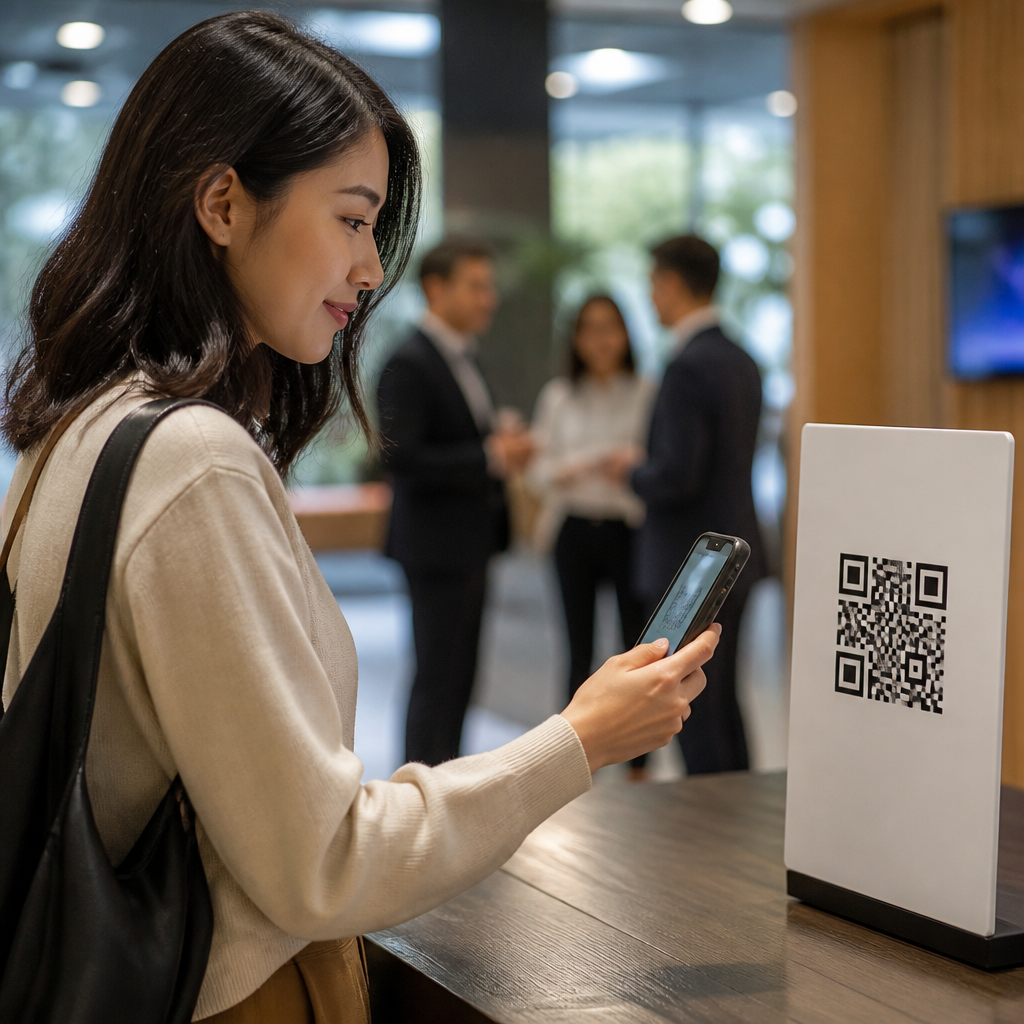
Using QR codes for middle-of-funnel engagement means placing scannable codes at the point where prospects already know your brand but still need enough trust, proof, and relevance to move toward purchase. In marketing funnel terms, the middle of the funnel is the consideration stage: people are comparing options, reviewing details, and deciding whether your offer deserves more time. A QR code can shorten that decision path by connecting an offline or static touchpoint to a highly targeted digital experience.
I have used QR campaigns across retail, events, B2B field marketing, packaging, direct mail, and sales enablement, and the consistent lesson is simple: QR codes work best when they answer the next question a prospect actually has. At this stage, the goal is not broad awareness and it is not the final checkout click. The goal is qualified engagement. That could mean viewing product demos, booking a consultation, downloading a buyer’s guide, reading case studies, comparing models, joining a webinar, or accessing customer proof that reduces friction.
For marketers building a stronger QR code marketing strategy, middle-of-funnel execution matters because it influences conversion efficiency across every channel. Paid media becomes more valuable when offline interest can be captured. Print becomes measurable. In-store traffic becomes attributable. Sales teams get warmer leads. CRM data improves because QR interactions can be tagged, segmented, and routed by source, audience, and intent. When done correctly, QR codes are not just convenience tools; they become decision-stage bridges between attention and action.
This hub explains how to integrate QR codes into marketing funnels with practical structure. It covers channel placement, content mapping, landing-page design, lead qualification, measurement, and compliance. It also clarifies what separates high-performing codes from campaigns that get scans but no movement. If you want prospects to move from curiosity to serious evaluation, middle-of-funnel QR engagement is one of the most efficient, underused levers in modern marketing.
What middle-of-funnel QR engagement actually looks like
Middle-of-funnel QR engagement starts with intent matching. A person scanning from a product shelf, a trade show booth, a brochure, or a direct mail piece is not asking the same question. The scan destination must reflect the specific decision barrier at that moment. For retail packaging, that often means ingredient details, comparison charts, reviews, tutorials, and subscriptions. For B2B print collateral, it may mean ROI calculators, implementation guides, case studies, or booking a discovery call. For healthcare or education, it may mean eligibility details, program overviews, or enrollment FAQs.
The strongest campaigns treat each code as a context-aware entry point rather than a generic homepage shortcut. Dynamic QR platforms such as Bitly, QR Code Generator PRO, Uniqode, and Flowcode allow destination updates, UTMs, and scan analytics without reprinting assets. In practice, that means a code on a sales sheet can direct manufacturing buyers to a vertical-specific landing page, while the same core offer on event signage can lead to a shorter mobile form with a post-event nurture sequence. This level of message-to-moment fit is what produces meaningful engagement instead of vanity scan volume.
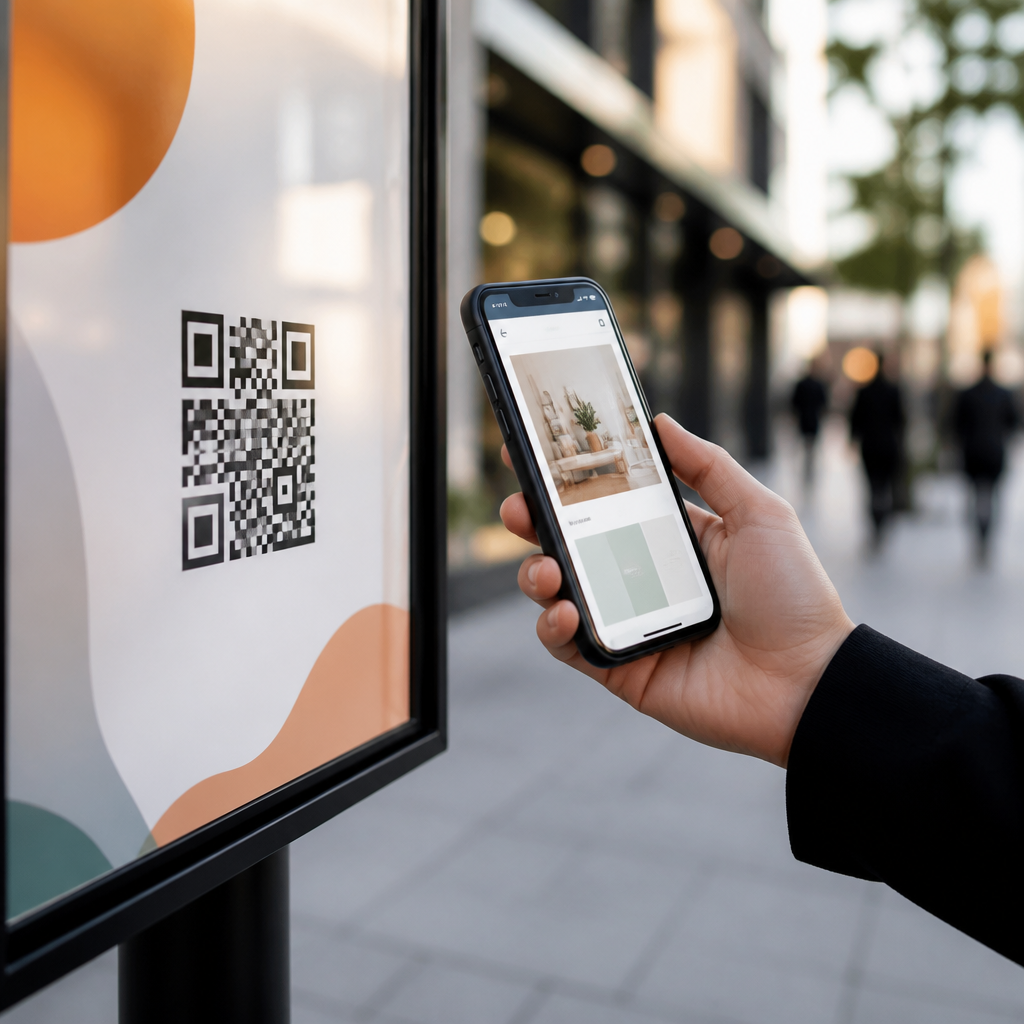
Real-world examples illustrate the difference. A wine brand can place a QR code on shelf talkers that opens tasting notes, food pairings, sustainability certifications, and retailer availability. That is middle-funnel because the shopper already notices the bottle and now needs reassurance. A SaaS company can add QR codes to conference booth graphics that lead to a two-minute product walkthrough and an option to request a sandbox account. A home-services company can include a QR code in direct mail that takes homeowners to a “compare repair versus replace” guide before asking for a quote. In each case, the code helps the buyer evaluate, not merely discover.
How to map QR codes to funnel stages without losing focus
One of the most common mistakes I see is using one QR destination for every stage of the funnel. Awareness, consideration, and conversion require different content and different expectations. A middle-of-funnel page should acknowledge that the visitor already has baseline awareness and now needs substance. That means fewer brand slogans and more proof, specifics, and next-step clarity. If your code opens a generic homepage, a long navigation menu, or an unfiltered product catalog, you are forcing mobile users to do work they are unlikely to finish.
A practical mapping model starts with three questions: where is the code placed, what does the scanner already know, and what uncertainty still blocks action? From there, define one primary desired outcome per code. That outcome might be a content download, video completion, store locator visit, meeting booking, configurator session, or email capture tied to a nurture flow. The destination page should contain a single dominant call to action, supporting proof elements, and enough detail to satisfy evaluative intent without overwhelming the user.
| Placement | Likely User Intent | Best QR Destination | Primary KPI |
|---|---|---|---|
| Product packaging | Validate quality and fit | How-to video, reviews, comparison page | Engaged sessions |
| Trade show booth | Assess solution relevance | Demo page, case study hub, meeting scheduler | Qualified leads |
| Direct mail | Research before response | Offer explainer, calculator, localized landing page | Form completion rate |
| In-store signage | Compare options quickly | Feature matrix, inventory page, customer proof | Scan-to-assist ratio |
This discipline creates cleaner reporting and stronger downstream optimization. In Google Analytics 4, for example, separate QR source and medium conventions allow you to compare scan cohorts by placement, creative, and intent. In HubSpot, Marketo, or Salesforce Account Engagement, those interactions can trigger list membership, lead scoring, and sales alerts. Integration works best when campaign naming standards are set before launch, not after the first batch of scans arrives.
Choosing the right content for decision-stage scans
The best middle-of-funnel QR content reduces uncertainty quickly on a mobile screen. Buyers in consideration mode usually need one of five things: explanation, proof, comparison, personalization, or reassurance. Explanation comes through short demos, walkthroughs, explainer pages, and FAQs. Proof comes through testimonials, analyst recognition, certifications, product specs, before-and-after results, and detailed case studies. Comparison helps users distinguish versions, plans, or alternatives. Personalization includes calculators, quizzes, fit finders, and recommendation tools. Reassurance includes shipping details, guarantees, privacy terms, onboarding expectations, and support availability.
Format matters as much as topic. A QR scan is usually a micro-moment, often on a phone, often while standing, walking, or multitasking. Dense PDFs and desktop-first landing pages underperform unless the audience explicitly expects technical documentation. I have seen response rates improve simply by converting long brochures into mobile landing pages with collapsible sections, embedded videos, sticky calls to action, and autofill forms. If a PDF is necessary, provide a summary page first so users can decide whether the download is worth the bandwidth and time.
For B2B, especially, decision-stage assets should reflect buying complexity. One-page summaries can attract the initial scan, but enterprise buyers often need implementation timelines, integration details, security information, procurement FAQs, and role-specific benefits. A code on a conference handout might route IT stakeholders to technical documentation and business stakeholders to a value case. That segmentation can be accomplished through multiple codes or a first-click choice page. The important point is that content should mirror real evaluation criteria, not just marketing preferences.
Designing QR destinations that convert on mobile
A middle-of-funnel QR experience lives or dies on landing-page usability. Mobile page speed, thumb-friendly layout, and immediate message continuity are mandatory. Google’s Core Web Vitals are relevant here because delays erode intent. If a scanned page loads slowly on cellular service inside a store or venue, the prospect may never see your offer. Compress images, reduce third-party scripts, and keep the first visible section focused on the exact promise implied by the code’s surrounding text. Message match is not optional.
The page should answer three questions within seconds: what is this, why should I care, and what do I do next? I recommend a headline tied to the placement context, a concise value statement, one proof element above the fold, and a single primary action. Secondary links can support deeper research, but they should not compete with the main outcome. For a QR code on packaging, that outcome might be “Watch how it works.” For event signage, it might be “See the 3-minute demo.” For a brochure, it might be “Download the buyer’s guide.”
Forms require special care. At the consideration stage, asking for excessive information suppresses completion rates. If the content value is modest, request only email and perhaps company name. Progressive profiling can collect more later. Tools like HubSpot forms, Typeform, and native CRM landing pages make this manageable, but the logic must be deliberate. I also recommend using hidden fields or URL parameters to capture campaign metadata automatically so the user does not need to provide information you already know from the scan source. That improves both user experience and attribution quality.
Measurement, attribution, and operational setup
QR code marketing often fails in reporting, not in audience interest. Teams launch scans without governance, then cannot tell which placements influenced pipeline or revenue. The operational fix is straightforward. Use dynamic codes, enforce a UTM taxonomy, create consistent naming conventions, and define success metrics by funnel objective. For middle-of-funnel engagement, useful KPIs include scan-through rate relative to footfall or circulation, landing-page engagement rate, video completion, content downloads, meeting bookings, assisted conversions, and lead-to-opportunity progression.
Attribution should reflect the fact that QR scans frequently assist rather than close. In GA4, track events such as qr_scan_session, asset_view, form_start, form_submit, video_progress, and scheduler_complete. In CRM systems, stamp the original QR campaign and the most recent QR interaction separately. That distinction helps marketers see whether the code created first-party engagement, revived a dormant lead, or accelerated an active opportunity. For account-based programs, connect scan data to account records whenever possible so field marketing and sales can coordinate follow-up.
There are also compliance and trust considerations. If the QR destination collects personal data, privacy disclosures must be clear and regionally appropriate. If cookies or tracking technologies are in use, consent requirements may apply depending on jurisdiction. Branded domains improve trust, especially because users are cautious about unknown links after scanning. Error handling matters too. Codes should never lead to expired pages, unsupported file types, or dead redirects. In my experience, a quarterly QR audit prevents many silent failures, especially when campaigns span packaging, print, retail, and partner channels.
Common mistakes and how to avoid them
The most expensive mistake is treating QR codes as decoration. A code without a compelling reason to scan rarely performs, especially in the middle of the funnel where the prospect is evaluating effort versus value. “Scan me” is weak. “Scan to compare plans,” “scan to see customer results,” or “scan for a 2-minute setup demo” gives users a concrete payoff. The second major mistake is misalignment between context and destination. If the surrounding message promises product education but the code opens a lead form immediately, trust drops and abandonment rises.
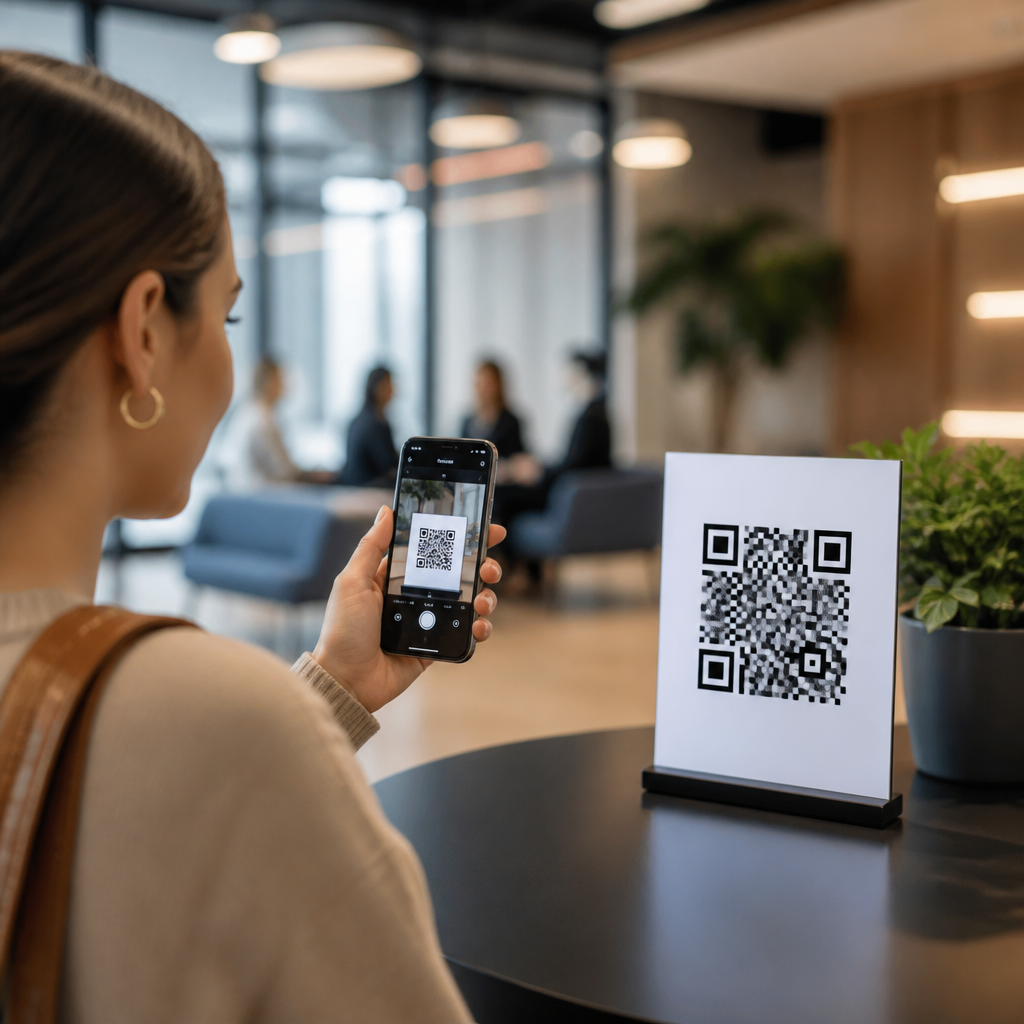
Another common issue is printing codes too small, placing them in low-light areas, or using low-contrast designs that hurt readability. ISO/IEC 18004 defines technical standards for QR code symbology, and while marketers do not need to memorize the specification, they should respect fundamentals: adequate quiet zone, strong contrast, and sufficient size for expected scanning distance. Testing on multiple devices is essential. I also advise teams to test in the real environment, not only on office Wi-Fi. Store lighting, glossy packaging, event glare, and weak connectivity all affect results.
Finally, many teams stop at scans instead of optimizing for movement. A high scan count with low engagement is a diagnosis, not a win. Improve copy near the code, refine destination relevance, shorten forms, and add stronger proof. Treat QR placements like any other conversion path: hypothesize, test, measure, and iterate. The brands that outperform are usually not using exotic tactics. They are simply disciplined about context, relevance, and operational follow-through.
Using QR codes for middle-of-funnel engagement is ultimately about helping interested prospects make a better decision faster. The code is only the entry point. The real value comes from matching placement, intent, content, and measurement so the scan resolves uncertainty instead of creating more of it. When marketers integrate QR codes into marketing funnels this way, offline touchpoints become measurable consideration assets, not disconnected impressions.
The key principles are consistent across industries. Give people a specific reason to scan. Send them to a mobile-first destination built for evaluation. Offer proof, comparison, and clarity rather than generic branding. Track the interaction with disciplined attribution. Use dynamic infrastructure so campaigns can evolve without reprinting every asset. And review performance in terms of downstream business impact, not just top-level scan volume.
As the hub for integrating QR codes into marketing funnels, this topic connects packaging, print, events, retail, direct mail, sales enablement, and lifecycle automation into one practical system. If your current QR program produces attention but not progression, start by auditing one middle-of-funnel touchpoint and rebuilding it around a single buyer question. Then measure what happens after the scan. That is where engagement becomes pipeline.
Frequently Asked Questions
1. What does “middle-of-funnel engagement” mean, and why are QR codes effective at this stage?
Middle-of-funnel engagement refers to the consideration stage of the buyer journey, when prospects already recognize your brand or offer but are not yet ready to commit. At this point, people are actively evaluating whether your solution is credible, relevant, and worth further attention. They may be comparing features, reading reviews, looking for examples, or trying to understand how your product or service fits their needs. This is exactly where QR codes become especially useful. Instead of asking a prospect to remember a URL, search for information later, or take multiple steps to find the next piece of content, a QR code creates an immediate bridge from a physical or static marketing asset to a highly targeted digital experience.
That matters because middle-of-funnel audiences are not looking for generic awareness content. They want practical information that helps them reduce uncertainty. A well-placed QR code on product packaging, direct mail, in-store signage, brochures, event materials, sales sheets, print ads, or presentations can send them straight to comparison guides, product demos, testimonials, case studies, explainer videos, pricing details, FAQ pages, or industry-specific landing pages. In other words, the QR code is not just a convenience feature. It is a conversion assist that shortens the path between curiosity and confidence.
QR codes are effective here because they support intent in real time. If someone is already paused at a touchpoint and considering your offer, giving them a frictionless next step can significantly improve engagement. Instead of losing momentum between “I’m interested” and “I’ll look it up later,” the scan captures attention in the moment. When paired with the right content, that interaction can increase time on site, content consumption, lead quality, and progression toward a sales conversation or purchase decision.
2. What kind of content should a QR code link to for consideration-stage prospects?
The best QR code destinations for middle-of-funnel engagement are content assets that build trust, answer objections, and help buyers make a confident comparison. At this stage, prospects usually do not need broad brand storytelling alone. They need proof, specificity, and relevance. That means your QR code should connect to a destination that feels like the logical “next answer” based on where the code appears and what the prospect is already thinking about.
Strong options include product comparison pages, customer testimonials, case studies, video demonstrations, interactive lookbooks, buying guides, service explainers, implementation overviews, sample reports, pricing frameworks, and landing pages tailored to a particular audience or use case. For example, a QR code on a printed product catalog might lead to a short demo video and product specs. A code on a trade show handout might direct visitors to a case study library organized by industry. A code on in-store signage could link to reviews, before-and-after examples, or an FAQ page addressing common concerns.
The key is alignment. If the scan experience feels too broad, too early-stage, or too sales-heavy, it can weaken results. A consideration-stage user wants content that reduces risk and clarifies fit. They want to see social proof, feature details, outcomes, and evidence that your offer performs well for people like them. It is also important to make the destination mobile-friendly, fast-loading, and visually clean, because most scans happen on a smartphone. If possible, create segmented landing pages so the content reflects the source of the scan, such as retail, events, direct mail, or sales collateral. The more relevant the experience, the more likely the prospect is to continue deeper into the funnel.
3. Where should businesses place QR codes to improve middle-of-funnel engagement?
Placement matters because a QR code performs best when it appears at a moment of active consideration. Businesses should look for touchpoints where prospects are already paying attention, asking questions, or evaluating options. These can include packaging inserts, product displays, shelf talkers, brochures, catalogs, direct mail pieces, showroom signage, print ads, sales decks, event booths, tabletop displays, menus, proposal documents, and post-demo leave-behinds. The goal is not simply visibility. The goal is contextual usefulness.
For example, if a shopper is standing near a product display, a QR code can direct them to side-by-side comparisons, video demonstrations, or verified customer reviews. If a prospect receives a printed brochure after meeting a sales representative, the code might lead to a personalized landing page with a case study, implementation timeline, and an invitation to book a follow-up consultation. If you are exhibiting at an event, QR codes can help attendees move beyond passive booth traffic into deeper engagement by linking to industry-specific content, ROI calculators, or solution pages tailored to their role.
Effective placement also depends on usability. The code should be easy to spot, easy to scan, and paired with a clear call to action that explains what the user will get. “Scan to compare options,” “Scan to watch a 2-minute demo,” or “Scan to see customer results” tends to outperform a code with no explanation. It is also wise to avoid placing codes where lighting, distance, curvature, or clutter make scanning difficult. In practice, the strongest placements are the ones that match buyer intent with immediate informational value. When the location and destination work together, the QR code becomes a meaningful engagement tool rather than a decorative add-on.
4. How can you measure whether QR codes are actually helping move prospects toward purchase?
Measuring QR code performance in the middle of the funnel requires looking beyond raw scan volume. Scans are useful, but they only tell you that someone took the first step. To understand whether the code is contributing to consideration-stage progress, you need to track what happens after the scan. That includes landing page visits, time on page, bounce rate, video plays, downloads, scroll depth, form submissions, demo requests, consultation bookings, and assisted conversions. These metrics reveal whether the QR code is attracting meaningful engagement or just generating curiosity clicks.
A strong setup usually starts with dynamic QR codes and trackable URLs that let you identify source, campaign, placement, audience segment, or creative variation. For example, you might use separate QR codes for in-store displays, direct mail, trade show handouts, and printed sales materials, all pointing to related but distinct landing pages. This makes it possible to compare performance by channel and understand where prospects are most willing to deepen their engagement. Integrating the scan data with analytics platforms, CRM systems, and marketing automation tools can provide an even clearer picture of lead quality and downstream pipeline impact.
It is also helpful to evaluate middle-of-funnel success based on intent-based actions. Did the prospect view testimonials? Did they use a product configurator? Did they read a case study and then request pricing? Did the scan increase return visits or shorten the time between first contact and sales inquiry? Those are stronger signals than scans alone. Over time, testing different calls to action, content types, placements, and landing page experiences can help you improve results. In short, the most useful measurement framework connects offline scan behavior to digital engagement and, ultimately, to movement closer to a purchase decision.
5. What are the biggest mistakes to avoid when using QR codes for consideration-stage marketing?
One of the most common mistakes is sending consideration-stage prospects to generic destinations, such as a homepage or a broad top-of-funnel page that does not match the context of the scan. If someone scans a code while evaluating your offer, they expect immediate relevance. A generic page forces them to do more work, which increases drop-off and weakens trust. Another major mistake is failing to provide a clear reason to scan. A QR code by itself is not persuasive. Users need a direct and specific promise, such as access to reviews, detailed specs, a buyer’s guide, a quick demo, or customer success stories.
Other frequent issues include poor mobile optimization, slow landing pages, weak visual placement, and low-quality print execution that makes codes difficult to scan. Businesses also sometimes overload the experience by sending users to forms too early. In the middle of the funnel, prospects often want value before commitment. If the first thing they see is a demanding lead capture form, they may abandon the interaction. It is usually better to offer useful content first, then create a natural pathway to a stronger conversion action once trust has increased.
Another mistake is treating QR codes as isolated tactics rather than part of a broader journey. A code should fit into your messaging, targeting, and funnel strategy. The content destination, the call to action, the physical placement, and the follow-up process should all support the same consideration-stage objective. Finally, many brands fail to test and refine. Without analytics, campaign tagging, or conversion tracking, it is difficult to know whether the QR code is helping prospects move forward. The most effective programs avoid these pitfalls by focusing on relevance, clarity, usability, and measurable next steps that help buyers confidently continue toward purchase.