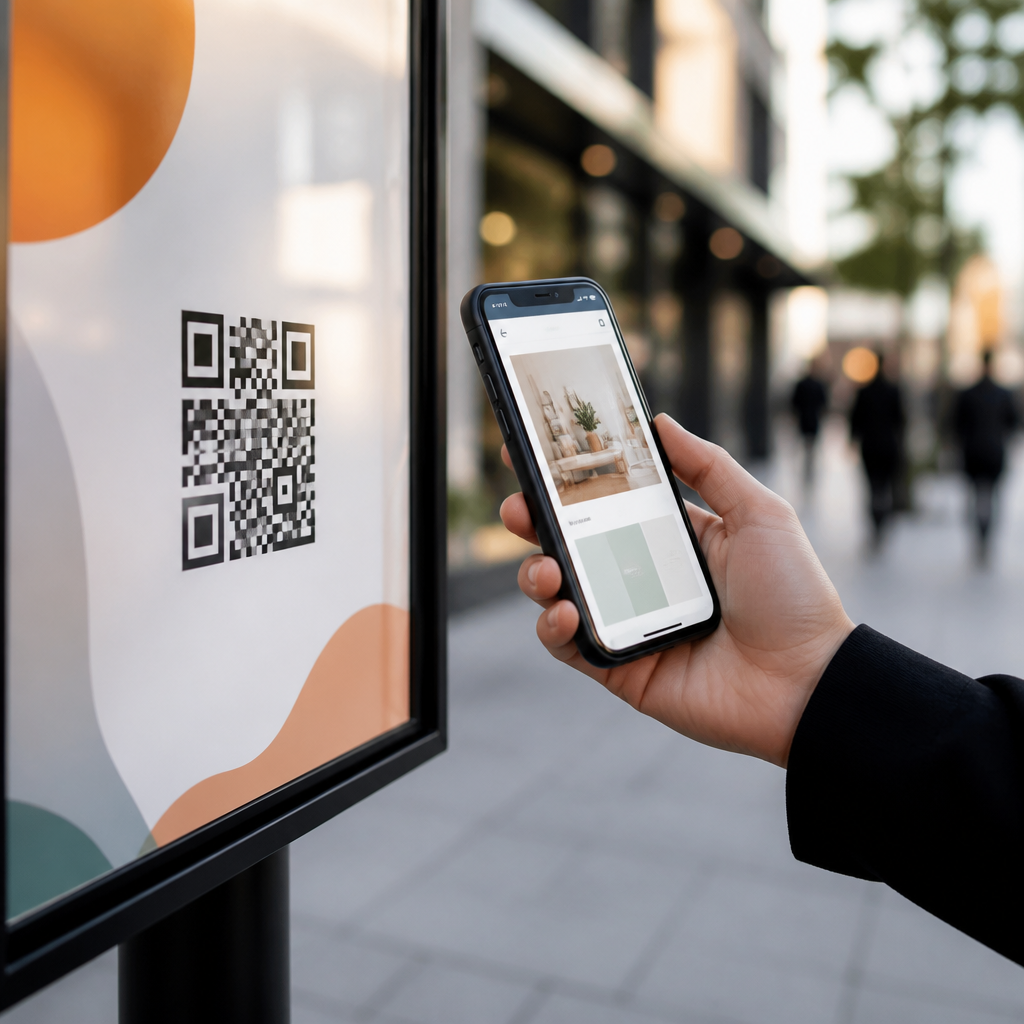

QR codes have moved far beyond contactless menus and event check-ins; in modern retail and ecommerce, they are a practical bridge between shopper curiosity and buying confidence. For consideration-stage content, that bridge matters because this is the point where a shopper is no longer asking, “What is this product?” but “Is this the right product for me?” A well-placed QR code can answer that question in seconds by delivering deeper, decision-shaping information exactly where hesitation happens: on shelves, packaging, displays, direct mail, catalogs, and in-store signage.
Consideration-stage content refers to material designed for people actively comparing options before purchase. Typical examples include product demos, how-to videos, comparison charts, customer reviews, ingredient or materials details, fit guides, FAQs, warranty explanations, and case studies. In my work with retail campaigns, the highest-performing QR programs rarely point to a generic homepage. They send shoppers to focused content that removes friction, reduces uncertainty, and helps someone justify a purchase. That is why QR codes work in marketing: they compress the path from interest to informed action.
Shoppers now expect immediate access to information while standing in front of a product. Smartphone scanning is built into most camera apps, and mobile browsing behavior favors fast answers over broad navigation. According to widely cited retail behavior studies from Google and Think with Google, shoppers frequently research products during in-store visits, often comparing prices, reviews, or specifications before buying. A QR code supports that behavior instead of fighting it. Rather than hoping shoppers search the right phrase, click the right result, and find the right page, marketers can deliver the exact asset needed at the exact moment of evaluation.
This matters because consideration is where many sales are won or lost. Awareness campaigns can generate traffic, and bottom-funnel promotions can trigger urgency, but neither fixes uncertainty on its own. If a shopper cannot quickly verify quality, compatibility, value, or results, they delay the decision, choose a competitor, or abandon the category entirely. QR codes improve marketing performance when they are used as context-driven answer tools. They can raise engagement, extend time with branded content, improve assisted conversion rates, and make offline media measurable through scan data, landing-page behavior, and downstream attribution.
Why QR Codes Work in Marketing During the Consideration Stage
QR codes work because they reduce friction at a decisive point in the customer journey. Friction in consideration usually takes the form of unanswered questions: Will this fit? Is it durable? How does it compare? Is setup difficult? Is it worth the price? A printed package or sign cannot answer all of that, but a QR code can open a mobile destination that does. The technology itself is simple; the strategic value comes from matching the destination to the decision barrier.
In practice, the strongest campaigns use QR codes to connect physical touchpoints with high-intent digital proof. A beauty brand can link to shade-matching guidance and real customer photos. A consumer electronics brand can link to compatibility checkers, installation videos, and warranty details. A food brand can link to sourcing standards, nutritional guidance, recipes, and dietary certifications. These are not awareness assets. They are consideration assets because they help a shopper evaluate suitability and risk.
Another reason QR codes perform well is that they create message continuity across channels. The shopper sees a claim on packaging, scans, and lands on evidence that supports the claim. That continuity increases trust. I have seen response rates improve simply by changing QR destinations from broad campaign pages to tightly aligned proof pages. When the call to action says “See how it works,” the landing experience must begin with a clear demonstration, not a navigation menu.
Marketers also value QR codes because they make offline influence measurable. With UTM parameters, dynamic QR platforms, and analytics tools such as Google Analytics 4, Adobe Analytics, Bitly, or QR Code Generator PRO, teams can track scan volume, time, device type, landing-page engagement, assisted conversions, and region-level performance. That turns packaging, print, and point-of-sale media into testable channels rather than static brand assets.
What Shoppers Want When They Scan a QR Code
Most shoppers scan with a practical goal, not casual curiosity. They want confidence fast. The content that performs best usually falls into a few recurring categories: proof, comparison, instruction, reassurance, and validation. Proof includes demonstrations, before-and-after examples, independent certifications, and verified reviews. Comparison includes side-by-side feature breakdowns, model selection guides, and price-to-value explanations. Instruction includes setup steps, usage videos, and care guides. Reassurance includes return policies, guarantees, safety details, and support availability. Validation includes testimonials, case studies, and user-generated content showing the product in real use.
Intent should shape the offer. If the shopper is facing a premium-priced item, lead with evidence of value and durability. If the product is complex, lead with setup simplicity and support resources. If the category depends on personal fit, lead with calculators, quizzes, and guides. For example, a mattress brand may offer a comfort comparison tool and trial policy summary. A skincare brand may offer ingredient explanations and regimen recommendations. A pet food brand may offer age, breed, and dietary guidance. The goal is always the same: replace uncertainty with a credible next step.
| Shopper question | Best QR code destination | Why it works |
|---|---|---|
| Is this right for me? | Buying guide or product quiz | Personalizes the choice and narrows options quickly |
| Does it actually work? | Demo video or case study | Shows real outcomes instead of making abstract claims |
| How does it compare? | Comparison chart | Reduces search effort and keeps evaluation on brand-owned pages |
| Can I trust this brand? | Reviews, certifications, sourcing, warranty page | Builds confidence through social proof and policy clarity |
| Will setup be difficult? | Quick-start guide or installation video | Addresses a common objection that blocks purchase |
Best Content Offers for Consideration-Stage QR Codes
The most effective offer is usually the one that answers the biggest objection without requiring extra navigation. Product demo videos are consistently strong because they compress explanation into a few seconds and work well on mobile. Keep them short, front-load the benefit, and show the product being used in realistic conditions. For tools, appliances, fitness equipment, and cosmetics, demonstration content often outperforms text-heavy pages because it answers capability questions visually.
Comparison pages are another top performer, especially for brands with multiple models or tiers. Shoppers comparing “good, better, best” options need a clear framework. Use concise specifications, ideal use cases, and honest tradeoffs. A vacuum brand, for example, should explain suction level, floor compatibility, battery life, and maintenance needs, not just headline features. If you do not provide that context, shoppers will leave to find it elsewhere.
Reviews and user-generated content matter because shoppers trust peers for real-world validation. The key is curation. A QR code should not dump users into a generic review feed. It should highlight verified reviews that answer practical concerns such as longevity, sizing accuracy, ease of use, or customer service quality. For apparel, fit photos and measurement notes are especially valuable. For supplements or skincare, routine details and time-to-results are more persuasive than star ratings alone.
Educational content is often overlooked, but it is crucial in categories where confusion blocks conversion. In B2B and high-consideration consumer categories, explainer pages, glossaries, calculators, and FAQs improve decision quality. A home improvement brand can link to material selection guidance. A software company can link to implementation checklists and integration documentation. A wine brand can link to tasting notes and food pairing guidance. Good educational content does not feel like a sales pitch; it feels like competent assistance.
Finally, offer reassurance content near purchase decision points. Return windows, free trial terms, subscription flexibility, support channels, safety standards, and warranty specifics all reduce perceived risk. This is especially important for first-time buyers and higher-priced products. Many brands bury these details in footers, but they often belong in QR-enabled consideration journeys because risk reduction is part of evaluation.
How to Match QR Code Content to Channel and Context
Context determines what a shopper needs. On packaging, the scan usually happens close to purchase, so content should be product-specific and fast to load. On an endcap or shelf talker, comparison content and “why choose this” messaging work well because the shopper is evaluating multiple options at once. In a print catalog, richer editorial content can succeed because the shopper is in discovery mode but may still want proof before taking action. In direct mail, QR codes can link to personalized landing pages tied to the featured offer or household segment.
In-store signage should account for time pressure. People standing in an aisle do not want a five-step funnel. Give them the answer first, then optional depth. A strong mobile landing page opens with a headline that mirrors the call to action, followed by a primary proof asset such as a video, comparison summary, or review highlight. Secondary links can support deeper research, but the first screen should do the heavy lifting.
For ecommerce-adjacent touchpoints such as package inserts or post-purchase inserts, consideration content can support cross-sell and upsell decisions. A coffee machine insert might lead to grinder comparisons, cleaning guidance, and recommended accessories. A skincare package might lead to regimen builders and complementary products. When done well, QR codes extend the customer journey beyond the initial sale and increase lifetime value.
Execution Standards That Improve Results
Good strategy fails when execution is sloppy. The QR code must scan easily, load quickly, and lead to a page built for mobile readability. Use high contrast, adequate quiet space, tested print sizes, and clear placement. Avoid placing codes on curved surfaces where distortion affects scanning. Dynamic QR codes are generally better than static ones for marketing because they allow destination updates, campaign management, and performance tracking without reprinting materials.
The call to action is equally important. “Scan me” is weak because it explains the action, not the benefit. “See the 30-second demo,” “Compare models,” “Check compatibility,” or “Read verified reviews” sets expectation and raises scan intent. I also recommend showing a small preview of what the shopper will get, such as a video thumbnail, star rating snapshot, or icon set for delivery, warranty, and returns.
Measure beyond scans. A high scan rate with poor engagement usually signals a mismatch between promise and destination. Watch bounce rate proxies, scroll depth, video completion, assisted conversions, and add-to-cart behavior. Run A/B tests on calls to action, landing-page modules, and content sequence. In one packaging program I worked on, moving review highlights above technical specifications increased downstream product page visits because shoppers wanted reassurance first and detail second.
Common Mistakes and the Main Strategic Takeaway
The most common mistake is sending shoppers to a homepage or generic product category page. That creates work at the exact moment your QR code was supposed to remove it. Another mistake is overloading the landing page with too many choices. Consideration content should guide, not overwhelm. Slow pages, intrusive pop-ups, and uncompressed video also hurt performance, particularly on retail Wi-Fi or weak mobile signals.
Brands also fail when they ignore trust signals. If you make claims about durability, sustainability, safety, or efficacy, support them with specifics: testing standards, third-party certifications, sourcing details, or documented policies. Shoppers in consideration mode are looking for reasons to believe. Give them substance, not slogans.
The central lesson is simple: QR codes work in marketing when they deliver the right proof at the right moment. For consideration-stage content, offer what helps shoppers evaluate fit, value, and risk with minimal effort. Start with their likely question, build the mobile destination around the answer, and track whether that answer moves the decision forward. If you are building a broader QR code marketing strategy, audit every physical touchpoint and ask one practical question: what information would help a shopper say yes here? Then make that the scan destination.
Frequently Asked Questions
What kind of content should a QR code offer shoppers during the consideration stage?
At the consideration stage, shoppers already understand the basic product category and are trying to decide whether a specific item fits their needs, budget, and expectations. That means QR codes should lead to content that reduces uncertainty and helps compare options, rather than repeating top-level promotional messaging. The most effective destinations include product comparison guides, detailed feature breakdowns, sizing or fit help, how-to videos, ingredient or material information, compatibility details, customer reviews, FAQs, warranty explanations, and user-generated content that shows the product in real-life use. For higher-consideration purchases, brands can also link to buying guides, side-by-side model selectors, expert recommendations, setup tutorials, and care instructions. The key is relevance: the content should answer the exact questions a shopper is likely to have while standing in-store, browsing packaging, or pausing on a product page. If the QR code sends them to generic homepage content or broad brand storytelling, it wastes the moment. If it delivers specific, decision-supporting information, it becomes a useful conversion tool.
Why are QR codes especially effective for consideration-stage retail content?
QR codes work well at this stage because they connect physical and digital touchpoints at the exact moment hesitation appears. In many shopping environments, space is limited. Packaging, shelf tags, displays, and print materials can only hold so much information, yet shoppers often need more than a short feature list before they feel ready to buy. A QR code solves that problem by opening access to richer content instantly, without requiring a sales associate, separate search, or extra effort. That speed matters because consideration-stage friction is often small but critical: “Will this work with what I already own?” “How does this compare to the premium version?” “What do real customers say after using it for a month?” By delivering answers on demand, QR codes help preserve buying momentum. They also support self-directed research, which modern shoppers prefer. Instead of pushing a hard sell, a well-designed QR experience gives people the confidence to make their own informed choice. That makes QR codes not just convenient, but strategically valuable for guiding purchase decisions with less resistance.
How can brands decide what to link to in a QR code without overwhelming shoppers?
The best approach is to start with the shopper’s likely decision barriers, not with everything a brand wants to say. Consideration-stage QR codes should be built around the most important objections, comparisons, and clarifications that influence conversion. For example, if customers frequently hesitate over fit, sizing tools and try-on guidance should come first. If the product is technical, compatibility checkers, installation videos, and setup FAQs may be more useful. If trust is the issue, verified reviews, return policies, and proof points like certifications or testing results should be prioritized. A good rule is to give shoppers a focused landing experience with clear options rather than a cluttered content dump. One strong model is a mobile landing page that offers three to five paths such as “Compare Models,” “See Reviews,” “Watch Demo,” “Check Size,” or “Learn Materials.” This keeps the experience simple while still serving different buyer needs. Brands should also align QR destinations with product type, price point, and location. A shelf label in-store may need quick comparisons, while a QR code on packaging can support post-pickup reassurance and final validation. The goal is not maximum content volume; it is maximum decision usefulness.
What makes a consideration-stage QR code experience more likely to convert?
Conversion improves when the entire experience is fast, relevant, and clearly connected to the shopper’s intent. First, the QR code itself should include a brief call to action that tells people exactly what they will get, such as “Compare models,” “See if it fits,” or “Watch a 30-second demo.” That simple cue raises scan rates because it gives the shopper a reason to engage. Second, the landing page must load quickly and be fully mobile-optimized, since most scans happen on smartphones in real-time shopping situations. Third, the content should get to the answer quickly. Shoppers in the consideration stage are not looking for a long brand journey; they want practical information that helps them move forward. Strong experiences often include concise summaries at the top, followed by expandable details, video, review highlights, comparison tables, and clear next steps. Those next steps might include adding to cart, locating the item in-store, checking availability, or speaking with support. It also helps to tailor content to context. A QR code on a premium skincare product may perform best when linking to ingredient benefits, routine recommendations, and skin-type guidance, while a code on electronics may need compatibility specs and setup support. The more precisely the experience resolves the shopper’s most immediate concern, the more likely it is to influence purchase.
How should businesses measure the success of QR codes used for consideration-stage content?
Success should be measured beyond basic scan volume. While scan rate is a useful starting point, it only shows initial engagement, not whether the content actually helped move shoppers closer to purchase. Businesses should also track landing page engagement metrics such as time on page, completion of video views, clicks on comparison tools, interactions with reviews or FAQs, and progression to product pages or add-to-cart actions. In physical retail, teams can compare scan activity by location, display type, packaging version, or product category to see where decision-support content performs best. In ecommerce and omnichannel campaigns, it is valuable to measure assisted conversions, repeat visits, email sign-ups tied to product research, and downstream purchases after a scan. Brands should also look at qualitative insights. Customer service questions, return reasons, and in-store associate feedback can reveal whether the QR-linked content is actually reducing confusion. If shoppers still ask the same questions after scanning, the content may be too vague, too broad, or too hard to navigate. The most effective measurement approach connects QR performance to business outcomes: increased conversion rate, stronger confidence signals, fewer abandoned decisions, better product understanding, and ultimately a smoother path from interest to purchase.