QR codes for abandoned-cart recovery through direct mail turn a common ecommerce loss into a measurable reactivation channel by linking offline touchpoints with digital purchase intent. An abandoned cart occurs when a shopper adds products to an online basket but leaves before checkout, often because of distraction, price hesitation, shipping surprises, or simple delay. Direct mail in this context means postcards, letters, self-mailers, or dimensional pieces sent to identified prospects using first-party data and triggered by on-site behavior. When a printed piece carries a personalized QR code that opens a prefilled cart, a landing page, or a tailored offer, it removes friction and gives marketers a precise way to reconnect with buyers who already signaled strong intent.
I have used this approach in retention programs for ecommerce brands with long consideration cycles and for retailers selling replenishable products. The pattern is consistent: email and SMS do most of the early recovery work, but direct mail captures a valuable segment that ignores inbox prompts, delays the decision, or needs a stronger trust signal before paying. Physical mail also extends the funnel beyond the screen. It can arrive after digital reminders have been filtered, missed, or forgotten, and it creates a tangible prompt in the home or office. For higher-average-order-value categories such as furniture, skincare systems, nutritional bundles, and premium apparel, that extra reminder often pays for itself.
This article is the hub for integrating QR codes into marketing funnels, with abandoned-cart recovery as the clearest use case because it sits near the point of conversion. The same funnel principles also apply to welcome journeys, win-back campaigns, referral loops, loyalty enrollment, product education, and post-purchase cross-sell. To use QR codes effectively, marketers need more than graphic placement. They need strong identity resolution, event tracking, offer design, landing-page continuity, and disciplined measurement. The sections below explain how to build the funnel, what technologies matter, which metrics reveal real lift, and where direct mail fits against email, SMS, and retargeting.
Why QR codes work inside a recovery funnel
QR codes work because they collapse several steps into one scan. A shopper does not need to search for a brand again, remember a coupon code, or rebuild a cart from scratch. The scan can open a deep link to a checkout page with products preserved, a discount already applied, and shipping options visible. That matters because checkout friction compounds quickly. Baymard Institute has repeatedly documented that extra steps, surprise costs, and required account creation drive abandonment. A QR code cannot solve every objection, but it can eliminate navigation friction and recover intent at the moment the shopper is ready to resume.
Direct mail adds a psychological advantage. Unlike an email buried under promotions, a postcard remains visible on a kitchen counter or desk. I have seen brands lift conversion by pairing a personalized headline with a cart image, a deadline, and a QR code that resumes checkout in seconds. The physical asset acts like a durable reminder, while the code bridges back into the digital funnel. This combination is especially effective when the mail arrives five to ten days after abandonment, after email urgency has faded but while product interest is still alive. For some audiences, especially older and higher-income households, direct mail also carries more legitimacy than a text message from an unfamiliar sender ID.
As a hub topic, integrating QR codes into marketing funnels starts with role definition. In top-of-funnel campaigns, a QR code may open a quiz, store locator, or lead form. In mid-funnel journeys, it may launch a comparison guide, testimonial page, or demo request. In bottom-funnel recovery, it should usually deep-link to the exact action left incomplete. The rule is simple: match the scan destination to the user’s stage and reduce one obstacle. When brands violate that rule by sending abandoned-cart users to a generic homepage, response drops because the code creates curiosity but not continuity.
Building the abandoned-cart direct mail workflow
The workflow begins with data capture and consent. A brand needs a way to identify the shopper before abandonment, usually through logged-in sessions, email capture, checkout progress, or household matching from a customer data platform. Tools such as Shopify, Klaviyo, HubSpot, Salesforce Marketing Cloud, Bloomreach, and Segment can pass cart and identity events into a triggered campaign system. A direct mail automation provider then receives the event, checks suppression rules, and initiates printing and postage. Providers commonly used in this space include Lob, PostPilot, PebblePost, and Postalytics. The best setup uses event-driven triggers rather than manual list exports because timing influences recovery rates.
Offer strategy comes next. Not every cart should receive the same incentive. Brands should segment by cart value, product margin, customer status, and predicted likelihood to convert without a discount. For example, a first-time shopper with a $60 skincare cart may receive free shipping, while a returning VIP customer with a $240 cart may receive a deluxe sample or loyalty points instead of a percentage-off offer. Margin discipline matters. If the cart likely converts through email alone, direct mail may waste budget. If the category has high lifetime value, however, a breakeven first order can still be rational. The QR code destination should reflect the offer automatically so the user never types a code manually.
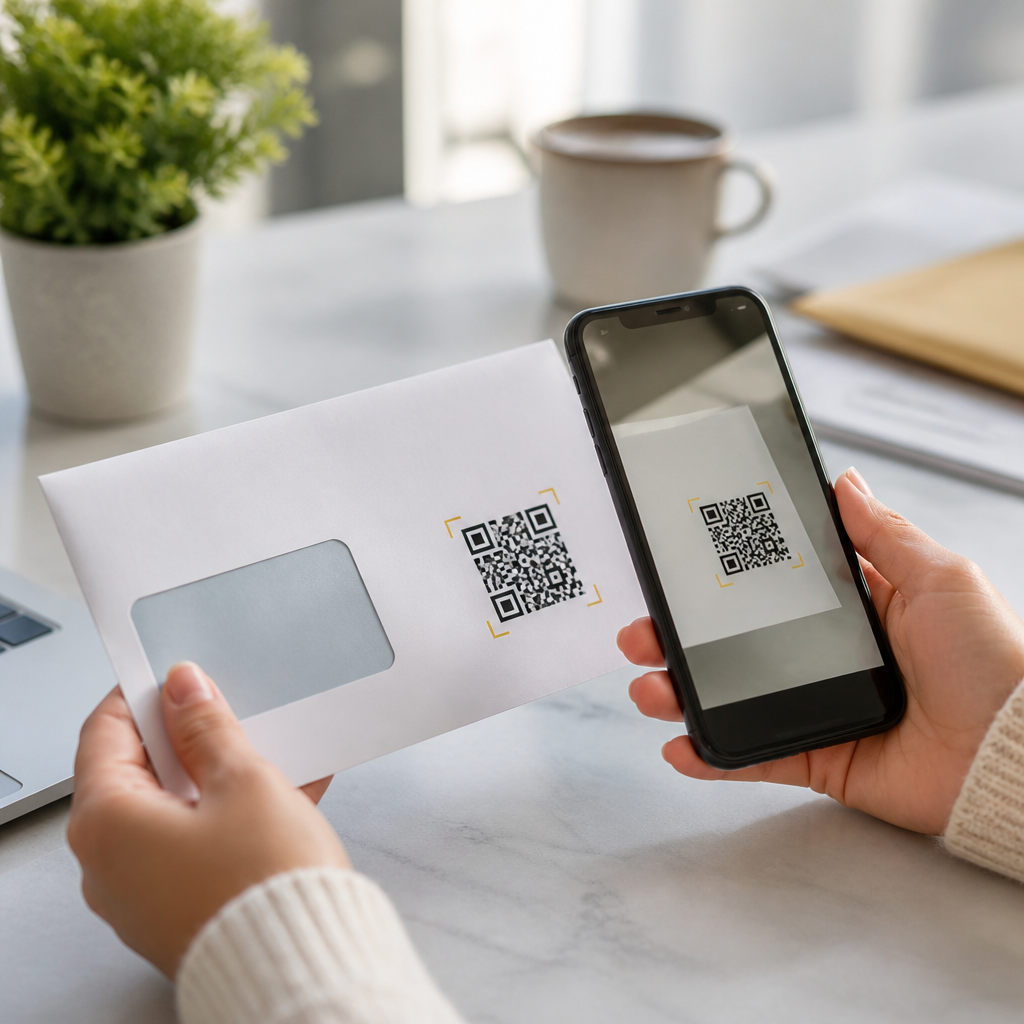
Creative and logistics must support scan behavior. The mailer should show the abandoned product or category, one clear value proposition, and one obvious QR call to action such as “Resume your order” or “See your saved cart.” Keep the code at least around 0.8 inches square for smartphone reliability, preserve quiet space, and test contrast under different print finishes. Personalized URLs can back up the QR code for users who prefer typing. Timing should align with the rest of the funnel: email within hours, SMS if consent exists within one or two days, then direct mail when a physical reminder can add incremental lift rather than duplicate early touches.
Critical funnel components and measurement standards
Strong recovery programs depend on operational detail. The table below covers the components I treat as nonnegotiable when integrating QR codes into a marketing funnel that includes direct mail.
| Component | What it does | Practical standard | Example |
|---|---|---|---|
| Identity resolution | Matches cart behavior to a mailable person or household | Use first-party login, checkout email, or CDP-based household match | A known shopper abandons a cart on mobile, then receives a postcard at home |
| Deep linking | Opens the exact saved cart or tailored landing page | Preserve cart contents, applied offer, and source tags | Scan opens checkout with products already loaded and free shipping active |
| Attribution | Measures scans, visits, conversions, and incrementality | Use UTM parameters, QR identifiers, holdout groups, and matchback analysis | Brand proves postcard recipients converted 12% more than control households |
| Suppression logic | Prevents waste and customer annoyance | Cancel mail if cart converts before print cutoff or if user received recent mail | Converted shoppers are removed from the production file same day |
| Offer governance | Protects margin while increasing completion rate | Set thresholds by AOV, product margin, and customer value | VIP customers receive bonus points, low-margin carts receive no discount |
Measurement should separate response from true lift. A scan rate alone is not enough because some recipients would have returned anyway through branded search or email. The cleanest method is a randomized holdout group that receives no mail while still receiving normal digital recovery messages. Compare conversion rate, revenue per recipient, and contribution margin between mailed and control groups. Matchback analysis can supplement this by connecting households to later orders, but holdouts provide the causal evidence. In my experience, teams that skip holdouts usually overstate direct mail impact and then struggle to defend budget during performance reviews.
Marketers should also track delivery timing, print-to-mail lag, landing-page load speed, and checkout completion by device. If scans are high but conversions are weak, the issue is often downstream: expired carts, broken product variants, mobile payment friction, or mismatched offers. GA4, server-side event tracking, and platform-native order data should all reconcile. I also recommend tracking incremental revenue after postage and production cost, not just gross sales. A postcard campaign that looks successful on top-line revenue can quietly destroy efficiency if discounts are unnecessary or if broad mailing rules catch too many low-intent shoppers.
Best practices for personalized QR landing experiences
The landing experience determines whether the scan completes the sale. The best destination is usually a mobile-optimized saved-cart page or checkout, not a general promotion page. Show the exact items left behind, current price, shipping estimate, and a concise reassurance block covering returns, delivery, and payment security. If inventory has changed, explain it clearly and recommend close substitutes rather than sending the shopper into an error state. Apple Pay, Google Pay, PayPal, Shop Pay, and other accelerated wallets reduce recovery friction further. Every additional field or redirect after the scan lowers the odds of conversion.
Personalization must feel helpful, not invasive. Use data the shopper would reasonably expect you to remember: products viewed, cart value, category preferences, and loyalty status. Avoid overexplaining the tracking mechanics in the creative itself. A message like “Your saved items are waiting” is often stronger than a highly specific line that feels watched. If the campaign uses household-level matching rather than named individuals, keep copy broad enough to avoid awkwardness. Regulatory and brand trust considerations matter here. Respect suppression for sensitive categories, honor privacy disclosures, and make opting out of future mail straightforward.
Recovery pages can also support broader funnel integration. Include links to reviews, FAQs, ingredient details, fit guides, or financing information if those assets commonly unblock purchase hesitation. This is where the abandoned-cart page becomes a hub within the larger “QR codes in marketing strategy” framework. A shopper may scan to resume checkout, then branch into education before buying. Well-structured internal pathways help that happen without losing attribution. I have seen apparel brands improve recovery by linking from the saved cart to a sizing guide, and furniture brands lift conversions by adding white-glove delivery answers directly below the cart summary.
Channel coordination, economics, and common mistakes
Direct mail performs best when coordinated with the rest of the funnel rather than treated as a standalone rescue tactic. Email is cheapest and fastest. SMS is immediate but permission-limited and easy to overuse. Retargeting depends on platform reach and privacy changes. Direct mail is slower and more expensive, but it offers durable visibility and often better household reach when digital identifiers are weak. The practical model is sequencing: try low-cost digital messages first, reserve mail for higher-value or nonresponsive segments, and use QR codes to restore one-tap continuity once the piece arrives. This structure usually improves blended recovery efficiency.
Economics should be calculated at the segment level. Start with total cost per piece, including creative setup, printing, postage, data matching, platform fees, and any discount expense. Then estimate expected incremental conversion rate, average order value, gross margin, and projected repeat purchase value. A brand with a $180 AOV, 65% gross margin, and strong repeat behavior can justify richer mail than a commodity seller with thin margins. Catalog and DTC operators have known this for years: mail is rarely about cheap clicks. It is about profitable audience selection. QR codes make that selection more accountable because they expose scan behavior and accelerate response.
The most common mistakes are predictable. Brands send users to a homepage instead of a saved cart. They print static QR codes with no campaign-level tracking. They fail to suppress converted shoppers before production. They mail too late, after intent has gone cold, or too early, before email and SMS had a chance to work. They offer discounts to everyone and train customers to wait. They ignore creative hierarchy so the code is present but not compelling. Fixing these errors usually matters more than adding complexity. If you want QR codes for abandoned-cart recovery through direct mail to scale, build for continuity, timing, relevance, and clean measurement.
QR codes give direct mail a precise role inside modern marketing funnels: they turn a printed reminder into a low-friction path back to checkout. For abandoned-cart recovery, that matters because the audience already demonstrated purchase intent, and even small improvements in completion can produce outsized revenue. The essentials are clear. Identify shoppers accurately. Trigger mail quickly enough to remain relevant. Personalize the message and destination. Deep-link the scan to a saved cart or tailored checkout. Measure incremental lift with holdouts, not vanity metrics. When those pieces are in place, direct mail stops being a broad awareness channel and becomes a disciplined conversion tool.
As the hub for integrating QR codes into marketing funnels, this use case also teaches a wider lesson. A QR code works best when it matches the user’s stage, removes one barrier, and connects every touchpoint across channels. The same framework can support lead capture, product education, store visits, loyalty enrollment, referrals, and win-back campaigns. What changes is the destination and the offer, not the underlying principle. Brands that treat QR codes as infrastructure rather than decoration create more coherent journeys, stronger attribution, and better customer experience.
If you are evaluating this tactic, start with one segment: high-intent carts above a defined value threshold that did not convert after email and SMS. Build a personalized mailer, route the QR code to a saved cart, and run a true holdout test. Review contribution margin, not just recovered revenue, then expand to adjacent funnel stages. That disciplined rollout will show whether QR codes for abandoned-cart recovery through direct mail deserve a permanent place in your marketing strategy.
Frequently Asked Questions
1. How do QR codes help recover abandoned carts through direct mail?
QR codes make abandoned-cart recovery through direct mail fast, trackable, and highly convenient for the shopper. Instead of asking someone to remember a website, search for a product again, or manually re-enter login details, the mail piece gives them a simple scan-and-return path back to their purchase. When a shopper scans the code on a postcard, letter, or self-mailer, they can be taken directly to a personalized landing page, a rebuilt cart, a saved product page, or a checkout experience that reflects what they previously considered online.
This matters because abandoned carts often happen for practical reasons rather than true lack of interest. A shopper may have been interrupted, hesitant about price, surprised by shipping costs, or simply not ready to complete the order at that moment. Direct mail reintroduces the offer in a physical format that stands out from crowded inboxes, and the QR code closes the gap between offline reminder and online action. That combination helps brands reconnect with high-intent prospects in a measurable way.
From a performance standpoint, QR codes also improve attribution. Each code can be uniquely tied to a campaign segment, product category, audience type, or even an individual household. That means marketers can measure scans, visits, conversion rates, average order value, and revenue generated from the mailer. Instead of treating direct mail as a broad awareness channel, ecommerce brands can use it as a highly targeted recovery tactic with clear data behind it.
2. What should a direct mail piece include to make an abandoned-cart QR code campaign effective?
An effective abandoned-cart recovery mailer should make the next step feel easy, relevant, and worthwhile. At a minimum, the piece should include a prominent QR code, a strong call to action, concise but persuasive copy, and a clear value proposition. The recipient should immediately understand why they received the mail, what they will get by scanning, and why acting now is in their interest.
Strong campaigns typically reference the shopper’s prior intent without feeling intrusive. For example, the mailer might remind them that they left items in their cart, highlight a category they viewed, or mention that their selection is still available. The QR code should direct them to a tailored digital experience rather than a generic homepage. Sending someone back to a generic site creates friction and reduces the chance of conversion. A better destination is a prefilled cart, a landing page featuring the same products, or a curated page with a simple route to checkout.
The offer also plays a major role. If the abandonment was caused by price hesitation or shipping concerns, the mail piece can include a limited-time discount, free shipping, bonus gift, financing option, or other incentive that addresses likely objections. Design matters too. The QR code should be large enough to scan easily, surrounded by enough white space, and supported by a short instruction such as “Scan to complete your order.” Including trust signals like return policy reminders, customer ratings, or satisfaction guarantees can further reassure hesitant buyers. The most effective direct mail pieces combine clarity, relevance, and low-friction response design.
3. What types of businesses benefit most from QR-code-based abandoned-cart recovery through direct mail?
This strategy is especially effective for ecommerce businesses that have identifiable shoppers, meaningful cart values, and products that benefit from an extra reminder or second touch. Brands in apparel, home goods, beauty, electronics, wellness, specialty food, pet products, furniture, and subscription offers often see strong alignment with this approach because shoppers frequently browse, compare, delay, and return before buying. When a cart already exists, the purchase intent is real, and direct mail can help reactivate that interest.
It is particularly valuable for businesses with higher average order values or longer consideration cycles. A shopper deciding on premium skincare, a mattress accessory, a home office setup, or a higher-end fashion purchase may need more time and reassurance than someone making a low-cost impulse buy. In those cases, a well-timed direct mail piece with a QR code can serve as a trusted reminder that feels more deliberate and credible than another email or retargeting ad.
Brands with strong first-party data are also well positioned. If a company can identify a shopper through account creation, prior purchase behavior, loyalty enrollment, or a captured mailing address, it can trigger direct mail based on abandonment behavior and segment the message intelligently. Even businesses with moderate volume can benefit if they focus on high-value carts, profitable customer segments, or categories with strong margins. In short, the best fit is a brand that wants to turn known digital intent into measurable offline-assisted conversion.
4. How can marketers measure the success of an abandoned-cart direct mail campaign using QR codes?
Measurement starts with assigning trackable QR codes to the campaign. Each code should lead to a dedicated URL structure or landing environment that allows marketers to distinguish direct mail traffic from email, paid search, social, and other channels. Once that is in place, brands can evaluate both response metrics and business outcomes rather than relying on assumptions.
Key top-of-funnel metrics include delivery rate, scan rate, landing-page visits, time to response, and device behavior after the scan. Mid-funnel metrics may include cart restoration rate, checkout starts, and offer redemption. The most important bottom-of-funnel metrics are completed purchases, revenue per mail piece, return on ad spend or return on marketing investment, average order value, and customer reactivation rate. For some brands, it is also useful to track whether the campaign brings back first-time shoppers, repeat customers, or lapsed high-value buyers.
To get a clearer view of impact, marketers often compare mailed audiences with holdout groups that did not receive the mailer. That helps isolate incremental lift and shows whether direct mail drove conversions that would not have happened otherwise. Timing analysis is important as well. Brands should review how quickly shoppers convert after receiving the piece and whether shorter trigger windows outperform delayed outreach. Over time, campaign reporting can reveal which products, incentives, formats, and audience segments generate the best results. With proper setup, QR-code-based direct mail is not just measurable—it can become one of the more accountable channels in a recovery program.
5. What are the best practices for timing, personalization, and privacy in these campaigns?
The strongest abandoned-cart direct mail programs balance speed, relevance, and responsible data use. Timing should reflect both the buying cycle and operational realities. In many cases, sending too late reduces effectiveness because the shopper has already bought elsewhere, lost interest, or forgotten the original intent. Sending too early can also be inefficient if the customer is still likely to convert through email or onsite reminders. Many brands test trigger windows such as a few days after abandonment, one week later, or after digital remarketing has failed to convert. The ideal timing depends on product category, shipping speed expectations, and purchase urgency.
Personalization should feel useful rather than invasive. The goal is to reduce friction and reconnect the shopper with relevant products, not to create discomfort by overexposing behavioral details. Practical personalization includes category-specific messaging, product imagery, dynamic offers based on cart value, loyalty-based incentives, and landing pages tailored to prior activity. The QR code destination should continue that relevance by bringing the shopper back to the most natural next step in the purchase journey.
Privacy and compliance are essential. Brands should use customer data according to applicable laws, consent frameworks, and stated privacy policies. Mailing practices should rely on properly sourced first-party or permissioned data, secure handling of customer information, and responsible audience targeting. It is also wise to avoid printing overly sensitive details on the mail piece itself. The best campaigns respect the customer while still being effective: they use data carefully, personalize intelligently, and make the response path easy. When done well, that creates a recovery experience that feels helpful, professional, and trustworthy.