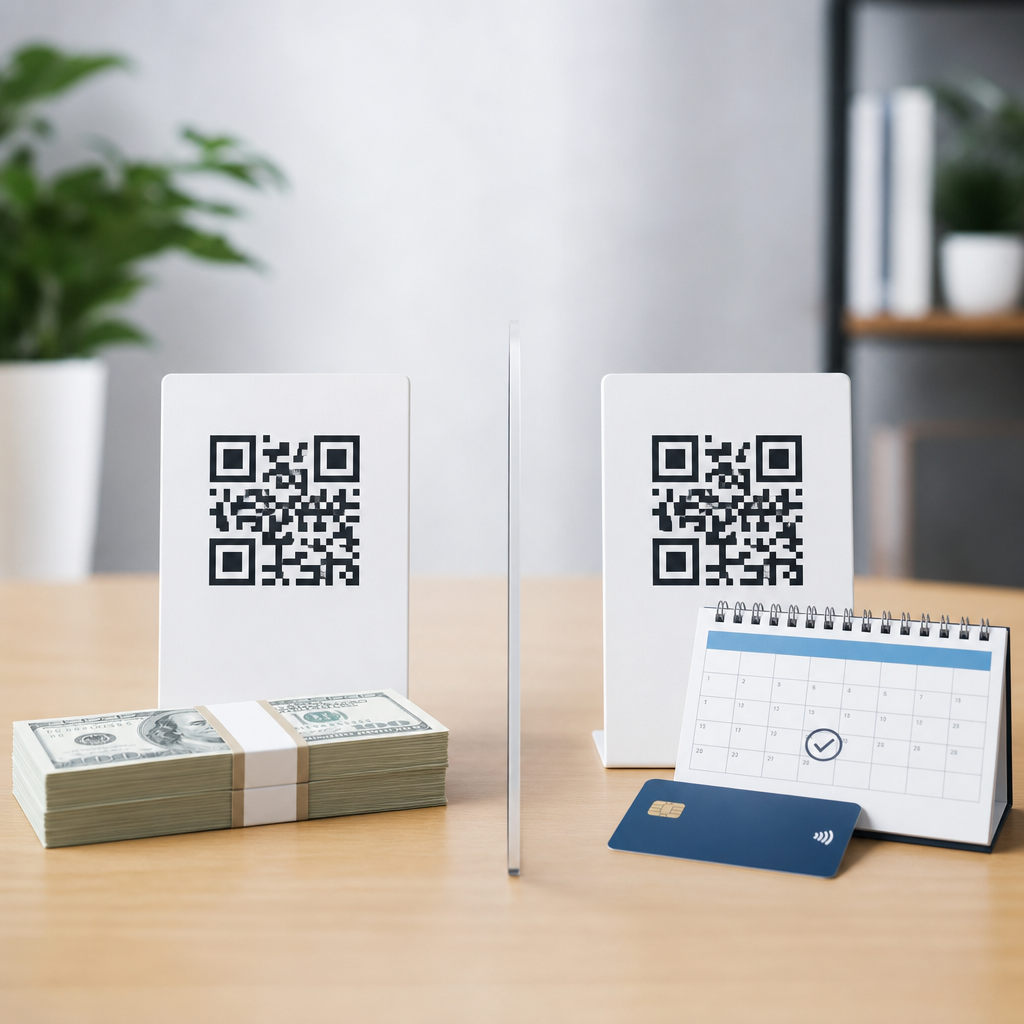
QR code pricing looks simple until you have to sell it, buy it, or scale it. Then the difference between a flat fee and a subscription determines margins, customer retention, support load, and even whether a QR code keeps working after a campaign ends. In QR code services, a flat fee usually means a one-time payment for code creation, design, printing support, or a bundled campaign setup. A subscription means recurring payment for dynamic redirects, analytics, editing, user access, security controls, and ongoing hosting. For businesses evaluating pricing QR code services, the model matters because QR codes are not only images; they are often software products with infrastructure costs, compliance considerations, and service obligations behind them.
I have worked with restaurants, agencies, event teams, and SaaS vendors that all assumed QR code monetization would be straightforward. It rarely is. Static QR codes can be delivered profitably with simple one-time pricing, but dynamic QR codes introduce redirect servers, analytics pipelines, custom domains, scan tracking, expiration rules, password gates, and multi-user administration. Those features create recurring costs and recurring value. That is why this topic sits at the center of QR code monetization and business opportunities. If you choose the wrong model, you either undercharge for ongoing obligations or create unnecessary friction for buyers who only need a single campaign. This hub explains how flat-fee and subscription pricing work, where each model fits, what buyers should compare, and how providers can structure offers that are commercially sound and easy for customers to understand.
What Flat-Fee QR Code Pricing Includes
Flat-fee QR code pricing works best when the scope is finite and delivery is clear. In practice, that often includes static QR code generation, branded design, vector export formats such as SVG and EPS, print-ready files, landing page setup for a fixed campaign, and limited implementation support. A restaurant launching table menus may pay once for ten static menu QR codes with custom frames and logo placement. A real estate agent may buy a batch of property flyer codes linked directly to listing pages. In both cases, the customer expects ownership of a finished asset, not an ongoing software relationship.
The strength of a flat fee is simplicity. Procurement teams like predictable invoices. Small businesses like avoiding another monthly software charge. Sales cycles are shorter because the buyer can treat the purchase as a project expense rather than an operational expense. For providers, flat pricing also reduces churn management, billing complexity, and customer success overhead. However, the margin only holds if the service truly ends after delivery. The moment you promise editable destinations, scan reports, uptime guarantees, or ongoing troubleshooting, a one-time fee starts absorbing recurring work.
Static versus dynamic is the key technical distinction. A static QR code encodes the final destination directly, so it does not require the provider’s redirect infrastructure after delivery. A dynamic QR code points to a short URL or managed redirect, letting the destination change later. That flexibility is why dynamic services are usually poor candidates for pure flat-fee pricing unless the term is limited, such as a ninety-day event package. If a provider sells lifetime dynamic QR codes for a low one-time amount, the economics often fail because hosting, SSL, monitoring, and analytics storage continue indefinitely.
What Subscription QR Code Pricing Includes
Subscription QR code pricing reflects the reality that many QR code services are software products. Customers are not just paying for an image. They are paying for a managed system that keeps links editable, records scans, separates users by role, supports custom domains, enforces security rules, and integrates with marketing tools. In my experience, the most sustainable recurring offers bundle dynamic QR codes, analytics dashboards, batch creation, API access, folders, campaign labels, and support response times into tiered plans.
A subscription also matches how businesses use QR codes over time. A franchise group may update menu URLs every quarter. A packaging company may rotate campaign destinations by market. An events agency may create hundreds of temporary codes each season. These are not one-off deliverables. They are operational workflows. Recurring pricing aligns revenue with the actual value delivered each month: flexibility, measurement, and administration. It also gives providers a budget to maintain redirect reliability, audit scan anomalies, patch vulnerabilities, and improve reporting.
Common subscription structures include user-based, feature-based, usage-based, and hybrid plans. User-based plans charge by seats, which suits teams with controlled workflows. Feature-based plans lock advanced tools such as retargeting pixels, white-label portals, SSO, or API access behind higher tiers. Usage-based plans meter dynamic codes, scans, redirects, or landing page views. Hybrid plans are often strongest because they combine a platform fee with reasonable usage allowances, then overage pricing for scale. That model protects margins while keeping entry pricing accessible.
Flat Fee vs Subscription: Core Differences That Affect Profitability
The main difference between flat fee and subscription pricing is not billing frequency; it is the relationship between cost structure and customer value. Flat-fee pricing fits low-maintenance deliverables. Subscription pricing fits ongoing utility. If you mismatch the model to the service, profitability erodes quickly. I have seen agencies sell dynamic QR campaigns for a one-time setup fee, then spend months handling redirect changes, replacing broken destination pages, and answering analytics questions without additional revenue. The original sale looked profitable on paper but became a support burden.
Customer psychology also differs. A flat fee lowers commitment and works well for buyers who want certainty. A subscription requires stronger justification, but it can reduce perceived risk when it includes support, reliability, and the ability to cancel. Enterprise buyers often prefer subscriptions because service continuity, documentation, access controls, and procurement compliance matter more than the lowest possible entry price. Small local businesses may lean toward one-time pricing unless the recurring benefit is obvious, such as menu updates or lead tracking.
| Factor | Flat Fee | Subscription |
|---|---|---|
| Best for | Static codes, fixed campaigns, design projects | Dynamic codes, analytics, ongoing management |
| Revenue pattern | Front-loaded | Recurring and compounding |
| Customer commitment | Low | Medium to high |
| Support burden | Low if scope is tight | Built into pricing model |
| Scalability | Depends on new sales volume | Improves with retention and expansion |
| Main risk | Underpricing future work | Churn if value is unclear |
When pricing QR code services, providers should map every promised capability to an underlying cost driver. Redirect hosting creates infrastructure expense. Analytics creates storage and processing expense. White-label portals create onboarding and support expense. Custom domain mapping creates DNS and certificate management work. Once those drivers are visible, the correct model becomes easier to choose. If costs persist, revenue should persist too.
How to Price QR Code Services by Use Case
The best pricing model depends on the use case, not on abstract preference. Restaurants often need frequent content changes, which favors subscriptions for dynamic menu QR codes. A monthly plan can include editable destinations, analytics by location, and support for seasonal updates. By contrast, a wedding planner producing welcome signs and printed itineraries can usually sell static QR codes for a flat fee because the event has a fixed date and limited post-delivery change requirements.
Retail and packaging often justify subscriptions because tracking matters. A consumer brand placing QR codes on product labels may want scans by geography, time, and device type. If the campaign changes after packaging is already in circulation, dynamic redirects become essential. This is a classic recurring-value scenario. Agencies serving multiple clients also tend to prefer subscriptions, especially if they need workspaces, client permissions, branded reporting, and reusable templates.
Real estate can go either way. Individual agents may buy flat-fee flyer codes linked to listing pages. Brokerages managing many agents and changing inventory benefit more from subscriptions with dynamic routing and account-level governance. Events are another hybrid case. A single conference can be priced as a project if the service term is explicitly limited, while an events company running dozens of activations per year usually belongs on a recurring plan.
Education, healthcare, and regulated sectors require additional care. If a QR code service touches patient intake, consent forms, or student records, pricing must reflect compliance work, access controls, and vendor review processes. Those environments rarely fit bargain one-time offers because documentation, uptime expectations, and security practices create continuing obligations.
Building Tiered Offers Customers Actually Understand
Confusing pricing pages hurt conversion more than high prices do. The strongest QR code pricing tiers separate customers by operational need, not by arbitrary feature clutter. A basic tier might offer a limited number of dynamic QR codes, core analytics, and one user. A growth tier can add custom domains, bulk creation, and more users. A professional or enterprise tier can add API access, SSO, SLA commitments, audit logs, and onboarding support. Each tier should answer a specific buyer question: will this work for one location, multiple campaigns, or a governed team?
Clear limits matter. State whether limits apply to total QR codes, active dynamic codes, monthly scans, landing pages, users, or workspaces. Ambiguity causes disputes later. I recommend providers avoid “unlimited” unless they can define fair-use thresholds and enforce them consistently. Heavy scan volumes, bot traffic, and abuse can distort infrastructure costs. Tools such as Stripe for billing, ChartMogul for subscription reporting, and Mixpanel or Google Analytics for product usage can help monitor whether plan design aligns with real customer behavior.
Setup fees can coexist with subscriptions when onboarding effort is significant. For example, a franchise deployment may require template creation, custom domain configuration, UTM conventions, and staff training. Charging a one-time implementation fee plus a monthly platform fee is often more honest than hiding onboarding labor inside a bloated recurring plan. Buyers accept this structure when the deliverables and timeline are explicit.
Metrics, Retention, and the Economics Behind Each Model
A pricing model is only viable if the unit economics work. For flat-fee offers, track gross margin per project, revision hours, average support tickets after delivery, and repeat purchase rate. If post-sale support keeps rising, your scope or terms are too loose. For subscriptions, monitor monthly recurring revenue, net revenue retention, churn, customer acquisition cost, and payback period. These are not abstract software metrics; they determine whether QR code monetization scales or stalls.
Retention is the deciding factor for subscriptions. Customers stay when the service is embedded in a workflow and when reporting proves value. A restaurant group that can compare scans by location is less likely to cancel. A manufacturer that changes landing pages without reprinting packaging has a hard operational reason to keep paying. In contrast, if your recurring offer is little more than a hosted redirect with no reporting, no governance, and no convenience advantage, churn will be high because alternatives are easy.
For flat-fee businesses, repeatability matters more than retention. Standardize templates, proofing steps, and delivery formats so each project remains profitable. For subscription businesses, expansion revenue matters too. Additional locations, more users, extra analytics retention, and agency workspaces often produce healthier growth than constant new-customer acquisition. The best providers know which motion they are running and price accordingly.
Common Pricing Mistakes and How to Avoid Them
The most common mistake is selling dynamic QR codes as if they were static assets. If the customer can edit destinations later, view scan analytics, or expect uptime, they are buying an ongoing service. Price it that way. Another mistake is bundling support too loosely. “Unlimited edits” sounds attractive in sales conversations but can become operationally expensive, especially for agencies handling client-by-client change requests. Put guardrails around turnaround times, revision counts, and included channels.
Providers also underprice white-label offerings. A reseller portal is not just a skin on top of a generator. It creates onboarding, account administration, brand control, and support complexities. Likewise, offering custom domains without accounting for DNS troubleshooting and certificate renewal is a margin leak. Security is another blind spot. Password-protected destinations, role-based access, and audit logging add real implementation and support costs.
On the buyer side, the biggest mistake is comparing prices without comparing service continuity. Ask who owns the dynamic link, what happens if the subscription ends, whether exports are available, how analytics are defined, and whether scans include bots or filtered human traffic. A lower monthly price can be more expensive if the platform lacks governance, reliability, or migration support.
How to Choose the Right Model for Your Business
If you sell design-heavy, low-maintenance QR code work, start with flat-fee packages and tightly defined deliverables. If you operate a platform with editable redirects, analytics, and team features, build a subscription with clear usage limits and expansion paths. Many businesses need both. In fact, the most practical approach is often a hybrid catalog: one-time setup or campaign packages for simple projects, plus recurring plans for dynamic management and reporting. That lets buyers enter at the right level while giving providers a path to upgrade customers as needs grow.
The decision should come down to three questions. First, does the service create ongoing technical obligations? Second, does the customer receive continuing operational value? Third, can the buyer easily understand why the pricing repeats or does not? If the answer to the first two is yes, a subscription is usually correct. If the work ends at delivery and the asset can function independently, a flat fee is usually cleaner.
QR code pricing models shape more than invoices. They determine how you sell, support, retain, and scale. Flat fees work when scope is finite, while subscriptions work when value continues through hosting, analytics, editing, governance, and reliability. The strongest QR code monetization strategies do not force every customer into one box; they align price with actual service delivery and business outcomes. Review your offer list, map recurring costs to recurring value, and choose a pricing structure that customers can understand and your team can profitably sustain.
Frequently Asked Questions
What is the main difference between a flat-fee QR code pricing model and a subscription model?
A flat-fee QR code pricing model is built around a one-time payment. The customer pays once for a defined deliverable, such as QR code creation, custom design, print-ready files, campaign setup, or a packaged implementation service. In most cases, this model works best when the scope is fixed and the buyer does not need ongoing changes, analytics, or active management after launch. It is straightforward, easy to quote, and appealing to customers who want predictable upfront costs without a recurring bill.
A subscription model, by contrast, charges on a recurring basis because the service continues after the QR code is created. This usually includes dynamic redirect capability, scan analytics, editable destinations, team access, security controls, uptime monitoring, and platform support. The key distinction is that the customer is not just paying for the QR code image itself; they are paying for the infrastructure that keeps the code flexible, measurable, and manageable over time.
That distinction matters because most business value in modern QR campaigns comes after deployment. If a restaurant changes its menu URL, a retailer updates a promotion, or a manufacturer needs to revise product documentation, a dynamic QR code under a subscription can be edited without reprinting the code. A flat-fee arrangement may be perfectly fine for a static use case, but it may become limiting when the campaign needs optimization, reporting, or changes across multiple locations and teams.
When does a flat-fee model make more sense for QR code services?
A flat-fee model makes the most sense when the customer’s needs are clear, limited, and unlikely to change after delivery. Common examples include a one-time event, a single printed asset, a wedding invitation, a basic menu link, a flyer, product packaging with a permanent destination, or a branded QR design project where the real value is in setup rather than ongoing management. In those scenarios, buyers often prefer to pay once and be done, especially if they do not need dashboards, analytics, or destination editing.
It is also a strong fit for service-heavy work. If you are charging for consultation, campaign design, vector artwork, print coordination, landing page creation, or implementation support, a flat fee can align pricing with the work performed. This keeps the offer simple and prevents confusion about whether the customer is paying for a software platform or for a completed deliverable. For agencies and freelancers, this can make quoting and margin planning much easier.
That said, a flat fee only works well if expectations are clearly defined. Sellers should specify whether the QR code is static or dynamic, whether scan tracking is included, how long any hosted redirect will remain active, and what happens if the client wants future edits. Buyers should ask whether the code will continue working indefinitely, whether support is included, and whether ownership of assets and destination infrastructure is transferable. A low one-time price can look attractive, but if future updates require rework or reprints, total cost can rise quickly.
Why do so many QR code providers use subscriptions instead of one-time pricing?
Many QR code providers use subscriptions because the service they are selling is ongoing, not one-and-done. Dynamic QR code management requires hosting, redirect logic, analytics processing, account administration, user permissions, security maintenance, support, and platform reliability. Those are recurring operational costs. A subscription aligns revenue with that continuing responsibility, which is why it has become the standard model for businesses offering editable and trackable QR solutions.
Subscriptions also better match how customers use QR codes in real campaigns. Businesses often need to change destinations, compare scan performance, segment by location, control access across teams, and keep campaigns live over months or years. A recurring plan makes it easier to bundle these features into tiers based on scan volume, number of codes, number of users, or analytics depth. From the provider’s perspective, this supports retention and more predictable revenue. From the customer’s perspective, it provides flexibility and continuity.
Another practical reason is risk. If a provider charged only a one-time fee for a dynamic QR code and then had to host and support it indefinitely, the economics could break down fast. Subscription pricing avoids that mismatch. It ensures that customers who benefit from ongoing edits, reporting, and support continue paying for the infrastructure that delivers those benefits. In short, subscriptions are common not just because they generate recurring revenue, but because they are often the fairest way to price a service that remains active after launch.
What should businesses look for when comparing QR code pricing plans?
Businesses should start by looking beyond the headline price and focusing on what is actually included. The most important question is whether the code is static or dynamic. A static code usually points directly to a fixed destination and cannot be changed later. A dynamic code typically routes through the provider’s platform, which allows destination edits, scan tracking, and campaign management. That single difference has a major effect on flexibility, long-term cost, and operational risk.
Next, evaluate feature depth. Important items include analytics quality, scan history, geographic data, device and time breakdowns, bulk creation tools, design customization, password protection, expiration rules, role-based user access, API availability, integrations, white-label support, and export options. If the QR code is being used across multiple departments, products, or locations, team management and governance controls become especially important. For customer-facing campaigns, uptime and redirect speed matter more than many buyers realize.
Businesses should also pay close attention to service continuity. Ask what happens if the subscription is canceled, paused, downgraded, or exceeds plan limits. Some providers disable dynamic redirects when billing stops, while others may archive codes or limit analytics access. That can become a serious issue if printed materials are still in circulation. Finally, compare support terms, migration options, data ownership, and contract flexibility. The cheapest plan is not always the best value if it creates lock-in, weak support, or a risk that live QR codes stop working during an active campaign.
Can a flat-fee or subscription model affect whether a QR code keeps working over time?
Yes, and this is one of the most important issues in QR code pricing. Whether a code keeps working usually depends less on the image itself and more on how the destination is managed. A static QR code that links directly to a permanent URL can often keep working without any subscription, as long as the destination page remains live. In that case, the code is not dependent on an external redirect platform for ongoing functionality.
Dynamic QR codes are different. They typically rely on the provider’s redirect service, which sits between the code and the final destination. That setup enables editing, analytics, and campaign control, but it also means the provider’s platform must remain active. If the service is tied to a subscription and that subscription ends, the redirect may stop functioning, become limited, or lose edit and reporting capabilities. For businesses that print QR codes on packaging, signage, menus, or long-lived marketing assets, this is a critical pricing and operational consideration.
The safest approach is to confirm lifecycle terms before committing. Buyers should ask exactly how long the code will remain active, what happens after cancellation, whether there is a grace period, and whether codes can be migrated or exported. Sellers should make these conditions explicit to avoid disputes and support issues later. A pricing model is not just about billing structure; it directly affects reliability, customer expectations, and the long-term usefulness of the QR code itself.