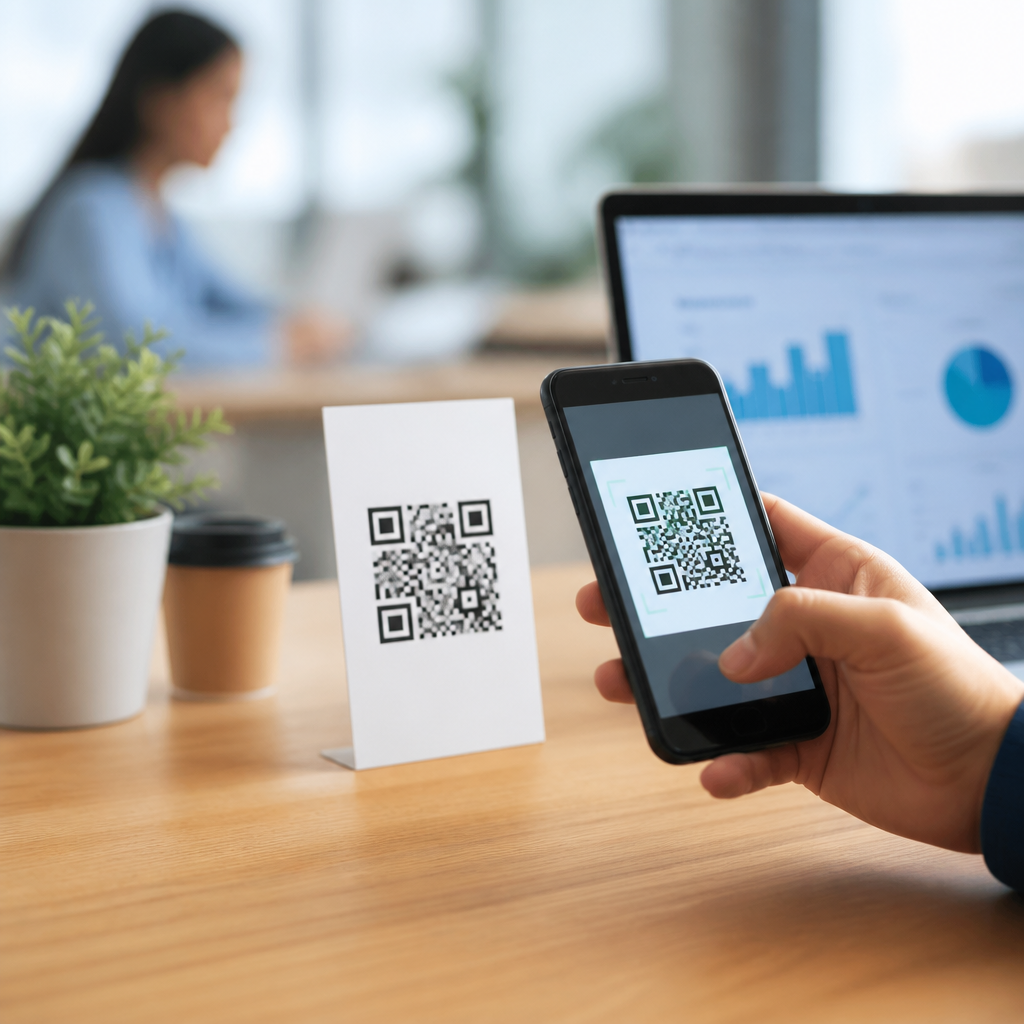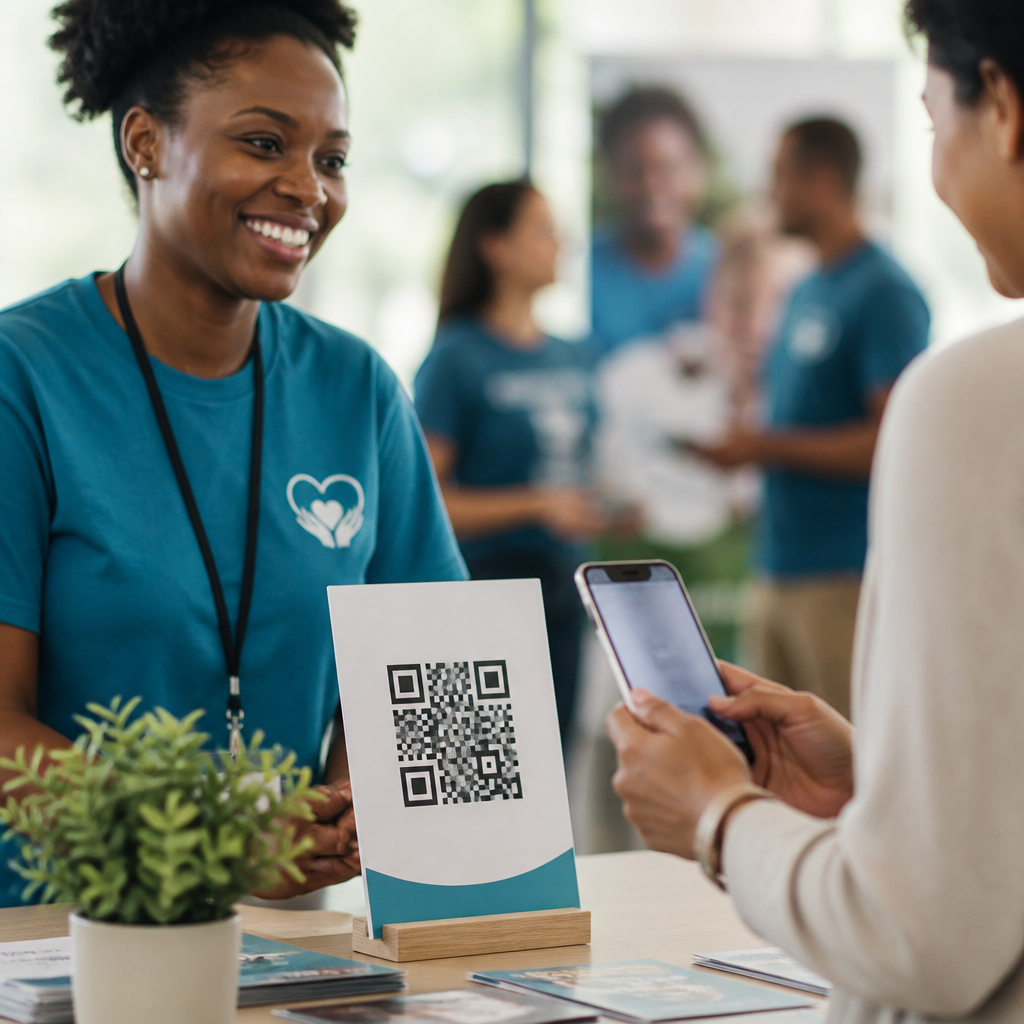
QR code marketing gives nonprofits a low-cost way to connect offline attention with online action, turning a poster, mailer, event sign, donation box, volunteer badge, or annual report into a measurable response channel. A QR code is a scannable matrix barcode that opens a digital destination, most often a donation page, event registration form, campaign landing page, downloadable resource, or contact method. In nonprofit work, that simple bridge matters because supporters often encounter the mission away from a keyboard: at galas, worship services, school partnerships, community centers, thrift stores, advocacy rallies, direct mail campaigns, and field programs. I have used QR campaigns for donation appeals, volunteer recruitment, and program awareness, and the difference between a generic code and a well-planned one is dramatic. The code itself is not the strategy; the strategy is the offer, the page, the timing, the placement, and the follow-up.
This QR Code Marketing Playbook for Nonprofits serves as a hub for the broader topic of QR Code Marketing Playbooks, covering the planning decisions, execution standards, measurement methods, and governance rules that make campaigns work. Nonprofits care about three outcomes: more donations, more participation, and better stewardship of limited resources. QR codes can support all three when they reduce friction. A supporter who sees a compelling story on a table tent can scan and give in under a minute. A volunteer at a park cleanup can scan a sign and check in without a clipboard. A parent at a school fundraiser can scan a banner to bid, donate, or join a mailing list. Because smartphone camera apps now read QR codes natively on iPhone and Android, the barrier to use is much lower than it was a decade ago. The opportunity is real, but so are the mistakes: broken links, weak landing pages, tiny print sizes, poor contrast, and codes that ask people to do too much at once.
To use QR codes well, nonprofits need a repeatable playbook. That means choosing the right campaign objective, matching the right type of QR code to the use case, designing for accessibility, building pages that load fast and clearly ask for one action, tagging every scan source with analytics parameters, and reviewing results against benchmarks. It also means understanding privacy expectations, payment security, and donor trust. The guidance below is written as a practical operating framework for nonprofit teams, agencies, and consultants who need one page that ties the subtopic together and points to the major decisions behind every successful QR campaign.
How nonprofit QR code marketing works
Nonprofit QR code marketing works by linking a physical moment to a digital conversion path. The supporter sees a prompt, scans the code, lands on a mobile page, and completes a target action. The strongest campaigns are built around one clear ask. For fundraising, that might be “Donate $25 to stock the pantry this week.” For events, it might be “Register for Saturday’s 5K.” For advocacy, it could be “Send a prewritten message to your city council member.” In each case, the QR code is only the access point. The campaign succeeds because the message, destination, and context are aligned.
There are two basic code types nonprofits should understand. Static QR codes encode a fixed destination and cannot be changed after printing. Dynamic QR codes route through a short URL or platform redirect, allowing teams to update the destination, add tracking, and review scan data after distribution. In practice, dynamic codes are usually the better choice for campaigns because nonprofits often reuse signage, extend deadlines, or need to swap links quickly if a page changes. Reputable tools such as Bitly, Beaconstac, QR Code Generator Pro, Flowcode, and Uniqode support dynamic QR creation with analytics and team controls. If a nonprofit is printing 5,000 annual appeal cards, the ability to correct or update the destination later is operationally important.
The most common destinations are donation pages, campaign microsites, event forms, PDF resources, video stories, app download pages, volunteer signups, and social or messaging contact flows. The destination should match audience intent. A person scanning at a gala may be ready to donate immediately, while someone scanning at a library resource fair may first need a concise page explaining services. In my experience, scan rates rise when the code is paired with a direct benefit statement and a time cue, such as “Scan to reserve your seat by Friday” or “Scan to give before tonight’s match expires.” Clear prompts outperform decorative QR placement with no explanation.
Campaign goals, channels, and high-value use cases
Before generating a code, define the campaign goal in measurable terms. Typical nonprofit goals include one-time donations, recurring donor acquisition, event attendance, volunteer applications, newsletter signups, petition signatures, resource downloads, and service referrals. Each goal requires a different landing page and success metric. If the objective is recurring giving, sending people to a generic homepage is a mistake; the page should explain monthly impact, suggested giving levels, payment options, and trust signals. If the objective is volunteer recruitment, the page should outline roles, time commitments, location, and next steps.
Offline channels create different expectations. Direct mail works well for personalized asks because the recipient has time and attention in hand. Event signage performs best when urgency and social proof are visible, such as a progress thermometer or matching-gift announcement. Window decals and point-of-sale signage help thrift stores, museums, and community spaces capture impulse giving. Printed reports and newsletters support stewardship and deeper education because the reader is already engaged with the organization. Staff badges, volunteer shirts, and name tags are effective at peer-to-peer events, where a quick scan can open team fundraising pages or sponsorship forms.
Several nonprofit use cases consistently produce strong results. Disaster relief appeals benefit from QR codes on church bulletins, partner posters, and local business counters because supporters can respond immediately to current need. School and arts organizations use codes on programs and silent auction materials to simplify mobile bidding, donations, and membership sales. Health nonprofits often place codes in waiting rooms or community clinics to route people toward screening information, appointment requests, or multilingual education resources. Animal rescues can place QR codes on kennel cards or adoption-event signage to display pet profiles, application forms, and sponsorship options. These examples work because the action is relevant to the moment and easy to complete on a phone.
Building the playbook: offer, destination, design, and governance
A reliable QR code marketing playbook starts with four pillars: the offer, the destination, the design, and governance. The offer is the value exchange. Why should someone scan now? Effective offers are concrete: “Give $10 to provide two meals,” “Join our volunteer orientation,” or “Download the caregiver guide.” Vague calls to action like “Learn more” generally underperform unless the audience is already highly motivated. The destination is the mobile experience after the scan. Keep it focused on one primary action, with concise copy, visible trust badges, and minimal form fields. For donations, use digital wallet options such as Apple Pay, Google Pay, PayPal, or Venmo where supported, because every extra field lowers conversion.
Design determines whether people can scan at all. Follow practical standards. Print codes with sufficient size; a common rule is at least one inch square for close-range use, scaling larger for distance. Maintain high contrast, ideally dark modules on a light background. Preserve quiet space around the code so cameras can detect edges. Test under realistic conditions, including glare, low light, and curved surfaces. Branded frames can help if they do not interfere with readability. Always include a short line of instructional text and, when possible, a fallback short URL for people who prefer to type. Accessibility also matters. If the linked page is not mobile friendly, screen-reader compatible, and readable in plain language, the campaign will lose users after the scan.
Governance is the overlooked pillar. Nonprofits should maintain a QR inventory that records the code owner, destination URL, campaign dates, print locations, tracking parameters, and retirement status. This prevents common failures such as expired pages linked from year-old signs or staff departing without transferring access to the platform account. Establish naming conventions for campaign UTM parameters, approval rules for payment pages, and a review schedule for evergreen materials. For organizations with multiple departments, a simple checklist saves money and protects donor trust.
| Playbook Element | Best Practice | Nonprofit Example | Main Metric |
|---|---|---|---|
| Objective | Choose one primary action | Acquire monthly donors from gala signage | Recurring gift starts |
| Offer | State a specific benefit and urgency | Scan to fund 100 weekend meal kits tonight | Scan-to-donation rate |
| Destination | Use a mobile page with one focused CTA | Preselected $25, $50, $100 donation amounts | Conversion rate |
| Design | High contrast, proper size, clear label | Poster in clinic lobby with fallback short URL | Successful scans |
| Tracking | Add UTM tags and platform analytics | utm_source=mailer&utm_campaign=springappeal | Attributable revenue |
| Governance | Assign owners and audit regularly | Communications manager reviews codes quarterly | Broken-link rate |
Measurement, testing, and optimization
If a nonprofit cannot measure QR performance, it cannot improve it. The minimum reporting stack includes dynamic QR analytics, web analytics, donation or CRM attribution, and campaign naming discipline. Google Analytics 4 can track landing page sessions and conversions, while donation platforms such as Classy, Givebutter, Donorbox, Funraise, or OneCause can report gift completion and average order value. CRM systems like Salesforce Nonprofit Cloud, Bloomerang, Neon CRM, and Blackbaud tools help connect scan-driven responses to donor records and follow-up journeys. The point is not to collect every possible metric; it is to connect scans to outcomes.
Key metrics include scan volume, unique scans, scan rate by placement, landing page bounce rate, conversion rate, average gift size, recurring gift uptake, event registration rate, and cost per acquisition. Context matters. A poster in a busy transit corridor may generate many scans but low conversion if the ask requires several minutes. A direct mail piece may generate fewer scans but higher gift intent because the audience is prequalified. Compare like with like, and segment by channel, audience, and creative.
Testing improves results quickly. Start with call-to-action language, destination page layout, donation amount presets, and placement. I have seen simple wording changes increase scans materially, especially when the prompt explains exactly what happens next. “Scan to donate in 30 seconds” is clearer than “Support us.” For events, moving a code from the side wall to the registration queue often lifts scans because it meets people during idle time. Use A/B tests where practical, but avoid changing multiple elements at once without documenting the variation. Review campaigns after completion and feed the findings into the next playbook version. Nonprofits that treat QR marketing as an iterative program, not a one-off tactic, steadily improve return on effort.
Security, privacy, and trust in nonprofit QR campaigns
Trust determines whether supporters complete the scan. Because malicious QR codes exist in the wider world, nonprofits should proactively signal legitimacy. Use branded domains or recognizable short links, and make sure the landing page uses HTTPS with a valid certificate. Payment pages should rely on established processors and clear organization branding. On print materials, place the code near the organization name, logo, and a plain-language explanation of the action. Anonymous-looking codes on loosely branded signs are less likely to convert, and they can raise fraud concerns.
Privacy should be handled carefully. If the code opens a form that collects personal data, say what the information will be used for and avoid unnecessary fields. For health, youth, domestic violence, immigration, and legal service nonprofits, discretion is especially important. Public scans can expose sensitive intent, so consider neutral sign text, low-friction informational pages before detailed forms, and accessible privacy notices. If location or device data is used in analytics, keep reporting aggregated and aligned with the organization’s existing privacy policy.
There are also operational safeguards. Test every code after printing proofs and again after installation. Archive the final destination URL in case staff need to rebuild pages later. Limit admin access to dynamic QR platforms, enable two-factor authentication, and document who can edit redirects. If a campaign ends, redirect the code to a relevant evergreen page rather than letting it fail. These details are not glamorous, but they prevent public errors that undermine confidence at exactly the moment a supporter is ready to act.
How this hub guides your broader QR code marketing strategy
As a hub under QR Code Tutorials, Guides & Resources, this page should anchor the wider library of nonprofit QR code marketing playbooks. The natural supporting articles include guides to dynamic versus static QR codes, QR code donation page optimization, direct mail QR campaign setup, event fundraising QR tactics, volunteer recruitment funnels, analytics and UTM conventions, design and print standards, and QR code security best practices. Organizing the topic this way helps teams move from concept to execution without reinventing process for each campaign.
The central lesson is simple. QR code marketing for nonprofits works when it removes friction between interest and action. Pick one goal, make the ask specific, send supporters to a fast mobile page, track every source, and maintain the campaign like any other fundraising asset. Done well, QR codes turn printed materials and in-person moments into measurable channels for giving, participation, and education. Review your current donor touchpoints, identify the places where supporters pause and decide, and build one focused QR campaign this quarter. Then measure it, refine it, and expand what proves useful.
Frequently Asked Questions
1. How can nonprofits use QR codes effectively in their marketing campaigns?
Nonprofits can use QR codes as a practical bridge between physical outreach and digital action. When someone sees a printed flyer, event sign, direct mail piece, donation box, annual report, volunteer badge, or table display, a QR code gives them an immediate next step without requiring them to type a long web address. That simple convenience can make a major difference in whether interest turns into action. For nonprofits, effective uses include linking to donation pages, volunteer sign-up forms, event registration pages, petition campaigns, impact stories, newsletter subscriptions, downloadable guides, sponsorship information, or a campaign-specific landing page.
The most effective approach is to match each QR code to a clear supporter intent. For example, a code on an event banner should lead to event-related information or registration, while a code on a donation canister should take users directly to a mobile-friendly giving page. A code on a program brochure might lead to a short video showing outcomes and inviting support. This kind of message-to-destination alignment improves conversion rates because the supporter gets exactly what they expect after scanning.
Nonprofits should also think strategically about placement and context. A QR code works best when it appears where people naturally pause and have enough time to scan, such as waiting areas, check-in tables, printed handouts, community bulletin boards, museum-style displays, or post-event follow-up materials. The surrounding copy matters just as much as the code itself. Instead of placing a code with no explanation, use a direct call to action such as “Scan to donate in 30 seconds,” “Scan to register,” “Scan to see your impact,” or “Scan to become a volunteer.” When supporters understand the benefit before scanning, they are far more likely to engage.
2. What should a nonprofit link to when someone scans a QR code?
A nonprofit should link each QR code to a destination that is specific, relevant, and easy to use on a mobile device. The best destination depends on the goal of the campaign. If the organization wants immediate financial support, the QR code should go directly to a streamlined donation page. If the focus is event attendance, it should lead to a registration form with key event details. If the objective is awareness, the best destination might be a campaign landing page, impact report, advocacy action page, or short video that explains the cause and encourages the next step.
What matters most is reducing friction. Supporters who scan a QR code are usually responding in the moment, often from a phone, and that moment of interest can disappear quickly. A homepage is usually not the best destination because it forces users to search for what they need. A dedicated landing page performs better because it continues the message they just saw offline and guides them to one focused action. For example, if a direct mail piece highlights a hunger relief campaign, the QR code should open a page specifically about that campaign, with a compelling headline, a brief explanation, a donation form, and proof of impact.
It is also smart to tailor destinations by audience segment or channel. The QR code on a volunteer recruitment poster may link to a volunteer application, while the code in an annual report might lead to a page with financial transparency, stories of impact, and board information. Some nonprofits also use QR codes to distribute practical resources, such as care guides, service directories, intake forms, educational materials, or text-to-connect options. The key is to make the scan feel useful, intentional, and worth the user’s time.
3. How can nonprofits track the performance of QR code marketing?
One of the strongest advantages of QR code marketing for nonprofits is measurability. Unlike many traditional print channels, QR codes allow organizations to see when offline materials generate online engagement. To track performance effectively, nonprofits should use unique QR codes for different placements, campaigns, or audience segments. For example, the organization might create one code for event posters, another for direct mail, another for a fundraising gala table card, and another for a volunteer brochure. This makes it possible to identify which materials and locations are driving the most scans, clicks, registrations, or donations.
Tracking usually works best when QR codes direct users to URLs that include campaign parameters, such as UTM tags, and when the destination page is connected to analytics software. This setup can help nonprofits measure not only scan volume but also deeper outcomes like bounce rate, time on page, completed donations, event sign-ups, or email subscriptions. If the donation platform or CRM supports source tracking, the organization can follow the supporter journey from scan to conversion and better understand return on investment.
Performance analysis should go beyond raw scans. A high scan count does not automatically mean a campaign is successful if very few people complete the intended action. Nonprofits should review the full funnel: where people scanned, what page they landed on, whether the page loaded quickly, whether the form was easy to complete, and how many people followed through. By comparing results across campaigns, organizations can refine placement, messaging, design, and destination pages over time. That iterative approach turns QR codes from a novelty into a reliable and data-informed marketing channel.
4. What are the most common mistakes nonprofits make with QR codes?
A common mistake is sending people to a generic homepage instead of a focused landing page. When supporters scan a code, they should not have to hunt for the next step. If the destination is unclear or requires too many clicks, many users will drop off. Another frequent issue is linking to a page that is not mobile-friendly. Since most scans happen on smartphones, the landing page must load quickly, display cleanly on small screens, and make forms simple to complete. A donation page with too many required fields, slow load times, or confusing navigation can undo all the value created by the scan.
Another major mistake is failing to provide context around the QR code. A code by itself does not explain why someone should scan it. Nonprofits should always include a short, benefit-driven call to action that tells users what they will get or what they can do. It also helps to build trust by including supporting text, such as a campaign description, privacy reassurance, or a recognizable brand element. If a QR code appears disconnected from the nonprofit’s identity, some users may hesitate to scan it.
Design and placement errors are also common. Codes that are printed too small, distorted, placed in low-light areas, wrapped around curved surfaces, or displayed where people are moving too quickly can be difficult to scan. Some organizations also make the mistake of using the same QR code everywhere, which limits their ability to measure performance by channel. Others forget to test codes before printing, resulting in broken links or poor user experiences. The best way to avoid these problems is to treat QR codes like any other campaign asset: design them carefully, align them to a clear goal, test them across devices, and review results after launch.
5. Are QR codes a good fundraising tool for nonprofits?
Yes, QR codes can be a very effective fundraising tool for nonprofits, especially when the giving experience is fast, trustworthy, and tied to a compelling message. They work particularly well in environments where supporters already feel emotionally connected to the cause but need a convenient way to act. Examples include fundraising events, worship services, community fairs, museum exhibits, advocacy rallies, donor thank-you mailers, peer-to-peer campaigns, storefront signage, and printed impact reports. In those moments, a QR code can remove unnecessary friction and let someone give immediately from their phone.
For fundraising success, the donation journey must be intentionally designed. The QR code should lead directly to a mobile-optimized donation form, not a general website. The page should reinforce the campaign message with a strong headline, a concise explanation of need, a suggested gift range, and visible trust signals such as secure payment indicators, nonprofit branding, and evidence of impact. If possible, the form should support digital wallets or other quick payment methods to reduce abandonment. The fewer obstacles between intention and completion, the better the fundraising results.
QR codes are especially powerful when paired with storytelling and specificity. A sign that says “Scan to donate” is useful, but a sign that says “Scan to provide a week of meals for a local family” is much more motivating. Donors respond when they understand the outcome of their gift. Nonprofits can also use QR codes to support recurring giving, tribute gifts, matching gift drives, campaign countdowns, or post-event giving. While QR codes are not a complete fundraising strategy on their own, they are a highly valuable tool within a broader donor engagement plan because they connect offline attention to immediate, measurable support.