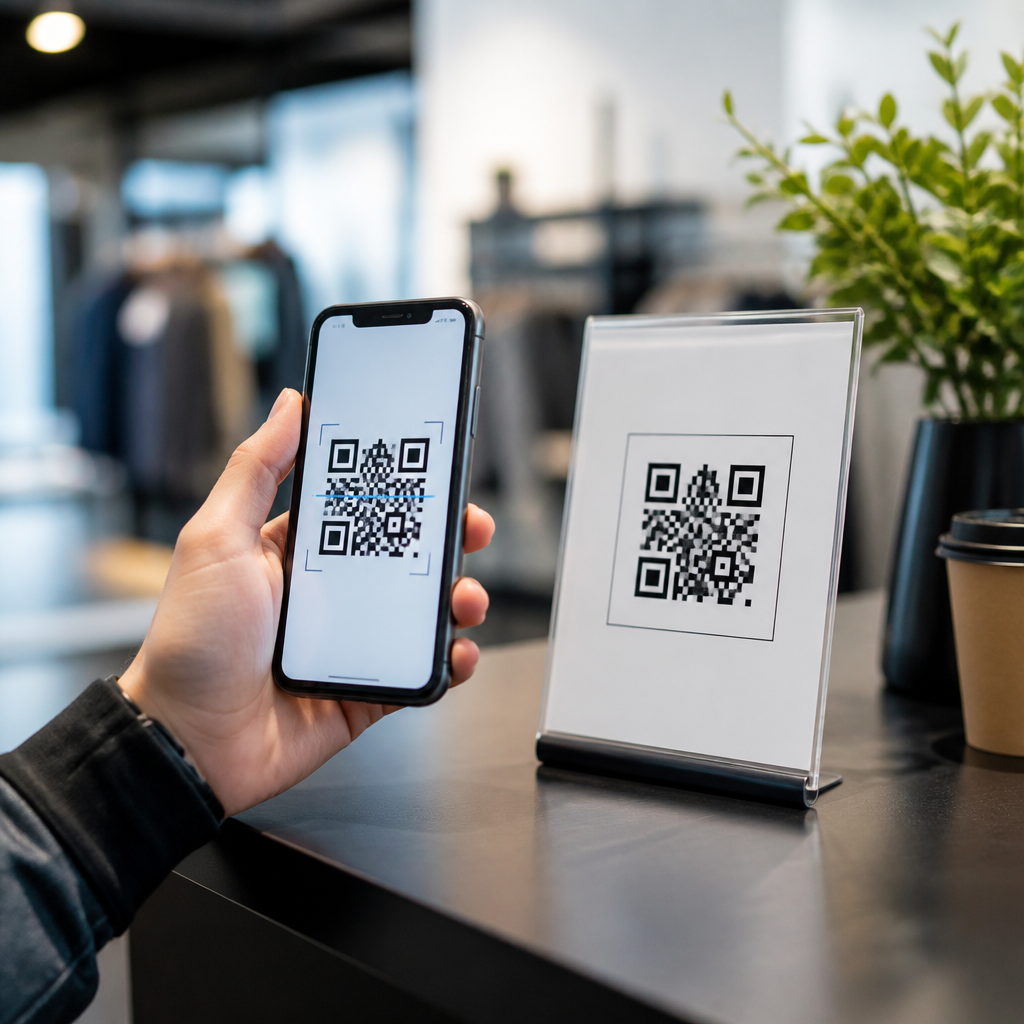

Launching a QR campaign looks simple on the surface, but the difference between a code that quietly fails and one that drives measurable conversions is almost always preparation. A QR code launch checklist for marketers turns a one-step tactic into a disciplined workflow covering strategy, design, testing, analytics, compliance, and post-launch optimization. In practice, that checklist matters because QR codes connect physical media to digital journeys, and any weakness in that handoff—a poor destination page, unreadable print, broken tracking, or vague call to action—can waste budget at scale.
In my work on retail signage, direct mail, event collateral, and packaging rollouts, the most successful teams treat QR codes as campaign assets, not decorative add-ons. A QR code is a machine-readable symbol that stores a destination such as a URL, vCard, coupon, app link, payment request, or form. Marketers usually choose between static codes, which cannot be edited after creation, and dynamic codes, which redirect through a managed short URL so the destination can be changed and scans can be tracked. That distinction is foundational: static codes are durable and simple, while dynamic codes are safer for campaigns that may require updates, localization, A/B testing, or expiration controls.
This hub page covers templates and checklists for QR launches comprehensively because marketers need repeatable systems. Teams are often juggling creative approvals, print deadlines, UTM parameters, privacy requirements, and channel-specific production specs. Without a standard process, common mistakes recur: low color contrast, tiny quiet zones, mismatched destination content, and analytics setups that cannot separate poster scans from email scans. A strong checklist reduces operational risk, improves scan rates, and makes results easier to attribute. It also creates internal alignment between brand, demand generation, operations, sales, legal, and external vendors.
The sections below break the process into practical stages, answer the questions marketers usually ask, and give you a framework you can reuse across packaging, out-of-home, in-store displays, menus, business cards, trade show graphics, and product inserts. Use it as the central reference for your templates and checklists library, then adapt it by channel, audience, and campaign goal.
Start With Campaign Objective, Audience, and Destination Fit
The first item on any QR code launch checklist is strategic clarity. Ask a direct question: what exactly should happen after the scan? Common objectives include product education, coupon redemption, lead capture, app installs, store visit tracking, event registration, review generation, support access, and contact exchange. The objective determines everything that follows, including the type of code, the landing page architecture, the copy printed near the symbol, and the analytics events you need to record. If your team cannot describe the desired post-scan action in one sentence, the campaign is not ready.
Audience context matters just as much as the objective. A QR code on retail shelf talkers serves a different user than one on B2B trade show signage. Shelf-level users need speed, concise product value, and mobile-optimized product details. Trade show attendees may accept longer forms if the perceived value is a demo booking or downloadable research. In hospitality, a table-tent code should open instantly to a menu, reservation flow, or loyalty offer with minimal friction. In healthcare or financial services, compliance and readability may outweigh aggressive conversion design. The checklist should force a channel-by-channel review of audience intent, environment, lighting, distance, and connectivity.
Destination fit is where many campaigns break. A QR code can generate scans even when the destination is weak, but scans are not success. The landing experience must match the promise on the physical asset exactly. If the poster says “Get 20% off today,” the page should reveal the offer immediately, not bury it under navigation. If packaging says “Watch setup in 60 seconds,” the destination should open to the correct video, not a generic homepage. I advise teams to define a message match rule: the headline, offer, and next step on the landing page must mirror the code’s surrounding copy within seconds of load.
Choose the Right QR Code Type, Generator, and Governance Model
Once the objective is clear, choose the operational setup. Dynamic QR codes are usually the right choice for marketing because they support editable destinations, scan analytics, campaign pausing, and in many platforms, geolocation or device breakdowns. Reliable generators include Bitly, QR Code Generator Pro, Beaconstac, Uniqode, and enterprise systems integrated with campaign management tools. Static codes still have a place for permanent uses such as Wi-Fi access, contact cards, or long-lived product documentation links where change control is minimal and no scan data is required.
Governance is the overlooked decision. Someone must own naming conventions, destination approvals, UTM standards, archiving, and vendor coordination. I have seen national print runs delayed because regional teams generated their own codes without source-of-truth documentation. Create a QR register that includes campaign name, owner, creation date, platform, destination URL, redirect status, UTM set, asset dimensions, intended placement, expiration date, and replacement plan. This single document becomes the operational backbone of your templates and checklists system.
Marketers should also evaluate longevity and platform risk. If a QR code resolves through a third-party service, what happens if the subscription lapses or the account owner leaves? A good checklist includes account administration, billing oversight, backup access, and redirect documentation. For critical assets such as packaging or installed signage, use branded short domains when possible and store final destination mappings centrally. Treat the redirect layer like infrastructure, because in practice it is.
Design for Scan Reliability Across Real-World Conditions
Design rules are not cosmetic; they determine whether a code works. The core requirements are sufficient size, strong contrast, an unobstructed quiet zone, and error-tolerant styling. As a baseline, black on white remains the safest option. Decorative treatments can work, but gradient-heavy, low-contrast, or inverted designs frequently reduce scan reliability, especially under glare or from lower-end phone cameras. The quiet zone—the blank margin around the code—should never be crowded by logos, borders, or promotional text. If it is compromised, scan failures rise fast.
Size depends on viewing distance. A common practical rule is roughly one inch of code size for every ten inches of scan distance, though field testing should always override generic formulas. A code on product packaging may work at 0.8 to 1 inch square, while a transit poster or event banner often needs significantly more. Print finish matters too. Matte surfaces generally scan more reliably than glossy finishes under bright retail lighting. Curved packaging, folds, and shrink wrap can distort modules and reduce readability. Add placement checks for seams, perforations, and bottle curvature to your launch checklist.
Branding should support clarity, not compete with it. If you place a logo in the center, verify that the generator’s error correction level can handle the obstruction, then test it on multiple devices. The surrounding call to action is essential. “Scan me” is weak because it explains the action but not the value. “Scan to claim your trial,” “Scan for setup video,” or “Scan to book a demo” consistently performs better because it states the benefit. Every QR asset should answer three immediate questions: what do I get, how long will it take, and is it safe to scan?
Build Tracking, Analytics, and Measurement Before Release
Measurement should be configured before anything goes to print. At minimum, append UTM parameters to the final landing URL so traffic can be identified in Google Analytics 4, Adobe Analytics, or your attribution platform. Standardize source, medium, campaign, content, and term fields across physical placements. For example, a direct mail campaign might use source=directmail, medium=print, campaign=spring_offer, and content variations for postcard front, insert, or outer envelope. That structure lets you compare asset-level performance instead of seeing one blended traffic bucket.
Dynamic QR dashboards can add scan counts, repeat scans, rough location, and device data, but they should not replace site analytics. A scan is only the top of the funnel. Your checklist should define primary and secondary KPIs such as landing page views, form starts, coupon saves, purchases, meeting bookings, assisted conversions, or store locator usage. If offline sales matter, connect the flow to POS redemption codes, CRM campaign IDs, or call center scripts. For app journeys, use deferred deep linking and mobile measurement partners where relevant so installs and post-install events can be attributed correctly.
A practical launch table helps teams review what to measure and where the data should appear:
| Checklist Area | Key Question | Recommended Standard | Primary Tool |
|---|---|---|---|
| Objective | What action should follow the scan? | One defined conversion per asset | Campaign brief |
| Code Type | Will the destination need edits? | Use dynamic for campaigns | QR platform |
| Design | Will it scan in real conditions? | High contrast, clear quiet zone | Creative QA |
| Tracking | Can scans be tied to outcomes? | UTMs plus conversion events | GA4 or Adobe |
| Landing Page | Does the page match the promise? | Fast, mobile-first, message matched | CMS and PageSpeed tools |
| Compliance | Are privacy and legal reviews done? | Approved copy and disclosures | Legal workflow |
| Testing | Has it been validated on devices? | Cross-device and print proof testing | QA checklist |
Optimize the Landing Experience for Mobile Speed and Conversion
A QR code is only as effective as the page it opens. Because almost every scan happens on a phone, mobile performance is nonnegotiable. Google’s Core Web Vitals are useful directional metrics, but in campaign work I focus on practical outcomes: first useful content appears quickly, the main call to action is visible without hunting, and forms ask for the fewest fields necessary. If the code is promoting a simple action, consider a lightweight landing page instead of a general website page with full navigation. Less friction usually means higher completion rates.
Speed can be improved through image compression, script reduction, server caching, and fast hosting. Test using PageSpeed Insights, Lighthouse, and real devices on cellular connections, not just office Wi-Fi. Accessibility also belongs on the checklist. Use readable font sizes, tappable buttons, meaningful headings, and color contrast that meets WCAG guidance. If the page contains a form, confirm that autofill works and input masks do not break on mobile keyboards. For multilingual campaigns, route users to the correct language based on placement or explicit selection, not assumptions.
Trust signals increase completion rates, especially when codes are placed in public spaces where users may worry about spoofing. Use branded domains, HTTPS, recognizable logos, and concise privacy disclosures when personal data is collected. If the destination asks for payment, account creation, or health information, the code’s surrounding context must clearly explain why. In sectors with higher risk sensitivity, a QR code should never be the only route to essential information. Provide a short URL or support alternative alongside it.
Test Print, Placement, and Cross-Device Performance Before Launch
Testing is where disciplined teams outperform rushed teams. Do not approve a QR campaign from a digital mockup alone. Print a proof at final size on final material, place it in realistic lighting, and scan it with a range of devices and camera apps. Test recent iPhones and Android devices, but also include older phones because many campaigns serve broad audiences. Check scan speed, autofocus behavior, glare resistance, and whether the link preview clearly shows a trusted domain. Then test the full user journey: redirects, page load, form submission, CRM entry, confirmation message, and downstream email or SMS delivery.
Placement testing should reflect the environment. In-store signage competes with motion and clutter. Outdoor posters face sunlight, weathering, and variable distance. Trade show graphics may be scanned while attendees are walking. Direct mail pieces may be folded, bent, or viewed in low light. Each environment changes how prominent the code, CTA, and supporting copy need to be. Add a rejection rule to your checklist: if a code requires more than a couple of attempts for ordinary users in ordinary conditions, it is not launch-ready.
Pre-launch QA also includes error handling. What happens if the destination page is unavailable, the promotion expires, or inventory runs out? Dynamic redirects let you reroute to an evergreen page explaining the next best step. For regulated campaigns, confirm that records of approvals, screenshots, and final live destinations are archived. That may feel administrative, but when a vendor misprints an asset or a legal question appears later, those records save time and budget.
Use Reusable Templates and Post-Launch Reviews to Scale What Works
The reason this page serves as a hub for templates and checklists is simple: repeatability creates better outcomes. After launch, review performance within the first forty-eight hours, then again after enough volume accumulates to spot patterns. Look at scan-through rate by placement, bounce rate by destination, form completion rate, coupon redemption, assisted revenue, and any regional differences. If one store poster outperforms another, inspect the basics first: size, height, offer clarity, and mobile page speed. Small physical differences often explain large performance gaps.
Turn each completed campaign into a reusable template. Keep a standard brief, QA checklist, UTM builder, creative spec sheet, and postmortem format. Segment templates by use case: packaging QR code checklist, event QR code checklist, direct mail QR code checklist, restaurant menu QR checklist, retail signage QR checklist, and B2B lead capture QR checklist. This hub should point teams to those specialized resources, but the core process remains the same: define the objective, choose the correct code type, design for reliability, track correctly, optimize the destination, test in real conditions, and review performance systematically.
A QR code launch checklist for marketers is valuable because it turns a familiar tool into a dependable conversion channel. It reduces preventable errors, protects print investment, and makes campaign results easier to measure and improve. If you manage QR campaigns across channels, build your standard checklist now, store it with your campaign templates, and require every new code to pass the same launch review before it goes live.
Frequently Asked Questions
What should be included in a QR code launch checklist for marketers?
A strong QR code launch checklist should cover far more than simply generating a code and placing it on a campaign asset. At a minimum, marketers should confirm the campaign objective, define the target audience, choose the correct destination URL or landing page, and decide how success will be measured before the code goes live. That means identifying whether the goal is lead generation, product education, app downloads, event registration, coupon redemption, or direct sales, because the purpose of the campaign should shape everything from the call to action to the analytics setup.
The checklist should also include design and usability considerations. Marketers need to verify that the QR code is large enough to scan easily, has sufficient color contrast, includes adequate quiet space around the edges, and appears in a placement where users can realistically interact with it. A code on packaging, signage, direct mail, in-store displays, or print ads should always be tested in real-world conditions, not just on a desktop screen. It is equally important to review the destination experience: the landing page should load quickly, display properly on mobile devices, match the campaign message, and make the next step obvious.
Operational items belong on the checklist as well. These include assigning campaign ownership, setting launch timelines, documenting the final URL structure, applying UTM parameters, connecting scans to analytics dashboards, and planning for changes after launch. If a dynamic QR code is being used, marketers should confirm who has access to edit the destination later. Finally, a complete checklist should include legal and privacy review, especially if the campaign collects personal data, uses location-based experiences, or routes users into retargeting flows. In short, the checklist should protect the full journey from scan to conversion, not just the code itself.
Why is testing so important before launching a QR code campaign?
Testing is essential because QR campaigns often fail at the transition point between physical media and digital experience. A QR code may technically work, yet still underperform because it scans slowly, opens the wrong page, breaks on certain devices, leads to a poor mobile experience, or creates confusion about what the user should do next. Marketers only get one first impression in many offline environments, and if someone scans once and has a bad experience, they are unlikely to try again.
Pre-launch testing should happen across multiple devices, operating systems, browsers, and lighting conditions. A code that scans instantly on a newer phone may struggle on an older model. A printed QR code may look fine in a design proof but become difficult to scan after resizing, glossy printing, awkward placement, or environmental wear. Testing should include distance, angle, indoor versus outdoor conditions, and realistic user behavior. For example, a code on a poster in a transit station should be tested from standing distance, not from a few inches away at a desk.
Marketers should also test the destination path, not just the scan itself. That means validating redirects, page speed, form functionality, autofill behavior, coupon logic, checkout completion, and event tracking. If analytics are not firing correctly, the campaign can appear to underperform even when scans are happening. Good testing protects budget, preserves brand trust, and improves conversion rates. In practical terms, it is the difference between a QR code that simply exists and one that reliably moves people from curiosity to action.
How can marketers track and measure the success of a QR code launch?
Measurement starts by deciding what success actually means for the campaign. Scans alone are useful, but they are not enough. A high scan volume with poor downstream engagement may indicate strong placement but weak messaging, an irrelevant offer, or a poor landing page experience. Marketers should define primary and secondary KPIs before launch, such as unique scans, landing page sessions, time on page, form completions, purchases, coupon redemptions, app installs, or assisted conversions. The right metrics depend on the campaign objective.
To make QR performance measurable, marketers should use structured tracking such as UTM parameters, dedicated landing pages, event tracking, conversion goals, CRM attribution, and where possible, dynamic QR code platforms that provide scan-level reporting. Useful data points may include time of day, device type, scan location, repeat scans, and campaign asset source. This helps distinguish whether a code on packaging, a point-of-sale sign, a direct mail piece, or an out-of-home ad is producing the strongest results. If multiple placements use the same destination, separate tracking links are important so performance can be segmented accurately.
Measurement should continue after launch through dashboard monitoring and optimization reviews. Marketers should look for drop-off points: Are people scanning but bouncing quickly? Are they reaching the page but not converting? Are some environments generating more engagement than others? These insights support practical improvements such as changing the call to action, simplifying the form, improving page speed, adjusting creative, or relocating the code. A well-run QR campaign treats analytics as an active decision-making tool, not a reporting exercise at the end.
What design and placement mistakes most often hurt QR code campaign performance?
The most common mistake is assuming the QR code itself is enough to drive action. In reality, people respond better when they understand what they will get and why it is worth scanning. A code without a clear call to action often gets ignored. Marketers should tell users exactly what happens next, whether that is “Scan to claim your offer,” “Scan to watch the demo,” or “Scan to register now.” Specificity reduces hesitation and sets expectations for the experience that follows.
Another major issue is poor physical execution. Codes that are too small, low contrast, distorted, crowded by other design elements, or printed on reflective surfaces can become difficult to scan. Placement matters just as much. A QR code positioned too high, too low, behind glass, on a moving object, or in an area with weak connectivity can depress engagement even if the design itself is technically correct. Quiet space around the code is especially important because without it, some devices may struggle to recognize the code boundary quickly.
Marketers also run into performance problems when the landing page does not align with the context of the scan. If someone scans from a product package, they should land somewhere immediately relevant, not on a generic homepage. If the campaign appears in a retail environment, the page should load fast and present a simple next step. The best-performing QR experiences are intentional from end to end: clear promise, easy scan, relevant destination, and low-friction conversion path. Any mismatch between those elements can quietly weaken results.
How should marketers optimize a QR code campaign after it launches?
Post-launch optimization should begin as soon as real scan and conversion data starts coming in. The first step is to compare expected behavior with actual performance. If scans are lower than anticipated, the issue may be placement, visibility, offer strength, or the wording of the call to action. If scans are healthy but conversions are weak, marketers should focus on the destination experience, including page relevance, load speed, mobile usability, and form friction. Optimization works best when teams separate top-of-funnel scan issues from bottom-of-funnel conversion issues.
Dynamic QR codes are especially valuable after launch because they allow marketers to adjust the destination without reprinting the code. That flexibility can be used to swap landing pages, rotate offers, fix broken URLs, localize experiences by region, or direct traffic to seasonal content. Marketers can also run structured tests on headlines, incentives, layouts, button copy, or form length to improve downstream performance. If different physical placements are underperforming, the campaign may benefit from revised signage, stronger explanatory text, or relocation to a more accessible area.
Optimization should also include compliance and maintenance checks. Teams should confirm that redirects still work, tracking remains intact, and destination content stays current throughout the campaign period. Expired offers, outdated product pages, or slow-loading experiences can hurt results long after launch if no one is monitoring them. The most effective marketers treat QR campaigns as living assets rather than one-time executions. A disciplined review process turns scan data into insight, insight into refinements, and refinements into stronger measurable returns over time.