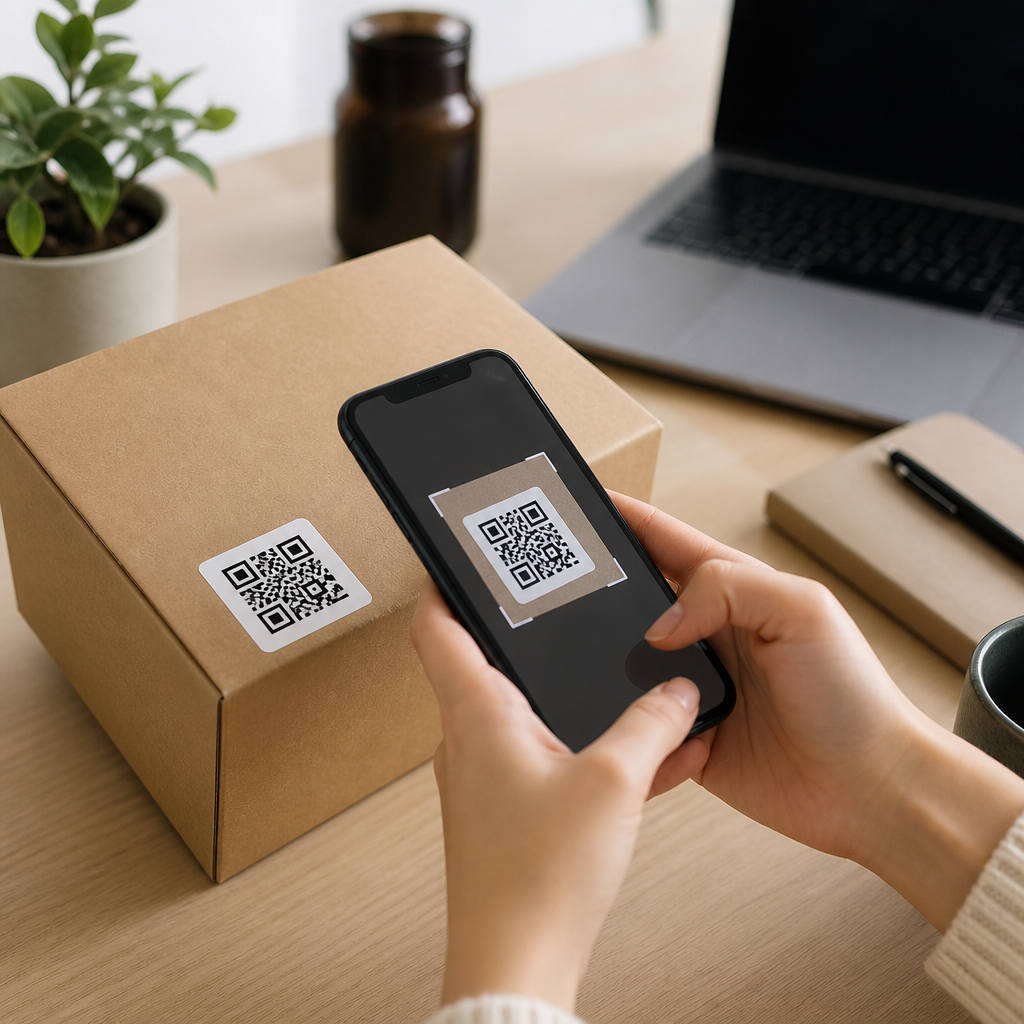
QR code marketing has become one of the most practical ways for eCommerce brands to connect physical touchpoints with digital buying journeys. A QR code, or quick response code, is a scannable two-dimensional barcode that opens a webpage, app, video, coupon, payment screen, review form, or other digital destination when scanned by a smartphone camera. In eCommerce, that simple action matters because it removes friction at the exact moment a shopper is curious, interested, or ready to buy. I have used QR campaigns across packaging inserts, retail displays, direct mail, event booths, and post-purchase flows, and the difference between a generic code and a well-planned playbook is significant. Strong campaigns increase product discovery, improve attribution, lift repeat purchases, and give brands measurable first-party engagement data.
A marketing playbook is more than a list of tactics. It is a structured system for deciding where a code appears, what value it offers, which audience it targets, how results are measured, and what action happens next. For eCommerce teams, this matters because QR codes sit at the intersection of acquisition, conversion, retention, customer education, and customer support. A code on product packaging can drive replenishment orders. A code on a postcard can recover abandoned prospects. A code in a pop-up shop can move offline traffic into an online subscriber list. Each use case demands different landing pages, creative treatments, analytics tagging, and incentives.
The reason this topic deserves a dedicated hub is that many brands still treat QR codes as one-off assets instead of durable growth infrastructure. When that happens, scans go to homepages, UTMs are missing, mobile pages load slowly, and the campaign underperforms. A better approach is to build a repeatable framework around audience intent, placement, offer design, and measurement. This article maps that framework so a brand can create QR code marketing playbooks that are clear, scalable, and profitable. It also serves as the central guide for related tutorials, implementation checklists, and campaign-specific resources within the broader QR code tutorials, guides, and resources library.
How a QR code marketing playbook works for eCommerce
A QR code marketing playbook is the operating manual for turning scans into business outcomes. The core principle is simple: every code should lead one audience from one context to one next step. If a shopper scans a code on a shipping box, they should not land on the same page as someone scanning a code from an influencer mailer. Context determines intent, and intent should shape the destination. In practice, that means creating a campaign brief before generating the code. Define the objective, audience segment, placement, offer, destination URL, analytics convention, and follow-up sequence. This process prevents waste and makes reporting useful.
For most eCommerce brands, the strongest objectives fall into five categories: acquire new customers, convert interested shoppers, increase average order value, improve retention, and reduce support friction. A cosmetics brand might place a code on product packaging that opens shade tutorials and a replenishment link. A coffee subscription company might use a code on inserts to drive membership upgrades. A home goods retailer might add codes to printed catalogs so each category page is trackable by campaign and page number. The code itself is only the trigger. The playbook is what makes that trigger commercially relevant.
Dynamic QR codes are usually the right choice for campaign management because they let teams update destinations without reprinting the asset. They also provide scan analytics through the platform, although serious teams still use tagged URLs and analytics tools such as Google Analytics 4, Shopify reports, Triple Whale, or Northbeam for attribution context. Static QR codes have a place when the destination never changes and cost control matters, but they are less flexible for active campaigns. In my experience, flexibility matters more than saving a small software fee, especially once campaigns are spread across packaging, retail, events, and direct mail.
High-performing QR code campaign types and when to use them
The most effective QR code campaign types match the customer journey stage. Top-of-funnel campaigns focus on discovery and list growth. Mid-funnel campaigns help shoppers evaluate products. Bottom-funnel campaigns remove purchase friction. Post-purchase campaigns increase repeat revenue and loyalty. Framing campaigns this way keeps teams from overusing discounts when education or convenience would work better. It also helps creative, lifecycle, and performance teams work from the same playbook rather than launching disconnected tests.
Acquisition campaigns often use QR codes in out-of-home ads, event signage, product sampling, and direct mail. The destination can be a mobile landing page with a new-customer offer, a quiz, or a product finder. Conversion campaigns work well on shelf talkers, print lookbooks, and influencer inserts where shoppers already know the brand but need a direct path to a product page, bundle, or limited offer. Retention campaigns are especially effective on packaging, instruction cards, and thank-you inserts. These can link to refill subscriptions, loyalty enrollment, setup videos, referral programs, or review requests after the product has been used.
Customer support is an underrated use case. A QR code on packaging that opens setup steps, care instructions, or troubleshooting videos can reduce support tickets while improving satisfaction. For regulated categories such as supplements or electronics accessories, codes can route users to ingredient details, compliance documents, warranty registration, or safety instructions. That practical utility builds trust because the code solves a real customer need instead of acting like an obvious ad.
| Campaign type | Best placement | Primary goal | Recommended destination |
|---|---|---|---|
| New customer acquisition | Direct mail, events, posters, sampling | Email/SMS capture or first purchase | Offer page, quiz, or curated collection |
| Product education | Packaging, shelf displays, inserts | Increase confidence and conversion | How-to video, comparison page, FAQs |
| Cart conversion | Print catalog, lookbook, in-store signage | Drive product page visits and sales | Specific SKU page, bundle page, checkout-ready offer |
| Retention and reorder | Shipment box, thank-you card, refill reminder | Repeat purchase or subscription sign-up | Replenishment landing page or account portal |
| Support and trust | Manuals, labels, warranty cards | Reduce service friction | Setup guide, support center, registration form |
Placement, creative, and mobile landing page strategy
Placement determines whether a code gets scanned at all. The best locations are the ones where attention already exists and where using a phone feels natural. On packaging, that may be the inside flap, insert card, or product label rather than a crowded exterior panel. In retail, it is usually eye-level signage near a decision point, not a code buried in small print. In direct mail, the code should be paired with a plain-language reason to scan, such as “See the 30-second demo” or “Claim your refill discount.” People rarely scan a code simply because it exists. They scan because the next step is obvious and worthwhile.
Creative execution matters just as much as placement. Codes need adequate quiet space, high contrast, and enough size to scan from the expected distance. As a rule, the farther away the scanner will be, the larger the code should be. Branded styling can improve recognition, but excessive customization reduces readability, especially when logos overwhelm the data pattern or colors blend into the background. The safest path is to brand the surrounding design while keeping the code itself technically conservative. Always test on multiple devices, under real lighting conditions, and with cracked-screen scenarios in mind.
The landing page is where most campaigns succeed or fail. A scan is a high-intent action, so the page must load quickly, match the promise beside the code, and present a single clear next step. Sending traffic to the homepage is usually a mistake because it forces users to navigate rather than act. A better destination might be a product detail page preloaded with the featured SKU, a tutorial page with embedded purchase links, or a short form tied to an incentive. Mobile-first design is non-negotiable: compressed images, clear buttons, short forms, wallet-friendly offers, and minimal pop-up interference all improve scan-to-conversion performance.
Measurement, attribution, and optimization standards
To measure QR code marketing properly, teams need both campaign-level tracking and business-level outcome tracking. At the campaign level, use unique URLs with UTMs for every placement, version, and audience. A catalog cover code should not share a URL with a page-spread code, and a package insert for first-time buyers should not share a URL with an insert for subscribers. This granularity reveals where scans come from and which contexts convert. On the business side, track sessions, conversion rate, revenue per session, email captures, repeat purchase rate, subscription take rate, and support deflection where relevant.
Attribution should be handled with realism. A QR scan may introduce a user who buys later on another device, or it may assist a purchase that gets credited elsewhere. That does not make the campaign ineffective; it means measurement needs multiple lenses. I recommend combining platform scan data, analytics software, post-purchase surveys, and holdout testing when spend is material. For example, a DTC apparel brand can mail 50,000 postcards with QR codes to one region and suppress a matched control region. Revenue lift, not just scan count, shows whether the campaign paid back. Scan-through rate is useful, but conversion quality matters more.
Optimization usually comes from fixing basic points of friction. Test the call to action next to the code, the strength of the offer, the destination page format, and the timing of the request. A skincare brand might find that “Get your routine in 20 seconds” outperforms “Scan to learn more” because it promises a specific outcome. A furniture brand may learn that assembly-video scans are high, but product review requests perform better seven days after delivery than on-box. Strong playbooks encode those learnings so each campaign starts from a better baseline instead of repeating avoidable mistakes.
Common mistakes, governance, and how to scale the hub
The most common QR code marketing mistakes are predictable. Brands use one generic code across many channels, send users to irrelevant pages, fail to tag links, forget mobile page speed, and never define success before launch. Another frequent problem is treating code generation as a design task instead of a cross-functional workflow. Marketing owns the message, design owns readability, eCommerce owns the landing page, analytics owns tracking, and customer experience often owns the post-scan journey. Without governance, codes proliferate without naming standards, reporting consistency, or expiration management.
A practical governance model includes a campaign intake form, naming convention, template library, QA checklist, and monthly performance review. The intake form should require channel, audience, objective, destination, owner, expiration date, and measurement plan. The QA checklist should include scan testing across iPhone and Android, page-speed review, analytics verification, and print proof review. This sounds operational because it is operational. The teams that win with QR codes treat them like managed assets, not decoration.
As the hub page for QR code marketing playbooks, this article should connect naturally to deeper resources on dynamic versus static codes, packaging insert strategy, catalog QR implementation, event lead capture, QR code analytics setup, mobile landing page best practices, and compliance guidance by industry. That hub structure helps readers find tactical detail while keeping the strategic framework in one place. For eCommerce brands, the payoff is straightforward: QR codes can make offline attention measurable, turn existing shipments into revenue opportunities, and improve customer experience at moments when intent is strongest. Start with one high-intent use case, build the tracking correctly, document what works, and expand your QR code marketing playbook from there.
Frequently Asked Questions
1. How can eCommerce brands use QR codes throughout the customer journey?
eCommerce brands can use QR codes at nearly every stage of the buying journey because they connect offline moments to online actions instantly. At the awareness stage, QR codes can appear on product packaging, retail inserts, posters, event signage, direct mail, and influencer materials to send shoppers to landing pages, product collections, or brand videos. During consideration, they can link to comparison guides, customer reviews, sizing charts, tutorials, and user-generated content that helps buyers make informed decisions. At the point of purchase, QR codes can send shoppers directly to a checkout page, a mobile-friendly product page, a limited-time offer, or a digital wallet payment screen. After the sale, they can support onboarding by linking to setup instructions, care guides, reorder pages, loyalty enrollment, referral programs, and review requests. This makes QR codes especially valuable for brands that sell physical products, because every shipment, shelf display, insert card, or in-person interaction becomes a chance to continue the conversation and drive measurable digital engagement.
The most effective brands do not treat QR codes as generic links. Instead, they map each code to a specific customer intent. A shopper scanning from a package insert may want a reorder discount, while someone scanning from a storefront window may want to browse bestsellers or check local availability. A customer at an event may be more likely to engage with a giveaway or email signup than a full product catalog. When QR codes are aligned with context, they feel useful rather than promotional. That is what makes them powerful in eCommerce: they meet consumers exactly where curiosity happens and remove unnecessary steps between interest and action.
2. What makes a QR code campaign effective for an eCommerce brand?
An effective QR code campaign starts with a clear objective. Brands should decide whether the goal is to drive sales, capture email signups, increase app downloads, collect reviews, promote subscriptions, educate customers, or improve retention. Once the objective is defined, the destination behind the QR code should be built specifically for mobile users and focused on a single action. Sending traffic to a homepage usually underperforms because it forces users to search for the next step. A dedicated landing page with a strong headline, clear offer, fast load speed, and a simple call to action typically performs much better. In most cases, the fewer decisions a shopper has to make after scanning, the higher the conversion rate.
Design and placement also play a major role. The QR code needs to be easy to notice, easy to scan, and paired with a compelling reason to act. A short instruction such as “Scan to claim 15% off,” “Scan to watch how it works,” or “Scan to reorder in seconds” gives users immediate clarity. Without that context, many people will ignore the code because they do not know what will happen next. Testing is equally important. Brands should evaluate placement, size, surrounding copy, landing page experience, incentive strength, and timing. They should also track scans, click-through rates, conversion rates, average order value, and repeat purchase behavior. The best QR code campaigns are not just creative; they are intentional, measurable, and optimized like any other performance marketing channel.
3. Where should eCommerce brands place QR codes to get the best results?
The best placement depends on where customer intent is strongest. For many eCommerce brands, product packaging is one of the highest-value placements because it reaches verified buyers at a moment when attention and trust are already high. A QR code on the box, insert card, thank-you note, or product label can drive repeat purchases, product registration, how-to content, social sharing, loyalty signups, or cross-sells. Shipping materials are another strong option because they turn fulfillment into a marketing opportunity. Instead of viewing packaging as the end of the transaction, smart brands use it as the beginning of retention and lifetime value growth.
Beyond packaging, QR codes can perform well on in-store displays, event booths, print ads, catalogs, direct mail, window signage, business cards, and even product samples. For omnichannel brands, these placements help bridge offline discovery with online conversion. Placement should always reflect the user’s likely mindset. For example, a QR code on a trade show banner may work best for lead capture or a product demo, while a QR code on a sample packet may be better suited for a first-purchase offer. Visibility matters too: the code should be large enough to scan quickly, positioned on a flat surface when possible, and not crowded by distracting design elements. Good placement combines physical practicality with strategic intent, ensuring the code is both accessible and relevant in the moment it appears.
4. How can brands measure the ROI of QR code marketing?
Measuring QR code ROI starts with tracking infrastructure. Each QR code should point to a unique URL or use campaign parameters so brands can attribute scans and downstream conversions accurately. This allows marketers to distinguish performance by channel, asset, offer, audience, or placement. For example, a QR code on packaging can be measured separately from one used in direct mail or retail signage. Core metrics usually include total scans, unique scans, click-throughs, bounce rate, conversion rate, revenue generated, average order value, customer acquisition cost, and repeat purchase rate. If the campaign goal is not direct revenue, brands may instead focus on email opt-ins, app installs, account creations, review submissions, loyalty enrollments, or product education completion rates.
To calculate ROI, compare campaign cost against the value created. Costs may include design, printing, packaging updates, landing page development, incentives, and analytics setup. Value can come from first-time purchases, increased reorder frequency, larger baskets, improved retention, or lower support costs if QR codes help customers find answers quickly. It is also important to look beyond last-click revenue. A QR code that leads to a tutorial may not create an immediate sale, but it could reduce returns, increase satisfaction, and improve long-term loyalty. The strongest brands assess both short-term conversions and broader customer lifecycle impact. When QR code campaigns are tracked properly, they become far more than a novelty; they become a measurable acquisition, conversion, and retention tool.
5. What are the most common QR code marketing mistakes eCommerce brands should avoid?
One of the most common mistakes is sending users to a weak destination. If a shopper scans a code and lands on a slow, generic, or desktop-unfriendly page, the opportunity is often lost immediately. The post-scan experience needs to be fast, relevant, and optimized for mobile. Another frequent issue is a lack of context. A standalone QR code with no explanation gives shoppers no reason to engage. Brands should always tell users what they will get by scanning, whether that is a discount, a tutorial, exclusive content, a product registration page, or a one-click reorder flow. Without a clear benefit, even well-placed QR codes can underperform.
Other mistakes include poor print quality, codes that are too small, low color contrast, bad placement on curved or reflective surfaces, and linking to expired or broken pages. Brands also miss opportunities when they use one static experience for every audience. A customer who just received an order has different needs from someone discovering the brand at an event or on a store shelf. Treating every scan the same can reduce relevance and conversion potential. Finally, many teams fail to track performance closely enough. If scans are not tied to specific campaigns and outcomes, it becomes difficult to know what is working or improve future efforts. Avoiding these mistakes comes down to one principle: make the scan worthwhile. When the value proposition is clear and the landing experience is smooth, QR codes can become one of the simplest and most effective tools in the eCommerce marketing playbook.