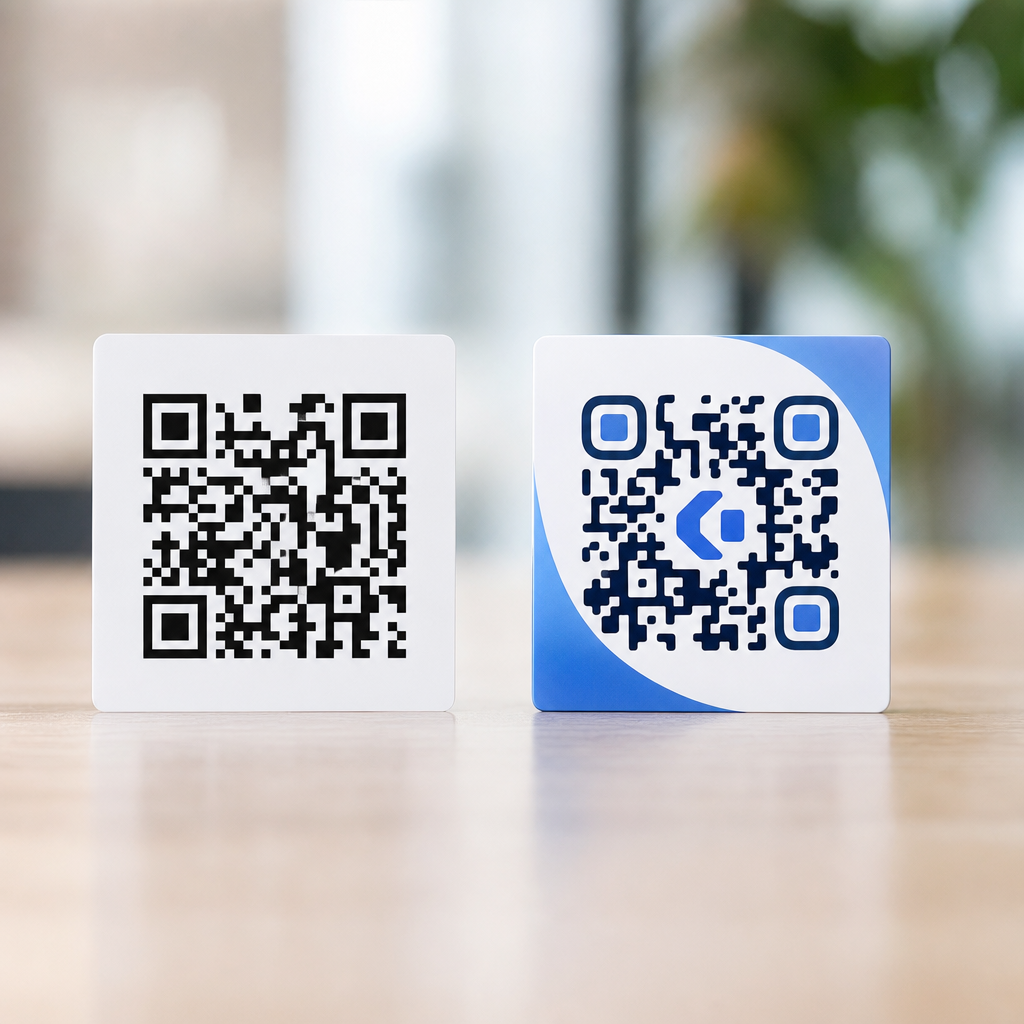

Brand consistency with QR codes starts by treating every code as a branded touchpoint rather than a disposable utility. A QR code is a machine-readable matrix barcode that stores a destination such as a URL, app action, file, payment prompt, or menu, while brand consistency means keeping visual identity, messaging, and user experience aligned wherever a customer encounters the brand. In practice, that means the code’s appearance, placement, call to action, landing page, and analytics should all reflect the same standards used in packaging, email, retail signage, and digital campaigns. I have worked with teams that shipped thousands of printed codes across product labels, event booths, direct mail, and storefront windows, and the strongest results always came from systems, not one-off designs. A well-branded QR code improves recognition, builds trust before the scan, and reduces the friction that causes people to hesitate. It also protects campaign performance, because a beautiful code that scans poorly or lands on an off-brand page damages both conversion and perception. This matters more now because smartphone cameras natively recognize QR codes, making them a routine bridge between physical and digital experiences. Customers expect a code to feel official, safe, and easy to use. When the design, destination, and context match the rest of the brand, scan rates usually rise and support questions fall. When they do not, people ignore the code or suspect fraud. For companies building a broader QR code design and branding program, branded QR codes serve as the operational center: they connect visual identity rules, technical quality control, campaign tracking, and customer experience into one repeatable framework.
What Branded QR Codes Actually Include
Branded QR codes are not simply black-and-white squares with a logo dropped in the middle. They are codes intentionally customized to reflect a brand’s identity while remaining reliably scannable. That includes visual elements such as color palette, corner marker style, center icon treatment, background contrast, quiet zone protection, and shape adjustments for modules and eyes. It also includes contextual elements: a short descriptive call to action, surrounding copy, channel-specific sizing, destination URL structure, and a landing experience that matches the promise made before the scan. The distinction matters because many marketers focus on decoration alone and overlook functional branding. Functional branding means the code resolves to a recognizable domain, uses campaign parameters consistently, loads quickly on mobile, and supports the same tone, typography, and offer structure as the ad, package, or display where it appears.
Static versus dynamic QR codes is another critical distinction. A static code permanently encodes the final destination, so changing the target later requires reprinting the asset. A dynamic code points to a redirect service, allowing the destination to change without changing the printed symbol. For most branded QR code programs, dynamic codes are the better operational choice because they support analytics, A/B testing, outage recovery, and seasonal updates while preserving the printed investment. In retail packaging, for example, I have seen dynamic codes save complete production runs when a campaign URL changed after print approval. The code on the carton stayed the same; the redirect changed. That flexibility is part of maintaining consistency because it prevents broken experiences and lets teams correct messaging without visual disruption.
Why Brand Consistency Matters for QR Code Performance
Consistency is not only a design principle; it is a performance driver. Users make trust decisions in seconds, especially when a code asks them to move from a physical object into a digital environment. If the code looks unofficial, the surrounding message is vague, or the landing page feels disconnected from the source, scan abandonment increases. Consistent branding reduces that uncertainty. It signals ownership, professionalism, and relevance. In direct mail, a branded code next to a clear offer and a recognizable sender identity typically outperforms an unbranded generic code because recipients can instantly associate the action with a known company. The same applies in hospitality, healthcare, education, and field events, where users often scan in fast-moving environments and need immediate confidence.
Consistency also improves measurement and governance. When teams use standard naming conventions, redirect rules, design templates, and QA checklists, campaign reporting becomes comparable across channels. A restaurant chain can evaluate scans from table tents, takeout bags, and window posters because every code follows the same URL taxonomy and dashboard structure. A B2B company can compare trade show booth scans with brochure scans because each asset uses an approved design family and a defined call-to-action pattern. Over time, those standards reveal what actually works: minimum print sizes, best-performing CTA language, ideal color combinations, and the landing formats that convert highest. Without consistency, each code behaves like an isolated experiment and the brand loses both efficiency and insight.
Core Design Rules That Keep QR Codes On-Brand and Scannable
The first rule is contrast. A scanner needs strong separation between dark modules and a light background. Brand colors can work, but not every palette is suitable. Deep navy on white often scans well; pale yellow on cream usually does not. The safest approach is to keep the foreground dark, the background light, and to test on multiple devices under different lighting conditions. The second rule is preserving the quiet zone, the empty margin surrounding the code. Remove or crowd that border and scan reliability drops sharply, especially on lower-quality prints or reflective surfaces. The third rule is error correction. QR codes support different error correction levels, commonly L, M, Q, and H. Higher levels allow more visual customization and logo placement because more data loss can be tolerated, but they also increase density. In practice, H is often selected for heavily branded codes, then balanced against size and scan distance.
Logo use requires restraint. A center logo should be small enough not to interfere with core data modules and should sit within the tolerance allowed by the selected error correction level. Rounded modules, custom eyes, gradients, and patterned fills can work, but only after testing. I have rejected attractive designs that failed on older Android camera apps, glossy shelf wobblers, or curved bottle labels. A QR code is still a functional symbol first. Good branded design respects that. So do sizing rules. The common rule of thumb is a minimum physical size based on expected scanning distance, often approximated as one unit of code size for every ten units of distance. A code viewed from one meter away needs to be much larger than a code on product packaging held in the hand. Material choice matters too: matte finishes generally outperform glossy ones because glare interferes with camera focus and contrast detection.
| Branding element | Best practice | Risk if ignored |
|---|---|---|
| Color | Use dark foreground on light background with strong contrast | Low scan reliability, especially in poor lighting |
| Logo | Keep centered logo modest and test with high error correction | Data obstruction and failed scans |
| Quiet zone | Maintain clear margin around the code on all sides | Camera cannot distinguish symbol boundary |
| Size | Match print dimensions to scanning distance and context | Users cannot scan from intended position |
| CTA | State what happens after the scan in plain language | Lower scan intent and trust |
| Landing page | Mirror the campaign design, message, and offer | Brand disconnect and conversion loss |
Building a Repeatable Brand System for QR Codes
Maintaining brand consistency across many campaigns requires a formal system. Start with a QR code style guide that sits alongside existing brand guidelines. It should define approved colors, forbidden combinations, logo treatment rules, minimum and maximum logo size, corner marker styles, quiet zone requirements, preferred error correction levels, and minimum print dimensions by use case. It should also specify approved call-to-action language such as “Scan to view setup guide,” “Scan to reorder,” or “Scan for event agenda,” because action framing affects performance. The guide needs destination standards too: approved domains or subdomains, URL slug format, UTM tagging conventions, redirect ownership, and landing page templates. When those standards exist, designers, marketers, packaging teams, and vendors can work from the same playbook.
Governance is the second part of the system. In larger organizations, QR codes often appear outside the marketing department: operations, product, support, field sales, HR, and regional franchisees may all create them. Without controls, the brand ends up with duplicated codes, outdated destinations, inconsistent designs, and security risks. A central request and approval workflow fixes that. Many teams manage this with asset management platforms, project management tools like Asana or Jira, and QR platforms that support roles, folders, and audit trails. Templates inside Adobe Illustrator, Figma, or Canva can accelerate compliant production, but the source of truth should still be documented standards and a managed generator platform. If a franchise network needs local autonomy, provide locked templates with variable fields for store location, promo URL, or market language rather than allowing unrestricted creation.
Matching the Code to the Customer Journey
A branded QR code works best when it is designed for a specific stage of the customer journey. Awareness-stage codes might appear on out-of-home posters and should emphasize speed, simplicity, and a low-friction destination such as a teaser video or product overview. Consideration-stage codes on brochures or product packaging can lead to comparison pages, demos, ingredient details, or reviews. Purchase-stage codes may open checkout flows, wallets, or limited-time offers, while post-purchase codes often connect to onboarding, setup, warranty registration, care instructions, or support. The same brand identity should be present in each case, but the message and destination must fit the user’s context. A code on a bus shelter cannot demand the same attention span as one on an instruction manual sitting on a kitchen table.
Real-world examples show why journey alignment matters. A cosmetics brand can place a code on shelf talkers that opens a shade finder optimized for mobile, then use a separate code on the box to deliver tutorials and replenishment reminders. A manufacturer can put one code on a trade show backdrop for product specs and lead capture, then another on the installed equipment for maintenance videos and spare parts ordering. Both codes are branded, but each solves a different customer need. That is the discipline of hub-level branded QR code strategy: unify the identity while tailoring the function. The result is higher usefulness, better conversion, and fewer dead-end scans.
Landing Pages, Analytics, and Trust Signals
The scan is only the midpoint. Brand consistency fails if the destination page looks unrelated to the code. The landing page should preserve the same campaign language, visual style, offer, and purpose. If the code says “Scan for assembly video,” the destination should open directly to that video or an obvious page heading, not a generic homepage. Mobile performance is nonnegotiable. Compress images, reduce scripts, and use responsive layouts because most QR scans happen on smartphones. Page speed affects both user satisfaction and conversion, and it shapes whether the entire branded experience feels polished or careless.
Analytics should be designed into the program from the beginning. Dynamic QR code platforms typically report scans by date, device, location, and sometimes operating system. Combined with analytics platforms such as Google Analytics 4 and campaign parameters, that data reveals which placements, creatives, and offers perform best. Be careful, though, not to over-interpret “scan” as business success. A high scan count with poor landing engagement may indicate misleading CTA copy, weak load performance, or a mismatch between the physical context and digital destination. Trust signals matter here as well. Use recognizable domains, HTTPS, concise preview text where supported, and privacy-conscious forms. People are more willing to scan when they believe the brand will not waste their time or misuse their data.
Common Mistakes and How to Avoid Them
The most common mistake is prioritizing aesthetics over scanability. Designers often push low-contrast colors, oversized logos, or decorative backgrounds until the code stops functioning reliably. The second mistake is skipping context. A code with no CTA, no benefit statement, and no explanation of what happens next forces the user to guess, and many simply will not bother. The third mistake is linking to a homepage instead of a purpose-built mobile destination. That breaks intent and makes the interaction feel generic. Another frequent issue is printing without environmental testing. A code that scans perfectly on a desktop proof may fail on corrugated cardboard, metallic ink, curved labels, tinted windows, or sunlit posters.
Operational mistakes are just as damaging. Teams forget who owns redirects, campaigns expire without updates, and codes remain live with irrelevant destinations. Some organizations create multiple codes for the same function with no naming system, making reporting impossible. Others ignore accessibility and readability around the code, using tiny CTA text or placing the symbol where wheelchair users, drivers, or fast-moving shoppers cannot comfortably scan it. The fix is disciplined QA: test across iPhone and Android devices, multiple native camera apps, different distances, print substrates, and real lighting conditions. Maintain an inventory with owner, purpose, destination, live dates, and status. Audit active codes quarterly. Brand consistency is sustained by operations as much as design.
Branded QR codes are most effective when they are managed as a long-term brand system, not a decorative campaign extra. The core principles are straightforward: keep the symbol scannable, align the look and message with the brand, send users to a destination that matches the promise, and measure performance in a consistent way. When those pieces work together, QR codes strengthen recognition, improve trust, and make physical-to-digital journeys easier for customers. They also become easier to scale across packaging, retail, events, support, and lifecycle marketing because every team works from the same standards.
For any company building out a QR code design and branding program, this branded QR codes hub should anchor the effort. Use it to define visual rules, choose dynamic infrastructure, standardize CTA language, connect landing pages to campaign intent, and create a testing process that catches failures before launch. The benefit is not only cleaner design. It is better conversion, safer user experiences, more reliable analytics, and a stronger brand presence in every scan moment. Review your existing QR codes, document what is inconsistent, and turn those findings into a formal branded QR code guideline your teams can use immediately.
Frequently Asked Questions
Why does brand consistency matter when using QR codes?
Brand consistency matters because a QR code is not just a technical shortcut; it is a visible customer touchpoint that influences recognition, trust, and conversion. When people scan a code on packaging, signage, direct mail, menus, product displays, or event materials, they are moving from a physical or printed brand experience into a digital one. If that transition feels disconnected, generic, or visually inconsistent, it can weaken credibility and reduce response rates. A code that aligns with brand colors, typography, design standards, voice, and messaging helps reinforce familiarity and signals that the experience is intentional and secure.
Consistent QR code use also improves the overall customer journey. The code itself, the call to action beside it, the page it opens, and the next step the customer takes should all feel like part of the same brand system. For example, if a premium brand uses elegant packaging but sends scanners to a cluttered landing page with off-brand design, the experience breaks. On the other hand, when every element feels cohesive, customers are more likely to trust the destination, engage with the content, and complete the intended action. In short, consistency turns a QR code from a simple utility into a branded pathway that supports stronger recall, smoother user experience, and better performance.
What elements of a QR code experience should stay consistent with the brand?
Maintaining consistency means looking beyond the square code pattern itself and managing the entire scan journey. The most obvious element is visual design. If you customize QR codes, the colors, frames, logo integration, and surrounding design should follow your brand guidelines without making the code hard to scan. Placement matters too. A QR code should appear in locations and formats that match your broader brand presentation, whether that is minimalist retail packaging, in-store signage, restaurant menus, brochures, or digital ads. Even the size, spacing, and supporting graphics around the code should feel deliberate and aligned with the rest of your materials.
Just as important are the messaging and destination. The call to action beside the QR code should sound like your brand and clearly explain what happens after scanning, such as “View the collection,” “Start your free trial,” or “See care instructions.” The landing page should continue the same visual identity, tone of voice, offer, and purpose so users do not feel redirected into an unrelated experience. Functionality should also remain consistent. If your brand promises simplicity and convenience, the QR destination should load quickly, work well on mobile, and require as few steps as possible. Finally, analytics and campaign naming conventions should be standardized internally so teams can measure performance consistently across channels while protecting a unified customer-facing experience.
How can you customize QR codes without hurting scan reliability?
The key is to treat customization as a branding layer, not a license to ignore technical requirements. QR codes can often be styled with brand colors, embedded logos, custom frames, and shaped design elements, but readability must remain the priority. High contrast between the code and background is essential, and the code should never blend into busy imagery or low-contrast brand palettes. There also needs to be sufficient quiet space, which is the empty margin around the code that scanning devices rely on to detect it properly. If that area is removed or crowded by text and graphics, scan performance can drop significantly.
It is also wise to test codes in real-world conditions before publishing them widely. Check them on different phone models, camera apps, operating systems, lighting conditions, print finishes, and viewing distances. If you are placing a code on curved packaging, reflective surfaces, outdoor signage, or small-format materials, test in those exact environments. Use dynamic QR codes when appropriate so destinations can be updated without reprinting the code, but keep the redirect experience trustworthy and fast. A strong rule of thumb is that if a design decision makes the code more beautiful but even slightly less dependable, it should be reconsidered. Consistent branding is valuable, but a QR code that does not scan creates frustration and undermines the brand far more than a simpler design ever would.
What should the landing page include to keep the QR code experience on-brand?
A successful landing page should feel like a natural continuation of the material that prompted the scan. That means using recognizable brand elements such as logo treatment, color palette, typography, photography style, and tone of voice. The message on the page should match the promise made next to the QR code. If the code says “Scan to download the guide,” the user should arrive at a page focused immediately on that guide rather than a generic homepage or unrelated promotion. Relevance is one of the biggest factors in maintaining consistency because it shows that the brand respects the user’s time and expectations.
The page should also be designed for mobile-first usability since most QR scans happen on smartphones. Clear headlines, simple navigation, fast load times, accessible layouts, and a focused call to action all contribute to a smoother branded experience. If forms are involved, they should be brief and easy to complete. If the destination includes video, menus, product details, payments, or app actions, those functions should work seamlessly without confusion or unnecessary friction. Trust signals matter as well, including secure URLs, brand domain usage, recognizable design, and transparent context about what the user is doing. The best landing pages do not merely “work” after a scan; they confirm the user is in the right place and deepen the brand relationship through consistency, clarity, and ease.
How can businesses scale QR code use across campaigns while keeping everything consistent?
Scaling successfully usually requires a clear governance process. Businesses should start by defining QR code standards within their brand guidelines, including approved colors, logo usage, minimum size, placement rules, contrast requirements, call-to-action language, destination page standards, and accessibility considerations. This gives marketing, design, packaging, retail, product, and operations teams a shared framework so QR codes do not become inconsistent from one campaign or department to another. Creating reusable templates for common use cases such as product information, promotions, event check-ins, menus, payments, and customer support can save time while preserving consistency.
It is equally important to centralize management and measurement. Using a controlled platform for generating and tracking QR codes helps ensure that destination URLs, naming conventions, UTM parameters, redirects, and performance reporting are handled in a standardized way. Regular audits can catch outdated links, off-brand placements, or weak-performing destinations before they create customer confusion. Teams should also review analytics not just for scan volume, but for the full post-scan journey, including bounce rate, conversion rate, time on page, and device behavior. That data helps refine both branding and functionality over time. When businesses combine design standards, operational control, and ongoing performance review, they can expand QR code usage confidently while keeping every scan aligned with the brand’s identity and customer experience goals.