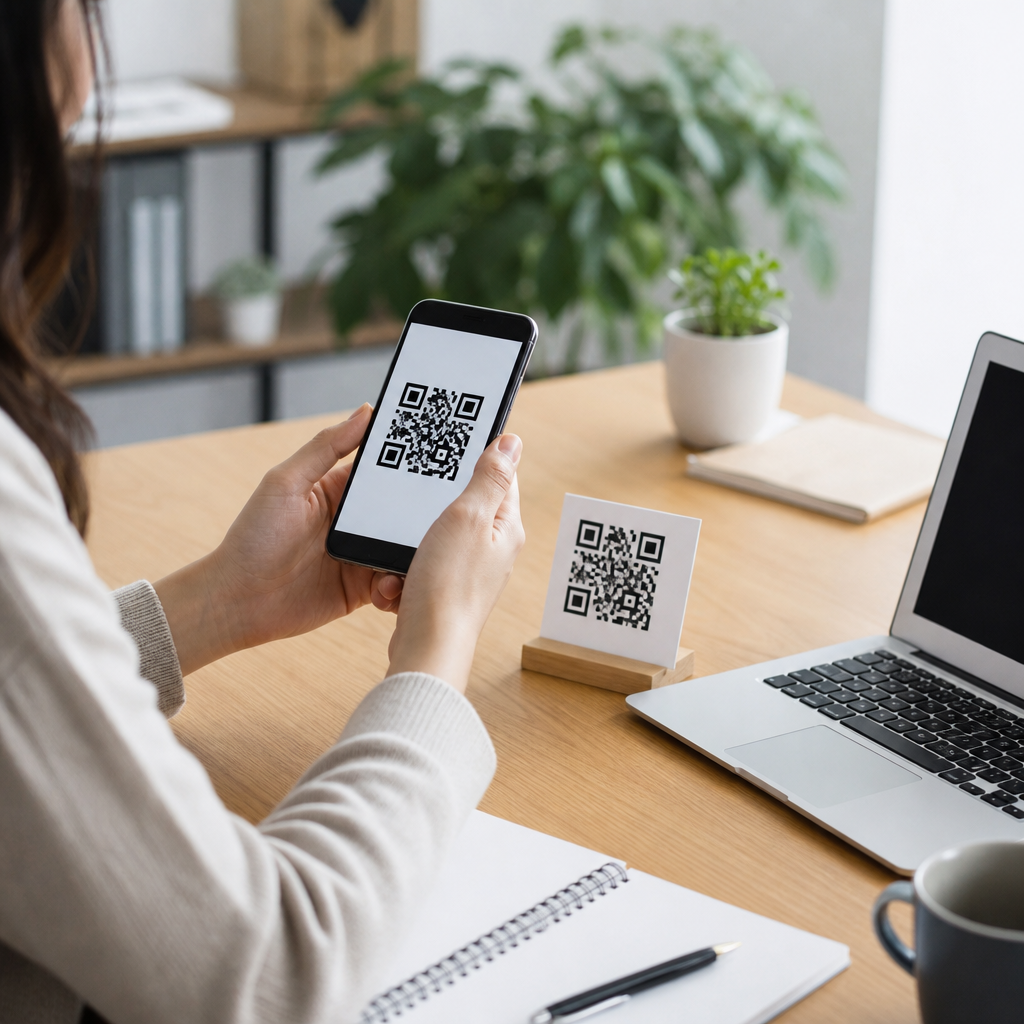
How to get your first QR code client as a freelancer starts with understanding what businesses actually buy. They are not buying a black-and-white square. They are buying a measurable customer action: a menu view, a lead form completion, an app download, a payment, a review, a coupon redemption, or a faster check-in. A QR code freelancer helps a business plan that action, create the code, place it where people will scan it, and track whether it works. I learned this early when small clients stopped asking, “Can you make a QR code?” and started asking, “Can you help us get more bookings from our tables, flyers, and storefront?” That shift matters because it turns a low-fee task into a service with strategy, setup, analytics, and ongoing optimization.
QR codes have become standard in restaurants, events, retail, packaging, real estate, healthcare, and local services because smartphone cameras now scan them natively on iPhone and Android. During the last few years, adoption moved from novelty to habit. For freelancers, that creates a practical entry point into digital services. You do not need to build custom software to start. You need to understand use cases, code types, landing pages, tracking, print considerations, and client outcomes. Static QR codes point to a fixed destination and cannot be edited after printing. Dynamic QR codes use a short redirect URL, so the destination can be changed later, and scans can usually be tracked by device, time, and location. In client work, dynamic codes are usually the better product because businesses change menus, campaigns, and offers.
This topic matters because QR code services sit at the intersection of marketing, operations, and design. A restaurant may need table tents that lead to a digital menu, a review request flow, and a loyalty signup. A real estate agent may want codes on signs that open a listing page with photos and a contact form. A gym may need codes for class schedules, waiver forms, and referral offers. These are not isolated gigs. They can expand into landing page design, copywriting, analytics setup, local marketing, and monthly reporting. If you want your first client, your goal is not to sell technology. Your goal is to package a business result using QR codes as the delivery mechanism.
Freelancer opportunities in this space are broad. You can offer QR code strategy, custom design, print placement consulting, analytics configuration, campaign testing, staff training, or maintenance retainers. This article is the hub for that entire opportunity set. It explains where demand exists, what to sell first, how to build proof without waiting for a paying client, how to price the work, and how to close a small business owner who has limited time and a healthy skepticism of marketing claims. Get those fundamentals right and your first QR code client becomes much easier to win.
Choose a service businesses already understand
The fastest route to a first client is offering a narrow service tied to a familiar business need. Broad positioning like “I do QR code solutions” is too vague. Specific offers are easier to buy. Good examples include “Google review QR setup for local service businesses,” “digital menu QR system for cafes,” “open house QR lead capture for realtors,” or “event check-in QR workflow for organizers.” Each offer maps to an existing pain point. The client already understands the problem; your job is to make the fix simple.
In practice, local businesses respond best when the service removes friction. A salon owner understands missed review opportunities. A food truck owner understands the chaos of paper menus and changing specials. A dentist understands the value of a post-visit review flow. When I prospect in this category, I never begin with code features. I begin with the operational problem: customers waiting, staff repeating answers, offers going untracked, or leads disappearing because the next step was too hard. Then I show how a QR code closes that gap in one scan.
Dynamic menu links, review funnels, payment links, Wi-Fi access pages, appointment booking pages, and digital brochures are usually the easiest first services to sell because they require little technical overhead and produce visible results quickly. Avoid starting with highly customized app-like experiences unless you already have strong development skills. Your first client should be easy to onboard, easy to deliver, and easy to explain.
Build a portfolio before anyone hires you
You do not need a client to create proof. You need examples that look like real client assets. Create three to five sample projects for different industries. Build a restaurant menu QR poster, a realtor sign rider with a property page, a fitness studio flyer with a trial-pass signup, and a plumber review card linking to a review instruction page. Use Canva, Figma, Adobe Express, or Illustrator for print mockups. Use Carrd, Notion, Typedream, Framer, WordPress, or a simple Google Sites page for landing pages. Generate dynamic codes with tools such as QR Code Generator, Bitly, Beaconstac, Uniqode, or Flowcode.
The critical point is that your samples should show the full system, not just the code. Include the printed placement, destination page, call to action, and tracking method. For example, a sample for a café should include a tabletop sign, a mobile menu page with sections and prices, and a note that scans are measured with UTM parameters inside Google Analytics 4. A sample for a realtor should include a yard sign rider, a listing page, and a contact form connected to email notifications. This demonstrates that you understand what businesses are paying for: customer flow, not pixels.
Publish these samples on a simple portfolio page. For each one, explain the use case, target action, implementation steps, and expected metric. Keep the language plain. A small business owner should be able to read it in under two minutes and think, “Yes, this solves a problem I have.” If you want stronger credibility, create one live project for your own freelance business, such as a QR code on your business card leading to a booking page or service menu. That is a first-hand proof point, and it often starts conversations offline.
Find the right first prospects and pitch the result
Your best first prospects are businesses where a scan naturally fits into the customer journey. Restaurants, cafés, bars, realtors, event planners, photographers, gyms, trade show vendors, clinics, salons, auto detailers, tourist attractions, and local retailers all qualify. Start with businesses you can observe in person. Walk into ten nearby locations and look for friction points: no easy review prompt, outdated printed menus, cluttered front desks, no clear lead capture on signage, or inconsistent promotional materials.
Prospecting works better when you bring a mini-audit instead of a generic pitch. Take a photo of the space if appropriate, note one missed opportunity, and draft a quick example. Then send a short email or direct message: “I noticed customers at your patio still use paper menus. I mocked up a simple table QR menu with updateable specials and a review prompt after checkout. Would you like me to show you a one-page example?” That message is specific, relevant, and low pressure.
Cold outreach can work, but warm channels convert faster. Ask friends, former coworkers, local printers, web designers, sign shops, photographers, and marketing consultants whether they know businesses that need a better scan-to-action setup. Print shops are especially valuable partners because they already serve businesses ordering flyers, menus, signage, brochures, and packaging. If you can help them add QR strategy to printed materials, they may send steady referrals.
| Business type | Easy first offer | Main outcome | Typical add-on |
|---|---|---|---|
| Restaurant or café | Dynamic menu QR with specials page | Faster menu access and easier updates | Review request flow |
| Realtor | Property sign QR to listing page | More inquiries from drive-by traffic | Lead form and SMS follow-up |
| Salon or clinic | Review and rebooking QR card | More reviews and repeat appointments | Loyalty offer page |
| Event organizer | Check-in or agenda QR | Smoother attendee experience | Sponsor lead capture |
| Retail shop | Shelf or window QR for product info | Better product education | Coupon or email signup |
Price for business value, not code generation
Many freelancers lose their first sale by pricing the visible object instead of the underlying system. If you charge only for “creating a QR code,” clients will compare you to free generators and expect a one-time fee of almost nothing. Instead, price the package: strategy, code setup, destination page, design adaptation, testing, tracking, and launch support. A basic review QR package for a local service business might include one dynamic code, a branded review instruction page, a print-ready card design, and setup guidance for $150 to $400 depending on complexity and local market. A menu or lead capture setup can reasonably start higher because it involves more page design and testing.
Retainers are where this niche becomes durable. Once the first campaign is live, businesses may need seasonal updates, new landing pages, campaign codes for different locations, monthly scan reports, or A/B tests on offers and calls to action. A dynamic QR platform subscription can be billed directly to the client or bundled into your monthly fee. Be transparent either way. Hidden markups create distrust.
When presenting price, connect it to a concrete result. For a dentist, frame the offer around more reviews and easier rebooking. For a realtor, frame it around more listing inquiries from physical signage. For a restaurant, frame it around faster updates and cleaner table presentation. Small business owners are willing to pay when the return is understandable. They resist when the deliverable feels abstract.
Deliver a setup that actually works in the real world
Technical quality is what turns a first client into referrals. Start with the right code type. Use dynamic codes for anything printed in quantity or tied to a campaign that may change. Keep contrast high, usually dark code on a light background, and avoid shrinking the code below a practical scan size. In print, test from realistic distances. A code on a storefront window has different requirements from one on a business card. Quiet zone spacing matters; crowded designs reduce scan reliability.
The destination matters as much as the code. The landing page should load quickly, match the offer on the sign, and present one clear next step. If the QR says “Get 10% off your first visit,” the page should immediately show that offer and the redemption instructions. Do not send people to a busy homepage and expect them to hunt. Use UTM parameters so traffic can be segmented in analytics. In Google Analytics 4, define conversions such as form submits, button clicks, or bookings. If the client uses call tracking or CRM tools, connect the flow where possible.
Testing should be routine. Scan on multiple devices, under indoor and outdoor lighting, on matte and glossy surfaces, and on mobile data rather than only office Wi-Fi. I also test whether someone unfamiliar with the business can understand the next step in under five seconds. That simple usability check catches weak copy and cluttered layouts fast. A QR campaign succeeds when scanning feels obvious and the action afterward feels effortless.
Turn one client into recurring work and a fuller freelance niche
Your first QR code client is rarely the endpoint. It is the entry ticket to broader freelancer opportunities. After launch, send a short performance summary after two or four weeks: scans, top times, device mix, destination actions, and one recommended improvement. That report positions you as a partner instead of a one-off vendor. It also opens the door to additional services such as updated signage, a second campaign, location-specific codes, review management support, or landing page revisions.
This subtopic expands naturally into several related article paths. One path is niche selection: restaurants, real estate, events, healthcare, retail, and local services each have distinct scan behaviors and compliance considerations. Another path is service packaging: setup fees, subscriptions, white-label work for agencies, and collaborations with printers or web designers. A third path is delivery operations: testing standards, print specs, analytics dashboards, and client handoff documents. A fourth path is lead generation: cold email, local networking, LinkedIn outreach, Upwork positioning, and referral systems. Together, these areas make QR code freelancing more than a quick gig category; they make it a practical micro-specialization.
The main takeaway is simple. To get your first QR code client as a freelancer, sell a clear business outcome, show realistic proof, target businesses where scanning fits naturally, and deliver a tracked system rather than a standalone code. Start with one narrow offer, one local market, and one useful sample. Then ask ten qualified prospects to review a tailored example. That approach is straightforward, credible, and repeatable. If you want momentum this week, build one sample, write one concise audit message, and send it today.
Frequently Asked Questions
1. What does a business actually pay for when hiring a QR code freelancer?
A business is rarely paying for the QR code itself. What it is really buying is a specific customer action and a simple system that helps generate that action consistently. That could mean more menu views for a restaurant, more form submissions for a service business, more app downloads for a startup, more payments for an event organizer, more reviews for a local shop, or faster check-ins for a venue. The QR code is just the delivery tool. Your real value as a freelancer is in helping the client connect the code to a business outcome that matters.
That is why the strongest freelance offers are outcome-focused instead of feature-focused. Instead of saying, “I create custom QR codes,” say, “I help restaurants get more digital menu views and track scans,” or “I help local businesses turn walk-in traffic into review requests and coupon redemptions.” This positioning instantly makes your service easier to understand and easier to buy. Business owners do not want a technical extra. They want something useful that saves time, improves customer experience, or produces measurable results.
When you explain your service this way, you also make pricing easier. A plain code generator is cheap and often free, so selling “just a code” puts you in a race to the bottom. Selling strategy, setup, placement advice, scan tracking, call-to-action wording, landing page recommendations, and simple reporting gives your service real business value. That is what separates a freelancer from a generic online tool. If you want your first client, lead with the problem you solve and the action you help create, not the graphic itself.
2. How can I find my first QR code client if I do not have a portfolio yet?
The easiest way to get your first QR code client is to stop trying to market yourself as a general QR code expert to everyone and instead pick a very small, clear niche. Local businesses are usually the best starting point because they often have immediate, practical use cases. Restaurants need menu scans. Realtors need property information pages. Fitness studios need class sign-ups. Vendors at markets need instant payments. Salons need review requests and rebooking links. Event organizers need registrations and check-ins. When you focus on one type of business, your outreach becomes more relevant and much more persuasive.
If you do not have paid client work yet, create sample use cases instead of waiting for permission. Build two or three realistic mock examples for a specific niche. For example, create a sample table tent QR code for a cafe that leads to a mobile menu, a review request card for a salon, or a flyer QR code for a real estate open house. Show the destination page, the call to action, and how scan tracking could be used. A prospect does not need a huge portfolio to understand your value. They need to see that you understand their business and can imagine a practical result.
Outreach works best when it is direct, short, and personalized. Identify businesses already using printed materials, storefront signage, packaging, tables, receipts, business cards, posters, or event displays. Then point out one missed opportunity. For example, you might say, “I noticed your cafe has printed table cards but no quick scan option for menu access or review requests. I help local businesses use QR codes to increase menu views and customer actions, and I put together a sample idea for your setup.” That feels helpful instead of spammy. In many cases, your first client comes from making the service feel obvious, low-risk, and immediately useful.
3. What should I include in my first QR code service offer to make it easier to sell?
Your first offer should be simple, practical, and tied to one business result. Avoid creating a long menu of confusing options at the beginning. A strong starter offer usually includes goal planning, QR code creation, destination setup, design guidance, placement recommendations, and basic tracking. For example, you might offer a “Review Boost QR Setup” for local businesses, a “Digital Menu QR Package” for restaurants, or a “Lead Capture QR Funnel” for service providers. A narrow offer helps prospects quickly understand what they are buying and why it matters.
It also helps to package your service around implementation instead of only design. A complete QR code project often involves more than generating an image. You may need to help the client choose the right landing page, optimize the mobile experience, decide where the code should be placed, write the call-to-action text, test scanning conditions, and explain how results will be measured. If you present these steps clearly, your offer sounds more valuable and more professional. It becomes obvious that you are helping them build a working customer pathway, not just handing over a file.
For a first offer, keep the scope manageable so it is easy for a client to say yes. You could include one QR code campaign, one target action, one or two placements, and one simple report after launch. This creates clarity for both sides. You can also reduce buyer hesitation by positioning it as a pilot or starter package. Businesses often feel more comfortable testing a focused use case before expanding. If your first project is tied to something measurable and easy to understand, such as review requests or appointment bookings, it becomes much easier to prove value and win follow-up work.
4. How do I prove that a QR code campaign is valuable to a client?
You prove value by connecting scans to outcomes the client already cares about. Scan count alone is not enough. A business owner might think scans are interesting, but what they really want to know is whether those scans led to something useful. Did more people open the menu? Did more customers fill out the lead form? Did more event attendees check in faster? Did review submissions increase? Did coupon redemptions go up? Did more users complete payment? When you frame the conversation around these actions, your work becomes easier to justify and easier to retain.
This is why setup and tracking matter from the very beginning. Before launching anything, define the goal clearly. Decide what action the code is supposed to generate and where people will encounter it. Then make sure the destination is mobile-friendly, fast, and specific. A QR code that sends users to a homepage usually performs worse than a code that leads directly to a menu, booking form, product page, payment screen, or review prompt. The smoother the path, the easier it is to show meaningful results.
After launch, keep reporting simple and business-focused. Share what was scanned, where it was placed, what action it was meant to produce, and what happened next. If possible, compare results across placements or messaging. For example, a counter sign may outperform a receipt insert, or “Scan to leave a review” may perform differently than “Scan to get 10% off your next visit.” Even basic insights like these help clients understand that your value is not just technical setup. It is helping them test, learn, and improve customer response. That is what turns a one-time QR code job into ongoing freelance work.
5. What mistakes should I avoid when trying to get my first QR code client as a freelancer?
The biggest mistake is selling the QR code as if it is the product. It is not. If you focus only on creating a code, clients can compare you to free tools and cheap templates in seconds. Instead, sell the business use case, the customer journey, and the measurable result. Another common mistake is being too broad. If your message says you help “all businesses with QR codes,” it becomes forgettable. If your message says you help “restaurants increase digital menu views and improve table-side ordering flow,” it is much stronger and much easier for the right buyer to understand.
Another mistake is ignoring placement and call-to-action wording. Even a technically correct QR code can fail if people do not know why they should scan it or if the code is placed in a bad location. A sign without a clear reason to scan often gets ignored. A code placed too high, too low, in poor lighting, on reflective surfaces, or in a rushed customer environment may underperform no matter how good the destination page is. Businesses notice results, not effort, so you need to think beyond setup and into real-world usage. Testing matters, and so does explaining that to the client in plain language.
Finally, do not overcomplicate your first sales process. New freelancers often make their offer too technical, too large, or too vague. Keep it practical. Start with one problem, one audience, one action, and one easy-to-understand package. Show the client what success looks like before the project begins. Make sure the destination is relevant and mobile-friendly. Track something meaningful. Follow up with a concise results summary. When you avoid trying to do everything at once, you make it easier to close the first client, deliver a clear win, and build confidence for the next project.