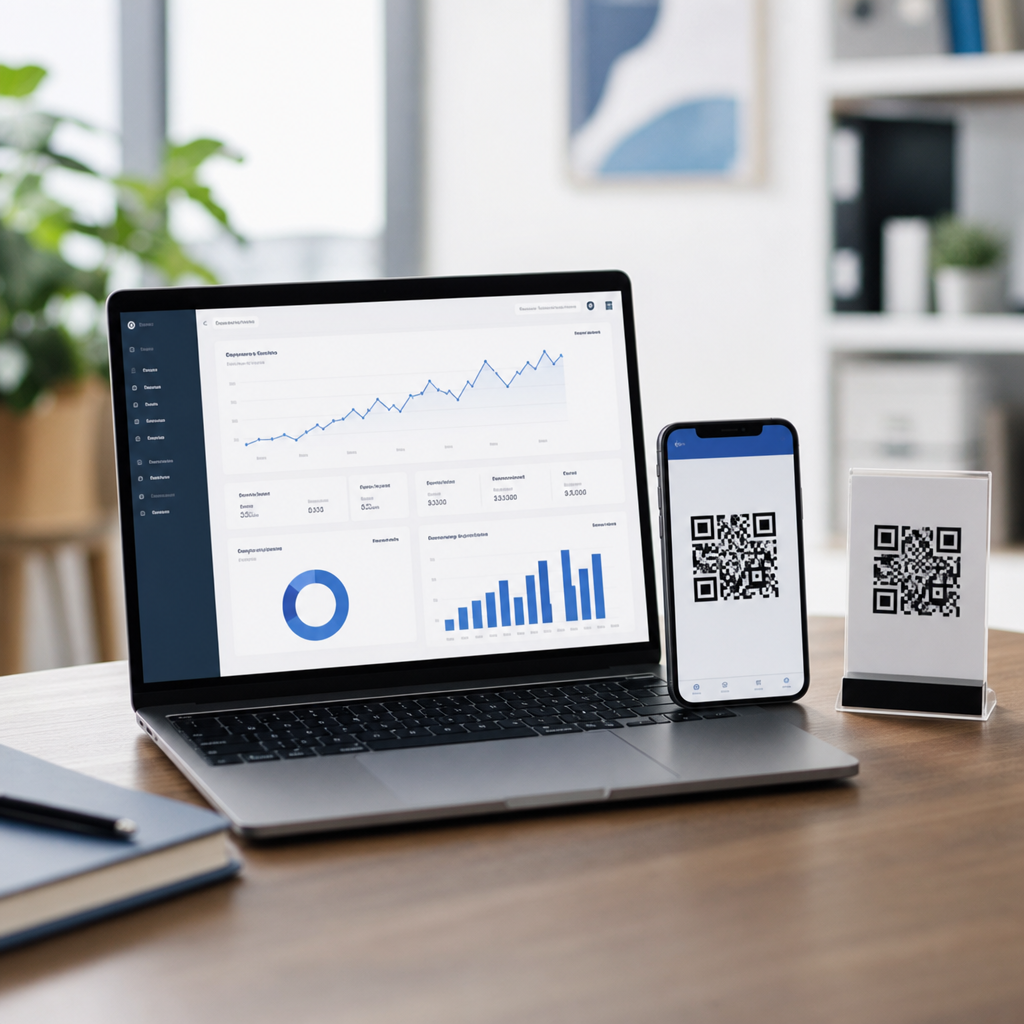
Recurring revenue with QR code services comes from turning a simple scannable graphic into an ongoing business asset that clients pay to manage, update, track, and improve month after month. In practice, selling QR code services means offering more than code generation. It means packaging strategy, design, hosting, analytics, campaign management, and operational support into retainers that solve real business problems. I have seen this shift repeatedly: businesses that first ask for “a QR code” often stay for landing page edits, scan reporting, menu updates, lead capture, review generation, and location-based promotions. That is where predictable income is built.
A QR code is a machine-readable matrix barcode that directs a phone to an action such as opening a URL, downloading a file, saving contact details, joining Wi-Fi, starting a payment flow, or launching an app. Static QR codes point to fixed data and usually cannot be edited after printing. Dynamic QR codes redirect through a managed short URL, which allows the destination, tracking, and rules to be changed later. For recurring revenue, dynamic QR codes are the commercial foundation because they create a legitimate reason for hosting, maintenance, reporting, and optimization fees.
This market matters because QR codes sit at the intersection of offline attention and digital conversion. Restaurants use them for menus and loyalty signups. Real estate teams place them on signs to collect leads. Healthcare practices use them for forms and check-ins. Retailers connect shelf tags to product information and promotions. Event organizers use them for ticketing, maps, and sponsor offers. In each case, the printed item is only the trigger. The real value is what happens after the scan: attribution, conversion, updating content without reprinting materials, and learning which placements generate results.
For agencies, freelancers, printers, marketers, and local consultants, QR code services are attractive because setup is fast, margins are high, and the offer can be layered onto existing services. A web designer can add dynamic codes to landing pages. A print shop can bundle codes with menus, flyers, signage, and packaging. A local SEO consultant can use them for review campaigns and store visit promotions. A managed service provider can include them in client communications systems. The strongest hub strategy is to treat QR codes as a business workflow product, not a novelty graphic.
Why recurring revenue fits QR code services
Recurring revenue works when a service remains useful after launch, and QR code programs do exactly that. Businesses change offers, opening hours, product availability, staff contacts, compliance documents, and campaign destinations constantly. If a code is dynamic, you can update the destination in minutes without replacing posters, labels, menus, mailers, or packaging. That ongoing flexibility is operational value, and clients understand it quickly once they avoid even one costly reprint.
Analytics create the second reason clients continue paying. Scan counts, unique visitors, device types, time-of-day trends, geography, and conversion paths reveal whether physical placements are working. A restaurant may discover that table tent scans produce more loyalty signups than window decals. A realtor may learn that sign riders convert better on weekends, prompting ad scheduling changes. A trade show exhibitor may compare booth signage scans against badge handout scans. These insights are not one-time deliverables. They improve through monthly review and testing.
There is also a governance argument. When I have onboarded multi-location businesses, one of the first issues is QR code sprawl: different teams create free codes, nobody knows what they point to, and printed assets outlive promotions. Centralized management fixes this. You document each code, assign naming conventions, connect each to a controlled destination, and keep an archive. That management layer supports monthly billing because the service protects brand consistency and prevents broken customer journeys.
Finally, QR code services expand naturally into adjacent retainers. If scans lead to underperforming pages, clients need conversion optimization. If they want gated content, they need forms, CRM integration, and email automation. If campaigns rely on local offers, they need updated creative and offer calendars. A QR code retainer often becomes the front door to broader digital work because it ties physical media directly to measurable outcomes.
Service models you can sell
The most dependable way to sell QR code services is to separate setup fees from monthly management. Setup covers strategy, code creation, naming conventions, destination design, testing, and deployment guidance. Monthly management covers hosting, redirect maintenance, analytics access, reporting, edits, and optimization. This structure is familiar to clients and aligns price with continuing value.
Common productized offers include dynamic QR code hosting, menu management, review generation campaigns, event access systems, digital business cards, real estate lead funnels, print-to-web tracking, and multi-location management. For a restaurant, a package may include branded menu codes, allergen pages, seasonal update support, and monthly scan reporting. For a gym, it may include membership offer codes, class registration flows, trainer bio pages, and referral tracking. For a manufacturer, it may include packaging codes linked to setup guides, warranty registration, and compliance documentation.
Another strong model is campaign-based service with ongoing retainers. A retailer preparing a holiday promotion may pay an implementation fee for in-store signage, direct mail, and product packaging codes. After launch, the monthly retainer covers redirect changes, A/B testing of landing pages, and weekly performance summaries. This works well because clients can see the launch deliverable clearly, then appreciate the continued need for support as results come in.
| Service model | Best fit | What clients pay for monthly |
|---|---|---|
| Dynamic code hosting | Small businesses | Redirect management, uptime, basic analytics |
| Campaign management | Retail, events, franchises | Reporting, destination updates, testing, creative swaps |
| Menu and document control | Restaurants, healthcare, hospitality | Content edits, version control, compliance updates |
| Lead generation funnels | Real estate, home services, education | Landing page edits, CRM sync checks, conversion reporting |
| Multi-location governance | Chains and regional brands | User access, code inventory, naming standards, rollup dashboards |
White-label service is another route. Marketing agencies, print brokers, and sign companies often want QR functionality without building the stack themselves. You can provide branded dashboards, code provisioning, analytics exports, and support behind the scenes. In my experience, white-label relationships tend to have lower churn because the partner embeds your system into its own client offering.
Building the offer stack and pricing for retention
Recurring revenue depends on pricing design as much as technical capability. The simplest mistake is charging only for the QR code image. That turns your service into a commodity. Instead, price the business outcome and the managed system behind it. Good retainers usually combine a platform fee, a service allowance, and usage boundaries such as number of codes, destinations, locations, users, or monthly scans.
A practical pricing ladder starts with a starter plan for single-location businesses, a growth plan for active marketers, and an enterprise plan for larger teams. A starter plan might include up to ten dynamic codes, one branded landing page template, monthly reporting, and two content edits. A growth plan might include fifty codes, multiple campaigns, review monitoring, CRM integrations, and quarterly testing. An enterprise plan might add SSO, role-based access, bulk creation, API workflows, and cross-location dashboards.
Setup fees should not be skipped. They cover discovery, taxonomy, branding, destination setup, compliance review, and testing across devices. I typically frame setup as protection against future errors. If a client wants codes placed on 50,000 product inserts, the cost of one broken link or mistyped URL is far greater than the implementation fee. Positioning setup this way makes pricing easier to defend.
Retention improves when your service agreement includes regular actions, not just passive access. Promise a monthly scan summary, redirect audit, broken-link check, and destination review. Offer a fixed number of edits each month so clients feel the plan is active. Tie quarterly reviews to goals such as lead volume, review count, average order value, or event attendance. Clients keep subscriptions when they can point to specific work being done and clear business metrics being tracked.
Be careful with unlimited claims. They attract edge cases and erode margins. It is better to define fair-use limits and charge for overages, rush changes, custom integrations, or high-volume scan tiers. Transparency builds trust and reduces disputes, especially for clients running time-sensitive promotions where last-minute changes are common.
Technology, analytics, and fulfillment systems
To sell QR code services professionally, you need reliable infrastructure. At minimum, use a platform that supports dynamic redirects, HTTPS, scan analytics, bulk management, folder organization, branded short domains, downloadable formats, and exportable reports. Teams often use platforms such as Bitly, Beaconstac, Uniqode, QR Code Generator PRO, or custom redirect systems built on their own domain. The right tool depends on client scale, branding requirements, and whether you need API access.
Branded short domains matter more than many sellers realize. A custom domain increases trust, improves brand recall, and gives clients continuity if they ever migrate platforms. It also helps with governance because every code routes through a controlled property rather than a third-party domain that may look unfamiliar to users. When I deploy at scale, I insist on naming conventions that encode client, location, campaign, and asset type. That one discipline prevents chaos later.
Analytics should go beyond raw scans. A useful fulfillment setup connects QR scans to web analytics, form submissions, phone calls, bookings, ecommerce events, or CRM records. UTM parameters remain valuable for source tracking in analytics platforms. For landing pages, event tracking in Google Analytics 4 can tie scans to engaged sessions, purchases, or lead submissions. If calls matter, call tracking numbers on destination pages can connect offline placements to phone conversions. Without this chain of attribution, your monthly reports will feel thin.
Testing is nonnegotiable. Every code should be checked on iPhone and Android devices, under bright light and low light, at expected print sizes and viewing distances. Contrast ratios, quiet zones, error correction levels, and print surface quality all affect scan reliability. Glossy surfaces can introduce glare. Curved packaging can distort smaller symbols. Tiny codes on distant signage underperform. Reliable service delivery means advising on these practical limitations before materials go to print.
Documentation closes the loop. Maintain a code inventory with owner, purpose, destination, creation date, print locations, linked campaign, and status. For multi-location clients, this inventory becomes a strategic asset. It lets you retire outdated codes, compare results across stores, and quickly update campaigns during promotions or emergencies.
How to win clients and grow this hub offering
QR code services sell best when prospects can visualize the business outcome immediately. Instead of pitching “dynamic QR codes,” pitch faster menu updates, more five-star reviews, measurable direct mail, easier event check-in, or trackable signage. Verticalized offers work because they reduce decision friction. A “restaurant QR growth package” is easier to buy than a generic QR subscription.
Your sales process should start with an asset audit. Ask what printed materials they already use, how often offers change, whether they measure offline response, and who owns updates internally. Most businesses already have underperforming physical touchpoints: brochures, window signs, table tents, invoices, receipts, packaging, vehicle wraps, trade show banners, and business cards. Each is a chance to attach a tracked digital action and begin a retainer relationship.
Case examples make the offer concrete. A local café can replace static PDF menu links with dynamic codes that update to breakfast, lunch, and seasonal specials, while scan reports show peak ordering times. A dental practice can place codes in-office and on recall postcards leading to booking pages and post-visit review requests. A home services company can put codes on yard signs and door hangers, connecting each neighborhood campaign to quote requests. These are simple deployments, but they lead naturally to ongoing management.
As the hub article for selling QR code services, your broader content cluster should branch into pricing, dynamic versus static codes, restaurant QR strategy, real estate QR lead generation, review QR campaigns, event QR check-in, branded short domains, print design standards, and analytics setup. Internally linking those resources helps prospects move from curiosity to purchase because each article answers a practical buying question. The hub page should frame the business model clearly, then guide readers into implementation details by industry and use case.
In the long run, recurring revenue with QR code services is built on managed outcomes, not on the code itself. Dynamic infrastructure, clear pricing, disciplined reporting, and strong vertical offers turn a low-cost digital tool into a stable service business. Clients stay when updates are easy, scan data is meaningful, and printed assets keep working harder without reprinting. If you want to build a durable offer inside the QR Code Monetization & Business Opportunities space, start by packaging one industry-specific retainer, create a repeatable fulfillment system, and sell the measurable result rather than the square graphic.
Frequently Asked Questions
1. How do QR code services become a recurring revenue business instead of a one-time sale?
QR code services become recurring revenue businesses when you stop selling the code itself and start selling the outcomes, management, and ongoing performance behind it. A static QR code created once and handed off to a client is usually a low-margin, one-time transaction. A managed QR code service, by contrast, gives clients an asset that stays useful because it can be updated, monitored, optimized, and supported over time. That is where recurring revenue is created.
In practical terms, this means packaging services around the QR code rather than treating the code as the final product. Clients often begin by asking for “a QR code,” but what they actually need is a reliable way to connect offline marketing, packaging, signage, events, menus, product information, lead capture, promotions, and customer support to digital experiences that can evolve without reprinting materials. When you provide dynamic QR codes, landing page management, scan tracking, campaign reporting, call-to-action testing, redirect updates, and technical support, you give the client a reason to keep paying monthly.
Recurring revenue also comes from the operational value you create. Businesses frequently need destination URLs changed, campaigns turned on or off, regional redirects updated, expired promotions removed, and scan performance reviewed. They may need different QR codes for different departments, locations, or products. If you position your service as managed infrastructure for their offline-to-online customer journey, you move from being a vendor who generated a graphic to a partner who maintains a business system.
The strongest retainer offers usually combine several elements: setup and strategy, branded design, dynamic hosting, analytics dashboards, monthly reporting, optimization recommendations, and agreed service levels. The more directly your service ties into revenue, customer experience, compliance, or operational efficiency, the more defensible your recurring pricing becomes. Clients are rarely paying for squares on a page; they are paying for continuity, flexibility, visibility, and reduced risk.
2. What services should be included in a monthly QR code retainer?
A strong monthly QR code retainer should include services that keep the client’s QR campaigns functional, measurable, and adaptable. At a minimum, this usually means dynamic QR code hosting, destination management, uptime monitoring, and analytics reporting. These are the foundation of a recurring service because they provide ongoing value long after the initial code is launched. If a client can update a destination without reprinting anything and can see how people are engaging with the code, the service already becomes much more valuable than simple code generation.
Beyond the essentials, many retainers should include strategy and campaign support. That can mean advising on where QR codes should be placed, what offers or actions they should promote, how to improve scan rates, and how to align the destination page with the user’s intent. For example, a restaurant may need menu updates and seasonal promotions, a real estate company may want property-specific landing pages, and a retailer may want store-level tracking and rotating offers. Your retainer should be designed to serve those real-world business use cases.
Design and branding services also fit well into a recurring package. Businesses often need QR codes customized for signage, packaging, direct mail, product inserts, trade show booths, table tents, and window displays. Over time, campaigns change, and so do design needs. Including ongoing creative support helps increase retention because the client no longer has to source multiple vendors to keep their materials current and consistent.
More advanced retainers can include landing page hosting, A/B testing, CRM or email platform integrations, lead form setup, multi-location management, audience segmentation, and compliance oversight. If you serve enterprise clients or regulated industries, you may also include access controls, approval workflows, and documentation. The best monthly offers are not overloaded with random features; they are structured around what the client needs to run campaigns reliably and make smarter decisions based on scan behavior.
3. How should you price QR code services for recurring revenue?
QR code services should be priced based on business value, service scope, and management complexity rather than on the act of generating the QR code. Pricing only by the number of codes usually traps you in commodity work, because code creation alone is easy and increasingly inexpensive. A more sustainable model is to price around what the client is really buying: flexibility, analytics, support, campaign execution, and ongoing optimization.
One effective approach is to create tiered monthly plans. An entry-level package might include a limited number of dynamic QR codes, basic scan tracking, hosting, and simple monthly reporting. A mid-tier plan could add branded design, landing page updates, support response times, and campaign recommendations. A premium plan might include advanced analytics, multiple stakeholder dashboards, location-based routing, frequent updates, custom integrations, and consulting. Tiered pricing makes it easier for clients to self-select based on their needs while giving you a clear path to upsell as their use of QR expands.
You can also price according to operational demands. A local business with three active QR codes and occasional updates requires a very different level of service than a franchise, distributor, or multi-location brand running dozens of campaigns across print, packaging, and physical locations. In those cases, monthly pricing should reflect not just volume but coordination, reporting depth, compliance needs, and responsiveness. Some providers also charge an initial setup fee for strategy, buildout, and implementation, followed by an ongoing monthly retainer for management and optimization.
Whatever model you choose, it helps to anchor pricing in outcomes. If your service helps a client capture leads, improve campaign attribution, reduce reprint costs, update packaging destinations instantly, or increase conversions from physical media, those are meaningful business results. Price discussions become easier when clients understand that they are paying for an agile customer engagement channel, not for a graphic file. The more clearly you connect your service to measurable impact, the easier recurring billing is to justify and maintain.
4. Which types of clients are best suited for ongoing QR code services?
The best clients for ongoing QR code services are businesses that frequently update information, run recurring promotions, operate across multiple locations, or need measurable engagement from physical assets. These clients benefit from having QR codes that are dynamic, trackable, and actively managed. In other words, the ideal customer is not someone who wants one permanent link on a flyer and will never touch it again. It is an organization that sees QR codes as part of an ongoing customer experience or marketing system.
Restaurants are a strong fit because menus, specials, event announcements, reservations, and loyalty offers change regularly. Real estate professionals also benefit because listings rotate, open house details change, and marketing materials often stay in circulation longer than the campaign landing pages they originally pointed to. Retailers, e-commerce brands, and consumer product companies are particularly well suited because QR codes can connect packaging, displays, inserts, and in-store materials to product education, reviews, subscriptions, promotions, and support resources.
Healthcare clinics, gyms, event organizers, educational institutions, home service companies, and franchised businesses are also excellent candidates. These organizations often need appointment booking links, form submissions, onboarding materials, class schedules, service requests, localized pages, and performance tracking across multiple campaigns. Manufacturers and B2B suppliers can use managed QR code systems for product documentation, training, authentication, installation guides, inventory workflows, and post-sale support. In these environments, the QR code is not just a marketing tool; it becomes part of operations and customer service.
When evaluating whether a client is a good retainer prospect, look for signs that they will need repeated changes, visibility into performance, or centralized management. Ask whether they run seasonal campaigns, maintain multiple offers, have distributed teams, print materials at scale, or need offline attribution. Clients with these characteristics tend to stay longer because they quickly realize that managed QR code services reduce friction, improve responsiveness, and create a useful stream of engagement data they would otherwise miss.
5. How do you retain QR code service clients month after month?
Client retention in QR code services comes from making your work visible, useful, and tied to ongoing business decisions. Many providers lose clients because they set up a few codes, disappear, and leave the client with no clear sense of what is being managed or improved. To retain clients, you need to show that your service is active and that it creates value every month. That usually starts with regular reporting that goes beyond raw scan counts and explains what the numbers mean, what changed, and what actions should happen next.
Retention improves significantly when you take a proactive role. Instead of waiting for a client to request updates, review performance patterns, identify weak calls to action, suggest better landing pages, recommend placement changes, and flag opportunities to reuse successful campaigns in new contexts. If a code on packaging is getting scans but low conversions, that is a discussion. If one location outperforms another, that is a discussion. If a printed campaign is still generating scans after the original offer expired, updating the destination instantly demonstrates the practical value of staying on retainer.
Operational reliability is another major retention driver. Clients stay when they trust that links will work, updates will be handled quickly, branding will stay consistent, and no one has to scramble when a destination changes. Clear service expectations, documented processes, and responsive communication make your offer feel dependable. For larger clients, dashboard access, stakeholder summaries, and organized campaign management can make your