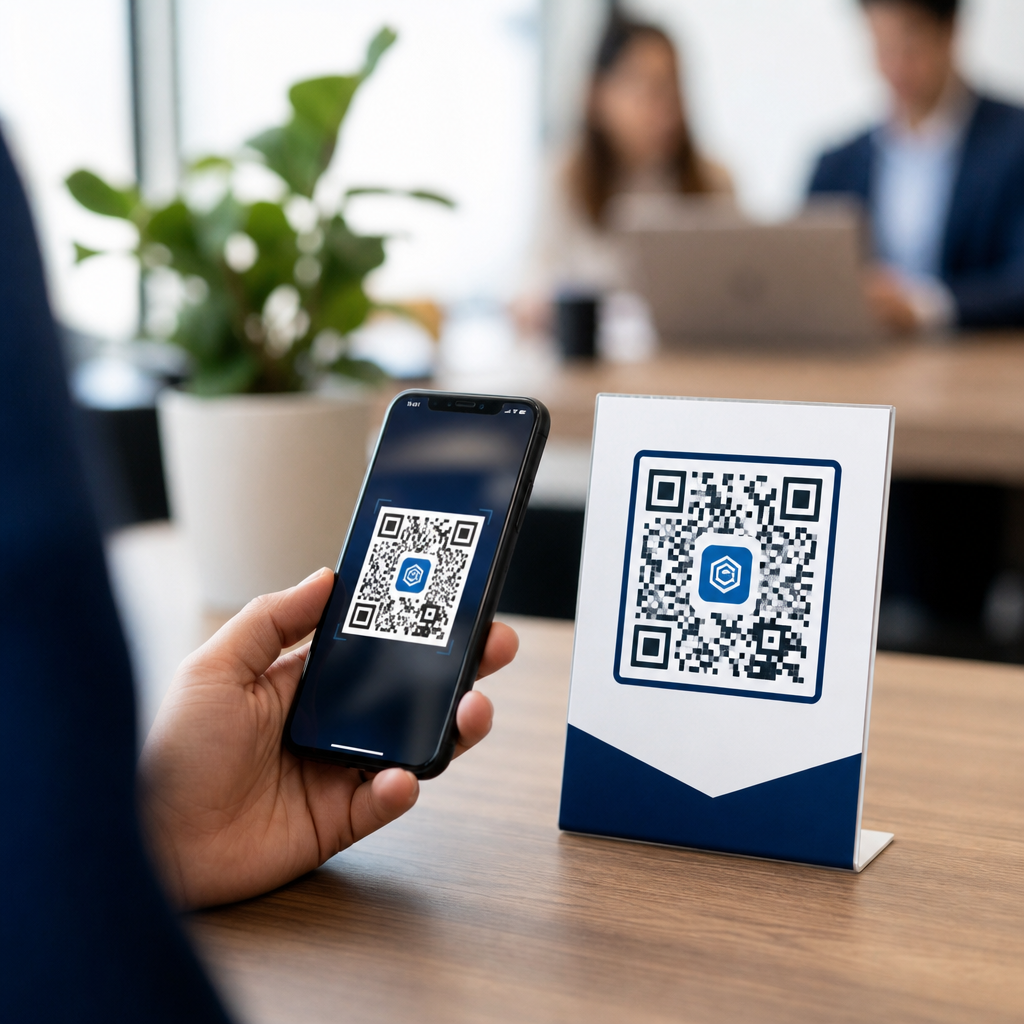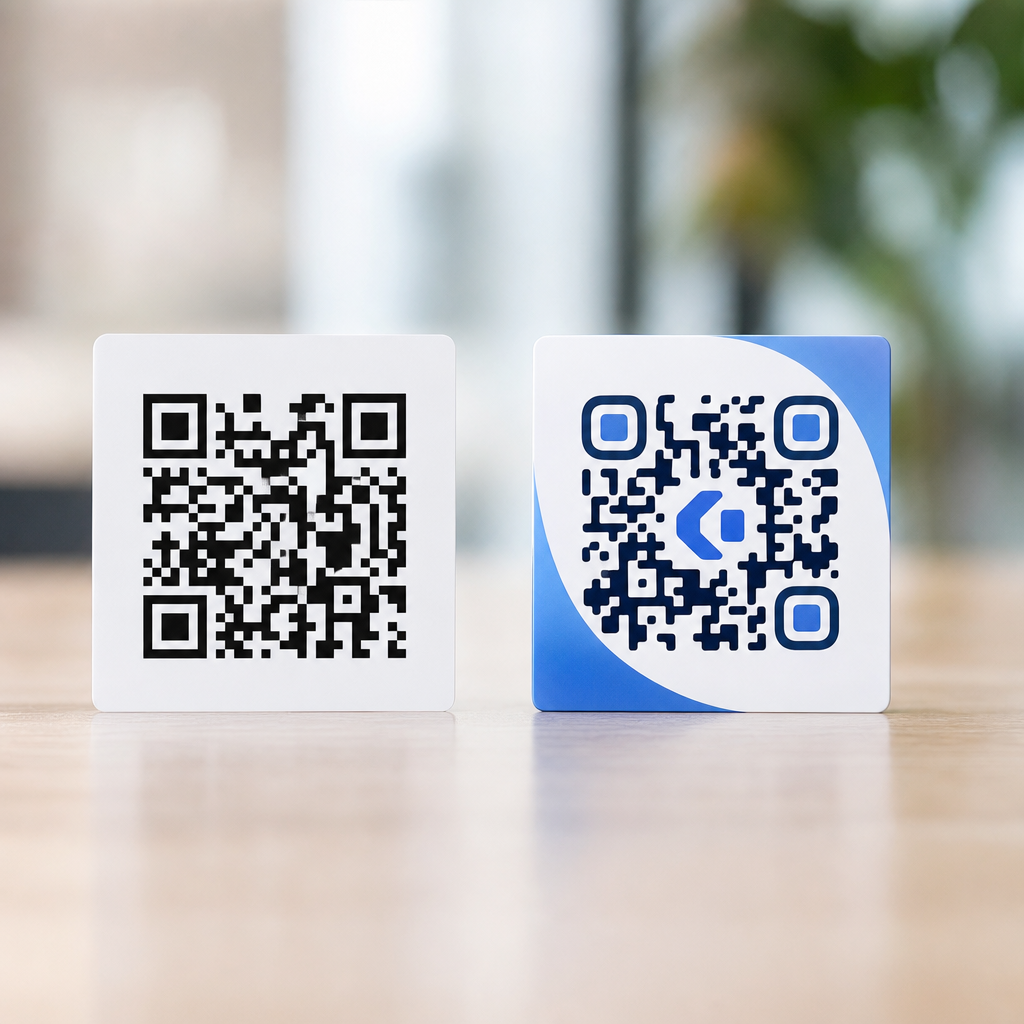
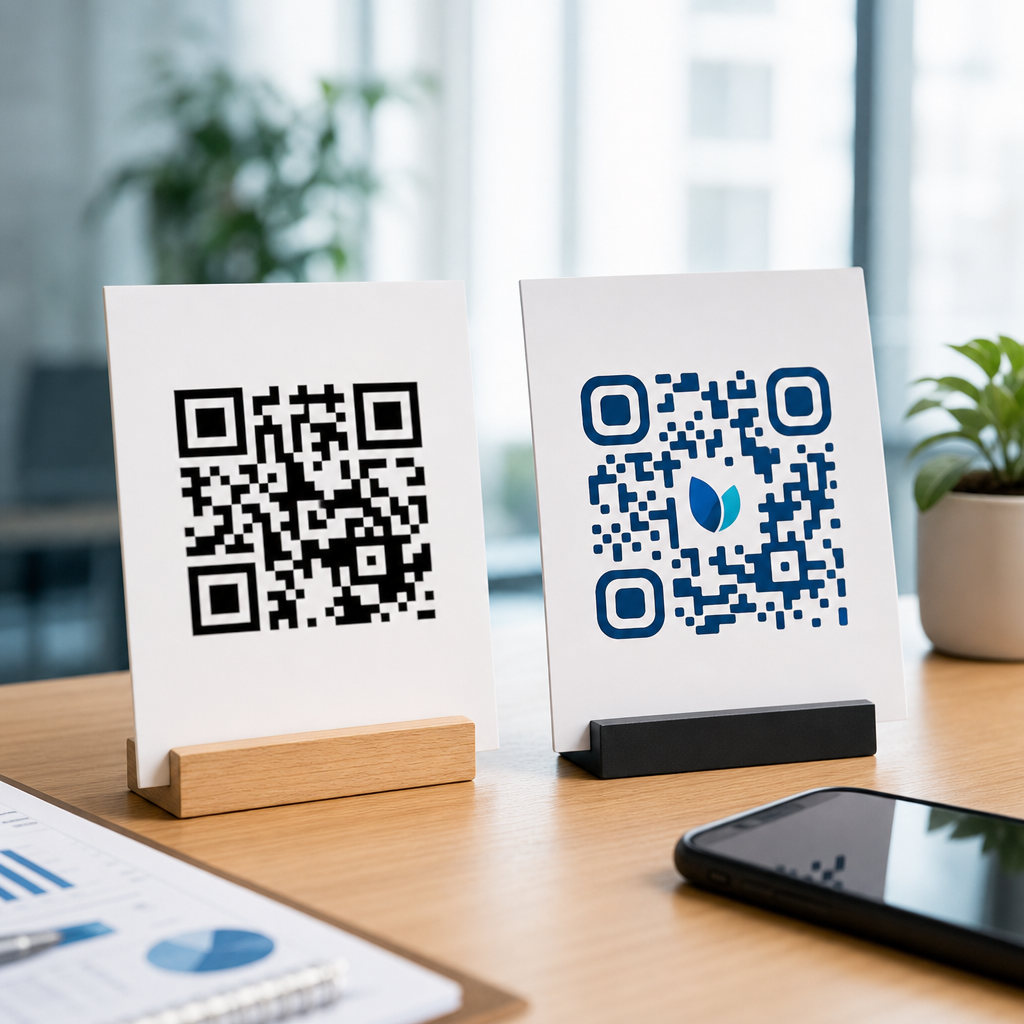
Custom QR codes and standard QR codes both connect offline attention to online action, but they do not perform equally in the real world. For brands deciding how to present links on packaging, signage, menus, direct mail, product inserts, and event materials, the difference is not cosmetic. It affects scan rate, trust, analytics, campaign flexibility, and even long-term maintenance. In practice, the better option depends on the goal, the environment, and how well the code is designed.
A standard QR code is the familiar black-and-white square generated with a fixed pattern and usually linked directly to a destination URL. It is optimized for simplicity, low cost, and broad compatibility. A custom QR code, often called a branded QR code, changes the visual presentation while preserving machine readability. It may include brand colors, rounded modules, a logo, a short branded domain, a custom frame with a call to action, and a dynamic redirect that allows the destination to be edited after printing. In many campaigns I have worked on, teams assume customization is only a design preference. It is not. It changes user behavior because people scan what they recognize and trust.
This matters because QR codes now sit at the center of retail, hospitality, healthcare, field service, education, and consumer packaging. After the pandemic accelerated adoption, smartphone camera apps improved native scanning, and user hesitation dropped. Yet adoption alone does not guarantee performance. A QR code can be visible and still underperform if it lacks context, looks suspicious, or fails under low light, curved surfaces, or reflective packaging. A branded QR code can lift engagement, but only when customization respects technical constraints such as contrast ratio, quiet zone spacing, error correction level, and module size. The best-performing codes balance brand identity with scan reliability.
For marketers, performance usually means more scans, better conversion from scan to landing page action, cleaner attribution, and easier optimization across channels. For designers, it means integrating the code into the creative without hurting readability. For operations teams, it means using dynamic infrastructure, monitoring uptime, and preventing broken links on printed assets that may stay in circulation for years. This article compares custom QR codes and standard QR codes across these criteria, with a special focus on branded QR codes as the core design-and-branding approach for organizations that want measurable results, not just prettier squares.
What Branded QR Codes Change Beyond Appearance
Branded QR codes differ from standard QR codes in three operational ways. First, they shape perception before the scan. A plain code with no label can look anonymous or risky, especially in public spaces where users worry about phishing or malicious redirects. A branded code paired with a recognizable logo, campaign headline, and branded short link signals legitimacy. Second, they support campaign management when built as dynamic QR codes. Instead of encoding the final URL directly, the code points to a redirect service, letting teams change destinations, append UTM parameters, localize by geography, or A/B test landing pages without reprinting. Third, they generate stronger reporting because scan events can be measured centrally and segmented by asset, date, device, and location.
Those advantages explain why branded QR codes have become a hub topic inside QR code design and branding. They connect visual design, brand governance, conversion optimization, analytics, and print production. A product team may want one code style system for labels, shelf talkers, and inserts. A franchise brand may need templates that local operators can customize without violating logo rules. An enterprise compliance team may require ownership of the redirect domain and documented retention policies for scan data. Standard QR codes can work for one-off utility uses, but branded QR codes scale more effectively across departments and campaigns.
Performance also depends on what is being measured. If the only question is whether any phone can decode the symbol, a plain code often performs very well because it uses the default high-contrast format. If the question is whether more people notice, trust, scan, and complete the intended action, branded QR codes usually have the edge. In my own testing on retail signage and mail pieces, the biggest lift rarely came from adding a logo alone. It came from combining a clear call to action, a short branded URL, and a design frame that explained the value of scanning.
Scan Rate, Trust, and Conversion Performance
When businesses ask which performs better, the practical answer is this: branded QR codes usually outperform standard QR codes on scan rate and downstream conversion, while standard QR codes retain an advantage in raw simplicity and low failure risk. Why does branding improve scan rate? Because users need motivation and reassurance in less than a second. A code next to text that says “Scan for setup video,” “Scan to view ingredients,” or “Scan for warranty registration” answers the user’s first question immediately. Add a brand mark and consistent color treatment, and the code looks intentional rather than random.
Trust is a measurable factor. Security-conscious users hesitate when they cannot predict where a scan will lead. A branded frame and human-readable short domain reduce that uncertainty. This is especially important in financial services, healthcare, and public venues where fraudulent stickers have trained users to be cautious. A standard QR code can still earn trust if the surrounding design is strong, but branded QR codes make trust signals part of the code unit itself rather than depending entirely on adjacent copy.
Conversion after the scan depends less on the code pattern and more on the experience it launches, yet the code still influences results. High-intent users who scan branded packaging often expect continuity: the landing page should match the same campaign, product, or offer. Dynamic branded QR codes help maintain that continuity because teams can route by product SKU, store, language, or inventory status. Standard static codes often break this chain over time because the printed destination is fixed. If a page moves, a product is replaced, or a promotion ends, the user hits a dead end unless the site team preserves redirects indefinitely.
| Factor | Standard QR Codes | Custom or Branded QR Codes |
|---|---|---|
| Visual trust | Neutral, sometimes anonymous | Higher when paired with logo, brand colors, and short domain |
| Scan reliability | Very high with default black-on-white design | High if contrast, quiet zone, and error correction are preserved |
| Campaign flexibility | Low for static links | High with dynamic redirects and editable destinations |
| Analytics | Basic if linked directly | Strong centralized scan tracking and attribution |
| Brand consistency | Minimal | Excellent across packaging, print, and in-store media |
| Production risk | Low | Moderate if overdesigned or poorly tested |
Design Rules That Determine Whether a Custom Code Works
Custom QR codes perform well only when the design respects the symbol’s structure. The three finder patterns in the corners must remain distinct. The quiet zone, the blank margin around the code, should typically be at least four modules wide. Contrast must be strong enough for smartphone cameras to separate dark modules from light background areas; dark foreground on light background remains the safest choice. Error correction level matters because adding a logo or stylizing modules removes or obscures data area. In practice, many branded codes use level H error correction, which can recover from more damage or occlusion, though it also increases symbol density.
Size is another non-negotiable factor. A useful field rule is a scan distance ratio around ten to one: if people scan from ten feet away, the code should be roughly one foot wide. That is a simplification, but it keeps teams from placing tiny codes on posters, shelf signs, or trade show walls. Material and placement matter just as much. Glossy varnish, metallic foils, curved bottles, low-light restaurant tables, and wrinkled labels can all hurt readability. I have seen a perfectly generated branded code fail only because it was printed across a package seam or reduced below the minimum size during final artwork export.
Logo insertion is where many teams overreach. A small centered logo can work well if the generator recalculates the pattern properly and the code is tested on multiple devices. A large opaque logo, decorative background image, or gradient crossing the data modules often creates inconsistent scans. Rounded modules, custom eyes, and brand colors can be effective, but every change should be validated in realistic conditions, not only on a designer’s screen. Use iPhone and Android camera apps, older midrange devices, and common scanning apps. Test under glare, from angles, and at the intended distance.
Dynamic QR Codes, Analytics, and Lifecycle Management
The strongest business case for branded QR codes is often not aesthetics but lifecycle control. Dynamic QR codes let teams update the destination after printing. That single feature protects investment in packaging, direct mail, point-of-sale displays, manuals, and outdoor signage. If a landing page changes, the QR asset does not become obsolete. If a campaign underperforms, the destination can be optimized without replacing every printed piece. For seasonal brands and multi-market organizations, dynamic routing enables localization, language detection, store matching, or inventory-aware redirection.
Analytics add another layer of performance. A dynamic branded QR code can capture timestamp, approximate location derived from IP, device type, operating system, and referrer context depending on the platform and privacy configuration. That data helps answer operational questions: Which store poster drove the most scans? Did the package insert convert better than the shipping box label? Are event attendees scanning during the keynote or afterward? Teams can pair scan data with analytics tools such as Google Analytics 4, Adobe Analytics, or CRM events using UTM conventions and server-side redirects.
Governance matters here. The redirect domain should be owned by the brand, not a disposable third-party account controlled by an agency intern. Link rot, vendor churn, and account cancellations are common failure points. Reliable platforms such as Bitly, QR Code Generator PRO, Scanova, Beaconstac, or enterprise campaign managers can support dynamic links, but ownership, exportability, and SLA expectations should be reviewed before rollout. Branded QR codes perform better over time because they are treated as durable digital infrastructure, not just artwork placed in a layout file.
Best Use Cases for Standard Codes and Branded Codes
Standard QR codes remain the right choice in some environments. Internal operations, warehouse labels, temporary testing, manufacturing workflows, and low-stakes one-page links often benefit from plain, high-contrast codes. If the audience is trained, the environment is controlled, and branding adds no business value, a standard static code is efficient. The same is true for engineering prototypes, classroom exercises, and one-time event credentials where speed matters more than presentation.
Branded QR codes are better for customer-facing experiences where attention, trust, and continuity affect outcomes. Consumer packaged goods are a leading example. A food brand can place a branded QR code on packaging that leads to sourcing information, allergen details, recipes, loyalty enrollment, or replenishment. Hospitality brands use them for menus, property guides, and upsells. B2B companies use branded codes on trade show booths and brochures to route visitors to product demos or lead forms with source attribution. Healthcare systems use them for patient education and appointment instructions because recognizable branding reduces confusion.
The best hub strategy for branded QR codes is to treat them as a family of use cases rather than a single tactic. Design systems, logo placement standards, minimum size rules, print specifications, destination architecture, and analytics naming conventions should all be documented. When teams do this, every future article or campaign about packaging QR codes, restaurant QR codes, flyer QR codes, logo QR codes, dynamic QR tracking, or QR code call-to-action copy fits under one coherent operating model.
So which performs better: custom QR codes or standard QR codes? For pure readability in ideal conditions, standard QR codes are the baseline winner because their default format minimizes risk. For real marketing performance, branded QR codes usually win because they increase trust, fit the visual system, support dynamic destination control, and produce better analytics. The important caveat is that customization must be disciplined. A beautiful code that fails to scan is not branded success; it is broken navigation.
The most effective approach is to match the code type to the job. Use standard codes for controlled internal or short-life applications where simplicity is enough. Use branded QR codes for customer-facing campaigns, packaging, in-store media, print, and any asset that needs measurement, flexibility, and long-term maintenance. In those cases, include a clear call to action, preserve high contrast and quiet zones, use dynamic redirects, and test across devices and environments before release. Performance comes from combining design judgment with technical rigor.
As the hub for branded QR codes within QR code design and branding, this topic should guide every related decision: logo use, color rules, packaging placement, landing page continuity, tracking setup, and governance. Brands that build a repeatable QR code standard do more than improve scans. They create a trusted bridge between physical touchpoints and digital experiences, one that remains editable, measurable, and useful long after the asset is printed. Review your current QR code library, identify where static plain codes are limiting results, and build a branded system that is designed to perform.
Frequently Asked Questions
1. Do custom QR codes actually perform better than standard QR codes?
Custom QR codes can perform better than standard QR codes, but not automatically. In many real-world campaigns, a well-designed custom QR code improves scan rate because it attracts more attention, feels more intentional, and gives people more confidence about where the code will lead. When a QR code includes brand colors, a recognizable logo, and a clean call to action nearby, it often looks more trustworthy than a plain black-and-white square floating on a package, poster, menu, or mailer. That visual context can make a measurable difference, especially in crowded environments where people have many things competing for their attention.
That said, performance depends heavily on execution. A standard QR code is often easier to generate and is usually very reliable because it follows the most basic, highly scannable format. If a custom QR code is overdesigned, uses low contrast, has too much visual styling, or places a logo in a way that interferes with the pattern, scan performance can drop quickly. In other words, custom QR codes have a higher upside, but they also create more room for mistakes. A standard QR code may outperform a custom one if the custom version sacrifices readability for branding.
The strongest answer is that neither format wins in every situation. If the goal is maximum simplicity, fast deployment, and dependable scanning in varied conditions, a standard QR code is often the safer choice. If the goal is stronger brand presence, higher engagement, better trust, and a more polished campaign experience, a properly tested custom QR code can outperform it. The best-performing option is the one that balances visibility, scannability, context, and user confidence.
2. Are standard QR codes more reliable and easier to scan?
In general, yes. Standard QR codes are usually more reliable because they are built in the simplest and most universally recognized format. They typically use high-contrast black modules on a white background, with no extra branding elements that could interfere with how a smartphone camera reads the code. Because they are visually straightforward, they tend to scan quickly across a wide range of devices, camera qualities, lighting conditions, print sizes, and surface materials. That makes them especially useful in situations where performance must be predictable and failure is costly.
This reliability matters in places like warehouse labels, utility documents, basic product packaging, instructions, receipts, or operational workflows where the main objective is function, not visual marketing. In those cases, a standard QR code reduces complexity and lowers the risk of scanning issues. It is also a strong choice when the code may be printed very small or reproduced in environments where contrast and image quality cannot be tightly controlled.
However, “more reliable” does not mean “always better.” A standard QR code may be easier to scan, but it can also be easier to ignore. In public-facing marketing materials, people often respond better to a code that looks clearly tied to a brand and appears to have a purpose beyond simply existing on the page. If a custom QR code is designed correctly, tested across devices, and printed at an appropriate size with sufficient quiet space and contrast, it can still be highly reliable while offering stronger marketing value. So while standard codes have an edge in baseline scannability, custom codes can narrow that gap significantly when they are professionally executed.
3. How do custom and standard QR codes affect trust and brand perception?
Trust is one of the biggest differences between custom and standard QR codes, especially in consumer-facing campaigns. A standard QR code is familiar, but it can also feel anonymous. People may hesitate to scan a code if they are unsure where it leads or whether it is legitimate. This is particularly true on posters, public signage, direct mail, or product inserts where users have little context and may be cautious about scams, phishing, or irrelevant landing pages. A plain QR code without supporting branding can create uncertainty, even if it is technically functional.
Custom QR codes can reduce that hesitation by making the destination feel more predictable. When a code includes brand colors, a logo, and surrounding visual elements that match the rest of the campaign, users are more likely to assume it leads to an official page. That familiarity can improve perceived legitimacy and increase willingness to scan. In brand-sensitive industries such as retail, hospitality, events, food service, and consumer packaged goods, this added layer of visual trust can have a direct impact on response rates.
Brand perception also matters beyond the initial scan. A custom QR code can signal professionalism, attention to detail, and campaign consistency. It shows that the brand has thought about the user experience, not just the mechanics of linking offline to online. By contrast, a generic-looking standard code may still work perfectly, but it does less to reinforce identity or create a polished impression. For organizations trying to build recognition, increase engagement, or maintain a premium image, custom QR codes often provide a meaningful advantage. The key is that the design must still support easy scanning; trust is strengthened when branding and usability work together, not when one compromises the other.
4. Which type of QR code is better for analytics, editing links, and long-term campaign flexibility?
From an analytics and campaign-management perspective, the most important distinction is usually not custom versus standard in appearance, but static versus dynamic in setup. Either a custom QR code or a standard QR code can be created as a dynamic code, which means the destination URL can be updated later without reprinting the code. Dynamic QR codes also make it possible to track scans, measure time and location trends, compare performance across placements, and optimize campaigns over time. For marketers, that flexibility is often more valuable than the visual style alone.
That said, custom QR codes are commonly used in branded marketing campaigns where analytics matter most, so they are often associated with stronger measurement and control. For example, a custom code placed on product packaging, event signage, menus, or direct mail can be connected to a dynamic landing experience, allowing a brand to change promotions, update content, route users by device or geography, and monitor scan activity after launch. This is especially helpful when printed materials have a long shelf life or when campaigns may need to evolve without expensive reprints.
Standard QR codes can offer the same technical flexibility if they are dynamic, but they are often deployed as simple static codes for quick use cases. Static codes work well when the destination will never change and analytics are not essential, but they become limiting if the URL breaks, the page is updated, or the campaign strategy changes. Over the long term, brands that care about maintenance, attribution, and optimization usually benefit more from dynamic QR code infrastructure, whether the code itself looks custom or standard. In short, if long-term performance includes data, editing control, and adaptability, dynamic setup matters most, while custom design can further improve engagement at the point of scan.
5. When should a brand choose a custom QR code instead of a standard QR code?
A brand should choose a custom QR code when the QR code is part of the customer experience, not just a utility function. If the code appears on packaging, retail displays, restaurant menus, direct mail, product inserts, trade show materials, event signage, or any branded touchpoint where presentation influences behavior, a custom QR code is often the stronger choice. In these contexts, visual design can increase noticeability, reinforce credibility, and support higher engagement. A custom code is particularly valuable when the brand wants the scan to feel intentional, premium, or integrated into a broader campaign.
Custom QR codes also make sense when multiple brands, competitors, or messages are present in the same environment. A plain standard QR code can easily blend in or be overlooked, while a customized version with a clear call to action can stand out. This advantage is useful in crowded physical settings such as store shelves, conferences, public venues, and shared printed materials. If the objective is to improve scan rate, strengthen recognition, or connect the code visually to a promotion or product story, custom design can help.
A standard QR code is often the better option when speed, simplicity, and maximum baseline scan reliability are the top priorities. It is ideal for internal operations, highly functional use cases, low-budget campaigns, or any application where branding adds little value. The smartest decision is usually situational: choose standard QR codes when utility comes first, and choose custom QR codes when user trust, visual appeal, and marketing performance are central to success. In either case, the best results come from proper sizing, strong contrast, adequate quiet space, thoughtful placement, and real-world testing before launch.