
A failed QR code campaign is not the end of your marketing investment; it is a diagnostic moment that reveals exactly where audience intent, creative execution, landing page performance, and measurement discipline broke down. In practice, most failed QR code campaigns do not fail because people dislike QR codes. They fail because the code appears in the wrong context, promises too little value, sends users to a poor mobile experience, or lacks the tracking needed to isolate friction. I have audited underperforming campaigns across retail packaging, restaurant table tents, event signage, direct mail, and out-of-home placements, and the pattern is consistent: when teams treat the QR code as the strategy instead of the access point, scan rates and conversions collapse.
Recovery starts with a clear definition of terms. A QR code campaign is any initiative that uses a scannable code to drive a measurable user action, such as visiting a landing page, claiming an offer, downloading an app, viewing product information, registering for an event, or submitting a lead form. Failure does not mean only zero scans. It can mean low scan-through rate, weak conversion after the scan, poor lead quality, broken attribution, or negative brand response. Lessons learned matter because QR campaigns sit at the intersection of offline media and mobile behavior. When they underperform, the problem often exposes larger issues in message-market fit, channel placement, mobile usability, and campaign analytics that would hurt other channels too.
This hub article explains how to recover from a failed QR code campaign by identifying the type of failure, diagnosing root causes, redesigning the offer and user journey, rebuilding technical tracking, and creating a testing system that prevents repeat mistakes. It also serves as a practical center for the broader failures and lessons learned topic under QR code campaign ideas and case studies. If you are asking why nobody scanned, why scans did not convert, whether dynamic QR codes help, what metrics matter, or how to relaunch without wasting more budget, the answers begin with disciplined analysis rather than a quick creative refresh.
Classify the Failure Before You Fix Anything
The fastest way to waste recovery budget is to treat every weak result as the same problem. In my campaign postmortems, I classify QR code failures into four buckets: visibility failure, motivation failure, experience failure, and measurement failure. Visibility failure means people never noticed or could not easily scan the code because of poor size, contrast, placement height, lighting, print distortion, or distance. Motivation failure means they saw it but had no reason to act. A code next to a generic line like “Learn more” almost always underperforms compared with a concrete value proposition such as “Scan for 20% off today” or “See ingredients and allergy info.”
Experience failure happens after the scan. The code works, but the destination is slow, not mobile optimized, mismatched to the ad, blocked by too many form fields, or impossible to use on weak cellular connections. Measurement failure means the campaign may have performed better than reported, but poor UTM governance, missing event tracking, redirect issues, or inconsistent CRM integration made it impossible to prove. Each category requires a different remedy. If scans are low, redesigning the form will not help. If scans are high but conversions are weak, changing poster placement will not fix the real problem. Accurate classification turns recovery from guesswork into a controlled process.
Start with a basic funnel: impressions, scans, landing page sessions, engaged visits, conversions, qualified conversions, and downstream revenue. Compare each stage against expected benchmarks from your industry and medium. For example, direct mail can generate stronger intent than transit posters because the user has more time and fewer distractions. Event badges may get high scan volume but lower lead quality if the offer is broad. The goal is not to find one average benchmark and force your numbers into it. The goal is to locate the exact stage where performance drops sharply, because that is where the campaign actually failed.
Audit Creative, Placement, and Scanability
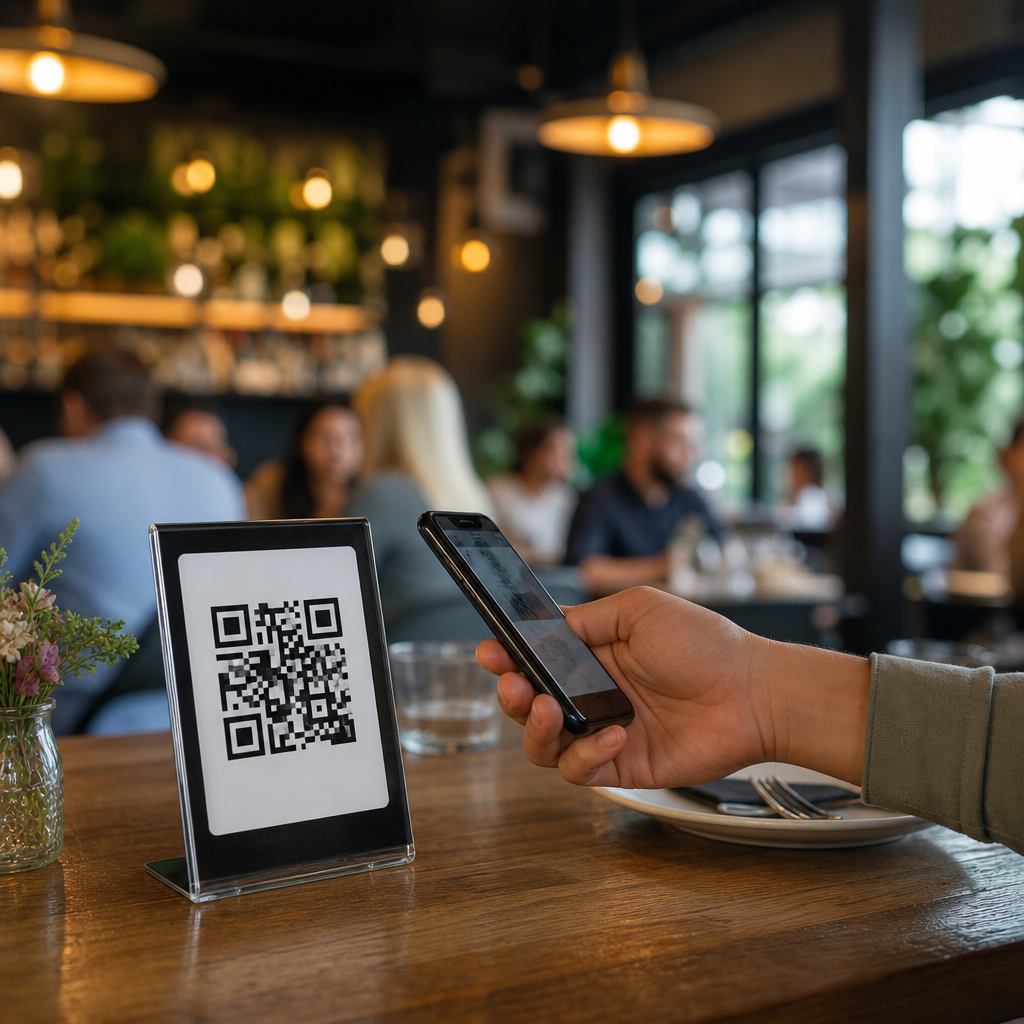
Many recovery efforts overlook the physical environment in which scanning happens. QR code performance is highly contextual. A code on product packaging competes with shelf pressure, limited time, and customer uncertainty. A code on a restaurant menu competes with hunger and social conversation. A code on a billboard gives drivers almost no safe opportunity to engage. I have seen brands blame weak offers when the code itself was simply too small for the expected scanning distance. A practical rule is to size the code based on environment, maintain a proper quiet zone, and test with multiple phone models under real lighting conditions before launch.
Creative also determines whether users trust the scan. Branded design can improve recognition, but over-stylized codes with weak contrast or crowded logos often reduce readability. ISO/IEC 18004 standards matter here because technical readability is not negotiable. Keep dark modules on a light background, protect the quiet zone, and avoid placing the code over complex imagery. Placement should align with natural eye flow. On flyers, put the call to action above or beside the code, not below where attention drops off. On packaging, place the code where hands can hold the item steady. On table tents, angle the code toward seated users instead of printing it flat.
| Failure Signal | Likely Cause | Best Fix |
|---|---|---|
| Very low scans | Poor visibility, weak CTA, bad placement | Increase code size, improve contrast, rewrite offer |
| Good scans, low conversions | Landing page friction or message mismatch | Align destination with promise, reduce steps |
| Strong traffic, poor lead quality | Incentive attracts low-intent users | Tighten offer and qualification logic |
| Unclear results | Broken attribution or missing analytics | Rebuild tracking with UTMs and event mapping |
Do not skip live testing. Print samples at production quality, place them in the intended environment, and test scan speed from the actual viewing distance. Use both iPhone and Android devices, older camera hardware, and at least one low-signal scenario. If a user has to reposition repeatedly, zoom, or move closer than the environment allows, the campaign is already compromised before the first impression is bought.
Repair the Value Proposition and Call to Action
A QR code is a bridge, and people cross bridges only when the destination feels worth the effort. One of the most common reasons campaigns fail is that the call to action is informational from the brand’s perspective rather than valuable from the user’s perspective. “Discover our story” sounds polished but rarely motivates action in a busy retail aisle. “Scan to compare models in 30 seconds” is specific, useful, and time-bound. Recovery often begins by rewriting the CTA so it answers the user’s immediate question: what do I get, how fast do I get it, and why should I trust this scan?
The offer must also match context. At an event, people may want schedules, speaker bios, slides, or raffle entry. On packaging, they may want setup instructions, warranty registration, recipes, authenticity verification, or reordering. In healthcare waiting rooms, they may want intake forms, location directions, or patient education. I have seen a beverage brand lift scans by replacing “Join the community” with “Scan for cocktail recipes using this bottle,” because the new message met a real moment of need. The campaign did not need a new audience; it needed a more relevant reason to scan.
Urgency and clarity outperform cleverness. If there is an incentive, state it plainly. If there is no incentive, highlight utility. If privacy matters, say where the scan leads and what happens next. People are more cautious than they were a few years ago, especially in public environments where malicious codes have become a known risk. A short trust cue such as “Opens our official site” or a branded domain in the redirect path can reduce hesitation. Recovery is not about louder messaging. It is about making the exchange obvious and credible.
Fix the Mobile Destination and Post-Scan Journey
If scans happen but results do not, the destination is usually the problem. The landing page should load quickly on mobile networks, reflect the exact promise made near the QR code, and ask for only the information needed for the next step. Google’s Core Web Vitals are useful diagnostic signals here, especially Largest Contentful Paint and Interaction to Next Paint, but field testing matters more than lab scores. Open the page from the actual QR code redirect on a crowded network and watch how long it takes before a user can act. Every additional second reduces completion rates, especially for low-commitment offers.
Message match is nonnegotiable. If the poster offers a discount, the landing page must show that discount immediately. If the code is placed on product packaging for setup help, users should land on the exact model guide, not the homepage. I have seen campaigns recover simply by replacing a generic homepage redirect with a dedicated mobile page containing one headline, one primary action, and one supporting proof point. Homepages are navigation hubs, not conversion pages. They force users to think when the campaign should be reducing thought.
Forms are another common failure point. On mobile, every field is a tax. Ask only what is required to fulfill the offer or qualify the lead. Use autofill where possible, support wallet passes or one-tap app downloads when relevant, and avoid pop-ups that obscure content. For location-based experiences, confirm that store locators, map links, and click-to-call buttons work without pinching or retyping. Recovery often means removing friction, not adding persuasion. A cleaner path consistently beats a more elaborate one.
Rebuild Tracking, Attribution, and Data Quality
A surprising number of QR code campaigns fail analytically before they fail commercially. Teams print static codes without a redirect layer, use inconsistent UTM parameters, or send traffic into pages with incomplete analytics events. Then they cannot answer basic questions: which placement produced the scan, which creative led to revenue, or whether repeat scans came from the same user. To recover, create a measurement architecture first. Dynamic QR codes are usually the right choice because they allow destination changes, placement-level tracking, and phased testing without reprinting every asset.
At minimum, define source, medium, campaign, content, and placement naming conventions. Map scan events, landing page views, CTA clicks, form starts, form completions, coupon saves, and purchases into your analytics platform. GA4 can handle event collection, but it should connect to your CRM or commerce system so campaign success is judged by qualified outcomes rather than raw scans. If the QR code appears across multiple surfaces, generate separate codes for each placement rather than relying on one code for the whole campaign. Granularity is what turns failure into insight.
Also account for offline realities. A user may scan in store, return later via direct traffic, and convert on desktop. If your attribution model ignores assisted conversions, you will undervalue the campaign. Coupon codes, first-party identifiers, CRM source fields, and post-purchase survey questions can help close that gap. The goal is not perfect attribution, which is rarely possible. The goal is decision-grade attribution: enough confidence to know which variables deserve more budget and which should be retired.
Run a Structured Recovery Plan and Relaunch Carefully
Once the diagnosis is complete, relaunch in stages. Start with one corrected variable at a time if volume allows: new CTA, revised placement, faster landing page, or improved incentive. A controlled pilot is better than a full reprint because it shows which fix actually changes behavior. In retail, test revised shelf talkers in a limited store set. In direct mail, split a small batch by offer. At events, rotate booth signage messages across time blocks. Recovery should look like disciplined experimentation, not a dramatic reset driven by internal opinion.
Set thresholds before the relaunch. Define what counts as improvement for scan rate, conversion rate, cost per lead, qualified lead rate, or revenue per scan. Without predefined thresholds, teams tend to declare success based on the first metric that moves. I recommend weekly reviews during the recovery period with creative, performance, sales, and operations stakeholders in the same room. QR code campaigns often fail because ownership is fragmented: design controls print, marketing controls copy, web controls the destination, and sales judges lead quality later. Recovery works when those functions review one funnel together.
This hub on failures and lessons learned should anchor your next steps across related topics: low scan rate analysis, QR code landing page optimization, static versus dynamic code strategy, event QR code mistakes, packaging campaign troubleshooting, and QR code attribution methods. Use those subtopics to deepen the exact issue your audit surfaces. The central lesson is simple. Failed QR code campaigns are recoverable when you treat them as measurable systems rather than isolated creative misses. Diagnose the real failure point, fix the value exchange, remove mobile friction, rebuild tracking, and relaunch with controlled tests. If your last campaign underperformed, do not print a new code and hope. Build the recovery plan, validate it in the field, and turn the next scan into a result.
Frequently Asked Questions
What should I do first after a QR code campaign fails?
The first step is to stop treating the campaign as a total loss and start treating it as a source of evidence. A failed QR code campaign usually leaves behind valuable clues about what went wrong, whether the issue was poor placement, weak creative, low audience relevance, a bad mobile landing page, or incomplete tracking. Begin by auditing the full user journey from the moment someone sees the code to the moment they are expected to convert. Ask practical questions: Was the QR code placed where people had enough time and motivation to scan it? Did the surrounding message clearly explain what the user would get? Was the call to action specific and compelling, or vague and forgettable? Did the destination page load quickly on mobile and match the promise made in the ad or sign?
Next, review the numbers you do have, even if the tracking setup was imperfect. Compare impressions or estimated foot traffic with scan volume, then compare scans with landing page visits, bounce rate, time on page, form completions, purchases, or any other downstream conversion events. This helps you identify where the biggest drop-off happened. If scans were low, the problem likely started with visibility, incentive, or context. If scans were healthy but conversions were poor, the problem probably shifted to the landing page experience, offer clarity, or conversion design. The goal is not to assign blame to the QR code itself. The goal is to isolate the exact friction point so your next version is built on evidence rather than assumptions.
Why do most QR code campaigns fail in the first place?
Most QR code campaigns fail because the campaign asks for user effort without giving enough immediate reason to act. People do not scan QR codes simply because they are present. They scan when the code appears in the right moment, in the right environment, with a clear promise of value. If a code is placed on a fast-moving billboard, in a dimly lit corner of a store, or on printed material with no persuasive message around it, even a technically functional code can underperform badly. In many cases, the failure has less to do with the code and more to do with campaign strategy, message design, and user intent.
Another common reason is disconnect between expectation and experience. If a poster promises exclusive access, a discount, or useful information, but the scan leads to a generic homepage, a slow-loading site, or a page that is difficult to navigate on mobile, users abandon immediately. That creates the false impression that QR engagement does not work, when the real issue is post-scan friction. Poor measurement is also a major factor. Without campaign-specific URLs, UTM parameters, event tracking, or segmented analytics, marketers cannot tell whether the issue was low scan volume, bad traffic quality, or weak conversion flow. In short, QR code campaigns usually fail because of context, offer, user experience, and analytics gaps—not because consumers reject the format itself.
How can I tell whether the problem was the QR code, the offer, or the landing page?
The best way to diagnose the problem is to break the campaign into stages and evaluate performance at each stage. Stage one is visibility and scan motivation. Did enough people see the code, notice it, and understand why they should scan it? If scans were extremely low relative to exposure, the problem was likely placement, size, contrast, surrounding copy, or incentive. A QR code with no clear call to action often gets ignored because users do not know what benefit they will receive. Phrases like “Scan to learn more” are usually weaker than direct, outcome-focused language such as “Scan for 20% off today” or “Scan to book in 30 seconds.”
Stage two is the transition from scan to landing page engagement. If people scanned but bounced quickly, that suggests a mismatch between what was promised and what they found. Review mobile page speed, form length, readability, load errors, and message continuity. The destination should feel like a seamless continuation of the original campaign, not a detour. Stage three is conversion. If users spent time on the page but did not complete the desired action, the issue may be the offer itself, pricing, trust signals, unclear next steps, or a weak conversion path. By measuring scan rate, landing page engagement, and final conversion separately, you can identify whether the breakdown happened before the scan, immediately after it, or near the point of conversion. That level of diagnosis is what turns a failed campaign into a smarter relaunch.
What are the most effective ways to recover and improve the next QR code campaign?
Recovery starts with simplification. Instead of trying to fix everything at once, focus on the handful of variables most likely to move results: placement, call to action, value proposition, landing page quality, and tracking. Make the QR code easier to notice by increasing its size, improving contrast, and placing it where users naturally pause rather than rush past. Rewrite the surrounding copy so the incentive is unmistakable. People respond better when they know exactly what they get and why it matters now. A concrete reward, exclusive content, instant access, or a time-sensitive offer often performs better than generic curiosity-based prompts.
Then improve the post-scan experience. Send users to a mobile-first landing page built specifically for the campaign, not a broad homepage. Keep the page fast, focused, and aligned with the promise made at the scan point. Reduce unnecessary navigation, limit form fields, and surface the primary action immediately. If trust is part of the hesitation, include testimonials, security cues, recognizable branding, or concise benefit-driven copy. Just as important, rebuild the campaign with proper measurement in place. Use unique QR codes for each placement or audience segment, attach UTM parameters, and configure analytics events for scans, page views, clicks, form starts, and conversions. Recovery is rarely about abandoning QR. It is about tightening the connection between audience context, message clarity, user experience, and data discipline so the next campaign performs with far less guesswork.
How important is tracking when recovering from a failed QR code campaign?
Tracking is essential because without it, you are left with opinions instead of diagnosis. In QR code marketing, even small blind spots can create misleading conclusions. For example, if a campaign generated few sales, that could mean very few people scanned, or it could mean plenty of people scanned but the landing page failed to convert them. Those are completely different problems and require completely different fixes. Robust tracking gives you the ability to separate top-of-funnel interest from mid-funnel engagement and bottom-of-funnel conversion performance. That is what makes recovery practical rather than speculative.
At a minimum, every QR code campaign should use campaign-specific destination URLs or QR variants tied to individual placements, media types, or audience segments. Add UTM parameters so web analytics can attribute sessions accurately. Track key events such as page load, button clicks, scroll depth, form starts, form completions, purchases, and calls. If the campaign runs across physical locations, packaging, direct mail, retail displays, or outdoor media, separate each source so you can identify where interest and friction differ. Good tracking also supports testing. Once you know which version of the offer, placement, or page experience performs best, you can scale with confidence. In recovery terms, measurement is not a technical extra. It is the system that turns a failed QR code campaign into a measurable improvement process.