Using QR codes for test drive scheduling gives automotive marketers a direct way to turn vehicle interest into booked appointments without forcing shoppers through unnecessary steps. In this context, a QR code is a scannable two-dimensional barcode that sends a driver to a landing page, form, inventory listing, calendar tool, or messaging workflow. Test drive scheduling is the process of selecting a vehicle, choosing a time, confirming shopper details, and routing the appointment to a dealership team. I have implemented these systems for dealer groups and OEM campaigns, and the pattern is consistent: when the path from curiosity to booking becomes shorter, lead quality improves and showroom friction falls. This matters because automotive buyers move between physical and digital touchpoints constantly. They see a car on a lot after hours, spot a print ad, compare trims on a mobile device, and expect immediate action. A well-built QR code strategy supports that behavior. It also strengthens the broader QR Codes in Marketing program by connecting inventory, attribution, retail operations, and customer intent in one measurable workflow. For automotive teams, this article serves as the hub for using QR codes in test drive scheduling across dealership websites, off-site media, events, service drives, and model launches.
The automotive context makes QR deployment more nuanced than in many retail categories. Inventory changes daily, legal disclosures vary by region, and lead routing must align with CRM processes. A code on a window sticker for a specific VIN may need different logic than a code on a billboard promoting a new model line. Dynamic QR codes are usually the better choice because they allow destination changes without reprinting assets, preserve campaign continuity, and support scan analytics such as location, time, and device type. Static codes can still work for evergreen pages, but they are less flexible when incentives, inventory feeds, or scheduling tools change. Another important term is conversion rate: in this setting, it usually means the percentage of scans that become completed test drive bookings, not merely form opens. Teams that track only scans mistake curiosity for performance. The practical objective is qualified appointments that show up. That requires matching the scan experience to shopper intent, using mobile-first forms, and integrating every booking source with dealer operations so no request sits unattended.
Why QR codes work for automotive test drive scheduling
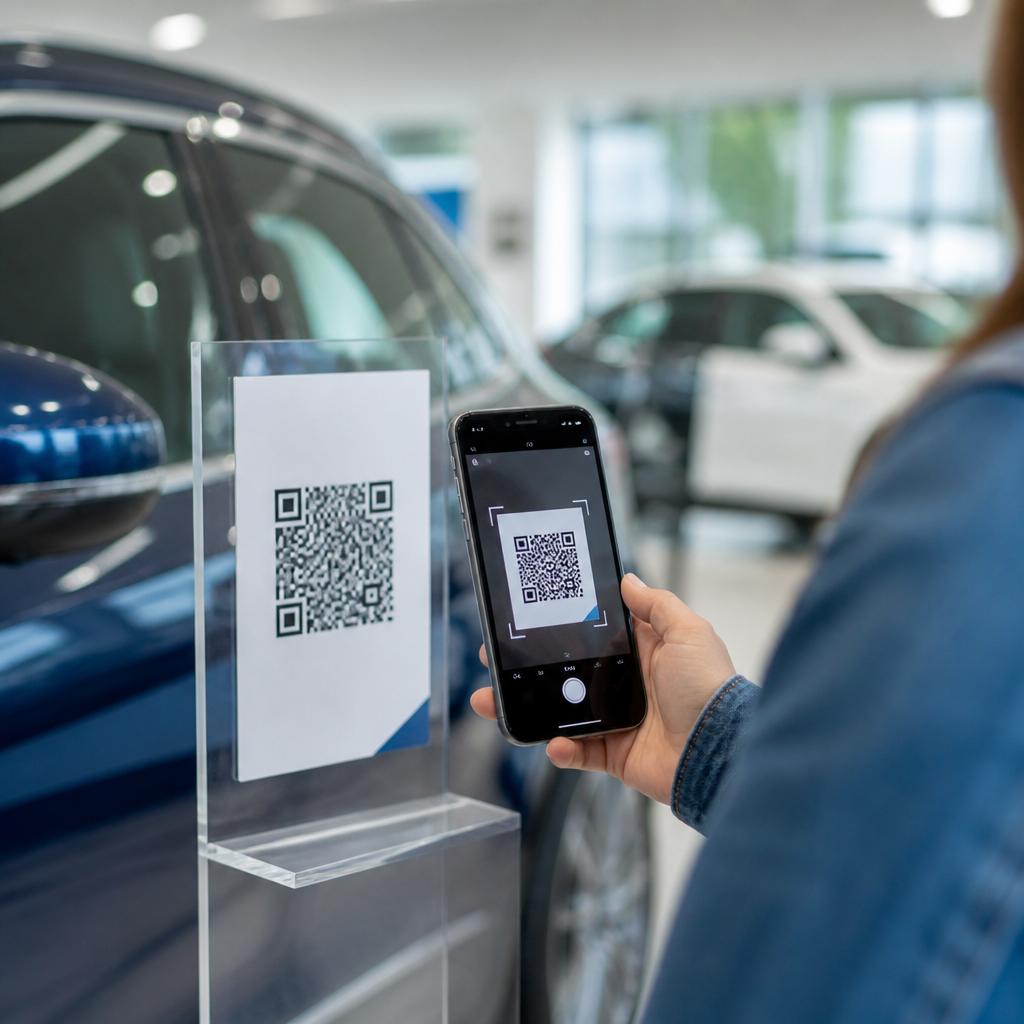
QR codes work in automotive because they bridge an offline moment of interest with an online action at the exact point of decision. A shopper standing next to a vehicle already has context: the model is visible, the trim may be posted, and urgency is often high. Asking that person to remember a long URL, search the dealership site, and navigate inventory pages creates avoidable drop-off. A scannable code removes that friction. In my experience, the best-performing use cases are high-intent placements: Monroney-adjacent stickers, lot toppers, showroom displays, direct mail, event signage, and localized out-of-home placements near the store. Each one captures attention where the desire to “try this car” is strongest.
There is also a measurable operational benefit. Dealerships often struggle with inconsistent appointment capture from phone calls, walk-ins, and third-party marketplaces. QR-based scheduling standardizes the intake path. When the code sends users to a dedicated booking page with prefilled vehicle data, stores can enforce cleaner lead fields, trigger immediate confirmations, and assign appointments based on rooftop, model specialist, or BDC queue rules. This improves response times, which directly affects show rates. According to widely cited retail lead management benchmarks, responding within minutes materially increases contact and appointment outcomes compared with delayed follow-up. QR codes help because they can trigger instant automation the moment a prospect scans and submits.
Where to place QR codes across the automotive journey
Placement determines whether a QR code becomes a booking engine or just decoration. On the dealership lot, the most effective placement is near the individual vehicle, with a clear action such as “Book a test drive for this exact SUV.” The landing page should carry VIN, model, trim, stock number, and location automatically. In print, direct mail for conquest or equity-mining campaigns can link to model-specific scheduling pages segmented by household data, geography, or trade-in propensity. At auto shows, ride-and-drive events, and mall displays, QR codes can funnel traffic to event calendars with time slots and waiver collection. In broadcast or connected TV support materials, a shortened vanity URL is still useful, but the QR code should remain visible long enough for a mobile scan.
Service lanes are another undervalued placement. Existing owners waiting for maintenance are often open to trying a new model, especially when there is a lease-end or upgrade opportunity. A code on service counter signage can route them to “test drive while you wait” scheduling. This is particularly effective for electric vehicle adoption, where current owners may need a low-pressure first experience with charging, regenerative braking, or driver assistance features. For OEM regional campaigns, dealer locators can display a shared model-level QR code that uses geolocation to route the customer to the nearest participating retailer’s availability. That creates consistency while preserving local appointment ownership.
Building the scheduling flow that converts scans into appointments
A QR code is only as effective as the destination behind it. The ideal scheduling flow is short, mobile-first, and specific. First, confirm the vehicle or model family immediately so the user knows the scan worked. Second, present available dates and time windows without making the shopper create an account. Third, collect only the minimum required fields: name, mobile number, email, preferred contact method, and any trade-in interest. Fourth, send an immediate confirmation by SMS or email with the vehicle details, directions, and a calendar hold. Fifth, push the lead to the CRM and alert the assigned team member. Every extra field lowers completion. If a finance prequalification is offered, it should be optional and clearly separated from the scheduling task.
Speed matters technically as well. Mobile landing pages should load in under three seconds on cellular connections, compress imagery, and avoid pop-ups that block the form. Accessibility matters too: sufficient contrast, readable type, and button sizes that work outdoors in bright conditions. If inventory is scarce, offer alternatives before the user exits. For example, if a specific trim is unavailable, suggest a comparable in-stock unit or a model-level drive. Mapping this flow usually reveals hidden process issues inside the dealership, such as double-booked calendars, missing SMS consent language, or weak CRM field mapping. Fixing those issues often improves all appointment channels, not just QR traffic.
| Placement | Best destination | Main advantage | Key caution |
|---|---|---|---|
| Vehicle window or lot stand | VIN-specific booking page | Highest intent, strongest relevance | Needs dynamic routing if vehicle is sold |
| Direct mail postcard | Model campaign scheduler | Easy household-level attribution | Message and offer must match landing page |
| Auto show signage | Event time-slot registration | Handles volume and staffing | Requires reliable mobile connectivity |
| Service lane display | Upgrade or EV test drive page | Targets current owners with known history | Offer should not disrupt service operations |
| Billboard or transit shelter | Nearest dealer scheduler | Captures local demand quickly | Creative must remain scannable at distance |
Technology stack, CRM integration, and measurement
For this automotive hub topic, the most important implementation truth is that QR code success depends on systems integration more than artwork. The core stack usually includes a dynamic QR platform, a mobile landing page builder or inventory feed connection, a scheduling engine, analytics tags, and CRM integration. Common dealership environments involve tools such as DealerSocket, VinSolutions, Elead, Salesforce Automotive Cloud, and inventory systems tied to website providers. The QR platform should support editable destinations, UTM parameters, and scan-level reporting. The scheduler should expose appointment status, not just submissions, so marketers can compare scans, booked drives, shows, and sales.
Measurement should be practical and hierarchical. Start with scan volume and unique scans. Then measure landing-page engagement, scheduler starts, completed bookings, confirmation delivery, appointment show rate, and downstream sales attribution. For multi-rooftop groups, break results down by store, campaign, placement, and model line. This identifies whether the issue is media quality, page friction, or store execution. If one dealer has strong scan-to-book rates but weak show rates, the problem is likely follow-up or appointment setting discipline. If scans are high and scheduler starts are low, the landing page probably lacks trust signals or loads too slowly. Use analytics platforms such as GA4 alongside CRM reports, but reconcile definitions carefully. A marketing platform may count every form submission; the store should count only valid appointments entered and acknowledged.
Automotive use cases by campaign type
Different automotive campaigns call for different QR code strategies. New model launches benefit from educational landing pages that explain features, then move users into a guided test drive booking. For electric vehicles, the page should answer practical questions upfront: charging time, estimated range, home charging setup, and eligibility for incentives. Certified pre-owned campaigns work better with inventory-led experiences because shoppers often care about a specific vehicle rather than a broad promise. Lease pull-ahead campaigns can use personalized mailers with QR codes tied to household or VIN data, sending current customers to upgrade appointments. Fleet and commercial sales are different again: the code may route to a request form for van or truck demonstrations at the customer’s job site rather than at the dealership.
There are also event-driven scenarios. Weekend tent sales, regional truck months, and manufacturer incentive pushes can all use QR codes to regulate appointment flow. During high-volume promotions, assigning dedicated slots protects salesperson capacity and reduces lot congestion. I have seen stores use separate codes for walk-around appointments, extended test drives, and at-home demonstrations, each feeding a different staffing queue. That level of segmentation matters because not all drives are equal. A serious buyer requesting a forty-five-minute family evaluation of a three-row SUV should not be handled like a five-minute first look at a compact crossover. The code can signal intent before a human makes contact.
Design, compliance, and operational pitfalls to avoid
Design mistakes are common and expensive. A QR code should be large enough to scan quickly, surrounded by quiet space, and paired with a direct call to action. “Scan to schedule your test drive” outperforms vague prompts such as “Learn more.” Contrast matters; dark code on a light background remains the safest option. Avoid placing the code on curved surfaces or reflective glass where distortion hurts scan reliability. Test printed assets from actual user distances, not just on-screen proofs. For roadside placements, account for speed, angle, and dwell time. If the code cannot be scanned safely and legally, the creative should push to a memorable URL instead.
Compliance and trust are equally important. Consent language for SMS reminders must meet current telecom and privacy requirements. If the booking page collects driver’s license information for extended drives, that data needs secure handling and clear disclosure. Incentive claims should match OEM and dealer legal standards, especially when offers vary by ZIP code, financing qualification, or inventory availability. Operationally, the biggest failure is neglect after submission. If a customer scans, books, and receives no confirmation call or message, the campaign teaches them not to trust the brand. Every QR scheduling program needs service-level agreements for response time, backup routing after hours, and accountability for no-contact leads.
Using QR codes for test drive scheduling is effective because it aligns with how modern car shoppers behave: they notice a vehicle, want details immediately, and prefer a short mobile path to action. The automotive teams that win with this approach do three things consistently. They place codes where intent is highest, they send every scan to a fast and relevant scheduling experience, and they connect bookings to CRM workflows that guarantee follow-up. As the hub within a wider QR Codes in Marketing strategy, this topic also supports related efforts across model launches, direct mail, showroom signage, service-lane retention, and event marketing. The same principles apply in each case: relevance, speed, measurement, and operational discipline.
The main benefit is not simply more scans. It is better-qualified appointments, cleaner attribution, and a smoother bridge between media spend and showroom activity. When a code identifies the vehicle, campaign, and source automatically, dealership staff can prepare the right car, personalize the conversation, and reduce friction at arrival. That improves customer experience and raises the odds of a productive visit. Review your current automotive touchpoints, choose two or three high-intent placements, and launch a measured pilot with dynamic QR codes, dedicated landing pages, and CRM tracking. Then expand based on appointment quality, show rate, and sales impact rather than scan volume alone.
Frequently Asked Questions
How do QR codes simplify the test drive scheduling process?
QR codes simplify test drive scheduling by removing extra steps between shopper interest and appointment booking. Instead of asking someone to remember a dealership URL, search for a vehicle later, or navigate through multiple pages, a QR code lets them scan and go directly to the most relevant destination. That destination could be a vehicle detail page, a dedicated test drive form, a live scheduling calendar, a mobile landing page, or even a messaging workflow that starts the conversation instantly.
For automotive marketers, this matters because timing is everything. A shopper standing next to a vehicle on a lot, viewing a direct mail piece at home, or browsing a showroom poster is already engaged. A QR code captures that interest in the moment and channels it into a clear action. The scheduling experience becomes faster, more convenient, and more likely to be completed because there is less friction. In practical terms, the process usually includes selecting the vehicle, choosing a preferred date and time, entering contact information, and receiving confirmation, all from a smartphone in just a few taps.
QR codes also help create a more consistent handoff between marketing and dealership operations. When set up correctly, the appointment request can be routed to the right store, sales team, or CRM workflow automatically. That means fewer missed opportunities, better follow-up, and a smoother experience for both the shopper and the dealership.
Where should dealerships and automotive marketers place QR codes to increase test drive bookings?
The best QR code placements are the ones that match shopper intent and make scanning feel natural. High-performing locations often include vehicle window stickers, showroom displays, lot signage, event booths, print ads, direct mail pieces, service lounge materials, email campaigns, and social media graphics. The goal is to place the code where a shopper is already thinking about a specific vehicle or is close to making a next-step decision.
On the dealership lot, a QR code on a vehicle display can send shoppers directly to a page for that exact model with an option to book a test drive immediately. In print and direct mail, the code can connect interest generated offline to a digital scheduling tool without requiring the shopper to type anything manually. In digital campaigns, a QR code can still be useful in formats that are viewed on a second screen, such as connected TV ads, event signage, or in-store displays where people can scan with their phones while continuing to engage with the environment around them.
Placement should always be paired with a strong call to action. A QR code by itself is not enough. Language such as “Schedule Your Test Drive,” “Scan to Check Availability,” or “Book This Vehicle Now” tells the shopper what to expect and why it is worth scanning. It is also smart to send people to a mobile-optimized landing page designed specifically for scheduling. If the page is too generic, slow, or difficult to use, even a well-placed QR code will underperform.
What should happen after a shopper scans a QR code for a test drive?
After a shopper scans the QR code, the next experience should be immediate, relevant, and easy to complete. Ideally, they should land on a mobile-friendly page that matches the context of the scan. If the QR code was placed on a specific vehicle, the page should feature that exact vehicle first, along with clear test drive options. If the code came from a broader campaign, the page should help the shopper choose a vehicle category, inventory listing, or dealership location before booking.
The scheduling flow should be simple and focused. In most cases, the shopper should be able to confirm the vehicle of interest, choose a preferred date and time, submit key contact details, and receive an appointment confirmation. The form should avoid asking for unnecessary information early in the process. Too many fields can reduce completion rates. At the same time, the dealership still needs enough information to prepare the appointment properly and follow up if needed.
Once the request is submitted, automation becomes important. The appointment should be routed to the correct dealership team, logged in the CRM or lead management system, and followed by a confirmation message through email, text, or both. A strong post-scan workflow may also include reminders, options to reschedule, and prompts to upload a driver’s license or answer pre-visit questions. These details improve show rates and help the dealership prepare for a more productive in-person experience.
How can dealerships track the performance of QR codes used for test drive scheduling?
QR code performance can be tracked effectively when each code is tied to a specific campaign, placement, audience, or vehicle category. At a basic level, dealerships and marketers should measure scans, landing page visits, form starts, completed appointments, and confirmed showroom visits. More advanced tracking can connect scans to downstream results such as sold vehicles, gross profit, and appointment show rates.
One of the biggest advantages of using QR codes is that they create a measurable bridge between offline and online marketing activity. A code used on a direct mail piece can be tracked separately from one placed on a lot sign or event banner. This makes it easier to understand which channels are actually driving scheduling activity. Using unique URLs, UTM parameters, campaign tagging, and integration with analytics platforms helps attribute performance with much greater accuracy.
Dealerships should also evaluate user behavior after the scan. If many people scan but few complete the booking form, that may point to a weak landing page, confusing message, poor mobile design, or too many required fields. If appointments are booked but show rates are low, the issue may be in the reminder process or appointment follow-up. In other words, tracking should not stop at the scan itself. The full journey from scan to scheduled appointment to showroom arrival is what reveals whether the QR code strategy is truly working.
What are the best practices for creating QR code campaigns that drive more test drive appointments?
The most effective QR code campaigns are built around clarity, convenience, and relevance. First, the destination must match the shopper’s intent. If someone scans a code next to a specific vehicle, they should not land on a generic homepage. They should arrive at a page that highlights that vehicle and makes booking a test drive feel like the obvious next step. Relevance reduces drop-off and improves conversion rates.
Second, the user experience must be optimized for mobile. Since most QR code scans happen on smartphones, the landing page should load quickly, display cleanly on smaller screens, and make the scheduling process easy to complete with minimal typing. Buttons should be prominent, form fields should be limited to what is necessary, and the call to action should stay visible throughout the page. Appointment availability, dealership hours, and confirmation details should also be clear.
Third, campaign messaging should be specific and action-oriented. Instead of simply presenting a QR code with no explanation, tell shoppers exactly what they will get by scanning. Phrases such as “Book a Test Drive in Seconds,” “Scan to Reserve Your Time,” or “See This Vehicle and Schedule Today” create stronger intent. Marketers should also test different creative formats, placements, offers, and landing page variations to identify what performs best.
Finally, strong internal processes are just as important as good marketing. A fast response from the dealership, accurate routing, automated confirmations, and timely reminders all support better appointment outcomes. QR codes can generate the opportunity, but the dealership experience determines whether that opportunity turns into a completed test drive and, ultimately, a sale.