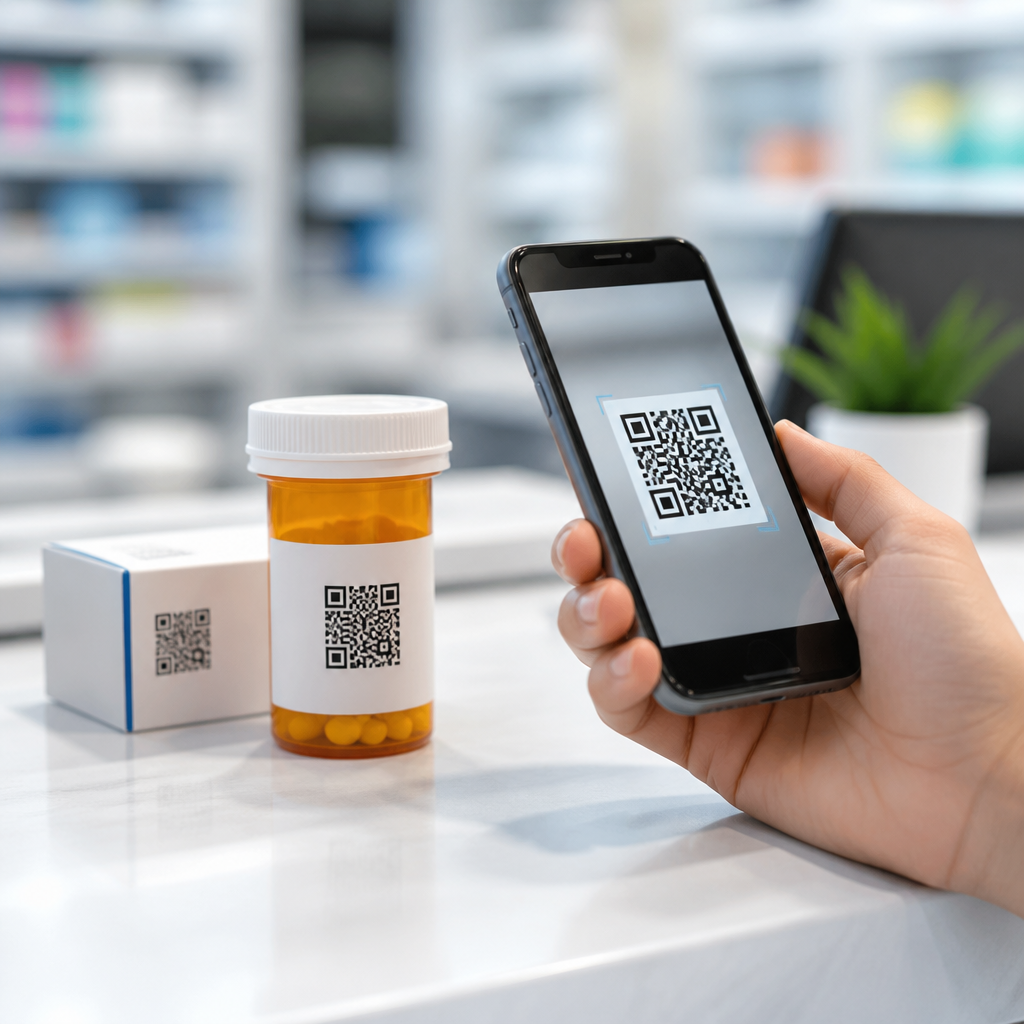
QR codes for prescription and medication information are becoming a practical bridge between printed labels, digital instructions, and safer patient communication in modern healthcare. A prescription QR code is a scannable two-dimensional barcode that links a patient, caregiver, pharmacist, or clinician to medication details such as dosage directions, refill status, counseling videos, safety warnings, adherence tools, and authenticated product information. In healthcare settings, that matters because medication use is complex, error prone, and highly regulated. I have worked with organizations that needed to fit essential instructions onto tiny labels while still meeting patient education standards, and QR codes consistently solved the same problem: they expanded access to useful information without overcrowding the package. For healthcare marketers, pharmacy operators, hospital teams, and digital health product owners, this use case sits at the intersection of patient experience, compliance, education, and operational efficiency. It also serves as a central entry point into broader healthcare QR strategies, from intake forms to device tracking. As a hub topic under QR codes in marketing, prescription and medication information deserves special attention because it combines communication goals with clinical risk, language accessibility, and trust in ways few industries do.
What QR Codes Do in Medication Communication
At the simplest level, a QR code on a prescription label or medication carton connects a physical product to updated digital content. That content can include drug facts, side effects, storage instructions, administration technique, prior authorization help, manufacturer support programs, or links to a pharmacy portal. Unlike static print, the destination can be maintained over time when the code uses a dynamic URL. That matters if a pharmacy updates refill workflows, a hospital changes discharge instructions, or a manufacturer adds a new educational video. In practice, I have seen three high-value scenarios repeat across healthcare organizations. First, pharmacies use codes to reduce confusion after pickup by linking to mobile-friendly medication guides. Second, providers use them at discharge so patients can review instructions at home when questions usually surface. Third, pharmaceutical brands use them on packaging to deliver approved education, language options, and product verification without forcing patients to search online and risk landing on unreliable pages.
Medication communication often fails for ordinary reasons: labels are small, patients are stressed, health literacy varies, and the handoff between prescriber, pharmacy, and patient is fragmented. A well-implemented QR code helps by meeting patients where they are already looking: the bottle, carton, blister pack, after-visit summary, or printed insert. It can support spoken counseling rather than replace it. For example, a patient starting warfarin may receive in-person guidance on bleeding risks, then scan a QR code later for a plain-language explanation of INR monitoring, food interactions, and when to seek care. A parent filling an amoxicillin suspension prescription can scan for dosing by weight, refrigeration guidance, and a demonstration of how to measure the liquid correctly. These are not marketing flourishes. They are practical interventions that reduce misunderstandings and strengthen the continuity of care.
Core Healthcare Use Cases Across the Medication Journey
The most effective prescription QR code programs map to specific points in the medication journey. During prescribing, codes can appear on visit summaries or e-prescription receipts, linking to disease education, affordability resources, or pharmacy choice tools. During dispensing, the code usually sits on the vial label, leaflet, or bag insert and points to individualized instructions, refill reminders, or contact options. During administration, the code can link to technique training, especially for inhalers, insulin pens, auto-injectors, eye drops, and topical therapies where misuse is common. During adherence follow-up, the same code can support refill enrollment, symptom tracking, or caregiver sharing. Finally, at the manufacturer level, packaging codes can provide anti-counterfeit verification, lot-specific recall notices, and patient support enrollment.
Healthcare organizations should think of these as separate use cases because the audience, risk level, and governance needs differ. A retail pharmacy serving chronic disease patients may prioritize multilingual medication guides and refill links. A specialty pharmacy may add prior authorization updates, nurse support contacts, and cold-chain handling instructions. A hospital discharge team may focus on reducing readmissions by linking every new prescription to diagnosis-specific education, known interactions with home medications, and warning signs that justify a call. A pharmaceutical manufacturer may emphasize brand-approved patient education, REMS-related materials where applicable, and authenticated supply chain information. Each of these use cases supports communication, but each requires its own workflow, review process, and metrics.
Benefits for Patients, Providers, Pharmacies, and Brands
For patients, the main benefit is easier access to accurate medication information at the moment of need. Instead of searching the open web for “how to take metformin” or “what if I miss a dose of Eliquis,” they can scan a trusted code tied directly to the dispensing or packaged product. That improves confidence and reduces dependence on memory. It also supports accessibility when the linked page offers larger text, audio playback, translation, or video. For providers and health systems, QR codes can reinforce discharge education, reduce repetitive call volume, and standardize instructions across sites. Pharmacists benefit because a scan can answer common after-hours questions, route refill requests, and direct patients to counseling resources without lengthening every pickup interaction. Pharmaceutical brands gain a compliant, measurable channel for education, patient support, and package authentication that begins offline and continues digitally.
There are operational benefits too. Dynamic QR platforms record scan counts, times, devices, and broad location patterns, giving healthcare teams evidence about what information patients actually use. If a hypertension medication guide gets scans but the low-sodium education page does not, content can be redesigned. If inhaler technique videos see strong engagement within 48 hours of dispensing, pharmacists can schedule targeted follow-ups for first fills. In marketing terms, this turns packaging and prescription print materials into accountable communication assets. In clinical terms, it highlights where patient understanding may still break down. The strongest programs use both perspectives, because medication education succeeds only when content is both discoverable and useful.
Implementation Models and Technology Choices
Choosing the right implementation model depends on who controls the medication touchpoint and what data must be protected. Retail pharmacies often use dynamic QR codes generated through pharmacy software, customer communication platforms, or standalone QR management systems such as Bitly, QR Code Generator, or enterprise campaign tools integrated with analytics dashboards. Health systems may prefer secure landing pages built inside the patient portal ecosystem, especially when a scan could reveal personalized information. Pharmaceutical companies typically route scans to branded medication education hubs with medical, legal, and regulatory review built into publishing. The code itself can be printed on bottle labels, outer cartons, medication guides, discharge packets, shelf talkers, direct mail, and co-pay support materials.
The technology decision should start with content architecture, not the code image. Teams need to decide whether the destination is public educational content, authenticated patient content, or a mixed model. Public pages are easier to access and ideal for general instructions such as storage, side effects, and administration videos. Authenticated pages are necessary for refill status, individualized dosing plans, or account actions. I usually recommend a layered approach: the first page provides universal, non-sensitive medication guidance and then offers a secure path into personalized services. This reduces friction while protecting privacy. Dynamic codes are usually the better long-term choice because destinations, campaign tags, and analytics can be updated without reprinting labels or packaging.
| Use Case | Best QR Destination | Primary Benefit | Main Caution |
|---|---|---|---|
| Retail prescription label | Mobile medication guide plus refill portal link | Improves understanding after pickup | Avoid exposing personal data before login |
| Hospital discharge packet | Diagnosis-linked medication instructions | Reinforces education at home | Content must match discharge orders exactly |
| Specialty pharmacy shipment | Adherence tools, injection training, nurse support | Supports complex therapy success | Needs strong review for high-risk therapies |
| Manufacturer packaging | Approved education and product verification | Builds trust and deters counterfeits | Claims must stay within approved labeling |
Compliance, Privacy, and Risk Management
Healthcare QR campaigns must be designed with compliance from the beginning. In the United States, any workflow touching protected health information has to be evaluated under HIPAA requirements, and that means the scan path cannot casually expose names, prescription details, or refill history on an unsecured landing page. The safest standard is simple: treat the code as public unless the user logs in. Medication information itself may be general educational content, but once the page identifies the individual or displays account-level data, authentication, access controls, and vendor agreements matter. If text reminders, support enrollment, or savings programs are attached, teams should also review TCPA, consent language, and data retention policies.
Regulatory review is equally important for pharmaceutical manufacturers and pharmacies making therapeutic statements. Prescription drug promotion rules, fair balance expectations, state board of pharmacy standards, and internal medical-legal review processes all shape what can appear after a scan. Hospitals must also ensure consistency between QR-linked content and approved patient education libraries. Another risk is accessibility. If the code is too small, printed with poor contrast, or placed on curved packaging where scans fail, adoption drops quickly. If the destination page is not responsive, readable, and available in common languages, the code becomes performative rather than useful. Good governance means version control, review dates, owner assignment, documented approvals, and periodic testing across devices and lighting conditions.
Content Strategy for a Strong Healthcare QR Hub
Because this page serves as a hub for healthcare medication use cases, content strategy should branch into clear cluster topics. The strongest supporting articles usually cover prescription label QR codes, QR codes for medication adherence, multilingual drug instructions, hospital discharge medication education, specialty pharmacy onboarding, pharmaceutical packaging verification, QR codes for over-the-counter products, and accessibility design for senior patients. Each spoke article should answer one concrete question and link back to this central page, creating a logical structure for both readers and search engines. From a user perspective, that organization mirrors the medication journey. From a publishing perspective, it establishes authority within the healthcare segment instead of scattering isolated articles across unrelated themes.
On-page content should also reflect how people actually search and ask questions. Common queries include: What information should a prescription QR code include? Are QR codes on medication safe? Can a pharmacy use QR codes for refill reminders? Do QR codes help with adherence? How can healthcare organizations protect privacy? Every section on this page answers one of those questions directly because clear retrieval matters. The best healthcare QR content does not rely on broad claims. It names the workflow, the audience, the benefit, the limitation, and the implementation requirement. That specificity is what makes a hub page genuinely useful to marketers, pharmacists, health system leaders, and digital health teams evaluating real deployment options rather than abstract trends.
Best Practices and Common Mistakes
The best prescription QR code programs follow a few non-negotiable rules. Put the code where the user naturally looks, usually near dosing instructions, pickup paperwork, or the medication name. Add a short call to action such as “Scan for instructions, side effects, and refill options” so the purpose is obvious. Send users to a mobile-first page that loads fast, uses plain language, and offers language selection immediately. Separate general education from personalized account actions. Track scans with campaign parameters and review engagement by medication type, first fill status, and location. Most important, make the information genuinely better than what fits on the label; if the code only repeats generic copy, patients will stop scanning.
The most common mistakes are easy to avoid. Many teams launch with a code but no meaningful content, or they link to a desktop PDF that is impossible to read on a phone. Others send all scans to a homepage, forcing patients to navigate menus while they are holding a pill bottle. Some organizations overreach by trying to replace pharmacist counseling, which is the wrong model. QR codes should extend care, not excuse less human support. Another frequent mistake is failing to govern updates. Medication instructions change, educational videos age, and portal URLs break. A code printed on packaging can outlive several website redesigns, so the destination needs durable ownership. When managed well, QR codes for prescription and medication information become one of the most practical healthcare communication tools available.
QR codes for prescription and medication information work because they solve a real healthcare problem: critical instructions rarely fit where patients need them most. Used well, they connect labels, packaging, discharge materials, and pharmacy workflows to trusted digital guidance that is easier to read, easier to update, and easier to measure. They help patients understand how to take medicines safely, help providers reinforce education after the visit, help pharmacies reduce friction around refills and counseling, and help manufacturers deliver verified product information. The value is not in the code itself. The value comes from pairing the code with accurate content, secure access design, accessibility, and ongoing governance.
As a hub within healthcare QR code use cases, this topic should guide readers toward deeper pages on adherence, discharge education, multilingual support, specialty pharmacy, and packaging verification. That structure reflects how medication communication actually happens across the care journey. If you are building a healthcare QR strategy, start with one high-impact medication workflow, define the audience and risk level, create mobile-first content, and measure scan behavior against patient support goals. Then expand deliberately. A well-planned prescription QR code program is not a novelty. It is a scalable way to improve communication, strengthen trust, and make medication information more useful at the exact moment people need it.
Frequently Asked Questions
What is a prescription QR code, and what information can it provide?
A prescription QR code is a scannable two-dimensional barcode printed on medication packaging, prescription labels, inserts, or pharmacy handouts that connects the user to digital medication information. Instead of relying only on the small amount of text that fits on a bottle or carton, the QR code can open a secure mobile page with far more detail. Depending on how it is implemented, it may provide dosage instructions, timing guidance, refill status, administration tips, side effect information, drug interaction warnings, storage instructions, patient education materials, counseling videos, multilingual content, adherence reminders, and manufacturer-authenticated product details.
In practical healthcare use, this makes the code a bridge between physical medication labeling and real-time digital support. Patients can scan it at home when they need clarification, caregivers can use it to confirm instructions, pharmacists can link it to counseling resources, and clinicians can direct patients to up-to-date medication guidance without overloading the printed label. This is especially valuable for complex regimens, specialty medications, pediatric dosing, or cases where patients need visual or language-accessible education beyond standard print materials.
How do QR codes improve medication safety and patient communication?
QR codes can improve medication safety by making critical information easier to access, easier to update, and easier to understand. Traditional labels are limited by space and readability, which can leave patients with incomplete or hard-to-follow instructions. A QR code can direct users to clearer step-by-step guidance, demonstration videos, warning alerts, missed-dose instructions, and condition-specific counseling that supports safer medication use. When patients can quickly confirm how and when to take a medicine, the risk of confusion, dosing mistakes, and improper administration can be reduced.
They also strengthen patient communication because they create a direct digital connection between the medication and trusted information sources. A pharmacy or healthcare provider can use the linked page to reinforce verbal counseling, explain changes in directions, share refill or adherence tools, and provide language options that better match the patient’s needs. For patients managing multiple prescriptions, that added clarity can be extremely helpful. In broader terms, QR-enabled communication supports a more informed medication experience by helping patients find accurate guidance at the moment they need it, rather than searching online and potentially finding incomplete or unreliable sources.
Are QR codes on prescription labels secure and compliant for healthcare use?
They can be, but security and compliance depend on how the system is designed. In healthcare, QR codes should be implemented with attention to privacy, data protection, and regulatory obligations. A code printed on a prescription label may simply link to general drug information, or it may connect to patient-specific content such as refill details or individualized instructions. If protected health information is involved, the linked system should include appropriate safeguards such as secure hosting, access controls, authentication steps when needed, encryption, and privacy-conscious data handling practices aligned with applicable healthcare regulations and organizational policies.
It is also important that the QR code itself does not expose sensitive information if scanned by the wrong person. Many healthcare organizations avoid embedding raw personal data directly in the code and instead use tokenized or indirect links that retrieve information securely. In addition, medication QR workflows should be supported by clear governance around who creates the codes, how destination content is maintained, how product or patient information is verified, and how updates are audited. When implemented thoughtfully, QR codes can support secure and compliant communication while still delivering convenience and usability to patients, caregivers, and care teams.
Can patients and caregivers use medication QR codes for refills, instructions, and adherence support?
Yes, and that is one of the most practical benefits of using QR codes in medication management. A well-designed medication QR experience can help patients and caregivers do more than just read directions. It can connect them to refill request portals, reminders for dose timing, adherence tracking tools, instructional videos for inhalers or injectables, appointment follow-up guidance, and easy-to-understand answers to common medication questions. This is particularly useful for older adults, family caregivers, and patients managing chronic conditions who may need ongoing support between pharmacy visits or clinical appointments.
QR codes can also improve confidence and independence. For example, a caregiver helping a family member with multiple medicines can scan each code to confirm the right dosing schedule or review whether a tablet should be taken with food. A patient starting a new therapy can revisit educational content after leaving the pharmacy, when questions often arise. When refill status and support resources are integrated into the experience, the QR code becomes a simple access point for everyday medication tasks. That convenience can encourage better adherence, reduce misunderstandings, and make treatment plans easier to follow over time.
What should healthcare organizations consider when implementing QR codes for prescription and medication information?
Healthcare organizations should approach QR code deployment as both a communication strategy and a patient safety initiative. The first priority is content quality: the information behind the code should be accurate, clinically reviewed, easy to understand, mobile-friendly, and updated whenever medication instructions, warnings, or product details change. Organizations should also consider usability, including large enough print placement, clear scan prompts, multilingual support, accessibility for patients with visual or literacy challenges, and compatibility across common smartphones without requiring unnecessary app downloads.
Operational and technical planning matter just as much. Pharmacies, health systems, and medication manufacturers should define whether the QR codes are static or dynamic, what systems they connect to, how analytics will be used responsibly, and how patient-specific content will be protected. They should also think through workflow integration for pharmacists and clinicians so the QR code enhances counseling rather than creating confusion. Finally, trust is essential. Patients should understand what the code is for, what kind of information it provides, and whether they are being directed to an official pharmacy, provider, or manufacturer resource. When those elements are in place, QR codes can become a scalable, patient-friendly tool for delivering clearer prescription guidance and safer medication communication.