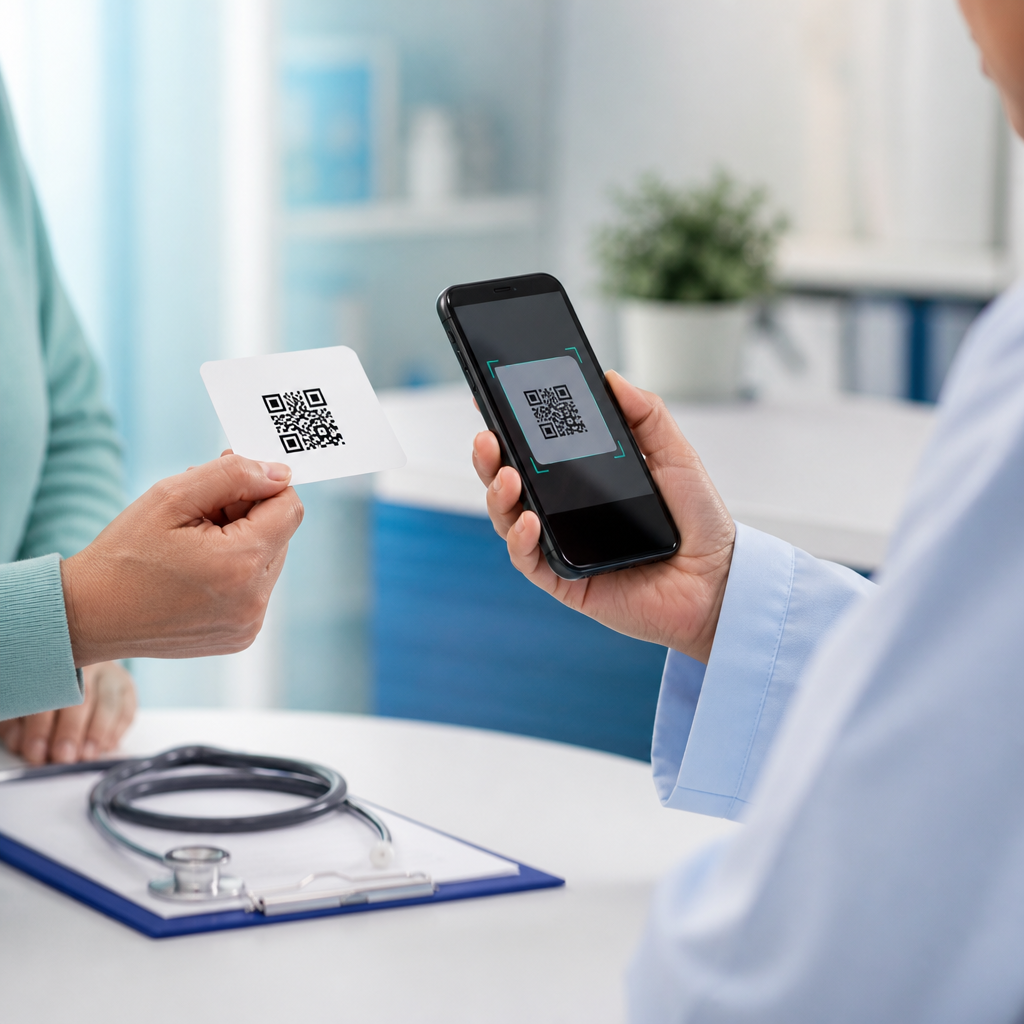
Using QR codes for medical information access has moved from a novelty to a practical healthcare workflow, giving patients, caregivers, and clinicians a fast way to reach accurate digital information at the point of need. In healthcare, a QR code is a two-dimensional barcode that can store a URL, patient-facing instruction, device identifier, form link, or authentication token that a smartphone camera can read in seconds. Medical information access refers to the controlled delivery of health content such as medication instructions, discharge guidance, appointment details, test explanations, consent forms, and device documentation. I have helped organizations deploy these systems in clinics, pharmacies, and health education campaigns, and the same lesson appears every time: the code itself is simple, but the information architecture, privacy controls, and usability decisions determine whether the program improves care or creates confusion.
This topic matters because healthcare information is often fragmented, time-sensitive, and difficult for patients to retain after a brief appointment. Studies on patient recall consistently show that people forget substantial portions of verbal instructions, especially when stressed or managing a new diagnosis. A well-placed QR code bridges that gap by connecting printed materials, packaging, signage, wristbands, portals, and medical devices to current digital resources without requiring a patient to type a long web address. For healthcare marketers and operations teams, QR codes also create measurable touchpoints that reveal what information people actually need, when they access it, and which channels drive engagement. Used correctly, they support health literacy, streamline communication, and reduce avoidable calls, no-show rates, and instruction errors.
As a hub topic within QR codes in marketing, healthcare deserves its own treatment because the stakes are higher than in retail or events. A restaurant menu QR code can be annoying if it fails; a medication dosing page that loads the wrong content can be dangerous. That makes healthcare QR code strategy different in four ways. First, content must be clinically reviewed and version controlled. Second, patient privacy rules such as HIPAA in the United States require strict limits on encoded data and analytics practices. Third, accessibility standards such as WCAG matter because many users are older adults or people with impairments. Fourth, trust signals are essential. Patients need to know who created the resource, when it was updated, and how to verify that it is legitimate.
The most effective programs treat QR codes as an access layer, not the information itself. The code should route a user to a mobile-optimized destination that answers one specific question clearly: How do I take this medication? What does this lab test mean? Where is the imaging center? How do I prepare for surgery? Can I refill this prescription? Because this article serves as a hub for healthcare use cases, it covers the core applications, implementation standards, privacy issues, measurement practices, and common mistakes that every healthcare team should understand before launching or expanding QR code access.
Where QR Codes Improve Medical Information Access
Healthcare organizations use QR codes most effectively when they remove friction at moments that already involve printed or physical touchpoints. In hospitals, I have seen discharge packets include a QR code linking to diagnosis-specific recovery guidance in multiple languages, short follow-up videos, and phone numbers for urgent questions. Patients are far more likely to scan a code on a paper packet sitting on the kitchen table than to remember a portal password after anesthesia. In outpatient clinics, codes placed in exam rooms can link to condition education libraries, preventive screening checklists, or digital intake forms. At pharmacies, they can direct patients to medication counseling videos, refill instructions, adverse effect guidance, and manufacturer support programs.
Public health and community care settings create another strong use case. Vaccination campaigns can place QR codes on posters, flyers, or reminder cards that link directly to appointment scheduling, eligibility rules, and aftercare instructions. Specialty practices use them for high-complexity information that is difficult to explain once during a visit, such as fertility treatment calendars, oncology nutrition guidance, diabetes device training, or post-operative physical therapy exercises. Medical device manufacturers also rely on QR codes to satisfy user demand for instant setup help, cleaning instructions, troubleshooting, and safety updates. The common thread is not technology for its own sake. It is immediate access to the right information at the exact place where questions arise.
The following table shows common healthcare use cases, the information delivered, and the operational value created when QR codes are implemented well.
| Use case | Information accessed | Primary benefit | Key implementation note |
|---|---|---|---|
| Hospital discharge packets | Recovery steps, warning signs, follow-up scheduling, medication guidance | Improves adherence and reduces post-discharge confusion | Use dynamic links so instructions can be updated without reprinting packets |
| Medication labels and inserts | Dosing videos, side effects, refill links, multilingual counseling | Supports safe use and better understanding | Never encode protected health information directly in the code |
| Clinic waiting rooms and exam rooms | Intake forms, preventive care content, specialist bios, consent documents | Reduces paperwork and saves staff time | Offer a non-digital alternative for patients without smartphones |
| Lab and imaging centers | Preparation instructions, directions, result explanation pages | Reduces missed prep steps and rescheduled visits | Make content grade-level appropriate and mobile first |
| Medical devices and home health equipment | Setup, cleaning, troubleshooting, recall notices, support contacts | Improves safety and lowers support volume | Include product identifiers and version control on destination pages |
| Public health campaigns | Eligibility rules, vaccine scheduling, local resources, FAQs | Connects awareness campaigns to measurable action | Use short URLs and campaign-specific analytics parameters |
Core Content Types Patients Actually Need
The best healthcare QR code programs start by mapping common patient questions, not by generating codes in bulk. In practice, five content categories drive the most scans and the highest value. The first is preparation guidance: fasting rules before labs, colonoscopy prep timelines, imaging restrictions, and what to bring to an appointment. The second is medication support: how to take a medicine, what to do after a missed dose, whether food matters, and which side effects require medical help. The third is after-visit care, especially wound care, activity restrictions, symptom monitoring, and follow-up scheduling. The fourth is navigation and logistics, including parking maps, campus directions, wayfinding, and department check-in instructions. The fifth is administrative access such as forms, billing explanations, financial assistance, and record requests.
When I audit existing healthcare QR deployments, a common problem is overloading a single landing page with every possible resource. That hurts comprehension and depresses scan-to-completion rates. Medical information access works better when each code has one primary job. A code on a pathology leaflet should not send a patient to the general hospital homepage. It should land on a plain-language explanation of that specific test, what the results categories mean, expected turnaround time, and who to contact with questions. Likewise, a code on a physical therapy handout should open exercise videos tied to that treatment plan, not a generic rehabilitation page. Specificity creates trust and reduces abandonment.
Language access and readability are equally important. The National Institutes of Health and the Centers for Disease Control and Prevention have long promoted plain-language communication because health literacy directly affects outcomes. For QR-linked content, that means short paragraphs, familiar vocabulary, large tap targets, captions on videos, and page layouts that work on older smartphones and slow mobile connections. Multilingual support should not be an afterthought. If a health system serves a large Spanish-speaking population, the printed prompt near the QR code should indicate Spanish access clearly, and the landing page should either auto-detect preference or present an immediate language choice. A scan that leads to content a patient cannot read is not access.
Privacy, Compliance, and Patient Trust
Privacy concerns shape every healthcare QR code decision. The safest rule is simple: do not place protected health information inside the code itself. A QR code can be photographed, forwarded, or scanned by anyone who sees it, so encoding a patient name, diagnosis, medical record number, or appointment specifics is usually inappropriate unless strong security controls exist and the use case has been vetted by compliance and legal teams. In most programs, the QR code should contain only a short URL or tokenized route to a secure system. If authentication is required, the user should sign in through established patient portal credentials, multifactor authentication, or a temporary secure access flow.
HIPAA in the United States does not ban QR codes, but it does require covered entities and business associates to safeguard protected health information and limit unnecessary disclosure. That affects analytics too. Marketing teams often want scan location, device data, and retargeting capability. In healthcare, those impulses need restraint. If a QR code on an oncology brochure loads a page instrumented with aggressive third-party tracking, the reputational risk is obvious even before any legal analysis. The more defensible model uses first-party analytics, limited data retention, clear privacy notices, and segmentation at the campaign or content level rather than the patient identity level. If personally identifiable information is collected through forms, encryption in transit and at rest should be standard.
Trust also depends on anti-phishing design. Patients are increasingly aware that malicious QR codes can redirect users to fraudulent sites. To counter that, healthcare organizations should use branded domains, place organization names directly beside the code, and explain exactly what the scan will do. For example, “Scan to view your knee replacement recovery guide on MercyOrtho.org” is stronger than “Scan here.” Destination pages should show recognizable branding, review dates, clinician authorship where appropriate, and a visible phone number or help path. In my experience, adoption rises when users can verify legitimacy immediately. Security and usability are not competing goals here; they reinforce each other.
Implementation Standards That Make QR Codes Work
A healthcare QR code program succeeds or fails on execution details. Start with code format and quality. Use high-contrast black-on-white designs unless branding changes have been tested for scan reliability. Maintain adequate quiet space around the code, choose a size that matches viewing distance, and test across iPhone and Android devices under clinic lighting conditions. ISO/IEC 18004 governs QR code symbology, and while most teams do not need to study the standard directly, they should work with production partners who understand error correction, print resolution, and scan tolerance. Dynamic QR codes are usually the right choice because the destination can be changed later without replacing posters, packaging, discharge sheets, or device labels.
The landing page deserves as much attention as the code. Fast load times matter, particularly in hospital buildings with inconsistent cellular reception. Compress images, avoid bloated scripts, and keep the first screen focused on the promised task. If the page is a medication guide, the dosage reminder, major warnings, and refill action should appear before scrolling. Use schema markup where relevant, consistent headings, and descriptive page titles so content is discoverable and internally linked across the broader healthcare resource center. Accessibility should follow WCAG 2.1 AA principles: sufficient color contrast, keyboard support where forms exist, alt text for meaningful images, captions for videos, and readable typography. A QR code is only accessible if the destination is accessible.
Operational governance is the final piece. Assign ownership for content review, redirects, analytics, and incident response. Clinical content needs version control and expiration policies, especially for treatment instructions that change with updated guidelines. Build a naming convention for campaigns and assets so a team can identify where each code appears physically and what page it targets. Maintain a code inventory with print dates, locations, destinations, and owners. When a clinic moves or a service line changes phone numbers, someone must know which codes require updates. Healthcare organizations already manage formularies, patient education libraries, and document revisions; QR code governance should be treated with the same discipline.
Measuring Performance and Connecting Healthcare Access to Marketing
Although the primary goal is better information access, QR codes also create valuable marketing and service data when measured responsibly. Basic metrics include scan volume, unique users, device type, location by campaign asset, bounce rate, completion rate for key actions, and return visits. More advanced programs connect scans to outcomes such as completed appointment bookings, reduced call-center volume, medication refill requests, form submissions, or improved attendance at screenings. In one clinic network I advised, adding QR codes to mammography reminder mailers increased online scheduling uptake because recipients no longer had to type a complex URL from a postcard. The scans did not just prove engagement; they shortened the path to care.
Good measurement requires context. A low scan count is not automatically failure if the code serves a narrow but critical use case, such as implanted device troubleshooting. Conversely, high scans with low task completion may indicate that users are confused, mistrustful, or landing on content that does not answer the question implied by the printed prompt. The most actionable reviews compare asset placement, call-to-action wording, and destination quality. For example, “Scan to see how to prepare for your MRI” will usually outperform “Learn more,” because it sets a clear expectation. Healthcare marketers should also compare QR engagement across channels such as brochures, prescription bag inserts, direct mail, in-clinic signage, and community outreach materials to understand where intent is strongest.
As a hub article, this topic also points to related subtopics that deserve deeper treatment: patient education QR codes, prescription and pharmacy workflows, hospital wayfinding, medical device instructions, appointment scheduling, digital forms, vaccination campaigns, and post-discharge care. Each has distinct conversion events and compliance considerations, but the strategic pattern stays the same. Match one code to one user need, route to trusted mobile content, and measure whether the scan led to comprehension or action. That is how QR codes move from gimmick to infrastructure in healthcare communication.
Common Mistakes and Best Practices for Long-Term Success
The most common mistake is treating QR codes as decoration rather than as part of a patient journey. Codes get placed on posters without testing cell coverage, on labels without enough contrast, or on handouts that send people to desktop PDFs impossible to read on a phone. Another frequent error is linking to homepages or generic portals that force users to search again. In healthcare, every extra step costs attention and increases the odds that the patient gives up. Teams also underestimate maintenance. A code that still resolves but points to outdated clinical guidance is worse than no code at all because it carries the authority of the organization’s brand.
Best practice is straightforward. Use dynamic codes, clear calls to action, branded and secure destinations, plain-language content, multilingual support, and routine review cycles. Offer alternatives for patients who cannot or will not scan, such as short URLs, printed instructions, or staff assistance. Test with real users, including older adults and people with limited digital literacy. Ask them whether they understand what will happen after scanning, whether the page answers their question, and whether they would trust the information enough to act on it. Healthcare communication succeeds when access is immediate, credible, and usable. If your organization is building a stronger healthcare marketing and patient information strategy, start by auditing one high-friction moment, deploy one well-governed QR pathway, and measure the improvement.
Frequently Asked Questions
What does it mean to use QR codes for medical information access in healthcare?
Using QR codes for medical information access means placing a scannable code on a document, wristband, medication package, discharge sheet, device label, poster, or digital screen so a patient, caregiver, or clinician can instantly open relevant health information on a phone or approved device. In practice, that information might include after-visit instructions, medication guidance, appointment check-in forms, educational videos, lab result portals, device manuals, consent documents, telehealth links, or emergency care information. The goal is not simply convenience. It is to deliver the right information, in the right format, at the exact moment someone needs it.
In healthcare settings, QR codes are especially useful because they reduce friction. Instead of typing a long web address, searching through a patient portal, or handing out stacks of printed materials, users can scan once and go directly to the intended resource. That speed matters when someone is recovering from a procedure, managing a chronic condition, trying to understand medication dosing, or coordinating care for a family member. For clinicians and organizations, QR codes also help standardize communication by linking every user to the same current source of truth rather than relying on outdated printed instructions.
When designed well, a QR code workflow supports both access and control. It can route a user to public education content, or it can direct them to a secure log-in page for protected health information. In other words, the QR code itself is just the entry point. The real value comes from how it connects users to trustworthy, current, and appropriately protected medical content.
What are the main benefits of QR codes for patients, caregivers, and clinicians?
The biggest benefit is immediate access to information without unnecessary steps. Patients can scan a code on a discharge summary and review wound care instructions, diet restrictions, follow-up timelines, or warning signs to watch for once they get home. Caregivers can use a code to pull up mobility guidance, medication schedules, or training videos that help them support a loved one more confidently. Clinicians can use QR codes to streamline patient education, connect people to standardized forms, and reduce time spent repeating instructions that are better delivered through clear digital resources.
Another major advantage is accuracy and consistency. Printed handouts can be lost, damaged, or become outdated. A QR code that points to a managed digital resource can always lead to the latest approved version of a care instruction, clinic policy, or educational page. That improves communication quality across departments and care episodes. It also helps healthcare organizations maintain version control, which is especially important when instructions change because of new clinical guidance, updated device recommendations, or revised patient safety protocols.
QR codes can also improve accessibility and engagement. Digital destinations can offer multiple languages, larger text, audio explanations, captions, interactive forms, and short videos that are easier for many users to understand than dense printed material. For busy clinicians, this creates a practical way to reinforce teaching without adding extra administrative burden. For patients, it can reduce confusion and increase confidence. In short, QR codes help bridge the gap between clinical information and real-world understanding, which is where better adherence and better outcomes often begin.
Are QR codes for medical information secure and compliant with healthcare privacy expectations?
They can be, but security depends on how the system is designed rather than on the QR code alone. A QR code is simply a method for launching a digital action. If it links to public educational content, privacy concerns may be minimal. If it connects to personal health information, then the destination must follow the same security standards expected of any healthcare technology workflow. That usually means secure websites, encrypted connections, authenticated access, role-based permissions, audit logging, and organizational policies that align with applicable privacy laws and regulations.
One common best practice is to avoid embedding sensitive personal data directly inside the QR code itself. Instead, the code should point to a secure platform or tokenized link where the user is required to verify identity before viewing protected information. This reduces the risk that someone who casually scans a code could access confidential details. Healthcare organizations should also think carefully about where codes are displayed, how long they remain active, and whether the linked content should expire, refresh, or require additional verification.
There are also practical safety issues to consider. Users should know that not every QR code is trustworthy, especially outside controlled clinical settings. Organizations can build trust by using branded materials, clear instructions, and official domains. Staff should be trained to verify code placement and monitor for tampering. When combined with secure infrastructure and governance, QR codes can support privacy-conscious medical information access. Without those safeguards, they can create avoidable risk. The technology itself is simple, but the compliance strategy behind it must be deliberate.
How are QR codes commonly used across hospitals, clinics, pharmacies, and home care?
In hospitals, QR codes are often used to improve access to patient education and operational workflows. A patient may scan a code at bedside to review recovery instructions, pain management guidance, dietary recommendations, or discharge planning materials. Departments may place codes on signage that links to registration steps, wayfinding information, interpreter services, or visitor policies. Medical equipment can also carry QR codes that lead staff to device manuals, maintenance logs, troubleshooting resources, or training content, helping teams find reliable information quickly at the point of care.
In clinics and outpatient practices, QR codes are frequently used for intake forms, appointment check-in, telehealth links, vaccination information, screening questionnaires, and follow-up care instructions. They can simplify front-desk processes and reduce paperwork while making it easier for patients to complete tasks from their own devices. Pharmacies may use QR codes on medication packaging or printed materials to direct people to dosage guidance, refill options, side-effect information, adherence tips, or instructional videos for inhalers, injectables, and other specialized therapies.
In home care and caregiver settings, QR codes can be especially valuable because they bring reliable guidance into the environment where care is actually happening. A code placed on a care binder, mobility device, nutrition plan, or home health instruction sheet can link to step-by-step demonstrations, emergency contact resources, symptom escalation guidance, or daily care protocols. This helps reduce uncertainty for family caregivers and supports safer care transitions after hospitalization. Across all of these settings, the strongest use cases are the ones that remove friction, improve clarity, and connect users to trusted information exactly when action is required.
What should healthcare organizations consider when implementing QR codes for medical information access?
Implementation should start with purpose, not with the code itself. Organizations need to identify the exact problem they are trying to solve: reducing discharge confusion, improving form completion, supporting device education, simplifying check-in, or expanding access to multilingual instructions. Once that use case is clear, the linked content should be carefully designed for mobile use, plain-language readability, accessibility, and clinical accuracy. A QR code that leads to a confusing webpage or outdated PDF will not improve the patient experience, no matter how easy it is to scan.
Content governance is another critical consideration. Healthcare information changes, and QR-enabled resources must be reviewed, updated, and owned by the appropriate team. Organizations should use dependable landing pages, short and memorable official domains, and analytics where appropriate to understand scan behavior and identify gaps in engagement. It is also important to think through practical details such as print size, placement, lighting, instructions for first-time users, and backup options for people who do not have smartphones or prefer non-digital access. Inclusivity matters, especially in healthcare.
Finally, implementation should include security review, staff training, and measurement. Teams should confirm whether the linked content is public or protected, validate the authentication approach, and define how expired, damaged, or replaced codes will be managed. Staff should understand when to offer a QR code, how to explain it, and what alternatives to provide. Success should be measured by outcomes that matter, such as fewer patient questions after discharge, better completion rates for forms, improved education access, or higher satisfaction with care communication. When QR codes are treated as part of a broader information strategy rather than a standalone gimmick, they can become a practical and scalable healthcare tool.