QR codes have become a practical bridge between physical touchpoints and digital experiences, making them unusually effective across the full customer journey. In marketing terms, the customer journey is the sequence of interactions a person has with a brand from initial awareness through consideration, purchase, onboarding, retention, and advocacy. Customer journey mapping with QR codes means identifying those moments, placing scannable codes where intent is highest, and designing the destination experience so each scan moves the customer to the next stage. When teams do this well, QR codes stop being generic shortcuts and start functioning as measurable transition points inside a larger strategy.
I have seen this shift firsthand in retail, events, packaging, and service businesses. Early campaigns often treated QR codes as decorative add-ons: one code on a poster, one code on a package, and little thought about context, timing, or user intent. Results were usually mediocre because the landing page was mismatched, the code was hard to scan, or there was no follow-through after the click. Performance improved only when the code was mapped to a specific journey stage, supported by a clear call to action, and tied to analytics. That operational discipline is what turns scans into qualified visits, leads, purchases, and repeat engagement.
This matters because modern customer journeys are fragmented. A buyer might first encounter a product in a storefront, compare reviews on mobile, scan packaging for ingredients, buy later from an online marketplace, and then need setup instructions after delivery. QR codes fit naturally into this pattern because they reduce friction between offline and online environments. A printed surface becomes a digital entry point. A customer does not need to type a long URL, search manually, or download materials later. One scan can open a product page, a menu, a warranty form, an app deep link, a payment screen, or a support article.
Used strategically, QR codes also solve a measurement problem. Marketers have long struggled to attribute offline influence to digital outcomes. A flyer, shelf talker, direct mail piece, package insert, trade show banner, or in-store display can be difficult to track with precision. A dynamic QR code creates a traceable event tied to location, campaign, creative, and time period. Combined with UTM parameters, event tracking, CRM tagging, and marketing automation, that scan becomes actionable data. This article explains how QR codes fit into each stage of the customer journey, how to map them effectively, what metrics matter, and what common mistakes reduce performance.
Understanding Customer Journey Mapping with QR Codes
Customer journey mapping is the process of documenting the goals, questions, emotions, channels, and barriers a customer experiences as they move toward and beyond a purchase. When QR codes are part of that map, the key question is simple: what does the customer need at this moment, and can a scan provide the fastest path to it? The answer determines placement, message, destination, and measurement. A code on packaging has a different job than a code on a window display. One might reassure and educate. The other might drive store traffic, appointment booking, or product discovery.
A useful QR journey map includes five components. First, define the stage: awareness, consideration, conversion, onboarding, retention, or advocacy. Second, identify the physical or hybrid touchpoint where a scan can occur, such as signage, mailers, receipts, labels, menus, booths, or invoices. Third, clarify user intent at that point. Fourth, align the landing experience to that intent. Fifth, set a measurable objective, such as video completion, form submission, add-to-cart rate, redemption, account activation, or repeat purchase. Without those elements, QR campaigns become hard to optimize because teams know scans happened but not whether they solved the user’s problem.
Dynamic codes are usually the better fit for journey mapping than static codes. A static code points permanently to one URL. A dynamic code routes through a managed redirect, which allows updates without reprinting the code and enables scan reporting. Platforms such as Bitly, QR Code Generator Pro, Uniqode, and Beaconstac support dynamic management, campaign tagging, and device-aware routing. In practice, this flexibility matters. If a printed insert originally points to a setup video but support data later shows customers need a troubleshooting guide first, the destination can be changed while keeping the same printed asset in circulation.
How QR Codes Support Awareness and Discovery
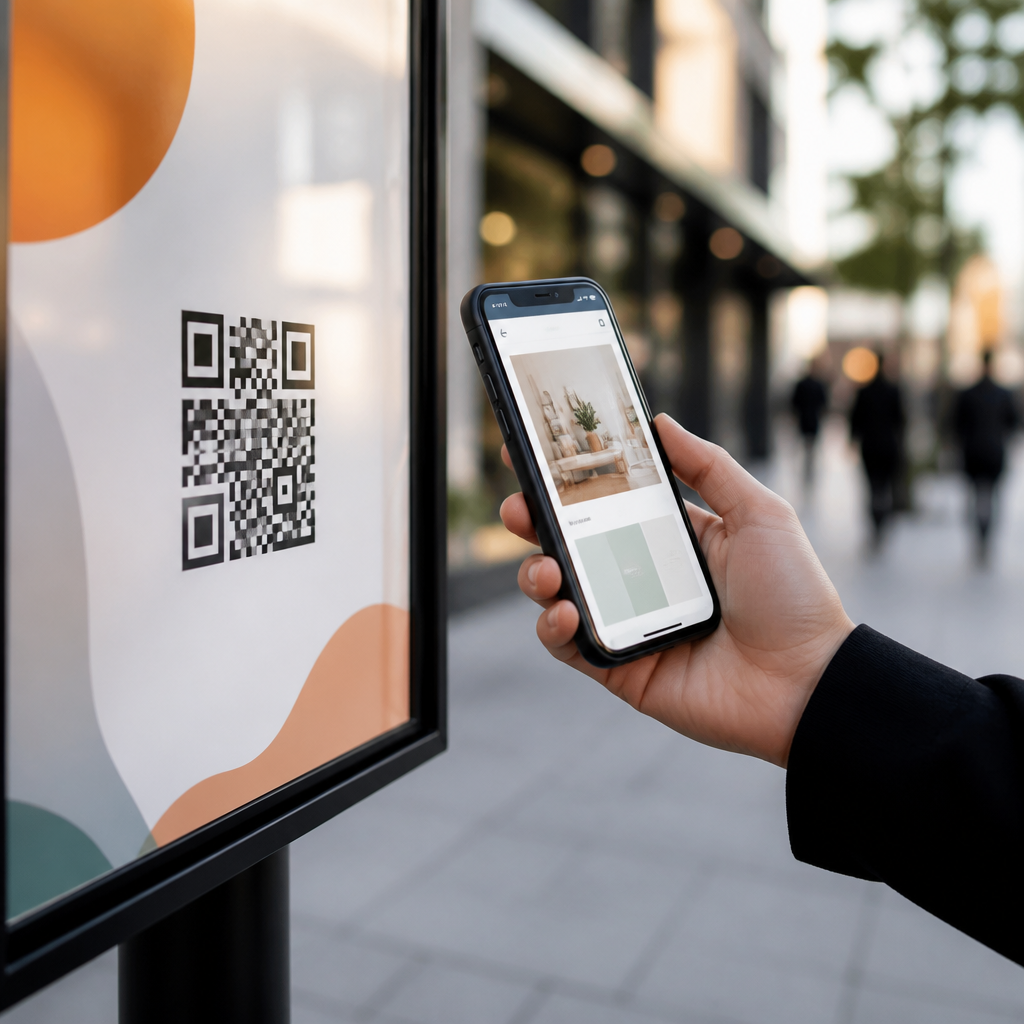
At the awareness stage, customers are not ready for a heavy ask. They need a quick reason to pay attention and a low-friction way to learn more. QR codes work well here on out-of-home ads, product displays, storefront windows, event signage, transit posters, and direct mail. The destination should answer the immediate question triggered by the placement: What is this? Why should I care? What do I do next? Strong awareness-stage experiences include short videos, store locators, campaign landing pages, product explainers, social proof, or limited-time offers tied closely to the context of the scan.
A restaurant opening in a busy neighborhood is a simple example. A window poster with a QR code can offer a menu preview, opening date, reservation link, and map directions. That works better than sending people to the homepage, where they may need several taps to find the same information. A consumer packaged goods brand can place QR codes on shelf displays that open a 30-second ingredient story, recipe ideas, and nearby retailer availability. In both cases, the code acts as a bridge from curiosity to meaningful engagement. The scan should feel like the obvious next step, not an extra task.
Creative execution matters more than many teams expect. Scan rates increase when the call to action is specific, benefit-led, and visible from the distance at which the code will be seen. “Scan to see pricing” or “Scan for a 2-minute demo” outperforms a vague “Learn more.” Contrast, whitespace, and size affect readability. Most practitioners follow a minimum print size around 2 x 2 centimeters for close-range use, though larger formats are necessary for posters, windows, and outdoor placements. ISO/IEC 18004 governs QR code symbology, but practical testing across lighting conditions, camera quality, and surfaces is what protects campaign performance.
Using QR Codes in Consideration and Evaluation
In the consideration stage, buyers compare options, validate claims, and reduce uncertainty. This is where QR codes can carry substantial commercial value because they deliver decision-support content exactly when evaluation is happening. Retail packaging can link to reviews, comparison guides, certifications, FAQs, or demonstration videos. In B2B settings, booth displays, brochures, and sample kits can open case studies, ROI calculators, technical specifications, or a calendar booking page for a specialist. The key is that the destination must remove a barrier to decision, not simply repeat a top-level brand message.
I have consistently seen better results when the landing page is built for mobile-first scanning rather than repurposed from desktop campaigns. Consider a cosmetics brand in a retail aisle. A shopper scans a code on a display because they want proof that a serum suits sensitive skin. If the destination opens a cluttered product page, the moment is lost. If it opens directly to dermatologist testing, ingredient explanations, before-and-after imagery, and authentic customer reviews, the code supports conversion. The principle is the same in industrial sales. Engineers scanning a code on machinery documentation need specification sheets, compatibility notes, and safety guidance immediately, not a general brand overview.
| Journey Stage | Typical QR Placement | Best Destination | Primary Metric |
|---|---|---|---|
| Awareness | Posters, storefronts, direct mail | Campaign page, video, store locator | Unique scans |
| Consideration | Packaging, displays, brochures | Reviews, comparisons, FAQs, demos | Engaged sessions |
| Conversion | Menus, shelf tags, event booths | Checkout, booking, coupon, payment | Orders or leads |
| Onboarding | Product inserts, receipts, welcome kits | Setup guide, registration, app link | Activation rate |
| Retention | Emails, invoices, packaging, loyalty cards | Reorder page, support, rewards dashboard | Repeat purchase |
| Advocacy | Thank-you cards, receipts, packaging | Review form, referral page, UGC prompt | Referral or review volume |
Trust signals deserve special attention at this stage because mobile users are wary of unknown links. Branded QR codes, recognizable domains, and clear destination labels improve confidence. So does contextual placement. A code printed beside third-party certifications, star ratings, or trial information is easier to trust than a standalone black square with no explanation. If compliance matters, include visible cues such as “Opens ingredients and test results” or “View CE documentation.” That specificity reduces hesitation and increases useful scans from customers who are already evaluating seriously.
Driving Conversion, Checkout, and Immediate Action
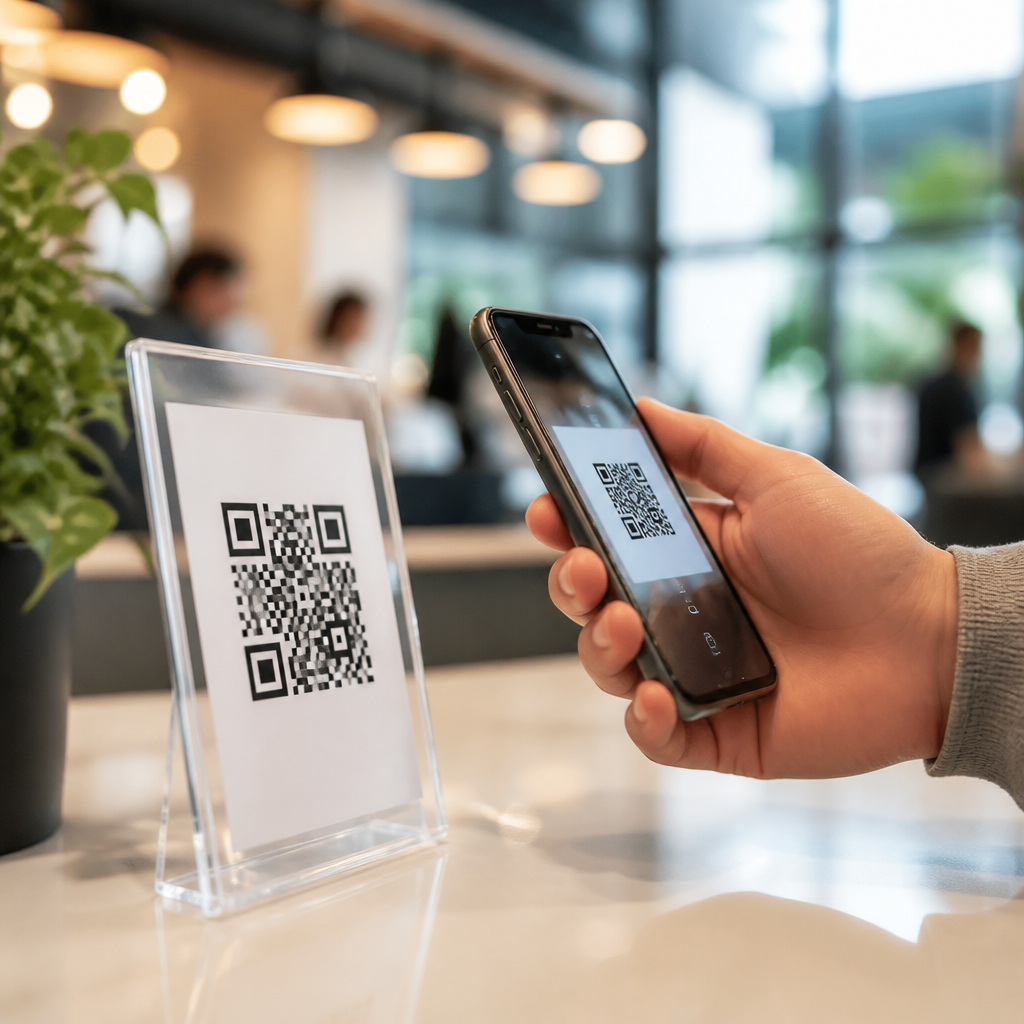
At the conversion stage, QR codes should reduce steps between intention and transaction. Common applications include scan-to-order restaurant menus, scan-to-pay invoices, event registrations, coupon redemption, app install deep links, and fast paths to ecommerce checkout. The best conversion-focused QR experience removes navigation entirely. A diner should land on the exact menu or ordering interface, not a restaurant homepage. A trade show attendee scanning a booth code should reach a short lead form prefilled where possible, or a meeting scheduler connected to the relevant sales rep. Conversion rates improve when the scan resolves urgency rather than introducing more choices.
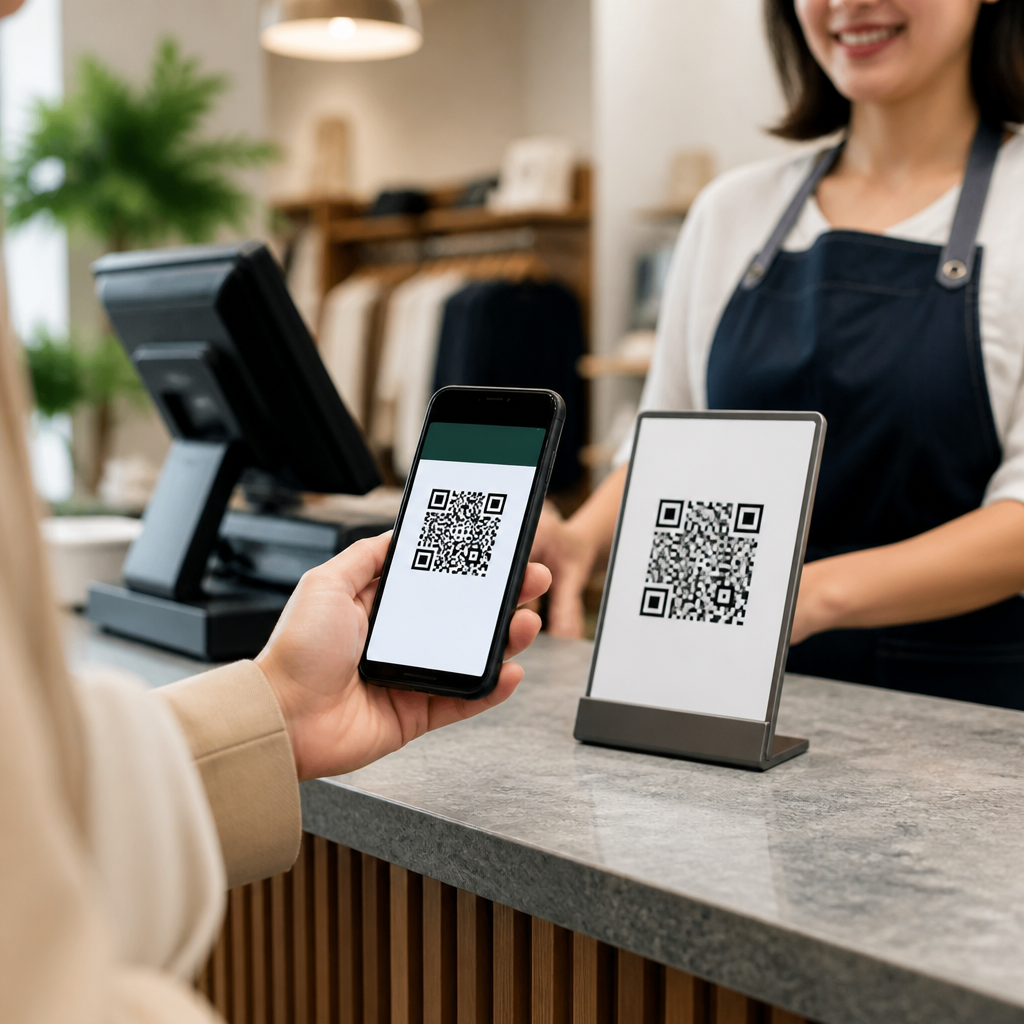
Payments are a strong example because QR codes can compress what used to be a complicated sequence. Merchants using platforms such as PayPal, Stripe, Square, and regional wallet systems can generate payment links encoded into QR codes for invoices, countertop displays, and peer-to-peer transactions. In many markets, scan-based payment behavior is already normal, especially where mobile wallets dominate. The customer benefit is speed, but the business benefit is lower checkout friction and cleaner attribution. A printed invoice with a unique code can link payment completion back to an account record, campaign segment, or location without manual reconciliation.
That said, a conversion-stage QR code must respect the environment. In low-signal areas, a heavy landing page can fail. In high-pressure retail spaces, a long form will underperform. In restaurants, codes should not force unnecessary account creation before viewing a menu. The best teams test load speed, form length, payment flow, and deep linking across iOS and Android before launch. They also prepare fallback options. If a code fails or a customer prefers not to scan, a short URL or NFC alternative can preserve access and keep the transaction from stalling.
Improving Onboarding, Retention, and Loyalty
Many brands underuse QR codes after purchase, even though this is where they often create the most durable value. Onboarding is the first period after conversion when a buyer needs help using, registering, or understanding what they purchased. A QR code on packaging, inserts, receipts, labels, or welcome materials can open setup videos, app downloads, product registration forms, warranty activation, care instructions, training modules, or troubleshooting guides. This is especially important for products with any complexity, from fitness equipment and electronics to software-linked devices and specialty food subscriptions.
When onboarding improves, retention usually follows. I have seen support ticket volume drop when packaging directs customers to visual setup instructions before they get stuck. That result is not surprising. A customer who can assemble a chair, connect a device, or start a subscription service smoothly is less likely to return the product and more likely to remember the brand positively. QR codes also help companies guide customers toward loyalty programs, refill reminders, reorder pages, and educational content that increases product usage. For consumables, a code on the package can detect likely reorder timing and route returning buyers to a subscription offer or bundle page.
Retention campaigns benefit from segmentation. The same printed code does not have to deliver the same experience forever if it is dynamic and tied to known customer data after the click. For example, a beauty brand can place one code inside every order insert. First-time buyers might land on tutorials and usage tips. Repeat buyers might see complementary products and loyalty rewards. Customers from a wholesale channel could be routed to a store finder rather than direct purchase. This kind of post-purchase personalization works best when QR scans are connected to CRM systems, consented first-party data, and lifecycle automation tools such as HubSpot, Klaviyo, Salesforce Marketing Cloud, or Braze.
Measurement, Governance, and Common Mistakes
Effective customer journey mapping with QR codes depends on measurement discipline. The baseline metrics are scans, unique scans, scan location, device type, time of day, bounce rate, and downstream conversions. But those are only starting points. Better analysis compares scan volume to impression estimates, tracks assisted conversions, and evaluates stage-specific outcomes such as booked demos, completed registration, repeat purchase rate, or support deflection. Google Analytics 4, Adobe Analytics, CRM attribution models, and URL parameters are standard tools here. Without clear naming conventions and governance, QR reporting becomes fragmented across campaigns and teams.
There are also recurring mistakes that limit performance. One is linking every code to the homepage. Another is placing codes where scanning is physically awkward, such as moving vehicles, reflective surfaces, or areas with poor lighting. A third is ignoring design basics, including quiet zone spacing, contrast, and error correction. Security is another issue. Customers have learned that malicious codes can redirect to unsafe pages, so brands should use trusted domains, HTTPS, and transparent calls to action. For regulated industries, review workflows should cover legal claims, privacy disclosures, accessibility, and record retention for destination content.
The most successful programs treat QR codes as journey infrastructure rather than campaign decoration. They maintain a destination library, redirect rules, governance standards, testing checklists, and performance benchmarks by stage. They coordinate teams across brand, ecommerce, product, retail, sales, and support so each code serves a defined customer need. If you are building a broader QR Codes in Marketing Strategy program, this customer journey hub should anchor related work on QR code landing pages, packaging strategy, event activation, offline attribution, loyalty flows, and scan analytics. Start by mapping one high-intent touchpoint in each stage, measure rigorously, and refine from real behavior. That is how QR codes become a dependable part of growth, not just a trend.
Frequently Asked Questions
How do QR codes support the customer journey from awareness to advocacy?
QR codes work well across the customer journey because they connect offline intent to online action in a fast, low-friction way. At the awareness stage, a code on packaging, signage, direct mail, out-of-home ads, or event materials can introduce people to a campaign, product story, or landing page without asking them to type a URL. During consideration, QR codes can lead prospects to comparison pages, reviews, demos, FAQs, testimonials, or product configurators that help them evaluate options. At the point of purchase, they can simplify access to product details, limited-time offers, mobile checkout, financing information, or store-specific promotions.
After the sale, QR codes continue to add value. A code on packaging, receipts, inserts, or welcome materials can direct customers to setup instructions, onboarding flows, video tutorials, account registration, warranty activation, or customer support. In the retention phase, brands can use QR codes to encourage reorders, promote loyalty programs, collect feedback, and surface personalized recommendations. In the advocacy stage, they can route satisfied customers to referral programs, review platforms, community spaces, or social sharing experiences. Their real strength is not that they serve one campaign, but that they can be strategically placed at multiple high-intent moments to reduce effort and keep the customer moving forward.
Where should businesses place QR codes to make them most effective in the customer journey?
The best placement depends on where customer intent is naturally highest. In early-stage awareness, strong locations include storefront windows, posters, product displays, trade show booths, print ads, menus, brochures, and product packaging. These are moments when a person is curious but may not be ready for a long interaction. A QR code gives them a quick path to engage immediately. In consideration, effective placements include shelf talkers, catalogs, sales collateral, showroom signage, comparison sheets, and presentation materials, where the customer is already evaluating whether to move forward.
For purchase and post-purchase stages, placement becomes even more important because the customer is actively looking for help, reassurance, or next steps. Codes on receipts, shipping boxes, instruction manuals, invoice emails, in-store checkout displays, and product inserts can guide buyers to onboarding content, registration forms, support resources, replenishment pages, or loyalty enrollment. The key principle is to match the code to the moment. A QR code should not be added simply because there is space for it; it should appear where the customer is most likely to want more information or a convenient next action. Context matters too. Clear surrounding copy, a strong call to action, and a mobile-friendly destination often make the difference between a code that gets ignored and one that meaningfully improves conversion.
What makes a QR code experience successful once someone scans it?
A successful QR code experience starts after the scan, not before it. The destination must align with the user’s immediate expectation. If someone scans a code on product packaging to learn how to use an item, they should land directly on setup instructions or a short tutorial, not a generic homepage. Relevance is critical because every extra click creates friction and increases the chance of abandonment. Speed also matters. The landing page should load quickly, display well on mobile devices, and present a clear next step such as watching a video, claiming an offer, starting setup, joining a loyalty program, or contacting support.
Good QR code journeys also depend on message continuity. The wording around the code should preview the value of scanning, and the landing page should immediately confirm that the customer is in the right place. Strong experiences often use dynamic QR codes so brands can update destinations over time, test different pages, and track performance without reprinting physical materials. It is also important to remove unnecessary barriers. Avoid forcing users through complicated forms too early, and make sure key actions are easy to complete on a phone. In practice, the most effective QR code experiences are simple, specific, and intentional: one audience, one context, and one clear next action tailored to that stage of the journey.
How can businesses measure the impact of QR codes within customer journey mapping?
Measurement should focus on how QR codes influence movement between stages of the journey, not just how many scans they receive. Scan volume is useful, but it is only the first signal. Businesses should also track metrics such as unique scans, repeat scans, click-through behavior, time on page, bounce rate, conversion rate, purchases, registrations, support deflection, loyalty sign-ups, review submissions, and reorders. When mapped properly, these metrics show whether a code is helping people progress from awareness to consideration, from purchase to onboarding, or from satisfaction to advocacy.
To improve accuracy, brands should use dynamic QR codes, campaign tagging, and stage-specific landing pages. That allows teams to distinguish the performance of a code on a retail display from one on packaging or a receipt insert. Comparing those placements can reveal where customer intent is strongest and where the experience needs refinement. Measurement should also include qualitative signals. Customer service teams, in-store staff, and survey responses can help explain why some codes perform better than others. For example, a low scan rate may indicate weak call-to-action copy, poor placement, or limited perceived value, while a high scan rate with low conversion may point to a mismatch between the code’s promise and the landing page experience. The best journey mapping combines behavioral data with real customer feedback to show how QR codes contribute to both immediate results and longer-term customer relationships.
What are the most common mistakes brands make when using QR codes in the customer journey?
One of the most common mistakes is treating QR codes as a novelty instead of a journey tool. Brands sometimes place them everywhere without a clear purpose, which leads to cluttered experiences and low engagement. Another frequent issue is sending users to a homepage rather than a page built for the specific context of the scan. That disconnect creates friction and wastes the high-intent moment. Poor mobile optimization, slow-loading pages, and vague call-to-action language also weaken performance. If customers do not know why they should scan, or if the experience after scanning feels inconvenient, adoption drops quickly.
Other mistakes happen at the strategy level. Some businesses fail to align QR codes with actual customer needs at each stage, so the code offers the wrong content at the wrong time. Others neglect testing and analytics, which makes it difficult to improve placements, messaging, or destination pages. Design issues can also get in the way, including low contrast, codes that are too small, bad placement on curved or reflective surfaces, or positioning that makes scanning awkward. Finally, many brands overlook the post-purchase opportunity. They focus heavily on acquisition but miss the chance to use QR codes for onboarding, service, retention, and advocacy. The most effective approach is to view every QR code as part of a larger customer journey system, where each scan has a specific role in helping the customer take the next best step.