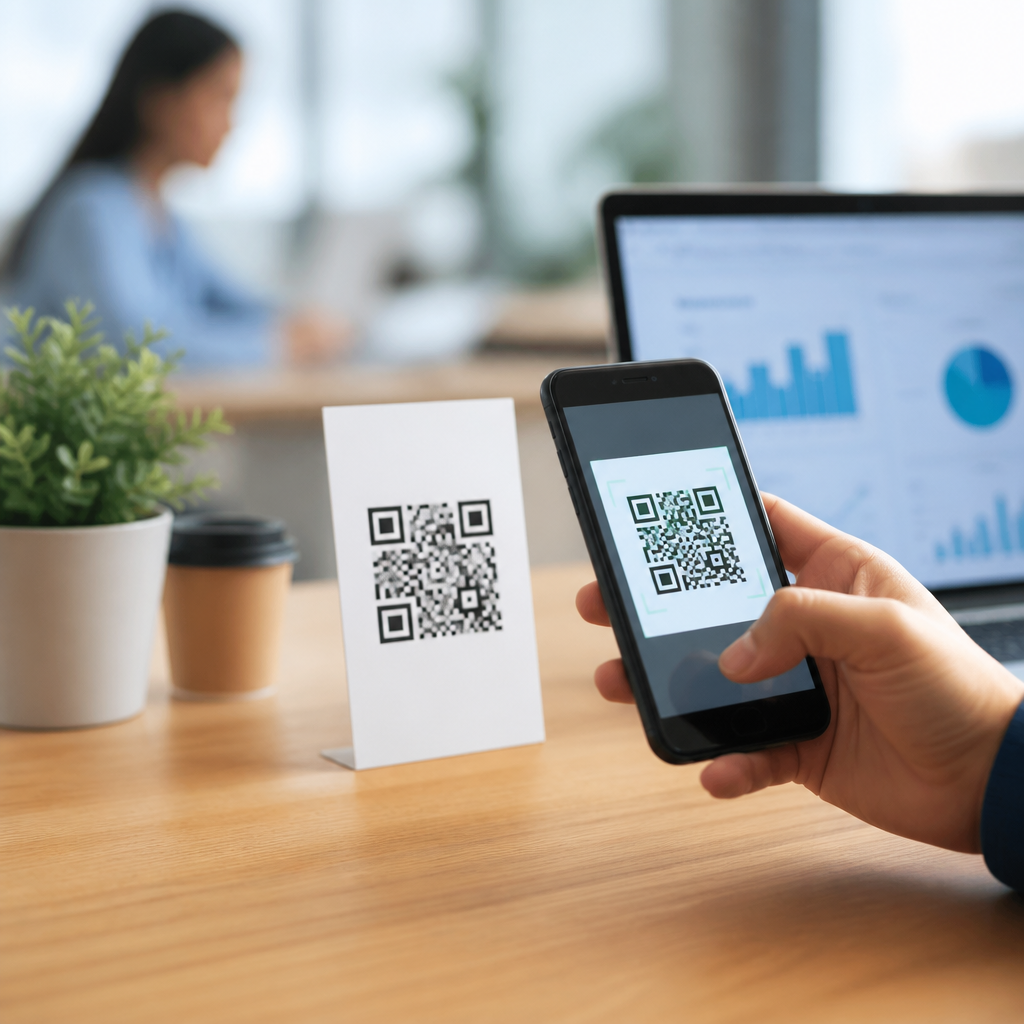
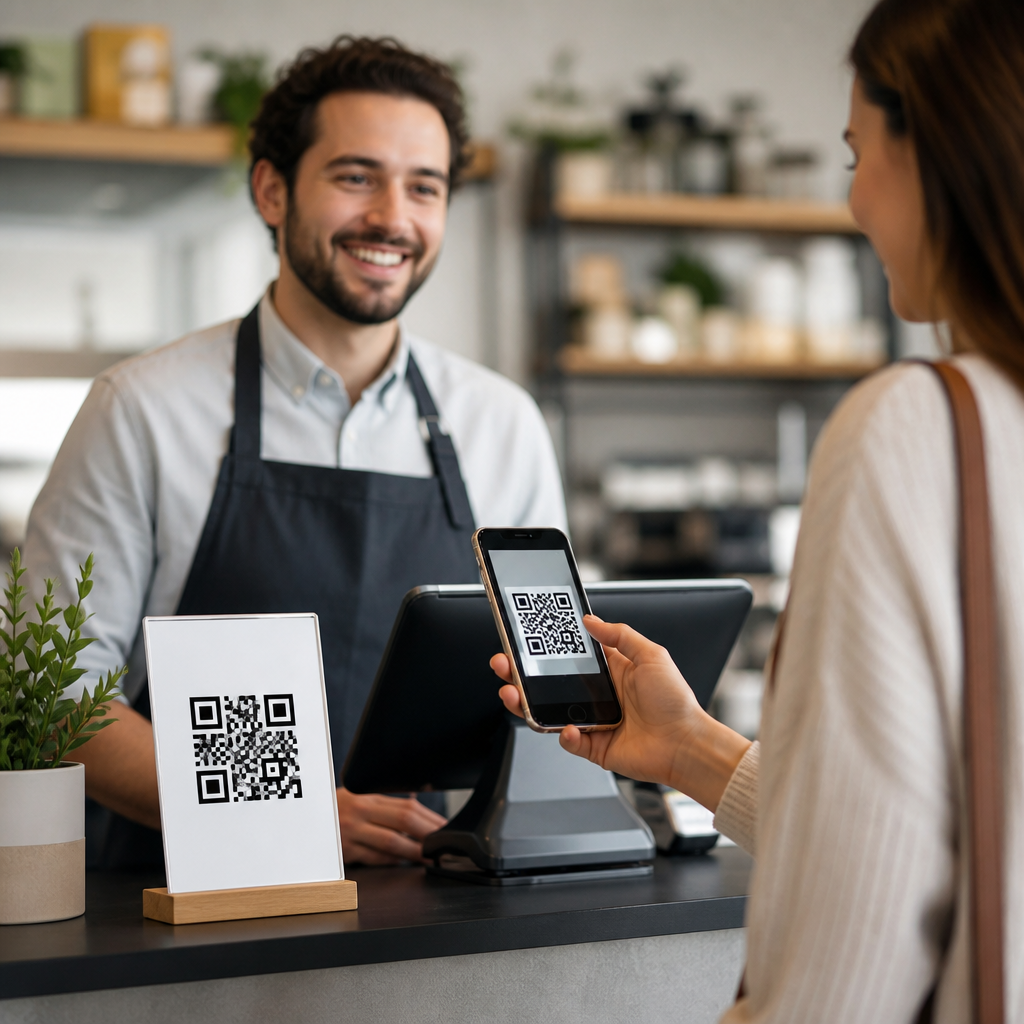
QR code marketing gives small businesses a low-cost way to connect offline attention with online action, turning a printed sign, menu, package, flyer, or receipt into a measurable customer journey. A QR code, short for quick response code, is a scannable two-dimensional barcode that opens a digital destination when a smartphone camera reads it. In practice, that destination might be a landing page, a coupon, a review form, a payment screen, a menu, a video, a map listing, or a contact card. I have used QR campaigns for retail counters, restaurant tables, event booths, service vans, direct mail pieces, and window posters, and the pattern is consistent: when the offer is clear and the scan experience is fast, response rates improve because customers do not need to type a URL, search manually, or download an app.
For small businesses, the appeal is straightforward. QR codes are cheap to create, easy to place across physical touchpoints, and flexible enough to support promotions, customer service, loyalty, payments, and retention. They also create trackable attribution between a real-world asset and a digital outcome. A salon can learn whether its mirror decal drives booking traffic. A coffee shop can compare scans from table tents versus takeaway cups. A contractor can track whether yard signs produce estimate requests. This matters because many small companies still struggle to connect local foot traffic, print marketing, and repeat business to measurable revenue. QR code marketing closes that gap. A strong playbook covers strategy, destinations, creative, placement, analytics, compliance, and maintenance. That is what this guide does: it gives you the core framework to plan campaigns that customers will actually scan and that your team can operate without wasting time or budget.
What a QR code marketing playbook includes
A QR code marketing playbook is the documented system a business uses to decide why a code exists, where it appears, what happens after the scan, how results are measured, and who owns updates. Without a playbook, companies often generate random codes for random pages, print them too small, and never check whether they perform. The result is clutter, not conversion. With a playbook, every code has a job. For example, a storefront code might aim to capture after-hours leads with a “Book tomorrow’s appointment” page, while a receipt code might invite a review in exchange for loyalty points.
In my experience, the best playbooks start with five decisions. First, define the business goal: lead generation, review growth, order volume, email signups, payments, app downloads, or support deflection. Second, choose the audience context: first-time visitor, repeat customer, walk-by prospect, event attendee, or existing client. Third, select the right destination, usually a mobile-first landing page tailored to one action. Fourth, build tracking using UTM parameters, QR platform analytics, and conversion goals in Google Analytics 4. Fifth, set an operations rule for testing and updates. If an offer expires, the destination must be changed immediately. Static codes point to one fixed URL and are best for permanent destinations. Dynamic codes route through a management platform, letting you edit the destination later and collect scan data. For active marketing, dynamic codes are usually the right choice.
Choosing the right campaign goals and customer journeys
Every successful QR campaign begins with a clear, narrow objective. “Get more engagement” is not a usable goal. “Generate 40 catering inquiries this quarter from in-store signage” is. Small businesses benefit most when each code maps to a specific stage in the customer journey. Awareness campaigns work well on posters, packaging, and window displays. Consideration campaigns fit brochures, product shelves, and menus, where customers want more information. Conversion campaigns belong on point-of-sale displays, direct mail, and service invoices. Retention campaigns often perform best on receipts, thank-you cards, and packaging inserts that reach existing buyers.
Here is a practical way to think about the journey. A prospect sees a code, understands the benefit in seconds, scans it, lands on a page that matches the promise, and completes one easy action. Break any of those steps and performance drops. A bakery, for instance, can place a code near the register with the message “Join our pastry text club for a free cookie today.” The scan should open a simple opt-in page, not the homepage. A fitness studio can put codes on lobby signage reading “See this week’s class times and reserve your spot.” A real estate agent can add codes to yard signs that open a listing page with photos, price, and a call button. In each case, the destination reflects customer intent at the moment of scanning. That is the heart of the playbook: message-to-context match.
Best QR code use cases for small businesses
Small businesses can use QR codes across nearly every customer touchpoint, but a few use cases deliver the strongest return. Restaurants commonly use them for digital menus, table ordering, loyalty enrollment, and review requests. Retail stores use them for product education, size guides, back-in-stock alerts, and post-purchase care instructions. Service businesses use them for estimate requests, before-and-after galleries, maintenance tips, and invoice payment links. Professional offices use them for patient forms, directions, scheduling, and secure feedback surveys. Event-based businesses use them for ticketing, maps, lead capture, and speaker resources.
The highest-performing examples usually solve friction, not just add novelty. A pet groomer’s window decal that says “Scan to book next available appointment” helps after-hours shoppers convert. A boutique’s shelf tag that says “Scan for styling ideas in your size” supports hesitant buyers. A plumber’s truck wrap can direct neighbors to “Get same-day estimate availability.” A farmers market vendor can add a code to packaging that opens recipes and storage tips, increasing repeat purchases because buyers feel more confident using the product. Codes also work well in local partnerships. A gym and smoothie bar can exchange in-store codes offering a first-visit discount, with unique landing pages that show which partner drove the visit. This turns offline referral relationships into measurable channels rather than guesswork.
How to design QR codes that people actually scan
Design affects scan rate more than most owners expect. The code must be technically readable, visually noticeable, and paired with a clear reason to act. I recommend starting with contrast and size. Dark code on a light background is the safest choice. Avoid low-contrast palettes, glossy surfaces with glare, and busy patterns behind the code. For print, a minimum size of around 0.8 by 0.8 inches can work at close range, but larger is better when the scanning distance increases. The practical rule many print teams use is a scanning distance-to-code-size ratio of about 10:1. If customers scan from 20 inches away, the code should be roughly 2 inches wide. Always leave quiet space around the code so phone cameras can distinguish the edges.
Equally important is the call to action. “Scan me” is weak because it explains the mechanism, not the benefit. “Scan for 10% off today,” “Scan to see lunch specials,” or “Scan to leave a two-minute review” gives customers a reason. Brand customization can help recognition, but only within limits. If you add a logo in the center or use custom colors, test across multiple devices, lighting conditions, and camera apps. Error correction levels can protect readability when part of the code is stylized, but overdesign still causes failures. The landing page must also load quickly and be mobile friendly. In tests I have run, businesses often focus on the printed code and ignore the destination experience, even though a slow page destroys conversion after a successful scan.
Tracking performance, testing, and optimization
QR code marketing becomes valuable when it is measured like any other acquisition channel. At minimum, track scans, unique users, destination visits, conversions, conversion rate, and location or asset source. Dynamic QR platforms such as Bitly, QR Code Generator PRO, Beaconstac, and Flowcode can report scans by date, device, and geography. Pair those reports with Google Analytics 4 events and UTM parameters so you can see what happened after the click-through. If your point-of-sale or booking system supports campaign attribution, tie the code to revenue as well. Small businesses do not need enterprise tooling, but they do need consistent naming conventions. I prefer asset-based labels such as storefront-window-spring, receipt-june, tabletent-brunch, or van-wrap-east-route.
Optimization should be deliberate. Change one variable at a time: call to action, placement height, incentive, landing page headline, or destination type. If a code on a menu gets scans but few orders, the issue is probably the page experience, not awareness. If a flyer gets no scans, the issue may be placement, trust, or weak incentive. Use basic benchmarks, but interpret them in context. A review-request code on receipts may have a lower scan rate than a discount code at the register yet still be a success if it lifts review volume meaningfully.
| Business type | Best QR placement | Primary goal | Key metric |
|---|---|---|---|
| Cafe | Counter sign, cups, receipts | Loyalty signup | Opt-in rate |
| Retail boutique | Shelf tags, fitting rooms | Product education | Assisted conversion rate |
| Home services | Vehicle wrap, invoice, yard sign | Lead generation | Qualified inquiries |
| Restaurant | Table tents, takeout packaging | Repeat orders and reviews | Repeat order rate |
Testing also means checking the physical environment. Does the code still scan under dim restaurant lighting, behind a storefront window, or on a curved bottle? Are customers expected to scan while standing, sitting, driving past slowly, or holding a shopping basket? These details change performance dramatically. Build a routine review schedule, retire underperforming assets, and redirect winning offers to additional surfaces.
Common mistakes, compliance issues, and rollout strategy
The most common QR code marketing mistakes are easy to avoid. The first is linking to a homepage instead of a purpose-built page. The second is using a code with no explanatory text, assuming people will scan out of curiosity. The third is printing without testing on different phone models. The fourth is forgetting ongoing ownership, which leads to broken links, expired offers, or outdated forms. The fifth is placing too many codes in one space, creating choice paralysis. One code, one promise, one action is usually the strongest pattern.
There are also trust and compliance considerations. If you collect phone numbers or email addresses, make consent language clear and follow applicable privacy rules and messaging requirements. For payments, use secure processors and trusted domains. For healthcare, legal, or financial businesses, avoid routing customers to pages that expose sensitive personal data without proper safeguards. Accessibility matters too. Pair the code with a short URL or plain-language instruction so people who cannot scan still have a path forward. Use readable typography and avoid placing codes where wheelchair users or shorter customers cannot comfortably access them.
For rollout, start with a pilot rather than a business-wide launch. Choose one high-traffic touchpoint, one strong offer, and one conversion event. Run it for two to four weeks, review scan and conversion data, then expand to two or three additional placements. Document what worked, including size, copy, destination, and timing. Over time, this hub approach becomes a library of repeatable QR code marketing playbooks: one for reviews, one for lead capture, one for loyalty, one for direct mail, one for events, and one for packaging. That structure makes future campaigns faster to deploy and easier to measure.
QR code marketing works best when small businesses treat it as a disciplined system, not a gimmick. The essential formula is simple: define one business goal, match the code to a real customer moment, send scans to a mobile-first destination, and measure outcomes with clear attribution. When those elements line up, QR codes turn physical assets into conversion points that are cheap to test and easy to scale. That is why they fit small business realities so well: limited budgets, mixed online and offline channels, and a constant need to prove what is working.
The main benefit of a strong QR code marketing playbook is clarity. Your team knows which codes exist, where they live, what they promise, and how success is judged. Customers get a faster path to booking, buying, reviewing, paying, or returning. Management gets data instead of assumptions. Start with one campaign this month: choose a high-intent touchpoint, write a specific call to action, build a dedicated landing page, and track results. Then refine and expand. A well-run QR program does not just increase scans. It creates a measurable bridge between local attention and business growth.
Frequently Asked Questions
1. How can small businesses use QR codes effectively in their marketing?
Small businesses can use QR codes to bridge the gap between physical touchpoints and digital actions in a way that is inexpensive, fast to deploy, and easy to measure. A QR code can be placed on storefront signs, menus, packaging, receipts, direct mail pieces, table tents, business cards, event displays, window decals, product tags, and flyers. When scanned, it can direct customers to a highly specific destination such as a limited-time offer, a booking page, a loyalty program signup, a product tutorial, a review request form, a digital menu, a map listing, or a mobile payment screen. The most effective use cases start with a clear objective. If the goal is to increase reviews, the code should go directly to a review prompt. If the goal is to drive repeat visits, the code might open a coupon or a loyalty enrollment page. If the goal is education, it can link to setup instructions, care guides, or a short demo video.
To use QR codes well, businesses should match the code to customer intent and context. Someone scanning a code on a restaurant table is likely ready to view a menu, reorder, or pay. Someone scanning a code on product packaging may want directions, warranty registration, or usage tips. Someone scanning from a receipt may be receptive to joining a rewards program or leaving feedback. This context-based thinking improves conversion rates because the destination feels useful instead of promotional for its own sake. It also helps businesses create smoother customer journeys by reducing steps between interest and action. The best QR code marketing does not simply send people to a homepage. It sends them to a focused mobile-friendly page designed for the exact action the customer is most likely to take.
2. What makes a QR code campaign successful for a small business?
A successful QR code campaign usually comes down to relevance, clarity, ease of use, and follow-through. Relevance means the offer or destination has to make sense where the code appears. A code on a sidewalk sign should offer something immediately useful, such as today’s special, directions, or a first-visit discount. A code on packaging should support post-purchase engagement, like care instructions, reorder links, or referral incentives. Clarity means customers need a reason to scan. Simply printing a QR code without explanation often underperforms. Adding a short call to action such as “Scan for 10% off,” “Scan to book now,” “Scan to see the menu,” or “Scan to leave a review” removes uncertainty and increases engagement.
Ease of use is equally important. The destination should load quickly, display well on mobile devices, and ask the user to do only what is necessary. If a customer scans a code for a coupon but lands on a cluttered page that requires multiple clicks, the opportunity is often lost. Follow-through refers to what happens after the scan. The page should continue the promise made by the code, and the business should measure performance using trackable links, campaign-specific landing pages, or dynamic QR codes. This allows owners to compare placements, offers, and times of year to see what actually drives results. In many cases, a successful campaign is less about the code itself and more about having a clear offer, a frictionless landing experience, and a measurable next step that supports broader business goals.
3. Where should small businesses place QR codes to get the best results?
The best placement depends on where customers already pause, decide, wait, or interact with the business. High-performing placements often include entry doors, point-of-sale counters, menus, tables, waiting areas, product packaging, checkout receipts, takeout bags, event booths, printed ads, and in-store displays. For service businesses, QR codes can work well on invoices, appointment reminder cards, vehicle wraps, and job-site signage. For retail businesses, they can support product discovery by linking to sizing information, product demos, reviews, or restock alerts. For hospitality and food service, they are especially effective on table cards, order pickup stations, and receipts where customers are already in a decision-making mindset.
Visibility and usability matter as much as location. The code should be large enough to scan easily, printed with strong contrast, and placed where lighting, distance, and movement will not interfere. A code on a poster in a busy hallway may underperform if people cannot stop long enough to scan it. A code behind reflective glass or printed too small on textured packaging may also create friction. Strong placements pair convenience with intent. For example, a code on a checkout counter can invite customers to join a rewards program before they leave. A code on a package insert can drive repeat purchases once the customer gets home. A code on a flyer can lead to a campaign-specific page that tracks response from that exact distribution. Businesses often get the best results by testing multiple placements and adjusting based on scan data, conversion rates, and the practical behavior of their customers.
4. How can small businesses track and measure QR code marketing performance?
One of the biggest advantages of QR code marketing is that it can turn offline activity into measurable digital behavior. Small businesses can track scans, traffic sources, device types, location patterns, landing page visits, form submissions, purchases, bookings, coupon redemptions, and review completions depending on the tools they use. A common approach is to create campaign-specific URLs with tracking parameters and connect them to analytics platforms. Dynamic QR codes are especially useful because they allow businesses to update the destination without reprinting the code and often include built-in reporting dashboards. This makes it easier to test different offers, compare placements, and refine campaigns over time.
The most useful measurement strategy begins by defining success before launching. If the purpose of a QR code is to drive calls, then call clicks or completed calls should be the primary metric. If the goal is in-store redemption, then coupon use or point-of-sale attribution matters most. If the goal is customer feedback, then completed review or survey submissions become the key indicator. Businesses should avoid focusing only on scan volume. A high number of scans is encouraging, but the real value comes from what happens after the scan. Comparing scan count to conversion rate helps reveal whether the offer, landing page, or placement needs improvement. Over time, this data can help small businesses make smarter decisions about print materials, promotions, customer retention tactics, and which offline touchpoints are most effective at generating online action.
5. What are the most common QR code marketing mistakes small businesses should avoid?
The most common mistake is sending customers to a generic homepage instead of a dedicated mobile-friendly page built for a specific action. When users scan a code, they expect convenience and immediacy. If they have to search the website for the promised coupon, menu, or booking link, many will abandon the experience. Another frequent issue is failing to include a clear call to action. Customers should know exactly what they will get by scanning, whether that is a discount, directions, a digital menu, a video tutorial, or a review form. Businesses also sometimes overlook testing. Every code should be scanned on multiple devices before distribution to confirm that it works quickly, lands on the correct page, and displays properly on mobile screens.
Other avoidable mistakes include poor placement, low-contrast design, overly small print size, expired offers, and linking to pages that load slowly or require too much information upfront. Some businesses also miss the opportunity to track performance, which makes it difficult to know whether the campaign is generating real value. Another subtle but important mistake is using QR codes without considering customer intent. A code should feel helpful in the moment, not random or forced. For example, a receipt is a logical place for a feedback request or next-visit offer, while packaging is ideal for product information or reordering. Finally, businesses should keep the customer experience trustworthy and consistent. The destination should reflect the brand, the offer should match what was promised, and the path to completion should be simple. When small businesses avoid these pitfalls, QR codes become much more than a novelty. They become practical tools for engagement, conversion, and measurable growth.