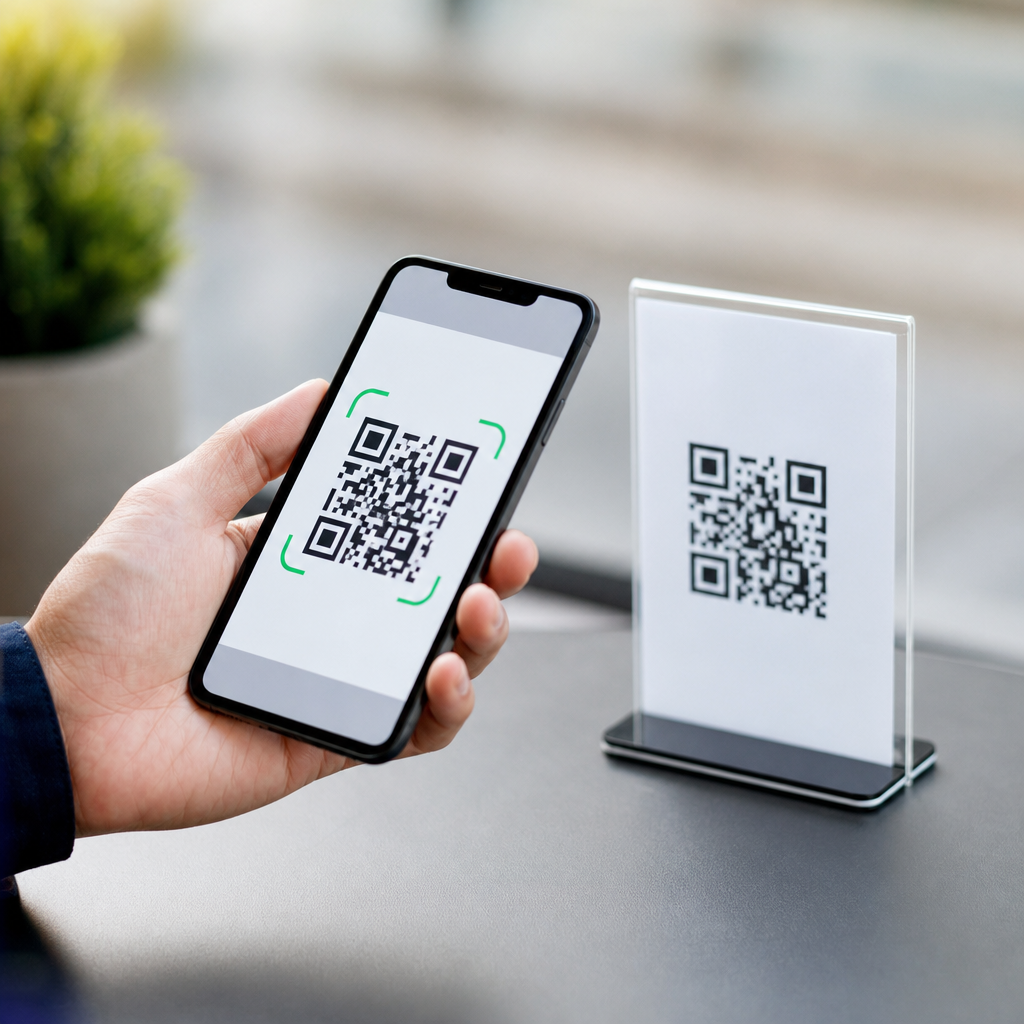

Privacy laws and QR code marketing now intersect in ways every brand, retailer, event organizer, and app developer must understand before launching campaigns. A QR code seems simple: a scannable image that sends someone to a landing page, payment flow, app download, menu, form, or loyalty program. Yet the moment a scan is logged, a cookie is dropped, a location is inferred, or an email address is collected, the campaign moves from creative promotion into regulated data processing. In practice, that means marketing teams must think beyond design and conversion rates. They must ask what personal data is collected, why it is collected, where it is stored, how long it is retained, and which privacy laws apply.
QR code marketing refers to using static or dynamic QR codes to connect offline or digital audiences to measurable online experiences. Dynamic QR codes are especially relevant because they route scans through a redirect service that can record metadata such as timestamp, device type, approximate location, language, and referring source. When combined with forms, analytics platforms, pixels, customer relationship management systems, or ad retargeting, those scan events can become personal data under laws such as the General Data Protection Regulation, the UK GDPR, the California Consumer Privacy Act as amended by the CPRA, Quebec Law 25, and similar rules in Brazil, several US states, and Asia-Pacific markets. Even when a single scan does not identify a person by name, it may still relate to an identifiable individual when linked with other data points.
I have worked on QR campaigns for retail packaging, restaurant ordering, trade show lead capture, and healthcare information access, and the pattern is consistent: teams usually underestimate the privacy footprint. They focus on whether the code works, not whether the redirect vendor, consent banner, analytics tags, and form fields are configured lawfully. This matters because regulators increasingly examine the full data chain, not just the visible form. A privacy-compliant QR campaign reduces enforcement risk, improves data quality, protects customer trust, and prevents a useful channel from becoming a liability.
This hub explains how data privacy and GDPR compliance apply to QR code marketing, what lawful collection looks like, how to design compliant scan journeys, and where the practical risk points usually appear.
What personal data QR code marketing collects and why it is regulated
QR code marketing can collect more personal data than many stakeholders expect because the scan journey often includes multiple systems. At minimum, a dynamic QR platform may record the date and time of scan, IP address or truncated IP, approximate geolocation derived from IP, device operating system, browser, and campaign identifier. A landing page may then place first-party cookies, load third-party scripts, and trigger analytics events in tools such as Google Analytics 4, Adobe Analytics, Meta Pixel, LinkedIn Insight Tag, or a marketing automation platform like HubSpot or Marketo. If the page contains a form, additional fields may include name, email, phone number, company, job title, age verification, or preferences.
Under GDPR, personal data means any information relating to an identified or identifiable natural person. Online identifiers, device identifiers, and location data can fall within that definition. The legal question is not whether the business intended to identify someone; it is whether the data can reasonably be linked to a person directly or indirectly. A scan log attached to a loyalty ID, email click, or CRM record is plainly personal data. Even aggregate reporting can begin with personal data at collection stage, meaning compliance obligations still apply.
Special care is required when QR codes are used in sensitive contexts. A code on prescription packaging, a clinic poster, or an employee benefits notice may reveal health, employment, or union-related inferences depending on the destination and campaign purpose. Children’s settings also raise risk. A code on school materials, toys, or youth events can trigger stricter consent and transparency obligations. The safest operating assumption is simple: if your QR code routes to a page that tracks, identifies, profiles, or collects contact details, privacy law applies from the first scan.
GDPR basics for QR code campaigns: lawful basis, transparency, and purpose limitation
GDPR does not ban QR code marketing; it requires disciplined processing. The main principles that matter in campaign design are lawfulness, fairness, transparency, purpose limitation, data minimization, accuracy, storage limitation, integrity and confidentiality, and accountability. For marketers, three issues dominate implementation: choosing a lawful basis, giving clear notice, and preventing data reuse beyond the stated purpose.
Lawful basis depends on what the QR journey does. If a scan only resolves to a webpage necessary to deliver requested content, a business may rely on legitimate interests for basic server logging, provided those interests are balanced against the user’s rights. If the landing page sets non-essential cookies, tracks users across sites, builds advertising audiences, or captures optional lead data for later nurturing, consent is often required in Europe before those actions occur. Consent must be freely given, specific, informed, and unambiguous. A pre-checked box or vague notice is not enough.
Transparency means people need to understand what happens after they scan. In good implementations, the poster, package, or display gives a short explanation such as “Scan to download the guide. Analytics and optional marketing signup on landing page.” The destination page then provides a layered privacy notice, cookie choices before non-essential tags fire, and just-in-time explanations beside forms. Purpose limitation means data collected to provide a recipe, warranty registration, or event check-in should not automatically be repurposed for unrelated advertising unless that later use is separately justified and disclosed.
In my experience, the biggest GDPR mistake is using one dynamic QR code for several departments and letting every team append new trackers over time. What began as anonymous brochure analytics turns into cross-channel profiling without a fresh assessment. That is exactly how low-risk campaigns become compliance problems.
Designing a privacy-compliant QR code journey from scan to storage
A compliant campaign starts before the code is generated. First, map the data flow. Identify the QR code generator or redirect provider, the hosting environment, analytics tools, consent management platform, tag manager, CRM, email service provider, and any downstream sales or support systems. Then document what each system receives. This record becomes the foundation for your privacy notice, retention schedule, vendor review, and, where required, your record of processing activities.
Second, decide whether you need a static or dynamic QR code. Static codes can reduce privacy exposure because they do not require a redirect intermediary for measurement. Dynamic codes offer flexibility and analytics but create an additional processor or joint processing question depending on the setup. If you need dynamic functionality, choose a provider that supports data processing terms, regional hosting options, access controls, audit logs, encryption, and configurable retention. Vendors that only advertise scan counts without compliance documentation are not suitable for regulated campaigns.
Third, build the landing page to minimize data. Do not ask for six fields when an email address and consent choice are enough. Avoid loading ad tech by default when the page objective is simply to provide a PDF or menu. Configure IP anonymization or truncation where appropriate, suppress unnecessary geolocation precision, and separate operational analytics from advertising uses. If the page targets EU users, deploy consent controls that block non-essential cookies and tags until the user opts in. Google Consent Mode can help align tags with user choices, but it is not a substitute for a valid consent banner or clear disclosures.
| Campaign scenario | Typical data collected | Main privacy requirement | Lower-risk design choice |
|---|---|---|---|
| Product packaging to recipe page | Scan time, device, page analytics | Notice and cookie consent for non-essential tags | Use first-party analytics and no retargeting |
| Trade show lead capture | Name, email, company, interests | Clear form notice and marketing consent where needed | Separate follow-up consent from event fulfillment |
| Restaurant menu QR code | Basic web logs, possible order data | Data minimization and secure payment handling | No third-party ad pixels on menu pages |
| Loyalty program sign-up | Contact details, purchase linkage, preferences | Lawful basis, retention limits, access rights handling | Collect only essential profile fields initially |
Finally, secure the storage and access layer. Restrict campaign dashboards to staff who need them, turn on multifactor authentication, remove dormant accounts, and define deletion rules. If scan logs are only useful for thirty or ninety days, do not keep them indefinitely. Security and privacy are separate disciplines, but in QR marketing they fail together: excessive retention increases both breach impact and regulatory exposure.
Consent, cookies, and direct marketing rules across major jurisdictions
Marketers often treat privacy law as one global standard, but QR code campaigns usually touch several legal regimes at once. In the European Economic Area and the UK, cookie and tracking rules sit alongside GDPR. This means consent may be required before non-essential cookies, pixels, or SDK-like scripts activate on the landing page, even if the subsequent personal data processing might be argued under legitimate interests. For email or SMS follow-up, ePrivacy rules and national marketing laws also matter. A person scanning a code to read product instructions has not automatically agreed to promotional messages.
In California, the analysis shifts. Businesses must disclose categories of personal information collected, purposes, retention periods, and whether data is sold or shared for cross-context behavioral advertising. If a QR landing page passes identifiers to ad platforms for remarketing, that may trigger opt-out obligations and “Do Not Sell or Share My Personal Information” requirements. Other US state laws, including those in Colorado, Connecticut, Virginia, Texas, and Oregon, add their own notice and rights frameworks. The details vary, but transparency, vendor contracts, and consumer rights workflows are recurring obligations.
Canada’s private-sector rules, including Quebec Law 25, place strong emphasis on transparency, meaningful consent, privacy impact assessment in certain situations, and default privacy settings. Brazil’s LGPD closely resembles GDPR in several respects, including lawful bases and data subject rights. The practical lesson is not to memorize every statute. It is to build QR campaigns with modular compliance controls: localized notices, consent logic by region, rights response procedures, and contract terms with every vendor in the scan path.
One frequent operational error is assuming that a single consent checkbox covers everything. It does not. Consent for cookies, consent for email marketing, and acceptance of terms for downloading content are distinct concepts. Bundle them together and the consent becomes vulnerable to challenge.
Vendor management, data transfers, and accountability in the QR stack
Most QR campaigns rely on outside providers: code management platforms, hosting services, analytics vendors, CRM tools, CDPs, and creative agencies. Each relationship needs classification. Some vendors act as processors, handling data only on your instructions. Others may act as independent controllers for parts of their service, especially where they use collected data for their own product improvement, security, or benchmarking. You need this distinction documented because it affects notice language, contract clauses, and responsibility for rights requests.
Under GDPR, processor agreements should address subject matter, duration, nature and purpose of processing, categories of data, security measures, subprocessor conditions, assistance with rights requests, breach notification, deletion or return of data, and audit support. For international transfers, assess whether personal data moves outside the EEA or UK and whether approved transfer mechanisms and supplementary measures are in place. After the Schrems II decision, transfer impact assessments became a routine part of responsible vendor review, especially for US-based software providers.
Accountability also means maintaining evidence. Keep records of your lawful basis analysis, DPIA decisions where high risk may exist, consent logs, vendor assessments, retention schedules, and tag deployment approvals. In regulated organizations, I recommend a simple release checklist for every QR campaign: destination reviewed, notice updated, consent banner tested, processors approved, retention defined, and fallback URL validated. That checklist catches most problems before launch.
Common compliance mistakes and how to avoid them
The most common mistake is invisible tracking. Teams generate a QR code, point it to a page with a default marketing template, and never realize the template loads eight third-party trackers. The fix is governance: approved landing page templates for low-risk, medium-risk, and lead-generation use cases. Another mistake is collecting too much information on mobile forms. Shorter forms are not just better for conversion; they are easier to justify under data minimization principles.
A third problem is poor disclosure at the physical touchpoint. If a poster says only “Scan me,” users have no context. A better prompt explains both value and expectation: “Scan for the conference slides. Optional signup and analytics on the page.” Fourth, businesses often forget rights management. If scan data enters a CRM, users may later request access, deletion, correction, or opt-out. Your campaign is compliant only if those requests can actually be fulfilled across all connected systems.
Finally, retention is routinely neglected. Scan-level logs from a one-week promotion do not need to live forever. Define retention by use case, automate deletion where possible, and review dashboards for fields that can be aggregated rather than stored at event level. Good privacy practice improves marketing discipline because it forces teams to decide what data truly matters.
Privacy laws and QR code marketing can work together when campaigns are designed with intention instead of patched after launch. The core rule is straightforward: treat every QR journey as a data collection system, not just a design asset. Identify the data, limit the purpose, choose the right lawful basis, obtain consent where required, vet every vendor, and secure the full chain from scan to storage. When teams follow that process, they usually discover they can still measure performance, personalize responsibly, and generate leads without excessive tracking or legal ambiguity.
For organizations building a broader QR Code Security, Privacy & Compliance program, this topic serves as the foundation. Data privacy and GDPR compliance affect menu codes, packaging codes, event codes, payment codes, loyalty flows, and support links alike. The same principles also connect to related issues such as data retention, vendor due diligence, international transfers, children’s privacy, consent management, and secure redirect architecture. A mature approach turns compliance from a blocker into a design standard that scales across campaigns and regions.
If you are planning a new QR initiative, start with a data map and landing page audit before you print a single code. That one step will reveal most privacy risks early, lower remediation costs, and help your marketing team launch with confidence.
Frequently Asked Questions
1. Do privacy laws apply to QR code marketing even if the QR code only links to a webpage?
Yes. A QR code by itself is simply a delivery mechanism, but the legal analysis begins the moment the scan connects a person to a digital destination that collects, stores, or analyzes information. If the landing page uses analytics tools, advertising pixels, cookies, device fingerprinting, location inference, form submissions, loyalty signups, payment processing, or app install tracking, privacy laws can apply. In many jurisdictions, the issue is not whether a QR code was used, but whether personal data or online identifiers were processed as part of the user journey.
That means brands should evaluate the entire flow behind the scan, not just the printed code. For example, a restaurant menu QR code may appear harmless, but if the page logs IP addresses, tracks repeat visits, or invites users to join a rewards program, data protection obligations may be triggered. The same is true for event check-ins, retail promotions, product packaging scans, and app download campaigns. Laws such as the GDPR, CCPA/CPRA, and other regional privacy frameworks often cover identifiers that can be linked to an individual or household, even if names are not immediately collected.
The practical takeaway is that QR code campaigns should be treated like any other digital marketing initiative. Conduct a data mapping exercise, identify what is collected after the scan, document the legal basis or disclosure requirements that apply, and make sure your privacy notice accurately describes the experience. The QR code may be the entry point, but regulators will look at the full chain of collection and use.
2. What personal data is commonly collected through QR code marketing campaigns?
Many organizations underestimate how much information can be gathered from a simple scan. Common data points include IP addresses, approximate geolocation, device type, browser details, operating system, time and date of scan, referral data, campaign identifiers, and behavior on the linked page. If the page includes forms, payment tools, event registration, email capture, surveys, or loyalty enrollment, the business may also collect names, email addresses, phone numbers, purchase details, and account information.
Additional tracking can occur through cookies, pixels, SDKs, and mobile attribution tools. These technologies may tie the scan to a broader profile used for analytics, retargeting, segmentation, or conversion measurement. Dynamic QR codes can add another layer because they often route users through a management platform that logs scan activity before redirecting them to the final destination. In other words, data may be collected both by the company running the campaign and by third-party service providers supporting it.
From a compliance perspective, even seemingly technical data can matter. IP addresses and persistent identifiers are treated as personal data under many laws when they relate to an identifiable person or can reasonably be linked back to one. That is why organizations should inventory not only direct user inputs, but also passive data collection occurring in the background. A careful review of analytics tools, ad tech integrations, and QR code platform settings is essential before launch.
3. When do businesses need consent for QR code marketing activities?
Consent requirements depend on the jurisdiction, the type of data collected, and what the business plans to do with that data. In many regions, consent is especially important when non-essential cookies or tracking technologies are used after a scan, when sensitive personal information is involved, or when data is used for targeted advertising and profiling. If a QR code leads to a page that immediately drops marketing cookies or activates retargeting pixels, the business may need a compliant consent mechanism before those tools fire.
Consent can also be required when collecting personal data through forms for purposes that are not obvious or strictly necessary to deliver the requested service. For example, if a consumer scans a code to view a menu, but the business also wants to sign that person up for promotional emails, share data with partners, or build behavioral profiles, those uses should be clearly disclosed and, where required, separately consented to. Pre-checked boxes, vague disclosures, or bundled permissions can create legal risk.
It is equally important to remember that consent is only one part of compliance. Even where consent is not the primary legal basis, transparency still matters. People should understand what happens after they scan, who is collecting data, what technologies are active, and how they can exercise their privacy rights. A smart approach is to pair a clear just-in-time notice near the QR code or on the landing page with an accessible privacy policy and, where needed, a properly configured consent banner or preference center.
4. How can a company make a QR code campaign privacy-compliant without ruining the user experience?
The best approach is privacy by design. Start by limiting data collection to what is genuinely necessary for the campaign objective. If the goal is to provide a digital coupon or event schedule, do not collect more information than needed to deliver that function. Remove unnecessary trackers, reduce retention periods, and avoid turning every scan into a full-scale profiling event. Simpler data flows are easier to explain to users and easier to defend if questions arise.
Next, focus on transparent design. If the QR code leads to a page that collects personal data, tell users early and plainly. A brief statement near the code or immediately after the scan can set expectations, such as noting that analytics are used, that location may be inferred, or that form submissions will be processed according to the privacy policy. If cookies or advertising technologies are involved, use a consent experience that is readable, mobile-friendly, and not manipulative. Good compliance should feel integrated, not intrusive.
Companies should also vet vendors carefully. QR code generators, landing page builders, analytics providers, CRM platforms, and ad partners may all process data. Confirm who acts as a processor, service provider, or independent controller, and make sure contracts address data protection obligations. Add internal safeguards as well: document the campaign purpose, review international data transfers if relevant, set access controls, and create a process for handling deletion, access, and opt-out requests. When privacy is considered at the planning stage rather than after launch, businesses can stay compliant while still delivering a smooth, high-converting campaign.
5. What are the biggest legal risks in QR code marketing, and how can organizations reduce them?
One of the biggest risks is invisible tracking. Users often scan a QR code expecting a quick action, not realizing they may be entering an ecosystem filled with analytics scripts, ad tech, and data sharing. If an organization fails to disclose that activity, lacks a valid consent mechanism where required, or uses data for broader marketing purposes without adequate notice, regulators may view the campaign as deceptive or non-compliant. The risk increases when the campaign targets consumers across multiple jurisdictions with different legal standards.
Another major issue is poor governance over third parties. Many QR code campaigns depend on vendors for redirects, hosting, analytics, email capture, or payment processing. If those vendors collect more data than expected, combine it with other datasets, or transfer it internationally without proper safeguards, the brand behind the campaign may still face accountability. Security is also critical. A QR-linked page that collects personal information must be secured like any other digital asset, with appropriate encryption, access controls, and vendor oversight.
To reduce risk, organizations should run a pre-launch privacy review for every campaign. Map the data flow from scan to final conversion, identify all trackers and integrations, verify disclosures, test consent mechanisms, and confirm that privacy rights workflows are operational. Update privacy notices so they accurately reflect QR-driven interactions, and train marketing teams not to treat QR initiatives as legally separate from digital data collection. The strongest compliance programs recognize a simple truth: QR code marketing is no longer just creative outreach; it is a regulated data processing activity that deserves the same diligence as any website, app, or advertising campaign.