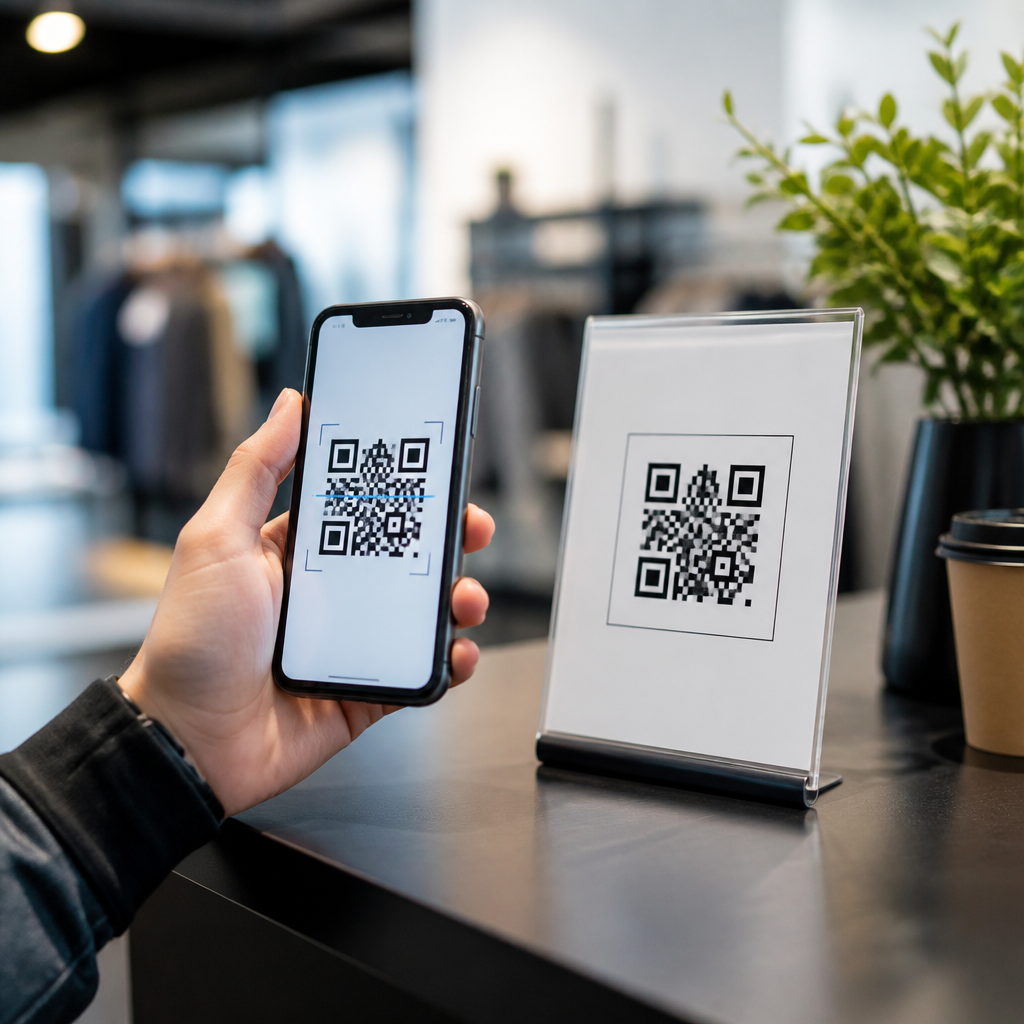
QR code marketing for real estate turns every sign, flyer, brochure, postcard, window display, and business card into a measurable digital entry point. In practical terms, a QR code is a scannable matrix barcode that opens a destination such as a listing page, virtual tour, lead form, map pin, calendar booking link, or downloadable document. A real estate marketing playbook is a repeatable system that defines where codes appear, what each code sends prospects to, how responses are tracked, and how agents follow up. Put together, a QR code marketing playbook for real estate gives brokers and agents a low-friction way to connect offline attention with online action.
This matters because property decisions are mobile-first and time-sensitive. Buyers often discover homes while driving neighborhoods, walking open houses, or browsing printed materials away from a laptop. Sellers compare agents based on responsiveness, presentation quality, and evidence that marketing will reach qualified buyers. A QR code closes the gap between curiosity and conversion in seconds. Instead of asking a prospect to type a long URL or remember an address later, the code opens exactly the next step at the moment intent is highest. In campaigns I have managed for agents and developers, that single change consistently improved engagement because it removed friction that otherwise killed momentum.
Used well, QR code marketing supports core real estate goals: generate listing inquiries, capture buyer and seller leads, speed showing requests, increase open house attendance, distribute disclosure packets, and measure channel performance. Used poorly, it creates dead ends, generic homepages, and untracked traffic that tells you nothing. The difference is strategy. Effective QR campaigns start with a specific audience, one clear action, and a mobile landing experience designed for fast decisions. They also rely on dynamic codes, UTM parameters, CRM integration, and property-specific routing so teams can update destinations without reprinting physical assets.
This hub article explains the full QR code marketing playbook for real estate, from placement strategy and landing page design to tracking, compliance, and optimization. It is built to serve as a central resource within a broader library of QR code tutorials, guides, and resources, so it covers the concepts that every agent, team, marketer, and brokerage should understand before launching campaigns at scale. If you want a reliable framework for turning scans into tours, calls, appointments, and signed clients, this is where to start.
Build a real estate QR strategy around intent, asset type, and destination
The most important rule is simple: every QR code should match a real-world moment of intent. A code on a yard sign reaches drive-by traffic that wants instant property details. A code on a listing brochure serves someone comparing features, pricing, and financing options. A code in a direct mail piece often targets homeowners who may be considering selling and need a valuation page or case study, not a generic search portal. When agents use one destination for every asset, performance drops because the experience ignores context.
Start by mapping your assets into three categories. First, on-property assets such as for-sale signs, rider panels, open house signs, lockbox instructions, and window displays. Second, printed collateral such as flyers, brochures, postcards, door hangers, and event invitations. Third, relationship assets such as business cards, email signatures converted to print handouts, buyer packets, and seller presentation folders. Each category deserves its own conversion path, because user motivation changes by location and timing.
For listing promotion, the best destinations are usually mobile-optimized property pages with gallery images, price, bed and bath count, map, school information, and one primary call to action. That action might be “Book a private tour,” “Get disclosures,” or “See the 3D walkthrough.” For seller lead generation, send users to an address-specific home valuation tool or a concise landing page offering a neighborhood market report. For recruiting, use a QR code on brokerage materials that opens a careers page with culture, split structure, support systems, and a calendar link to talk confidentially.
Dynamic QR codes are the standard for real estate because listings change. A property can move from coming soon to active, pending, or sold within days, and signs may remain in the field. With a dynamic code, you can redirect from a listing page to a backup destination like similar homes in the same price range, a sold-property case study for future sellers, or an “Under contract, see nearby listings” page. This preserves traffic and avoids the dead-end experience that static codes create once a URL becomes outdated.
Tracking structure should be decided before any design work begins. Create naming conventions by campaign, property, asset, and placement. For example, use distinct UTM parameters for yard sign scans versus brochure scans, even when both point to the same listing. In Google Analytics 4, those parameters let you compare engagement, form completion, and assisted conversions. Inside a CRM such as HubSpot, Follow Up Boss, kvCORE, or Salesforce, they support source attribution and automation, which is essential when multiple agents touch one lead.
Creative execution matters too. The code must be large enough to scan from a realistic distance, surrounded by sufficient quiet space, and paired with plain-language instruction. “Scan for price and photos” usually outperforms “Scan me” because it tells users what they get. Contrast must be strong, especially on outdoor signage. I have seen attractive but low-contrast branded codes fail in afternoon glare, while simple black-on-white versions scanned instantly. In real estate, fast scanning beats decorative styling every time.
Use QR codes across the real estate funnel, not just on listing signs
Many agents stop at “scan the sign for listing details,” but the strongest programs use QR codes throughout the full customer journey. At the awareness stage, direct mail campaigns can feature market snapshots by ZIP code, median sale price trends, days on market, and homeowner tips. A postcard with a QR code offering “See what homes sold on your street this quarter” often generates warmer seller leads than a generic “Thinking of selling?” message because it promises concrete local value.
At the consideration stage, buyer guides and neighborhood packets benefit from codes linking to school district maps, commute calculators, lender pre-approval forms, HOA documents, and interactive area tours. During open houses, place separate QR codes at entry, on feature cards, and in follow-up takeaway sheets. The entry code can handle registration. Feature-specific codes can open room-by-room highlights, appliance manuals, renovation dates, or inspection summaries. A takeaway code can invite visitors to save the home, request comparable listings, or submit an offer package checklist.
Post-visit and nurture stages are equally important. After a scan, prospects should enter a sequence tailored to the asset they used. Someone who scanned a luxury condo brochure should not receive the same messaging as a first-time buyer who scanned an FHA financing guide. Segment by price band, property type, neighborhood, and lead intent. Real estate CRMs make this practical through tags, smart lists, and automated workflows. The code is only the entry point; the follow-up system determines whether scans become conversations.
The table below shows how to align asset, user intent, and destination for stronger conversion.
| Asset | Likely user intent | Best QR destination | Primary metric |
|---|---|---|---|
| Yard sign | Immediate property curiosity | Mobile listing page with photos, price, map, tour request | Tour bookings |
| Open house sign-in sheet | Fast event access | Registration form synced to CRM | Qualified leads captured |
| Property flyer | Deeper comparison | Listing page with disclosures, 3D tour, financing options | Engaged sessions |
| Just listed postcard | Neighborhood awareness | Property page or nearby listings page | Scan-through rate |
| Home valuation mailer | Seller research | Address-entry valuation landing page | Valuation submissions |
| Agent business card | Relationship follow-up | Digital contact card with booking link | Appointments scheduled |
Developers and multifamily leasing teams can push this further. Codes on construction fencing can open interactive site plans, waitlists, and model unit tours. Apartment teams can place codes in lobbies that lead to availability pages, self-guided tour scheduling, or resident referral programs. Commercial brokers can use codes on offering memorandums, window displays, and event signage to distribute rent rolls, cap rate summaries, drone footage, and tenant mix data. The principle stays the same: match each physical touchpoint with the most useful next digital step.
Design landing pages, analytics, and follow-up systems that convert scans into leads
A scan does not equal a lead. The landing page must load fast, answer the user’s first questions, and present one obvious action. For listing pages, put the address, price, hero image, and key facts above the fold. Follow with short sections for highlights, photo gallery, map, schools, monthly payment estimate, and showing request. If the audience is likely to be in transit, add click-to-call and text options. If the audience is comparing homes quietly, use a short form and calendar booking widget. In my experience, pages overloaded with navigation, sliders, and unrelated property suggestions reduce form completion, even when traffic volume looks healthy.
Page speed is non-negotiable. Google’s Core Web Vitals matter because scans happen on cellular networks, often outdoors. Compress images, lazy-load galleries, minimize scripts, and avoid pop-ups that obscure content immediately after the scan. A property page that takes five seconds to become usable wastes the intent generated by the physical asset. Tools such as PageSpeed Insights, Lighthouse, and WebPageTest can identify bottlenecks before a sign or postcard goes live.
Measurement should include more than scan counts. Good QR code platforms report scans by date, device, location, and sometimes operating system, but that only covers the top of the funnel. Connect scans to on-page events and downstream sales activity. In GA4, define events for click-to-call, schedule-tour submissions, brochure downloads, mortgage calculator use, and map interactions. In your CRM, record the original source and campaign automatically. If your team uses call tracking platforms like CallRail, tie phone leads back to the QR campaign as well. This reveals whether a high-scan asset actually drives qualified conversations or just casual browsing.
Testing should be continuous. Compare one clear call to action against another, such as “Schedule a tour” versus “See inside now.” Test destination types too. Some neighborhoods respond better to a listing page; others convert better when the code opens a text message draft to an agent because mobile users prefer immediate answers. For seller campaigns, compare instant valuation tools against market report offers. Accuracy matters here: automated valuations can attract volume but may disappoint owners in heterogeneous neighborhoods where models struggle. A comparative market analysis request often yields fewer leads but higher trust.
Compliance and privacy deserve attention. Real estate advertising rules vary by state and brokerage, and fair housing standards apply across channels. If a QR code opens a lead form, include proper disclosures and consent language for follow-up communications, especially if text messaging is involved under Telephone Consumer Protection Act expectations. If the code links to property information, ensure required brokerage identification appears where regulations demand it. Trust is easy to lose when a code feels opaque, so state clearly where the scan leads and why information is being collected.
Operationally, create a maintenance routine. Review active codes weekly, especially for fast-moving listings. Confirm destinations still load, forms still sync, and status changes trigger correct redirects. Archive codes by campaign so you preserve reporting history without clutter. Teams that manage dozens of listings should keep a simple inventory spreadsheet or use campaign labels in the QR platform. The goal is boring reliability: every scan should work, every lead should route correctly, and every property update should happen without reprinting if possible.
Common mistakes, optimization tactics, and how to scale a brokerage-wide playbook
The most common mistake is sending every scan to the homepage. Homepages force users to search again, which defeats the purpose of the code. The second mistake is failing to explain the benefit of scanning. “Scan for floor plan, price, and tour times” is specific; “Learn more” is weak. Third is poor placement. Codes hidden behind reflective windows, mounted too high, or printed too small generate disappointing results and lead teams to blame the tactic rather than the execution. Fourth is neglecting follow-up. A code may capture a lead, but if the response time is slow, conversion falls sharply. Industry data from Zillow and other lead-response studies has repeatedly shown that speed-to-lead materially affects contact and appointment rates.
Optimization starts with a standard operating procedure. Define approved code sizes for signs, postcards, brochures, and business cards. Create landing page templates for listings, seller offers, recruiting, and events. Standardize UTM conventions, CRM tags, and notification rules. Train agents to test every code on both iPhone and Android before print approval. Establish service levels for lead response, such as five minutes during business hours. Once these basics are consistent, results become easier to compare across offices and campaigns.
At brokerage scale, centralization helps. Marketing teams can own QR generation, destination governance, and analytics dashboards while agents customize approved templates. This prevents brand inconsistency and protects data quality. It also makes internal linking across your broader educational resources more effective, because the hub article can point users toward deeper guides on dynamic versus static codes, QR code sizing, landing page best practices, open house workflows, and QR tracking in analytics platforms. That structure supports both user navigation and discoverability across the entire resource center.
Physical-world testing remains essential. Print samples at full size, place them in realistic lighting, and scan from expected distances. A sign code that works in a conference room may fail from a car window. If drive-by scanning is a goal, the safer path is often a short URL plus a large code, not the code alone. Redundancy matters in real estate because conditions are imperfect: weather, glare, motion, and weak signal all reduce ideal performance.
The biggest benefit of a real estate QR code marketing playbook is not novelty. It is operational clarity. Every offline asset gains a defined digital purpose, every scan becomes measurable, and every lead can enter a faster, more relevant follow-up path. Start with one listing workflow and one seller lead campaign, document what converts, then expand across signs, print, events, recruiting, and client service materials. When the system is intentional, QR code marketing stops being a gimmick and becomes a dependable part of real estate growth. Review your current assets, assign one clear action to each, and launch a tracked pilot this week.
Frequently Asked Questions
What is a QR code marketing playbook for real estate, and why does it matter?
A QR code marketing playbook for real estate is a repeatable system for using scannable codes across every physical and print touchpoint in an agent’s marketing. Instead of placing the same generic code on every sign, flyer, postcard, brochure, window display, or business card, the playbook defines exactly where each code appears, what destination it opens, what action the prospect should take next, and how performance is measured. In practice, that means one code might open a mobile-friendly property landing page, another might launch a virtual tour, another might pull up directions to an open house, and another might send a prospect to a scheduling page or lead form.
This matters because real estate marketing often loses momentum in the gap between offline interest and online action. A buyer sees a yard sign, picks up a brochure, or receives a postcard, but if the next step requires typing a long URL, searching manually, or waiting to call later, response rates drop. QR codes remove that friction and make every offline asset a direct digital entry point. When combined with a documented process for naming campaigns, assigning destinations, tracking scans, and evaluating lead quality, QR codes become more than a convenience. They become a measurable acquisition channel that helps agents understand which properties, neighborhoods, print materials, and calls to action are generating attention and conversion.
A good playbook also creates consistency across a team. It standardizes best practices for code placement, size, mobile landing pages, UTM tracking, CRM routing, and follow-up timing. That consistency is important for scaling results, reducing guesswork, and making smarter marketing decisions over time. In short, a QR code marketing playbook helps real estate professionals convert offline exposure into trackable online engagement, while giving them clear data on what is working and where to optimize.
Where should real estate agents and brokerages place QR codes for the best results?
The most effective placements are the ones that match buyer or seller intent in the moment. In real estate, that usually starts with yard signs and property signage because they capture prospects when interest is highest. A code on a for-sale sign can send someone directly to the property page, photo gallery, pricing details, school information, or a private tour request form. Open house signs can link to check-in forms, digital brochures, disclosures, or financing resources. Riders and directional signs can also work well when the call to action is simple and immediate, such as “Scan for price and photos” or “Scan for today’s open house details.”
Print collateral is another high-value category. Flyers, brochures, feature sheets, listing presentations, direct mail postcards, neighborhood farming pieces, and just-listed or just-sold mailers can all include QR codes that bridge printed messaging with richer digital content. For example, a seller-focused postcard can direct homeowners to a home valuation page or a market update report. A buyer brochure can open a saved search signup, relocation guide, or mortgage calculator. Window displays in office storefronts are especially useful for after-hours traffic, allowing passersby to view available properties without speaking to an agent immediately.
Business cards and networking materials can also perform well, especially when they direct to a polished mobile landing page rather than a generic homepage. That page might include contact options, current listings, testimonials, and a booking link for a consultation. The key is to align the destination with the context. Someone scanning from a sign wants fast property information. Someone scanning from a seller postcard wants evidence of local expertise and an easy path to request a valuation. Someone scanning from an event handout may want to book time or explore services. The best results come from matching placement, message, and landing page intent rather than treating every QR code as a one-size-fits-all tool.
What should a real estate QR code send prospects to after they scan?
The destination should be chosen based on the prospect’s likely intent, and it should make the next step feel obvious and easy. For active buyers, common destinations include a single-property landing page, a virtual tour, an image gallery, a map pin, open house registration, or a showing request form. For seller campaigns, effective destinations include a home valuation page, a neighborhood market report, a seller guide, or a consultation booking page. For broader brand awareness, a code may direct to a mobile microsite that includes listings, reviews, agent bios, and contact options. In every case, the destination should answer the question the prospect is most likely asking in that moment.
It is important not to send every scan to a homepage. Homepages often create extra navigation friction and lower conversion because the visitor has to hunt for the information that motivated the scan in the first place. A better approach is to use targeted landing pages that continue the message from the physical asset. If a flyer says “Scan for 3D tour,” the code should open the 3D tour or a page where the tour is clearly featured above the fold. If a postcard says “Scan for your home value,” the page should immediately present the valuation form and explain what the homeowner will receive.
The destination should also be optimized for mobile speed and usability. Most scans happen on a smartphone, so pages need fast load times, clear headlines, large tap targets, short forms, and prominent contact options. Strong destinations often include one primary call to action and one or two secondary options, such as call, text, or book a showing. If lead capture is the goal, ask only for the information necessary at that stage. If the content is high intent, such as property details or disclosures, offering immediate value before requesting more information can improve trust and conversion. Ultimately, the best QR destinations are relevant, mobile-friendly, and tightly aligned with the promise that got the user to scan.
How do you track and measure QR code performance in a real estate marketing campaign?
Tracking starts with treating each QR code as a unique campaign asset rather than reusing the same destination link everywhere. Each code should point to a dedicated URL or a tracked link that identifies the source, placement, property, audience, and campaign objective. For example, one code might be assigned to a yard sign for a specific listing, another to the flyer box, another to a postcard drop in a farm area, and another to an office window display. Using analytics parameters such as UTM tags helps connect scans to website sessions, behavior, and conversions in analytics platforms.
Beyond scan counts, real estate marketers should measure what happens after the scan. Useful metrics include landing page views, bounce rate, time on page, form submissions, showing requests, call clicks, calendar bookings, virtual tour engagement, and downloaded assets such as disclosures or buyer guides. If the QR flow feeds into a CRM, it becomes possible to track lead source, lead quality, response time, appointment set rate, and closed deals tied to specific placements or campaigns. That is where QR marketing becomes strategically valuable, because it links offline exposure to real business outcomes rather than vanity activity.
Operational discipline is essential. Create naming conventions for every code, maintain a campaign log, and review results regularly by asset type and audience segment. You may find, for example, that sign riders produce more high-intent buyer leads than postcards, or that valuation codes on seller mailers generate more conversions when they link to a shorter form and a localized market message. Dynamic QR codes are often the better choice because they allow destination updates without reprinting materials, and they typically provide stronger scan-level reporting. With consistent tracking, real estate teams can compare properties, neighborhoods, seasons, and calls to action, then refine the playbook based on evidence instead of assumptions.
What are the most common mistakes to avoid when using QR codes in real estate marketing?
One of the biggest mistakes is sending every scan to a homepage or to a page that is not designed for mobile conversion. Prospects scan because they want immediate information, not because they want to navigate a full website. If the page is slow, cluttered, or unrelated to the promise on the sign or flyer, they will leave quickly. Another common mistake is using vague calls to action. A code alone does not explain why someone should scan it. Clear prompts such as “Scan for price, photos, and tour,” “Scan to book a private showing,” or “Scan for instant home value” give people a reason to act.
Poor physical execution can also hurt results. Codes that are too small, placed in low-light areas, printed with low contrast, or positioned on curved or reflective surfaces can be difficult to scan. In real estate, this is especially important for outdoor signage, window displays, and flyer boxes where distance, glare, and weather matter. Testing is essential before deployment. Agents should scan codes with multiple phone types, at realistic viewing distances, and in actual field conditions. It is also wise to include a short backup URL for people who cannot scan for any reason.
Another mistake is failing to track performance at the placement level. If the same QR code is reused across signs, brochures, postcards, and business cards, the resulting data is too vague to guide decisions. Marketers also sometimes overlook compliance, branding, and follow-up. Landing pages should reflect the brokerage’s brand, include any required disclosures, and route leads into a system where follow-up happens quickly. Finally, avoid overcomplicating the experience. The strongest QR code campaigns in real estate are simple, relevant,