Best QR code strategies for capturing leads start with a simple truth: people will scan only when the next step feels fast, useful, and trustworthy. In lead generation, a QR code is not the goal. It is the bridge between an offline touchpoint and a measurable digital conversion. When that bridge is designed well, QR codes turn packaging, signage, direct mail, event booths, print ads, menus, product inserts, and even employee badges into acquisition channels that can feed a CRM, trigger automations, and qualify prospects in real time.
When I build QR code campaigns for lead generation, I define three terms upfront. A lead is a person or company that has shown interest and provided enough information to continue the conversation. Lead capture is the method used to collect that information, usually through a form, chat flow, booking page, or gated asset. A QR code strategy is the system behind the code: placement, offer, landing experience, tracking, routing, follow-up, and optimization. The image itself is the least important part. The conversion path behind it determines whether scans become revenue.
This matters because QR codes compress friction. Instead of asking someone to remember a URL, type it correctly, and decide later, you give them an instant path while intent is still high. That is especially valuable in physical environments where attention is brief. A person walking a trade show aisle, waiting in a retail line, opening a mailer, or reading a brochure may be willing to act for five seconds, not five minutes. A well-placed code captures that moment. A poor one wastes it.
QR codes also solve a tracking problem that has limited offline marketing for years. With dynamic codes, UTM parameters, redirect rules, and analytics integrations, you can attribute scans to campaigns, locations, devices, dates, and creative variants. In practice, that means you can compare a code on packaging versus a code on a countertop display, or test whether “Get pricing” outperforms “Book a demo.” Done correctly, QR codes for lead generation create measurable demand from channels that used to be difficult to tie to outcomes.
Build the offer before you generate the code
The best QR code lead generation campaigns begin with an offer people actually want. If the destination is a generic homepage, conversion rates usually collapse. People scan because they expect a specific benefit: pricing, a sample, a consultation, a warranty registration, an event giveaway, a buying guide, a case study, or access to exclusive content. The offer must match the context. At a conference booth, “Book a live product walkthrough” works better than “Learn more.” On product packaging, “Register for setup help and maintenance reminders” is stronger because it aligns with immediate customer needs.
I recommend mapping offers to funnel stage. Top-of-funnel visitors often respond to educational assets such as checklists, comparison guides, calculators, and trend reports. Mid-funnel prospects are more likely to convert on webinars, demos, free assessments, and use-case pages. Bottom-of-funnel prospects tend to want quotes, pricing consultations, implementation timelines, or procurement documents. This matters because a QR code in the wrong stage asks for too much or too little. Asking a cold prospect at a bus shelter to “Talk to sales” is usually premature. Offering a location-specific savings guide or quick self-assessment is often better.
Lead quality depends on value exchange. If you ask for an email, explain exactly what the person gets and when. If you ask for a phone number, the value should be higher. In business-to-business campaigns, “Get the benchmark report and optional expert review” can justify more fields than “Join our newsletter.” In consumer campaigns, loyalty points, extended warranty activation, contests, and personalized recommendations often outperform basic sign-up forms because the reward is immediate and concrete.
Design landing pages that convert on mobile
Most scans happen on smartphones, so the landing page must be built for mobile-first conversion. The page should load quickly, present one clear action, and avoid forcing users to pinch, zoom, or hunt for information. A good rule is one code, one purpose, one primary call to action. If the page offers too many choices, scan intent dissipates. I have seen campaigns double conversion rate by replacing a navigation-heavy landing page with a focused form page that led with a short headline, three benefit bullets, trust signals, and a visible submit button.
Form length should reflect intent and audience. For high-volume consumer lead capture, name and email may be enough. For enterprise lead generation, role, company, and problem category can improve routing and lead scoring. Progressive profiling is useful here. Instead of demanding seven fields on the first scan, collect three now and enrich later through a second interaction or CRM data append. Tools like HubSpot, Marketo, Salesforce, and Zapier make this workflow practical. The result is lower abandonment without losing qualification data.
Trust signals are essential because users often scan in public places and make rapid credibility judgments. Include clear branding, a privacy statement near the form, secure protocol, and evidence such as customer logos, ratings, certifications, or concise testimonials. If follow-up will be by email or phone, say so. If the code is on printed material, the landing page should visually match that material so the user knows they arrived in the right place. Consistency reduces hesitation and fraudulent-looking experiences, which can suppress submission rates.
Choose placement, context, and calls to action carefully
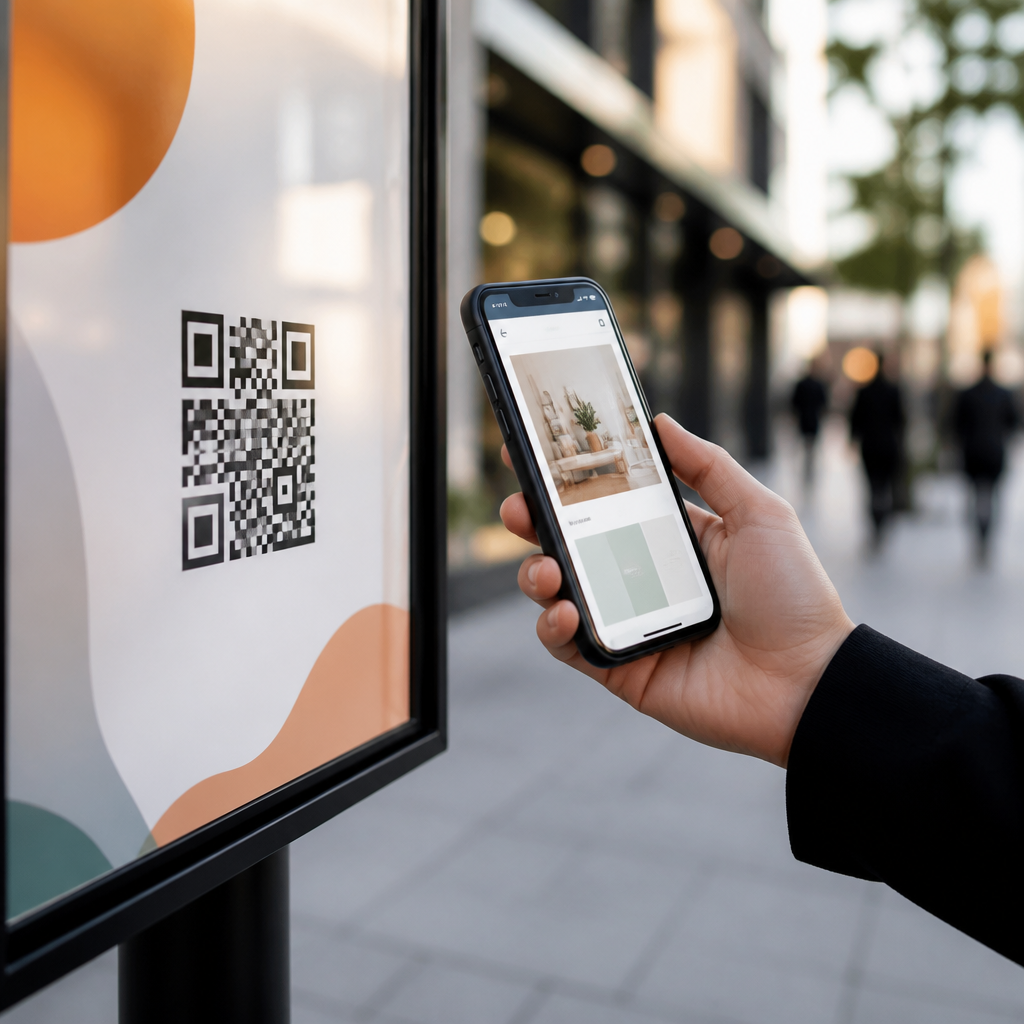
Placement drives scan volume more than many marketers expect. People need enough time, distance, and motivation to scan. A code on a highway billboard may be memorable but is rarely practical. A code at eye level on a trade show kiosk, product shelf talker, restaurant tabletop, waiting room sign, direct mail postcard, or checkout receipt is far more usable. The environment shapes both response rate and lead quality. Event attendees often generate warmer leads because they are already in discovery mode. Packaging inserts can produce high-intent leads because they reach existing customers who may need support, accessories, or replenishment options.
Your call to action should answer the immediate question, “Why should I scan this now?” Generic language such as “Scan me” is weak. Specific language such as “Scan for a 2-minute savings estimate,” “Scan to get the spec sheet,” or “Scan to enter the giveaway and book a consultation” performs better because it names the outcome. If space allows, add one line on what happens next, such as “No app required” or “Instant access.” That reduces uncertainty and lifts response, especially among less technical audiences.
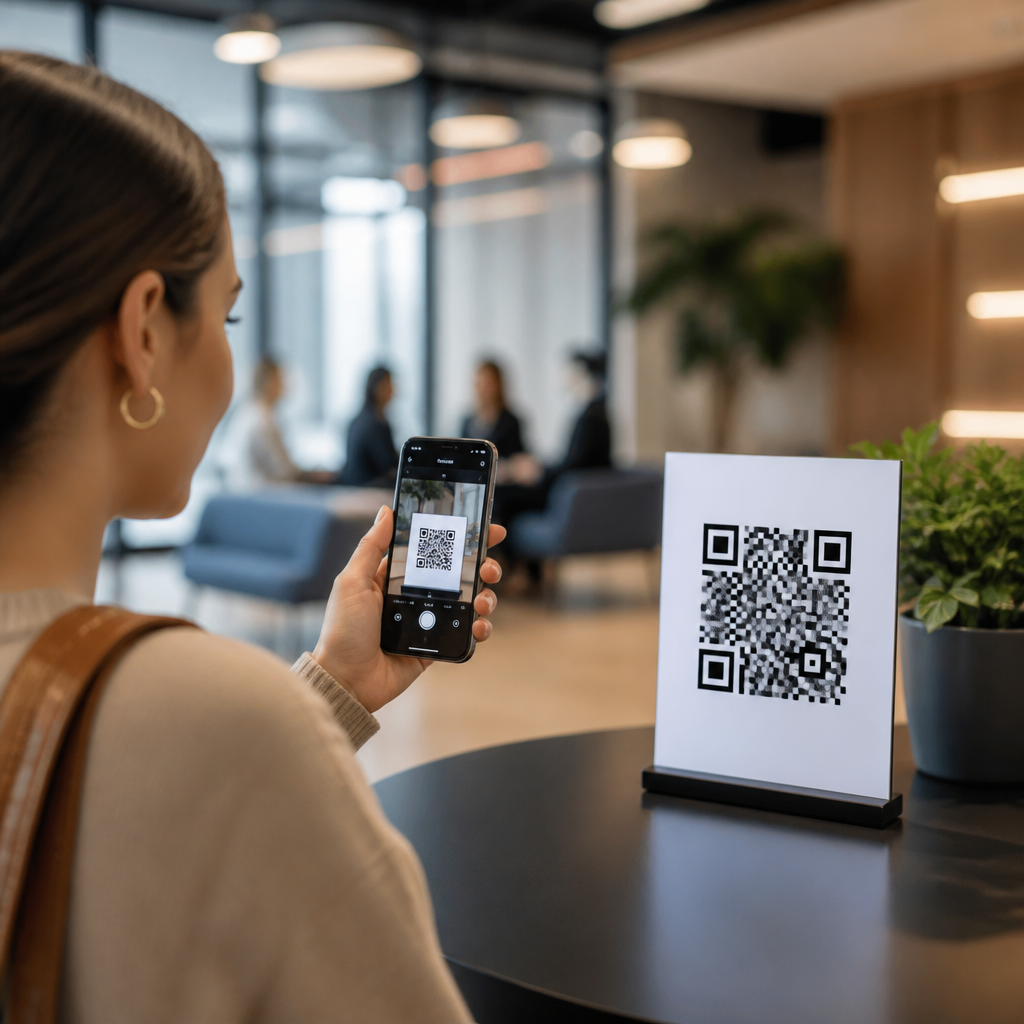
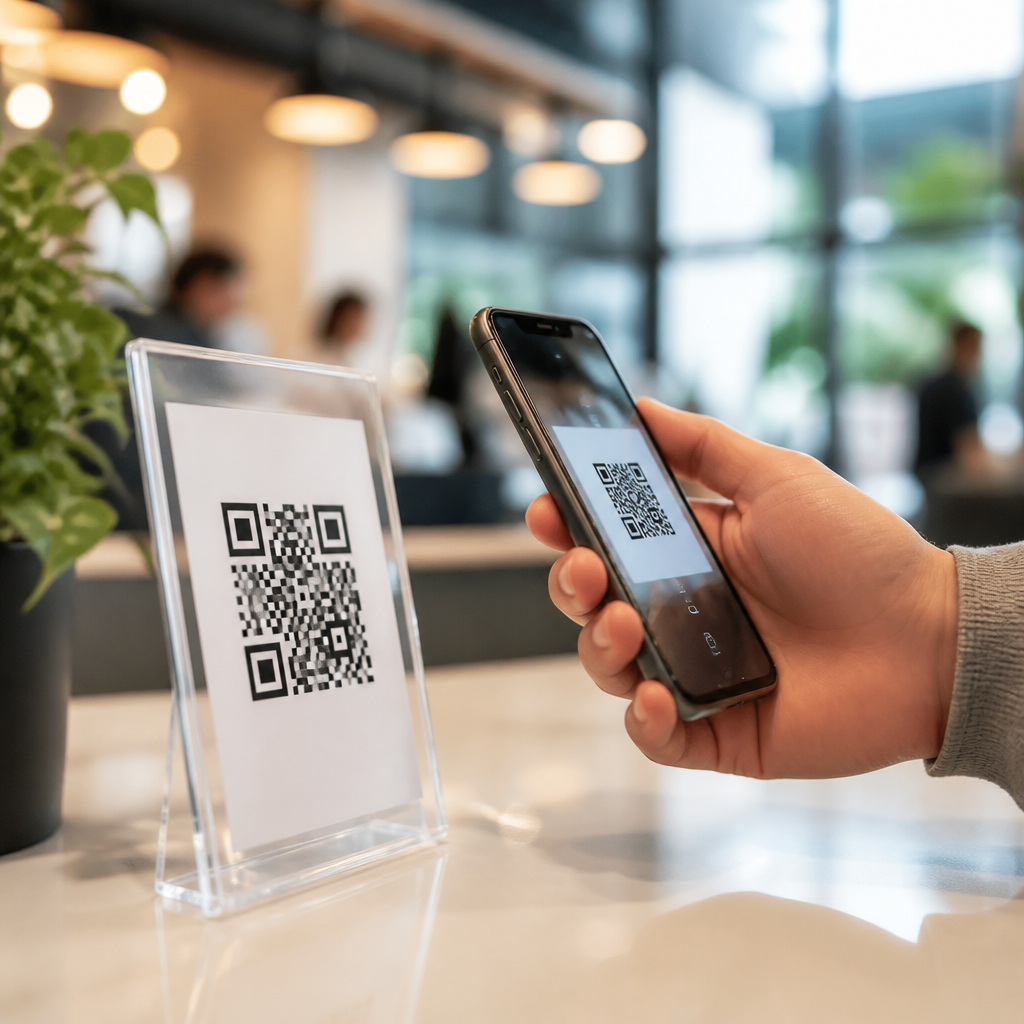
Use the code as part of the message, not as decoration. Size, contrast, quiet zone, and placement affect scannability. Dark code on a light background is safest. Maintain adequate white space around the code and test from realistic distances and lighting conditions. I avoid placing QR codes on reflective surfaces, curved packaging seams, or low corners where users must crouch. If a code appears in print, include a short backup URL. That protects campaign continuity if a phone camera struggles or a user prefers manual entry.
Track every scan and connect it to revenue
Lead generation without measurement quickly becomes guesswork. Dynamic QR codes are the standard because they let you change the destination without reprinting materials and preserve analytics. Every code should carry campaign parameters that identify source, medium, placement, creative, and audience segment. In Google Analytics 4, those parameters allow you to compare sessions, form completions, and downstream conversions from different offline assets. In a CRM, they help sales teams see where a lead originated and which message prompted the response.
The strongest setups connect scans to business outcomes, not just traffic. That means passing hidden fields into forms, syncing records to the CRM, and reporting on metrics such as qualified lead rate, meeting-booked rate, cost per lead, and pipeline generated. At events, I often separate codes by booth zone, asset, or staff member so we can see whether the product demo station outperformed the prize wheel or whether one script produced better lead quality. That level of detail informs future spend and booth design.
| QR lead tactic | Best use case | Main metric | Common mistake |
|---|---|---|---|
| Direct mail QR code | Driving consultations or downloads from a targeted list | Scan-to-form completion rate | Sending traffic to the homepage |
| Trade show booth QR code | Capturing warm prospects during live conversations | Qualified leads per event day | Using one code for every asset and interaction |
| Packaging insert QR code | Registering customers and cross-selling accessories | Registration rate and repeat purchase rate | Offering no immediate benefit to scan |
| Retail signage QR code | Collecting local leads for appointments or offers | Location-level conversion rate | Poor placement outside natural dwell areas |
A testing discipline separates average campaigns from strong ones. Test one variable at a time: offer, headline, CTA, page length, form fields, incentive, or placement. For example, a home services brand might compare “Get a same-day estimate” against “See local pricing and availability.” A software company might test a benchmark report against an ROI calculator. Keep sample sizes credible and review by segment, because what works in retail may fail at events, and what works for existing customers may underperform for cold audiences.
Match strategy to channel and audience
Different channels produce different kinds of leads, so the QR code strategy should adapt. In trade shows and conferences, speed matters. Staff should be able to point attendees to a code that opens a short qualification form or meeting scheduler. The best event workflows send the lead into the CRM instantly, tag the campaign, and trigger a personalized follow-up while the conversation is still fresh. In one event program I managed, adding a “Choose your priority” field—pricing, integration, security, or migration—improved sales follow-up quality because reps could tailor outreach within hours.
In direct mail, relevance and targeting matter more than novelty. A postcard with a personalized headline, local proof points, and a QR code to a dedicated landing page often outperforms a broad awareness message. For real estate, insurance, healthcare, and professional services, response increases when the code leads to a page that reflects geography, audience, and intent. A dental clinic should not send every household to the same generic form; a family dentistry offer and an orthodontics offer speak to different needs and should use separate tracking.
On product packaging, inserts, receipts, and in-store displays, QR codes can generate first-party data from customers who already trust the brand. This is useful as browsers restrict third-party tracking and privacy expectations rise. Brands can invite buyers to register products, unlock tutorials, join loyalty programs, reorder consumables, or request support. These interactions generate leads for retention, upsell, and advocacy, not just initial acquisition. The key is to provide utility first. If a code helps the customer solve a problem quickly, data collection feels justified rather than extractive.
Avoid the mistakes that kill scan-to-lead performance
The most common mistake is treating the QR code as a tactic instead of a conversion system. Marketers print a code, point it to a homepage, and assume the technology will do the work. It will not. Another frequent error is offering no reason to scan beyond curiosity. Curiosity is weak compared with relevance. A third mistake is failing to test in real conditions. A code that works perfectly on a desktop proof may fail under fluorescent glare, from six feet away, or on wrinkled packaging.
There are also compliance and trust issues to manage. If you collect personal data, state what you collect and how it will be used. For regulated sectors such as healthcare and finance, review copy, consent, and data routing carefully. Avoid aggressive gating for low-value offers, and do not promise one thing in print and deliver another on the landing page. Finally, plan follow-up rigorously. Leads decay fast. If a person scans to request a demo and hears nothing for two days, the campaign underperforms no matter how elegant the code looks.
Best QR code strategies for capturing leads combine a compelling offer, a fast mobile landing page, context-aware placement, precise tracking, and disciplined follow-up. That is why QR codes continue to earn a larger role in marketing strategy: they connect physical attention to digital action in a measurable way. As the hub for QR codes for lead generation, this page sets the foundation for deeper tactics around event campaigns, packaging programs, direct mail, local marketing, landing page optimization, and analytics. The main benefit is not more scans. It is more qualified leads from moments that would otherwise disappear.
If you are refining your own QR code lead generation plan, start with one high-intent channel, build a dedicated mobile page, use dynamic tracking, and test a specific value proposition. Measure qualified leads, not vanity scans, and improve from real behavior. That is how QR codes move from gimmick to dependable pipeline.
Frequently Asked Questions
What makes a QR code effective for lead generation instead of just getting scans?
An effective lead-generation QR code does more than attract attention. It moves someone from curiosity to action with as little friction as possible. That means the destination has to match the context of the scan, the value proposition has to be immediately clear, and the conversion step has to feel worth the effort. If someone scans a code on product packaging, an event booth, or a direct mail piece, they should land on a page that clearly continues that experience rather than forcing them to figure out what to do next. The message should answer three questions right away: what is this, why should I care, and what happens if I submit my information?
The strongest QR code strategies also focus on trust. People are much more likely to convert when the page looks professional, loads quickly, uses a recognizable brand identity, and asks only for information that feels reasonable. A slow page, a generic form, or a confusing offer can kill momentum instantly. In practice, that means keeping forms short, making calls to action specific, and offering something genuinely useful such as a discount, exclusive content, event materials, a consultation, a demo, or a gated resource. The QR code itself may initiate the interaction, but the real performance comes from the landing page, the offer, and the follow-up process behind it.
Where should businesses place QR codes to capture the highest-quality leads?
The best placement depends on where buyer intent is already present. High-quality leads usually come from locations where the audience has a reason to engage, not just where the code is visible. Trade show booths are a strong example because attendees are actively exploring solutions and often expect to exchange information for a demo, brochure, or follow-up conversation. Product packaging and inserts can also perform well because they reach people who have already purchased or shown clear interest, making them ideal for warranty registration, upsells, loyalty programs, referrals, or educational content that deepens the relationship.
Other strong placements include in-store signage, restaurant tables, direct mail, print ads, service vehicles, counter displays, business cards, receipts, employee badges, and event materials. The key is to match the placement to the user’s mindset. A QR code on a brochure handed out during a sales conversation can point to a booking page or case study, while a code on a storefront window may be better suited to a coupon or quick contact form. Businesses should also consider practical scanning conditions such as lighting, distance, movement, and available internet access. A technically perfect code can still underperform if it is too small, poorly placed, or presented at a time when the person has little motivation to act. The highest-quality leads come from placements that combine attention, relevance, and a clear next step.
What should happen after someone scans a QR code if the goal is to increase conversions?
After the scan, the experience should feel immediate, relevant, and easy to complete. The landing page should be mobile-first, fast-loading, and tightly aligned with the message near the QR code. If the code promised a free guide, discount, consultation, or event follow-up, that exact offer should appear at the top of the page without forcing the user to search for it. Strong pages use clear headlines, concise supporting copy, visible trust signals, and one primary call to action. Too many choices create hesitation, so it is usually better to design around a single conversion goal rather than sending visitors to a general homepage.
Once the visitor submits their information, the follow-up system becomes just as important as the page itself. Leads should flow into a CRM or email platform automatically so they can be tagged by campaign, source, and audience segment. That enables tailored nurturing rather than generic outreach. For example, someone who scanned at an event may receive a different sequence than someone who scanned from packaging or direct mail. A good workflow can trigger an instant confirmation email, a sales notification, a resource delivery message, or a timed sequence that educates and qualifies the lead. Fast response times matter because scan-driven intent is often strongest in the moments right after engagement. Businesses that connect QR code campaigns to automation and segmentation usually see better conversion rates and clearer attribution over time.
How can businesses track and measure QR code lead generation performance accurately?
Accurate measurement starts with using dynamic QR codes rather than static ones whenever possible. Dynamic codes allow marketers to change the destination URL without reprinting the code, and they also provide access to performance data such as scan volume, time, location, and device patterns. To understand actual lead generation impact, those scan metrics should be connected to analytics tools, landing page reporting, CRM records, and campaign tracking parameters such as UTM tags. That way, businesses can distinguish between total scans, unique visitors, form completions, qualified leads, booked calls, and downstream revenue.
It is also important to define success at more than one stage of the funnel. A campaign with a high scan rate but low form completion rate may signal landing page friction or a weak offer. A campaign with fewer scans but a high close rate may indicate better audience targeting. Tracking should include scan-to-visit rate, page engagement, conversion rate, cost per lead, lead quality, and sales outcomes when possible. Businesses should compare different placements, offers, and creative variations to identify what actually drives performance. The most useful reporting does not stop at “people scanned the code.” It shows which offline touchpoints produced qualified contacts, which segments converted fastest, and which QR campaigns contributed to pipeline and revenue.
What are the most common QR code mistakes that reduce lead capture results?
One of the biggest mistakes is treating the QR code itself as the strategy. A code with no compelling reason to scan will rarely produce meaningful leads, even if it is placed everywhere. Many campaigns fail because the offer is vague, the design does not build confidence, or the user lands on a generic page that does not continue the promise made offline. Another common issue is asking for too much information too early. Long forms can be useful for high-intent prospects in some contexts, but for most scan-based campaigns, fewer fields create less friction and improve completion rates. Businesses should earn more data over time through progressive profiling and follow-up rather than demanding everything upfront.
Technical and placement errors are also common. Codes that are too small, low contrast, distorted, or positioned where people cannot comfortably scan them will underperform. Sending users to non-mobile pages, failing to test across devices, and ignoring page speed are equally damaging. On the operational side, some organizations do not connect QR campaigns to a CRM, automation workflow, or analytics setup, which makes it hard to respond quickly or prove ROI. Finally, many brands overlook trust signals. If people are unsure where the code leads, they may not scan at all. Clear labeling, recognizable branding, and a concise explanation of the benefit can dramatically improve response. The best results come from combining strong intent-based placement, a useful offer, seamless mobile experience, and disciplined measurement from scan to sale.