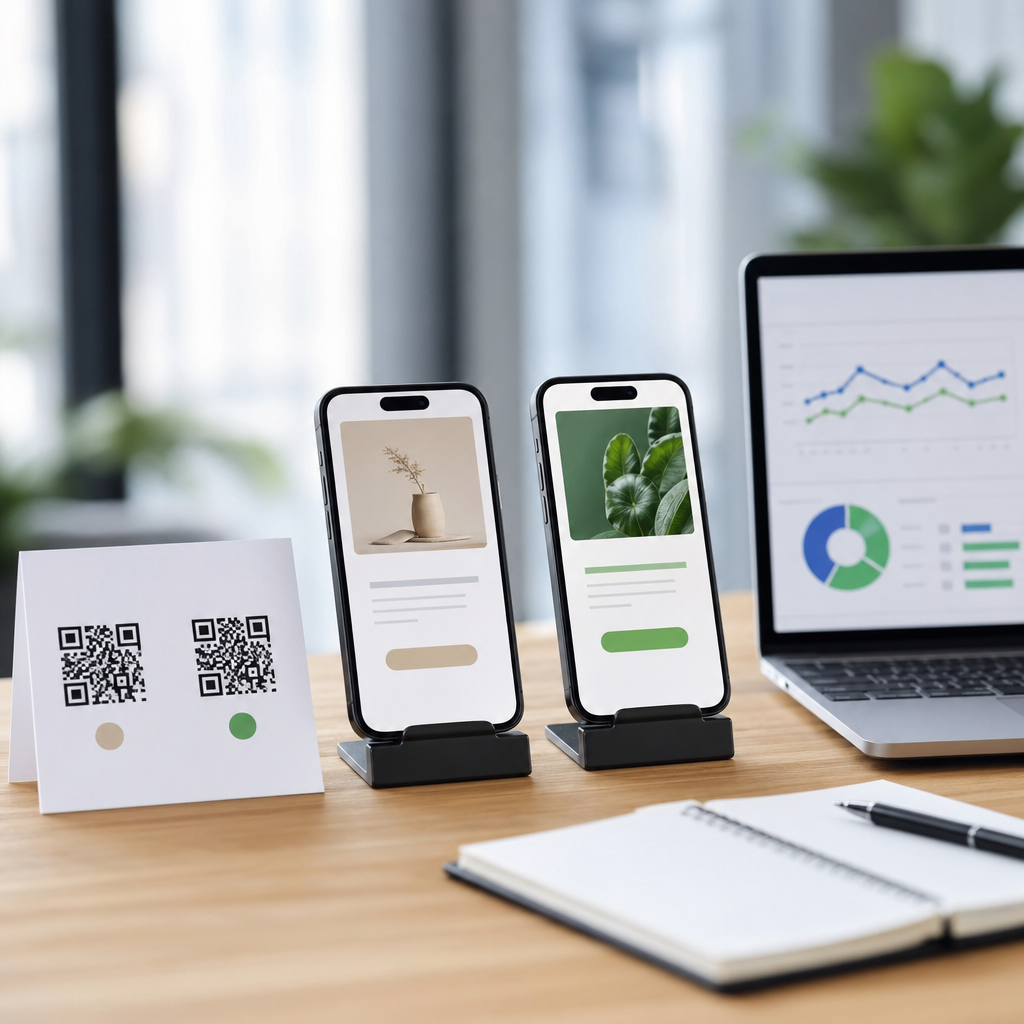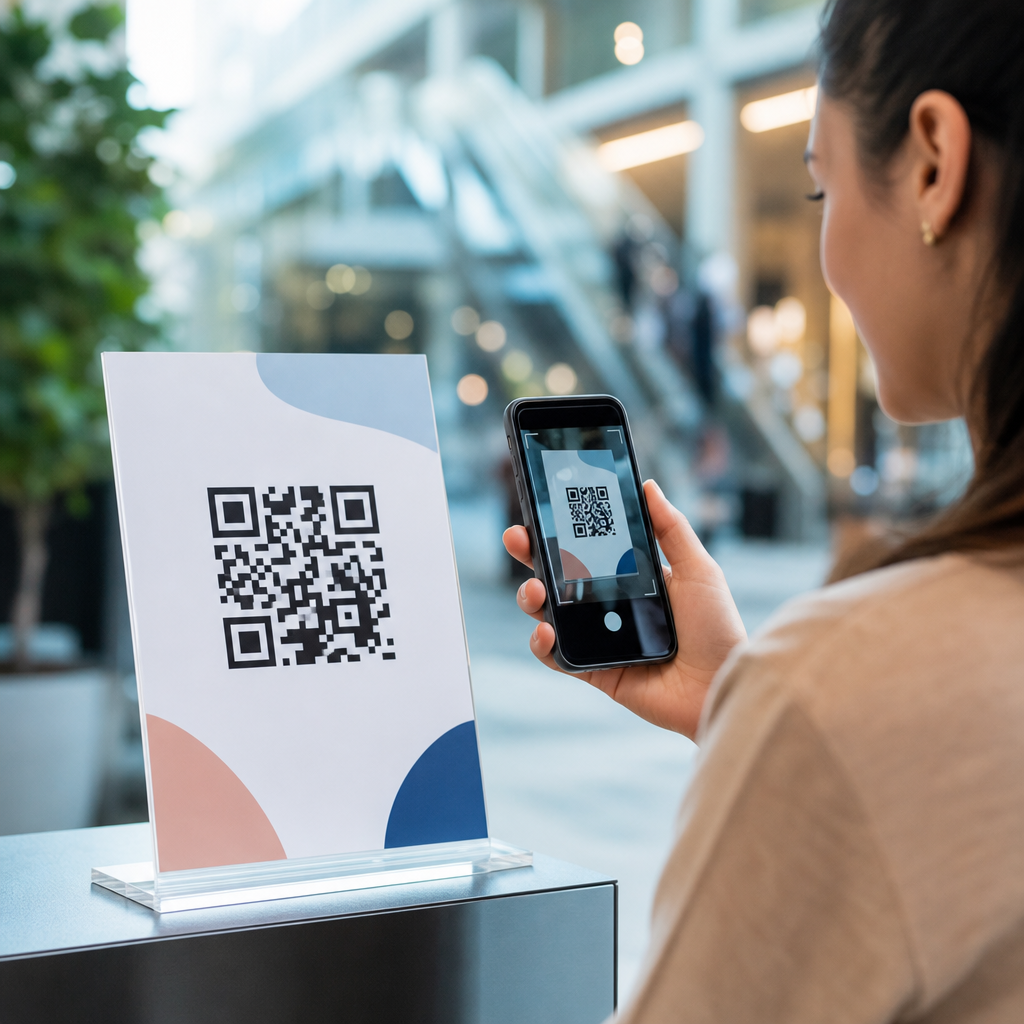
Behavioral insights from QR code campaigns turn simple scan counts into actionable evidence about how people move, notice, hesitate, and convert. In the context of QR code analytics, tracking, and optimization, heatmaps and scan behavior refer to the spatial, temporal, device, and contextual patterns behind each scan event. A scan is not just a tap-in to a landing page; it is a measurable moment shaped by placement, lighting, distance, design, audience intent, and follow-through. When marketers understand those variables, they stop guessing which poster, package, shelf talker, direct mail piece, or event sign is working and start improving performance with confidence.
I have worked on QR programs for retail displays, trade show booths, restaurant table tents, and product packaging, and the same lesson keeps repeating: aggregate scan totals hide the reasons campaigns succeed or fail. One code may attract many scans but weak conversions because the audience is casually browsing. Another may get fewer scans yet drive stronger revenue because the placement catches high-intent users at a decisive moment. Heatmaps reveal concentration areas, dead zones, and directional traffic. Scan behavior analysis shows when people act, what devices they use, where they are, and how quickly they complete the next step. Together, these signals answer the practical questions teams ask every day: Where should the code go, which assets deserve reprints, and what friction is suppressing response?
This subtopic matters because QR codes now bridge physical media and digital journeys across nearly every industry. Restaurants use them for menus and loyalty enrollment. Consumer brands use them for product education, authentication, and promotions. Healthcare organizations use them for appointment reminders and forms. Event teams use them for registration, session feedback, and sponsor activations. In each case, the code sits in a physical environment, so behavior is affected by line of sight, crowding, movement, dwell time, and trust cues in ways standard web analytics do not capture alone. That is why this hub centers on heatmaps and scan behavior: they connect real-world context to measurable digital outcomes and support smarter decisions across creative, placement, and conversion strategy.
To analyze scan behavior well, start with precise definitions. A scan event is the recorded interaction when a device camera or QR app resolves the code and requests the destination URL or redirect. Unique scans estimate distinct users within a defined logic window. Repeat scans indicate return interest, confusion, or multi-device behavior. Scan-through rate compares scans with estimated exposures, such as footfall, impressions, or distributed units. Heatmaps visualize where scans cluster by geography, venue zone, store layout, booth section, or poster network. Time-based patterns show hourly, daily, or campaign-phase shifts. Downstream metrics include bounce rate, session depth, form completion, purchase, coupon redemption, and assisted conversions. Without these definitions, teams routinely compare incomparable numbers and optimize the wrong thing.
What heatmaps and scan behavior actually measure
Heatmaps in QR code campaigns are visual summaries of concentration and distribution. At the simplest level, a geographic heatmap shows scan density by city, ZIP code, store, or event hall section. At a more operational level, it maps scans to a shelf, endcap, transit station, direct mail drop zone, or conference entrance. I have seen a retail pilot where two aisle-end displays looked equally productive in total scans, but a store-level heatmap showed one cluster came almost entirely from suburban locations with higher basket sizes. That changed the rollout plan. The point of a heatmap is not visual appeal; it is to reveal where response is strongest, where there is wasted inventory, and where exposure exists without action.
Scan behavior adds the who, when, and how. Device type indicates whether users scan on iPhone or Android and can expose compatibility issues with app deep links or wallet passes. Timestamp data highlights rush periods, late-night use, and differences between weekday errands and weekend browsing. Referral and destination data show whether the code sent users to a mobile web page, app install, PDF, menu, or payment flow. Repeat scans can be healthy, such as returning to a digital manual, or unhealthy, such as users rescanning because a form failed to submit. Strong programs separate curiosity scans from intentional scans and evaluate both against the campaign objective.
The most useful analysis combines the physical and digital layers. If a code on packaging scans heavily in stores with high dwell time but converts poorly after 9 p.m., the issue may be page speed on cellular networks rather than package design. If a trade show booth code spikes during opening hour but drops once the aisle gets crowded, placement height or queue management may be the barrier. Heatmaps make these patterns visible faster than spreadsheet-only reporting.
How to build a reliable measurement setup
Reliable behavioral insight starts before launch. Every QR code campaign should use dynamic codes with redirect control, UTM parameters, and a naming convention that identifies channel, asset, location, audience, and version. A static code printed once can still work, but it limits optimization because destination updates and granular attribution become difficult. In practice, I structure campaign taxonomies so each code instance maps to a specific placement, such as store_142_endcap_a or expo_hall_b_north_entry. That makes heatmaps and placement comparisons meaningful later.
Measurement also requires clean event architecture. The QR redirect should log timestamp, approximate location when available and compliant, device class, operating system, destination URL, and campaign metadata. The landing environment should capture session metrics in analytics platforms such as Google Analytics 4, Adobe Analytics, or Mixpanel. For offline-to-online analysis, teams often connect scan events to point-of-sale data, CRM records, coupon systems, or event registration platforms. The critical discipline is consistent identifiers. If the QR platform labels one code “spring poster” and the web analytics tool calls it “Poster B,” reporting breaks down and behavior cannot be compared reliably.
Privacy and data quality deserve equal attention. Geolocation may be inferred from IP data, which is useful for regional heatmaps but not precise enough for shelf-level claims. Venue-level mapping often needs custom logic, Wi-Fi triangulation, beacon data, or controlled distribution lists. Bot filtering matters too, especially when redirects are previewed by social apps or security scanners. Test scans should be labeled and excluded. A trustworthy dataset is always better than a bigger but noisy one.
Key behavioral patterns that improve QR performance
Across campaigns, several patterns consistently explain performance differences. First is visibility. Codes placed between chest and eye level generally scan better than codes near the floor or above comfortable camera angle, especially in transit, retail, and event environments. Second is dwell time. People need enough time to notice the code, understand the value, open the camera, and scan. A moving walkway ad may get awareness but weak scan volume unless the incentive is immediate and the code is large. Third is incentive clarity. “Scan to learn more” underperforms against a specific promise such as “Scan for ingredients,” “Scan for 10% off,” or “Scan to join the waitlist.”
Distance and print quality are often underestimated. A practical rule is that the scanning distance should be roughly ten times the code’s width, though lighting, contrast, and phone camera quality affect this. Glossy surfaces can create glare and false negatives. Curved packaging can distort modules. Busy backgrounds reduce detection. In one packaging test I ran, scan rates improved after we increased quiet zone spacing, raised contrast, and moved the code away from a fold seam. Nothing about the offer changed; the physical readability did.
Behavior after the scan matters just as much as scan initiation. If landing pages are slow, non-mobile optimized, or ask for too much information too soon, the campaign wastes demand it already earned. Heatmaps may show a high-performing venue, but session recordings or funnel analysis can reveal the real leak is a payment field, a broken coupon autofill, or a region-specific load time issue.
| Behavior signal | What it usually indicates | Optimization action |
|---|---|---|
| High scans, low conversions | Strong curiosity but weak post-scan experience or vague offer | Improve landing page relevance, speed, and message match |
| Low scans, high conversions | High-intent audience but limited visibility or reach | Expand placement, increase code size, test stronger calls to action |
| Clustered scans in specific zones | Placement quality differs by traffic flow or dwell time | Reallocate signage and inventory toward hot zones |
| Many repeat scans | Return utility, sharing, or friction after first visit | Separate repeat-use journeys from troubleshooting cases |
| Time-of-day spikes | Context-driven intent, staffing, or network conditions | Schedule promotions and support around peak windows |
Using heatmaps to diagnose placement, traffic, and intent
A well-built heatmap answers three questions directly: where are people scanning, where are they not scanning, and what does that imply about intent? In stores, map scans against entrances, promotional endcaps, checkout zones, and category aisles. In events, compare registration desks, theater entrances, partner booths, and food courts. In direct mail, compare postal regions, carrier routes, or household segments. The visual pattern often shows operational truths that scan totals obscure. For example, checkout-area codes may produce fewer scans than aisle displays but a far higher coupon redemption rate because the shopper is already ready to buy.
Traffic flow interpretation is crucial. A cold zone on a heatmap does not always mean poor creative. It may reflect blocked sightlines, low foot traffic, poor lighting, or audience mismatch. Conversely, a hot zone may simply have better dwell time, such as a queue, waiting room, or demo area. When I audit campaigns, I pair heatmaps with walkthroughs, floor plans, and photographs taken at user eye level. This prevents over-crediting the code design for what is actually an environmental advantage.
Intent segmentation makes heatmaps even more powerful. Separate scans tied to product education, discount redemption, support content, app downloads, and loyalty sign-up. The same physical location can behave differently by intent. A product detail code near a shelf may get frequent scans from comparison shoppers, while a loyalty code near checkout attracts committed buyers. Hub-level analysis should therefore connect location heatmaps with funnel outcomes, not treat all scans as equal.
Testing methods, benchmarks, and common mistakes
QR code optimization works best when teams test one meaningful variable at a time. Common experiments include code size, call-to-action copy, placement height, incentive framing, destination type, and redirect flow. Use split distribution where possible: similar stores, matched event entrances, or alternating print variants. Benchmark success using more than scan rate alone. I typically review scans per exposure, unique scan rate, landing page engagement, conversion rate, revenue per scan, and assisted conversion value. For recurring utility experiences like manuals or menus, repeat-scan rate and return interval are also important.
Industry benchmarks vary widely, so internal baselines are usually more reliable than generic averages. A transit poster and a product package should never share the same expectations. What matters is whether performance improved after a controlled change and whether that lift persists across locations. Statistical rigor matters, but practical significance matters too. A 5 percent increase in scans may be irrelevant if conversion quality drops, while a modest scan increase at checkout can create outsized revenue.
The most common mistakes are easy to recognize. Teams print static codes without governance, then lose attribution. They route every scan to a homepage instead of a purpose-built mobile destination. They ignore site speed on cellular connections. They fail to test under real lighting conditions. They read IP-based location as exact physical position. They celebrate scans without linking them to business outcomes. Strong QR code analytics connect behavior, context, and conversion in one decision framework.
How this hub supports deeper optimization work
As the hub for heatmaps and scan behavior, this page establishes the measurement model that supports every related article in the wider QR code analytics, tracking, and optimization cluster. From here, deeper resources should branch into store-level heatmapping, event traffic analysis, time-series scan trends, repeat-scan interpretation, campaign attribution models, landing page optimization, and QR code A/B testing. Those specialized topics all depend on the same core principle: the scan is a contextual behavior, not an isolated metric.
The practical benefit of this approach is better allocation of creative effort and media spend. When teams know which placements generate high-intent scans, which environments suppress response, and which post-scan experiences create friction, they can improve both efficiency and user experience. Start with dynamic codes, clean taxonomy, and a mobile-first destination. Layer in heatmaps, funnel metrics, and controlled tests. Then revisit your physical environment with the data in hand. That is how QR campaigns move from novelty to dependable performance. Use this hub as your starting point, and build every optimization decision on observed behavior rather than assumption.
Frequently Asked Questions
What behavioral insights can marketers actually learn from QR code campaigns?
QR code campaigns can reveal far more than total scan volume. When properly tracked, they show how people interact with a code in real-world conditions and what happens immediately after that moment of engagement. Marketers can learn where scans happen, when they happen, what type of device was used, which placements attract attention, and which environments create friction. This turns a QR code from a static asset into a measurable behavioral touchpoint.
For example, scan timing can indicate intent and context. A spike in scans during commuting hours may suggest that transit placements are reaching people on the move, while evening scan activity may indicate that audiences are more willing to explore offers when they have more time. Device data can reveal whether the experience is primarily mobile-first in practice, not just in theory. Geographic or venue-based differences can highlight which locations are generating curiosity and which are simply generating visibility without action.
Just as importantly, behavioral insights from QR code analytics help identify hesitation and follow-through. If a code receives many scans but low completion rates on the landing page, the issue may not be awareness at all; it may be message mismatch, slow load speed, poor mobile design, or weak calls to action. If one placement generates fewer scans but stronger conversions, that often points to higher-intent exposure. In other words, QR code data helps marketers distinguish between people who notice, people who engage, and people who complete a desired action. That distinction is what makes optimization possible.
How do heatmaps and scan behavior improve QR code campaign optimization?
Heatmaps and scan behavior data help marketers move from assumptions to evidence. Rather than guessing which placement, format, or environment is performing best, teams can analyze patterns in where engagement clusters and where interest drops off. In QR code campaigns, heatmaps may refer to geographic concentration, in-store zones, event layouts, signage positions, or traffic-rich placement areas. Scan behavior extends this further by showing when scans occur, what devices are used, and how scan activity aligns with audience movement and campaign context.
This is valuable because optimization is rarely about the QR code alone. A code may underperform because it is too high on a poster, printed too small, placed in poor lighting, surrounded by distracting visuals, or shown in a moment when the audience has no time to act. Heatmap-style insight can reveal whether foot traffic is passing the asset without engaging, while scan time and completion data can show whether people are interested but not compelled enough to continue. These patterns point directly to practical improvements such as changing placement height, adding clearer instructions, simplifying the offer, improving contrast, or adapting the landing page for faster completion.
Over time, this data supports more disciplined testing. Marketers can compare placements, creative variations, and environments to see which combinations drive not just scans, but meaningful outcomes. That makes optimization more strategic. Instead of measuring a QR code campaign as a yes-or-no success, teams can refine performance in layers: visibility, scanability, relevance, and conversion. Heatmaps and behavioral trends provide the operational clarity needed to improve each layer with confidence.
Why isn’t scan count alone enough to measure QR code campaign performance?
Scan count is useful, but it is only the starting point. On its own, it tells you that interaction occurred, not whether the interaction was valuable, intentional, or commercially meaningful. A campaign with high scan volume might look successful at first glance, but if visitors bounce immediately, abandon forms, or fail to complete purchases, the campaign may be attracting curiosity without delivering results. Conversely, a lower-scan campaign may be reaching a smaller but more qualified audience that converts at a much higher rate.
That is why performance analysis must include the full behavior chain surrounding the scan. Marketers should look at scan-to-visit rates, engagement depth, time on page, conversion actions, repeat visits, location trends, and device segmentation. These metrics reveal whether the QR code is reaching the right audience in the right moment with the right next step. They also expose friction. A high number of scans paired with low landing-page engagement often signals that users expected one thing and encountered another, or that the mobile experience failed to support immediate action.
Scan count also ignores context. Two hundred scans from a retail shelf, a trade show booth, and a direct mail insert do not mean the same thing. The audience mindset, environmental conditions, and urgency level differ in each case. Without behavioral interpretation, marketers risk overvaluing raw activity and undervaluing quality. The most effective QR code measurement framework treats scans as entry signals, then evaluates what those signals reveal about attention, intent, and outcome.
What factors most often influence whether someone scans a QR code or hesitates?
Scanning behavior is shaped by a combination of physical, psychological, and contextual factors. Physical factors include code size, contrast, print quality, viewing angle, distance, lighting, and placement height. If a code is too small, poorly lit, distorted, or located where people cannot comfortably pause, even interested users may not scan. These conditions directly affect scanability, and they are among the most common reasons campaigns underperform in real-world environments.
Psychological and messaging factors are just as important. People are more likely to scan when the benefit is clear, immediate, and credible. A QR code with no explanation creates uncertainty. A short prompt such as “Scan to view menu,” “Scan for 20% off,” or “Scan to watch the demo” reduces hesitation because it answers the audience’s first question: what happens next? Trust also matters. Branded design, familiar context, and a visible value proposition help reassure users that the scan is worthwhile and safe.
Context often determines whether interest turns into action. Someone passing a store window while rushing to work may notice the code but delay scanning until later, if ever. The same person in a waiting room, event queue, or product aisle may have enough time and intent to engage immediately. Behavioral insights help marketers identify these differences. If scan rates are weak in a high-traffic location, the issue may not be reach; it may be insufficient dwell time. If scans happen but conversions remain low, the problem may lie in what follows the scan rather than the invitation to scan itself. Understanding hesitation means studying the full environment around the code, not just the code itself.
How can marketers use QR code analytics to improve future campaigns?
The most effective way to use QR code analytics is to treat each campaign as a source of behavioral evidence for the next one. Marketers should begin by connecting scans to meaningful business outcomes, not just traffic. That means setting up analytics that capture source, time, location, device type, landing-page behavior, and conversion events. Once that framework is in place, the data can reveal which placements generate attention, which audiences respond in specific contexts, and which post-scan experiences produce action.
From there, teams can build a disciplined optimization process. They can compare performance by channel, venue, creative format, call to action, and landing-page version. For example, they may discover that packaging scans produce repeat engagement, while out-of-home placements drive awareness but require simpler messaging. They may learn that certain times of day produce stronger conversions, suggesting a difference between passive scanning and active buying intent. They may also uncover device-specific issues, such as a page that loads poorly on older mobile browsers and suppresses completion rates.
The long-term advantage is strategic learning. QR code analytics can inform placement decisions, creative direction, offer design, and user-experience improvements across campaigns. Instead of repeating the same execution in different places, marketers can adapt based on observed behavior: enlarge codes in low-light settings, shorten the conversion path for on-the-go audiences, strengthen instructions where hesitation appears high, and shift budget toward placements with stronger downstream results. In that sense, QR code analytics is not just a reporting tool. It is a decision-making system that helps marketers understand how real people notice, engage, and convert in the environments where campaigns actually live.