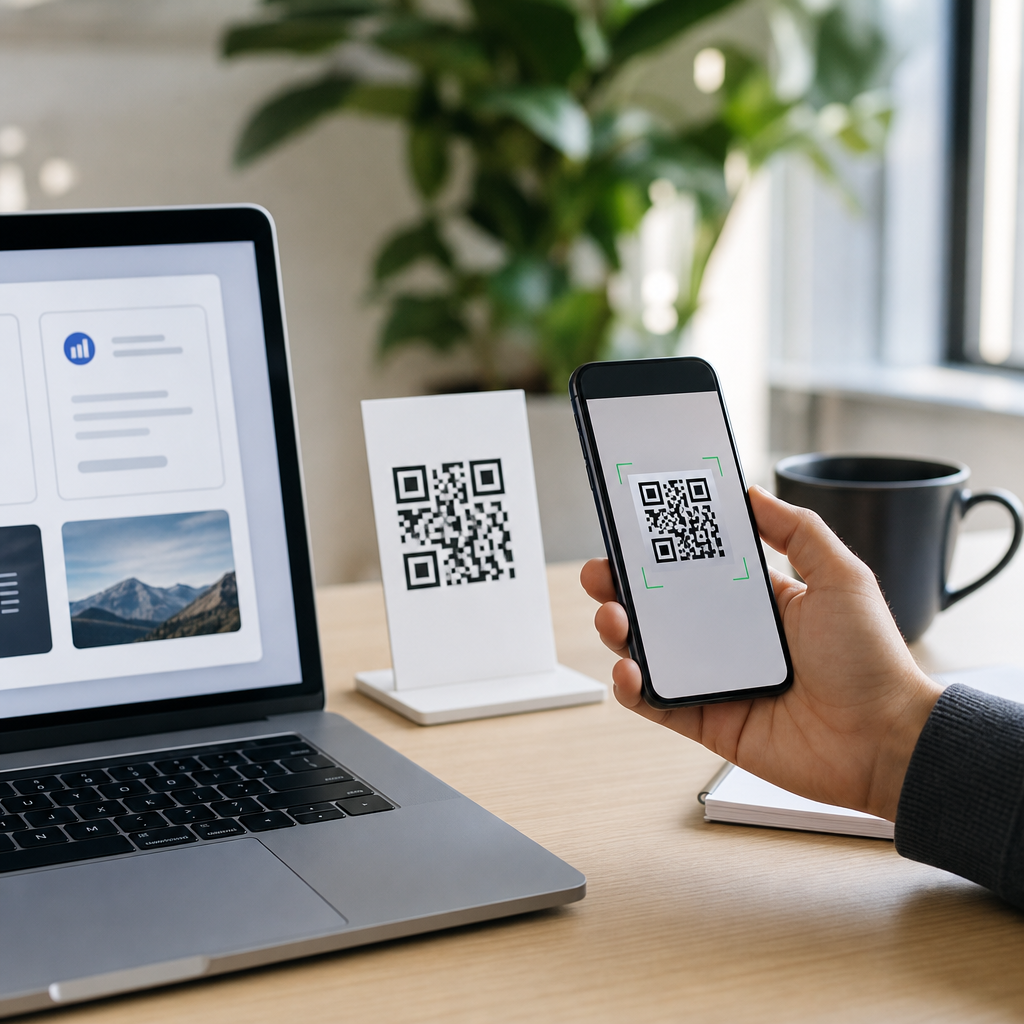

Creating a QR code looks simple, but the most common mistakes when creating QR codes happen before anyone clicks generate. A QR code is a two-dimensional matrix barcode that stores data such as a URL, PDF, contact card, Wi-Fi credential, payment string, or app deep link. In practice, most businesses use QR codes to bridge print and digital experiences: packaging to product pages, menus to ordering systems, posters to event registrations, and invoices to payment portals. I have built and audited QR campaigns for retail stores, restaurants, field service teams, and trade show booths, and the pattern is consistent: when a QR code underperforms, the issue is rarely the graphic itself. The problem is usually poor setup, wrong destination logic, weak testing, or design decisions that ignore how people actually scan.
This matters because QR codes compress a lot of business value into a very small asset. One code can influence conversion rate, customer support volume, attribution quality, and even brand trust. If the linked page loads slowly, if the code is too dense to print cleanly, or if the call to action is vague, scans drop and users blame the brand, not the technology. A good QR code system is not just a square image. It is a workflow: define the goal, choose static or dynamic encoding, prepare the destination, generate the code with appropriate error correction, size it for the medium, test across devices, track results, and maintain it over time. This article serves as the hub for how to create a QR code step by step while focusing on the mistakes that derail results most often. If you understand these mistakes early, every related task in QR code creation and tools becomes easier, faster, and more reliable.
Start With the Goal, Not the Generator
The first mistake is opening a QR code generator before deciding what success looks like. A QR code made for product authentication is different from one made for restaurant ordering, lead capture, or social follow growth. Before creating anything, define the user action, the destination type, and the measurement plan. Ask three direct questions: What should the scanner do? Where should the scan lead? How will we know it worked? If those answers are fuzzy, the QR code will be fuzzy too.
For example, a retailer placing codes on shelf talkers may want immediate product comparison and add-to-cart actions. In that case, linking to a generic homepage is a mistake because it forces users to search again. A better destination is a mobile product detail page with inventory, price, reviews, and a clear purchase button. In events, I have seen organizers print registration QR codes that point to a desktop-heavy ticketing page. Scan volume was fine, but completion rate was poor because the destination introduced friction. The fix was not a new code design; it was a mobile-first landing page.
Good QR planning also prevents duplication. If every flyer, package insert, and poster points to the same untagged link, you lose source attribution. Use distinct dynamic links or campaign parameters so each asset can be measured. Platforms such as Bitly, QRCode Monkey integrations, Beaconstac, Flowcode, and Uniqode make this manageable, but the principle matters more than the tool: create each code for a specific intent and context.
Choose the Right QR Code Type and Data Payload
Another frequent mistake is choosing the wrong QR code type. Static QR codes encode the final data directly and cannot be changed after printing. Dynamic QR codes encode a short redirect URL, allowing the destination to be edited later and scans to be tracked. If the printed asset has a long lifespan, dynamic is usually the safer choice. Menus change, campaign URLs break, PDF versions update, and promotions expire. Reprinting because a static code points to the wrong page is expensive and avoidable.
Data payload also affects usability. Encoding a very long URL directly into a static QR code creates a denser pattern with more modules, making it harder to scan at small sizes or on rough surfaces. I routinely shorten destination paths and remove unnecessary parameters before generation, even when using dynamic links, because clean structure reduces complexity across the workflow. For non-URL use cases, use established formats. vCard for contact sharing, MATMSG or mailto for email actions, and standard Wi-Fi strings for network access are more dependable than improvised text formats.
Security and privacy deserve attention here. If the QR code leads to a payment page, patient form, or account login, avoid exposing sensitive query parameters in the final URL. Redirect through controlled, secure endpoints and use HTTPS everywhere. A QR code should not become a data leakage channel. When teams ignore this, they create convenience at the expense of trust.
How to Create a QR Code Step by Step Without Costly Errors
The practical process for how to create a QR code step by step is straightforward when done in order. First, define the exact destination and confirm that it is mobile friendly. Second, choose static or dynamic based on whether the destination may change and whether tracking is required. Third, prepare the URL or payload in its cleanest form. Fourth, generate the code using a reputable tool that supports error correction settings and exports in SVG, EPS, PNG, or PDF. Fifth, add branding carefully without reducing scannability. Sixth, size the code for the final medium and preserve quiet space. Seventh, test across multiple phones, camera apps, and lighting conditions. Eighth, publish and monitor scans, bounce rate, and completion rate. Ninth, maintain the destination over time.
The mistake is skipping steps because the software makes generation feel instant. It is instant only at the image level. Operationally, QR code creation is closer to launching a miniature conversion path. If your code links to a form, test the form. If it opens a PDF, test load time on cellular data. If it triggers an app, define the fallback for users without that app installed. In one field deployment, a maintenance company placed QR codes on equipment for service manuals. The codes scanned correctly, but many technicians had weak signal in basements and mechanical rooms. Moving the manuals to lighter mobile pages and enabling downloadable offline copies raised successful task completion significantly.
Design Mistakes That Make QR Codes Hard to Scan
Design errors are among the most visible mistakes when creating QR codes. The biggest is poor contrast. Dark modules on a light background remain the standard because phone cameras detect the pattern more reliably. Inverted codes, low-contrast brand colors, busy photo backgrounds, and glossy reflective printing all reduce scan success. Another mistake is removing too much of the quiet zone, the blank margin around the code. Without that border, camera software struggles to isolate the symbol from surrounding graphics.
Logo insertion is useful, but excess customization often breaks function. I recommend keeping logos centered and modest in size, then increasing error correction appropriately. QR codes use Reed-Solomon error correction, commonly at levels L, M, Q, and H. Higher correction tolerates more damage or obstruction, but it also increases density. Teams often select H automatically, then shrink the code too much for a small label. The result is a dense, tiny symbol that fails more often than a simpler code with moderate correction and better print size.
File format choices matter as well. For print, vector formats such as SVG or EPS preserve sharp edges at any size. Raster PNG files can work, but low-resolution exports become soft when scaled. On packaging and signage, I prefer vector masters and final prepress checks. A QR code is not decorative artwork; edge clarity directly affects machine readability.
Printing, Placement, and Sizing Errors in the Real World
A technically correct QR code can still fail if printed badly or placed in the wrong spot. Size should match scanning distance. A common rule is roughly one inch of code width for every ten inches of scanning distance, though camera quality and lighting can widen the safe range. Tiny codes on posters force users to step too close. Huge codes on business cards waste space and can distort branding.
| Use Case | Typical Size | Placement Guidance | Common Mistake |
|---|---|---|---|
| Business card | 0.8 to 1 inch | Keep clear of trim edges and fold lines | Using a dense static URL that prints too small |
| Product packaging | 0.8 to 1.2 inches | Place on flat area away from seams and glare | Printing on curved or crinkled material |
| Restaurant table tent | 1.25 to 1.5 inches | Use high contrast and simple CTA nearby | No quiet zone or poor lighting assumptions |
| Poster or window sign | 2 to 4 inches | Position at comfortable scanning height | Mounting too high or behind reflective glass |
| Trade show banner | 3 to 5 inches | Allow scanning from a short queue distance | Linking to a slow form on weak venue Wi-Fi |
Placement should support natural user behavior. I have seen excellent codes placed at knee height on retail displays and at the top corner of tall event banners where users could not aim comfortably. Consider lighting, reach, and the time available to scan. If users are walking past, the code needs a strong call to action and a fast destination. If they are seated, as in restaurants or waiting rooms, you have more time but still need clear instructions.
Destination Page and Tracking Mistakes After the Scan
Many QR projects fail after the scan. The code works, but the landing experience does not. A slow page, intrusive pop-up, broken form, cookie banner that covers the main button, or desktop layout on mobile can destroy conversion. The QR code is only the handoff. If the next step is weak, scan counts become a vanity metric.
Build destination pages for mobile first. Compress images, reduce third-party scripts, and put the primary action above the fold. If the code is on packaging in a store aisle, users need quick answers such as ingredients, compatibility, setup steps, or reviews. If the code is on a poster, the visitor may need event details, map directions, or an instant RSVP option. Every extra tap lowers completion rate.
Tracking should also be planned before launch. Use analytics parameters, campaign naming conventions, and event tracking so you can distinguish scans from conversions. In Google Analytics 4, define events that reflect business outcomes, not just pageviews. A restaurant menu scan should be tied to order starts if possible. A product manual scan may be tied to support deflection. Dynamic QR dashboards are useful, but platform-native analytics and server logs often provide the fuller picture.
Testing, Maintenance, and Governance That Teams Often Ignore
The final category of mistakes when creating QR codes is operational neglect. Teams generate the code once, test it on one phone, and assume the job is done. Proper testing means checking multiple devices, both iPhone and Android, under realistic lighting and connectivity conditions. Test from the actual distance users will stand, on the actual material that will be printed, and through any surfaces involved, such as laminated menus or storefront glass.
Maintenance is just as important. Dynamic destinations should be reviewed on a schedule, especially for seasonal campaigns, PDF assets, and app links. Broken redirects accumulate quietly. I keep a simple QR inventory with owner, purpose, destination, print locations, launch date, and review date. That governance step prevents orphaned codes and makes updates routine rather than reactive. Larger organizations should also define brand standards for QR usage, including minimum size, color contrast, approved generators, and analytics conventions.
Accessibility deserves mention. Pair the QR code with plain text instructions and, when appropriate, a short URL for users whose devices cannot scan or who prefer manual access. For public services and healthcare settings, this is not optional. Redundancy improves inclusion and reduces failure points. QR codes are efficient, but they should never be the only doorway when the information is essential.
Creating effective QR codes is less about pressing a generate button and more about designing a reliable user path from scan to outcome. The core mistakes are consistent: starting without a goal, choosing the wrong code type, overloading the data payload, breaking scanability through design, printing at the wrong size, placing the code poorly, sending users to weak mobile pages, and failing to test or maintain the experience. When those errors are removed, QR codes become one of the simplest and most measurable bridges between physical media and digital action.
If you are learning how to create a QR code step by step, follow a disciplined sequence. Define the use case, prepare the right destination, choose static or dynamic intentionally, generate with appropriate error correction, preserve contrast and quiet space, export in a suitable format, test in real conditions, and measure what happens after the scan. This hub is the foundation for every article in QR code creation and tools because each specialized topic—design, tracking, printing, security, dynamic redirects, or analytics—depends on getting the basics right first. Audit your current QR codes today, fix the weak links, and build the next one with the full workflow in mind.
Frequently Asked Questions
What is the most common mistake people make when creating QR codes?
The most common mistake is treating QR code generation as the whole project instead of treating the scan experience as the real product. Many people focus on producing a code quickly, but they do not stop to ask where the code will appear, who will scan it, what device they will use, what happens after the scan, and whether the destination is actually useful. A QR code can technically work and still fail in practice. For example, a code may resolve correctly to a webpage, but if that page loads slowly, is not mobile-friendly, requires too many clicks, or does not match the promise of the printed call to action, users will abandon it immediately.
Another frequent issue is encoding the wrong type of content for the use case. A restaurant may link to a full desktop PDF menu that is difficult to read on a phone. A retailer may send packaging scans to a generic homepage instead of a specific product page. An event organizer may print a QR code to a registration form that closes before the poster campaign ends. These are not generator problems; they are planning problems. The mistake happens before anyone clicks “create.”
The best way to avoid this is to design backward from the scan outcome. Decide exactly what the user should do after scanning, choose the right destination format, test the flow on multiple phones, and confirm that the code still works under real-world conditions such as glare, distance, low signal, and poor lighting. When you think of a QR code as a bridge between physical media and a mobile action, the most important decisions become much clearer.
Why do some QR codes scan poorly even though they look fine on screen?
A QR code can look perfectly sharp on a computer monitor and still perform badly once it is printed, resized, stylized, or placed in a real environment. One major reason is insufficient contrast. Scanners need a strong visual difference between the dark modules and the light background. Black on white remains the safest option. Problems often appear when brands use low-contrast color combinations, gradients, transparent backgrounds, metallic inks, glossy finishes, or dark backgrounds that reduce readability. If the scanner cannot clearly distinguish the pattern, performance drops fast.
Size is another major factor. A code that is too small for the expected scanning distance will frustrate users. As a rule, larger placement generally improves reliability, especially on posters, signs, packaging viewed at arm’s length, or surfaces seen from farther away. Quiet zone problems also cause failures. The quiet zone is the clear margin around the code. If text, borders, graphics, or folds crowd that space, scanners may struggle to detect the code’s boundaries correctly.
Design customization is another common source of trouble. Rounded modules, embedded logos, decorative frames, and altered finder patterns can all work if handled carefully, but over-stylizing the code often reduces error tolerance. Low-resolution exports are also a problem. If a QR code is saved as a small raster image and then enlarged for print, edges can blur and modules can distort. Vector formats are usually the safer choice for print production.
Environmental placement matters too. Codes placed on curved bottles, wrinkled labels, reflective windows, moving vehicles, or heavily textured surfaces can become difficult to scan. Always test the final printed version, not just the digital artwork. Scan it using different phone models, camera apps, and lighting conditions. Real-world testing catches the problems that screen previews hide.
Should I use a static QR code or a dynamic QR code?
This is one of the most important decisions in any QR code project, and choosing the wrong type is a very common mistake. A static QR code stores the final destination directly in the code itself. That means once it is printed or published, you generally cannot change the destination without replacing the code everywhere it appears. Static codes can be perfectly fine for permanent information such as plain text, contact details, or a URL that will never change. They are simple and often cost-effective, but they are unforgiving if you make a mistake or need to update the destination later.
A dynamic QR code, by contrast, points to a short redirect URL that can send users to a destination you manage. This gives you flexibility to update the landing page, fix broken links, change campaigns, rotate seasonal content, and in many systems, track scan data such as time, location, or device type. That flexibility is especially valuable for printed materials with a long lifespan, including product packaging, signage, brochures, menus, and invoices. If a destination might ever change, dynamic is usually the safer option.
The mistake businesses make is choosing static because it seems simpler, then discovering later that the URL changed, the campaign ended, the PDF was replaced, or the payment page moved. At that point, every printed asset becomes a liability. On the other hand, some teams choose dynamic without thinking about governance. They forget subscription dependencies, ownership of the QR management platform, redirect speed, privacy obligations, or what happens if the service is discontinued. A dynamic code is only as reliable as the infrastructure behind it.
The practical rule is this: use static only when the encoded content is stable and you are comfortable with zero editing after release. Use dynamic when you need flexibility, analytics, campaign management, or protection against future URL changes. Before publishing at scale, document who owns the code, who controls the destination, and how updates will be managed over time.
What destination should a QR code lead to for the best results?
The best destination is one that matches the user’s context, intent, and device at the exact moment of scanning. A common mistake is sending everyone to a generic homepage and expecting them to find the next step on their own. That creates friction and wastes the value of the scan. If someone scans a code on packaging, they usually want product-specific details, setup instructions, warranty registration, ingredients, support, reviews, or reorder options. If they scan on a poster, they likely expect ticketing, event details, directions, or a registration form. If they scan on a table tent or menu, they want a fast mobile ordering experience, not a desktop-style website.
Another problem is linking to destinations that are technically accessible but poorly suited for mobile users. Large PDFs, unoptimized forms, app store dead ends, login walls, autoplay videos, and pages with intrusive pop-ups can all damage performance. The landing experience should load quickly, display well on small screens, and make the next action obvious. Ideally, the page should answer the user’s immediate question or enable a single clear action such as buy, book, pay, sign up, download, or contact.
Relevance and continuity matter as much as usability. The message beside the QR code should tell users what they will get, and the destination should deliver exactly that. If the call to action says “Scan to view installation guide,” the code should not send users to a homepage with dozens of navigation choices. If the label says “Scan to pay invoice,” the scan should land directly on a secure payment flow with the amount or account context already prepared where appropriate.
For best results, build dedicated mobile landing pages for major QR code use cases. Keep them lightweight, specific, and measurable. Add campaign parameters if analytics are needed, but keep the user experience clean. The strongest QR campaigns remove decision fatigue. Users should feel that scanning saved them time.
How can I test a QR code properly before printing or launching it at scale?
Proper testing goes far beyond checking whether your own phone can scan the code once. That kind of quick test is useful, but it is not enough for business use. A thorough QR code test should evaluate both technical readability and the full post-scan experience. Start by confirming that the code resolves to the correct destination every time. Then test on multiple devices, ideally across iPhone and Android, using native camera apps as well as a few common scanning tools. Different devices can behave differently, especially with custom designs or lower-contrast artwork.
Next, test the code in the format and environment where it will actually be used. Print a proof at final size. Place it on the real substrate if possible, such as cardboard, label stock, poster paper, acrylic signage, or product packaging. Check scanning performance in bright light, dim light, and under reflections. Test from the expected scanning distance and angle. If the code will appear on a curved surface, folded brochure, moving display, or outdoor sign, simulate those conditions. Many scan failures only appear after production, when placement and materials change the code’s readability.
You should also test the destination experience carefully. Measure page load speed on mobile data, not just office Wi-Fi. Confirm that forms submit correctly, payment pages are secure, PDFs open smoothly, and app links behave as intended on both major mobile platforms. Look for broken redirects, expired campaigns, login barriers, cookie pop-ups that block content, and pages that are difficult to navigate one-handed. If analytics matter, verify that tracking works without interfering with performance or privacy compliance.
Finally, establish a pre-launch checklist and an ongoing maintenance process. Check destination ownership, redirect settings, analytics, expiration dates, and fallback behavior. If using dynamic QR codes, make sure someone is responsible for monitoring them after launch. A QR code is not a set-it-and-forget-it asset, especially when it is tied to time-sensitive promotions, menus, payments,