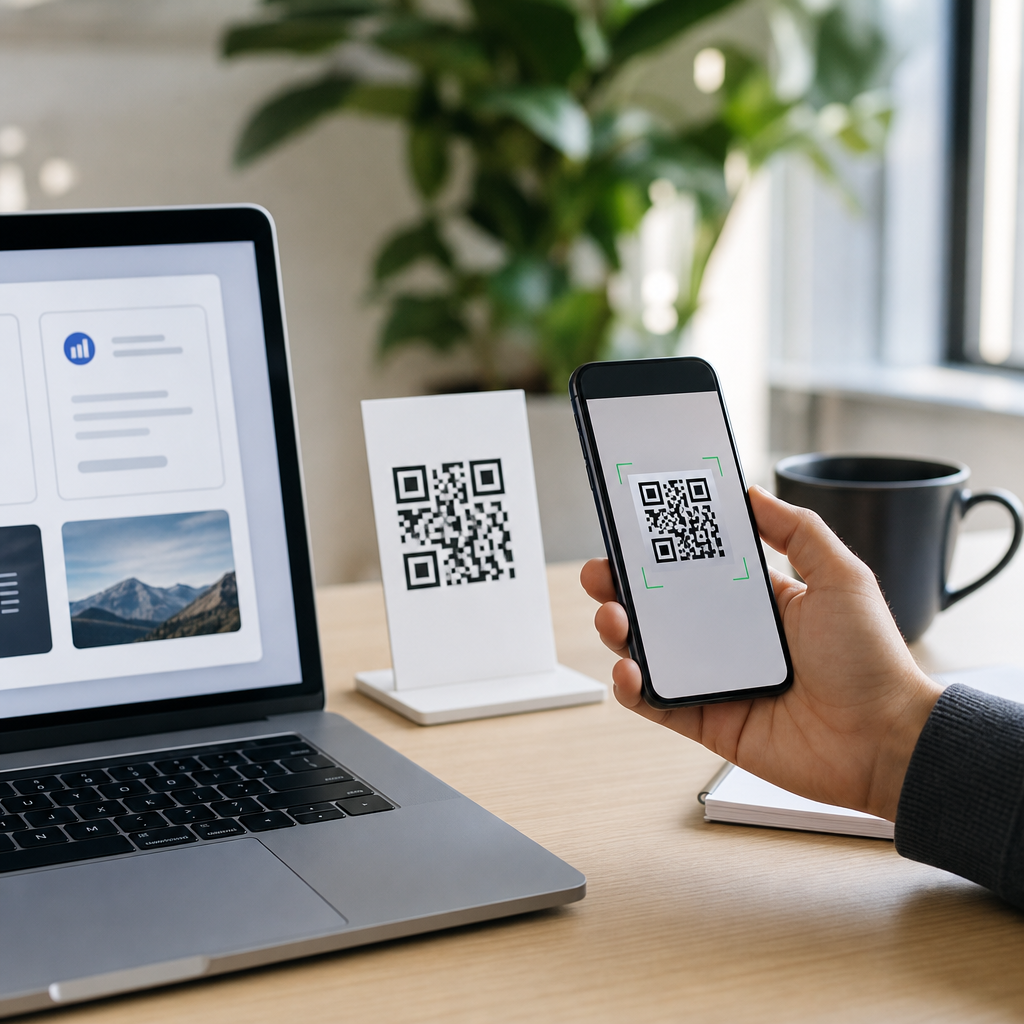
Integrating QR codes into your app or website turns a simple black-and-white pattern into a practical bridge between physical objects, mobile screens, authenticated sessions, payments, support flows, and measurable user actions. In product teams I have worked with, QR implementation stops being a novelty as soon as stakeholders see how quickly a code can connect packaging to onboarding, restaurant tables to ordering, event badges to identity, or desktop logins to mobile approval. A QR code, short for Quick Response code, is a two-dimensional matrix barcode that stores structured data such as URLs, contact records, Wi-Fi credentials, app deep links, or signed tokens. Integration means more than generating an image. It includes choosing an encoding format, creating codes through an API or library, rendering them responsively, tracking scans, handling redirects, securing the payload, and testing behavior across camera apps and devices. This matters because users increasingly expect instant, low-friction transitions between contexts. Businesses also need reliability, analytics, and governance. A well-built QR workflow reduces typing, shortens conversion paths, and creates measurable touchpoints that tie offline activity to digital outcomes. A poor implementation does the opposite: broken scans, unattractive codes, privacy risks, and campaigns no one can accurately attribute.
For teams building under the broader QR Code Creation & Tools umbrella, API and developer tooling form the operational core. Design choices affect scan success, app routing, maintainability, and reporting months after launch. If this article is your hub for the subtopic, the key idea is straightforward: treat QR codes as part of your application architecture, not as static images pasted onto a page. That means using developer-friendly generation services, establishing a redirect layer, defining data standards, instrumenting events, and documenting lifecycle rules for expiration, rotation, and ownership. It also means knowing when to use static versus dynamic codes, when to embed plain data versus a short URL, and how to support web, iOS, Android, and backend systems consistently. The sections below cover the implementation decisions that matter most, with examples from production environments and the standards and tools developers actually use.
Choose the Right QR Architecture First
The first decision is architectural: what exactly should the QR code contain, and who controls the destination after printing or deployment? Static QR codes embed the final data directly, such as a URL, vCard, or Wi-Fi string. They are simple, cheap, and suitable for fixed use cases like product manuals or device setup labels. Dynamic QR codes usually encode a short URL that resolves through your server or a provider platform. That extra redirect unlocks analytics, destination changes, A/B testing, campaign tags, expiration rules, and access control. In most commercial implementations I recommend dynamic codes for anything customer facing, because printed assets tend to outlive campaign assumptions.
Payload choice affects resilience. A long URL increases symbol density, which can make scanning harder at small print sizes or on low-quality surfaces. A short HTTPS URL is generally the best default for web and app experiences. If you need integrity, embed a signed token or opaque identifier and resolve it server side. For example, event check-in systems often encode attendee IDs plus an HMAC signature rather than exposing personal information. Payment flows may encode data in formats defined by regional schemes, while login flows typically encode a one-time session challenge tied to a short expiration window. The key is to minimize public data and keep mutable logic off the printed code.
Error correction level matters too. QR standards support levels L, M, Q, and H, recovering roughly 7 percent, 15 percent, 25 percent, and 30 percent of damaged codewords. Marketers often want logos placed in the center; engineers should push back unless size, contrast, and testing support it. Higher error correction increases redundancy but also symbol complexity. For app screens and modern phone cameras, medium or quartile correction is often a sound compromise. For industrial labels exposed to wear, higher correction can be justified. A code that looks branded but scans inconsistently is a product defect, not a design choice.
Generation APIs, Libraries, and Rendering Options
Developer teams usually integrate QR creation through either a hosted API or a local library. Hosted services are faster to launch, especially when they also offer management dashboards, analytics, and dynamic redirects. Common vendors include Bitly, QR Code Generator API, Beaconstac, and Scanova. They help when nontechnical teams need to create and manage assets without deployments. Local libraries provide more control, lower variable cost at scale, and easier compliance for regulated environments. On the web, widely used options include qrcode for Node.js, QRCode.js for browsers, and ZXing for Java, Android, and multi-format scanning. Python teams often use Segno or qrcode. iOS developers can generate codes natively with Core Image using CIQRCodeGenerator.
The rendering format should match the use case. SVG is ideal for web because it stays crisp at any size and usually yields smaller assets for simple codes. PNG works well for email, social sharing, and environments where vector support is inconsistent. Canvas rendering is convenient for client-side generation but is less portable for asset pipelines. If your platform allows user-generated codes, render on the server when possible so outputs are deterministic, cacheable, and easier to audit. I also advise storing generation parameters alongside the asset: version, error correction, margin, foreground color, embedded logo settings, and the exact payload string. That metadata prevents debugging blind spots later.
| Approach | Best for | Main strengths | Tradeoffs |
|---|---|---|---|
| Hosted QR API | Fast launch, marketing teams, dynamic campaigns | Dashboards, redirects, analytics, nontechnical access | Recurring cost, vendor dependency, data governance review |
| Server-side library | Custom platforms, regulated data, high volume | Full control, predictable outputs, easier internal integration | You must build management, analytics, and redirect logic |
| Client-side generation | Simple utilities and instant previews | Low backend load, quick UX feedback | Harder to audit, expose logic, inconsistent exports across browsers |
For scanning inside your app, use native camera frameworks where possible instead of browser-based workarounds. Android’s ML Kit barcode scanning and CameraX integration perform well in varied lighting. iOS supports AVFoundation for camera capture and metadata detection, with Vision offering additional image analysis options. Web apps can use the Barcode Detection API where supported, or libraries such as html5-qrcode and ZXing-JS as fallback. The implementation detail that matters most is not the decoder itself but the surrounding experience: autofocus hints, permission prompts, torch controls, duplicate-scan prevention, and explicit success states. Good scanner UX reduces abandonment more than swapping one decoding engine for another.
Deep Linking, Redirects, and Cross-Platform Routing
The most common integration failure happens after a successful scan: the user lands in the wrong place. A QR code should route by context, not just open a generic homepage. The best pattern is a redirect layer that inspects device type, operating system, app install state when available, language, campaign parameters, and business rules before sending the user onward. For mobile apps, use universal links on iOS and app links on Android so scanned URLs can open the installed app directly. If the app is not installed, send users to the app store or a mobile web fallback that preserves intent.
Deep linking becomes especially important in flows like account pairing, product activation, and promotions. Suppose a desktop SaaS product displays a QR code for sign-in approval. The code can contain a short-lived challenge ID. After the user scans it with the mobile app, the app opens a confirmation screen tied to that challenge, the backend verifies identity, and the desktop session completes. Nothing sensitive lives in the image itself. In retail, shelf tags may route to localized product pages based on the shopper’s language and store region. In hospitality, a room placard can open a web app menu, but returning guests with the app installed can go straight into ordering.
Preserve measurement data through redirects. Add UTM parameters only at the final destination or inject them server side to avoid bloating the QR payload. Keep redirect latency low; every extra network hop increases the chance that users close the camera app before the page loads. Use permanent logic identifiers internally even if campaign names change. For example, route through /q/room-service/4821 rather than embedding volatile marketing labels. That makes analytics durable and simplifies governance when assets move between teams.
Security, Privacy, and Compliance Controls
QR codes are easy to generate, which also makes them easy to abuse. Attackers can place malicious stickers over legitimate codes, encode phishing URLs, or replay stale tokens if systems are not designed correctly. Secure integrations start with domain trust. Use branded HTTPS domains you control, publish them consistently, and avoid URL shorteners that hide ownership unless they are your own. For sensitive actions, issue single-use or short-lived tokens and validate them server side. Login and payment approvals should always expire quickly and require authenticated confirmation within the app or browser.
Never embed secrets, raw personally identifiable information, or direct database keys in a public code. If you need to identify a record, encode an opaque reference and look it up after scan. Signed payloads help detect tampering when offline verification is necessary. In healthcare, manufacturing, and regulated B2B environments, document data flows and retention periods before launch. If scans trigger analytics or location-based routing, disclose tracking appropriately and align with GDPR, CCPA, and your consent model. Logging should record event IDs, timestamps, user agent, and destination decisions, but it should not retain more personal data than necessary for debugging and reporting.
Operational security also includes print governance. Maintain a source of truth for approved assets, especially when agencies, franchisees, or field teams can download codes. Version files, watermark staging outputs, and revoke obsolete destinations cleanly. I have seen teams discover months later that an outdated code still redirected to a test environment because no ownership model existed. A QR program needs the same change control discipline as any other customer-facing endpoint.
Analytics, Testing, and Ongoing Optimization
If you cannot measure scans and post-scan behavior, you are treating QR as decoration. At minimum, track scan timestamp, device type, operating system, location when appropriate, referral context, redirect destination, and downstream conversion events. Because native camera apps do not pass a standard referrer, your redirect layer becomes the attribution anchor. Create event schemas that distinguish unique scanners from total scans and first-time scans from repeat engagement. In analytics platforms such as Google Analytics 4, Mixpanel, or Amplitude, map QR traffic into named campaigns and tie it to funnel milestones like sign-up, purchase, form completion, or support deflection.
Testing must happen in realistic conditions. Verify scan speed across iPhone and Android models, printed sizes, matte and glossy surfaces, indoor and outdoor lighting, and distances users will actually stand from the code. The practical baseline many teams use is at least 2 by 2 centimeters for short URLs at close range, increasing size with distance according to the common ten-to-one rule: scanning distance divided by ten approximates minimum code size. Quiet zone margins, usually four modules wide, are not optional. Low contrast, cramped placement near edges, and busy backgrounds are recurring causes of failure.
Optimize the full journey, not only the symbol. Landing pages should load quickly, declare the next step clearly, and minimize form fields for mobile users who just came from a camera app. If app installation is part of the flow, defer it unless necessary; forcing an install before value is demonstrated usually hurts conversion. Review scan heat by placement and creative. A restaurant may learn that table tent codes outperform wall posters because intent is immediate. A SaaS team may find that account-pairing codes work best when refreshed every thirty seconds with a visible countdown. These are product decisions supported by data, not guesswork.
Integrating QR codes into your app or website works best when you approach it as an end-to-end product capability. Start with architecture: choose dynamic redirects for flexibility, short payloads for scan reliability, and appropriate error correction for the environment. Build with tools that fit your team, whether that means a hosted API for speed or local libraries for control. Route users intelligently with deep links and robust fallbacks, secure every sensitive flow with expiring tokens and trusted domains, and instrument analytics so offline touchpoints become measurable digital actions. The payoff is practical: fewer typing barriers, stronger attribution, smoother cross-device journeys, and reusable infrastructure for marketing, operations, support, payments, and authentication.
As the hub page for API and developer tools within QR Code Creation & Tools, this topic should guide your next implementation decisions and connect to deeper articles on generation libraries, scanning SDKs, dynamic redirect design, analytics setup, security patterns, and testing standards. If you are planning a rollout, audit one customer journey now: define the payload, redirect logic, app routing, analytics events, and expiration policy before anyone prints a code. That discipline is what separates QR programs that scale from campaigns that quietly fail.
Frequently Asked Questions
What are the most effective ways to use QR codes in an app or website?
The most effective QR code use cases are the ones that remove friction for the user and create a clear, measurable next step for the business. In practice, that usually means connecting an offline surface or a second device to a digital action that would otherwise take too many taps, searches, or sign-in steps. Common examples include linking product packaging to onboarding flows, sending restaurant guests directly to digital menus and ordering pages, opening app download pages from printed marketing, launching event check-in and badge validation, connecting desktop sessions to mobile authentication, and triggering fast payment or support experiences. The strongest implementations are not built around the novelty of scanning a code, but around speed, convenience, and context.
For websites, QR codes work especially well when users start on one device and finish on another. A desktop site can display a QR code that opens a mobile app, approves a login, continues a checkout process, or saves an item to a phone for later action. For mobile apps, QR codes can power peer-to-peer sharing, access control, loyalty programs, ticketing, and in-person activation flows. The key is to map the QR code to a specific user intent. If the user is standing in a store aisle, the code should answer product questions or unlock a promotion. If the user is at a counter, it should speed up payment or pickup. If the user is on a laptop but needs a mobile step, it should hand off the session seamlessly. When the destination matches the moment, QR codes become genuinely useful rather than decorative.
How do you integrate QR codes technically into an app or website?
Technical integration usually involves two parts: generating the QR code and handling what happens after a scan. On the generation side, most teams either create static QR codes that always point to the same destination, or dynamic QR codes that resolve through a managed URL and can be updated, tracked, or personalized later. Dynamic codes are typically the better choice for production environments because they allow you to change destinations without reprinting materials, attach campaign or user context, measure scans, and support expiration or routing logic. A web application can generate QR images server-side or client-side using standard libraries, then render them anywhere from landing pages to account dashboards to printable assets.
On the scan-handling side, the destination needs to be carefully designed. A QR code might open a web URL, deep link into a mobile app, trigger an app clip or instant experience, authenticate a session with a one-time token, or call an API-backed workflow such as payment initiation or support verification. This is where implementation quality matters most. Teams should define the payload format, set token lifetimes, validate every scan request on the server, and provide fallback behavior when the app is not installed or the code has expired. It is also important to account for device differences, mobile operating system handling of deep links, and analytics attribution. A good QR implementation is not just an image generator; it is a complete flow that includes routing, security, instrumentation, error handling, and a landing experience optimized for the device that performed the scan.
Are QR codes secure enough for logins, payments, and identity verification?
QR codes can absolutely be secure enough for high-trust workflows, but only when the code itself is treated as a transport mechanism rather than the security boundary. In other words, the printed or displayed code should not be assumed to be inherently secure. The real protection comes from short-lived tokens, server-side validation, authenticated app sessions, cryptographic signing where appropriate, and clear rules around expiration, replay prevention, and device trust. For login flows, a common pattern is to display a temporary QR code on a desktop screen that contains a session identifier or challenge, then require the user to approve the action inside an already authenticated mobile app. That model can be very strong because it combines possession of the phone, an existing signed-in session, and explicit user approval.
For payments and identity verification, the same principle applies. Avoid embedding sensitive data directly in the QR code whenever possible. Instead, encode a reference or token that your backend can resolve securely. Use HTTPS everywhere, limit token scope, expire codes quickly, bind actions to known sessions or devices, and log abnormal activity. If the QR code is used in public spaces, consider anti-tampering measures such as signed payloads, visual verification cues, or validation against expected location and time windows. User education also matters. People should know they are scanning a code from a trusted source and understand what action will follow. Done well, QR-based flows can be both secure and convenient, especially for cross-device authentication, controlled access, and verified transaction approvals.
What design and user experience best practices make QR codes easier to scan and more effective?
Successful QR code UX starts with clarity. Users should know exactly what they will get when they scan, why it is worth doing, and whether they need a phone camera, an app, or a logged-in account. A short call to action near the code dramatically improves performance: “Scan to order,” “Scan to continue on mobile,” “Scan to check in,” or “Scan to pay” sets expectations and reduces hesitation. Size, contrast, spacing, and placement also matter. The code should be large enough for the viewing distance, printed with strong contrast, and surrounded by enough quiet space so cameras can detect it reliably. Avoid crowding it with other visual elements, distorting the shape, or placing it on reflective, curved, or low-light surfaces unless you have tested those conditions thoroughly.
Beyond scanability, think about the full journey after the camera opens the destination. The landing page or in-app screen should load quickly, match the promise near the QR code, and continue the task with minimal friction. If the app is required, provide a smart fallback to the app store or a mobile web alternative. If the scan unlocks a personalized or authenticated action, explain the next step clearly instead of dropping users into a generic homepage. Accessibility is important too: include nearby text alternatives, avoid relying on color alone, and remember that not every user scans the same way. Finally, test in real-world environments, not just on a perfect office monitor. Lighting, distance, motion, older cameras, crowded signage, and weak connectivity all affect results. The best QR experiences feel obvious, immediate, and reliable from start to finish.
How can you measure the performance of QR codes and improve results over time?
QR code performance should be measured as part of the broader conversion funnel, not just by scan count. A scan is useful, but it is only the first signal. What matters more is what happens next: app installs, account sign-ins, purchases, completed orders, support resolutions, event check-ins, form submissions, or whatever business outcome the code is meant to drive. Dynamic QR codes are especially valuable here because they let you attach campaign identifiers, location metadata, device context, and timestamped events without changing the printed asset itself. With the right analytics setup, you can compare placements, channels, creative treatments, destinations, and user segments to see where QR codes are genuinely adding value.
Optimization usually comes from testing the whole experience rather than tweaking the pattern alone. Teams can experiment with call-to-action copy, destination type, page speed, app deep linking, placement height, printed size, incentive messaging, and whether the code appears at the right moment in the user journey. For example, a packaging QR code may perform better when it leads to a quick-start page instead of a general homepage, and a desktop login QR may convert better when the page explains the mobile approval process in one sentence. It is also helpful to monitor failure points such as expired tokens, unsupported devices, weak app routing, and slow mobile landing pages. When you combine scan analytics with downstream conversion data, QR codes stop being a black box and become a measurable interface you can continuously refine.