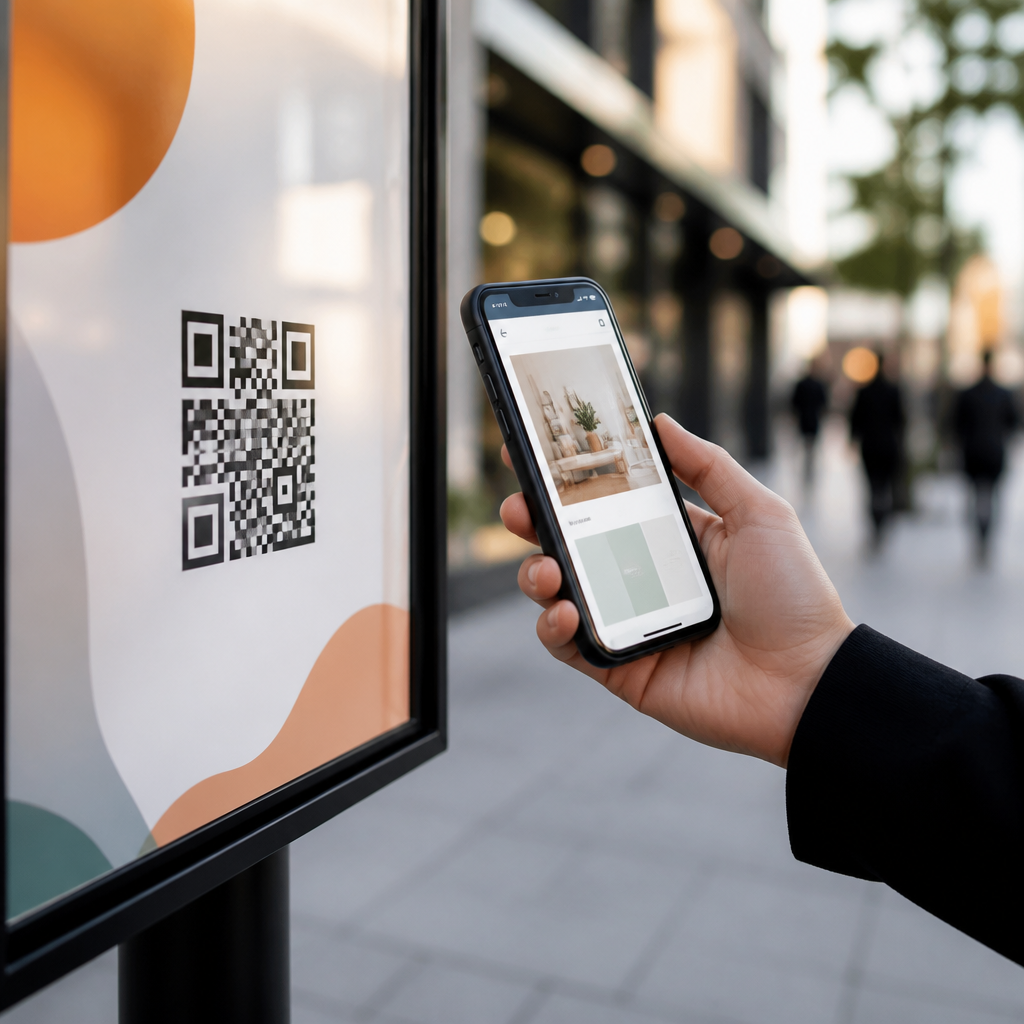

QR codes can lift response rates, shorten the path from attention to action, and connect offline media to measurable digital outcomes, but knowing when not to use a QR code in your marketing campaign is just as important as knowing why QR codes work in marketing. A QR code, or Quick Response code, is a two-dimensional barcode that a smartphone camera can scan to open a URL, save contact details, trigger an app action, or launch another digital experience. In modern marketing strategy, the appeal is obvious: a printed sign, package, menu, mailer, poster, or product label can instantly become interactive without forcing the customer to type a long web address.
I have used QR codes across retail promotions, event signage, direct mail, field sales collateral, restaurant menus, and product packaging, and the pattern is consistent. They work best when they remove friction. They fail when they add friction, confuse the audience, or appear where a simpler method would perform better. That distinction matters because marketers often treat the code itself as the tactic. It is not. The tactic is the customer journey, and the code is only one access point within it.
Understanding why QR codes work in marketing helps explain why they sometimes should be avoided. They are effective because they compress discovery, intent, and action into one step. They also create trackable touchpoints, support attribution, and bridge physical environments with digital analytics platforms such as Google Analytics 4, Adobe Analytics, HubSpot, or Salesforce campaigns. Yet those strengths depend on context. If the audience cannot scan easily, does not trust the destination, or has no reason to continue, the code becomes dead space on creative that could have carried a stronger call to action.
This article is a hub for the wider subject of QR codes in marketing strategy. It explains the mechanics behind strong performance, then focuses on the scenarios where a QR code is the wrong tool. If you are deciding whether to place one on a billboard, brochure, packaging insert, checkout display, email footer, presentation slide, or in-store poster, the right question is not “Can we add a QR code?” but “Should we?” The answer depends on environment, audience behavior, creative hierarchy, technical execution, and campaign objective.
Why QR codes work in marketing when the fit is right
QR codes work in marketing because they reduce the number of steps required to move from interest to action. A customer sees a product demo sign, scans the code, and lands directly on a buying guide. A conference attendee scans a booth graphic and books a meeting. A diner scans a table tent to join a loyalty program. In each case, the code removes typing, searching, and memory burden. That friction reduction is not trivial. In campaign testing I have run, a clean scan-to-landing-page path routinely outperformed print-only URLs on mobile-heavy audiences because the code met the user where they already were: on a phone, in a moment of intent.
They also work because they make offline channels measurable. A flyer on a countertop, a package insert, a trade show banner, and a direct mail postcard can each use distinct tagged destinations with UTM parameters, dynamic redirects, or campaign IDs. That allows marketers to compare placements, offers, and creatives instead of judging offline assets by instinct. Dynamic QR code platforms such as Bitly, QR Code Generator Pro, Beaconstac, and Uniqode can support redirect editing, scan analytics, device data, and expiration controls. Used properly, these tools turn static media into testable media.
Another reason QR codes perform well is message continuity. A good code does not send people to a generic homepage. It sends them to the next obvious step: redeem the offer, watch the explainer, register for the event, verify authenticity, review setup instructions, or claim support resources. That continuity improves conversion because the scan fulfills the promise made by the surrounding creative. When marketers say QR codes do not work, the root problem is often not scan behavior. It is a mismatch between the incentive and the destination.
When not to use a QR code: the environment blocks scanning
The first clear case for avoiding a QR code is environmental impracticality. If people cannot safely and comfortably scan, the tactic is weak from the start. Billboards viewed from moving vehicles are the classic example. A driver cannot scan responsibly, and a passenger may only have a second or two to focus, unlock a phone, open a camera, and capture the code. That is too much to ask. In that context, a memorable short URL, branded search term, or simple SMS keyword usually makes more sense.
Distance and motion are only part of the problem. Poor lighting, reflective surfaces, small print sizes, curved packaging, obstructed placement, and weak mobile reception can all undermine scan success. I have seen beautifully designed in-store displays fail because the code was placed near floor level where shoppers had to crouch, or behind glossy laminate that created glare under retail lighting. A code should never be treated as decoration. It requires line of sight, adequate size, contrast, and a realistic user posture.
There are also situations where the customer has no free hand or no time to stop. Think transit turnstiles, airport security lines, busy checkout counters, or fast-moving conference entrances. In those moments, adding a QR code can satisfy the marketing team’s desire to include a digital bridge without matching the user’s reality. If the environment makes scanning inconvenient, the code does not create engagement. It creates abandonment.
When not to use a QR code: the audience does not need one
A QR code should not be used when a simpler access method is already native to the channel. Email is the easiest example. On most devices, the reader is already online and already able to tap a button or link. Asking that person to open the email on one screen, scan a code with another device, and then complete an action adds unnecessary friction. The same logic applies to digital ads, website pages, app screens, and social posts viewed on mobile. If the customer can click, do not ask them to scan.
Audience capability also matters. While smartphone camera recognition is now widespread on iPhone and Android devices, usage behavior still varies by demographic, context, and trust level. Some audiences are highly scan-literate because they use QR codes for payments, menus, and tickets. Others remain hesitant, especially in regulated industries or among users who worry about phishing. In B2B settings, I have seen senior decision-makers ignore codes on printed leave-behinds but respond well to a direct short URL paired with a clear benefit statement. The issue was not age alone. It was habit and perceived usefulness.
Accessibility is another reason not to default to QR codes. A blind or low-vision user may struggle to locate and frame the code. Users with motor limitations may find scanning awkward. If the code is the only route to information, the campaign excludes part of the audience. Best practice is to provide an equivalent option such as a readable URL, NFC alternative, or human-assisted path. When no equivalent exists, the code should not be the primary gateway.
When not to use a QR code: the value exchange is weak
People scan for a reason, not out of curiosity alone. If the benefit is vague, the code underperforms. “Scan me” is not a strategy. “Scan to compare plans,” “Scan for setup instructions,” and “Scan to get 20% off today” are strategies because they state the reward. In audits I have done on underperforming campaigns, the most common failure is an unlabeled code surrounded by generic copy. The customer has no idea what will happen next, so the safest choice is not to engage.
A weak value exchange becomes even more damaging when the landing experience is poor. If the code opens a desktop page on a mobile device, forces a slow load, requests too much data upfront, or drops users onto a homepage where they must search again, the campaign burns trust. The destination should be mobile-optimized, fast, secure, and tightly aligned to the promise. Core Web Vitals are not abstract technical metrics here; they affect whether the scan pays off. A code that sends users into a dead end conditions them not to scan your future materials.
The issue is especially visible in packaging and print. Space is limited, so every element must earn its place. If a product label uses a QR code merely because competitors do, but the destination contains nothing beyond the same information already printed on the box, there is no meaningful reason to engage. In that case, the code occupies valuable real estate without adding utility.
Choosing the right tactic for the objective
Marketing teams often use QR codes to solve the wrong problem. The better approach is to start with the objective, then pick the mechanism that best fits the channel, audience, and conversion step. If the goal is immediate purchase from a mobile-ready audience in a physical setting, a QR code can be strong. If the goal is broad awareness from a fleeting impression, recall-based tactics may be better.
| Campaign objective | When a QR code fits | When another tactic is better |
|---|---|---|
| Drive product detail views | On packaging, shelf talkers, trade show displays, print ads with time to scan | On moving outdoor media or digital channels where a tap is available |
| Capture leads | At events, in waiting areas, on direct mail with a strong incentive | In rushed environments or when the form is long and trust is low |
| Deliver support content | On products, manuals, receipts, installation guides | When users need instant spoken help or have limited device access |
| Promote offers | In-store signage, packaging inserts, table tents, window decals | When the offer can be claimed faster with a visible coupon code or tapable link |
This framework keeps the code in its proper role. It is not a universal sign of innovation. It is a utility. The right choice depends on user effort, immediacy, and whether the physical context naturally supports a scan.
Execution mistakes that turn a good idea into a bad campaign
Even when a QR code is appropriate, poor execution can make it the wrong choice in practice. Size is a frequent problem. A common rule is to maintain a scan distance-to-size ratio of roughly 10:1, so a code scanned from 10 inches away should be about 1 inch wide, while one scanned from several feet away needs to be much larger. Contrast matters too. Dark code on a light background remains the most reliable option. Stylized brand treatments can work, but only after device testing across lighting conditions and camera types.
Destination governance is equally important. I strongly recommend dynamic codes for active campaigns because they allow redirect updates without reprinting materials. They also support campaign continuity if the landing page changes or inventory shifts. However, dynamic systems create operational risk if ownership is unclear. I have seen brands lose working codes because a vendor account expired or an agency retained control of the redirect. Every code should have a documented owner, destination map, analytics convention, and review schedule.
Security and trust signals cannot be ignored. Users have learned that QR codes can mask malicious links. Brands should reduce that concern by using recognizable domains, HTTPS pages, concise pre-scan labels, and landing pages that look exactly like the brand promised. In some campaigns, showing the short branded domain near the code improves confidence because users can preview where they are going. If your audience must wonder whether the scan is safe, the code is probably not the best front door.
How to decide before you print or publish
Before approving a QR code, ask five practical questions. First, can the audience scan safely and comfortably in the real environment? Second, is scanning easier than the alternatives available in that channel? Third, is the benefit immediate, clear, and worth the effort? Fourth, does the landing experience complete the promise on a fast mobile page? Fifth, can the campaign be tracked, maintained, and supported over time? If any answer is no, reconsider the tactic.
This decision process is what separates effective QR code marketing from trend chasing. Why QR codes work in marketing is not mysterious. They work when they save time, carry intent forward, and connect a physical moment to a useful digital action. They should not be used when they interrupt, duplicate simpler paths, or ask too much from the audience. The best marketers treat them as one option in a broader conversion toolkit, alongside short links, search prompts, NFC, SMS, app deep links, and human-assisted calls to action.
Use QR codes where they create genuine convenience and measurable value, and leave them out where they do not. Audit each placement from the customer’s point of view, test the full journey on real devices, and choose the path with the least friction. That discipline is what turns QR codes from a novelty into a dependable part of marketing strategy.
Frequently Asked Questions
When should you avoid using a QR code in a marketing campaign?
You should avoid using a QR code when it does not make the customer journey easier, faster, or more useful. A QR code works best when it reduces friction between seeing your message and taking action, but if the audience can reach the same outcome more easily through a short URL, a clickable digital button, a search result, or a direct in-app action, the code may add an unnecessary step. This is especially true in digital environments where people are already on a screen and can click a link immediately. Asking users to scan a code from a device they are already using often creates inconvenience instead of momentum.
It is also a poor fit when the destination experience is weak. If the QR code leads to a generic homepage, an unoptimized mobile page, a confusing menu, or content that does not match the promise of the ad, the campaign can lose trust quickly. In those situations, the issue is not the QR code itself but the disconnect between the scan and the value delivered after the scan. Marketers should also think carefully before using QR codes in situations where internet access is unreliable, where scanning is physically difficult, or where the audience may not be comfortable using smartphone-based interactions. The key question is simple: does the QR code remove friction, or does it create more of it? If it creates more, it probably should not be there.
Why are QR codes often a bad choice in digital ads, emails, or social media posts?
QR codes are usually a bad choice in digital-first channels because those channels already support direct interaction. In an email, users can tap a button or hyperlink. In a social media post, they can click through a bio link, story sticker, paid ad CTA, or embedded product link. In a display ad, they can click immediately. Adding a QR code in these environments often introduces a second device problem: the person must either use another phone to scan the code or take a screenshot and open it later, both of which interrupt the natural flow and reduce conversion potential.
There are occasional exceptions, such as when a digital screen is being viewed from a distance in a public space or when the goal is to transfer an experience from a shared display to a personal device. Even then, the code needs a strong reason for existing. If the audience is already one tap away from your destination, a QR code is generally redundant. Good marketing design respects context. In clickable environments, clickable elements almost always outperform scan-based ones because they are more intuitive, faster, and better aligned with user behavior. In short, use the native action of the channel whenever possible, and reserve QR codes for situations where they truly bridge offline attention to online action.
What problems can QR codes cause if the landing page or offer is not properly prepared?
A QR code can attract the scan, but it cannot rescue a poor destination experience. If the landing page is slow, not mobile-friendly, difficult to read, or poorly aligned with the message that triggered the scan, users are likely to drop off immediately. Because most QR scans happen on smartphones, the post-scan experience has to be designed specifically for mobile behavior. That means fast load times, clear headlines, simple navigation, minimal form fields, and a strong, relevant call to action. If those basics are missing, the campaign may generate curiosity but not results.
Misalignment between the code and the offer is another common problem. For example, if a poster promises a discount, demo, menu, event registration, or exclusive content, the QR code should take users directly to that exact destination, not to a homepage where they must search for it. Every extra step lowers the chance of conversion. Trust is also at stake. If users scan a code and land on something generic, outdated, or off-brand, they may question the legitimacy of the campaign. For that reason, QR codes should never be treated as a shortcut around strategy. They work best when they are part of a complete conversion path that has been tested end to end, from scan to action to measurement.
Are there audience or placement situations where QR codes are ineffective?
Yes, and these situations are more common than many marketers realize. QR codes can be ineffective when the target audience is unlikely to scan them due to habits, device comfort, physical environment, or lack of motivation. If your audience is in a hurry, driving, carrying bags, navigating a crowded venue, or viewing the message from too far away, the practical ability to scan drops sharply. A code printed too small, placed too high, wrapped around curved packaging, shown at a steep angle, or displayed briefly in a fast-moving video can undermine performance even if the creative concept is strong.
Audience readiness matters as much as placement. Some customer groups are very comfortable with scan-based actions, while others may prefer phone numbers, simple URLs, or in-person interaction. In higher-consideration purchases, a QR code may not be enough on its own unless it leads to genuinely useful next steps such as product comparisons, scheduling, reviews, or location details. Marketers should also be cautious in low-trust contexts. Some consumers remain wary of scanning random codes because they cannot see the destination before opening it. If the setting already creates hesitation, another response mechanism may feel safer and more transparent. The most effective choice depends on visibility, accessibility, trust, and the user’s willingness to act in that moment.
How can marketers decide whether a QR code is the right tool or whether another call to action would work better?
The best way to decide is to evaluate the role of the QR code in the customer journey rather than using it because it feels modern or convenient. Start by asking what action the person needs to take next and whether scanning is the fastest path to that action. If the campaign begins in an offline setting such as packaging, direct mail, signage, print ads, product displays, or event materials, a QR code may be an excellent bridge to digital content. But if the audience can just as easily type a memorable URL, tap a link, call a number, visit a nearby location, or use an app they already have open, another CTA may perform better.
Marketers should also compare intent, urgency, and context. If immediate action matters, choose the option with the fewest possible steps. If trust matters, make the destination and benefit extremely clear before asking for the scan. If measurement matters, ensure the scan leads to a trackable, campaign-specific landing page. Testing is important here. Try a QR code against a short vanity URL or another CTA and compare engagement quality, completion rates, and downstream conversions. In many cases, the right answer is not to eliminate QR codes entirely but to use them selectively where they add real value. A strong marketing campaign is not defined by whether it includes a QR code; it is defined by whether every element supports user behavior, campaign goals, and a smooth path to conversion.