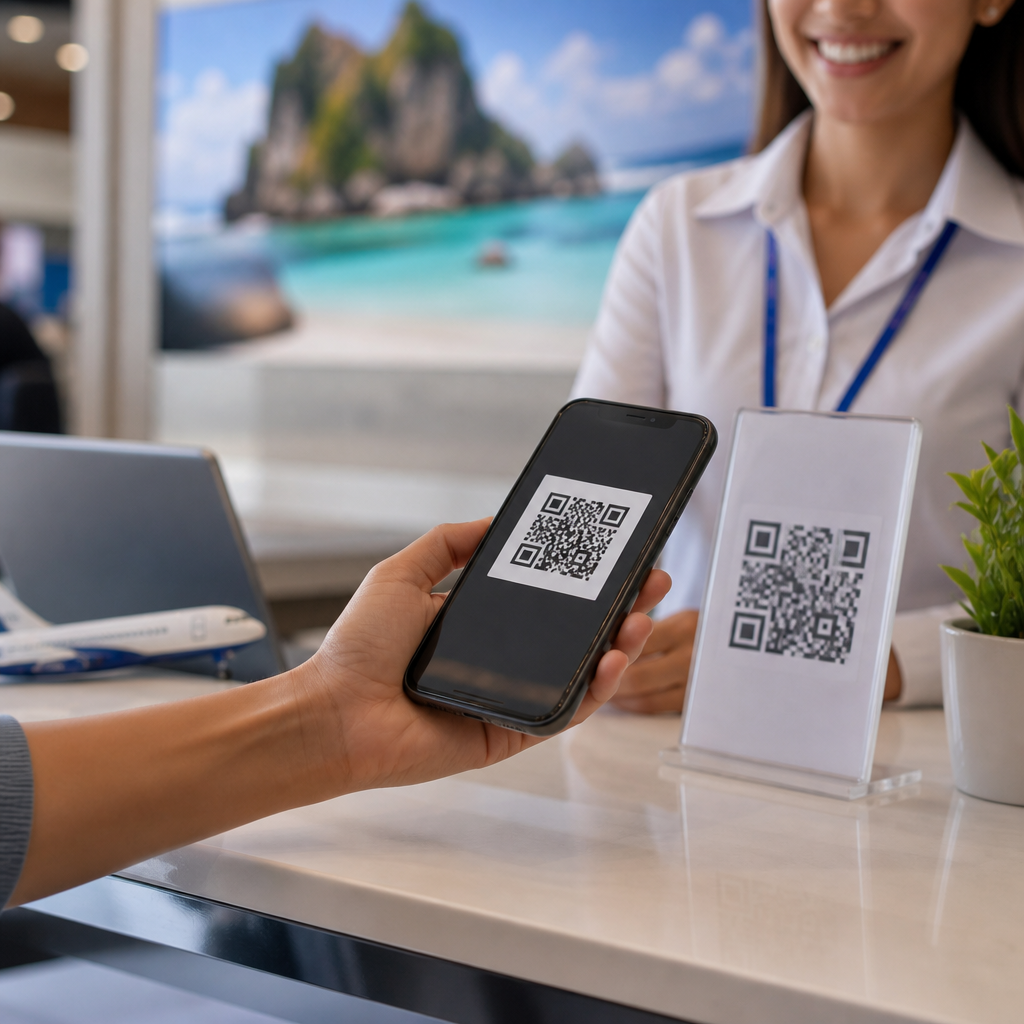
Travel companies use QR codes for bookings because they reduce friction at every step of the customer journey, from trip discovery to payment confirmation, check-in, ticket retrieval, and on-trip service. In travel and tourism, a QR code is a scannable two-dimensional barcode that stores a URL, booking reference, digital pass, contact detail, payment link, or app trigger. When I have implemented QR campaigns for operators and hospitality brands, the strongest results came from treating the code as a bridge between physical touchpoints and digital conversion, not as a novelty. That distinction matters because travel purchases are often time-sensitive, mobile-led, and fragmented across channels.
The travel sector is unusually well suited to QR-based booking flows. Travelers discover offers on posters, airport screens, brochures, in-room materials, social media, tour vehicles, and partner locations. They also move across multiple moments where typing a long URL is inconvenient or impossible. A well-governed QR code lets a traveler scan and land directly on a booking page, prefilled itinerary, loyalty enrollment form, airport transfer reservation, attraction ticket, or support chat. For tourism marketers, that means fewer abandoned sessions, stronger attribution, and more measurable offline-to-online performance.
This topic sits at the center of modern travel marketing because booking behavior has changed. Mobile traffic dominates many travel categories, but conversion still suffers when forms are long, payment options are limited, or the next step is unclear. QR codes can shorten the path by sending the traveler to a tailored landing page with dates, departure point, language, package type, and promo code already embedded in the link. They can also support operational needs after purchase, including boarding, hotel access, excursion check-in, baggage tracking, and feedback collection. Used this way, QR codes are not just promotional assets; they become conversion infrastructure.
Travel companies also benefit from the flexibility of dynamic QR codes. A static code permanently points to one destination, while a dynamic code redirects through a managed URL and can be updated without reprinting. That matters in travel because inventory changes, weather disrupts schedules, campaigns expire, and seasonal offers rotate quickly. A hotel can keep the same QR code on lobby signage while changing the booking destination from summer packages to winter spa stays. A destination marketer can reuse the code on printed maps while redirecting visitors to current events, attraction bundles, or multilingual itineraries.
Why QR Codes Fit Travel Booking Behavior
Travel booking is rarely a single click. People compare fares, check dates, look for cancellation policies, read reviews, and often coordinate with companions. QR codes work in this environment because they capture intent at the exact moment interest peaks. A traveler standing outside a museum, seeing a train poster, or browsing a resort brochure is already contextually primed. If the scan opens a mobile page with real-time availability and a simple call to reserve, the company removes the biggest conversion barrier: delay. In my experience, every extra step between discovery and checkout lowers response, especially for day tours, transfers, events, and add-on services.
There is also a trust advantage. Travelers are more likely to complete a booking when the page reflects the source they just engaged with. A QR code on an airline seatback should lead to a clean ancillary booking page for lounge access, seat upgrades, or destination activities, not a generic homepage. Relevance improves completion rates because the user does not need to search again. This is particularly useful for tourism businesses with broad inventories, such as online travel agencies, destination management companies, cruise operators, and large hotel groups.
Operationally, QR codes support contactless service, which expanded rapidly during and after the pandemic and remains standard in many settings. Airlines, rail providers, hotels, and attractions normalized scan-based boarding, room access, menu access, and identity checks. Booking adoption followed naturally because customers became comfortable scanning to continue a transaction. As a result, the same behavior now supports reservations for excursions, table bookings, shuttle seats, insurance, and local experiences. The code acts as a familiar interface, reducing the learning curve for digital interactions during travel.
Core Booking Use Cases Across Travel and Tourism
Airlines use QR codes in booking and post-booking upsell flows more often than many travelers notice. A code on email confirmations, airport signage, inflight magazines, or seatback cards can send passengers to book extra baggage, lounge access, priority boarding, or destination services. Rail and bus operators use them on timetables, station posters, and paper tickets to route travelers toward mobile booking, timetable updates, and return-trip purchases. These use cases work because they align with immediate traveler intent and benefit from location context.
Hotels and resorts apply QR codes across direct booking campaigns and on-property revenue generation. A code on print ads, event collateral, key card sleeves, or lobby displays can open a room booking page with dates, rate plan, or package already selected. Once the guest arrives, additional codes can drive spa reservations, restaurant bookings, airport transfers, late checkout purchases, and local partner excursions. This is where hospitality teams often see the greatest incremental value: QR codes extend the direct relationship instead of sending the guest back to an intermediary platform.
Tour operators, attractions, and destination marketing organizations use QR codes to convert foot traffic into immediate reservations. A walking tour company can place codes at hotel concierge desks, cruise terminals, or visitor centers linking directly to today’s available departures. A theme park can use them on wayfinding signs to sell skip-the-line upgrades or timed-entry experiences. A tourism board can place codes on city maps that open curated booking hubs for museums, transport cards, and multilingual passes. In each case, the code turns a passive information surface into a transaction point.
| Travel segment | Typical QR placement | Booking action enabled | Main conversion benefit |
|---|---|---|---|
| Airlines | Seatbacks, boarding areas, confirmation emails | Ancillary purchases, transfers, lounge access | Captures high-intent travelers during the journey |
| Hotels | Brochures, key sleeves, lobby signage, ads | Direct rooms, spa, dining, airport shuttle | Reduces dependence on third-party channels |
| Rail and bus | Stations, timetables, printed tickets | Mobile tickets, return journeys, upgrades | Moves offline passengers into digital self-service |
| Tours and attractions | Concierge desks, entrances, maps, partner venues | Same-day tours, timed entry, premium add-ons | Converts spontaneous local demand quickly |
| DMOs and visitor bureaus | Visitor guides, kiosks, event signage | Attraction bundles, city passes, itinerary bookings | Centralizes discovery and partner revenue |
How to Build High-Converting QR Booking Journeys
The landing page matters more than the code design. A travel QR code should open to a mobile-first page that loads quickly, reflects the context of the scan, and presents one clear next action. If the source is a cruise terminal sign for shore excursions, the destination should show today’s port-specific inventory, not a generic catalog. If the source is a conference brochure for hotel bookings, the dates, negotiated rate, and venue details should already be applied. Deep linking, URL parameters, and booking-engine integrations make this possible with most modern travel stacks.
Strong booking journeys also minimize form friction. Autofill, digital wallets, stored traveler profiles, and clear cancellation terms improve completion rates. Where possible, use preselected occupancy, origin, language, and currency based on campaign context. Companies using platforms such as Cloudbeds, SiteMinder, Sabre SynXis, Amadeus, Bookinglayer, Rezdy, FareHarbor, Checkfront, or custom booking engines can often map QR traffic to dedicated pages or campaign IDs. That setup allows marketers to track scans, sessions, conversions, and revenue by placement, partner, market, and season.
Measurement should be planned before launch. Dynamic QR platforms such as Bitly, QR Code Generator PRO, Flowcode, Beaconstac, or Uniqode can provide scan-level analytics including device type, time, and approximate location. Pair those metrics with analytics tools like Google Analytics 4, booking-engine reporting, CRM records, and call-tracking where applicable. In travel, I recommend judging QR performance by completed bookings, ancillary revenue, assisted conversions, and cost per acquisition rather than scan volume alone. A station poster with fewer scans can still outperform a brochure if its users convert at a higher rate.
Industry-Specific Tactics for Key Travel Businesses
For hotels, the best QR strategy usually combines direct booking acquisition with on-property upsell. Campaigns aimed at prospecting should appear in print ads, out-of-home placements, event sponsorships, wedding venue partnerships, and local tourism materials. Each code should point to a dedicated offer page with rate parity messaging, loyalty perks, and a clear reason to book direct. On property, separate QR codes should support dining reservations, spa packages, room service ordering, activity schedules, and future-stay rebooking. This segmented approach makes reporting cleaner and prevents one code from serving too many unrelated purposes.
For airlines and airports, relevance and timing are critical. Pre-trip QR codes can promote seat selection, baggage purchase, and transfer reservations. At the airport, codes near gates or lounges can sell access passes, travel insurance, or destination experiences. During irregular operations, dynamic codes can redirect to rebooking information, hotel voucher instructions, or live support resources. The practical lesson is simple: the same visual placement can support both revenue and service if the destination is updated intelligently. Travel companies that operationalize this flexibility gain more value from every printed asset.
For tour operators and attractions, urgency drives results. Same-day inventory, weather-dependent departures, and limited-capacity experiences mean booking pages must show real availability. QR codes placed at hotel desks, transport hubs, restaurants, beaches, and partner shops work best when they land on a page tailored to the visitor’s location and likely intent. Multilingual content is essential in international destinations. I have seen conversion improve significantly when operators replaced generic English-only pages with localized landing pages and simple visual cues showing duration, meeting point, inclusions, and cancellation policy.
Governance, Security, and Common Mistakes
QR booking campaigns fail when companies treat them as isolated graphics instead of managed customer pathways. Governance starts with naming conventions, ownership, destination mapping, and expiration policies. Every code should have a documented purpose, source location, linked page, tracking structure, and review date. Travel businesses often have hundreds of physical placements across hotels, stations, vehicles, trade shows, and partner venues, so unmanaged codes quickly create broken experiences. A centralized inventory prevents outdated offers and supports brand consistency across regions.
Security matters because travelers are increasingly aware of fraudulent QR stickers and spoofed booking pages. Reputable brands should use recognizable domains, HTTPS, and clear on-page branding so users can verify authenticity immediately. Staff should inspect physical signage regularly, especially in airports, stations, and street-facing tourism locations where tampering is possible. Payment pages must meet standard security requirements, and privacy disclosures should be easy to access. Trust is fragile in travel; one suspicious redirect can damage conversion performance well beyond the affected campaign.
The most common mistakes are avoidable: linking to a homepage, using non-mobile booking pages, printing codes too small, placing them where scanning is awkward, and failing to offer a fallback short URL. Another mistake is ignoring operational alignment. If a QR code promotes same-day bookings but inventory is not updated in real time, the traveler lands on a dead end. Likewise, if a campaign targets international visitors but the page lacks language and payment localization, abandonment rises. The technology is simple; execution discipline is what separates useful booking infrastructure from wasted print space.
The Hub Role of QR Codes in Travel Marketing
As a hub topic within QR codes in marketing, travel and tourism connects to several deeper subjects: hotel direct booking strategy, attraction ticketing, transit adoption, event tourism, contactless guest services, destination partnerships, and measurement frameworks. The reason this matters is that QR performance in travel is rarely isolated. It depends on landing-page design, booking-engine integration, channel attribution, signage placement, creative messaging, multilingual UX, and post-booking service flows. Companies that view QR codes as part of a wider conversion system consistently achieve better results than brands that deploy codes ad hoc.
The main benefit is practical and measurable: QR codes help travel companies capture intent wherever it appears and turn that intent into bookings with less friction. They support direct revenue, better guest experiences, and stronger visibility into offline marketing performance. If you manage marketing or digital commerce for a travel brand, audit every physical touchpoint where a customer currently has to search, type, wait, or ask staff for help. Then replace that friction with a governed QR journey tied to a specific booking outcome, and measure revenue from the first scan onward.
Frequently Asked Questions
1. How do travel companies use QR codes to improve the booking journey?
Travel companies use QR codes to remove friction across the entire booking journey, not just at the point of sale. A traveler might first encounter a QR code on a poster, brochure, hotel display, airport ad, social graphic, or printed itinerary. Scanning that code can take them directly to a booking page, a specific tour package, a seasonal offer, a room upgrade option, or a mobile-friendly landing page without requiring them to search manually. That shorter path matters because every extra step in the booking process creates an opportunity for drop-off.
In practice, the most effective use of QR codes happens when they are treated as part of a larger customer flow. For example, a code can connect trip discovery to pricing, then lead into secure payment, confirmation, digital ticket delivery, and post-booking support. Travel brands also use QR codes for check-in instructions, boarding passes, attraction entry, transport vouchers, and customer service contact points. Instead of forcing travelers to switch between paper documents, emails, and multiple apps, the QR code acts as a quick-access bridge to exactly what they need in the moment. That convenience is especially valuable in travel, where customers are often moving, time-sensitive, and using mobile devices in unfamiliar places.
2. What information can a travel QR code contain for bookings and reservations?
A travel QR code can contain or link to several types of booking-related information depending on the use case. Common examples include a website URL for a booking page, a booking reference number, a digital boarding pass, a hotel reservation confirmation, a ticket for an attraction or guided tour, a payment link, a customer support phone number, a map link, or an app trigger that opens a travel company’s mobile experience. In some cases, the QR code may simply point to a landing page where the traveler can complete the next step. In other cases, it may function as the actual credential used for access, check-in, or validation.
This flexibility is one of the main reasons QR codes are so useful in travel and tourism. A single technology can support discovery, reservation, payment, verification, and service after booking. For instance, a tour operator may place one QR code on a brochure that links to live availability and another in the confirmation email that stores the traveler’s booking details for fast check-in. Hotels may use QR codes for room service ordering, spa appointments, airport transfers, or digital concierge access after the reservation is made. The key is matching the content behind the QR code to the traveler’s immediate intent so the scan feels useful rather than generic.
3. Are QR codes secure enough for travel bookings, payments, and digital tickets?
QR codes can be secure and highly effective for travel bookings, payments, and digital ticketing when they are implemented correctly. The QR code itself is simply a way to store or trigger information, so the real security depends on the destination it opens and the systems behind it. Reputable travel companies typically direct scans to encrypted HTTPS pages, secure payment processors, verified booking platforms, and authenticated customer portals. When used this way, QR codes can safely support reservation confirmation, mobile check-in, digital passes, and contactless transactions.
That said, travel brands should follow best practices to protect customers and maintain trust. They should use branded, trustworthy landing pages, avoid broken or shortened links that look suspicious, and monitor codes for misuse if they are placed in public spaces. Dynamic QR codes can also help because they allow companies to update the destination without reprinting the code, which is useful if a page changes or a campaign needs to be redirected quickly. For travelers, the safest approach is to scan codes only from official company materials, confirmation emails, hotel signage, or verified partner channels. When both the business and the traveler follow common-sense security measures, QR codes are a practical and secure tool for modern travel operations.
4. Why are QR codes especially effective for mobile bookings in the travel industry?
QR codes are especially effective for mobile bookings because they align perfectly with how people plan and manage travel today. Most travelers research, compare, reserve, and retrieve trip information on their phones. A QR code eliminates the need to type a long URL, search for a property or tour manually, download a PDF, or dig through an inbox while on the move. With one scan, the user can land directly on a mobile-optimized booking page, open a payment screen, retrieve a reservation, or access a digital ticket. That speed is not just convenient; it directly supports conversion by reducing hesitation and distraction.
Mobile travel behavior is often fragmented and highly contextual. A person may see an offer in a lobby, on a shuttle, at a tourism kiosk, in a magazine, or at an event and want to act immediately. QR codes help companies capture that moment of intent. They also perform well in situations where urgency matters, such as same-day bookings, activity add-ons, fast-track check-in, and last-minute changes. From an operational standpoint, QR codes also reduce pressure on front-desk teams, call centers, and printed materials because customers can self-serve many common actions. When the mobile experience is well designed, QR codes become one of the simplest ways to move travelers from interest to action with minimal friction.
5. What are the best practices for using QR codes in travel marketing and booking campaigns?
The best travel QR code campaigns start with a clear purpose. Rather than using one code for everything, strong campaigns map each QR code to a specific traveler need and stage in the journey. One code might drive brochure readers to a destination package page, another might help guests retrieve booking details, and another might enable contactless check-in or in-destination upsells. The strongest results typically come from treating the code as part of a complete customer experience, not as a standalone gimmick. That means the landing page should be fast, mobile-friendly, relevant to the context, and designed to help the traveler complete the next step quickly.
Travel companies should also pay attention to placement, design, and measurement. The code should be easy to scan, large enough to work in real-world conditions, and accompanied by a clear call to action such as “Scan to Book,” “Scan for Mobile Check-In,” or “Scan to Retrieve Your Ticket.” Branded framing can increase trust, especially in airports, hotels, public attractions, and outdoor locations where people may be cautious about scanning unknown codes. Dynamic QR codes are often the better option because they allow edits, redirects, and campaign tracking without reprinting assets. Finally, companies should measure scans, conversions, drop-off points, device usage, and post-scan behavior. That data reveals whether the QR code is actually helping travelers book faster, complete payment more easily, and access services with less effort.