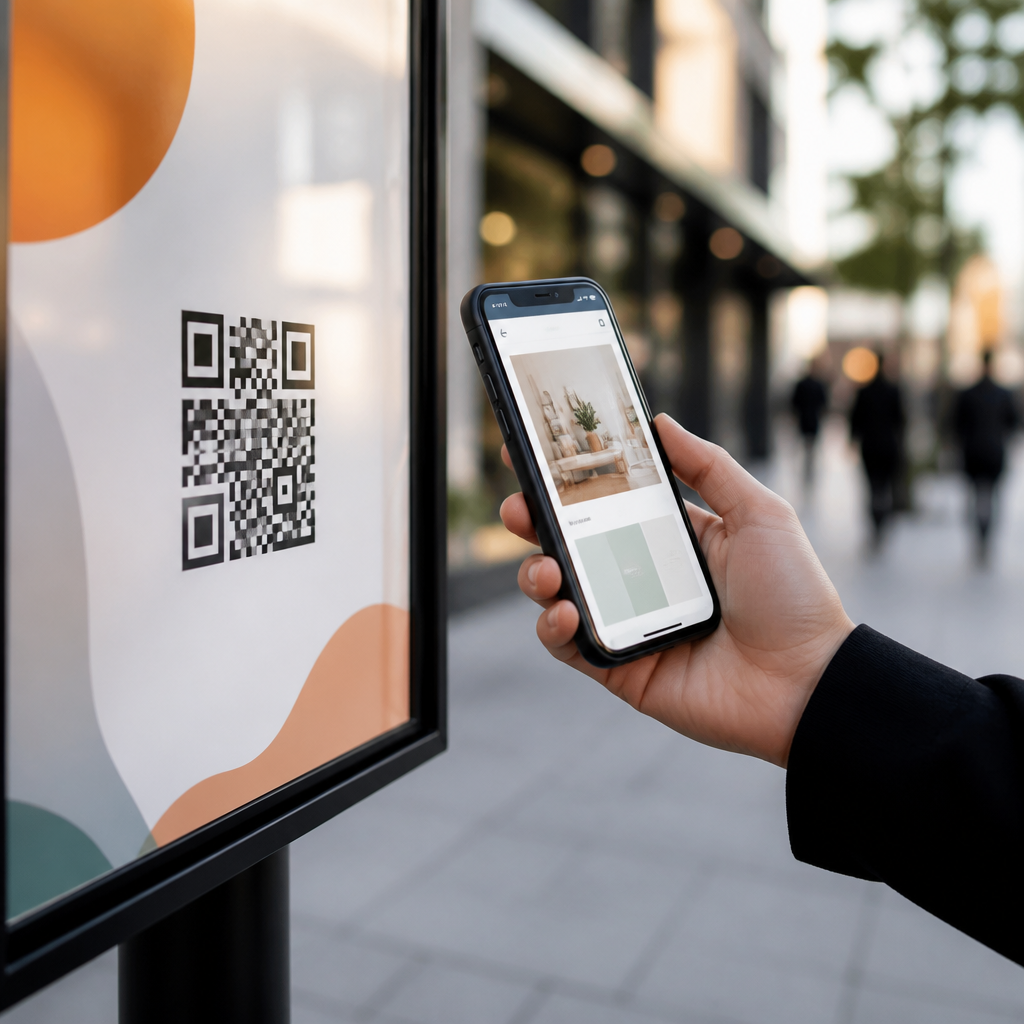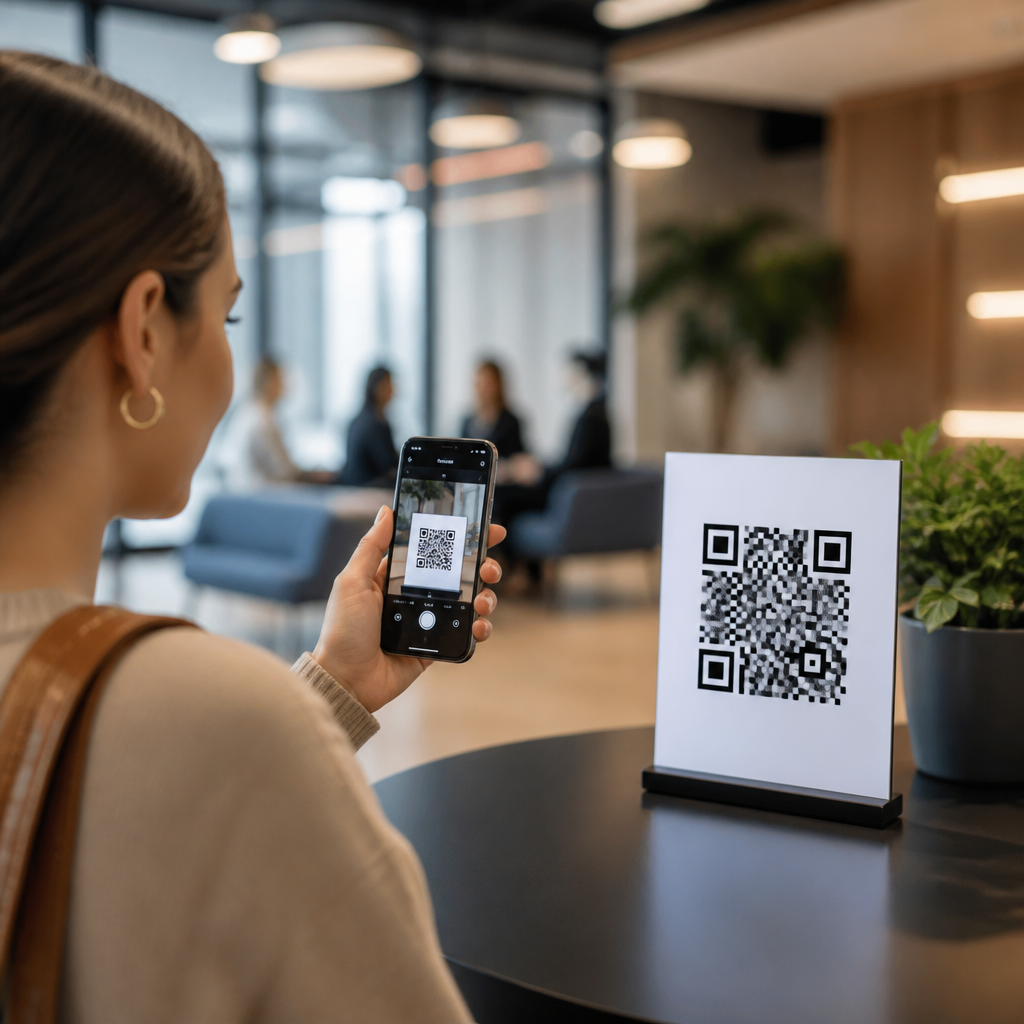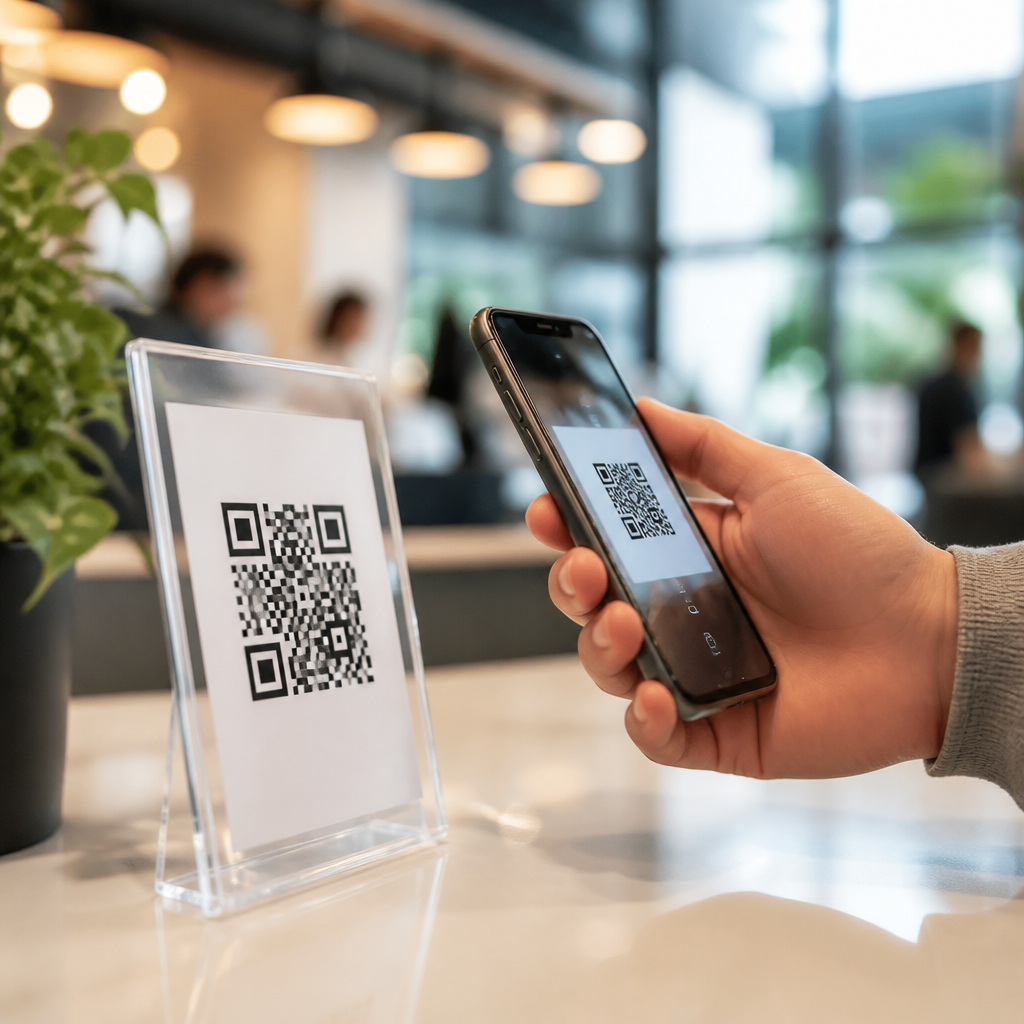
High-converting QR code lead magnets turn a quick scan into a qualified contact by offering something valuable enough that people willingly exchange their email address, phone number, or other business details. In practical terms, a lead magnet is the asset or incentive, such as a discount, checklist, template, webinar seat, product sample, or buying guide, while the QR code is the bridge that moves someone from an offline or mobile moment into a measurable digital conversion path. When marketers talk about QR codes for lead generation, they mean using scannable codes to capture interest, route users to optimized landing pages, and collect first-party data with consent. That matters more now because privacy changes, rising ad costs, and crowded inboxes make owned audiences far more valuable than rented reach.
I have used QR code campaigns in retail stores, trade show booths, direct mail drops, restaurant tabletops, and field sales collateral, and the difference between average and exceptional results rarely comes down to the code itself. It comes down to the offer, the context, and the friction between scan and submission. A black-and-white square printed in the right place with the right promise can outperform expensive media because it catches intent at the exact moment a prospect is paying attention. A poorly matched offer, by contrast, gets scanned once and abandoned. The core discipline here is not graphic novelty. It is conversion design anchored to user intent.
For a sub-pillar hub on QR codes in marketing strategy, this topic sits at the center because it links physical media, mobile behavior, landing page optimization, customer relationship management, and attribution. A restaurant can use table tents to collect birthday club signups. A B2B software company can place codes on booth graphics to deliver benchmark reports and qualify leads by industry. A real estate agent can place codes on signs to offer neighborhood guides and capture buyer timelines. In each case, the code is not the campaign. The lead magnet and follow-up sequence are the campaign, and the code simply removes typing friction while enabling tracking.
The most useful way to evaluate high-converting QR code lead magnets is to ask five direct questions. What exact audience will scan this code? What problem or desire are they experiencing at that moment? What asset solves it immediately? What data do you actually need to collect now versus later? And how will you measure lead quality after the form fill? Answering those questions prevents the common mistake of treating every scan as equal. A scan from a trade show attendee requesting a pricing calculator has different intent from a cafe customer entering a giveaway, and your page, form length, automation, and sales response should reflect that difference.
What makes a QR code lead magnet convert
A high-converting QR code lead magnet has four characteristics: relevance, immediacy, clarity, and low friction. Relevance means the offer matches the environment. If someone scans from product packaging, they want usage help, warranty registration, recipes, or replenishment offers, not a generic newsletter. Immediacy means the benefit is available right away, such as instant access to a PDF, promo code, video walkthrough, or appointment scheduler. Clarity means the call to action explains the value before the scan, using plain language like “Scan for the installer checklist” or “Scan to get 15% off your first order.” Low friction means the landing page loads fast, is mobile-first, and asks only for information justified by the value of the offer.
In campaigns I have audited, conversion rates improve most when marketers stop asking for too much too early. A simple lead magnet aimed at top-of-funnel prospects often converts best with just an email field, while a mid-funnel offer like a demo request may justify name, company, and role. The exchange must feel fair. This is why a webinar replay can support a longer form than a discount code. It is also why many brands use progressive profiling in platforms such as HubSpot, Marketo, or Salesforce Account Engagement: capture minimal data first, then enrich the profile through later interactions instead of forcing everything into the first scan.
The technical setup matters as much as the message. Use dynamic QR codes rather than static ones when possible, because dynamic codes let you change the destination URL, track scans by campaign, and test variants without reprinting assets. Pair each code with UTM parameters so analytics platforms can attribute sessions, conversions, and downstream revenue to the source placement. If the code appears on packaging, in-store signage, direct mail, and event displays, each location should have its own tracking destination or parameter set. Otherwise, you lose the operational insight needed to know which offline surfaces are producing leads and which should be redesigned or retired.
Choosing lead magnet formats by audience and intent
The best lead magnet format depends on buying stage and scan context. For cold audiences, checklists, short guides, quizzes, and limited-time discounts tend to convert because they are easy to understand and consume. For warmer audiences, calculators, case studies, free consultations, trials, and sample requests often work better because the prospect is evaluating fit rather than merely browsing. In B2C settings, immediacy usually wins. In B2B settings, specificity wins. A broad “marketing tips” PDF underperforms a niche offer like “Warehouse labeling audit checklist for food manufacturers” because the second title signals relevance, expertise, and practical value.
Physical context should shape format selection. At a trade show, attendees are overloaded with brochures, so a QR code that promises “Get the 2025 benchmarking report” or “Book a 15-minute product fit session” performs better than a generic “Learn more” page. On restaurant receipts, a bounce-back incentive like “Scan for your next dessert free with email signup” can generate repeat visits. In healthcare waiting rooms, educational guides on preparation steps, insurance questions, or post-visit care can convert if they respect privacy and comply with applicable rules. On real estate signs, neighborhood maps, mortgage calculators, and showing alerts are strong magnets because they solve immediate buyer questions.
| Context | Strong Lead Magnet | Why It Converts |
|---|---|---|
| Retail shelf or packaging | How-to guide, loyalty signup, first-purchase coupon | Matches in-the-moment product curiosity and buying intent |
| Trade show booth | Industry report, demo booking, ROI calculator | Captures professional intent and supports qualification |
| Direct mail postcard | Personalized offer page, estimate request, quiz | Extends offline attention into measurable digital action |
| Restaurant table tent or receipt | VIP club, birthday reward, feedback incentive | Reaches customers during or right after purchase |
| Real estate signage | Property details, neighborhood guide, alert signup | Answers immediate location-based questions on mobile |
Some marketers assume a discount is always the strongest lead magnet. It is not. Discounts often produce higher raw conversion rates but lower lead quality, especially if the audience is price sensitive and unlikely to buy again at full margin. Educational assets can generate fewer submissions yet deliver stronger long-term value because they attract people with real purchase intent. I have seen this clearly in manufacturing and software campaigns where spec sheets, buying frameworks, and implementation checklists outperformed coupon-style offers in sales-qualified lead rate. The best approach is to align the offer with the economics of the business, not just the top-line opt-in rate.
Building the scan-to-signup journey
The scan-to-signup journey should feel obvious, fast, and trustworthy. Before the scan, the surrounding copy needs to answer one question: why should I do this now? After the scan, the landing page should repeat the promise, show the benefit above the fold, and present a form sized to the value exchange. Mobile UX is decisive here. Use large tap targets, compressed images, readable typography, and short paragraphs. Test on multiple devices and under average cellular conditions, not only office Wi-Fi. A landing page that loads in one second can materially outperform one that takes four, especially in event halls, outdoor environments, and transit locations where connectivity is inconsistent.
Trust signals should be visible but not overdone. Include a concise privacy note, recognizable brand elements, and, where relevant, brief proof such as customer counts, review ratings, or publication mentions. If the lead magnet is a report or template, show a preview image or a few bullet points covering exactly what the visitor will receive. If the destination is a form for consultation or demo booking, explain what happens next, how long it takes, and whether the prospect will be contacted by phone or email. Uncertainty suppresses conversions. Clear expectations improve them.
One of the highest-impact techniques is using conditional landing pages tied to placement. A QR code on a product manual insert can open a support-focused page with setup help and an optional warranty registration form, while a code on a retail endcap can open an offer-focused page for first-time buyers. Both may feed the same CRM, but the message, form, and follow-up should differ. This is where dynamic code management platforms earn their value. Tools from QR Code Generator Pro, Bitly, Beaconstac, Flowcode, and Uniqode support editable destinations, analytics, and campaign governance, which become essential once multiple teams and channels are involved.
Measurement, attribution, and optimization
Measuring QR codes for lead generation starts with the right hierarchy of metrics. Scan rate tells you whether the placement and call to action are compelling. Landing page conversion rate tells you whether the offer and page experience are working. Cost per lead tells you whether the channel is efficient. But the most important metrics are deeper funnel indicators: lead-to-opportunity rate, sales-qualified lead rate, revenue per lead, and time to conversion. A giveaway can look excellent on scan volume and terrible on pipeline quality. A niche report may look modest on form fills and outstanding on booked meetings and closed revenue.
Attribution should be designed before launch, not reconstructed afterward. Every QR campaign needs a naming convention, unique destination parameters, and CRM fields that persist original source data. In Google Analytics 4, define key events for form submissions, file downloads, calls, and bookings. In your CRM, map campaign IDs so sales teams can report on opportunity creation and revenue influenced by each code placement. If teams use offline materials repeatedly, keep a change log of placement dates, creative versions, and destination updates. Without governance, performance data becomes noisy and difficult to trust.
Optimization usually comes from small, disciplined tests rather than dramatic redesigns. Test the call to action next to the code, not just the landing page headline. “Scan to get the checklist” may underperform “Scan for the 7-point inspection checklist” because specificity raises perceived value. Test incentive type, form length, preview imagery, and thank-you page next steps. Also test operational factors: code size, contrast, quiet zone, placement height, and distance from the viewer. ISO/IEC 18004 standards govern QR code symbology, but practical readability still depends on print quality, lighting, and camera behavior. If people cannot scan comfortably in the real environment, the campaign fails before persuasion even begins.
Common mistakes and how to avoid them
The most common mistake is using a QR code without a compelling reason to scan. “Scan me” is not a strategy. People scan for value, speed, or convenience. Another frequent error is sending traffic to a homepage. Homepages force visitors to navigate, which adds friction and weakens attribution. Every lead generation code should point to a dedicated landing page with one primary conversion action. I also routinely see marketers bury the QR code in visually busy layouts, print it too small, or place it where glare, curvature, or distance reduce scanability. A technically valid code can still be functionally unusable.
Another avoidable problem is collecting personal data without clear consent language or retention rules. If you are offering SMS alerts, email nurture, or sales outreach, disclose that plainly. Compliance requirements vary by region and sector, but permission practices are not optional. Regimes such as GDPR and CAN-SPAM, along with industry-specific privacy expectations, should shape your forms, records, and follow-up. Finally, do not treat all scans as successes. Some codes are used by existing customers seeking support, others by prospects exploring fit, and others by casual entrants chasing prizes. Segmenting these behaviors is the only way to improve lead quality over time.
How this subtopic fits a broader marketing strategy
QR code lead magnets work best when they connect to a broader lifecycle rather than functioning as isolated stunts. The immediate job is to capture permission and context. The next job is to route that contact into the right nurture path, sales queue, loyalty flow, or customer onboarding sequence. This is why the strongest programs connect QR data to CRM records, email automation, retargeting audiences, and reporting dashboards. When done well, a simple scan becomes the first observable step in a measurable customer journey that began in the physical world and continues across channels.
As a hub for QR codes for lead generation, the core lesson is straightforward. High-converting QR code lead magnets succeed when the offer fits the moment, the landing page removes friction, the tracking is rigorous, and the follow-up is intentional. Start with one audience, one context, and one clear incentive. Use dynamic codes, dedicated pages, and CRM tagging from day one. Then improve with tests based on conversion quality, not vanity metrics. If you are building a QR code marketing strategy, audit your current touchpoints and create one lead magnet specifically designed for the exact question your next scanner already has.
Frequently Asked Questions
What makes a QR code lead magnet high-converting?
A high-converting QR code lead magnet succeeds because it aligns three elements: timing, relevance, and perceived value. The person scanning the code must immediately understand what they will get, why it matters, and how quickly they can access it. Strong examples include a discount tied to an in-store product, a checklist connected to a service being considered, a buying guide available at a trade show booth, or a template that solves a specific business problem. In each case, the offer feels like a natural next step rather than a random promotion.
Conversion rates increase when the exchange feels low-friction and worthwhile. That means the landing page should load quickly, be mobile-friendly, and ask only for the information needed at that stage. If someone scans a code on packaging, signage, direct mail, or a presentation slide, they are often making a split-second decision. A vague headline, too many fields, or an offer that is too generic can break momentum. By contrast, clear copy such as “Scan to get the 7-point buying checklist” or “Scan for 15% off your first order” tells users exactly what to expect and why they should act now.
Trust also plays a major role. High-converting QR lead magnets make it obvious who is collecting the information, how the asset will be delivered, and what happens next. If users believe they are dealing with a credible brand and receiving something genuinely useful, they are much more likely to submit an email address or phone number. In short, the best-performing QR code lead magnets are not just technically scannable; they are strategically matched to audience intent and designed to turn curiosity into a measurable conversion.
What types of lead magnets work best with QR codes?
The best lead magnets for QR codes are those that deliver immediate, easy-to-understand value in the exact context where the scan happens. Discounts and coupons tend to perform well in retail, hospitality, events, and packaging because the benefit is instant and tangible. Checklists, templates, guides, and comparison sheets often work better for professional services, B2B marketing, education, real estate, and higher-consideration purchases because they help prospects make a smarter decision. Webinar registrations, demos, and free consultations can also be effective when the audience is already warm and looking for the next step.
Context matters more than format alone. For example, a QR code on a conference banner may convert better with a resource like “Get the keynote slide deck” or “Claim the industry trend report” than with a generic newsletter signup. A code on product packaging may perform best with “Unlock setup instructions, bonus tips, and a warranty registration gift.” A code in a restaurant might convert through “Join our VIP list for a free appetizer on your next visit.” The strongest lead magnets are tightly connected to the moment, the audience’s likely question, and the action the business wants to encourage.
It is also important to choose offers that can be fulfilled quickly on mobile devices. A long-form white paper may be valuable, but if the scanner is standing in a store aisle or walking through an expo hall, a short guide, discount, or instant access asset may convert more efficiently. In many cases, businesses see the best results by matching the lead magnet to the funnel stage: educational resources for early interest, comparison tools for evaluation, and offers or trials for purchase intent. The QR code should not just attract scans; it should connect the right person with the right incentive at the right time.
How much information should I ask for on a QR code lead capture form?
As a rule, ask for the minimum amount of information required to move the relationship forward. For many QR code lead magnets, that means starting with just an email address and possibly a first name. If the offer is especially valuable, such as an in-depth toolkit, a product sample, a booking request, or a consultation, users may be willing to provide more details like phone number, company name, or job title. The key is to make sure every field has a purpose. Each additional requirement creates friction, and friction can reduce conversions dramatically, especially on mobile devices.
A useful way to decide what to request is to consider lead intent and follow-up needs. If the goal is to deliver a downloadable guide and begin email nurturing, an email address may be enough. If the offer is a quote, appointment, event registration, or sales consultation, more information may be justified. However, asking for too much too soon can weaken performance, particularly with cold traffic scanning from print materials, signage, or product labels. In these cases, progressive profiling often works well: collect a small amount of information first, then gather more later through follow-up emails, preference centers, or subsequent interactions.
The experience should also feel fast and mobile-friendly. Use large fields, minimal typing, clear labels, and a visible value statement near the form. Let users know what they are receiving and when they will receive it. If you ask for a phone number, explain why. If you require consent for SMS or email marketing, make that transparent. High-converting QR lead capture forms respect the user’s time while still collecting enough information to qualify and nurture leads effectively. The ideal form is not the shortest possible form or the longest possible one; it is the form that balances conversion rate with lead quality.
How can I track and measure the performance of a QR code lead magnet?
Tracking begins by treating the QR code as part of a measurable conversion path rather than a standalone graphic. Use dynamic QR codes whenever possible so you can monitor scans, update destinations, and segment campaigns without reprinting materials. Pair each QR code with a dedicated landing page or campaign URL that includes tracking parameters. This allows you to see not only how many scans occurred, but also where they came from, which placements performed best, and how those visitors behaved after arriving on the page.
The most important metrics usually include scan volume, landing page conversion rate, form completion rate, cost per lead, and downstream lead quality. For example, a code might generate many scans but few form submissions, which may signal a weak offer, unclear messaging, or a poor mobile experience. Another campaign may produce fewer scans but higher-quality contacts that convert into meetings, purchases, or repeat customers. That is why it is important to go beyond vanity metrics and connect QR performance to CRM data, email engagement, sales pipeline stages, and revenue wherever possible.
Testing is essential for improvement. Marketers can compare different offers, headlines, calls to action, form lengths, page layouts, and placement locations. A QR code on product packaging may perform differently than the same code on a countertop display, event badge, flyer, or direct mail piece. Even small changes such as “Scan to get the free guide” versus “Scan for your custom checklist” can influence conversions. By combining scan analytics, web analytics, and lead outcomes, businesses can identify which QR code lead magnets are truly high-converting and optimize future campaigns with confidence.
What are the biggest mistakes to avoid with QR code lead magnets?
One of the biggest mistakes is offering something too generic or too low in value. If the incentive is not compelling, people will not trade their contact details for it. A plain “Join our newsletter” message usually underperforms compared with a specific and relevant benefit such as a discount, toolkit, calculator, cheat sheet, or exclusive access asset. Another common mistake is failing to connect the offer to the environment where the scan happens. A QR code on a showroom sign, mailer, menu, package, or event display should feel context-aware and purpose-driven, not copied from a generic campaign template.
Poor mobile experience is another major conversion killer. Since most scans happen on phones, slow landing pages, cluttered layouts, tiny text, long forms, and confusing navigation can cause users to abandon before submitting. It is also a mistake to send scanners to a homepage instead of a dedicated landing page. Homepages create unnecessary decision points, while focused landing pages reinforce the offer and guide the user toward one clear action. The call to action near the QR code itself should also be direct. People need to know why they should scan and what they will gain immediately.
Finally, many businesses miss opportunities by neglecting follow-up and optimization. Capturing a lead is only the beginning. If the promised asset is delayed, the nurture sequence is weak, or sales outreach is poorly timed, the value of the QR campaign drops. Brands also make avoidable errors by using static codes when they need flexibility, failing to test code placement and scanability, or not measuring which lead magnets actually produce qualified leads. The best results come from a complete system: a relevant offer, a clear CTA, a strong landing page, simple lead capture, reliable delivery, and a structured follow-up process that turns initial interest into real business outcomes.