Mapping customer touchpoints with QR codes turns a simple scan into a measurable step in the customer journey, connecting offline moments to digital actions with far more precision than most print, packaging, or in-store media can deliver. A customer touchpoint is any interaction between a person and a brand before, during, or after a purchase. Customer journey mapping is the structured practice of identifying those interactions, understanding intent at each stage, and improving the path from awareness to loyalty. QR codes matter in this process because they create a direct bridge between physical context and digital content while generating data that marketers can use to refine messaging, timing, and channel mix.
I have used QR codes across retail displays, event signage, direct mail, packaging, and service workflows, and the common lesson is straightforward: a code performs only when it is tied to a clear moment, a clear value exchange, and a clear next action. Brands often treat QR codes as a generic shortcut to a homepage. That wastes the strongest benefit of the format. The real opportunity is to map each code to a specific touchpoint, landing page, audience segment, and business outcome. When that discipline is in place, QR codes reveal where attention starts, where friction appears, and which interactions move people closer to purchase or retention.
For marketers building a hub around customer journey mapping with QR codes, the central question is not whether QR codes work. It is where they belong, what customer need they answer, and how performance should be measured. A code on a storefront window serves a different purpose than one on a receipt, product label, menu, brochure, vehicle wrap, or loyalty card. The copy around the code, the destination experience, and the analytics setup should all change accordingly. Understanding those differences is what turns QR codes from a trendy add-on into a dependable part of marketing strategy.
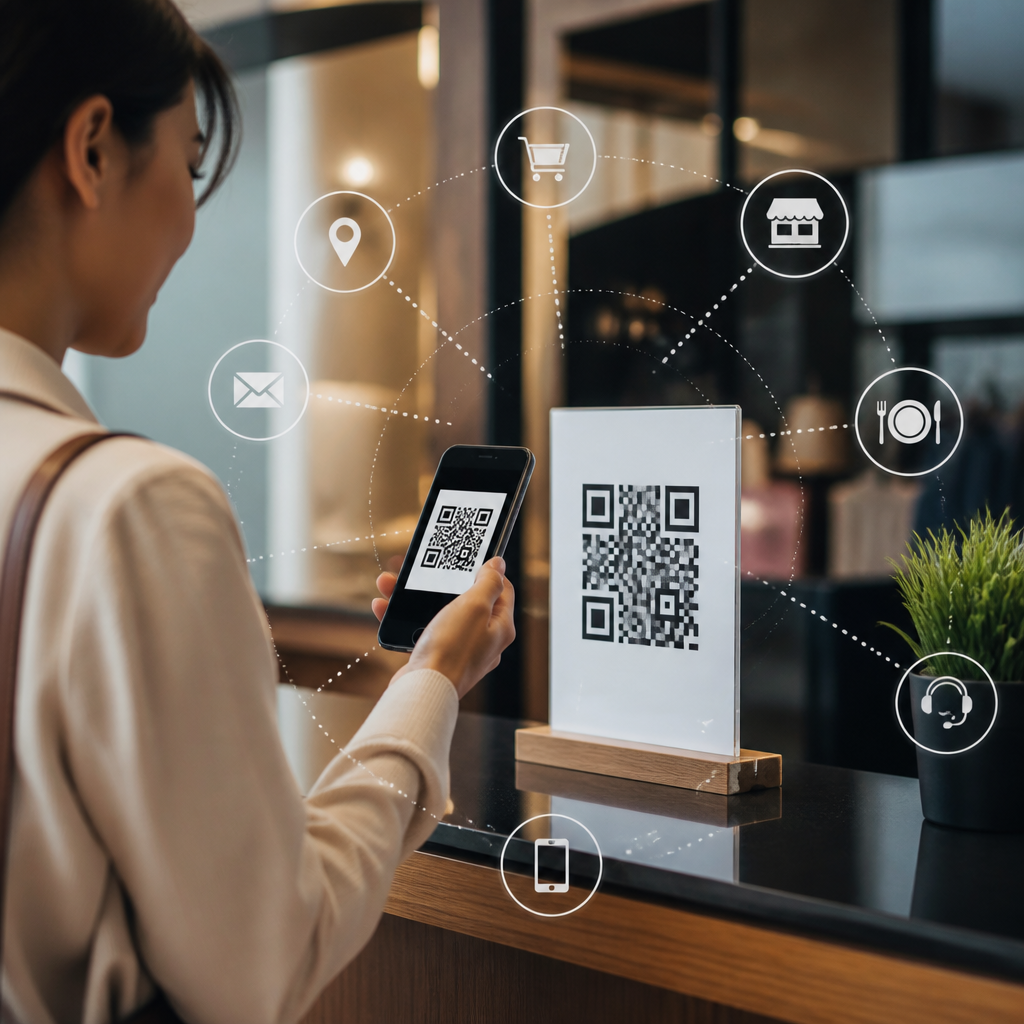
This topic matters because modern journeys are fragmented. Customers discover products on social platforms, compare options on search, encounter packaging in stores, seek reviews on mobile devices, and expect post-purchase support without delay. QR codes can connect these fragmented steps into a coherent path, especially in environments where typing a URL is inconvenient or impossible. They also help brands attribute offline influence more accurately. When every key interaction is mapped deliberately, teams can identify which touchpoints educate, which convert, and which need redesign.
Understanding customer journey mapping with QR codes
Customer journey mapping with QR codes means assigning scannable entry points to the stages of awareness, consideration, conversion, onboarding, service, retention, and advocacy. Each code should correspond to a stage-specific objective. In awareness, the objective may be education or traffic generation. In consideration, it may be product comparison, testimonials, or a store locator. In conversion, it may be a purchase page, lead form, coupon, or appointment booking flow. After purchase, it may support setup instructions, warranty registration, product care, reordering, referral programs, or review collection.
The practical value of this approach is that it forces teams to think in moments instead of channels. A shopper standing in front of a shelf has different information needs than a recipient opening a direct mail piece at home. A traveler scanning a poster in a station needs speed and mobile clarity. A new customer scanning packaging after purchase needs setup help, not brand storytelling. When I map journeys for campaigns, I start with customer intent at the moment of scan, then I define the minimum information needed on the landing page, and only after that do I choose the design, placement, and tracking method.
Dynamic QR codes are usually the better choice for journey mapping because the destination can be updated without reprinting the asset. That matters when product pages change, event details shift, or campaigns need testing. Dynamic codes also support scan analytics, including time, location, device type, and total scan count, depending on the platform and privacy setup. Static codes have a place for permanent destinations such as plain text, Wi-Fi access, or stable URLs, but they are less useful for campaign optimization because they do not support flexible redirection or robust reporting in the same way.
Successful journey maps pair QR codes with supporting context. A code alone is not a strategy. Customers need a reason to scan, such as “Compare models,” “See ingredients,” “Book a demo,” “Watch setup,” or “Claim 10% off.” They also need confidence that the scan is safe and worthwhile. Clear branding, short explanatory copy, and a recognizable destination domain increase trust. In my experience, the best-performing codes reduce uncertainty before the scan and reduce friction after it, creating a seamless exchange of attention for value.
Where QR codes fit across the customer journey
The most effective way to map customer touchpoints with QR codes is to organize them by journey stage and operational context. This prevents duplication and reveals gaps. Many brands overinvest in awareness placements and underinvest in post-purchase and service touchpoints, even though service-oriented QR experiences often deliver strong satisfaction and repeat purchase outcomes. The table below outlines how common placements connect to business goals.
| Journey stage | Touchpoint | Typical QR destination | Primary metric |
|---|---|---|---|
| Awareness | Poster, storefront, out-of-home ad | Campaign landing page or video | Unique scans |
| Consideration | Product shelf tag, brochure, catalog | Comparison guide, reviews, store locator | Engaged sessions |
| Conversion | Direct mail, menu, event badge, in-store sign | Offer page, cart, booking form, lead form | Conversion rate |
| Onboarding | Packaging insert, welcome card | Setup guide, app download, account activation | Completion rate |
| Retention | Receipt, product label, loyalty card | Reorder page, rewards portal, care instructions | Repeat purchase rate |
| Advocacy | Thank-you insert, service follow-up | Review request, referral page, community invite | Review volume or referrals |
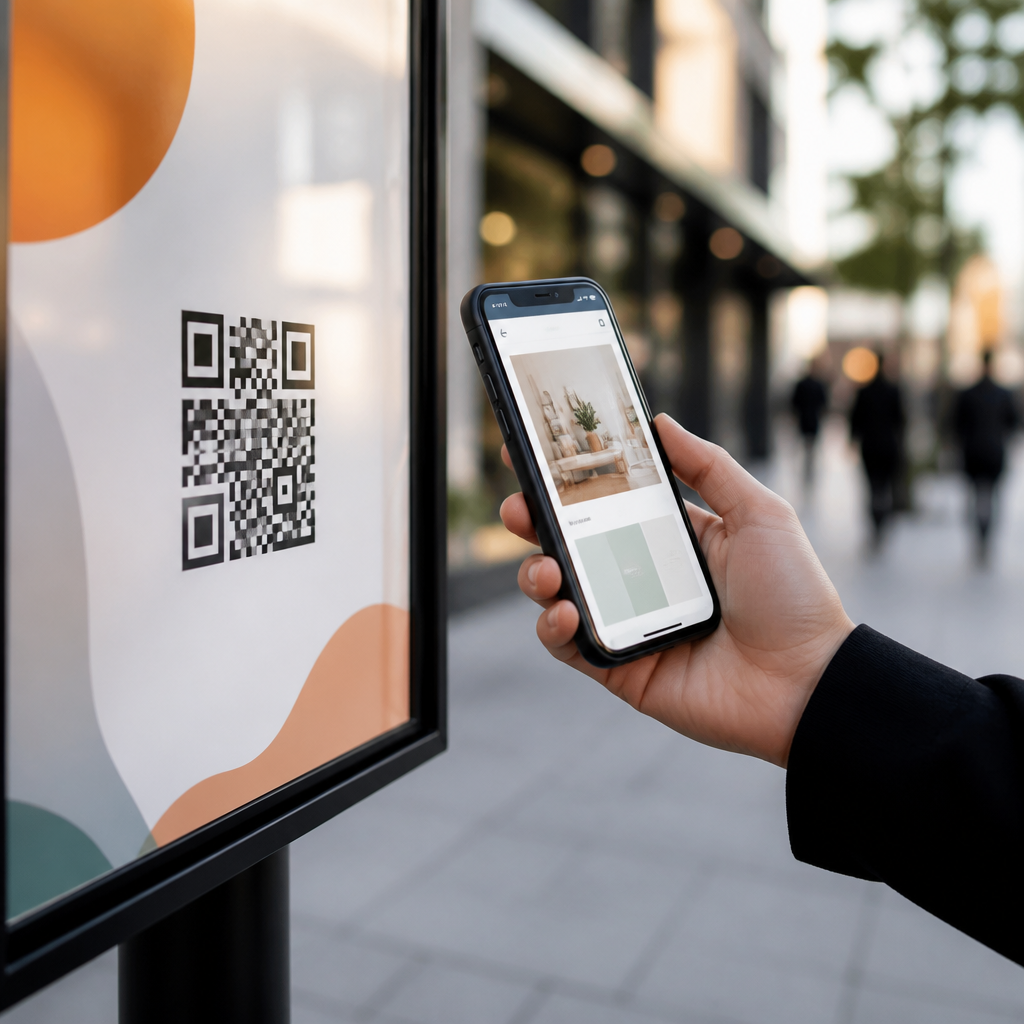
In awareness campaigns, QR codes work best when the value proposition is immediate. A restaurant poster may invite passersby to view the menu and reserve a table. A real estate sign may link to a property tour. A B2B trade show banner may open a product explainer and meeting scheduler. These are low-friction actions matched to the environment. In consideration, codes should reduce uncertainty. On-pack codes that reveal sourcing information, certifications, user guides, or ingredient details can help customers choose with more confidence, especially in categories such as food, beauty, electronics, and home improvement.
Conversion-stage codes need tight alignment between message and destination. If a printed coupon promises a discount, the landing page should apply the offer automatically or explain redemption clearly. If an event booth promises a demo, the form should be brief and mobile-friendly. I have seen campaigns lose momentum because a scan opened a desktop-style page with too many fields, slow load times, or navigation distractions. The scan is a hand-raise; conversion depends on honoring that attention quickly.
Post-purchase touchpoints are often the most underused. Packaging is especially powerful because it reaches people when intent is high. For example, a skincare brand can place separate QR codes on the outer carton and insert: one for product education before opening and another for usage tips after purchase. A consumer electronics company can use codes for quick-start setup, warranty registration, troubleshooting, and accessory recommendations. These interactions lower support costs while improving customer experience. They also create first-party behavioral data that can inform retention campaigns.
Designing QR code touchpoints that people actually use
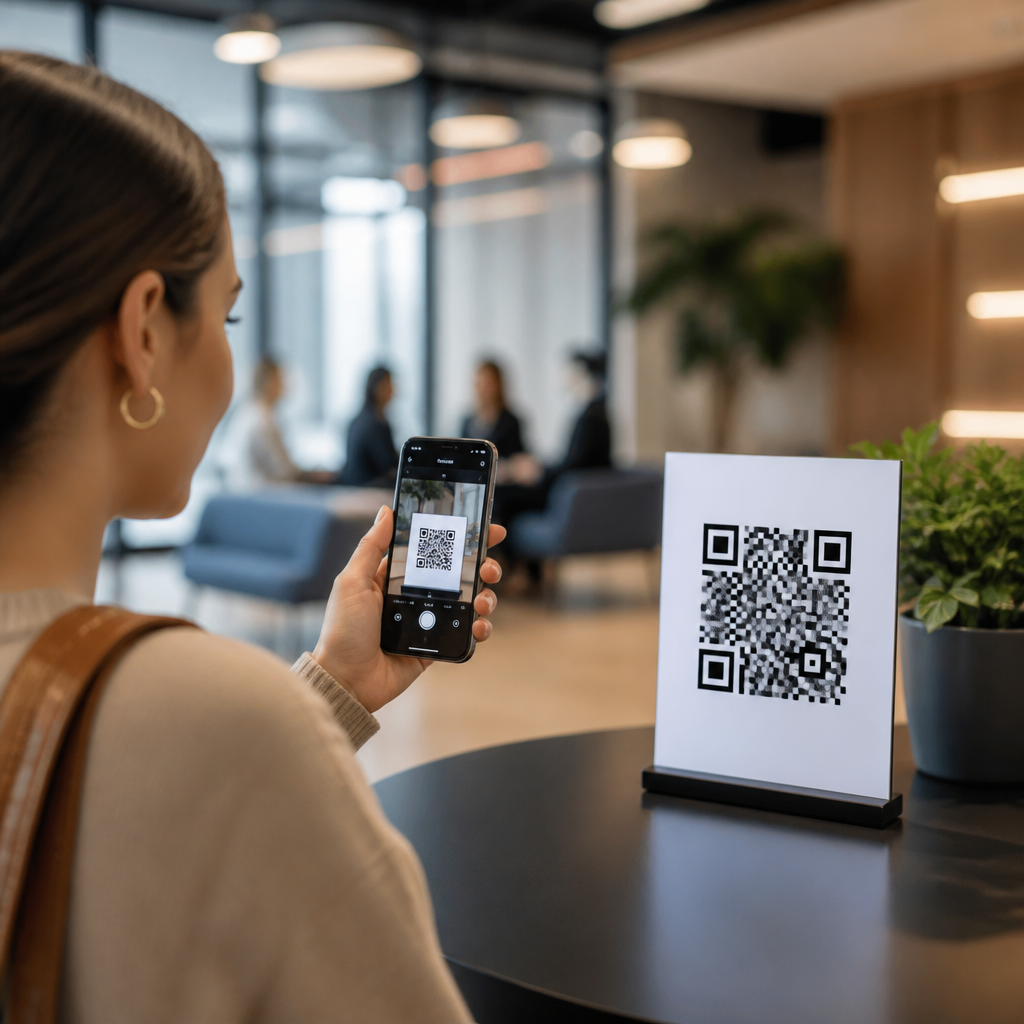
Good QR strategy combines human-centered design with operational discipline. Start with the moment of scan. Ask what the customer is doing, what device they are likely using, what urgency they feel, and what barrier the code removes. Then design the asset around that answer. Size, contrast, quiet zone, print quality, and placement all affect scan reliability. As a baseline, use dark codes on light backgrounds, preserve the required margin around the code, and test across multiple phone models and lighting conditions. Stylized codes can work, but only if readability is validated rigorously.
Placement matters as much as code quality. A QR code on a moving bus, behind reflective glass, or too low on a shelf will underperform regardless of creative strength. The surrounding call to action should state the benefit, not just the mechanic. “Scan to learn more” is weaker than “Scan for 2-minute setup,” “Scan to compare sizes,” or “Scan to claim your sample.” When possible, add a short fallback URL for accessibility and for users who prefer not to scan. This also supports trust by making the destination explicit.
The landing experience must match the physical context. A code from a retail shelf should lead to a fast page with key product details above the fold, concise proof points, and simple choices. A code from a package insert can support a richer onboarding flow because the customer has already committed attention. Speed is nonnegotiable. Google’s Core Web Vitals are not just technical metrics; they directly shape abandonment on mobile. Compress images, limit scripts, and remove unnecessary pop-ups. If the destination requires an app, explain why and provide a web alternative where possible.
Segmentation also improves touchpoint performance. Distinct QR codes for different stores, product variants, territories, or audience groups let teams compare results without relying solely on generalized traffic reports. UTM parameters remain useful for campaign structure inside analytics platforms such as Google Analytics 4, Adobe Analytics, or HubSpot. However, parameters should be consistent and documented. I recommend a naming convention that includes channel, placement, campaign, audience, and objective. Without that discipline, scan data becomes noisy, and teams lose the ability to learn from offline interactions.
Measurement, attribution, and optimization
Measuring customer journey mapping with QR codes requires more than counting scans. Scans indicate interest, not business impact. The right framework connects scan events to downstream behavior: engaged sessions, product views, form completions, purchases, account activations, repeat orders, reviews, or support deflection. For each touchpoint, define one primary metric and two or three secondary diagnostics. For example, a shelf tag code may use unique scans as the primary metric, with product detail views, add-to-cart rate, and bounce rate as secondary measures. A packaging code may use setup completion as the primary metric, with support article views and return rate as secondary measures.
Attribution improves when QR codes are mapped to distinct moments rather than reused broadly. If the same code appears on posters, flyers, receipts, and packaging, the resulting data is too blended to guide decisions. Separate codes by placement and intent, then connect them to campaign dashboards. Platforms such as Bitly, QR Code Generator PRO, Uniqode, and Flowcode offer dynamic code management and analytics, while CRM and marketing automation systems can capture lead-source detail after the landing page. In retail and franchise environments, location-specific codes can reveal differences in store execution and regional demand.
Optimization should follow a test-and-learn cadence. Change one variable at a time: call to action, offer, destination format, code placement, or landing page layout. A museum, for example, might test whether exhibit labels generate more engagement when codes open text summaries, audio guides, or short video clips. A packaged food brand might compare recipe-focused destinations with coupon-focused destinations. A home services company may find that a van-wrap QR code converts better to quote requests during weekdays and to educational checklists on weekends. These are not assumptions; they are testable patterns that emerge from disciplined mapping.
Privacy and trust deserve explicit attention. Do not collect more data than needed, and make consent clear when forms or personalized tracking are involved. In regulated sectors such as healthcare, finance, or alcohol, destination content and data handling must follow applicable rules. Broken links are another trust risk. Because physical assets remain in market long after launch, teams need governance for redirect updates, expired campaigns, and quality assurance. A dead QR code on packaging damages credibility in a way that users remember.
Building a scalable hub strategy around QR code journey mapping
As a hub topic within a broader QR code marketing strategy, customer journey mapping should connect to detailed supporting pages on design best practices, packaging QR codes, retail signage, event marketing, direct mail, analytics, dynamic versus static codes, landing page optimization, and post-purchase retention. The hub’s role is to define the framework: map stages, assign touchpoints, specify objectives, build destinations, measure outcomes, and refine. Supporting articles can then go deeper into each environment and tactic while reinforcing consistent terminology and methodology.
Operationally, scalable programs need ownership. Marketing may control creative and campaign goals, but sales, retail operations, product, support, and ecommerce teams often own the touchpoints themselves. A practical governance model includes a touchpoint inventory, a destination register, tracking standards, review cycles, and service-level expectations for updates. In larger organizations, I recommend maintaining a QR code library that records placement, owner, redirect target, start date, end date, and success metric. This prevents duplicate codes, outdated destinations, and measurement blind spots.
Scalability also comes from reusability without sameness. The framework should be standardized, but the customer value at each moment should remain specific. A hotel chain can use a consistent design system for lobby, room, restaurant, and checkout codes while routing each one to a tailored experience: local recommendations, spa booking, room service ordering, late checkout, or feedback. A manufacturer can standardize packaging workflows while customizing setup content by model. Consistent architecture reduces production friction; tailored content preserves relevance.
Teams that map customer touchpoints with QR codes well gain more than scan data. They gain a clearer picture of customer intent in physical environments, a stronger link between offline and online behavior, and a practical method for improving journeys one moment at a time. Start by listing your existing touchpoints, assigning each one to a journey stage, and defining the single action that would make that interaction more useful for the customer. Then build or revise the QR experience around that action, measure the result, and expand only after the pattern proves itself. That is how QR codes become a durable part of customer journey strategy rather than a disconnected tactic.
Frequently Asked Questions
1. What does it mean to map customer touchpoints with QR codes?
Mapping customer touchpoints with QR codes means using scannable codes to identify, track, and improve the moments when customers interact with your brand across the buyer journey. A touchpoint can happen before a purchase, such as seeing a QR code on a poster, shelf display, direct mail piece, or product package. It can also happen during the buying process, such as scanning for product details, reviews, pricing, or checkout options. After the purchase, QR codes can support onboarding, care instructions, warranty registration, reorder flows, loyalty programs, customer support, and feedback collection.
The real value is that each scan creates a measurable bridge between a physical interaction and a digital action. Instead of guessing whether printed materials or in-store placements are influencing behavior, businesses can see which locations, campaigns, products, or messages drive engagement. This makes it easier to understand intent at different stages of the journey. For example, a scan for specifications may signal research intent, while a scan for a discount or checkout page may signal purchase intent. When those scans are tied to specific touchpoints, brands can build a clearer customer journey map and make better decisions about content, timing, placement, and follow-up.
2. Why are QR codes useful for customer journey mapping compared to traditional offline marketing?
QR codes are especially useful because they turn traditionally hard-to-measure offline interactions into trackable, analyzable events. With many forms of print, packaging, signage, and in-store media, it has historically been difficult to know what people actually did after seeing the message. A QR code changes that by giving customers a direct path to a digital destination and giving businesses visibility into engagement patterns such as scan volume, timing, device type, location, and destination performance.
This added precision helps marketers move beyond broad assumptions. A flyer may generate awareness, but a QR code on that flyer can show whether people were motivated enough to learn more. A product label may attract attention, but a QR code can reveal whether customers wanted tutorials, ingredient details, or promotions. A point-of-sale display may encourage action, but the scan data can show which creative version performed best. In practical terms, QR codes make offline media more accountable and more adaptable. They let businesses compare touchpoints, test messages, and refine the customer journey using evidence rather than guesswork. That is a major advantage for teams focused on improving conversion paths and customer experience.
3. Which customer touchpoints are best suited for QR codes?
QR codes work best at touchpoints where customers naturally want more information, a next step, or a faster way to act. Common examples include product packaging, retail shelf tags, window displays, trade show booths, direct mail, event signage, restaurant tables, receipts, instruction manuals, and post-purchase inserts. In each of these settings, the QR code should reduce friction by helping the customer do something useful immediately, such as view product information, unlock a promotion, join a loyalty program, watch a demo, contact support, or leave a review.
The best touchpoints are not just visible ones, but contextually relevant ones. A QR code on packaging may be ideal for onboarding or replenishment. A code on an in-store display may be better for comparisons, buying guides, or limited-time offers. A code on a receipt may support feedback or encourage repeat purchases. A code in a service environment may direct customers to troubleshooting or appointment scheduling. The key is to align the QR experience with what the customer is likely thinking or needing at that moment. When the destination matches intent, the touchpoint becomes more useful to the customer and more informative to the business.
4. What should a business track when using QR codes to understand customer behavior?
To make QR codes valuable for customer journey mapping, businesses should track both scan activity and what happens after the scan. Basic metrics include total scans, unique scans, repeat scans, date and time of activity, approximate location, device type, and the specific code or campaign source. These data points help identify when and where engagement happens, which touchpoints attract attention, and how customers interact across different channels or physical environments.
Just as important are downstream behavior metrics. Businesses should measure landing page visits, click-through rates, time on page, form submissions, purchases, registrations, coupon redemptions, video views, review submissions, and support actions, depending on the goal of the touchpoint. This creates a more complete picture of customer intent and effectiveness. A high scan rate with low follow-through may indicate that the offer, page, or user experience needs improvement. A lower scan rate with strong conversion may signal a highly qualified audience. By combining scan data with page analytics, CRM data, and campaign reporting, brands can better understand how individual touchpoints contribute to awareness, consideration, purchase, retention, and advocacy.
5. How can businesses improve customer touchpoints with QR codes without creating friction?
The most effective QR code touchpoints are simple, relevant, and clearly valuable to the customer. Start by placing codes where people can easily see and scan them, and make sure the reason to scan is obvious. A short call to action such as “See how it works,” “Get setup instructions,” “Claim your offer,” or “Reorder in seconds” performs far better than a code with no explanation. The landing experience should also match the promise of the touchpoint. If someone scans from packaging, they should land on content related to that product, not a generic homepage that forces them to search for what they need.
Businesses should also optimize for speed, mobile usability, and continuity. Pages should load quickly, forms should be short, and the next action should be easy to complete on a phone. It is also smart to personalize destinations based on touchpoint type, product line, store location, or stage in the journey. A customer in the research phase needs different content than a customer who has already purchased. Finally, testing is essential. Compare placement, messaging, design, offers, and destination pages to see what improves engagement and conversion. When QR codes are treated as strategic journey tools rather than simple links, they can reduce friction, strengthen customer experience, and produce much more actionable insight across the full path to purchase and beyond.